Scientist Stories: Robert Langer, Interface between biology and materials & Co-Founder of Moderna
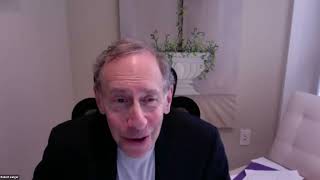
Robert Langer traces his career from chemical engineering to biomedical innovation, describing how he proved large molecules could diffuse through polymers, then developed controlled-release systems that became blockbuster drugs like Lupron Depot and Avastin. He co-founded Moderna and helped create the mRNA vaccine technology behind the COVID-19 shot, plus designed shape-memory pills that stay in the stomach for weeks.
Chapters
Hello everyone, um, good afternoon and good evening. It is my great pleasure to welcome you all to the 14th Elsevier Distinguished Lecture in Mechanics today. This lecture series has taken place annually since 2008 and encompasses such topics as the mechanics of robotics, fluid mechanics, biomechanics, and fracture mechanics. The lecture series was first conceptualized and continues to be organized by the journal Mechanics Research Communications and its editor-in-chief, Professor, Professor Anthony Rosato. Professor Rosato is a professor of mechanical and industrial engineering at the New Jersey Institute of Technology He received his PhD from Carnegie Mellon, is a fellow of the American Society of Mechanical Engineers and the American Academy of Mechanics, among many others. He's been editor-in-chief of MRC since 2005. And now I'd like to hand it over to Professor Rosado to introduce our speaker.
Thank you, Rebecca, for the introduction. And I'd also like to thank Elsevier for the continued support of this lecture series now for 14 years. So the Alice Marie Distinguished Lecture Series in Mechanics, actually, as Rebecca indicated, was conceived in 2007, and the inaugural presentation was made in April 2018, actually on the 14th of April, by Professor Jan Achenbach, who was a faculty member at Northwestern. From 2008 to 2015, the series was held at New Jersey Institute of Technology. In 2016, it was given at Rutgers University. They served as a host, followed by Princeton, the University of Pennsylvania, Georgia Tech, and in 2021, the University of Pittsburgh. All of the presentations have been video recorded, and they can be found on the Materials Today website. In fact, the abstracts are also listed on the journal page of Mechanics Research Communications. I'm also extremely pleased to, to let you know that a prospective article entitled "The Road Ahead for Application of Mechanics in Drug Delivery" that was co-authored by Professor Langer and his colleague will be appearing in the forthcoming issue of MRC, and that article will be available for free download as a service to the community for a period of 3 months from its publication date. So before turning the podium over to To Dean Ortino, I'd like to express my sincere gratitude to Northwestern University and the McCormick School of Engineering for hosting the event. And in particular, I also would like to thank Professors Wang and Lefevere in the Department of Mechanical Engineering for their work in also organizing the series. And I turn the podium over to Dean Ortino now, who will introduce the speaker.
OK, great. Thank you, Tony. So to introduce Bob Langer is to— it's an exercise in superlatives, okay? He has written more than 1,500 articles. Last time I checked, the H-index was 299, probably 300 by now. He has received 220 awards, 36 honorary doctorates, He was for a while one of the few people who was member of the three academies: engineering, science, medicine. He received the two prizes that are the equivalent of Nobel Prizes of engineering, the Draper Prize and the Queen Elizabeth Prize, and his patents have been licensed to about 400 companies. Everybody would like to be like Bob Langer. In fact, many people could be described as fractions of Bob Langer. When we look at people, junior faculty, we are told so-and-so is a miniature Bob Langer. For senior people, I think we could describe people as, I don't know, point one of Bob Langer, okay? All of that misses the point. All of those accolades are a consequence. The important thing is what gave rise to them, the way that Bob thinks, and he has mentioned many, many times his gratitude to his mentor, Judas Folkman, and he probably will do this in this talk. But he has recounted many times how many people told him that delivery of macromolecules was impossible, that the ideas were, if not ridiculed, regarded as an impossibility. And the many times that he tried to get funding for these ideas, and he was rejected. And I would mention that all of those things and rejections is what resulted, for example, in Moderna now, okay? So the point that I'm trying to make is Bob Langer should be seen as a model, someone who never gave up, and an inspiration for— to those who struggle to introduce new ideas. So if you want to be like Bob, it's not enough to do what has not been done. What you should try to do is what everybody says that it cannot be done. Well, distinguished Zoom audience, I give to you Bob Langer.
Well, Thank you so much, Dina Tino. It's such an honor to be able to give this talk, and thank you to Elsevier, and thank you to the members of the Northwestern community. I, I'm honored to really speak to you. I've had many fond memories of my visits there. So, um, I think if we could go to the beginning— we're not— yeah, thank you. Um, so let me just tell you how I got started. Julio did a great job. I'll, I'll give you a little— expand on it a little bit. You know, so I got my degree in chemical engineering in 1974. And when I did, my colleagues mostly went to work for oil companies. And I thought, that's what I do too, because they had the highest paying jobs. And that's what all my friends did. But when I went to some of these interviews, and by the way, I got— it wasn't that good. But I did get 20 job offers from those oil companies for from Exxon alone. But when I was going to them, you know, they would be talking about increasing the yield of certain petrochemicals by very small amounts. And I just wasn't excited about that. And so I started thinking about other job possibilities. One that I thought about was teaching high school students and doing curriculum development, because when I was supposed to be doing my PhD thesis, I helped start a high school for poor high school children in Cambridge. And I got very involved in developing new chemistry curriculum. And one day I actually saw an ad at City College of New York to do just that, to be assistant professor to develop new chemistry curriculum. So I wrote them a letter applying for a job, but they didn't write me back. But I really liked that idea. So I found all the ads I could to do something like that. I found about 40 different colleges and I wrote them and none of them wrote me back. So that wasn't going so well. So I started to think, what other ways could I use my engineering background to help people? And I thought about medicine. So I wrote to a lot of hospitals and medical schools, and they didn't write back either. But then one day, one of the people in the lab where I was, he said, Bob, you know, there's a surgeon in Boston named Judah Folkman, and Julio mentioned him, named Judah Folkman. And sometimes they said he hires unusual people. They, they, they thought very highly of Dr. Folkman, uh, but, uh, I won't say what they necessarily thought about me. But at any rate, I wrote to Dr. Folkman applying for a job, and he, uh, was kind enough to offer me a position. If we could go to the next slide, I'll just go over what his idea was. And it was really a very different concept for about how tumors grow, and actually it involves mass transport. Basically what he said, if you go to the lower bottom of this, you have a tumor cell that becomes abnormal and then it grows into a three-dimensional mass. If you look at the middle bottom of the screen, it maybe has a million cells. But what happens is because of diffusion, cells in the center die. They can't get nutrients or get rid of waste. But what he said, his theory was that the way a tumor solves that problem, it secreted a chemical signal. Called TAF, and that causes surrounding blood vessels, which you see on the bottom, to start growing directionally right to the tumor. And when that happens, he thought that now if you follow the arrows up the screen, the tumor is vascularized. That solves the nutrition problem. It gets bigger and bigger. And if you go to the upper top, what you see is it's very vascularized, and at that point it will spread through those blood vessels. That's a process called metastasis, and that is often what kills people. His theory was that if you could achieve anti-androgenesis, maybe that would be a whole new way to think about treating cancer. Now, I knew nothing about biology. I thought it was a terrific idea. And he— though it turns out many people ridiculed him and said this made no sense. But what he did is he hired me to prove he was right, and in so doing, isolate the first blood vessel inhibitor, angiogenesis inhibitor. So, so one of the key issues on this was creating a bioassay, a way to study blood vessel growth. And there was no, no way to do it at the time, because there's always background blood vessels wherever you go. So we had to invent one. And if we can go to the next slide. Our idea was that you'd have a certain type of— you'd have a tumor in the eye of a rabbit, which you could visualize, and then have a delivery system, which might be a polymer or lipid or something, that was very tiny that could be placed right near it, that could deliver any of the molecules I was isolating at the time, all of which turned out to be very, very large molecules, macromolecules. Dr. Folkman was on the board of the one company in the world that was working on drug delivery at the time. It was a company called Alza, and they had many famous people on their board, including Nobel Prize winners. Dr. Folkman asked them, could they help us? But what they said, uniformly was that you'd never be able to slowly deliver large molecules. If we go to the next slide, that they won't be able to diffuse through— that they wouldn't be able to slowly diffuse through solid materials. The literature, by the way, said the same thing. If you go literature on the next slide, what you see— this is just on polymers. But it pointed out that you— that it's been virtually restricted to small molecules. Nonetheless, if we were going to solve the angiogenesis problem, we had to solve the delivery problem. So I spent several years in the laboratory experimenting with different materials, different formulation techniques, I actually found over 200 different ways to get this to not work. But eventually, if we could go to the next slide, I was able to make little micro or nanoparticles, which you see on the left, cut in half on the right. What we showed eventually, we published in the journal Nature, next slide, that you could use these micro or nanoparticles to deliver any macromolecule for over 100 days. In fact, this is the first report ever showing that it was even possible to release nucleic acids, which are like DNA or RNA, over time. It must have been a few months before this paper came out. I remember being asked to give a talk at a big material science meeting in Midland, Michigan. I was 27 years old. I practiced this 20-minute talk for probably 2 or 3 weeks into a tape recorder. They didn't have a video then. Finally, I got up and I gave the talk. I thought I did okay. I didn't forget too much what I was going to say or stammer too much. I thought when I was done with this talk, all these older scientists in the audience, hopefully being nice people, would want to encourage me, this young guy. But when I got done, I stepped off the podium and a whole bunch of them came up to me and said, we don't believe anything you just said. The next slide shows what they wrote or said. They said again, large molecules couldn't slowly diffuse through solid materials and that organic solvents will denature whatever large molecules you'd put in, peptides, proteins, or nucleic acids. Because we were using things like ethanol and methylene chloride in the formulation process. Actually, things went downhill for me from there, unfortunately, if that were possible. I remember writing grants to support this work, and the first 9 were really badly rejected. The review sections, which were usually pathology study sections, because I was doing medical work, they would write back, well, Dr. Langer isn't going to be able to do this. He has no background in biology and even less in oncology. Now, I thought I knew enough about math to know that wasn't possible, but it didn't matter. I wasn't reviewing my own grants. And then I tried to actually get a job in a chemical engineering department. That was my major. And no chemical engineering department in the country or world would actually hire me to be an assistant professor. Pretty much if you go back to those days, they thought that I was doing experimental biological work. The only chemical engineering biological work that was being done were mathematical modeling, and that didn't fit in. So I got no jobs at all. But Dr. Folkman knew Nevin Scrimshaw, who was also on that ALSA board. And he was the head of the nutrition department. And he was a kind of department head who was kind of like a benevolent dictator. And a good one because he liked me, and he offered me a job. But he didn't bother to ask anybody else in the department what they thought. And that might have been okay except for one thing, which is the year after I joined the department, he left. So a lot of the senior faculty decided to give me advice, and their advice is I should leave too. In fact, the next slide depicts some of that. This was back in Mike Marletta is a very good friend of mine. He was on the MIT faculty in the late '70s and early '80s. Later, he would be a member of the National Academy of Sciences, chair of the chemistry department at Berkeley, and other great positions. But he's giving a speech when I got an award in 2014. And he was recanting what it was like to be with me at MIT at that time, the 1970s. And here's what he said. He said, well, one evening I went to a faculty dinner at a Chinese restaurant with myself and some senior MIT professors. He said a senior scientist sat quizzing us while smoking a cigar. He said when the older scientist heard my concepts for drug delivery, he blew a cloud of smoke in my face and said, you better start looking for another job. So the point I made, and Julio made this as well, is I had a very inauspicious beginning. Failures and rejections and so forth. Nonetheless, I believed in what we were doing. I could see some of the results with my own eyes. And as I mentioned, we want to solve the angiogenesis problem. And we did because we have the delivery systems. Now we could do that, that assay that I mentioned. And I'll repeat that on the next slide, which is that we had a tumor and a delivery system. And I want to give you a warning before I show the next slide because it's bloody. But I had isolated maybe 100 different, what I'll call fractions of inhibitors, possible inhibitors, all macromolecules, and I want to test them. And we did the rabbit eye work with several surgeons, Mike Klein and Ken Falterman in our lab. And, and let me just with this warning, show you what it looks like, but people shouldn't look if they don't want. But what you'll see on the next slide with this rabbit assay, and we published this in Science, in 1976. But what you see on the left-hand side is a sheet of blood vessels growing to the tumor. If you looked at an eye like that, a couple of weeks later, it would be 3-dimensional, out of the orbit of the eye, it would actually kill. We sacrificed the animals before that. But on the— and we repeated this experiment with probably 99 different fractions, none of which worked, as well as sham operations, none of which worked. And but One fraction did, and this had never been seen before. But what you see on the right-hand side is, again, at the same time period, the sheet of blood vessels, instead of being dense, now you see it's very sparse and it actually avoids the tumor and it's actually lower. We repeated this 20 times, 60% of the time, these tumors never got vascularized and actually would get rejected. This proved for the first time that blood vessel inhibitors, angiogenesis inhibitors existed. Nonetheless, it still took 28 years from this paper before the first one of these got approved by FDA. And people did use the analytical techniques, the assays, the drug delivery systems to find it. But it took 28 years, it took billions of dollars, and really great work by companies like Genentech and others like Napoleon Farrar before the first blood vessel inhibitor would get approved. But if we go to the next slide, and this starts 28 years after our paper, you see Avastin getting approved by the FDA. Avastin is probably the number 2 or 3 best-selling biotech drug in history. It's widely used even to this day, probably the 4th best-selling one right now. But what you see is over and over again, one after the next, after the next blood vessel inhibitor is approved by FDA. Not only are they approved for all cancers, they're also approved for diseases in the back of the eye. Older people often get a disease called macular degeneration. Younger people, diabetic retinopathy. But the thing is that those diseases, there were no pharmacologic treatments ever for them. Now for the first time, drugs like Lucentis, Eylea. They're also blockbuster drugs, and they provide the first methods of using drugs to not only stop macular degeneration or diabetic retinopathy, but someday, but also in some cases reverse it. This was a wonderful thing for us to see even though it took decades. Now, another thing going back to my time with Dr. Folkman at Children's Hospital in the '70s, he said, that we should file a patent. Now, people that have followed me, and as Julio mentioned, I, I have a lot of patents. I had none then. And actually, Children's Hospital in Boston, which in my opinion is one of the best children's hospitals in the world, they had none either. So we filed a patent for the first time, and 5 years in a row it got rejected. So the people at the hospital told me that I should just give up because the examiner didn't understand science. He wasn't going to allow it. But I, I could see by now I don't like to give up. That was another theme Julio mentioned. So I started to think, how could, how could we convince the patent examiner to allow this patent? Legally, of course. And science really wasn't working. So as I told you in the beginning, when we first did this, lots of people told me it would never work, told Dr. Folkman it would never work. I wondered, maybe somebody wrote that down. So I did what's called a science citation search, looking at what people said about this, about our work, our Nature paper. And let me just read you this one, which I had no idea, by the way, that was ever written. But when I did the search, I found it. And what they wrote, this is 5 of the top material scientists in the world. Don Paul's also a very, very famous chemical engineer, and the others are very famous material scientists. But basically, they're just describing the field. They're saying generally the agent to be released is a relatively small molecule with a molecular weight no larger than a few hundred. One would not expect that macromolecules could be released by such a technique because of their extremely small permeation rates. However, Folkman and myself have reported some surprising— surprising is a great word for a patent examiner if you want to get your patent allowed— results that clearly demonstrate the opposite. So I showed this to the people at the hospital. They were excited. They flew down to Washington to show it to the examiner. And the examiner said he had no idea. He said, he tell you what, I will— he will allow this patent if I could get written affidavits from each of these 5 people that they really wrote that. So I was this young guy, I wrote them, and they were all nice enough to write me back they really wrote it. And then he allowed the patent. And the next slide shows that patent, which was a very, very broad patent on controlled release of macromolecules. And with that patent, I got involved in a number of things, teaching different companies how to do this, licensing it to different companies, and actually starting my companies myself. And today, uh, there are many, many products that are used by hundreds of millions of people worldwide based on these ideas. The next slide, uh, shows some pictures of them. Uh, I won't go through all of them, but a few. Lupron Depot, which is in the middle of the screen, that we had an arrangement with Takeda, a big Japanese company. That gave us and Dr. Folkman a grant. And they developed Lupron Depot. That's for what are called luteinizing hormone releasing hormone analogs. People, they tried to give it orally or nasally, but you couldn't get any in. And then when you injected it, you know, it's a nanopeptide, it was destroyed immediately. So if you didn't have a delivery system, it would not work. But what they ended up doing is encapsulating it in microparticles that protected it., and would slowly deliver it. And this has been used by millions of people to treat advanced prostate cancer and endometriosis. I missed one. There's also pictures up here of some of the most common ways of treating opioid addiction, like Vivitrol, ways of treating schizophrenia, like Risperdal. And probably the most common way of treating heart disease is our drug-eluting stents, which also use our patents, and that's on the bottom right. Millions of people use these every year. But it took a long time again before these would get used. Now, a lot of these were either implants like the stents or microparticles that you might inject underneath the skin subcutaneously or intramuscularly. But sometimes when you do these injections and you make the particles too small, they will aggregate and also they might get eaten by macrophages. What we did, if we could have the next slide, is Roxandra Graeff in our lab basically made a coating of an FDA-approved material, polyethylene glycol. If any of you ever take MiraLax or other things, that's all polyethylene glycol. But anyhow, we make this coating and it attracts a lot of water. Of course, the cells that normally might eat these would see that water and they that's like a disguise so they don't eat the nanoparticle. Nova, the TV show, one time came to our lab and they made a video of this for one of their shows on making things smaller. So if we can go to the next video— oh, before that, you can put arrowheads on them too, I should have pointed out, to target them. Now I'll show you the video.
He starts with a nanoparticle of anti-cancer drug that gets encased in a plastic that releases the drug over time. That, in turn, gets a special wrapping that disguises the package as a water molecule to fool the body's immune system. And last but not least, the address where it should be delivered. A key that will only fit the lock of cancer cells.
Now, now I should tell you that a lot of the clinicians I work with tell me it doesn't blow the cell up like that. But you get the idea. You could use this to deliver small molecules. But what was really exciting to me is the possibility of delivering complex molecules like siRNA, which can shut genes down, and messenger RNA. I got asked in 2002 to be on the founding scientific advisory board of a company called Alnylam. One of my students, Akina King, helped develop the next product, which is shown on the next slide, which is actually the first siRNA drug ever approved. This is another, but you have to put it in nanoparticles. In this case, it's a lipid nanoparticle, but basically, and you have a targeting molecule to the liver. But this was approved in 2018. It's a rare disease, but it affects many people that have this nerve damage based on a problem called ATTR amyloidosis. This has also been a blockbuster product. Well, now, what I also got involved in, in 2010, I thought along with 3 other people, you know, that there were hardly anybody doing what's called messenger RNA therapeutics. And so I got to talk with Derek Rossi, Noubar Afeyan, and Ken Chen. And the idea we had is shown on the next slide, that if you look at what's called the central dogma of molecular biology, DNA makes RNA makes proteins. I had consulted for Genentech, a great protein development company, for 30 years. And proteins have been terrific therapeutics. Probably 70% of the top-selling drugs are proteins. But it takes a long, long time to make them, many years, or at least years to make them. And so what happens is you often need big production processes. One people may be familiar with, if you make vaccines for flu, You have to grow up eggs, it takes a long time. But messenger RNA, if you could use it, you could make the body do all the work. You give the body messenger RNA, and messenger RNA, as I'll go over, you don't need any reactor, you don't even need cells, you can just make it synthetically. Basically, our idea was, could you take messenger RNA? Could you put it in nanoparticles to protect it? Inject it into the body, and then it could make a protein, whatever protein you want. Not only could you make existing proteins that might be important, but you could do things you could never do before, which are shown on the next slide. You could actually treat diseases that are intracellular diseases or membrane-bound diseases by these molecules. Moderna, there's a lot of different things we've done. Over the years now, we have something like 25 products in clinical trials. But the one that's by far the most famous, and I imagine some of the people in the audience have used, has been the vaccine. When we started doing this, I mean, I think the newspapers almost always get it wrong, and I'll address that a little bit too. But they seem to think that all of a sudden, you know, we were able to do this from scratch. But Moderna actually had 9 vaccines in clinical trials. We had built a very significant manufacturing plant for actually cancer vaccines. When this came along, we were in a position to shift gears and make the COVID vaccine. The next slide just shows the timeline just to give you an idea of speed. The Chinese scientists on January 11th, 2020 published the genetic sequence. It took less than 2 days to design the vaccine. You can just back-calculate it. You put it in the nanoparticles, you make the batches in the manufacturing plant Moderna already had, shipped it to NIH, which was our clinical partner for testing. First patient was treated just a bit after 2 months later. It's the first time people were treated by this. Now, we were in clinical trials in May. I should point out that like today, a lot of people think this was straightforward. It wasn't. And in fact, people, just like they criticized me, they criticized Moderna. I'll just show you a headline. When we talked about our first clinical data, this is from our local paper, the Boston Globe. And this is— notice the date, May 19th, 2020. So that was 2 months after we started the trial. And they talked to a lot of different scientists and clinicians, and their front-page headline was, this is not how you do science. With my picture on the front page. Again, I wasn't real excited about that, but that's what happens. Nonetheless, this is May. Now let me go 6 months forward where we broke what's called the Phase 3 trial. The Phase 3 trial is 30,000 patients. 30,000 patients, we get 15,000 get a placebo, 15,000 get this vaccine. The striking thing when we broke the code is not a single person died. Not a single person who got this went, even went to a hospital. And it was 94 to 95% effective in terms of people not getting COVID. You compare that to less than 50% normally when people get flu vaccine. So this was really striking. And let me just even show you some of the very recent clinical data. The next slide. Just shows you the difference between getting vaccinated without a booster, with a booster. I mean, it's just shocking what the differences are. This is from the Mayo Clinic. I'm sorry, CDC. The next slide just shows you the top vaccines and how they perform. Moderna, 94%. Pfizer and Bio— this is from the Mayo Clinic. Pfizer and BioNTech, 91%. Johnson Johnson, which is a DNA vaccine,, which is still a lot better than any flu vaccine, um, 66%, but had side effects, so removed from the U.S. market. And let me just tell you two recent articles from the New England Journal of Medicine, both this year. Next slide. Uh, what you see, this is Qatar, almost 400,000 patients, and you see incredibly low, uh, the mRNA-1273 is a Moderna vaccine, very, very low incidence, less than BioNTech less than anything on getting COVID. The next slide is US veterans. What that shows is if you look at hospitalization, incredibly low numbers for hospitalization, the lowest again of any vaccine with this. That's where it is today, except now what they're doing at Moderna, there's 3,000 people. We're doing lots of manufacturing to try to get this to people in the developing world. Vaccines being developed against some of the variants are in clinical trials, and combination vaccines with flu and RSV and COVID are also being developed. Well, I wanted to tell you that story, but let me tell you a few others. Bill Gates came to see me and We've been doing a lot of work in our lab to try to help the developing world. One of the things that Bill said to me is that people don't come back for a second pill or a second shot. Could we help on that? By the way, this is not just a worldwide problem, it's a US problem. Here, the New York Times point out that the lack of adherence is basically cause 125,000 deaths and up to almost $200-300 billion a year. Now, one of the things that we thought about, and nobody's ever done this, is could you ever develop a pill that might not just last for a day? A day is the longest pill right now. But working with Gio Traverso, who's a fantastic gastroenterologist, and now actually, not only does he have a faculty membership in gastroenterology at Harvard, the mechanical engineering department at MIT also hired him as a faculty member. We thought, well, maybe we can come up with some ways that could deliver drugs orally for much longer than a day, maybe for the entire course of treatment. Now, if we could go to the next slide, you see the trip that the pill has to take, goes through the stomach, through the GI tract, it's out in your feces in a day. But what we thought is maybe we could do the following. Next slide. You know, and a lot of this we'd worked out. Could we deliver the drug for a long time? Could we control polymer degradation? Could we control its shape? And let me actually, I don't know, can people, I don't know if people can see me. But if we go to the next slide, I'll tell you what our idea was. And I even have one that I'll hold up. But basically, the idea is you could make an unusual shape. That shape, I'll hold it up. That shape is so big that it— well, first of all, you can fold it up. It's got the right mechanical properties that we can fold it up like this and actually put it in a regular capsule like this. But so the idea is that it could be put in the capsule and you swallow the capsule. When this capsule gets into stomach acid, it dissolves. But when that happens, this pops right out with that shape. But the beauty of that shape is it's so big it can't pass through the— what's called the pylorus. That's the hole at the bottom of your stomach before you go into the rest of the gastrointestinal tract. But the beauty of this shape is it's so open food can pass. So we had a couple shapes that, that on the next slide that I wanted to show you that meet these criteria. What you can do is you could take the centerpiece on the right, and we design biodegradable polymers and the centerpiece will dissolve. We could make it dissolve in a week, a month, a year, whatever the course of treatment is you want. Our goal, next slide, was maybe we could take these probiotic, people already use various capsules, we could just fold up our dosage form on the bottom, which you see, and we even put little colors on so you can see it when you put in the capsule. This will look to a patient like anything else, just like a fish oil pill, a multivitamin pill, or so forth. And what was exciting, Bill Gates and his team, they wanted to see if we could come up with a 2-week course of ivermectin to treat malaria, and then you would never have to take it again. It would wipe out malaria in small communities. But they said you have to keep a level that's over 6 nanograms per mL. We had to make sure that it lasted for that period of time, at least 2 weeks. The next slide shows that normally, of course, you can't do that on the left. But with our system on the right, we kept it there for over 16 days. Not only that, it was very safe. The next slide shows different safety studies. That we did. And there were no adverse effects, any— no bad symptoms. We did actually over 300 pigs. One of the good things about the Gates Foundation is they give you sufficient money so that you can really do a lot of experiments. And then we started a company with the foundation, with getting funding from the Gates Foundation and different venture capitalists. And the next slide shows that you get very predictable pharmacokinetics. Actually better than if you gave it once a day. The next slide just shows that it's quite reproducible. Giving donezepam, well, these are all drugs that the foundation wanted. Here's memantine on the next slide. Quite reproducible. This is all human patients. The company we started, Lyndra, they've raised probably $100 million. One of the big issues is actually, you might think, is manufacturing. So let me just show you a video. Next slide. So you see the pills, and then we have— we compound it. It's almost like an assembly line. You extrude it, you make it into pellets, you have these extrusions, and like I say, I'll show you this in a second. You cut to length, and like I say, it's all done on an assembly line. And the estimates are that this will cost hardly any more than a regular pill, like an osmotic pill that people use. They pick and place, they weld it. And let me just go to the next slide. Oh yeah, that's the final product. And this is the assembly line. You just put it in and all those things happen. And now they have it set up to make 25 million of these a year. We're excited that we could do that. Some of the things that we hope to treat are shown on the next slide. Many of them are already in the clinic, like to treat schizophrenia, Alzheimer's disease, opioid use, different cardiovascular diseases, and then a lot with the Gates Foundation like HIV, have a monthly oral birth control system, and as I mentioned, malaria. Now, Bill also was concerned about vaccines. You probably know that if you follow his career. And what they also said, well, could we come up with a way to, to, uh, um, if we go to the next slide, give one injection for a vaccine and people wouldn't have to come back? So, um, what we did, and, um, is that Anna Jakalenik and Kevin McHugh in our lab came up with a new printing process And see, normally you could say, so the goal— normally you give one injection, right? The patient comes back a month later, 2 months later. Our idea is, could we give you a cocktail of these that will burst at 1 month, 2 months, a year, whatever you want? So let me just show you a video of this new printing process.
Is the noise sound on? Peeling method to create an array of core-shell polymer particles. First, the polymer of choice, PLGA in this example, is melt-pressed using a prefabricated silicone mold. The mold with the particles is then transferred to another substrate where it is peeled off, leaving behind an array of polymer-based particles. These are then filled with any drug or vaccine using an inkjet piezoelectric nozzle and then dried. To seal the filled particles, a cap mold is aligned, sealed with the base, and delaminated. The resulting array of core-shell particles are then removed from the base and stored until use.
So if we could go to the next slide, I'll just show you some pictures, uh, of the different molds. And the next slide is our paper that we published, this also in Science, and patented. Bill's actually an inventor. But what's really exciting is the next slide. This is one injection with a cocktail of 11 different systems. Notice that they're bursting and delivering their contents at 11 different times. The idea is that you could ideally give one injection to a patient someday, which probably would be useful for COVID as well. In fact, on the next slide, what we're doing now in collaboration with Mark Krausnitz at Georgia Tech, who's one of my former PhD students, is putting these in microneedle patches. If you look on the left, you see they're little Band-Aids, and then we're putting these vaccines for different things, including messenger RNA vaccines in these patches. Then the hope is that we could distribute these around the world someday when people have these diseases. Now, I also wanted to tell you one other delivery idea we had. Here you see these little needles, they won't hurt you because they don't go in very deep. Geo Traverso and I also thought that maybe what we could do is, what if we could give drugs orally through some type of needle? Trying to give large molecule drugs like insulin or messenger RNA, which now can't be done. If we go to the next slide. What I want to show you is that, and you probably all know this, but if you try to take insulin, it won't get through the gastrointestinal tract because of acid, because of proteases, and mostly because it just can't get the barrier. The only thing that's ever been approved that's a large molecule, and this is very recent, is semaglutide, which is a Novo Nordisk product. The amount you actually get in, is 0.3%, and maybe, and they can maybe do that for that molecule, but you can't do it for many others. So, uh, if we could go to the next slide. So what we, uh, thought about, since Gio's a gastroenterologist, he actually treats people all the time through what are called endoscopy, meaning you go in through somebody's rear end, your butt, and you have this endoscope, and you can actually go into the stomach. And the nice thing when you go into the stomach, it's very efficient, there's very little pain, and the tissue regenerates rapidly. So what we wondered about is, could we, rather than going through the stomach, make a little pill you could swallow that could do the injection? And if we could go to the next slide, here's a pill that we made. In fact, again, I'll hold one up if, if some people want to see it. It's a little hard to see. But, um, but basically what we did is you can look at the bottom of this, there's a little hole by 5 mil where you see 5 millimeters. So we make the drop, we make the needle insulin, we make, but it's, but it's, it's hooked up to a spring. And if the spring were let loose, it would just shoot the needle right out. And so if you swallow this, it would shoot the needle right out. Except of course you don't want it to be shot right out in your mouth. You want it to be shot out in the stomach, which might be 60 minutes later after you swallow it. So what we did is we embedded that spring in what we call a sugar glass. That's a sugar actuator. And the idea is that by the thickness— I'll show you this— of the sugar actuator, the sugar glass, we can make the sugar break at any time. And if we want to make it break in an hour, we can do that. It'll happen because of osmosis. Water comes in, breaks the sugar glass. As soon as it breaks, it will shoot the needle out. I'll show you that. In fact, let me just show you. But you might be thinking about one other issue that might be important, and that is, how do you know that this bottom part is always going to be facing the stomach wall? Maybe it's facing the rest of the stomach. What Alex Abramson in our lab did, is he modeled this after what's called a leopard tortoise. And if we go to the next slide, by changing the weight distribution of this little pill, we can make it always land. It's also like a weeble wobble toy. We can make it always land, as you see on the right-hand side. This was also published in Science. And just to take this analogy a little further, next slide, you can actually see the leopard tortoise Our pill basically does the same thing. Once it gets to the stomach wall, it shoots it right out. The next slide, it just shows the thickness. The time of actuation can be controlled by the thickness. Emmanuel, if you just press the button, what you'll see is when the sugar glass breaks, the spring just shoots right out. Now, it can't get out of the device because the hole is too big. The hole is small enough so that the needle can get through, I'm sorry, it's big enough the needle can get through, but small enough so the spring can't. That's what happens, and we did this with insulin. Next slide. What you can see is we get statistically equivalent insulin levels. If you look at histology on the right, it's statistically equivalent to injection. If you look at histology on the right, you see really no real damage. The next slide just shows you get the same result with glucose lowering. Did we go to the next slide? Anyway, you get the insulin delivery or glucose lowering. We've actually done this with messenger RNA and so forth. Well, for the very last part of the talk, I just wanted to point out that you can use materials approaches to help people that have organ failure or tissue damage. Here's a little baby dying of liver failure. He's a child being treated by my colleague Jay Vacanti. Jay and I came up with the following idea. Next slide. That you could make tissues and organs from scratch by taking any cell type. Here we've listed 5, but you could also take stem cells and convert them into these cells. You could put them on a scaffold and give them the right cues, both molecular cues but also bioreactor clues, and as I'll go over, and then make virtually any tissue. Just again, show you some pictures. The next slide shows you fibers with cells on them, and you literally can make these in any shape or form by using CAD/CAM approaches followed by, say, 3D printing or other approaches. The next slide just shows making a nose. Now, I thought I'd just take you through a couple of quick examples to end the talk. What if we want to make a blood vessel? Well, Laura Nicholson led this work in our lab and we made little tubes to mimic a blood vessel, much smaller than a regular vascular graft. The next slide shows a little tube made of a polymer. And what we did was we took FDA-approved polymers— next slide— modified them so that you could get cell attachment. And then really to mimic what normally happens to the patient, we added smooth muscle cells to the outside and endothelial cells to the inside. Now, people had tried doing things before with trying to grow cells, but They've always grown them under pretty static conditions. Laura Nicholson said, she went to University of Chicago actually, and then Mass General. Now she started a company to do this. But she said, in the body, that's not what happens. In the body, our blood vessels don't just sit there, they're hooked up to a pulsatile pump, your heart. She created a series of bioreactors to mimic the heart and create pulsatile radial stress. The next slide shows exactly what she did. She has a pulsatile pump for 8 weeks, just giving the right medium to these blood vessels. At the end of it, what you get, next slide, is as Laura would say, an artery in a jar that's in the middle. When you look at its characteristics, what you see on the next slide is that you get 50% collagen, rupture is quite strong, which had never been done before. You get rupture strength 2,000 milligrams of mercury. You can suture it in and you get the same pharmacology as shown in the last bullet as a regular blood vessel. If you put it in pigs, which is the best animal model for blood vessels, we published in Science on the next slide that you get the blood vessels are patent, As I mentioned, Laura now is CEO of a company. She actually left Yale being full professor. Laura is a member of NAE, National Academy of Engineering, and National Academy of Medicine. But she started a company called Umicide. The next slide shows some of the data they've gotten in Phase 2 trials. They're in Phase 3 right now, but it's been pretty amazing. They got 100% patency compared to the gold standard, which is polytetrafluoro- ethylene, and a lot less stenosis. So hopefully it will get approved at some point, but it's a terrific example of what can be done with this. And of course, another example is making new skin. And, uh, here again, companies licensed our technology. And let me just show you what they did. The next slide shows a little baby who is badly burned, but what you can do is you can take the product, which are neonatal skin fibroblasts, Put it in the child at the time of injury. If we go to the next slide. Let's put it on the child who's now on the next slide. This is time 0. But let's come back 3 weeks later. Next slide. Finally, let's come back 6 months later on the next slide. He's pretty much healed. These are also now approved by FDA and other regulatory agencies all over the world. To treat patients who are burned and have diabetic skin ulcers. And I thought I'd end by just mentioning one other thing you can do with this, this field. You can, you can use, create tissues and organs on a chip. And so two other of my student, former students, Gordana Vanyak and Milica Ratsak, they're at respectively Columbia and Toronto, started, worked on making a heart on a chip. And the next slide shows that you can put these sarcomeres on. And they actually started a company, TARA Biosystems, which is working with 30 large companies to test these on a chip. And let me just show you what— to test different drugs on a chip. And let me just show you what it looks like under a microscope. It's really amazing, this video on the next slide. So this is 6 million cells, 6 million cells beating as one. And you can just put different drugs on Like I said, Tara's worked with 30 different companies to test their drugs. Tremendously reduces animal testing and hopefully human testing. I'm not going to show you any of the drug results, but I thought I'd show you in the very last slide an EKG that you can do. We're also working on gastrointestinal tracts on a chip and with Liwei Cai at MIT on brains on a chip. Then there are groups that are even doing things that I never dreamed of like making meat using these approaches. Two of my students are also doing that, or even making leather. So I want to thank you all so much for having me. It's been an honor to give this lecture, and I'm certainly happy to answer any questions. Thank you so much.
More from Joshua







Scientist Stories: Hans Waterham, The value of phenotypic assays in peroxisomal disorders




Scientist Stories: Joel Zlotogora, Genetic carrier screening programs for reproductive purposes