Scientist Stories: Robert Langer, Using Chemical and Biomedical Engineering to Advance Biomedicine
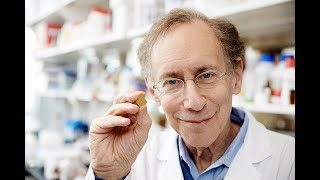
MIT's Robert Langer built a lab of over 100 people around platform technologies that became mRNA vaccines, long-acting pills, and organs-on-a-chip. He explains how one discovery spawns many applications, why he started companies, and how his team balances academic research with entrepreneurship.
Chapters
Good evening, everybody. Welcome to Director's Dialogues, our conversations with visionary leaders of science, education, and the biotech industry. These dialogues offer an inside perspective on the emerging opportunities, challenges, and trends in biomedical science and biotechnology. Our guests share their most meaningful experiences and observations. Tell us what excites and concerns them about the future of bioscience, and describe innovations that could dramatically affect the future of human health. You can participate as well by submitting questions to the question and answer box at the bottom of the screen. Send your questions at any time during the discussion, and we'll answer as many as we can. We're kicking off our new season of dialogues with one of the world's most accomplished and renowned biomedical researcher, inventor, and entrepreneur, Bob Langer. As an MIT Institute professor, he holds roughly 1,400 patents and has helped found more than 40 biotechnology companies. He works at the interface of biotechnology and material sciences, addressing a huge range of biomedical challenges, from detecting and treating cancer to delivering vaccines that use genetically engineered DNA and RNA to enabling cell transplants to create new liver, cartilage, pancreas, and nerve tissue. Bob is the very— one of the very few people to have received both the U.S. National Medal of Science and the U.S. National Medal of Technology and Innovation, and he was the youngest person to be elected to all three U.S. National Academies. A few years ago, Harvard Business Review described him as the Edison of medicine and his lab as one of the most productive and profitable research facilities in the world. Bob, welcome, and thank you so much for joining us.
Well, thank you, thank you, Ruth, and thank you for that very kind introduction. But it's great to see you.
Great to see you. Let me start out with a simple question that for you may actually be more difficult to answer. Which of your lab's many discoveries and the biotechnologies that emerged from them are you most proud of?
Yeah, well, that, that isn't an easy question. Sometimes it's like asking which is my favorite child, but, but I, you know, and I, I, I, so I sort of like all of them. But I suppose if I, if I just think of one, it was something early on that we did, which was I was a postdoc with Judah Folkman, and we were trying to study how blood vessels grew, and there wasn't really any good bioassay to study that. So I, so I, and the molecules we were studying were large molecules, so I, I came up with a way to make tiny little microparticles or nanoparticles, and people— that could deliver large molecules like you mentioned, DNA or RNA or proteins. And people didn't think you could do that. They thought that was impossible, and they thought the way we were making them with solvents, um, they didn't think that— they thought they would be all destroyed. But, uh, we did publish that, and that of course would lead over many years, and of course many people made many improvements on that but that would ultimately enable all kinds of delivery systems, and I like to think help make drug delivery an important practical area, and would enable things ultimately with the different improvements, including the, you know, the messenger RNA vaccines and other things.
So when you think about the early-stage projects that are going on now, is there anything that you particularly really feel like you're pushing, it's not quite, quite there yet, but it's, uh, something you're, you're, you're working on that you find exciting?
Well, there's a lot there, a lot we're doing that's not there yet. I mean, but, you know, uh, one of the things that I've enjoyed the last, uh, 10 years, uh, is that— is the work we've been doing with the Gates Foundation. You know, Bill, uh, himself came to see me, he must have been around 2012, and, you know, and asked if we could apply or develop some of the technologies that we had done, and that would lead to different things for, you know, the United States and Europe and other countries, but if we could apply these things to the developing world. And so some of them, um, actually, I think also, like, I like to think of relevance for what, you know, you know, even the United States and Europe and so forth. And some of those things involve 'Cause people don't come back for repeat injection. We don't do very good in our country coming back for repeat injections of vaccines, but in the developing world, it's even much more serious. So one of the things is what I call self-boosting vaccines that you could give one injection and it would lead to many, many boosts. Like Anna Kolenik, who leads some of this work in our lab, has gotten up to like 12 boosts at different times, but with a single injection. Another is pills you could swallow that would last for an entire course of treatment. Rather than taking them every 4 hours or every day, you could take them once a month. For example, Gio Traverso was another one of our fellows. He's now a professor in MECCHI and also HMS. He developed a way to create pills that could last really long times, like for a month, maybe even longer. And there's a small company called Lyndra that's developing those that's already in phase 2 trials. And then even applying these things to better nutrition. So also because a lot of important micronutrients are destroyed, and again, we've worked out ways to help change that. So those are some of the things. And then the other big area is probably tissue engineering, you know, ways could you make, you know, new tissues or organs because you make organs on a chip. So these are at various stages of research, but those are some of the things that, you know, we're trying to push forward.
So while with the medicines, kind of, I can imagine it's more sort of release, but with the boosters, can you tell us a little bit of how that could work?
Sure. So basically, yeah, so without getting too technical, one of the ways you make— you can make microspheres or nanospheres, there's different different ways, but you can make them out of, say, biodegradable polymers, polymers that will degrade into, say, water and carbon dioxide that we've been developing. And what you could do is by changing the thickness of the shell, let's say we make a little microparticle, we could change the thickness of the shell. We can also change the chemical composition. Again, with that, it would still be, you know, within the FDA approval limits, and we could also change the molecular weight. All three of those things will change if you envision tiny little eggshells with different thicknesses and different compositions. We can change the time when the tiny little eggshells will crack. For example, what we do is we give a cocktail. In fact, the earliest paper we came up with a new printing approach that was published in Science. And the idea is by changing the thickness and the composition, what'll happen is the vaccine comes out at different times. You could imagine that if it's very thick and has a composition that's slow to degrade, might come out 6 months or a year later. Whereas if it's very thin and has a you know, fast degrading composition might come out in a few weeks. So we make a cocktail that will come out at various different times. And we mix them together and we inject them in a single injection.
Yeah. Yeah. So you talked about boosters, release of medicine, nutrition. How do you choose the kinds of projects and the specific research questions that you and your team take on?
Yeah, I would like to tell you that it's really systematic, but it isn't, you know, at all. I mean, it's like, you You know, sometimes, you know, I might dream something up, so, you know, sometimes I— but I'm very happy if— and I try to encourage the students and postdocs, you know, to think that, you know, they can dream anything up. And, you know, and sometimes, like I say, people have come to see us like Bill and Gates and others. And, you know, and sometimes, you know, you just get ideas. I mean, I'm an engineer, so they're usually more technological ideas. But, you know, but also to make these work, a lot of times you have to understand things better, you know, do some really basic work on, on materials. And, and we've done that too. So there's no, no single source. And, and also another thing that I try to do is, you know, you have all different kinds of students. Some students, you know, are interested in, say, mathematical modeling. Some students are, or postdocs, are very interested in having, you know, doing clinical work. We have a number of medical doctors in the lab, and some students are more interested in just more fundamental work, and so I try to think about how you could tailor a project to match what the student or postdoc really wants to learn and what they, you know, what they're interested in.
And I can see also that that probably relates to how much the individual person maybe wants to be more on the basic side or crafting a new technology or actually more applying. How do you go effectively from connecting these early stages of research to practical applications?
Well, that's a really good question and it really varies. A lot of what I think we've done, especially if it's technologies, they're kind of what I'll call platform technologies. They're very basic. They could be applied to many different problems. And a lot of times, of course, you don't even know what problem— when you start, you don't know what problems it's ultimately going to lead to. When we did the work in the 1970s on micro and nanoparticles, I mean, nobody would have thought about mRNA vaccines and lots of other things. I mean, these things have been applied to preventing opioid addiction by releasing molecules that can affect that, to, you know, to cancer and, and many other things. I, I think it— to me, what we've done— I mean, sometimes there's clinicians in the lab and they have real ideas about what they might be applied to, but I have to say, really, if I look back to when we first did a lot of these things and I guessed what they would— or thought what they might be useful for, I would have been wrong. I mean, you know, I remember when we first developed these systems back in the '70s, I thought, well, the reason I did it in the first place was to study how blood vessels grew and to see if that might be possible to stop them. But also, as I did it, it occurred to me, well, maybe that would be a good way to give insulin for longer, you know. But it turned out— I mean, we looked at that, but there's— and one student even did a thesis on it, but that, that's not turned out to be I don't— so easy, or it didn't really work out the way I guess I thought it could have. But lots of other things did. And why did they? Because lots of people other than me at companies, and including companies I got involved in helping start, you know, had ideas and said, well, maybe it'll work like this. Or different companies would, or clinicians would see it and say, well, maybe it could be used for this problem or that problem. So it's ultimately a team effort by lots of different people.
Yeah, and it, it sounds like your early work with Judith Folkman was sort of, um, only reluctantly accepted, right? Or there was even, um, some adversity. So how did you stick to it?
Yeah, well, you're right. I mean, it was— I mean, so a couple things. I mean, yeah, when we first talked about— I first talked about this and published it, uh, you know, people really ridiculed it. And actually, my first 9 research grants got rejected. And even though, like, I'm a chemical engineer, I— and I like being a postdoc in Dr. Folkman's lab, that was great. But a lot of my friends said it's probably not good to be a postdoc forever. So I applied to chemical engineering departments. No chemical engineering department in the country would hire me because they didn't think doing bio stuff or what I did made any sense. So I actually— the reason I came to MIT was Nevin Scrimshaw, who headed the nutrition department, hired me. And but anyway, you know, I guess a couple things. Dr. Folkman was a really good role model for me. He ran into a lot of opposition too, and seeing what he did, and that, that meant a lot to me. And, and I guess the second thing is, you know, I've always been pretty stubborn. So I think it's— and I believed in it. You know, one of the things that, that was really good about doing best work on the blood vessels and and on the drug delivery systems, as you could see with your own eyes that things were coming out or that blood vessels were, you know, either growing or stopped. And that— so I, even though people criticized it, I felt like I wanted to see it through.
Yeah, that's— I think that all of what you just said is a really good lesson for people listening. You know, it's not always like, you know, easygoing, and the stubbornness is a very very interesting part of, I think, success. So let's talk about Bob Langer the entrepreneur, which is the sort of the next stage, right? What, what's the most important things you've learned from launching so many biotech and startups and advising also many others?
Well, yeah, so I think that when I think about companies, I mean, again, part of it goes back to that as a team effort. It really is. And And, you know, I might be able to help on the science, but when I've watched companies succeed or fail, so much has to do with the, the business people, you know, the CEO of the company, um, you know, the, the, the investors. And, and of course, you want— I mean, one of the— that wouldn't— I might set a different set of rules if I was in a different location, but the great thing about Cambridge and Boston is you have such a great ability to attract great scientists because people leave MIT and Harvard and other great colleges around here. And they want to do good, and these companies can do that. But particularly if I look at the ones that we've been involved in, I like to think that the science has been good. But what makes them succeed or fail is the team, and particularly the CEO and the people around that person. And very often, the investors who are which also relates to what you said, because really good investors will stick with you not only in good times, but bad. And you always get bad. A lot of times things don't work the way you want to. I think other things that I've felt have been important are good intellectual property. We publish everything we do at MIT, but we also patent it. And I often think that the third or fourth or fifth draft of the paper, that's a good start for a patent. You know, and, and, um, but so we do that too. And, and I, and, and I, I guess also having a lot of times when we've done these companies, it's the students in our postdocs in the lab that have ended up being key people at, at these companies. And, and they have like this passion, which I think is just so important. You know, they're going to walk through walls to see what they did for their thesis or postdoctoral work, work. So I think having people who, you know, really, really care, you know, means a lot too. So those are some of the things. And also, I guess, not starting too early. You know, if I looked at sometimes, again, in our lab, people think, well, okay, so we started this company or that one. And then they think, well, okay, that'll be great, we'll start a company. But then you have, you know, especially in the medical area, It takes a while to get to a key point. And if you start too early, investors, A, may not invest, and B, they may get tired. They may not want to keep investing after many, many years.
So how do you determine the sweet spot?
Well, what I've looked at when people have asked me things like that, I think about that usually I want to have done— usually we've done work in the lab probably for 4 or 5 years, maybe more. That students or postdocs have worked on it. And I'd like to have like a really good paper or papers in very good journals like Science or Nature or places like that. And I'd like to tie that to a patent, you know, that— and I think if we're doing things in the medical area, I want to have good in vivo data. It doesn't necessarily humans, but at least some in vivo demonstration that, you know, that it might be safe or effective. And finally, that we have people in the lab who really want that to happen. I, I feel I'm there for the students as well, you know. I want to get the stuff out to the world, but if a student really wants to do something or postdoc really wants to do something, you know, I want to help them do it. And so a lot of them have decided they want— I mean, a lot of them have become professors, but a lot of them do want to get involved in these startups and Either way, I think they're doing a good thing.
You've often spoken about the importance of focusing on platform technologies, that is, technologies that can be applied to address challenges and questions well beyond the original reason they were created. Why is this so important? Is this the transfer that's important? What is it?
Well, I think there's various ways that it could be important, you know, it would just to go over, I'd say important for what. So first, it's like, I think if you have a technology, I mean, that you've developed, as I was mentioning, when we first developed like microspheres and nanospheres, you know, I thought, well, yeah, maybe it'll be useful for insulin. Hasn't really turned out to be that useful for insulin, but it's turned out to be useful for many, many other things. And, you know, again, they're all modified in different ways, but, you know, it could be useful for treating opioid addiction, schizophrenia, COVID vaccines, all kinds of things, you know, all in different manifestations. And so I don't know that anybody's smart enough— I'm certainly not— to predict exactly where it's going to be most useful when you make a discovery or invention. So that's one aspect. I think the second aspect, if it's— and that's just me as a scientist at MIT, you know, I think if you start a company, the medical companies, it costs so much money to do things, and it's also very easy to fail. And if you have a platform technology, you sort of have what I'll call shots on goal. Not everything's going to work, but if one thing works really well or two things, that's good. And also it's like you can use, with ideally minor modifications, the same manufacturing procedure over and over again, you know, to, to make whatever it is, whether it's, you know, genetically engineered drugs or, or microspheres or nanospheres. So, so I think that when things are so expensive and time-consuming, the fact that you have a platform technology, I think, makes it easier when somebody's developing a company.
Yeah. So I was wondering, with these platform technologies and transferring, how do you do this in the lab? Because how do you manage, you know, the personalities in the lab where, you know, people are going to be very driven? But, you know, obviously collaboration is really important because you have to go from the early discoveries to applying the particular platforms. How is there Is there a recipe?
Well, I don't know that there's a recipe. People are people, but our lab is very interdisciplinary. I think that that's something like that Bill Sharpe and I have talked about as what we call convergence. We have people probably with maybe 10 different backgrounds in the lab, different chemical engineering, mechanical engineering, all kinds of engineering, but then biologists, chemists, and we have a lot of MDs who are from Harvard who are doing fellowships, and they're there for 3 or 4, sometimes a lot longer. And so in the end, it's like different people collaborating with each other. And also, I guess, to your question about managing, I mean, one of the other things I've put a premium on is— and this may sound almost silly— is having really nice people. There's a couple of questions I usually ask. The advisors, but that's one of them, you know, is because I really want people to get along and collaborate and, you know, and think not only of themselves but of others. And so, and by the way, when all those things happen, it certainly makes my job a lot easier too, you know, you just want to encourage people to do the science.
Yeah, I think that is so important, the environment. So, of the platforms you have developed, how do you go about sort of— you said, oh, you know, fourth version of the paper, we're starting to think about patents. How do you go from the patent then to really make it favorable for the early investor in your lab? So, and the early researcher in your lab to start the startup, so to get that connection, do you help them? Do you help the people in your lab directly to do that? Do you prepare them for this?
Well, I help them, but I don't know that I prepare them. I don't know that there is really a preparation other than, you know, sometimes I've had previous alumni in the lab come and give seminars on what they've done. But I guess what I'd say is, maybe I'll just pick an example. Klaus Jensen and I had a student, Armin Shari, And he made a serendipitous discovery. You know, we were studying how genes could get put into cells. And he had a little tube that he was shooting the cells through and flowing them through. And you had— and then we had a constriction. And it was— so the cell— and we also had a gene gun. That we would shoot in, and we were just studying what was going on. But one day Armin took away the gene gun, and he got exactly the same result. In other words, the gene went into the cell. So he realized that squeezing the cell, you know, allowed something to happen, you know, in terms of inserting things in. So it was, you know, really very serendipitous discovery. And then he went and he started— after he got his PhD with Klaus and myself, he started doing a postdoc But then I remember one day he came to see me and he wasn't that happy. And I said, "Well, what will make you happy?" He said, "I want to start a company in this area." So, you know, I interact— a lot of my former students are in different venture capital places like Flagship and Third Rock and Polaris. So at any rate, in that case, I introduced him to Polaris, in particular Amy Schulman, who was once on the Whitehead board too. And they put in some funding. And he didn't— he's just gotten his PhD and done a little bit of a postdoc. Amy also had been like chief counsel at Pfizer. She ran a $14 billion division. So she became like executive chairperson. And she gave him a lot of advice. And she still does. I mean, now the company's public, has over 100 people. It's in clinical trials. I helped get him started, but lots of other people would probably give much better advice than I did in terms of that aspect. I don't know.
Let's turn to your lab. What I find really an interesting question is how you manage and balance all your different roles. Your lab is obviously, I think you have more than 100 people in your lab. And you have very strategic approaches and incredibly high productivity. And in most labs, the PI sets the goals and the strategy. In the Langer Lab, how do ideas get put forward and how are decisions made to which ones to pursue?
Yeah, so that, that's also a good question. And again, there's not a single way, you know, or even close to that, you know, sometimes We work on things that I might dream up and we write an NIH grant, but I'm equally happy, in fact more so, if students or postdocs come up with ideas that at least make sense and that are at least within the realm of things that our lab can contribute to, which is more engineering, material science, biology interface. But sometimes I've had people approach me, like I mentioned, Bill Gates, and he's and also other people. And, and, and they say, well, could we come up with ideas? I mean, that's how those came up. He said, well, could you come up with ideas on vaccines and other kinds of things? And he has had, you know, some very good people that, you know, were like Lowell Wood, who was extremely helpful, and Dan Hartman. And, and so, you know, we brainstorm together to see how we can do, you know, the best research, but also have the the biggest impact. And, and, and, you know, we continue to just cross-examine ourselves all the time about how we can do those things and but keep pushing the science forward.
So do you do this in smaller groups within your labs, like experts, or how do you—
We've done it multiple ways. I mean, you know, sometimes it's smaller groups, sometimes it's me just talking to somebody in the lab, sometimes, you know, it's— I, I've had put two postdocs with very different backgrounds in a, you know, in a room together, you know, whether, you know, that we did that with Dan Anderson, who's now a full professor in chemical engineering, and David Lin, who— Dan was a biologist, and, and now he's like a chemical engineering professor, but, and in IMES, but, and David was a really good synthetic chemist, got his PhD with Bob Grubbs, and, you know, and, and so we started talking about ways that we could do combinatorial synthesis and yet much more rapid ways of testing things. And they came up with all kinds of new things that would need to lead to new polymers, new lipid nanoparticles, and so forth.
Amazing. You don't just manage the lab, so that's already incredibly impressive, but you're also a teacher, mentor, advisor, and you serve on many startup companies. How do you balance the various perspectives, needs on your time you must bring to bear, sort of educator versus manager, researcher versus entrepreneur?
Yeah, well, I mean, I guess the way I'd say is, I mean, to me, the academic stuff always comes first, you know, trying to be a good professor, a good teacher, and running the lab, uh, to the extent that I run it, you know, that, that's the most important thing to me. And that's always the advice I give to anybody in academics who wants to do entrepreneurship, is you put, you know, your university first. But that being said, I, over the years, you know, you get good at delegating. You— I've learned— I, I mean, I've got a fantastic staff, uh, Connie Beal, Hilda Thompson, on, on, on one side, and then you know, some really good scientists in the lab. And, and I, you know, and I'm not a micromanager. I like to, you know, hire just great people and, and try to turn them loose on projects that I think will be useful. And, and then a lot of it, the people work themselves. You know, with the companies, it's more— how do I say that— when you start a company, it's a little bit different. The first year I think of companies as like children growing up. You know, the first year when you start the company, it takes a reasonable amount of time. You know, now, you know, as the companies get bigger and bigger, it's almost like the child getting older and older. They need you less. Maybe when they're a lot older, they don't even want your advice. But I mean, fortunately, all my 3 kids do, well, still like to, but if they didn't, all that really matters to me is that you have a happy child or a happy company. And that doesn't have to mean that I play a role in it even. And some companies I haven't after a period of time, but as long as they— the people are happy and it's progressing well, I, you know, so I might be on a board of directors or a scientific advisory board, but the role— the amount of time it takes is less and less. And as time progresses, and the other thing that I've done and I didn't do this when I started my career, is I try to make sure they're pretty much all in Boston or Cambridge. So like Moderna is half a block away. It's a pretty easy walk. And a lot of them— that's one of the great things about Kendall Square. You don't have to go very far to go there. Whereas when I was an advisor to Genentech, which I was for many years, and I loved that, but then you fly to San Francisco, and you would usually take red eyes back. You know, it's a lot easier if I could walk half a block.
Yeah. Yeah, so, so you just concluded 19 years as a member of the Whitehead Board of Directors. So for someone as busy as you, we were amazingly grateful, but it was also a huge investment of time and energy. Why was it important to help and guide this institute to you?
Well, I even, you know, I've been at MIT, I think, as a student since 1970 and on the faculty since 1977. You know, the Whitehead is to me just a real jewel. I mean, you look at the people who have been there, who are there now. I mean, you have so many superstars, yourself included, but many others, you know, like Harvey and Rudy, and I mean, going back to David Baltimore and And just so many people, Jerry Fink, and so forth. And so I— Bob Weinberg. So to me, it was an honor, really, to be there. And in particular, I remember Susan Lindquist when she first came to MIT. She wanted to have lunch with me. And she asked if I would do it. And I was so impressed with her as both a person and as somebody that wanted to make the Whitehead even better than it was, you know, it was very hard to say no. You know, I just felt it was really a privilege, you know, and I feel that to this day. I mean, you look at the science that's come out of the Whitehead and the people that have come out, it's remarkable.
Well, it's very nice to hear. Thank you very much. We can always be better.
Well, and that's good, but part of that, your attitude, you know, that's always the way to think, you know, to— you can always be better, but boy, What a legacy, I mean, Whitehead has and continues to have.
Absolutely. So now let's open the questions to our audience. I'm sure there are already quite a few. Ah, yeah, there is quite a few coming in. So now we're probably going to go different, different directions. So the first question: What are some ways you have maintained creativity in the scientific process? In larger collaborations?
Well, that is an interesting question. It's not one I've been asked before, but I, I think that— I mean, to me, there's things that I feel that our lab is good at and that I'm good at, and lots of things I'm not good at. I actually think, though, that the larger collaboration actually, if anything, will enhance creativity because it'll expose you to things that you don't know. I mean, one of the things that's been great for me personally as a scientist and as an engineer has been exposure to very, very different areas. As I, I don't think I'd be where I am today if I didn't get exposed to the things at Children's Hospital, the surgery department, or— and even when I first came to MIT in the nutrition department, which is very different. So I, I actually think that whenever we have significant collaborations with people who are very, very different than me and, and the people we work with I think if anything, that just makes you think, boy, maybe you could do this, or maybe you could do that. And I never even realized that before because I didn't know enough about it. So I think collaborations really enhance creativity because you could think about things you could apply chemical engineering principles to, let's say, that, you know, didn't ever occur to you before, like vaccines as an example. But there's lots of others too.
So, so what's the present and future of genetically individualized treatment?
Well, I, I, if I think about— I, I'm not sure what it means by genetically individualized treatment, but I guess I would—
personalized medicine, I think.
Yes, yes. I, I, I, I, well, for first genetic, genetic treatment, I mean, just to take out individuals, I mean, is huge, and it's going to be bigger and bigger all the time. Things like, um, things like what we're doing at Moderna, but that people are doing with CRISPR, that people are doing with DNA. I think personalized genetic medicine— I also think that that's got huge potential. I mean, one of the things I think is very exciting are personalized cancer treatments, you know, using things like messenger RNA. And, and, and so I, I think that that, that's going to become a bigger and bigger area. Uh, so I, I, I would say to me the future— I mean, not that I'm any, you know, person that can always can see the future, but I think the future to me, from what I can see, looks, looks very, very bright. You know, there's a lot of opportunity to do a lot of good things for people.
Yeah. And kind of connected in a way to that is the vision from the future directions of machine learning. In these kinds of advances, right?
Yeah, absolutely. I think that's an exciting area. MIT, I think, has some fantastic people like Regina Barzilay and others. Jim Collins is doing work in that area. And I think that Dan Anderson and I have certainly talked about how you could apply— and we've actually done some work in the lab on things like that. But I think there's just so much more. One of the things that appeals to me is, could we predict if we synthesize thousands and thousands of lipids, for example, or polymers, can you predict the chemical structures that will enable you to get the next generation, whether it's for better biocompatibility or targeting or storage or whatever? I think there's enormous opportunities to apply artificial intelligence to all kinds of things.
Yeah, so another question connected is, what, what do you think is the big data in drug discovery and product development in modern medicine innovation?
Well, I think it's kind of partly what I just said, you know. I think that, that— I mean, the one thing that's really important to keep in mind when you do this, and this is what I learned from other people like Regina, is you really want to have good data sets, you know. You just can't pick anything and apply AI to it, if you start doing things under different conditions, I don't think that that's going to— or you even try to take things from the literature, I don't think that that's going to usually work very well because there's so many variables. If you don't control them, I don't think you're going to get very far. That being said, I think that you can do just what that question asked. I think you can apply artificial intelligence and machine learning if you have really good datasets where everything's done under controlled conditions in the same way, you can probably come up with predictions about what will be drugs with novel properties, what will be, you know, polymers or lipids with novel properties for delivery, all kinds of things. So I think it's a very, very powerful tool.
You mentioned insulin at the beginning, So the one question asked, what areas in drug delivery have been the most challenging and what ideas, technologies are the most exciting? Are you most excited about to break those remaining barriers?
Yeah. Well, what makes something challenging? I mean, why is insulin harder? Well, I mean, part of it is, and this is to make it a product, but I guess a way to think about it is, Let's say you made a mistake. I'll just make a contrast between— I'll pick human growth hormone or something like that. Well, if you delivered a little too much human growth hormone because something cracked or broke, well, I don't know that that will matter that much. I mean, you don't want that to happen. But if you deliver too much insulin, somebody could die. And so you'd have to say, well, so that's a really serious issue. And also, the second issue with insulin is therapeutic window. Usually insulin's got a very tight window, whereas a lot of drugs or molecules don't. So those are some of the things that make insulin harder, and that will make other drugs harder too. In other words, if the drug— too much of a, you know, slightly too much of a drug could cause toxicity or safety problems, you know, that's a big deal. So that kind of affects challenges, I think. And it's not even necessarily— you might have a delivery system that's equally good for insulin as it is for a lot of other things, but insulin itself, you know, the FDA doesn't view diabetes— maybe they should— as life-threatening. And, and, and whereas if you had an insulin overdose, I mean, that, you know, that's really bad. The things— the challenges ahead Well, I mean, I think some of it's genetic medicine, like you said. I think there's many things, you know, that we can do in terms of delivering medicines like messenger RNA. I mean, progress has been made, but there's a lot more to do. And then I also think getting through barriers, like Geo Traverso and I are working on, could you ever take insulin or messenger RNA orally? And we've made some pretty good progress on that, I think, but still a long way to go. Could you deliver drugs across the brain? You know, could you, you know, across— I mean, you look at all the failures after failure with Alzheimer's drugs, and, you know, if you could get significant— and there's lots of other brain diseases. So, so if you could deliver drugs better, that to cross the brain, that would be good too. I mean, there's so many others like that, making systems smarter and smarter. You know, that systems that might respond to signals in the body. I mean, insulin would be a good example. If somebody had too much glucose, you know, then if you had an insulin delivery system, maybe it could deliver more insulin, things like that. There are a lot of challenges.
So do you think the blood-brain barrier is sort of a real— is the major bottleneck for drug delivery nowadays?
It's one. I think there's a lot of bottlenecks. Certainly it's one barrier. And one of the difficulties has been that a lot of drugs that possibly could do some good, including, you know, the different antibodies, you know, that might, you know, attack amyloid or something, you know, I think the question might be getting enough in safely. But I think— and there's lots of other brain diseases too, you know, most of the— but I think it's one barrier. And I think this is again where basic science, you know, could come in. I think if more people understand the brain-blood-brain barrier better, that would be a really good thing. You know, we've done work with both Anne Graybiel and Li-Huei Tsai, who are in, you know, brain and cognitive sciences, and they've both been great to work with in different ways. And, uh, but I think there's certainly much more that can be done in that area than there is right now.
So, um, one question asked, you mentioned at the beginning that you're currently working on organs on a chip. How far along is this research?
Well, it really varies. Some of it's pretty far along. Um, you know, we've done, um, we, we've done our own lab, uh, either directly or with in collaboration, like with Li Wei, who I mentioned. We've been working on a brain on a chip. Alice Stanton is a postdoc with us from Stanford doing work on that, and Li Wei has a number of people. With Gio Traverso, we've got a gastrointestinal tract on a chip. And a long time ago, like Gordana Vaniak, who was one of our post-fellows— now she's a full professor at Columbia— you know, she and some of her colleagues, they made a heart on a chip. And by the way, people at MIT, not me— Sangeeta Bhatia and Linda Griffith, both independently created livers on a chip. So there's a lot of, I think, interesting work going on in that area.
So nanoparticles have been successfully used for COVID vaccine, but it seems that the efficiency of nanoparticles based on DNA delivery is very low. That's what the question is. Is that true?
Well, I— so I think it depends what nanoparticles and what somebody's doing with DNA. I mean, so I think that most people, but I'd say it probably is somewhat true in the sense that, you know, there's at least right now, I mean, people, as you know, mostly use viral vectors for delivering DNA. But, you know, Dan Anderson and I, we've certainly done work on trying to come up with polymers and lipids for DNA as well. They have not been as efficient yet. But I hope someday they will. I think, again, it's a question of time and doing more science to understand these things better.
And this is clearly, I think, a question which is coming from someone in the institute, and that is about male-female data and the data segmentation. How much is that actually integral part in your research, especially when we're thinking about, you know, tissues on a chip?
Yeah, well, it's interesting. I hadn't really thought about that. I mean, almost everyone I mentioned that was working on the organs on a chip when you asked me that question was female. But that, you know, but, but that being said, you know, um, so I think— I don't, I don't know if I have a really good answer because we're working on you know, sort of the design features. I think over— and, you know, we're still at what I'd say is a relatively early stage. When some of these things have become commercial— and again, I've been more an advisor or director of some of the companies, like Gordana started a company on this hard-on-a-chip— you know, I would say that people did pay attention to that issue. You know, they were looking at screening different different things. And, you know, so I would say that the, what I'll call, chief medical officer and so forth, you know, they did look at male-female issues. But I think it's still early enough that I don't know that— that so much more needs to be done, both on developing better and better chips, and then, you know, looking at different— at how that will be effective for either a male or a female. And sometimes it's, it's, it's, what should I say, Ace, there's no, I should say, either male or female issue. You know, you have an animal and, or you have human cells and a line that you put on the chip and you have materials and you construct these organs or tissues and, and then you're mostly doing drug testing to see, you know, whether— how does the drug transport, or does it change behavior, is it safe, does it kill cells, things like that.
Yeah, so back to the startup versus academia, I mean, all around us is lots of startups. Your lab produces startups as well as people who stay in academia. Sometimes now we wonder, you know, how do we keep talent in academia when it's so enticing to go for startups? Or is there sort of personal advice that you can give for maybe some of the trainees who are listening or some of us professors who are training people?
Yeah, well, first, even for me who has built a lot of startups, I think I've about 400 people from our lab are professors, you know, 10 at MIT, 9 at Stanford, 14 at Harvard, you know, and a lot of other schools. So I mean, that, that's part of the answer.
That's why you're the right person to ask the question.
Well, yeah, and I, and I, and I think people should just follow their heart. I mean, I love academia. I mean, it's, to me, you get to work with students, you're your own. There's advantages in each, and, you know, you, academia, the great thing is you're You're your own, you're really your own boss, um, pretty much. And, um, and, and, and you get to work with students. You get— I mean, to me, you, you know, there's different kind of rewards. I mean, even to this day, having had a lot of different students, I still get a thrill of when one, one of them gets a really good job. You know, one of my students, she just got a great job as assistant professor at Harvard. You know, I was probably happier than she was, you know. And when they get someone award or anything, I think you feel tremendous about it. And yet, I also think people can have a great job in companies, you know, where you can see that you've worked on a product that— I mean, obviously at Moderna, you know, that changes the world, that affects people's lives. I also think you can combine them. I mean, you know, quite a few of my students and postdocs, I mean, they have gone to academia and they write papers, but they've also gotten involved in starting companies. And, you know, so I think you can do good either way and have a lot of satisfaction either way. So I just try to go over what I think are advantages and disadvantages for each. And, but in the end, people should make up their own mind. And, but I think you can have a great, great career either way. But a lot depends. I mean, you know, some of this, like if you're in academia, you have to keep raising money. That's, that's often, you know, a challenge. A lot of people don't like that. Uh, to me it makes me think, well, you know, I, I, I want to be creative and think about good ways to do that. And I, so I think there's pros and cons of both.
So for you, the decision was always clear to stay in academia?
It has been. You know, I've gotten And I've gotten some pretty big industrial jobs and offers in my career, and that never occurred to me. I have gotten some academic jobs that at the time were certainly a lot more prestigious. They weren't MIT, but they were really good colleges and schools. And they certainly paid a lot more money and gave me a lot more facilities, but I decided not to do that because I just felt I loved MIT, and I felt the culture here and the students were great. And whatever I might have gotten then, I felt hope would come in time here. But no, I've never thought about leaving academia. And I never will.
I think at this point, although there are still quite a few questions, but I think this is a great moment to stop the— this conversation, because I think you told us so much and you answered so many questions. And thank you so much for joining me tonight and making this a real memorable addition to the Director's Dialogue series. I really greatly enjoyed our conversation, and I'm sure our guests did as well. So thank you so much. I learned a lot and very, very inspiring. And to everyone listening to us, we can't see you, but we know you're out there. Thanks for joining us. We have another dialogue scheduled for November 15th, and this is when Paula Johnson joins us to discuss women's health and women leaders. She is the president of Wesley College. And until then, I hope that you will take some time to learn a bit more about the extraordinary work we are doing at the Whitehead, and please consider making a gift to support our amazing scientists. —and I wish you all a very nice evening. And again, Bob Langer, thank you very, very much for this wonderful conversation. Good night.
More from Joshua







Scientist Stories: Hans Waterham, The value of phenotypic assays in peroxisomal disorders




Scientist Stories: Joel Zlotogora, Genetic carrier screening programs for reproductive purposes