Scientist Stories: Robert Plenge, Transforming Translational Medicine for Effective Drug Discovery
Robert Plenge, Merck's VP of Research Labs, proposes a framework to fix drug development's core problem: most Phase II/III programs fail because they lack efficacy in humans. His approach uses human genetics and biomarkers to validate targets, then tests them quickly in streamlined trials. He cites PCSK9 for cholesterol and subarexant for insomnia as successes, and predicts genome sequencing of trial participants will soon cost $500 to $1,000.
Questions this video answers
Yes, I think it’s inevitable. The cost of whole‑exome or whole‑genome sequencing is approaching the price of a basic blood test – roughly $500 to $1,000 per sample, depending on the provider. Data analysis remains a separate, more complex challenge.
Both factors play a role. Alzheimer’s is a complex disease with uncertain causal links between target perturbation and outcome, and timing of intervention matters. The blood‑brain barrier adds difficulty, but it is not the sole barrier; drug efficacy, target validation, and disease stage are also critical.
Organ‑on‑a‑chip, iPSC‑derived models, and similar micro‑physiological platforms provide more human‑relevant readouts than traditional animal models. They can be used for phenotypic screens, early safety assessment, and mechanistic studies, accelerating target validation when applied thoughtfully.
Chapters
Hi everyone, thanks for joining us for C&EN's 2nd Annual Virtual Symposium, Advances in Drug Discovery and Development. I'm Amanda Yarnell, managing editor for editorial at C&EN, and I'm delighted to introduce our next speaker, our next speaker, Robert Plenge, Vice President at Merck Research Labs in Boston. He is founder and worldwide head of the Department of Genetics and Pharmacogenomics, and earlier this year launched Merck's new Translation Medicine Department. Robert's talk today will focus on redefining translational medicine for efficient drug discovery. I'm excited to hear how human genetics can contribute to drug discovery and development, and to learn more about the role that biomarkers and clinical proof of concept studies play in testing therapeutic hypotheses. I'll be back to moderate a Q&A session immediately following the presentation. I welcome your questions at any time. Just click the green Q&A button in the left corner of your screen. And if you need any technical assistance during the presentation, please click on the support button located at the top right of your screen. And now I'll turn it over to Robert.
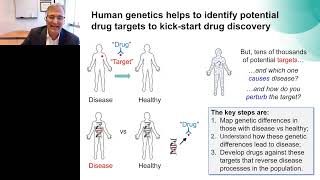
Okay, thank you very much. Again, this is Robert Plenge at Merck Research Labs, and I will be speaking to you for the next half hour on redefining translational medicine for efficient drug discovery. So I want to start just by defining what I consider to be the fundamental problem in drug discovery. While there are many, I think it can actually be distilled into two key issues. The first has to do with the very high failure rate of programs in Phase II and Phase III of drug development. So as you can see in the slide, in the figure on the left, the cost of drug discovery continues to go up. And much of the cost can be attributed not to the successes, but rather can be attributed to the failures of drug discovery. But the second problem is a bit more difficult to describe. It's actually around the rising healthcare costs. And the demand for innovative breakthrough therapies. It's very important that the drug discovery industry not just deliver medicines that work and deliver them at a lower cost, but also deliver medicines that will drive down the cost of healthcare and improve the lives of patients. And I like to think of these two problems as— the first one as the attrition problem, that is, too many things fail. And then the second problem is the innovation problem. Again, that is we need to create innovative therapies that ultimately drive down the cost of healthcare. With regard to the attrition problem, this has actually changed, this has changed over time. So in the 1990s, the failures were due to drug metabolism and pharmacokinetics and pharmacodynamics, DMPK. And so as shown in the silver box here, about 40% of failures could be attributable to DMPK. And in contrast, at that time, about 30% of failures could be attributed to efficacy. Today, however, this has actually changed. And now the majority of failures are due to efficacy. You can see Phase 2 failures in 2008 to 2010, over half were due to failures due to efficacy. And this number was even larger for Phase 3 failures. So that is, you know, despite all of the wonderful preclinical work that's done and Despite the Phase I studies that hopefully should establish proof of concept, many things still fail because they just don't work in humans. The second problem is the innovation problem. And here I like to cite Amazon as an example of challenges that are similar to what we face in the pharmaceutical industry. So what Amazon has said is we want to be the Earth's most customer-centric centric company. And where the customers can find and discover everything that they might want to buy online and importantly, at the lowest possible prices. That is, not only do they want to deliver innovation, they want to deliver innovation that drives down the cost of the retail business. And I think in the pharmaceutical industry, I think we have an obligation not only to deliver innovative therapeutic products, but also ultimately to drive down the cost of healthcare. So I think many people would actually— wouldn't argue with those two fundamental challenges of the drug discovery and development process. The challenge, of course, is, well, how do we fix it? And what are the guiding principles towards addressing these fundamental challenges? And what I'd like to talk about today are what I see as three key guiding principles. And the first has to do with the very front end of the drug discovery process around target ID and validation. That is deciding which targets we pursue at the very beginning of a drug discovery process. And I'll talk about this more over the course of the presentation, but I actually think one of the key issues is around defining which targets, when perturbed, have a desired effect on human physiology. And I refer to this as causal human biology. But the second main guiding principle is around developing biomarkers that are going to capture this human biology, that are going to capture causal human biology. And these biomarkers can measure therapeutic modulation, not in a preclinical model, that's useful as well, but ultimately in a human system. And this is more than just target engagement. This actually has to do with a therapeutic molecule binding to the target and modulating it in a way that recapitulates the underlying causal human biology. The third important guiding principle is around testing therapeutic hypotheses in humans as quickly and efficiently as possible in clinical proof-of-concept clinical trials. And I will differentiate proof of biology, proof of mechanism, and proof of concept in clinical trials. Ultimately, it's proof of concept that determines whether a drug will be successful and therefore approved. And I think that if we can address these fundamental principles, that ultimately this will deliver a portfolio of projects into Phase 2 and Phase 3 clinical trials that have a higher probability of success. And not just success for being approved, but also success for delivering breakthrough therapies. So another way to think about this is about the past versus the future. I think technology is changing the way we think about drug discovery and development. It is changing the ideal model organism for drug discovery. Discovery and development. So it used to be that most of the targets were identified in preclinical species because they're just, they're more tractable in terms of understanding biology. And that drugs were developed based upon these model organisms and then taken into heterogeneous patient populations. I think what we're trying to go in the future is to use humans as the ideal model organism. Not just for identifying new targets, but also for precision medicine. So increasingly technology allows us to understand human biology, differentiate cause and consequence, to find those targets that when prepared are going to have the desired effect. We still, and there still is a very important role of preclinical animal models to test aspects of pharmacology and to test safety. But ultimately we want to try to translate human observations into precise patient populations in small clinical trials. Okay. I will spend the remainder of the time going over several examples. I'll focus on human genetics throughout as one component of causal human biology. But to say from the outset, human genetics is not the only way to define new drug targets. So just to make sure we level set on what the challenge is with target identification and how human genetics can help. So in the left I'm showing you what I'm calling— I'll use this term as target. I think probably most people are familiar with that. But if you have a disease state, something's abnormal, you can then define this as a target, develop a drug against it, and then much simpler on this particular slide, of course, but that takes a diseased state into a healthy state, right? This is what we hope to accomplish. But the challenge is shown here on the right. There are tens of thousands of potential targets in the human body. And it's really hard to know which ones cause disease. And even if you thought you were quite convinced that this particular target is somehow causally related to disease process, there's also another level of complexity, which is how do you actually perturb that target to fix the underlying disease state. So how can human genetics help? Human genetics can help identify differences, germline differences, individuals that distinguish disease individuals, and that's shown in red, from healthy individuals, and that's shown in white. And if you can do this, this at least in theory should unveil new targets which could be the starting point of a drug discovery process. And there are several key steps to translate human genetics into successful drug discovery programs. First is that it's important to map genetic differences in those with disease versus those without disease. And I say disease, this could also be a quantitative trait or some other physiologic measurement that you think is relevant to drug discovery. Second is to understand how these genetic differences lead to this disease state or this quantitative state, some physiologic measurement that you think is important to health and to disease. And then third is to develop drugs against these targets that somehow reverse this underlying pathological process. And I want to be clear, I don't mean gene therapy necessarily, although that's one potential way to reverse an underlying disease process. What I actually mean is to have a drug that actually somehow modulates a target and reverses either that target or that sort of underlying pathophysiology. So I'll go over just a couple of examples. I think that most people are probably familiar with the example of of human genetics, PCSK9, and LDL lowering. But I'll just walk you through this example very quickly. So as I'm showing in the upper left, there are many genes which influence cholesterol levels and the risk of heart disease in the healthy population. Thanks to a number of new technologies such as genome-wide association studies and next-generation sequencing, we can now identify these genetic differences in those with disease versus those without disease. The next challenge, of course, is to translate this into an underlying kind of biological model. In the case of PCSK9, through animal model studies and other preclinical studies both in humans and in model organisms, it was understood that PCSK9 is involved in LDL receptor recycling.. And that LDL— PCSK9 can actually bind to, help internalize, and therefore degrade the LDL receptor. And loss-of-function mutations led to lower LDL cholesterol protection from cardiovascular disease, which then implied and generated this therapeutic hypothesis that a monoclonal antibody against PCSK9 would recapitulate this biology, lead to more LDL receptor on the surfaces of cells and therefore more internalization of LDL cholesterol and more clearance of LDL cholesterol from the blood. So in addition to anecdotal examples such as PCSK9, there's also evidence that portfolios of projects based upon human genetics have a higher probability of success. And again, success means efficacy in Phase 2 and Phase 3 clinical studies. This is a Nature Reviews Drug Discovery article on AstraZeneca's pipeline that was published a couple of years ago. And what this actually shows is that, you know, they see something quite similar in terms of, in Phase 2 and Phase 2a and 2b, many of the failures are due to safety. And also in efficacy. And if you ask, well, what factors predict success, human genetics is one aspect which actually doubles the probability that a program will be successful in Phase 2. Another predictor of success is to have biomarkers and to have biomarkers that are efficacy biomarkers based upon ideally causal human biology. And so these are two important predictors of success. I'll also point you to a recent Nature Genetics study by Matt Nelson and his colleagues at GSK. And they show something actually quite similar. Again, portfolios of programs based upon human genetics have a higher probability of success. And what they're showing in the graph here on the right is the odds that a program will be successful and whether that there is genetic data from Mendelian disorders or OMIM, whether genetic data from GWAS databases as well. And I think the bottom line here again is that genetic data predicts successful drug discovery programs. Okay. So there'll be a theme here which I always say, sure, human genetics is useful, but what's the strategy? Sure, we have these problems such as attrition and innovation, but what is the strategy? And so what I'd like to do is spend a few minutes just talking about what is the genetic strategy? How can we actually think about how to use human genetics to establish causal links and again to identify novel drug targets? So the way I like to frame this problem is to describe what happens in development programs. And ultimately a successful drug has this dose-response relationship where you can differentiate an efficacy signal from a toxicity signal. And this is a therapeutic window. Unfortunately in drug development this happens after many, many years and many millions of dollars. And that's the ultimate test of success of a drug. And what we'd like to do is to try to move this as early as possible into the drug discovery and development process to try to determine dose response at the time a new target is identified, at the time a drug discovery program is launched. And human genetics can help with this, and I'll just walk you through that very quickly. So on the X-axis is gene function, and on the Y-axis is human phenotype. This could be a phenotype that's related to disease risk or a quantitative phenotype such as high versus low cholesterol levels. And the very first and the most important step in this process is to pick a phenotype that's relevant for drug efficacy. So not all clinical phenotypes are relevant for drug discovery. I think some such as risk of diabetes or rheumatoid arthritis do have direct empirical evidence that they're valuable for drug discovery. And other Quantitative phenotypes such as LDL cholesterol levels are also good phenotypes. Others may be more difficult. Okay, the next step is then to identify ideally not just one allele, but multiple alleles with a range of effect sizes on the human phenotype of interest that are correlated or associated or linked to that human phenotype. But in this stage of this exercise, we really don't know anything about gene function, So the next step is to assess these alleles for function, characterizing gain of function or loss of function. And if you do this, you can really begin to sort of, at least in theory, begin to create an efficacy dose-response curve. But human genetics actually has a fairly unique feature, and that is pleiotropy. And you can ask, are these same alleles associated with other phenotypes that may be considered considered adverse drug events. And this can be done by linking genetic data in large biobanks that also have clinical data, for example, electronic healthcare data. And so through pleiotropy, you can use this as a proxy for adverse drug events. And again, this provides evidence for a therapeutic window at the very beginning of the drug discovery process. And in theory, if we can find this allelic series and draw these dose-response curves, this would be a very promising starting point for drug discovery screen. So what frequently— the question that's frequently asked at this point in the presentation is, sure, there's PCSK9, but are there any other examples, or is that really an exception? And I think there is a growing list of genes with this allelic series, and I've highlighted a few here. One of the other examples that's prominently cited is NAV1.7, or SCN1A. SCN9A is a phenotype that's related to pain insensitivity and also increased pain sensitivity. But even if you can't find a gene with an allelic series, there's an increasing list of genes with loss-of-function protective variants, and I just highlight a few that are actually shown here. And several of these have actually led to the development of successful drugs. Such as CCR5 antagonists. Okay. But what to me is probably one of the most exciting aspects of this is that, you know, as the cost of sequencing continues to drop, we are seeing a much larger number of genomes that are being sequenced. I mean, much of this is in the form of whole exome sequencing, but increasingly whole genome sequencing as well. And this trend is going to continue as the cost of genome sequencing protein drops so that we will make these connections between genetic variants and molecular phenotypes and therefore a more accurate molecular understanding of human disease. And on this slide I'm just highlighting a few of these initiatives that are linking human genetic data with clinical phenotypes in a setting that's amenable for recall for additional functional studies. I think many people are familiar with with Decode Genetics in Iceland. There's the Genomics England project to sequence 100,000 individuals. The United States has launched their Precision Medicine Initiative. Regeneron has partnered with Geisinger to create a similar biobank. And there are other examples that are shown here and many more examples. That aren't shown here. So I think, you know, over the next decade many, many genomes will be sequenced, many connections will be made, and many genes will be identified with this allelic series model. I said this at the beginning, I want to emphasize this as well, is that genetics is one way to establish these causal relationships, but there are other ways to establish relationships between perturbations of targets and physiologic outcomes, that is causal human biology. One example is with autoantibodies, for example, autoimmune thyroid disease and therefore the therapy here is thyroid replacement. There are examples of repurposing, for example, sildenafil and erectile dysfunction. If experimental medicine studies are done correctly, you can give physiologic challenges such as observing differences in cortisol levels and linking that to clinical outcome, in this case rheumatoid arthritis. This can help establish causal relationships. And there are other ways to do longitudinal profiling. So I just highlight some of those examples to make sure that everyone understands that genetics is one way, but it certainly isn't the only way. So the bottom line here is I think increasingly there'll be these large-scale studies in humans, for example genome sequencing, that'll establish causal links between target perturbation and physiologic outcome. Okay. So even once you actually have a target, there's of course a very important step in drug discovery and development, which is to and develop a therapeutic molecule that modulates the target in a particular way. I actually won't talk much about that, although that's a very obviously key step in this process. What I will spend a little bit of time on is talking about how we can actually develop biomarkers that measure therapeutic modulation, again with an emphasis on the human system. And here I'll use the example of ACE inhibitors and Alzheimer's disease. So just a little bit of background on the history of drug development in Alzheimer's disease. I think one could say in summary it's not very pretty. It is, it is, there are particularly high failure rates in Alzheimer's disease, even more so than for other complex traits. And this study was published in Nature Reviews Drug Discovery earlier in the year, which highlighted the high failure rate in Alzheimer's disease That's shown this number here compared to the industry average for other therapeutic areas or other indications of interest. There's been this prominent hypothesis around amyloid deposition and risk of Alzheimer's disease. And in the case of our— Merck has a BACE inhibitor program, just to be very clear on that, as do other companies as well. But there's also evidence linking this particular pathway to Alzheimer's risk. And so the causal human biology for this particular program is actually not based directly, it's one step removed, and that is the amyloid precursor protein. So the causal human biology here has to do with mutations in this pathway. In particular, there's a mutation that reduces Alzheimer's disease risk, that is protective, and it has an effect on decreasing A-beta cleavage. But there are also naturally occurring antibodies that bind to these alpha-beta oligomers and also appear to decrease Alzheimer's risk. So there is some causal evidence that this pathway is related to Alzheimer's disease. So the therapeutic hypothesis then is that base inhibition blocks the release of toxic A-beta levels and reduces Alzheimer's disease progression. And the 3 steps are shown on this slide. Again, protective APP mutations reduce base 1 cleavage in vitro, and that's shown here. Second in the therapeutic hypothesis is that base 1 inhibition will mimic this APP mutation and block the first step in the release of toxic A-beta peptides. And this will then really lead to a decrease in A-beta oligomers in the brain and therefore protect from Alzheimer's disease. So what I want to focus on here is not necessarily the genetic evidence that implicates this target in this pathway, but I want to emphasize how this can actually be linked to biomarkers to conduct a robust clinical trial. And here what I'm showing is that A-beta peptide levels can actually be measured directly in the cerebral spinal fluid, the CSF, and therefore serve as a biomarker, not just a target engagement but a target modulation. So this would be a proof of biology or proof of mechanism, but not necessarily a proof of concept because for that you need to see improvement in Alzheimer's disease itself. So here, give the drug, you measure, gather CSF, and you measure the biomarker and ask does the drug engage and modulate the target in the way that you think it should. And this can be done in healthy volunteers, but it can also be done in patients with Alzheimer's disease. So what I'm showing you here is Merck's compound that lowers A-beta levels in the CSF from healthy volunteers, and that's on the left. And in addition to that, in patients with Alzheimer's disease, and that's shown on the right. So with increasing dose of the drug, you can actually see that the levels go down of A-beta 40 levels in the CSF. And I think the important point here is that with therapeutic modulation of the base inhibitor with this particular compound, we can get more than 90% lowering of A-beta levels in the CSF of patients that are healthy, or individuals who are healthy, and also Alzheimer's patients. Okay, so this I think provides a good example of linking the first two steps, that is a target rooted in human biology and a biomarker that's based upon human biology. However, and this is actually should be an uppercase H in terms of however, this is a big if, the human mutations are in APP and not based directly. So we're actually one step removed away from the cause of human biology. Evidence. You know, I told you I think a good story around this relationship between CSF A-beta peptide levels and target perturbation, but we don't really know and we don't have a, for example, an established relationship that one could actually use with Mendelian randomization between carriers of these particular mutations and A-beta peptide levels. And ultimately, you know, this is the ultimate test of the therapeutic hypothesis. And the phase 3 clinical trials are underway. And it remains to be determined if this therapeutic modulation will have a beneficial effect. Okay. To me what makes this area very exciting is there are all sorts of new technologies that can be used to measure human physiology. This could be next generation sequencing. There are all sorts of interesting nanotechnology. And so I think increasingly we will be able to measure target modulation in a way that we weren't able to do before. So the bottom line is that an important component of a successful drug discovery program or translational medicine program is to have robust biomarkers to allow proof of mechanism studies in clinical trials. And there are new technologies that are being developed. Okay. So in the last 5 minutes, I just want to quickly remind you and go over an example of how all 3 of these can be stitched together to test a therapeutic hypothesis in patients in a relatively small study design. So here I'll use the example of an approved drug that targets the erection receptor, and it's an erection receptor antagonist. And full disclosure, this is also a Merck drug. It's called subarexant. And it's approved as a new therapeutic approach to treat insomnia. I won't go through the underlying human biology in detail, but I think it's interesting to note that the causal human biology link here is around not necessarily genetics, but around autoimmune orexin deficiency in humans, which results in narcolepsy. There is also this interesting connection between genetic deficiency in dogs, which leads to narcolepsy. And the orexin pathway is actually conserved across species. So here the therapeutic hypothesis is that orexin receptor antagonism will block the wake-promoting cycle and therefore enable sleep. And that's graphically illustrated in the 4 quadrants on this slide. So in the upper left quadrant, this is what a wake signal looks like. During sleep, you can see this system is blocked. And this correlates over time with the active and inactive state. And therefore the therapeutic hypothesis is by blocking orexin this will induce sleep. And here I think the most important point to emphasize is that now we have a clinical, not just proof of mechanism, but a proof of concept study study in healthy volunteers to use polysomnography to measure sleep. And what I find very interesting about this particular example is it was done in only 20 individuals. And you can see this relationship between dose of the drug and either total sleep time or a sleep efficiency index. So I think these are the types of things that we want to do going forward. Select targets based on causal human biology. Develop robust biomarkers, and get into the clinic as quickly as possible, of course as safely as possible, to test clinical proof of concept. And again, here one of the most exciting things to me is that there are all sorts of new technologies that are being developed to measure clinical outcomes, including a variety of tools for real-time patient monitoring. And I just highlight a few here. For example, a contact lens developed by Google that can measure glucose. There are all sorts of other mobile technologies that can actually link patient-reported outcomes to different interventions. And one example is a study done with patients like me and Biogen, and that's shown on the right. So here again, the bottom line is that there are new platforms to test not just clinical proof of mechanism, but clinical proof of concept. And hopefully this will allow us to advance novel targets into the clinic. And these technologies are continuing to be developed, and many are actually here today. So I will conclude simply by sort of voicing really some optimism and excitement about where we are in drug discovery. And to say that we do really live in an amazing time where there's a confluence of events centered around human, an understanding of human biology, both for the development of new targets through genetics and other means, the development of robust biomarkers, and also for the ability to test therapeutic hypotheses in humans as quickly and as safely as possible. So with that, I will stop and be happy to answer any questions.
Okay, so Robert, one of the questions that's come in is, do you envision a time when all clinical trial volunteers will have their— routinely have their genomes sequenced, and at what price point might that happen? Okay, I'll repeat the question. For Robert, do you envision a time when all clinical trial volunteers will routinely have their Genomes sequenced, and at what price point might that happen?
Okay. So if I'm following this correctly, I think I can pull up question number 13. And the question is, do you envision a time when all clinical trial volunteers will routinely have their genome sequenced? And at what price point could that happen? So absolutely. I mean, it's hard for me to imagine a time that this does not happen in the future. And I think in terms of the price point, given the cost of exome or genome sequencing, it really is approaching, you know, the cost of a basic blood test that's, you know, somewhere in the range of $500 to $1,000 depending upon, I guess, who you talk to. Of course, the data analysis is a totally different question, and that actually continues to be quite challenging. But I think, you know, this is just one example of how these databases will will continue to develop over time, not just as part of routine patient care, but I think as part of clinical trials as well.
Okay, Robert, hopefully you can hear me now. Is the high failure rate for treating Alzheimer's associated more with the ineffectiveness of the drugs or their inability to to cross the blood-brain barrier.
Okay, so question number 12 is, is the high failure rate for treating Alzheimer's "Is the high failure rate for treating Alzheimer's associated more with the ineffectiveness of the drugs or their inability to cross the blood-brain barrier?" And, you know, I think it's both. I mean, I think in terms of Alzheimer's disease, it's It's an incredibly complex disease process and we don't know the relationship of, you know, causal relationship between target perturbation and outcome. So I think that's one important component of the challenges in Alzheimer's disease. It's also a disease that takes many, many years to develop and there's a question of when's the right time to actually intervene. Some of the studies that are actually being done in ACE inhibitor in the BASEN-HEBRA trials are being done really in early onset, or I should say in patients with mild cognitive impairment and trying to use, and I didn't touch upon this but I should have, biomarkers for enrichment of patients that are most likely to benefit from these therapeutic interventions. I think that the blood-brain barrier makes it challenging to develop drugs that actually access the right targets, but there are ways in which this can be done. And so I don't think this in and of itself is the major barrier for developing drugs in Alzheimer's. I really do think it's about targets and the time course of disease and understanding human physiology.
Any comments on organ-on-a-chip technology? How will it help in drug discovery?
Okay, the next question has to do with any comments on organ-on-a-chip technology and how will it help drug discovery. I think there are a number of new technologies such as organ-on-a-chip, such as induced pluripotent stem cells or iPSCs. I think all of these are doing a better job of modeling the human system. So I think that they will help us test therapeutic molecules and pathways in a way that wasn't possible before. So I think these technologies are very, very valuable. I think we have to be very careful about the application in terms of identifying new targets. But depending upon the study that's actually done, you can imagine doing, for example, you know, a phenotypic screen where you think a readout in an organ-on-a-chip technology or and iPSCs is very valuable to underlying human disease process, and therefore it could be the starting point of the drug discovery program. But, you know, absolutely these new technologies, anything that's going to model the human system more effectively, I think will be very important.
Okay, that's all the time we have.
Okay, that's all the time we have.
Many thanks, Robert, for your fascinating presentation, and thanks to all of you for tuning in. In case you want to watch it again, Robert's talk will be archived and available on demand at the conference website for 3 months after the live broadcast until December 16, 2015. Chris Austin of NIH is up next at the top of the hour, and there are a lot more great talks to to come throughout the rest of the afternoon. You can find the full program on the agenda page located at the upper right-hand of your— side of your screen. And in the meantime, please stop by the virtual exhibit hall in the lounge where you can check out all of our sponsors and exhibitors or network with other attendees. Thanks very much.
More from Joshua







Scientist Stories: Hans Waterham, The value of phenotypic assays in peroxisomal disorders




Scientist Stories: Joel Zlotogora, Genetic carrier screening programs for reproductive purposes