Scientist Stories: Robert Weinberg, Discovering the First Human Oncogene
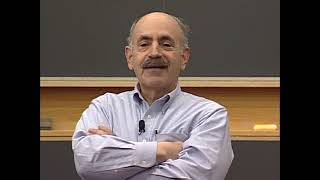
Robert Weinberg, an MIT scientist for 44 years, discovered the first human oncogene by realizing in 1978 that chemically transformed cells contained oncogenic DNA. His path from a refugee family to this breakthrough involved teaching at a black college in Alabama, mastering molecular genetics, and building a collaborative lab culture that valued mentorship and clarity.
Chapters
Today we are here to have a conversation with Bob Weinberg. I don't know how many of you know it, but Bob has spent his entire career here at MIT, even his juvenile career. He received his undergraduate degree here in 1964 and a PhD in 1969. And he was appointed an assistant professor in 1973. And he's now director of the Ludwig Center for Molecular Oncology. So as I added up, that's 44 years. Roughly at MIT. But you shouldn't get the wrong impression that his celebrity doesn't extend outside of Cambridge. Um, I count that Bob has received 62 awards for his scientific research, which is truly extraordinary. Many of them highly coveted awards that you would, of course, be aware of. One of them, which Bob could explain to me, is the Lucy Wortham James Award for the Society for Surgical Oncology. A little strange. I didn't know that he was a surgeon. He's also a noted textbook— author of a noted textbook on cancer and has been the subject of other notable books, not novels, but close to biographies. One of the things that I think strikes us as colleagues of Bob is his devotion to teaching and to MIT. And he's a really good citizen. I know on a number of occasions when he walks in front of the Whitehead that he will pick up a piece of paper that has been errantly thrown in front of the Whitehead and put it in the garbage. So I think of him, as many of us do, not just as a colleague but as a really good friend, someone who we can count on if you ask him to do something, uh, to do it to the end. This talk is called "A Conversation with Bob Weinberg," and I should mention that my first conversation with Bob Weinberg, uh, was when he was an assistant professor in 1977, um, when he was on a committee for the American Cancer Society. It's a little hard to remember when he was— for him, I'm sure, and even for me when he was starting out. But I remember this conversation quite well because I was head of the American Cancer Society Cell Biology Committee. And we reviewed grants. And Bob was the only assistant professor on that committee. And after one of the review sessions, he came up to me and he said, I'm going to have to go off this committee. And I said, why? You're doing— you're great. And he said, I'm coming up for tenure. And I have to really focus on my research. I think that gave me a sense of Bob's honesty and integrity. And I look forward to hearing about his early days even before I first met him and had this conversation.
Well, to be honest, I've never thought of myself as a particularly interesting person. I expected, therefore, for there to be 5 or 6 people here, mostly people from my lab. And so I am stunned By this turnout, uh, preparing for this as I did, I tried to dig back into my old roots to try to figure out why I am the way I am. Um, my roots are different from many other people's, but they do shed light on many aspects of me and my personality. I grew up in a family of refugees. I was born in '42, but my parents got out of Germany in '38. And so for the first teenage years of my life, I was deeply immersed in the life, the history, and the psyche of refugees. And this actually imprinted itself, I think, rather deeply on my personality. My grandfather, with whom I grew up and was very close, was a wine merchant in Strasbourg and later in Dortmund in Germany. After his bar mitzvah in 1892, he became an apprentice to a barrel maker and a winemaker in Bonn. And after he was arrested in 1938 and put into a concentration camp, he got out after 6 or 8 weeks, apparently because he didn't have anything more than a parking ticket to his name. Went over to England and was promptly interned there after the war began. As an enemy alien. He had the best 6 months of his life there because he was put in a former country club by the Brits. And then he came over in 1940, and in the States he became, logically enough, a sewing machine repairman. And so I spent many, many hours with him down in the basement of our house with all his tools, working on taking apart sewing machines. And then as I grew older, taking apart and putting together electric trains. And pinball machines and all kinds of electrical gadgets, which fascinated me then, and I think began to lay down the neural circuitry for my interest in how cells operate, because after all, much of the logic is the same. My father, that is, his son-in-law, grew up under difficult circumstances. His father was a cattle dealer, horse and cattle dealer, And he made a big mistake in 1915, which explains some of what Jerry attributes to me as being an example of good citizenship. He was selling horses to the Prussian cavalry in the first war, and wishing to sell a particularly nice horse to a procurement officer from the army, he went into the stall and found out that his stable boy had forgotten to take all the straw out of the bottom of the stall. And so he reached in compulsively to pick it up, was kicked in the belly, and was dead 3 days later from peritonitis. My father, many decades— my father was still very young then— my father decades later would go through our lawn in Pittsburgh where I grew up picking up individual leaves off the ground. And so I think what Jerry attributed to me as an example of good citizenship is a hardwired compulsion to pick up all kinds of detritus off the ground and put it in its rightful place. My father studied dentistry in Germany and then practiced for a while. In '33, after Hitler came to power, he began to smuggle money to his brother-in-law who lived then in the Netherlands, anticipating that things would go from bad to worse, which they did. And so when he arrived here in 1938, he had $20,000 in his pocket, which is serious money in those days, and allowed him to pay his way through a second dental school to get recertified. And so I grew up in Pittsburgh with a dentist father who had gone from one coal dust city, Dortmund, in the middle of the Ruhr, to an even dirtier one, Pittsburgh, PA. And somehow during all those years, many of their histories percolated into my consciousness and I think influenced very much the way I am today. My grandfather was one of 8. 5 of them were either killed or committed suicide to avoid deportation during the war. And although he was a reasonably cheerful person, there were just certain things that were off topic. We wouldn't discuss them. They were somehow too painful to discuss, including, I imagine, his 6 weeks in a concentration camp. My father was a rather successful dentist. My grandfather, successful wine merchant. And one thing that was made apparent to me was that no matter how successful and established one was, in the end it didn't all matter. And that from one day or one year to the next, One could be riding high and then be catapulted into the chasm. And so Jerry has talked about all of these recognitions, and I kind of have always reacted to them as it's said in Ecclesiastes, vanity of vanities, that even though one is recognized by one's peers, even though one lives with the what have you done for me lately syndrome that permeates our profession. Even if you continue to do things lately, it's all a mirage. And that to the extent that we feel ourselves successful and productive and respected, it can change very rapidly. And that our lives and our careers are very precarious. I am very grateful that I grew up in this country. To state the obvious. My father loved this country. He said, you know, the one thing about Americans that I really like is they're such decent, nice people. And that made a big impression on me. But he also told me a lot of other things that somehow permeated the way I think. One thing he said to me was, it's OK to be successful and productive, but don't be too visible. "lest the guys in the brown shirts come in one night and take you away." And if I had taken everything he said to heart, I probably wouldn't be sitting here today, because here you are looking at me. I have singled myself out and made myself very visible. Indeed, I have been rather visible in the world. But I always have echoing in my voice what my father told me: "Don't be too visible. Don't let your head stick above the crowd." because one day the bad guys could come and take you away. And you would think, well, that's old-fashioned foolishness, but things you hear from your parents early in life are deeply permeating your consciousness, your psyche, and never really go away. It's nice to receive recognition. It's nice to be— to receive prizes and awards. Jerry counted them up, although I must say I never have, even the Society for Surgical Oncologists that he cited. But it's all a mirage. And for me, what energizes me is the day-to-day process of doing science and being with young people. Which is wonderful simply because it allows me, even though I'm getting older, to have the illusion, the mirage, that I'm just like the graduate students, which I was at one time. My tinkering with electric trains, which was my passion already then, also went to other sources. I was very interested in our history because My father would talk on many occasions about this and that family. And so in 1957, I started a new hobby— my genealogy. And in the succeeding 51, 52 years, I now have put 3,000 or 4,000 people on the Weinberg family tree, all descended from the man in 1675 who allegedly gave me my Y chromosome. So it's gone back many generations. And this is a passion and is reflective, as I think about it, of my interest and my desire to try to bury underneath. Where did it all come from? How did we start? Where do the roots go? An interest which translates itself in my own work directly to trying to understand the evolutionary history of how we got to be on this planet. How did metazoan life evolve? How could organismic complexity arise from simplicity And how does a simple cell figure out what it's supposed to be doing, which is ultimately the major question in trying to understand the biology of cancer. I was an OK, but not great student in Pittsburgh. Friends of the family had sons who went to MIT. And so my parents, not knowing anything about American colleges and universities, said, why don't you try it? So I applied. And I was admitted not because I knew anything about MIT, but because it was for lack of anything better. And so I ended up here for 4 years as an undergraduate. I was not that successful, if the truth be known. I was not terribly happy here as an undergraduate because I didn't find many of the other undergraduates as being real soulmates. I didn't feel that comfortable. And I tried on a couple of occasions, actually, to transfer to Harvard with a more liberal arts orientation, which obviously did not succeed. Originally, I came to be a pre-med because that's what one did in those days. But when I was a sophomore, I learned that doctors had to stay up all night, that sometimes they had to go 48 hours without getting any sleep. And I said, this isn't for me. And so I switched to becoming a biology. Now, you think that all of our careers, fates, and decisions are made for profound reasons. But to my mind, where each of us is is no more or less of an accident than the accident of which sperm hit which egg in our mother's womb. It's all a bit of a roll of the dice. And so I ended up here for totally obscure reasons and ended up in biology for rather inconsequential reasons. And biology was really, if one may say it, rather poorly taught here in those days. I'm talking about the early 1960s. But in 1963, I took a course by Maury Fox, who is still on our faculty, on the then burgeoning area of molecular genetics. Now, in 1963, we knew about DNA. We had begun to learn about messenger RNA, not completely. And we were just learning about the genetic code. And my god, this was exciting for me to learn about molecular bacterial genetics and the fact that one could ultimately trace the whole mechanics of how cells operated to distinct and discrete molecules, something which fascinates all of us to this day. But for me, this was a revelation. And so my last 2 years at MIT as an undergraduate were much more energized. But I must tell you, as I teach now 7.012— Eric Lander and I, we do 50/50 in the fall—— that I make a confession to the class in the first or second lecture. I say, "Class, I have a confession to make," and they all look up. I say, "Class, I have to tell you that when I took this course in 1961, I got a D," and they all start clapping hysterically. Did I give you permission? To do so, I say. And of course, but that gets them relaxed. But in fact, it is the historical truth. I don't want to be going into that course under false pretenses. And no, I will not tell you who taught me that course in 1961, because he is still, believe it or not, among us here at MIT. Imagine how infantilizing it is for me to have as my colleagues now, 48 years later, the people who taught me when I was a freshman and a sophomore. So be it. When it came time for me to apply to graduate school, I really had no good prospects because my grades were actually rather lousy. They were lousy, but I was taken into MIT, I think because I'd worked in several labs and people knew me and gave me a very strong recommendation for reasons that were obscure to me then and are still to this day. And so I was admitted and began my first year of graduate school here in 1964. And then I did something that was most unusual then and now. I took off and I went down because I'd been here for 5 years, and it is a bit of a drag to be here for such long periods of time without getting out once in a while and breathing fresh air. And so I went down to West Alabama and became the biology department in a small black college near the Mississippi border called Stillman. It had about 602 students that year. It was integrated. There was one white student and 601 black students. And that was already considered partially integrated. That was the year after Goodman, Schwerner, and Chaney, 3 civil rights workers were buried under a dam in Philadelphia, Mississippi, long before your times. And it was still a rather dodgy time. Things in the South were still very unsettled. On the weekends, I would buy sacks of flour and rice and carry them out to tent cities of sharecroppers who lived in tent cities in Greene County on the Mississippi border. These sharecroppers, black sharecroppers, having been evicted from their land for registering to vote. Now that sounds very strange to you now. Imagine the transformation from 1965 to 2008. Look who got elected. Totally beyond my comprehension. And around the end of that academic year, the head of the Student Nonviolent Coordinating Committee, SNCC, which you probably also have never heard of, a man named Stokely Carmichael, who was much in national news, came over to me, put his arm around me, and said, Bob, I think this job is getting too political for you, meaning that was the time when the Black students wanted to run the show themselves, and they didn't want interference from white northern liberals who were coming down and trying good-naturedly and with good intentions to help out. Still, it was an extraordinary experience. I was the biology department for this small college. I taught 4 courses each semester. So when my colleagues moan about having to teach half or one course, I raise my eyes and don't say anything, because I was truly exhausted at the end of every day. But I think to this day that was enormously beneficial. Among other things, it convinced me that learning the teaching, which many of you have to do because you're graduate students, is really an extraordinarily important part of one's scientific education. Not only is it a good citizen-like thing to do, not only do we owe our students the same thing that our teachers taught us, but also it's very good for clearing the mind, for making oneself a bit more articulate, for allowing one to write papers better, for allowing one to get up in front of diverse audiences and explain what one is doing. I often think of many of my colleagues to this day who work in research institutes where they never teach, and they say proudly, "Oh no, I don't have to teach." And then I hear them get up on the podium and they start talking, and I realize these are people who've never had to explain clearly to freshmen what they're working about, because to this day many of those people are rather inarticulate and conceptually unclear in what they're trying to impart. I'm saying this just as a plug to explain and to extol the virtues of teaching, because it actually, I think, is very important for one's scientific career. Jerry and I know lots of scientists who are brilliant, truly brilliant and productive, but who are so inarticulate or so unable to convey what they're doing that their work remains relatively unappreciated, underappreciated, given its import. And so I did my PhD here. These were very exciting times. After coming back, much to the surprise of my parents and the MIT biology department, I showed up again in the summer of 1966. I didn't have any shotgun wounds in my side, although a neighbor down there, a white neighbor, threatened as much. And I started working in the laboratory of Sheldon Penman, who by now is retired, although he still lives in Brookline, on working on nuclear RNA, because at that time we didn't really understand the metabolism of RNA in mammalian cells. I spent a lot of time working on ribosomal RNA. How do ribosomes get put together? The biogenesis in nucleoli. And then toward the end of my work, I ran acrylamide gels to resolve different RNA species. And I discovered a small— a whole class of small nuclear RNAs, snRNAs I called them, which somebody else in Texas had discovered, as I found out, 6 months earlier. These are the RNAs that we today associate with the splicing machinery. And it was really interesting and exciting. But I would add, for the sake of you graduate students, that when I ran an RNA gel to resolve RNA species in a cell, I would take a Plexiglas tube. I would pour acrylamide into it, allow it to settle. I would layer over the top of that a sample of phenol-extracted RNA. I'd run that for a period of 3, 4, 5 hours. I'd take the gel, I'd freeze it in a mixture of dry ice and hexane, and then we would take a homemade salami slicer, slice up the gel into 60 or 71-millimeter slices, pick each slice up with forceps, put it in a planchette, and put it through a gas reader, which told us the radioactivity. And if I could run one RNA— profile or two in a day, that was considered a good achievement. And if I got really well-shaped peaks, that was terrific. Now, you guys, you can literally generate information, data, accumulate information between 1,000 and 10,000 times more rapidly than I could then. And I don't think you appreciate the extraordinary— not just marginal, but the extraordinary change in the way that data generation has changed over these last 3 or 4 decades. Of course, now one is confronted with our total inability to interpret almost all the data that we generate with such facility. In 1969, I went and went off to do 2 postdocs. And at the time, I was intrigued with the question of how messenger RNA is actually made. We didn't really know what messenger RNA— mammalian messenger RNA looked like. We knew it was there on ribosomes, but we didn't really know its molecular configuration. —and no one had actually discovered a discrete messenger RNA species. So I decided to work on SV40 virus. It's a DNA tumor virus which clones itself each time it grows in a cell because one double-stranded circular DNA molecule generates 100,000 or 200,000 copies in a lytically infected cell. This was before cloning. And to use that as a way of fishing out the SV40-encoded messenger RNAs—there were only 3 or 4— And so I spent the next 3 years, 1.5 in Israel at the Weizmann Institute and 1.5 in La Jolla at the Salk Institute, parsing out the different messenger RNA species of SV40 RNA and found actually some discrete species, something which Susumu Tonegawa had done actually in the La Jolla lab as well before my arrival. And again, you think of this as being so primitive and silly. Why would somebody spend 3 years of his or her life trying to figure out the sizes of messenger RNAs and the fact that they were polyadenylated. But at that time, it was a great challenge, and I figured out some interesting things. One interesting thing I came across was that one of the late messenger RNA species mapped someplace over here to the SV40 genome and someplace over here to the SV40 genome, but not in the middle. And therefore, I was, as probably were many others, this far away from discovering splicing. But of course, I didn't. I just passed it on, and it remained for Phil Sharp 2 or 3 years later at Cold Spring Harbor to do so. So in that sense, I guess I wasn't also ran. And when I was at the Salk Institute in the laboratory of Renato Dulbecco, David Baltimore, whom I'd known well here, had recommended me to go there. He'd been there himself as a postdoc. And Dolbecco came from a long line of illustrious scientists from Turin, Italy, among whom is Rita Levi-Motalcini. She's still alive today at the age of 98 or 99, the doyen— sorry? 100. Time flies. The doyen of— Italian biomedical research. And so I was there working in Del Becco's laboratory. And one day, Salvador Luria came by. None of you— most of you here, very few of you knew Salvador Luria. He was one of the stalwarts of the department, one of the leaders. And in 1970, '71, Nixon declared a war on cancer. And with that was the announcement that one would like to found a new cancer center. And so Salvatore Luria, the bacterial physiologist, bacterial geneticist, was, of course, the natural person to head this center. He decided to apply for funds to found a non-clinically oriented cancer center at MIT. The rest of the country had cancer centers that were both basic science and clinically oriented. And he decided, therefore, to apply for money found one at MIT. He got the money. MIT bought the former Brigham's Chocolate Factory across the street. And in 1971, it was rehabbed to form the new MIT Cancer Center. And by 1974, one could move in. In '72, Luria came by the laboratory of Dulbecco. They were both students together in the Salk. And he approached me and told me I was going to be part of the new cancer center. He didn't ask me. He told me. And I said, oh, and demurred for a couple of days pretending indifference until I finally said, OK, I'll do it. And so I came back here to MIT, totally unexpected. I wanted to go back to the East Coast because my parents were then in the midst of dying. And so it was a good opportunity. But it wasn't as if I had planned to come back to MIT. And it certainly wasn't as if I went out and, like most honest people, looked for a job. I just followed orders. But I was not averse to doing so, because MIT was then, as it is now, an extraordinarily interesting place with many fabulous colleagues. It remains that. And it's a decision I never made— I never regret. People say to me sometimes, how could you stay at one place for so long? We all know the lives of academic gypsies who spend 3 years here, 14 years there, 5 years there. And each time, each place they settle down, they make friends, social friends, colleagues. And then after a period of time, they and their families are uprooted and moved to some other place. And there's never any constancy in their lives, never any robust social network. Never any lifelong friends whom one can associate with. And so I have no regret having been a stick in the mud, having never really moved very far, and working now only a couple hundred yards from where I was an undergraduate in the dorm at MIT. If I were still doing the same things that I had done as a graduate student, I think I would be a little bit regretful. But in fact, as you know, this is a very dynamic place.— and to the extent one wishes to change one's orientations, there are continually new people coming into one's lab to help one do so. In fact, another confession is to the extent that really interesting and novel ideas have come out of my lab, almost invariably, almost without exception, they've not come out of my head but come out of the head of new people coming into the lab. I recall most amusingly the— the work of Chris Counter. He came into my laboratory about 10 years ago, and he said to me, "Hi, I'm new to the lab." I said, "Of course I know that." I said to him what I tell all new postdocs, "I want you to spend the next 2 or 3 weeks talking with everybody in the lab, seeing what they're doing, reading, because these are the most important 2 or 3 weeks of your postdoctoral career because you can figure out which direction you're going to go into." —and I don't want to be there telling him, you're going to work on this, and you're going to be working on that. I think people have to be enthusiastic about what they're working on rather than considering it a job assignment. And so he came back to me about 2 weeks later, and he said, Bob, I'm going to work on telomerase. I would like to work on telomerase, he said, being polite and Canadian. And I said to him, well, that's all well and good. It's a great topic. It's very interesting. It has intersections with cancer research. But I can't let you do that because you worked as a graduate student on telomerase, and it's my holy duty as your postdoctoral advisor to push you in a new direction so you broaden your intellectual horizons. And he said, that's really very important and an excellent idea. And about a week later, he recruited another postdoctoral fellow, Matthew Meyerson, as he's called, and they began to work together on telomerase. So I had then and have no illusions about what influence I have about people— on people in my lab. I say that because that turned out to be a very productive and interesting line of research, which once again, as time and again, came from the head, from the mind of somebody in my lab, a graduate student or postdoc, rather than from any insights or creativity or leaps of logic that I might have had. In 1972, I came back. MIT following Luria's orders. Luria put together what I think was a terrific cancer center. It still resides in that same grubby building, soon to be replaced by the new Koch Center, as we all know. And he recruited a number of faculty, among them Professor Herman Eisen, who you haven't reached 100 yet, but you're only 10 years away. And it was a very heady atmosphere. In 1970, Baltimore had discovered reverse transcriptase at the same time as Howard Temin. And so his laboratory, which had previously been focused on the replication of RNA viruses, now was refocused on how retroviruses were able to proliferate. And I saw the writing on the wall that it would be unproductive for me to continue to study the life cycle of SV40. And so I began to work with murine leukemia viruses, trying to figure out the products of reverse transcription in recently infected cells. Now, note, by the way, that both SV40 and murine leukemia viruses are tumor viruses. But in both cases, working on these viruses, these tumorigenic viruses, was in one sense influenced by the fact that they were useful tools to understand molecular biology. I didn't really care that SV40 caused cancer or that murine leukemia viruses caused cancer. They just were useful viruses to tease out profoundly interesting molecular biological traits of cells as a whole. And so my research began. A student in 1973 revealed to me the procedure of transfection, the fact that you could take naked DNA and put it into the cell with calcium phosphate precipitate, something you all take for granted then.— but then was very new. His name was David Smotkin. And so we began to transfect murine leukemia virus proviral DNA into cells. And lo and behold, out came virus particles. That was really a big thrill. And then in 1975, another student began to transfect the genomes of Harvey sarcoma virus. And Harvey sarcoma virus is another murine retrovirus. It carries a transforming gene. That it uses actually to transform cells. And lo and behold, the transfected cells that had acquired the DNA became transformed. And around 1975, I had another— I opened another facet in my life. I'd always wanted to build things. I always wanted to be out in the country. And so 1975, I bought 48 acres for an enormous amount of money, $300 an acre. In southern New Hampshire. And on my first date with my wife-to-be in 19— that year, I showed my wife the topological map of the recently purchased plot of land and told her that I, and as implicitly was the case, she, would be building a cabin there. And so in 1976, I began to build a cabin there. Occasionally, We had what were called lab concrete pouring parties, where we needed to move large amounts of concrete to pour foundations up a hill in pickup trucks, followed by large beer parties. And by 1967, '68, we had a habitable dwelling there, which I added on later. And that has really become a passion in my life. Ultimately, if I had my druthers, I would be a carpenter and a gardener because that's what I really enjoy doing. Now, mind you, I'm not objecting to doing what I do here, but if you ask me when I'm in nirvana, it's when I'm walking around our garden in New Hampshire with mud-caked overalls, grubbing around in the soil, splitting wood, or doing carpentry or electrical work. That's what I really like. But of course, one doesn't earn a living that way. And so I come here 5 or 6 days a week and pretend to be a biologist, for what it's worth. In 1978, I had a revelation. If we could take DNA from Harvey sarcoma virus transformed cells, the DNA having— the viral genes having integrated themselves into the chromosomal DNA, take that DNA and put it into normal cells and transform the latter, which in fact we could do, this suggested to me something which I thought was truly a brilliant insight. Maybe if one had cells that had been transformed through exposure to a mutagenic chemical carcinogen, maybe those cells also carried transforming genetic information, oncogenes. And if we could take those— the DNA from those cells and put it into normal cells, maybe the latter would become transformed. Now, the fact of the matter is, in those years, we had no idea what happened when you exposed a cell to a chemical carcinogen. We knew the cells started to grow abnormally. There were indications from the work of one of Jerry's mentors, Bruce Ames, that compounds that are carcinogenic are also mutagenic. But nobody had any idea about the nature of the genes inside the cells which ostensibly underwent change. So I had this terrific idea— it came to me— during the blizzard of 1978 when Boston was shut down and when I was trudging through 3 feet of snow across the Longfellow Bridge over to Beacon Hill where I lived at the time. And I said to myself, wow, this is terrific. This is the most original idea I've ever had. And then— and I got a new graduate student who had come to me as a refugee from Professor Howard Green's lab. That hadn't worked out. And he came to my lab. And obviously, this had to work out. Because he didn't want to have a second failed doctoral experience. And I said, why don't you work on this? And of course, he said compliantly, sure. And he started working on it and started getting some interesting results. And then about 6 weeks later, I came to realize that long before the '78 blizzard, there was an article that had appeared in Nature magazine by a man who worked up in Canada. Which described exactly the same thing, taking DNA from CHO cells, Chinese hamster ovary cells, and using it to transform normal cells, and thereby demonstrating that in fact the DNA of the CHO cells carried transforming oncogenic information. And so I was a little bit let down by this because in fact I became convinced of what probably was the case, that I'd somehow read this article, stuffed it in the back of my brain, and somehow live with the illusion that this was my idea when, in fact, it had come from this article in Nature. And then this person was invited first to give a seminar at Harvard. I went and attended it, and I was both extraordinarily impressed and extraordinarily depressed. The work that was shown was so vast that it was far beyond anything my laboratory could ever do, and it was beautiful data. —and it indicated to me that this guy had already done more than my own laboratory could do for the next 10 or 20 years, just the vast amount of data. And I went up to them, to this guy, and I said, "You know, we're beginning to get results just like these." And he said, "Really?" and he was very excited. Now, I will tell you that usually when you have somebody coming up to you after a seminar and telling you that they're getting exactly the same results as you have recently been getting,— you have mixed feelings. On the one hand, it's nice to feel confirmed in your findings. But on the other hand, you begin to feel the hot breath of competition on the back of your neck. But he was— he had unalloyed pleasure at this, which I sort of registered and then tucked away. And then about 6 weeks later, I heard that this guy was being invited to give a talk at the MIT Cancer Center. Indeed, to give a talk on the work which I myself had just begun. I found that a little bit of a letdown to think that my colleagues would want to hire somebody to do something that I was doing. But whatever, I was not in a position to say anything, and so I just bucked up, tucked in, had a stiff upper lip, and awaited the forthcoming seminar of a speaker who was also invited to Cold Spring Harbor and the Harvard BioLabs. He was being wood everywhere. And just before he was to come, David Baltimore swung around from his office into mine and said, you won't believe what happened. I said, well, what happened now? He said, well, this guy's boss in Toronto has just thrown him out of the lab. I said, what? He said, yeah, they sent a paper to Cell to be reviewed. And one of the reviewers, whom I learned later was Richard Axel, calculated how many Petri dishes would need to have been used in order to carry out this work, and calculated that it was more Petri dishes than were used in all of Eastern Canada that year. And so it turned out, although the guy to this day never admitted any wrongdoing, that this idea that he had was maybe right on the mark, but all the data that he had published, including the data I saw at this Harvard seminar, all came out of his brain rather than from his lab bench. I was convinced that the lab in which he was working had thrown its entire resources, with dozens of postdocs and technicians, on this project, when in fact, this guy had done it on his own, even without the help of the one technician he had. And so he was, as it were, momentarily exiled from science. And we went ahead, of course, working in a field that was by now terribly tainted Nobody believed this kind of work for the next years, because it was clear that at least in its first birthing, it was tainted by what can only be called fraud and deception. And so we began to get interesting results, and they involved looking through Petri dishes for little foci of transformed cells. Now, to be honest, to detect such foci was an act of great subjectivity. Was this a focus, or was this spontaneously transformed cells? And so we would do experiments where the student doing the work would give me a whole series of Petri dishes, and I would write codes on them so that when he counted the foci, he would not know which cells had been exposed to DNA from cancer cells and which cells had been exposed to normal DNA. And I called— this was a double-blind experiment, or as I came to call it, the blind leading the blind experiment. And in the spring of 1979, we got some really interesting and convincing results that the DNA of chemically transformed cancer cells really had oncogenic information in it. And I remember talking about it at a Gordon conference that summer, and years later seeing the notes of somebody who'd listened to that lecture in which he wrote down all the data that I presented. Wrote underneath it, "Not very convincing." Well, so I had a critical audience. But it became more and more solid, and soon one discovered that there were other such transforming oncogenes. And there were actually other instances of fraud, which I won't get into. In that field in those years, simply because some of the people who were responsible for them are still around and who knows, might be very litigious if I were to open my overly voluble mouth. So that really was for me a view into the underlying roots, into trying to figure out what it was that made cancer cells Tick. There were other experiments in the years that came thereafter. In 1983, Hartmut Land discovered you needed two oncogenes to transform cells. In 1985 or '86, a new MD came to my laboratory, MD-PhD, called Stephen Friend. He said, I want to clone the retinoblastoma gene. I said, what? He said, yeah, this is a tumor suppressor gene. It's very interesting. I said, how on earth are you going to do that? You don't know anything about cloning. Nobody knows exactly where it is in the chromosome, chromosome 13. He said, don't worry, I'll do it. And so he collaborated. He struck up— he's very voluble and enthusiastic, and he struck up a collaboration with a guy across at Mass Eye and Ear Infirmary called Ted Dryja. And Ted Dryja had developed a series of probes along different segments of chromosome 13. And lo and behold, one of the probes— there were 3 or 4 of them along this entire enormous chromosome— one of the probes landed right in the middle of the RB gene and allowed it to be cloned out. Now, you know how many megabases each human chromosome is long, and you know how astronomically unlikely this stroke of luck was, or is. But it happened, and this is what's called an unearned run. It was a terrific finding, but I'm not— I'm proud to have been associated with it because I really didn't have much to do with it. It happened on my watch. And so I'm a little wary of taking credit for it because on the one hand, it came from Steve Friend's irrational enthusiasm— totally irrational, illogical— and on the other, from the dumb luck of having a probe somewhere along the multi-megabase chromosome, which was sitting right in the middle of the gene. Amusingly, 6 months later, there was another cloning paper of the retinoblastoma gene. And this other group had cloned a gene that was called esterase D, which was located nearby on the chromosome, and reported taking this gene and then moving down the chromosome clone by clone by clone to ultimately land in the retinoblastoma gene. Wow, you might say. But if you read that paper, you realize there was no way on Earth that could have been done, because you may know that chromosome walking is extremely difficult, if not impossible, and he would have had to go on for years walking down a very long chromosome, the problem being when you do that walking, you never know whether you're going forward or backward. It was a mess. So there's all these little adventures. In 1999, I told you about Chris Counters. Foray into telomerase, which turned out to be interesting and important because it enabled the creation of the first experimentally transformed human cells. Until 1999, we believed that human cells were not transformable, but came to learn the missing ingredient was telomerase. And in 2003, Jing Yang and Sandor Raimondi in my lab started working on genes for metastasis because that remained and remains to this day the big frontier in cancer research. We don't really understand how cancer cells get out of a primary tumor and seed new colonies in distant sites, which ultimately represent the source of 90% of cancer-associated mortality. So Jerry, I understand that you routinely take questions at the end of these hours? I always take questions, yes. Well, I, I was told to leave time for questions, and so I've hurried along so that I can respond to some of your questions. I've been in this department now on and off, as you can imagine, since 1960, but I still find it an exhilarating experience to be here. This is a very unusual place. There are many departments across the country where each laboratory is its own isolated barony, where different faculty members begrudge each other's success, where there are all kinds of internal internecine disputes. Never forget— here's an important concept— never forget something that someone once said, which is that the reason why academic disputes are so nasty and bitter is that the stakes are so low. Imprint that on your mind for the next 50 years. But that, fortunately, has not been the case here. I have, I can say truthfully, wonderful colleagues. We get along. We enjoy each other's company. And we have a departmental sociological culture where people talk to one another. And there's enormous amounts of cross-fertilization going on every day and every hour in different arms of the institute. Institution. And imagine what's going to be the case now over the next couple of years where the four pillars of the department—Building 68, the Whitehead, the Cancer Center, and the Broad—will all be within 50 or 100 yards of one another. Most major institutions who have cognate— who have departments with cognate interests related are scattered all over the place. UCSF has just built a campus in Mission Bay, which is a 20-minute drive from their, their homeland campus. And yet here we are, all thrown together into the same cauldron and all able to really interact in this really wonderful, formidable scientific community. So I don't know whether any of you have any questions. I would not want to presume to Is that Lori in the back there? I was just curious where your interest in your foreign language came from, because I know you speak quite a few. Well, I grew up speaking German and English, German before English. When I went to elementary school in Pittsburgh, I spoke with a thick German accent, which lasted about 2 months, and then I started speaking Pittsburgh English, which is not that much of an improvement. My father had a brother who went to the Netherlands before the war. His wife was not Jewish, and so he was not deported because they had 3 kids together. And so he survived the fate of having to go to Westerbork and Auschwitz. And so I have 3 cousins over there. And when I'm with them, I had to speak Dutch, which is sort of halfway between German and English. I did a postdoc in Israel where I went out with a girl whom I promised to teach English. But of course, we did exactly the opposite. So my Hebrew actually is not so bad. When I was a graduate student here at MIT, I thought it was important— I had the illusion it was important— for every educated scientist, biologist, to know German, French, and Russian. Those were the fundaments of our language, of our science, of our discipline. And so I took Russian, which I still remember some elementary conversational Russian. My mother was born in Strasbourg in Alsace. She was a big Francophone. And my sisters lived in Paris for 30 years. So I can kind of get along in French as well and read the newspapers and things like that. In this country, you know, if you speak two languages, you're considered an absolute genius. But in places like the Netherlands or Switzerland, The mailman speaks 4 or 5 languages. And in many parts of Europe, people naturally spoke 3, 4, 5, 6 languages. There's even people— there's even primitive Stone Age tribesmen in the middle of New Guinea who are years from being literate who are in little tribes surrounded by 4 or 5 other tribes that speak totally non-cognate language. And by the age of 6, these little kids can speak 4 or 5 non-cognate languages perfectly. So I'm just a victim like these Stone Age kids in Papua New Guinea of history. And when I go visit cousins in Israel, the conversation will start out in Hebrew, switch to perfect German— they speak perfect German— in the mid-sentence, and then end up in English. And nobody even notices it. And people think, well, that's a wonderful gift or feat. It's just an artifact of history. It's not some particular talent. Does that kind of explain things? More than you wanted to know? You say that all the ideas that you have come from other people and it's all luck. But your lab is really successful and really original. So why? Well— I will not accept necessarily success or originality for reasons of upbringing, as I explained earlier. The fact is, if somebody comes to me with an idea, then we'll wrestle through it. And first of all, I'll ask them the question, is there a question being posed? And is the question being posed an interesting one, or will it just simply generate lots of data? Because there are certain people in this world who are interested in accumulating lots of data, observations about things. But are totally bewildered if they have to draw some interesting conceptual take-home lessons from this. So I always put a lot of pressure on the people in my laboratory to tell me, where is this work going to go, and what take-home lesson is it going to teach us? And if it teaches us a take-home lesson, is it something that's really important and of interest, or something that will be of interest to 2 or 3 other people in the world and soon forgotten? So it's that metric that I apply to what's going on in my laboratory. And to the extent it's been interesting or creative, it's because I forced people into being able to reply to me and to defend what they're doing as being something that really will create a new paradigm of some sort— not a milestone, but at least a new way of thinking about a problem. So it's really a point of view. —and even though I like to tinker and take things apart, like electric train sets or pinball machines, I've been averse to having people in my laboratory spend years trying to figure out new connections in intracellular circuit wiring diagrams, because although those are interesting and perhaps important, they're not conceptually that interesting. So it's this metric of conceptual interest which I kind of impose on people as having to meet. And sometimes it works. And sometimes people smile at me and tell me implicitly, leave them alone. Go away and let me do what I'm doing. And I respect that because just because I think something is important or unimportant doesn't mean they think so. And I come to realize that people in my laboratory are no more or less important than I am in many senses. And I think that has, in many ways, conditioned the kind of work that we do. By the way, I'm not the only one in this department who was and is an artifact of mid-20th century history. There were— let's see, how many other refugees? Vernon Ingram came from Breslau. Boris Magasanik— he's passed away. I don't know if many of you knew him. Boris Magasanik came from Vienna, as did Lisa Steiner. And these three people actually lived through those times in Central Europe, unlike myself. Have I missed somebody? Harvey Lodish, I thought you were from Cleveland. Who passed away? Werner Ingram. Not Boris. Werner Ingram passed. I'm sorry, it was a run-on sentence. I'll punctuate better. That's English. That's English. So I— yes, but I will tell you, I'm not about to say that they were marked by the same kinds of impressions that I grew up with, because each of us lived through quite a different life. And for them, it was maybe very early years when they didn't realize what they were in the midst of, or maybe have kind of sloughed it off. I don't know. So if you're ever interested in how mid-20th century history affected them, ask Lisa and ask Boris about— Life in Vienna. Or if you're really interested, read Eric Kandel's book, who lived through those times as well, probably a couple blocks from where Boris was growing up.
You discussed the— I mean, let's see. So people have been doing research really very intensely on cancer since, let's say, 1970.
Yes. In fact, some cynics say more people are living off of cancer than dying from it, but you didn't hear that.
What is your— I mean, I'm sure that in the '70s people thought, this is it. We have the oncogenes. We are going to have the cure in a few years. What is your view after 40 years of working on this that, except for, let's say, Gleevec and a few other isolated examples, really the promise has not lived to its hype or hope?
Well, Nixon's war on cancer was dedicated to proving that retroviruses caused human cancer. And of course, it was a total failure. They didn't. But it funded an enormous amount of work that led to the discovery of many of the genetic determinants of cancer, oncogenes and tumor suppressor genes. The fact is, we did that work, and we continue to do that work, because we had the ethic that if we don't understand the roots of cancer, the underlying machinery, we'll never be able to generate new cures. And if the truth be told, over the last 33 years, we started from a place in 1975 —when we knew absolutely nothing about why cells misbehave— to now when we know enormous details about it. The sad fact is, however, that with the exception of these recently cited cases, there have been very few advances made in trying to figure out how we're going to treat advanced solid tumors. Pancreatic cancer is still a death sentence, as is lung— as is advanced lung cancer, and stomach cancer, and esophageal cancer. And to the extent that death rates have gone down from many kinds of cancers, some of them have been from diagnosis, like the Pap test and cervical carcinoma, and others have been from different lifestyle practices, like, for example, the precipitous decline in stomach cancer due to refrigeration of food over the last 60 years and the use of food preservatives. Don't tell the organic people that. So— but still, advances in the therapy of solid tumors have not really happened, major advances. Will they happen? I believe so, yes. But cancer cells have proven to be much more formidable adversaries than any one of us would have imagined. But gradually, pieces are falling together in the puzzle. And I think we're going to find some— over the next 10 years, figure out how to use drugs in combination that we hadn't thought of before. They're really going to have effects. The field is still changing. 5 years ago, nobody talked about cancer stem cells. Nobody believed they existed in solid tumors. And now we know they exist, and now we know that they represent an important component of the resistance of solid tumors to therapy and the ability of solid tumors to regrow after therapy. So it's not as if we understand the entire volume, the entire book, and, um, but it has been the case that this 1/3 of a century-long investment in trying to understand the roots of cancer has only paid off minimally in terms of real declines in the truly life-threatening malignancies. Interestingly, breast cancer, you all heard about the breast cancer epidemic of the last 30 years, 40 years. So here is the incidence of breast cancer over the last 40 years. It's gone up, age-adjusted incidence. Of breast cancer, and here's the age-adjusted mortality of breast cancer for the last 30 years, and then it's gone down by 15 or 20%. So here we have two interesting stories. One, the epidemic is an illusion. More and more women are diagnosed with breast cancer, but of a kind that wouldn't kill them anyhow. Age-adjusted mortality hasn't changed for 3 or 4 decades, and actually, over the last 5, 6, 7 years, there's been a 15% to 20% decline in age-adjusted mortality, which indeed is a real testimonial to the fact that something is happening in terms of treatment. So people say, well, is there going to be one big battle where we finally win the war against cancer? And I always answer, absolutely not. It's going to be a series of small skirmishes where we make progress here and there and there, and once in a while have some home runs like Gleevec, for example. But it's— I would have hoped for more now, and it's certainly been a disappointment, but it's not been due to the fact people aren't working hard, or as many laypeople say, to the fact that these scientists just don't talk to one another. My God, I spend all my time on airplanes and doing emails to talk with literally hundreds of other cancer researchers every year. So it's just proven to be a very formidable adversary, disappointingly so. We had hoped that it would be easier to attack, but it's a much more complex disease than is, for example, cardiovascular disease, which has proven indeed to be a treatment that one can really address successfully. How do you keep on top, or how should a scientist keep on top of all the information —that's out there. If you comment a particular thing that you're interested in, you may get thousands of articles that come up every— Yes. So people say, how do you keep on top of all these things? And actually, I don't read the journals that much. I talk with people because I find that it's very inefficient for me to open up every issue of Science and Nature and Cell and read what's in there. It's just— there's too much. So I know lots of people. You know lots of people. I ask them, what's new in your field? But I don't ask them in that sentence. I ask them a question about this or that. We have journal club 2 or 3 times a week in my lab where people talk about new papers. And so for me, it's the oral and aural route which informs my thinking. I wrote a cancer biology textbook, as Jerry mentioned, which is 600 pages long. But it didn't involve looking through PubMed for the latest findings. It involved just talking to people and going to meetings and hitting up people for interesting slides that I could use as figures in the textbook. I'm known as a leech now. Whenever I come to cancer research meetings, people say, "Uh-oh, there's Weinberg around. He must want a PowerPoint from me." So it's a very informal and you might even say half-assed way of accumulating information. But it works for me, and I suspect it works for more people than one would like to admit, because the plethora of information is just overwhelming. When I was a graduate student, there were two journals one paid any attention to— Journal of Molecular Biology, JMB, and PNAS. That was it. Today, more than the stars in the sky. I think PubMed now has 12 or 15 million papers in it. And the only way I can deal with this is to continually ask people who've distilled in their own minds how this or that problem is evolving. Maybe that's not the answer you wanted. And there was one more question, maybe we'll break then. Or maybe there wasn't. Well, Thanks very much. I am again stunned so many people came to hear the life of someone whom I don't consider to be that interesting. Thanks for coming.
More from Joshua







Scientist Stories: Hans Waterham, The value of phenotypic assays in peroxisomal disorders




Scientist Stories: Joel Zlotogora, Genetic carrier screening programs for reproductive purposes