Scientist Stories: Rudolf Jaenisch, Creating the First Transgenic Mouse & iPSCs to Study Disease
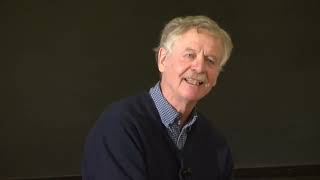
Rudolf Jaenisch describes creating the first transgenic mouse by injecting viral DNA into embryos, then later developing iPSCs that showed cells could be reprogrammed from a fixed state. His work at Princeton, the Jackson Laboratory, and Whitehead Institute led to discoveries of genes like MyoD and WT1, and opened new paths for disease modeling.
Chapters
I've been given the pleasure of introducing my and our colleague Rudolf Jaenisch. He has a long and distinguished record— excuse me— in science, and I just want to give you a feeling for it because it is really extraordinary in its variety and creativity. He got his M.D. in 1967 in Munich, and so he's one of the few real doctors among us, although I don't think he's ever come near a patient, probably to the benefit of both parties. He first worked with Peter Hans Hofschneider in Munich working on bacteriophage and then spent 2 years, which were really formative years, with Arnie Levine, who was then at Princeton working on SV40 virus, a DNA tumor virus. And this was the beginning of an excursion into animal virology for him. He first learned how to work with early embryos by working with Beatrice Mintz at the Fox Chase Cancer Research Center. And then he spent 5 years at the Salk Institute in La Jolla, 7 years after that at the Heinrich-Pette Institute in Hamburg. And in 1984, he graced our ranks by coming here and has been in the intervening 25, 26 years among us. It is my pleasure and honor to have been his colleague during that period of time. I don't think he's going to go into the great detail of what he did, but he published a series of landmark papers, perhaps the most consequential of which was in 1974 when he described how one could introduce SV40 DNA sequences into the mouse germline and thereby created the first transgenic mouse, which is— actually an underheralded achievement since it was the first time that one had purposively altered the mouse germline. Subsequently, he moved from SV40 to Moloney Murine Leukemia Virus, demonstrated the molecular configuration of these retroviruses in the mouse germline, showed that, in fact, their state of methylation, DNA methylation, excuse me, was critically important for the fact that they're not normally expressed, and then began a series of experiments demonstrating how one could isolate genes by finding out the loci into which these murine leukemia viruses integrated. One of the first of these studies was the collagen I locus. And later on, he further modified the mouse germline by using retroviral vectors to modify the mouse germline, even introducing a RAS oncogene, into the mouse germline, then began other kinds of experiments where he knocked out the microglobulin gene and followed its effects on immunology. He became very interested in the whole process of DNA methylation and how it affects the activation of endogenous retroviruses, how it's involved in X-chromosomal inactivation and in the inactivation of imprinted genes. He and his laboratory knocked out the Wnt tumor gene, WT1, in the mouse germline and did phenotypic follow-up. They knocked out the MyoD gene and the Mif5 and myogenin gene in the mouse germline and studied effects on muscle morphogenesis. They studied the consequences of knocking out the brain-derived neurotrophic factor on brain development and the consequences of knocking out an integrin gene in the mouse germline. And in 2000 became one of the major players in the whole field of nuclear cloning. Studying X-inactivation in these nuclear cone embryos. He demonstrated one could clone embryos from already highly differentiated lymphocytes and that one could reprogram lymphocytes and fibroblasts into ES cells and developed much of the technology that surrounds now our understanding of induced pluripotent stem cells. This is clearly a stunning opus in terms of its variability, in terms of its moving into a whole series of distinct and very important fields of modern biology. And so it's really— he's been a powerhouse for all these years and really one of the jewels in Whitehead's faculty crowns. Kollege Jädisch.
So what can I say? I don't know, I feel really a little bit embarrassed. Thank you, Bob, but And I'm not sure why you're here, actually. It's a little bit tough. So what I understand, I should say a little bit what Bob said so much nicer. So where I come from and why I'm here, I guess. So let me just go a little bit into a few things which I thought might be maybe of interest, maybe not. So anyway, I came from a family of doctors, MDs. My father was an MD, my grandfather, my great-grandfather was. They had a sanatorium in what's now Silesia, what used to be Silesia, which is now Poland at the Czech border in the mountains, very beautiful. And I grew up, and when the war ended, I was 3 years old, and my parents made the decision probably rightly so, not to— everybody moved west fleeing the advancing chaos of post-war Germany, and many people never made it to the west. My parents decided to stay, which was, I think, probably a wise decision because they went through first a Russian army occupation and then a Polish one, and as a doctor, I think you have an easy time and I think they became friends with these very educated officers and remained friends. They immigrated, some of them immigrated to Israel and so on. So they helped us a year later to get out of Silesia to West Germany when trains were getting partially running. I have a wonderful memory of how this trip to West Germany was, my parents probably not. And I grew up in a North German small town. I went to a gymnasium, didn't get much biology exposure, I must say. It was Greek and Latin and stuff like that. OK, so you don't— can you understand me? OK. So anyway, I went to this rather— not exposed to any biology, certainly. And then I wanted to go to university. In Germany, you don't go to college. You go to university and choose immediately. What do you want to do? And so I wanted to go to medical school against the wishes of my father. He thought it would be better to go logistics of the train system or something, which I didn't want. So I went to medical school and to Tübingen and to Hamburg and went for a winter semester to southern France to learn skiing and did do skiing a lot. And I ended up in Munich where I went to the medical part of the study. And I must say, I really hated medicine for how it was taught. It was totally overcrowded. You couldn't get in a lecture room. It was reasonably boring. You memorized. I was really— and I thought I could ever not be a good doctor. Not as good as my father, right? So it was really something which I wanted to get out. And that was a time when experimental molecular biology was just being invented in the '60s. And there were a handful of good groups— molecular biology groups in Germany. And one was Hofschneider, who was at the Max Planck Institute. For biochemistry. And I asked him to maybe I could do a thesis with him. And so Hofschneider worked with small phages, phiX174. And so there was also the filamentous phage. FD had been isolated and worked on by Norton Zinder at Rockefeller. And everybody wanted this phage. And Zinder just wrote letters, I'm not going to give you the phage. And then clever people took the letter incubated it on a bit of tree lawn and got the phage out, right? So that was pretty— Hofschneider didn't get an answer. So he didn't have this option. So this was— FD was isolated from sewage in New York. And so he went— there was American Army in Munich. So he went to the sewage of these barracks and isolated M13 from this. And as you know, M13 was a cloning vehicle. And I worked on M13. DNA replication. It's a small circular DNA. And so I learned this. And it was really— it was really— I learned a lot. But I had to finish medical school. And so I learned everything from books. And then you had to go through a practical year, which I dreaded. So Hofschneider, with good connections to the— to the clinic, arranged that I could go, like internal medicine for 6 months, going 2 afternoons a week and doing some injections. Surgery, surgery was 2 mornings doing a little bit small stitching. That was fine, I could work in the lab. The worst was gynecology. So this was in a small private hospital associated with the university, which was really They didn't have many people. And so you had to assist in operations, which is fine. You hold a leg or something. I could do that. But then they asked me to do the anesthesia because there was no anesthesiologist in the whole hospital. I was doing for hours. I couldn't even intubate. It was really scary. I was sweating blood and water that something would happen. It's something I kind of warn anyone go to such a clinic. But anyway, nothing bad happened. I got out. And then I had to swear I would never practice medicine. They gave me all the papers. And I never did practice medicine. I only married an MD. So that was a much— so anyway, the question was, in Germany, an MD In America, MD is pretty well regarded. In Germany, when you talk with a scientist, oh, you have only an MD, reflecting, I think, the bad training. So I was always feeling really second citizen and thought, well, I have to get a PhD. I have to get some real— and so with a friend, we went to— we thought, well, I mean, it's a lot of time. So we went to the— I got an interview with the— an appointment with the personnel chief of Bayer, who is a very big pharmaceutical company in Munich, and asked them would they be interested in having an MD-PhD, which you could do. And the guy says, no, no. We want MDs who sell our stuff and chemists who cook it. We have no interest. So it was good advice that we didn't do that. And what people then did was to go to the That was really everybody that was science here. And I didn't know where to go. And I asked someone who had returned from Los Angeles working with the Sinsheimer lab on small pages. And I asked him for advice. And he told me, well, I had this baymate, Arnold Levine, who just set up his own lab in Princeton. Why don't you write him? I wrote Arnie. And I got— with the return mail, I got an answer. Yes, I'm happy to have you. And here is a— I just have around an application to the NIH for fellowship. You can use it if you want. It's very different today. So I sent it in to NIH, and I got my fellowship and could go to Princeton. It was absolutely fantastic. And Princeton was really interesting. I was used in— at the Max Planck Institute, I worked with really new equipment. Princeton was really old and rotten. The mold was coming out of the walls of the tissue culture lab. But there was a time in Princeton where Bruce Alberts was there, Mark Kirschner, April Sell, Arthur Purdy. It was real. One of the high times of Princeton biology. It was really great. And it was very important for me. And Arnie was a terrific mentor. He worked with SV40 and polyoma, small tumor viruses, to understand the replication of DNA in eukaryotes. Very good model systems. And it was really familiar to me. I could— small DNA I'd worked with. And we could do that. And when I was— I was Arnie's first postdoc. And when I was there for a short time, he told me, oh, by the way, I didn't tell you. I'm going on a sabbatical to Europe. You run the lab. That's not what I had bargained for. That was really tough. So then we worked a lot. And we actually did some nice experiments on DNA replication of SV40 that led to a Nature article with the students. So it was really— but it was a time when there was no email, nothing. You were really on your own. But I was really mostly interested in one thing of SV40, which is a tumor virus. So when you inject it into a mouse or a hamster, they make sarcomas. But don't make other tumors. And I was wondering why. I mean, could it not infect the liver or brain cell? That's why. Or could it infect but wouldn't transform? So the question of tropism. And so I was wondering, struggling with this question, how to solve it. Then I read a paper, which I think was very important. One of the most important paper I read was from very prominent developmental geneticist, Beatrix Mintz, who's in Philadelphia. And this is a paper in PNAS '67 where she made striped mice. So by aggregating a black and a white embryo and getting chimeric animals. And from the stripes, she deduced how the pigment system develops, which I didn't understand. Actually, this paper— It was very controversial. People hated it because it really is not easy to understand why she ever got this result. But it's a really great paper to think about, and I use it every year in class for first-year students because it makes you think. But what I— I did not realize that as a simple molecular biologist, but I was really fascinated by the idea that you take an early mouse embryo and you can manipulate it and get a mouse. I thought it was really cool. So I thought, if I could put the DNA into these early embryonic cells, they would end up— DNA of SV40— they would end up in the skin and the brain. And I could ask my question, right? So I got really excited about this idea. I couldn't sleep. I called up Mintz the next day and asked her whether I could visit her. She said, sure. So I came there. She just had bought a microscope which was still unpacked and could do the injections with. Nobody had done that. And I proposed this experiment to her. And she was really friendly but very skeptical. I mean, who was I, right? So I was pretty disappointed, left, and thought, this doesn't work. So then I called up Jackson Laboratory and asked them whether they would be interested. And they said, sure, come on. But this was in Maine. It's pretty far away. And then she called me back. A week later and said, well, yes, she thought about it. I could do the experiment. I was really ecstatic. Then Arnie came back. And I told him this. And he said, well, I think it's nuts what you're doing. But if you want to do it, be my guest. You can make the DNA, whatever, in my lab. I will not be part of it. Very generous. I mean, really generous, I must say. So I just commuted between Princeton and Philadelphia. And Minsk— taught me how to think. I mean, how do you design an experiment with mice? I mean, she thinks genetically, how you do genetic markers. For me, it was absolutely a new world. It was really interesting. And she showed me how to manipulate embryos and stuff like that. And I just thought always— I always went, started at 11 o'clock at night because I thought the embryos were in the right stage to inject them for reasons which all had no basis. But I thought so. So then I learned how to inject them and made mice. And then I got mice. That was really exciting, except it was disappointing. They were totally normal. So did the experiment work? And so, of course, this was tough. There was no PCR. There was no Southern. There was no— you couldn't even buy labeled triphosphates from Amersham. I think Amersham probably didn't exist then. So you couldn't look for DNA just. So I thought the only thing I knew was I cut off the ears of the mice, let fibroblasts grow out, and stain for T antigen, right, of the SV40 T antigen. And they were positive. So I was really excited. I thought this worked. I was excited for one night. The next morning, I did the controls, and they were all positive too. So it was a bad antibody, right? So then I got an offer to the Salk Institute working on DNA replication. And that was a special place, I must say. The Salk— Dulbecco had just left to England, and it was a big vacuum. And NIH had allowed Walter Eckhart, who was a senior assistant of Dulbecker to organize the tumor virus lab and hire people. When I came, I was just surprised. There were— of the young faculty they had hired, there were 50% of them were Germans coming from the institute I got my degree in Munich. The American postdocs thought, I think, there was a sinking ship and they left. So it was really very strange. But so I inherited the bench, the laboratory, which my esteemed colleague Weinberg had worked in, the corner lab with a view of the ocean, small view. And I think Bob had worked with probably with labeling RNA with P32 or something. And it was so hot. It was blazing hot. It was hopeless. So then— but the Salk Institute has teak benches. So the maintenance guys came. Barney came. Oh, no problem. He took and just stripped the upper part of the wood away. And then he got rid of the radioactivity. So anyway, I inherited the famous laboratory. And it was really interesting. So Paul Berg had just invented nick translation. Peter Riek being Paul Berg, very important. And he gave me this protocol. And then there was Leslie Orgel, who was a prebiotic scientist. He was interested in how the first monophosphates is formed. He had this urea melting mix. And he put sparks on it or something. And you get monophosphates. So you start— and Tony Hunter was also on the faculty, showed me how to do this. He's a good chemist. So you start with 200 milligrams of P32. Do this melt, run columns, which Tony told me, and then end up with a few hundred microcuries of alpha phosphates. And then you could kinase them up to triphosphates. So you could do that. It took about 1.5 weeks or so, a lot of radioactivity. And then you do nick translation, make a hot probe. And then the only thing you would do was a CoT curve. I think CoT curves is probably unknown to you, most of you. It's an ancient thing. What you do is you denature your hot probe and let it reassociate in 1 molar salt or something. And it reassociates with a certain kinetics, right, depending on how hot it is and how high the DNA concentration is. And if you now add your test DNA, and if the test DNA also contains some, of course, unlabeled sequence, it will accelerate the kinetics. And from this, you can estimate where there DNA— SU40 DNA in the most or not. And so I did that. And you know, these are several days experiments. You have to always at night come and take time points as a kinetic. And so I did that. And lo and behold, many of these mice had SB40 DNA in their brain, many different copies in their liver, kidney. So it seemed to have worked. It's really exciting. But I want to say, I had a really one Really awful thought. Now, the tumor virus lab was working with the SV40, I mean, with quantities. So I thought, it was a very sensitive test assay. Could this be contamination? Just, you know, and I— the mice were dead. And I was really worried. I couldn't sleep. So then I thought about the control experiment. I took a Sorvall tube. Put 200 micrograms of denatured Osp40 DNA in it and incubated this overnight and during the day and poured it out, marked the tube with a diamond, and sent it down to the kitchen and fished it out the next day and extracted in this tube control DNA. And did a CoT curve and asked the question, would it contain Osp40? And it didn't. So I thought our kitchen was so good to get rid of major contaminations, right? So I was really reassured. And then these were the first transgenic mice. The name wasn't coined yet. But there were two problems with the experiment. So I should say this paper which came out then with Mintz had the nick translation procedure published 3 years— I had to do this 3 years before Paul Berg and Peter Rigby published it. I mean, they allowed me to do this. Very, very generous, I must say.
And—
but there were two problems with the experiment. First of all, there were no tumors. Of course, now we know because the virus gets silenced. Didn't know that then. And there was no germline transmission. The way I made it, I didn't get it, I think. In hindsight, I did not correctly. So there was a problem. And made me think then, at this point, two postdocs set up their labs coming from Boston, from David Baltimore's lab. That was Inder Verma and Hung Fan. And they brought the Moloney leukemia virus system, which I had worked on with David here. And this was a really efficient virus. It made leukemia all over the place. It was really great. So I thought, that I should use. So they taught me how to do it. And I had to try to learn how to infect embryos with a virus, not inject them. A lot of problems with that. Didn't know what to expect. And— but the biggest problem was I couldn't get any embryos to survive. I couldn't even isolate embryos because the animal quarter of the Salk was a disaster. It was a barn, big barn. And when you got in at night, there were field rabbits and rats. And there was really big parties going on. They visited the cages. And you couldn't wean an animal at 3 weeks. They would die. The stoppers were so bad that you could calculate the mouse has a 20% chance to drown within 2 months. It was really terrible. You couldn't do anything. So I got very frustrated and wrote this letter to the directors of the Salk Institute. It was Jonas Salk, Mel Cohn, Leslie Orgel, Robert Holley, Roger Gilman, all these really famous godlike people at this talk, writing that this is the worst animal quarter I have seen. I've seen only one in Philadelphia. And we could get healthy mice here. No way you could ever do this. And the mice were drowned. And might be very good for growing tumors. They grow tumors a lot, milk corn. But not for making healthy mice. That was a very undiplomatic letter. And they were really offended. And Walter Eckhart was much more diplomatic. And he arranged for me to give a talk to these directors and say why I can't work with this animal quarter. OK, so I did. And I showed my CoT curves. And I looked all impressed. It all looked like there was DNA there. And then I said, well, and then I had this mouse here which had all these copies in the brain and the liver. And now I wanted to see whether it transmitted. To the germline. And 2 days ago, I went down where the litter was there, and they were all drowned. You should have seen the look. Of course, it was not true at all, right? But it impressed them. And the consequence was really dramatic. They built me my own animal quarter. They put a trailer up. It was terrific. I hired my own guy who would change the cages. And, well, 9 months later, we had the first mice which had cumulonimbus and transmitted it to the germline. So we got that. So it was really incredibly luck. Because there were these things— I mean, working with mice is a hassle. So for example, suddenly my mouse colony would die. It would die. It was terrible. So I had no idea what to do. My medical background said, well, maybe penicillin infused them with penicillin, tetracycline, whatever I could. They died. And it turned out my neighbor, Bart Sefton, worked with Sendai virus. Now, Sendai virus is the most deadly virus for mice, and particularly for the strain I worked with, 129. That is die within days. Except I was lucky. I had— my transgenics were on an F1 background with BALB/c. And so they are more resistant. They survived. So I could rescue the colony. But it was a lesson for me. What's important for most, you have to understand something about viruses when you work with mice. So anyway, then I got an offer to go to Hamburg. And I don't know why I accepted it. I still don't understand because it was quite a— coming from Southern California to rainy Hamburg. It was shocking. But we worked then with the viruses. And actually, the viruses, as Bob mentioned, was at this point, you couldn't really isolate genes which were doing some phenotype. You could mutagenize a mouse, get an interesting phenotype, but get the gene before you sequenced was hopeless. The virus could mark. The gene, so insertion mutagenesis could mutate and mark the gene. And so we made in Hamburg many, many strains. And about 5% to 10% of those had lethal phenotypes, embryonic phenotypes. It was very interesting. And we could isolate the genes. And the first one I remember was MOF13. So that was a very, very exciting phenotype that died after gastrulation with a very dramatic phenotypes as well. This must be one of the key developmental genes, right? So we got the flanking sequence out and looked on the northern end. There were two RNA bands on it. We didn't know what the gene is. And just— it was Angelika Schnieke, who was then a terrific technologist in my lab, who then later actually was involved in making Dolly. So we looked at the RNA sizes and thought, well, it could looked like collagen. Dreadful thought. And it was collagen 1. And I thought, well, I mean, this— of all genes, collagen 1, the most boring gene you could— it was terrible. And the molecular biologists said, well, collagen knockout, why do they die so early? And the developmental biologists would say, how could they live so long? So it was really the totally— and it turns out this— it was an interesting mutant because it was really important for osteogenesis imperfecta, a major human disease, and taught us how a virus can silence a gene. I was really— and so insertion mutagenesis really studied lots of this. And still people do insertion mutagenesis even after gene targeting has been invented. Big projects on in China to make 100,000 transmutations in mice and in ES cells. So we don't do this anymore because I think there are other ways to do it. But it taught us a lot. And then I actually came to MIT. David Baltimore invited me to give a seminar at the fifth floor. Seminar room. And Salva Luria was then the director. And he asked me 10 minutes before my talk whether I would be interested to come to MIT. I never thought about it. And it totally confused me. And I really screwed up my seminar, I think.
It was—
so it was— I never thought about it. And then David founded the Whitehead Institute. And I met him at a meeting. And we talked about it. And he said, well, I would rather— I admire David a lot, so I would rather come to the Whitehead. And he worked it out with Luria somehow. And I don't know. And so then they offered me a job here, and I came. It was really fantastic. It was— the problem was actually moving my lab. I have moved it twice, from California to Hamburg and from Hamburg to here. Really traumatic. I really can warn people. But moving a mouse colony, I think, is really worse. So from San Diego, my mouse colony was going via Los Angeles Airport, and they just fried the mice on the airport. They left them for one day in the sun, and they were all dead. So I— it was my first shipment. So I thought, well, I mean, the mice, most important mice, I have to take with me in my brief— in my bag, actually. And I'd put them in this card box. And with my horror, I realized on the plane these guys had eaten through the card box and were running in the back. And I had to stuff them almost back. I was really worried that it would be a mess. But at this time, you could do these things on the airplane still. Now you would be arrested, I think, with some terrorist act, right? —so I got them to Hamburg, and I could establish a colony there. But going back to here, I thought I'd make it better. So I had Jessie Dausman, who I'd hired in San Diego, and she came with me to Hamburg. And she then— we froze down our colony as embryos. That was a lot of work. And we thought, no, we are safe against everything. And so I wanted to carry these embryos in big doors, two big doors. All my whole colony was in there. And I was so anxious, I overfilled the doors, which turned out to be a real mistake. They absorb in foam. So I went to the Hamburg airport and made these guys all crazy, saying this is the most important thing. They should be sure that they transfer this in Frankfurt to Boston. And yeah, sure, sure, they did. And then I was leaving, and then suddenly I get this loudspeaker called, Dr. Jaenisch, come with me to the loading dock. But then they had these doors went down the conveyor belt, and they flipped. And then this cloud of liquid nitrogen— and so there were these guards with drawn guns surrounding these two flasks. And I had to explain to them, this is only air. So I poured it on my hand, and it's really only air. Is mouse poop. Well, they finally calmed down and went to Boston. I hadn't thought about the problem in Boston. I hadn't any papers. I didn't think about it. And so these two big bottles, doers, come in. How do you get them to Boston customs? I hadn't thought about it. There was this really tall, black customs official. And he asked, what is in there? I said, well, frozen mice, I said. So my most colleague, he looked at me and said, frozen mice? And he thought it was a great joke. And he let me go through. So I was really— I could establish this here. It was really quite— it was pretty great. And of course, in Whitehead, I knew how a mouse colony would run. And it was very— I mean, our mouse colony, I think, is the best-run one I know. But yet, Whitehead, I was mostly interested in understanding what happens with these viruses. What was clear was that these viruses were really not expressed in embryonic cells, in embryos or ES cells, but were very efficient in somatic cells. Or actually, in developmental timings, you infect an early embryo, it was silenced. In fact, 4 days later at gastrulation, it was highly expressed. And why was that? And so we thought about it, and DNA methylation was one possibility. So we correlated this, and it was very clear that the virus integrates immediately, it gets de novo methylated and silenced in ES cells or in embryos. But if it's later, There's no de novo methylation. So it was something developmentally regulated. And so that was interesting, but it was only correlation. People correlated, correlated, correlated. It was really boring after a while. And then I had this real luck that a student joined my lab, En Li, one of these Reagan— the first wave of Chinese students coming to the States, and En was among them. And he used, first of all, ES cell technology. Sort of was being invented. Martin Evans had made the first ES cells. And Capecchi and Smithies had made homologous recombination. And you could now suddenly do gene targeting. So En made the first knockout mouse, a beta-2-microglobulin mouse, which one hypothesis was it has a developmental phenotype role., which it didn't have, which really made it for me disappointing. We didn't want to work with this anymore. But it has been useful for many, many— for immunology. And Ann then made the second mutation, which was the methyltransferase 1, which had been cloned by Tim Vestor here at MIT. And this was a very informative mutation. So mice which cannot maintain methylation die It got stellation very dramatically. It really showed methylation was important for development. And it was really the first means for us to study epigenetics by genetic means. So this mutation allowed us to study causal relation to cancer— cancer was causally related to methylation— exon activation, imprinting. So all these issues, very informative. Led then, of course, to the idea that in development, methylation is important for an egg to develop. You had to rearrange— you had to reprogram or program how genes are expressed. And methylation played a role there. And of course, it was more important even for reprogramming. So when Dolly was made— I thought it was a really cool experiment. It was incredible. I mean, an incredible experiment. And Dolly was actually made by my former coworker, Angelika Schnieker. She was the first, second author on the paper. I knew it was right when she was on it. But then Dolly, and then came a year later came the first cloned mouse by Teru Wakayama from Hawaii. Mouse cloning is more difficult than sheep. And so I thought, This is the best, most unbiased way to study epigenetics when you do cloning. So I really went to Hawaii and arranged a collaboration with Teru Wakayama and had the luck to get terrific students. I mean, it was Kevin Eggan joined my lab, Konrad Rehlinger. And they set up the cloning together with Teru here very efficiently. And we were one of the few labs who could do this visually because of them. And we could then study. Mechanism of cloning and maybe therapeutic applications, therapeutic cloning type of thing. And then was human YESTRs had been isolated by Jamie Thomson. And together with Dolly, that was exciting because you could use this technology for customized therapy, therapeutic cloning. People talked— really talked about a lot. And the problem was it was very controversial. I mean, you might remember this raging debate of people being opposed to embryonic stem cells and cloning, particularly. And they had hearings in Congress. And I wasn't one of the first ones, run by Greenwood, a Republican. And it was really amazing. It was the leader of the Rayilians, the sect from Canada who think that life came from cloning out of space. You see this on their website. There comes a UFO, and he talks with this alien. And he came, he testified in his spacesuit in Congress. And they asked him, now what do you want to do? Why? Well, I want to be immortal. How do you do that? Well, I load down my brain on the computer, then I clone myself, and then everybody was very impressed. And then was there also— Brigitte Bosselier, who was the chairman of Clonaid. That was a company who offered immediately after Dolly to clone you for $50,000. That was all fraud. But she was there with her attractive daughter of 22 years. And the daughter was advertised as a foster mother and ready to be foster mother and the egg donor. And that was, I think, the news. And there was all the newsmen around. Quite a circus. And then, of course, as you might know, this was really heating up. And then came this huge fraud case from the South Korean group Hwang, who claimed to have done therapeutic cloning or made cloned ES cells in humans, which turned out to be all fraud. But actually, that was not the first fraud in cloning. The first fraud was 25 years earlier. By Karl Ilmensee. Now, Karl— we were students together in Munich, so in Jung. But Karl did a very important experiment in Marhofer's lab. He did pole cell transfer. It was really important. And then he joined Mintz's lab after I had left and made an important experiment there. He used embryonal carcinoma cells, which Mintz had isolated, to make chimeras. Pretty important experiment. Mintz didn't believe it. I never understood why. But I think it was very important. It could revert a cancer cell to a normal state. That was the idea. But he parted from Mintz on not good terms. Then he went to the Jackson Laboratory and started cloning and made really two major claims. One was he could make uniparental mice, mice from to have two fathers or two mothers by changing the pronuclei, and just cloning sort of diploid cells, putting the zygote and getting mice. And this was really the beginning of the '80s very big in news. I mean, that was changing how we looked at molecular biology and biology. He was in Geneva and had audience with the Pope and was really high up. And the problem was nobody could replicate to repeat this because it was so difficult. And it was a golden hand argument. Ilmeny was so good. If he makes it 1 in 500, how could you prove him wrong? None in 10,000 or something. So it was impossible to disprove him. Nobody could do it. And so then, um, Dava Sultor came and made it suddenly very efficient by using Sendai virus fusion. And suddenly the control experiments worked. 80% you got mice. But the cloning didn't work. So uniparental mice do not exist. We know that from imprinting. That was clearly not correct. And cloning with other— the way he did it didn't work. And so this led to Dawes-Holter's famous sentence in his Science paper, cloning in mammals seemed not to work. Of course, Dolly came then along and was done differently. It did work. So it was premature. But there was Ilmen-Sehn, who was involved for the human cloners afterwards. So anyway, so then came— of course, then this whole changed again with Yamanaka. So as you know, Yamanaka with the iPS cells. Being a retrovirologist, I think that was a really courageous experiment, using 20 different viruses and thinking you get enough in a cell To me, that sounded— I mean, this was courageous. And it worked because he had a very strong selection. It's an amazing thing. So I think that then this field since then has somewhat exploded. So when I think back, sorry, what I sort of participated in some way was in the In the '80s, there was a decade of transgenics. So everybody made transgenics then. And I think it was a decade of transgenic artifacts because most of these results didn't tell you anything. I mean, you express MYCN in oligodendrocytes and you get demyelinating disease. So what? Never does it in diseases. And many of these— so I think there was some— sobering then. And then comes the '90s with knockouts. And knockouts, of course, even if there's no phenotype, they're always very informative. And then came cloning, which I think really changed it again, and reprogramming. And I think it always takes 10 years, I think, when people— to realize— so cloning was 10 years, and now it's direct reprogramming. I must say, I feel really very, very privileged to have somewhat at least looked at this and participated in some way in these phases. And it's really terrific fun to do science here. So I don't know what I can add here. Being at MIT, I think, is absolutely fantastic. I think what I find so terrific is this collegiality here, not only within, as you know, within the department, but within the other departments. And I haven't seen any in any other place. In the '90s, I thought, I was on a sabbatical in Germany, and I thought, well, it would be nice to go to Germany back and maybe the Max Planck Institute and talk with them. Berlin, great city. So I was thinking about it. But then I had these nightmares, waking up sweating that I accepted this offer. And I said, well, this tells you something. Maybe it's not such a good idea. So I didn't consider this further. So I— well, I mean, this gives you somewhat of a— I don't know what else to say. Unless someone has some questions. I don't know how this normally—
Maybe someone has some questions for Rudolf, who is often erroneously called Rudy.
So I think the interesting story is how you bring embryology together with molecular biology and viruses. Do you see that that marriage has told you a lot about embryology? And what has it told you about embryology?
I think it did. No, I think the viruses So the question was, viruses, would it teach you something about embryology? I think in the '70s and '80s, that was really the only way, I thought, to get to genes. And these viruses, I think, they taught us a lot about how gene expression works. I mean, this methylation story being developmentally regulated, I thought that was— it's now called epigenetics and much more sophisticated than it was then. But then also, you had to— we got a lot of these embryonic lethal mutations. So you had to learn the embryology around this. And the genes were often quite informative. I mean, this collagen gene was most— occupied a lot of my time, taught us a lot about how organs form, what the extracellular matrix has to do there. So things like this, and which was totally new to me. To get into this. And so yes, I think it really shaped certainly my interest in using genetic means to study embryonic development.
Just one step further. In the methylation of CG islands, which has something to do with cancer— in fact, it's one of the major epigenetic genetic properties in cancer. Have you thought about that aspect of it, to what extent these viruses, et cetera, are involved not only in embryogenesis, but cancer and methylation?
So this came— I mean, the enzyme we had knocked out was the maintenance methyltransferase, a major enzyme which is very active. But it only is a hemimethyltransferase. Transfers. But of course, these methylation patterns have to be set up. And Lee, again, my former student, when he had his own lab at Harvard, he isolated the de novo methyltransferases, DNMT3A and B, which are expressed early in development and really set up the whole methylation pattern. And they turn out to be, as we now know, really involved in— and they're inappropriately expressed in the DAS. They're turned off. After gastrulation than to de novo methylate, for example, CpG islands of tumor suppressor genes. So that has, of course, has been major interest in my lab and many other labs. And so the function of these enzymes having mutants you can study. So I think it's— this DNA methylation field has been enormously interesting for very, very different aspects of biology.
You've told us of 3 major technological breakthroughs in the last 3 decades. What's going to come next? Where is cloning going to go? Is there another technology over the horizon?
Well, I think at the moment we are just looking ahead a few years of this in vitro reprogramming, so the Yamanaka technology, which I think is just— To me, this is totally amazing. I mean, it shatters the whole idea of the differentiated state being terminally and stable. I mean, it's totally unstable, right? You do a few things, and you can change one cell type to the other. So I think this has changed in a major way— will change medicine. So before, we always were saying in our grant applications, I mean, cloning and therapeutic cloning would be important for medicine. I never believed it. He said it, right? Now I believe it. And because this is now very straightforward. There are technical issues to be resolved, which are on the way to be resolved. And then eventually, we'll be able to take a human cell from a patient and probably with a rather simple way— I think there will be soon kits available to make first an embryonic stem cell, maybe something else, or maybe directly something you want to use for the patient to study his disease, or even possibly for therapy. So I think that far at the moment in this field. I think it will be— it will change how we study complex diseases in an unforeseen way, I think.
You talked a lot about organismic cloning. Yet attempts to make cloned organisms have yielded organisms that are in one way or another defective. Yeah.
So our embryos— Right. This was a big debate. When Dolly was there, and then there were these cloners, like Zavos, a guy from Kentucky, who argued he wanted to clone and clone people because they wanted to resurrect dead babies or give them another chance for life. Or things like that, or your dog and whatever, and all these things. And this is a reality, actually. And it was very clear to us— and that was work done by a student in my lab, really saying that clones are just not normal. You can't— and I believe you cannot make normal clones. And I don't think that's solvable. You cannot solve that. When you shortcut gametogenesis, you will get defective defective genomes and epigenetically defective. And so clones either— most die early. And the ones which survive longer and even to adulthood are just less abnormal, but they will be abnormal. So I think we can't make that. I think the evidence from mouse is very clear. And people denied it for a long time. They argued cows— all cows are normal because they thought the FDA would be not happy if you have abnormal cows. But they never aged the cows. And it got very quiet around this. And I think it's a totally weird— anyway, a weird discussion because you don't eat the clones. You eat the offspring, right? And the offspring is always normal. Once you send this genome through gametogenesis, everything is reset. So to answer your question, yes, I believe you cannot make normal clones. But for agriculture, that doesn't matter. So if you want to make a cow which has certain properties from its donor, yeah, you can do this because the offspring will be absolutely normal. You don't care about the clone. In humans, you do care about the clone, right? You don't skip that generation. And so that's why cloning was always— the strongest argument, to my opinion, against human cloning was it's scientifically totally unsound. Which, um, people who— but then when you come, of course, the question gets much more difficult. If you would be able to solve cloning, let's say you could induce meiosis in a somatic cell, I think that would be the first step to possibly solve the cloning issues. Um, should you do it or should you not do it? That's a much more difficult question, in my opinion, because to have a strong argument against cloning, I think You have the gut feeling one shouldn't do this. It's really disgusting, whatever, not necessary, it's useless. But is that a strong argument? I'm not sure. So I think it's much more difficult than to go into this discussion. But I believe it will be scientifically unsolved for a long time, if not solved at all. Who wants it anyway? People clone Struppi, their dogs, right, for $50,000. $50,000 on cats. And there are companies who do this. And this guy from South Korea who did this fraudulent stuff, he is running one of these companies and sells you a dog for $50,000 or something. And I think they will be disappointed because these dogs will be not normal, right, when you wait longer. They look the same, but they may not be the same. So I think it's a very complex biological issue.
But in the absence of any other questions, we thank you once again.
More from Joshua







Scientist Stories: Hans Waterham, The value of phenotypic assays in peroxisomal disorders




Scientist Stories: Joel Zlotogora, Genetic carrier screening programs for reproductive purposes