Scientist Stories: Ruth Lehmann, How maternal information passes to progeny
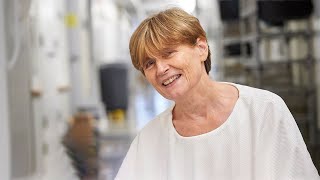
In this webinar, Dr. Ruth Lehmann discusses how maternal mitochondria are transmitted to offspring, focusing on two key processes that shape mitochondrial DNA (mtDNA) inheritance: a stochastic bottleneck during early germ cell formation and an active selection mechanism during oogenesis. She explains why mitochondria are a unique genetic system—high mutation rate, lack of recombination, and maternal-only transmission—necessitating mechanisms to prevent mutational load (Muller’s ratchet). The bottleneck is mediated by the actin‑meshwork protein Long Oscar, which sequesters mitochondria into nascent germ cells, creating a lottery‑like reduction in mtDNA diversity. Selection occurs later when mitochondria undergo a regulated fusion‑to‑fission transition: down‑regulation of Mitofusin leads to fragmentation, exposing individual mtDNA molecules. Mutant mitochondria with low ATP are targeted by mitophagy proteins Atg1 and Bnip3, while wild‑type mtDNA is preferentially replicated, enriching functional genomes. Lehmann’s lab used innovative tools—cross‑species mitochondrial transplants (Yakuba into D. melanogaster), temperature‑sensitive mtDNA alleles, and species‑specific DNA probes—to visualize mtDNA dynamics in vivo. The talk also touches on broader implications for aging, mitochondrial disease, IVF, and iPSC technologies, and highlights future directions such as probing mtDNA localization and the impact of aging on these mechanisms.
Chapters
Welcome to today's webinar, Preparing for the Next Generation: How Maternal Information Passes to Progeny. I'm Yukiko Yamashita, a member at the Whitehead Institute, where my lab studies the mechanism of asymmetric stem cell division as well as function of junk DNA and its implications in cancer and other diseases. I'm excited to be your host and the moderator today. So today's webinar is a part of the series of talks that we've organized to share Whitehead Institute of Science and the research with the wider community. In a few moments, we'll hear from our presenter, Whitehead Institute Director, Luz Lima. So, but first, I'd like to let you know that this webinar is being recorded for future viewing. And also, we'll be answering questions at the end of the presentation. So you can, but you can submit the questions at any time using the Q&A box that you can see on your screen. So with that, I'd like to introduce our speaker today, Dr. Luz Niemann. So Luz received her PhD with future Nobel laureate Christine Nüsslein-Volhard at the Max Planck Institute in Tübingen in Germany. And after postdoctoral training at the MRC in Cambridge, United Kingdom, she joined the White Institute and MIT. Then she was recruited to NYU, returning after 24 years, I do see, to Whitehead Institute as the fifth director, where she is also a professor of MIT Department of Biology. So, using Drosophila as a model system, Luz is the person who had established the mechanism how germ cells are formed, such that the life can continue from generation generation to generation. So, germ cells are the very special cell type and the only cell type that can transmit the potential to build entire whole organisms again, which also creates germ cells again to go to the next whole, you know, organisms, and so on. And so, and that means without the germ cells, this unique characteristic, life simply does not go on. So, because we have significant contribution to our understanding of germ cell biology, Ruth has received numerous recognitions, and reflecting the fact that these findings have been so fundamental to all areas of biology, her recognition also spans all areas. Just to pick a few, receiving a Conklin Medal of the Society of Developmental Biology, Keys Porter Award from American Society for Cell Biology, then, you know, Thomas Hannah Morgan Medal from Genetics Society of America, as well as most recently, Gruber Prize in Genetics. So Ruth is a member of also American Academy of Arts and Sciences and the National Academy of Sciences, among many others. So I stop here without listing all those accomplishments, but just simply handed to Ruth. So today she will share her findings on how maternal information passes to the progeny through germ cells. Ruth, welcome, and thank you.
Thank you very much, Yukiko. I'm so delighted to talk to you today. Let me share my screen. So I want to talk to you today about how we're preparing for the next generation. You just heard in the introduction how Yukiko is telling that we are interested in the germline, and so I want to talk today about how pretty much in every organism, multicellular organism, we prepare for the next generation. And let's get sort of start with the beginnings, and that is an egg and sperm, and can you see my pointer? Where the egg and sperm is uniting and the fertilized egg cell starts to divide, and forms many different cells, and some of these cells then will again give rise to egg and sperm, and both the mother and the father contribute their nuclear genome to the next generation, and this is— the cycle goes on and on, and so the germline is a really specific cell in the body because it's really not required for the organism itself, it is required for the perpetuation of the species. So, let's look at this a little closer, and that is I want to point out the difference in size when the egg meets the sperm, and that also tells me to tell you that there is so much more that the egg provides than what the sperm provides. Both of them are providing DNA, but the egg provides also all the cytoplasm that is required to help actually the embryo to develop, because initially the embryo is dividing rapidly, and so all the cytoplasmic components of the early developing embryo really come from the mother, come from that cytoplasm. So, while the, whoops, while the mother and the father provide the DNA for the nucleus, there are cytoplasmic, all kinds of cytoplasmic aspects which are provided to the egg cell just from the mother, from the oocyte. And one of them, and this is my, the focus of the talk today that I will be talking about, are mitochondria. What I want to also point out at this, this point is that it's quite curious that this this kind of difference of contribution is also reflected in the diseases of reproduction. So, with aging, male— so, older fathers, their offspring often has new mutations which affect, you know, cognitive ability of the progeny, but it is It is the mutations which occurred during the many divisions in the male donor to produce sperm. On the other hand, in the female, the oocytes are arrested. There isn't that much division. They're actually arrested for many, many years, and there, the disease of aging is cytoplasmic, so that the chromosomes do not segregate properly because cytoplasmic components are not working properly to segregate the chromosomes. Chromosomes properly at meiosis. So, there are very distinct consequences of this unequal contribution to the embryo. So, let's look more closely at mitochondria. And so, mitochondria have their own DNA. They also— mitochondria have two membranes. They are originally derived from proteobacteria many billion years ago, and within the inner membrane, which is forming these intricate cristae in this matrix, there is the mitochondrial DNA. So mitochondria have their own genome, and on these cristae we have one of the many different machineries that are contributed by the mitochondria, and that's the oxidative phosphorylation machinery. And this one has components which are both produced by the nucleus, and so they have to be imported into the mitochondria, but also by the mitochondria themselves. And so, in humans, there are about 16,000 DNA base pairs of this mitochondrial DNA, which encode for 37 genes, 13 of these are protein coding, and they are distributed between those various complexes of the oxidative phosphorylation machinery. On the other hand, there are about 1,500 protein coding genes in the nuclear— nuclearly encoded, and 77 of these proteins again contribute to this machinery. There are other components, there are other aspects of mitochondria, like for example, the TCA cycle, factors which are required for protein import, fatty acid, amino acid oxidation, apoptosis, biosynthesis of ketones, pyrimidines, heme, and urea. All of those are provided by these nuclear proteins. So, it's a very small number of proteins which are exclusively synthesized by the ribosomes which are in the mitochondria and then inserted into this inner mitochondrial membrane. Why is it so important and so interesting that mitochondria have actually their own DNA? It actually allowed us to understand how the migration of humans occurred. And you probably have heard of Mitochondrial Eve, and Mitochondrial Eve started— and this is a particular haplotype of mitochondria because mitochondria carry different mutations, and with the variation of the mitochondrial DNA, And by having it given on from generation to generation, always through the mother, the mitochondrial Eve could be located, and then the various migrations of humans could be followed by the pattern of these haplotypes and as they were changing through generations. And I will talk more about what these— what it means, these haplotypes mean. But so this has been very helpful. You may also know mitochondrial DNA has been used for, for many different aspects of also familiar connections. And so the mitochondrial DNA, as I said, is relatively small compared to the nuclear DNA, and it has these protein coding genes, and when there are mutations in the protein coding genes, then this can lead to diseases, and there are a whole number of diseases which are associated with mitochondrial DNA mutations. Of the inherited mitochondrial disorders, about 15 to 20% are due to the maternally inherited mitochondrial DNA. The others are all due to mutations in the nuclear contributions to the genome, to the, to the function of the mitochondria. And so, because mitochondrial DNA can mutate and change, we can have mutations in the mitochondrial DNA, and so that can cause then mitochondrial dysfunction because there is one of the important protein components of the mitochondria is mutated. And so what's interesting, and this will be the sort of the focus, has been the focus of our interest, is how do the mitochondria contribute to the next generation? And if we think about this, so if we have a mother who has both wild-type mitochondrial DNA and mitochondrial DNA with mutations, when she produces progeny, then this pro— her progeny will of course have one chromosome set from the mother, one chromosome set exactly from the father, but the contribution of the mitochondrial DNA will be very different. So there can be low heteroplasmy when just one type of mitochondria is transmitted, or there can be a high number or amount of heteroplasmy. And you can already imagine, dependent on what the low part of heteroplasmy is, that low part could mean that the offspring has a lot of wild-type copies of mitochondrial DNA, or it could mean that the offspring has a high concentration of mutant mitochondrial DNA leading to disease. And this explains why mitochondrial DNA mutations in terms of penetrance of the disease are very heterogeneous, because it really depends on the kind of inheritance, the amount of inheritance of the defective mitochondrial DNA. And so if we look at, just compare mitochondria and nuclear DNA, so we know, and we just discussed this, that the father and the mother gives one copy of each chromosome, and so we have exactly an N of 2 in every cell, including the early embryo. In contrast, in the egg, we have actually up to 4 times 10 to the 5, 400,000 copies per egg of mitochondrial DNA, which is here marked in red. We also know that there is a heightened mutation rate in mitochondrial DNA. It's 10 times higher than the nuclear genome. This has less to do with the fidelity of replication enzymes, but more to do with the proofreading. And also, mitochondrial DNA actually turns over. So during aging in non-germ cells, the mitochondria keep on turning over, and then new mitochondrial DNA is replicated, giving a chance for mutations to occur. And each mitochondrial DNA molecule lives for about a week. So there is, even in a cell which doesn't divide, there is constant replication of the mitochondrial DNA and the potential for new mutations to occur. Finally, and this is a really important aspect of germline development when we look from the chromosomal nuclear standpoint, that is recombination. So, each time an egg cell or a sperm cell is produced, the two ends that were inherited from the father and the mother have to be reduced to one end, so we can have actually one copy of each chromosome coming from the mother and one copy from each chromosome coming from the father in the process of meiosis. And what happens during meiosis is that the DNA from the father— that the DNA can recombine and make new associations, and these new associations can lead to this recombination process, can lead to being able to make actually better copies and coping with mutations. That is not the case largely in mitochondrial DNA. So mitochondrial DNA molecules, these circular mitochondrial DNA molecules, they do not, or they have very highly reduced recombination. So if we put these two aspects together, if we say on the one hand, we have this heightened mutation rate, and on the other hand, we have no recombination possibilities to make actually better copies by recombination, by getting actually rid of some of the deleterious mutations. This has been referred in the '30s by Muller as a ratchet model, and that means this ratchet continuously accumulating mutations would eventually lead to death because there would be more and more mutations, and if you can't do anything about it, you would accumulate these mutations. But that's obviously not happening, and so there have to be mechanisms of how mitochondria actually deal with the mutation rate. And so there are two principal phenomena that I want to mention, and then in my talk, I want to really talk about some of the mechanisms of those phenomena. So the first is referred referred to as a bottleneck. And so, if we think of a germ cell, maybe we think of an egg cell here, and the green molecules are mitochondrial DNA that is wild type, and the red ones are mutant, and we have here a heteroplasmic cell. If this cell goes through a bottleneck, which means it produces more cells which, with just a selection of these mitochondrial DNA molecules, as for example happens when the egg cell starts to divide and germ cells are set aside out of the whole million— of the hundred thousands of mitochondrial DNA molecules. And so some of these cells now can capture more mutant, and some will capture more wild-type mitochondrial DNA. They grow up, and we will get this heterogeneity in terms of heteroplasmy. So this is one effect. This effect is sort of more random. It's like a lottery. So you just throw out the balls, and whatever you catch in a small vessel— or you could also call it drift, like Darwin's finches, where the finches flew to an island, and then they start the colony, and that colony will be more similar to themselves. So this is this kind a bottleneck effect. Another is a more active process, and that is the process of selection. So again, we start with a mixture of functioning and nonfunctional mitochondrial DNA molecules, but then there is an active process where somehow the mutant mitochondrial DNA molecules can be deleted. And so we end up after the selection process with enrichment of wild-type mitochondrial DNA molecules. And so these two processes are really interesting processes, and there's lots of evidence that something like this occurs. And so, for example, one reason to sort of believe that selection has to occur are results in looking at actually the type of mutations which are passed on from one generation to the next generation by in terms of mitochondrial DNA. So there are two kinds of mutations. There are mutations which are synonymous, and those are sort of mutations which really do not matter because they will lead to the same kind of amino acid being incorporated into the protein. And then there are mutations which are non-synonymous, which cause mutations because it would lead to either an amino acid change in the protein or even a stop codon in the protein. And so what has— what had been observed in many different species, in mice, in humans, that there is a much higher frequency of synonymous mutations being passed on through generations than non-synonymous, suggesting that there had to be a selection mechanism. But what the selection mechanism actually is, and at what level, and at what time it occurs, was really not known. And so now I want to switch to telling you about our data, And so, we use, we use Drosophila as our model system, and Drosophila have mitochondria, and they have germ cells, and the mother gives on the mitochondria to the progeny. Some of you may have wondered, so what happens to the father's mitochondria? So, what happens in the fly to the father's mitochondria, and this is work from Pato Feroz's lab, where they showed that those mitochondria are actually degraded prior to the, at the late stages of sperm formation, and so then the sperm will not have any mitochondria. In other species, the paternal mitochondria actually get into the egg, but then they are degraded in the egg, and they're during the early development stages. So in Drosophila, the germ cells form at the posterior pole of the freshly laid egg, and that is also where I will be telling you about how do the mitochondria actually make it into the germ cells, and I will use this explanation as telling you something about the bottleneck effect. And then we will turn to the later stages of oogenesis, where actually the egg is made, and there I will show you data that suggests a selection mechanism that is occurring occurring during that stage. So in the fly, there are two bottleneck effects and selection effects are present, and we have some idea of the mechanisms, and we think that the separation in different times, one occurring during embryogenesis and the other occurring at later stages to development, could very well be also true for other species. So let's first look at the bottleneck So, what actually happens in the early embryo when these germ cells are forming at the posterior pole of the embryo, mitochondria are specifically localized to these, to the germ cells, and so are taken up into the germ cells. And you can see this here, when you look, here is actually, the fly embryo is a little funny because it doesn't have cells early on, it actually has just DNA, which is replicating, so the chromosomes are replicating, and so here we have an island of nuclei, but at the— whoops— but at the posterior pole, you can see there are mitochondria are highly enriched, and that is the same region where the germ cells are forming. And so, we would call this a bottleneck effect because we are sequestering certain mitochondria, not every mitochondrion of the egg is obviously going to go into the germ cells, and this is something which happens happens in every organism. So, this lottery of the bottleneck is occurring in every organism because as soon as you set aside one cell, you're only taking a small dip of the entire pool of mitochondria. And we identified a protein which is called Long Oscar, and this protein is specifically required through the actin meshwork to capture the mitochondria at this region where the germ cells form, and so you can see when we don't have this protein present, then the mitochondria are not enriched. And we actually know that this enrichment is about 75% of the— decreased when we, when we don't have this enrichment. And so, what does this mean sort of in terms of a bottleneck? So, we first, we know that this particular long form of OSCAR captures the mitochondria, it does it actually independently of the other formation of the germ cells, it does so through the actin meshwork, which is sort of illustrated here, and we know tropomyosin is an important component component in capturing the mitochondria. And then what we think is what this larger pool of mitochondrial genomes does is may sort of increase the bottleneck. So, actually, more mitochondria end up in the germ cells than in other cells of the organism. And this may actually affect transgenerational— may have transgenerational effects, because you could imagine now if you if you widen this bottleneck, you will have a larger selection of different mitochondrial genomes from which to select with more active mechanisms, which I will be talking about next. So, is there mitochondrial selection? So, the question is, we have here an oocyte developing in the female, and this oocyte has wild-type and mutant DNA and molecules, and will then somehow in the egg be a selection process so that more wild-type DNA is passed on, mitochondrial DNA is passed on. I should also point something out that I forgot to tell you before about the mitochondria. So, the mitochondria is this organelle with the extra, with the with the two matrices, and multiple mitochondrial DNA molecules can be in one mitochondrion. So what could be— how could selection actually work? And so it could be on the organismal level, and we kind of alluded to this already, if there is an inheritance of too many mitochondrial mutant mitochondrial molecules in the egg, and now the egg is fertilized, the embryo, the progeny may actually fail to develop. So that would be on the level of the organism. We could also imagine that there could be selection at the level of the cell. So like when we were talking about the effect of the bottleneck, so let's imagine when you form form the germ cells, and some germ cells have mostly wild-type mitochondrial DNA, so they will do fine, but if they have mostly mutant DNA, then the cell may die. And finally, we can imagine this happening at the level of the organelle, where there's specific picking of those mitochondria and survival of those mitochondria that are that have mostly normal wild-type mitochondrial functional mitochondrial DNA. And so, we set out to say, let's study this. And the way we wanted to study this is we wanted to be able to actually see the mitochondrial DNA, because this is a big problem. I was telling you about polymorphism between mitochondrial DNA, where where there are single mutations in the mitochondrial DNA, but how do we know then why the mitochondria have mutant DNA or wild-type DNA? And so we wanted to move the analysis to that we can actually image the mitochondrial DNA. And so we used a trick for this, several tricks, and I will go through those tricks a little bit. So the first trick was to use actually mitochondria, from a different species. And so, these mitochondria here, they are from Yakuba, and this is a different Drosophila species, and we can actually take this cytoplasm at the posterior pole where the germ cells will form, and we can put that, transplant that from one species into another species. And so, whoops, what we did is we transplanted transplanted the mitochondria from Yakuba into melanogaster embryos. They then grew up, and now they had two types of mitochondria. And there was another trick, and that was that the melanogaster mitochondrial DNA actually contained a mutation. This mutation was generated in the lab of Pat O'Farrell at UCSF, and it's a really neat mutation because it's a temperature-sensitive mutation. So at the permissive temperature, the melanogaster flies are perfectly fine, but if the temperature is increased, then the organism cannot survive. Now, of course, with this, now they will have this helper mitochondrial DNA, and this is called a heteroplasm. That's a very extreme heteroplasm, and you can sort of see that the melanogaster does a lot better with probably the melanogaster nuclear genome than the Yakuba having to deal with the melanogaster nuclear genome, and just think about 1,500 proteins having to interact with the 13 proteins which are produced from now Yakuba-like. So that was the first. The second was The Yakuba allowed us to make specific probes. So when we look at the, we look at the DNA, so there are the, these, the protein coding sequences and the tRNAs. Sorry. And then there's this region called the D-loop, and the D-loop is very variable and doesn't have any genes, because if we wanted to make a probe which distinguishes between these two genotypes, we really needed some area of the mitochondrial DNA that we could distinguish. And so we made a Yakuba and a— we made a Yakuba and a melanogaster-specific probe. And here we can show that this is very specific. So here's the probe against Yakuba, and we're looking at an egg chamber, and you can see Yakuba probe detecting in in the Yakuba egg chamber, the mitochondria, but the melanogaster probe does not, and vice versa, the melanogaster probe very nicely detects the melanogaster mitochondria, but not the Yakuba mitochondria. So that was really an excellent tool, and so the next, third tool we had was selection. And I already told you that the melanogaster mitochondria all carry this mutation, this temperature-sensitive mutation, and so at 29 degrees, through the generations, the mitochondria carrying that mutation will be lost, while there's no effect at the permissive temperature, 18 degrees. So now we can look by color, basically, if we raise the temperature, is there a selection where we are actually getting now more of the wild-type Yacouba DNA, and so can we actually image the selection? We knew selection was occurring from previous experiments in the O'Farrell lab, but we didn't know when it was occurring, and having now visual— being able to visualize the mitochondrial DNA allowed us to do that kind kind of experiment. And so, here's the experiment. So, this is— we focused on the egg chamber because we realized that the selection was occurring during oogenesis, and let me just give you a little introduction to how oocytes are made in the fly. At the very tip here, it's an area which we call the germarium. There are stem cells which keep on producing by asymmetric divisions, produce a new stem cell, and then a cell which is destined to develop into an egg. It will first make a cyst of 16 cells, 15 of these cells will be the nurse cells, which produce all the RNAs and proteins and dump these then into the oocyte, and then the oocyte can grow. And so, what you can see here, and this is not surprising from what I was telling you before, we see mostly pink when we look in the ovary when we're not selecting. And I should also point out another tissue, and this is the somatic tissue. These are somatic cells which are surrounding the egg chamber, and you can see this here very nicely. These somatic cells. So this is germline tissue, so this is what makes the eggs, and this is the somatic tissue. And when we now increase the temperature and use the probe, you can see selection happening. So the selection is happening because all of a sudden, under this temperature, we see mostly Yakuba mitochondrial DNA. You will also notice something else, and I will get back to I'll come back to this later. You also see that the somatic regions did not undergo selection. Selection is germline-specific. We're only seeing the selection for the wild-type genome in the germline. We do not see this selection in the males, and that's what we would have expected because the mitochondria are not passed on. And so let's look a little bit closer What is actually happening? How is the selection occurring? Can we actually figure out the mechanism by looking more closely? And so we went further and further back. We basically were looking for when do we see this clear change from mostly pink to mostly green, which is the wild type under selective conditions. And so here again, we have these germline stem cells at the very tip. The tip, and then we have the differentiating cysts, and then, then it develops to an egg chamber. And so, when we went in more closely, what we noticed was that the selection was not occurring in the stem cells, but it was occurring in these cysts, and it increased as we were going to these early egg chambers. And so, we thought, what's happening at these stages? So why, why do we have this transition in the germline? Why is selection specifically occurring at these stages, and for example, not earlier? Is there anything happening with the mitochondria? And what we noticed when we looked at the mitochondria at that stage— whoops— is that in the stem cells, the mitochondria are fused and are long and connected, while you can see in these cysts, they are more into dots. They undergo fission. They are smaller units. And so, mitochondria actually undergo fusion and fission constantly, and when they are fused, as I told you, then mitochondrial DNA— there are multiple mitochondrial DNA molecules in one mitochondrion. But when they undergo fission,, there can be many fewer, and we calculated that in the, in, in, at these stages, there may be only about on average one mitochondrial DNA molecule per mitochondrion. So, you can think about this in terms of selection, of course. When we have multiple mitochondrial DNA molecules in one mitochondrion and one of them cannot produce the products which are are needed for mitochondrial function, but others can, complementation can occur. However, if we only have one mitochondrial DNA molecule, no such complementation can occur. So, the model then was that maybe this transition is really important, but we first had to prove that that was actually really occurring. And so, here is a big mitochondrial network just to show you when you photoactivate a particular part of the mitochondrion, you can see when there is a fused network that the color of the photoactivated fluorescent protein quickly dissipates throughout the mitochondrial network. And so, we did the same experiment in Drosophila, in this germarium. And so, when we photoactivate activated in the stem cells, we saw rapid diffusion of the fluorescent protein, the activated fluorescent protein throughout the network. However, when we photoactivated in the cyst, it stayed very local, suggesting that indeed the fusion-to-fission transition had occurred. And so, with that, the model then was that initially in the stem cells we have these fused mitochondria, and so it doesn't really matter when there is some mutant DNA there because the wild type can complement for function. But then there is fragmentation in the cyst, and perhaps that fragmentation allows selection to occur. So that was our model, and so we wanted to test that model. And so initially, so this is again the model, we have this, and then selection occurs. And so, we wanted to know if fragmentation is necessary for selection. So, we know what kind of proteins are actually necessary for fragmentation and what proteins are required for fission. And so, one protein which is very important for the fission is the protein called mitofusin. And so, if we have too much mitofusin, then there will be no fission of the mitochondria. And indeed, what we found when we overexpress Mitofusin, so now we do not get this fragmentation, we do not see any selection, suggesting now we have these fused mitochondria which can complement. The opposite, if really all that is necessary for the process to occur, if we actually if we now induced fission in cells which normally do not undergo it, maybe we can actually see selection. And indeed, that is the case. So, if we have too little mitofusin or we overexpress the DRP1 fission protein, we see that now we can get, we can get selection at these very early stages. So, interestingly, this is really developmentally regulated, so this is not something which occurs by accident, this is highly orchestrated, and we can see that the mitofusin protein is specifically downregulated at the stage when we're seeing the fragmentation and when selection is occurring. So, the next question was, is the process really germline-specific, or is it really the induced fragmentation at a particular developmental stage, which then gets the machinery for selection going? And so, for that, we moved to the somatic cells. You will remember when we did the selection experiments before, the soma didn't seem to undergo selection, but the mitochondria in the soma are really long mitochondria with multiple DNA molecules. So now we said, so what happens if we are actually inducing fragmentation in the soma? And this is sort of, you know, I always tell everybody science is sort of hard. There are so many experiments which don't work, and sometimes there are these moments where you just say, this is just so wonderful, and I still remember where I was when Thomas and Toby were showing me these results, because this is really cool. First of all, we do the fragmentation in the soma, and we do get selection. So, what that tells us is that the process of selection, that the machinery for selection is actually not specific specific to the germline, as was actually previously thought, but it is really dependent just on the fragmentation process. And so we could then imagine if you would fragment mitochondria in other tissues that you could actually select for working mitochondria and help with mitochondrial diseases. The problem with this is fragmented mitochondria are actually not very good They are not as good in, for example, ATP production through the oxidative phosphorylation process. So, following were many experiments to figure out what is the mechanism of the selection. So, we know now the selection is occurring on the level of the individual mitochondria. So, what we found was that ATP levels were actually measured, and those mitochondria with lower ATP levels because they have the mutation were selected, and they were specifically recognized by mitophagy proteins like Atg1. What we also noticed, and this was also found by other groups, is that there is an increase in the replication of the wild-type DNA, mitochondrial DNA. So, there are two processes. One is getting rid of the mutant mitochondria, but also amplifying the mitochondrial DNA of the functioning mitochondria by making those mitochondria replicatively more active. And so, here are the pathways, the various pathways, just to— that we found. So, initially, it is a developmentally regulated fragmentation by the downregulation of Mitofusin. Then the mutant mitochondria are actually recognized by Atg1 and the protein Bnip3, and that leads to, again, a developmentally regulated mitophagy of just those mitochondria which have lower ATP levels. And then, at this— at the same time, the— also, the mitochondria which are functional amplify their DNA, and that mechanism then leads to a selection process, and I showed you that the mechanism of selection is not germline-specific and can act in the soma when we are inducing fragmentation at that stage. And so, just to summarize what I was telling you, I was telling you first about the bottleneck effect, which is kind of the lottery of how how the germ, each germ cell gets a different endowment of mitochondrial molecules, and that in flies, it seems like when the germ cells form, actually, there is care taken that the germ cells get a big endowment of mitochondrial DNA. There is some evidence in other species that there may actually be a process where mitochondria are depleted at the time of germ cell formation. So, for example, Jeremy Nantz's lab in C. elegans showed that the early germ cells, there is cannibalism where part of the germ cells are actually eaten by other cells and mitochondria are actually taken out of the germ cells. So, it can go both ways, broadening the bottleneck or diminishing the bottleneck. And then in the second part of my presentation, I told you about a mechanism of how mitochondria how mitochondrial fragmentation leads to the selection. And these processes, obviously, we study them in flies, because we can develop these kinds of methods that I was describing to you, and we can use genetics very easily. And, you know, we have lots of material available, and there are many advantages to using the fly system. But this is a very very conserved process, obviously mitochondria in all organisms, and so these two models that we have here developed are obviously now models for understanding mitochondrial inheritance in other species. Last but not least, I want to thank the people in my lab who did this. Much of this work was done while I was still at NYU, and in particular, Thomas Heard was the postdoc who was leading this project, and he is now a professor at the University of Toronto, and Toby Lieber was a senior research scientist, and she has now moved to Memorial Sloan Kettering, and here at Whitehead, a postdoc, Melissa Pamula, and research technician, Susan Savage, are continuing to study how mitochondria are inherited, and especially they are interested in the bottleneck effect. And I thank you all for listening, and I will stop sharing my slides so we can actually have a discussion about this, and I welcome your questions.
Thank you very much. Okay, great. Thank you so much for the great talk. We do have a few questions over here. So, okay, the one, when this, you know, the mitochondria sequestering to the germ cells are happening during oogenesis, is there any sign there's actual selection also going there, not only creating the bottleneck?
Yeah, so, so at this point, we have no evidence, but what, what Melissa is actually trying to figure out what's much harder is in the germ cells when they form to really look at the two genomes, and so she's doing those kinds of experiments now to really look at if we can see more with the two genomes. And so, but at this point, the genetics sort of suggests that the selection is really occurring during oogenesis, but obviously this is said setting the system up, right? So, because if you do get this, if you do get, you know, too many mutant mitochondria, so we would really like to know, because perhaps what's happening actually at that stage, if we could see, for example, when mitochondria, when the germ cells form, they have to migrate to the gonad, and there's always 30% of the germ cells die on the migration, and we don't really know why. And so, one possibility is would that be the mitochondria who have more mutant DNA. So that would then actually death at the cellular level as a consequence.
So we're curious about that. Okay, so the next one is, at the developmental stage where selection is happening, is there also a transition from the glycolysis to the aux force to promote the selection?
Yeah, so that's what we were, of course, thinking, right? Oh, this must be— but it's very interesting, So, previously, another study that we conducted, we actually found that during this entire time, there's a very low requirement for ATP. What we found was that for differentiation of the mito— for differentiation of the egg chambers, you do need to get the cristae formed really well, and that actually the ATP system folding the cristae, and that during that stage, you actually do not need much ATP production, but that is not replaced in the fly case by glycolysis. So we also know this because we've looked a lot at stem cell mutants and mutations in stem cells, or what is expressed very highly in the stem cells, and we couldn't actually see that there was a lot of use of glycolysis So, we think this is because clearly also the ATP levels are red. So, there is a need for ATP synthesis.
And so, okay, so the next question is the mitochondria with wild-type DNA or the mutant DNA, or maybe actually the mutant DNA versus wild-type DNA, do they have a different localization I guess, within the mitochondria?
Oh, we don't know that yet. So, that would be another level of resolution. But we are getting— so, the interesting part about the mitochondria, and this is actually an interesting question for the replication. So, it is known that the mitochondria, the DNA actually sits close to the cristae. And we are looking at the molecules which are important for replication, and we're actually also, because we want to know, is this differential replication, does that have maybe something to see? But this is really at the moment pushing our level of resolution, but we're kind of getting there. But we're needing, we need now the molecules for, you know, replication machinery, for the experts, we're also TFAM, and so to co-localize that then with the different types of of DNA.
So, we're just getting there.
Great.
The next one is, how does aging may impact this system?
Yeah. So, obviously, a major problem with aging for mitochondria is not that the mitochondria themselves age, but they accumulate more mutations. And that is— and so, it's almost— so, there are some There are some aging models, and they are actually models which are using sort of not polymerase, which is not as good. And so that's sort of a model of aging due to mitochondria, and that's what it basically is, is increasing the mitochondrial mutation load. So, in our model, because we're using these heteroplasmic, really from different species, to see it. At this point, we cannot see this, so for us to really get to the mechanism of when things happen, we have to see it. What you can do, of course, as aging occurs, you can look at the next generation, and for example, in older flies, and see that there is a larger mutation pool, but you wouldn't really know, has that been there through the entire development, when did this happen.
So, this one, I think you actually, you mentioned this a little bit, but I think, you know, there's still, you know, there's a question here. So, if mitochondrial fragmentation is so effective in maintaining this, you know, the mitochondrial DNA, etc., why don't you do it all the time?
Yeah. So, first of all, it's not that effective, actually. It takes really, it takes a couple of generations. So there's clearly always some— so there are escapers. I mean, you could imagine escapers actually being mitochondrial DNA molecules where you don't go down to fragmentation and you really have exactly one mitochondrial DNA molecule. And that's still something we have to absolutely prove, but that's part of our model. So that's one. So you could always get this complementation. And the other is, Mitochondria— so, mitofusin mutants— so, because you could say, oh, why don't you just get rid of mitofusin, then you always have these small mitochondria in there. They are actually very defective because they are not very effective as mitochondria. So, the larger mitochondria are actually much, much more effective in many of the functions of mitochondria. So, there are diseases that are caused to because of mutations of mitofusin. Okay, so it is not a solution, but you could think of doing it temporarily. So, one could think of a, you know, temporarily, you know, working drug, or that would for a short period gets the fragmentation and then you can get the fission again. So, one could sort of imagine something like that, especially for muscle diseases, that's, that's where this plays a very important role.
So, we might have the time for one more question, which is, I think, so, actually, this is kind of interesting. What's the implication of mitochondrial fragmentation and the selection in, for example, iPS cell line, or those kind of, you know, when you induce the pluripotency, what might happen?
That's a really cool question. I actually took the slide off, out, because I thought I was already like a little over, and that is, it's actually a really interesting question for also in vitro fertilization in particular. Because, so, first of all, we don't know if there is a, so how does selection work when you go through iPS and you make actually oocytes which are not made through the normal oogenesis phenotype. We do not know when selection is occurring in humans, although it is very clear that it does occur because of this, what I was telling you with synonymous and non-synonymous mutations. But a really interesting aspect is when you— with in vitro fertilization, so you can— you're creating now an environment where the mitochondrial DNA is not matched the nuclear, the nuclear-encoded proteins. And that's a really interesting aspect because that could give a discrepancy where now all of a sudden mitochondrial diseases will actually come out. And there has been some really interesting, interesting study recently by Patrick Chinnery which suggested that some of the mitochondrial DNA mutations are actually balanced because they're all forming complexes, right? They're just providing a few components of the aux phos complex, and so they're cooperating with proteins which are made in the nucleus, and so they have been adjusting themselves, so you can adjust and sort of make it better functioning, but now when people then mate, you know, with somebody who is coming from a very different haplogroup, type line, they do not have these mutations, and then all of a sudden a mitochondrial disease happens, which was actually covered before by this very interesting interactions between the nucleus and nuclear and mitochondria. So, there's many aspects of this dance with the mitochondrial DNA versus the nuclear DNA and the contributions to put together the functional mitochondria.
Okay, so thank you very much. I think this is all the questions that we've got.
Okay, great.
Thank you very much. And thank you all for joining us today. And thank you, Ruth, for a great presentation.
Thank you. Bye-bye.
More from Joshua







Scientist Stories: Hans Waterham, The value of phenotypic assays in peroxisomal disorders




Scientist Stories: Joel Zlotogora, Genetic carrier screening programs for reproductive purposes