Scientist Stories: Saar Gill, Inventor pioneering in vivo cell therapies and more
In this symposium talk, Dr. Gao provides a comprehensive overview of engineered T‑cell therapies as of 2018. He begins by highlighting the landmark FDA approvals of CD19‑directed CAR‑T products (Kymriah/CTL019 and Yescarta) for pediatric ALL and non‑Hodgkin lymphoma, noting their clinical impact and the underlying pivotal trials. He then discusses emerging safety concerns, focusing on neurotoxicity—summarizing recent human and non‑human primate studies that suggest a non‑CD19‑specific mechanism involving blood‑brain barrier permeability and endothelial dysfunction, while noting the lack of effective treatments beyond steroids. The talk moves to patient‑selection biomarkers, especially in CLL, where high‑frequency CD8⁺CD27⁺CD45RO⁻PD‑1⁻ T cells and IL‑6/IL‑6R signaling correlate with response. Dr. Gao surveys the expanding pipeline of CAR approaches: combinatorial and multi‑specific CARs (CD19/CD20, CD19/CD22, CD19/CD20/CD22) to overcome antigen escape; the rapid rise of BCMA‑targeted CARs for multiple myeloma with impressive response rates; and universal donor (UCAR) strategies that knock out TCRα and CD52 to enable off‑the‑shelf products, while acknowledging unresolved host‑vs‑graft and NK‑cell rejection issues. The speaker then addresses the “gorilla in the room” – solid‑tumor CAR therapy. He reviews glioblastoma trials (EGFRvIII‑CAR, IL‑3Rα‑CAR) that reveal immunoediting, adaptive immune changes (PD‑L1, IDO1 up‑regulation), and the potential of regional delivery (intracavitary, intraventricular) to improve efficacy. He also outlines TCR‑based and neoantigen‑targeted approaches for solid tumors, citing NY‑ESO‑1, MAGE‑A3, and LAGE‑1 studies with modest response rates. Finally, Dr. Gao highlights next‑generation engineering concepts: locus‑specific CAR insertion (non‑viral), checkpoint disruption (PD‑1 knockout, dominant‑negative TGF‑βR), metabolic modulation (addressing hyperkalemia, necrosis), stromal remodeling (heparinase expression), and logic‑gated circuits (synNotch, leucine‑zipper platforms) to increase specificity and safety. He concludes with a balanced outlook on the advantages (potential one‑time curative therapy, cost‑effectiveness versus chronic drugs) and challenges (CRS, neurotoxicity, manufacturing complexity, antigen specificity) facing the field, emphasizing the need for systematic head‑to‑head testing of the burgeoning therapeutic landscape.
Chapters
Good morning, everyone. This is a symposium hosted by the Cancer Gene and Cell Therapy Committee. The title of the symposium is Advanced and Future Directions for the Gene Therapy of Cancer in 2018, and we have 4 outstanding speakers today, and I am one of the co-chairs, Masato Yamamoto, and And the chair is Dr. Sergio from UPenn. And let's kick off the session. So the first speaker will be Dr. Sergio from University of Pennsylvania.
Thanks, Masaru.
I'm sorry, I have— I forgot to say that. Please turn off your cell phone and no photograph, no video taking, please.
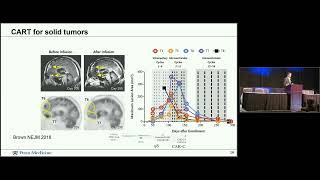
All right, thank you. So this talk is an overview of engineered T cell therapy in 2018. And this past year has been a banner year for engineered T cell therapy. In this talk, I'll outline some of those achievements, both clinical and preclinical. And this talk will in fact hopefully provide a useful framework for the subsequent speakers for this morning. So as you all very well know, Kim Riao or CTL019, was approved almost a year ago now for the treatment of pediatric acute lymphoblastic leukemia. And recently, the label was expanded to non-Hodgkin lymphoma. We also had approval of Viescarta, axiCell, for the treatment of some forms of non-Hodgkin lymphoma as well. And these were the first gene therapies approved by the Food and Drug Administration in this country. These approvals and several other advances were based on some major publications, including those of anti-CD19 CAR T cells in ALL by several different centers. In non-Hodgkin lymphoma, several different centers in multi-center trials. And then CLL, which is in fact the commonest B-cell malignancy in the Western world, has lagged behind a little bit in terms of the depth of responses to CAR T cells, but there was a very nice and important paper that was published last year by the Fred Hutch group showing that some patients do in fact achieve responses. Complete responses. We've also had two very recent and I think very important papers on neurotoxicity, which despite years of treatment with CAR T cells to date has remained somewhat opaque in its pathogenesis and its causes. And both these publications came from the Fred Hutchinson Cancer Research Center. The first one from human and the second one from non-human primate models. What I think we've learned from these papers is that probably it is not a CD19-specific or CD19-directed toxicity. And the reason I say that is because the monkey model that was using CD20 CARs— we also know that myeloma BCMA-specific CARs can induce neurotoxicity and CD22 as well. And so I think the balance of data right now is that it isn't a CD19-specific toxicity. So, what did we find? Well, both correlative human studies as well as the monkey studies have shown evidence for increased permeability of the blood-brain barrier and endothelial dysfunction, which— and at least in the monkey data, but not in the human data, showed infiltration of T cells into the CNS. Having said that, these were both CAR and non-CAR T cells in the CNS. So, I think there are some differences between the nonhuman primate and whatever correlative data we can ascertain from the human studies. Nonetheless, that's what I think we've learned from neurotoxicity. What we haven't learned from the neurotoxicity papers is how to treat it. And right now the treatment of neurotoxicity rests essentially on steroids and supportive care. People do not seem to respond to tocilizumab. Another very recent and I think very interesting paper that came from our group at Penn actually was published in Nature Medicine very recently and relates to the issue of patient selection selection in malignancies where the response rate isn't as high as the 90% that we see in ALL. So this was a very detailed correlative study of CLL patients, about 25% of whom in several different— across several different centers achieve a complete response. And so the question is, can we identify those patients ahead of time, with the implications that if we could do that, we could number one, direct the therapy to patients who are likely to respond, and this is important clinical and translational as well as commercial implications. And the second implication of that is maybe we can learn how to further enhance the response of CLL to CAR-T cells. So what our group led by Joe Freyetta showed is that patients who have high levels of CD8-positive cells that are CD27-positive, CD45R0-negative, PD-1-negative are those who are much more likely to respond. And in fact, something that I think was maybe relatively underexplored but nonetheless truly intriguing in that paper was the potential for the importance of IL-6 and IL-6 receptor signaling in these patients. And the reason I say that is that we know that patients who have, particularly in CLL but other malignancies too, high levels of IL-6 are the ones who respond. Joe and his colleagues also showed that the T cells that are described as those sort of central memory, less differentiated cells, have high-level expression of IL-6. IL-6 receptor. And so what this, I think, leads us to have to explore is whether giving an anti-IL-6 receptor antibody like tocilizumab in some way can abrogate the response to CAR T cells. And that's not something that's been unfortunately explored very well, though we and others are trying. So this is a slide that I got, and so I was delighted actually to see this slide. This was actually a commercial. This was by Wells Fargo, and you probably can't read the details on this, but suffice it to say this outlines the landscape of engineered T-cell therapy in 2018. I thought this was absolutely fascinating. Each and every one of those dots is a particular trial or product that's in development currently and spreads out from the middle from the two marketed and approved and marketed by Gilead and Kite, which is Yescarta, and then by Novartis, which is Kymriah, and then spreads out like sort of like like waves on a pond with those two pebbles thrown in first and then all the other development of T cells that I will explore gradually during this talk. So let's talk about ALL first. The data from the Children's Hospital of Philadelphia and also from a multicenter trial of ALL is what led to approval in this malignancy. The recent paper in the New England Journal of Medicine by Shannon Maud and colleagues showed spectacular complete response rates. Which we all know by now very well. I think what is very worthwhile to pay attention to is the event-free survival, which is still remarkable for patients with multiply relapsed malignancy, but it is about 50% at long-term follow-up. There is maybe, hopefully, a plateau on the event-free survival curve. I think there probably is. But what this does tell us, and I'll come back to this shortly, is that we need to do better for those other 50% of patients who who don't have a durable response. And similar data in adults, perhaps slightly lower responses or lower durable responses in adults published by the Sloan Kettering Group. And the reason I put this particular portion of their paper up is because, again, as can be expected from cancer therapy, those patients who have an MRD-negative complete response do better. Nonetheless, it is worthwhile pointing out here that those patients who had an MRD-negative complete response, still the majority of the of those patients did relapse. And so very exciting. Approval is tremendous accomplishment, but we certainly need to do better. So what about non-Hodgkin lymphoma? So here I'm showing Yaskarta with the multicenter trial of about 100 patients showing a very nice and durable progression-free survival of around between 40 and 50% at reasonable follow-up. If you look carefully at the survival curves, you see that patients who do achieve a response patients who don't achieve a complete response have a pretty rapid progression. So generally speaking, if I'm seeing a patient who's had a response to Yescarta or to Kymriah, if they get to around 6 months follow-up, what this means to me is I think we're probably pretty good. And similar results were shown by the Penn group, by Steve Schuster. So these are the approved products. What's in progress and what are we eagerly awaiting? So let's talk about combinatorial CAR approaches for B-cell malignancies. Here are some of them. CD19 and CD20. CD20 and CD19. At this meeting, we heard some preclinical data that explains what people are doing with that. There was a nice presentation yesterday showing CD19, CD20, and CD22 trispecific CAR T cells, which are very exciting as well. The reason we need these is quite clear, and I think— let me use the recent data published by Terry Fry and his colleagues from the NCI. This is data from a CART22 trial for patients who had relapsed after prior CD19-specific therapies. You're looking at the FACS plots of the leukemic cells in red on pretreatment in the top and after relapse in the bottom. And you can see that these patients pre-CART22 had no CD19 expression but had CD22 expression on their blasts. And yet at relapse, very shortly after infusion of the CAR T cells, the CD19 remained, as one would expect, remained diminished or absent, and CD22 was now absent as well. And then of the sizable minority of patients treated on this trial who relapsed, you can see that generally speaking, their CD22 site density was diminished. Not completely gone necessarily, except in one patient, but diminished. And so this tells us why we need combinatorial CAR approaches for B-cell malignancies, as I explained. And so in that context, we now have, at last count, the following trials currently in progress from several different institutions. City 19 and 22 are being targeted in Seattle, at Stanford, at the NIH, in London, and then 3 sites in China, at least. And then City 19 and 22 are being targeted combinatorially in Milwaukee and Beijing, and I'm sure several other centers are gearing up to do the same as well. I'm not going into the details of the construction of the dual or combination CAR approaches at the moment, but suffice it to say, the way I would think of it is a pooled, whereby two different products are made and infused together, or an engineered approach whereby a cell is engineered to express either two completely distinct CAR constructs, one directed against CD19 and one against CD22, or a sort of tandem CAR approach whereby a single polypeptide expresses two binding domains for CD19 and CD22. So, I think what else is really, really exciting and at a guess, I think BCMA is going to be the next CD19 for CAR T cells, is the BCMA approaches. Here are some of the active studies. There are 24 of them. The overall responses look really good. These are overall, not complete responses, mind you. So very recently at ASH and at ASCO, the Bluebird and then the Legend trial, and Novartis and Penn presenting in abstract form at ASH as well, showing overall responses of of 65 to 100%. Really remarkable. I think that we all look forward to the publication of these studies to look at the durability of these responses, which is going to be critical based on what we now know from several years of follow-up of CD19-directed studies. Complete responses are important, but we need to see what happens in a durable fashion. So what about universal donor CAR T cells? I'm sure this audience has heard a lot about the importance of this. I think we're going to hear a little bit about regulatory and probably manufacturing aspects of the CAR T cells. But it truly is, as a clinician I can share with you, it is sometimes very difficult to get a patient onto a CAR T cell study in terms of our ability to remove cells by apheresis, have them manufactured, and then infused to the patient, all while keeping the patient clinically stable. These are patients often with active and rapidly growing malignancies. So in that context, as well as from the commercial manufacturing perspective, it really would be important if we could have a universal donor, a healthy donor whose cells could be infused at will, off the shelf as it were, into a patient with malignancy. And so to my mind, Selectus currently leads the field through its— either by itself or through its various collaborations. And you You can see that various UCAR studies are currently in progress. We heard yesterday, and in fact a recent paper also described other approaches for removing the T-cell receptor from T-cells, not necessarily by knocking it out genetically, but various other interesting approaches to block its expression on the cell surface. And so, while these approaches are interesting, I think what hasn't been solved yet, at least to my satisfaction, is the host versus graft, if you will, the rejection direction. Of the donor T cells because for that, one would need to manipulate the MHC class I and II molecules, which in turn would make them very palatable targets for natural killer cells. So that's a problem that is yet to be solved, but people are working on. So what do we know so far? What has been published so far about universal donor T cells? Here's an example of— this was published in Science Translational Medicine last year. This is the London group, which uses Selectus product, anti-CD19 CAR T cells in infant ALL. And the additional modification was knocking out the T cell receptor alpha chain in order to abrogate the ability of the T cells to cause graft-versus-host disease, as well as of CD52, which is the target of a therapeutic monoclonal antibody called alemtuzumab. And this approach, this combined approach actually has been advanced by Selectus for quite a while now, and I really congratulate them on rolling this out. So here's an example of some— of quantification of the leukemia. MRD is minimal residual disease, quantified on the y-axis with days before or after UCAR19 infusion on the x-axis. And the gray and black represents the identity of the clones. And so you can see that this patient had failed an allogeneic stem cell transplant for infant B-ALL. Which progressed to day 49 and day -12. And then the patient was conditioned with fludarabine, cyclophosphamide, and alemtuzumab, followed by infusion of the UCART T cells, which eradicated the disease. And the patient then underwent a second allogeneic stem cell transplant. And I think while not the main intention of putting out this particular data, this brings to mind an active controversy in the field—what to do with patients who have achieved a complete response to CAR T cells Do these patients need a stem cell transplant afterwards? Is this a bridge to transplant or are these patients essentially— have we essentially eradicated the disease? And as I said, this is something that the field is still debating very actively. So the gorilla in the room, of course, is CAR-T cells for solid tumors. I think that— so here is just a few of the many trials. At last count, I counted around 250 CAR T-cell trials all over the world, of which about half were directed against a variety of solid tumor antigens. And so I can share with you a little bit about what we've learned. To my mind, the most interesting CAR T-cell trials published to date are the ones against glioblastoma. This is one from Penn, which treated a handful of patients, I think 10 or 11 patients with CAR T cells directed against EGFR variant 3, which is an interesting antigen because it is truly tumor-specific. It's one of the few cell surface-expressed tumor-specific antigens. So seemed very, very attractive to begin with. What you can see is these patients were— here we're quantifying the amount of EGFRv3 before and after CAR T cell infusion. And generally speaking, what we found was immunoediting. So what this brings to mind is the fact that if you don't have homogeneous 100% tumor-wide expression of your target antigen, what will happen is immunoediting, and that's exactly what we saw. We saw other things too, though. As you can see in the immunohistochemistry of pre- and post-biopsies of the glioblastoma from one particular patient, we saw evidence of have an adaptive immune response to that too. So we have lack of IDO1 expression before, but IDO1 expression after infusion of the T cells. PD-L1 is significantly upregulated as well, and there is an infiltration with probably regulatory T cells in that tumor microenvironment as well. So I think this is really interesting, not because it works spectacularly well, but because it was well done and because it has shown us some important lessons yet again. Another interesting trial was published now 2 years ago by the City of Hope group. And again, this is for glioblastoma. And this is illustrating another theme that we're learning in solid tumors— I think we're learning in solid tumors. Here's one particular— in fact, this is a case report of a single patient who had multifocal disease in his brain and spinal cord. Before and after infusion MRIs are shown and PET scans.. And on the right side of the slide, what you're looking at is quantification of the size of the individual lesions in this patient's brain. The patient was initially treated intracavitally, so there was a catheter put into the surgical cavity and T cells were infused directly into where the tumor site was. And in fact, what happened was that the tumor grew. Then the route of administration was altered such that the T cells against— and this is against interleukin-3 receptor alpha-2— were infused intraventricularly, again through a catheter. And this is 6 infusions, and this is when we see diminution in the size of all lesions, followed again after some— about 50 days or so— by another few, and again showing reduction. And so this is an interesting approach to thinking not about systemic intravenous administration of T cells, but again but showing local, perhaps regional administration of CAR T cells. And one can think about a variety of biological reasons why that would work better than intravenous systemic administration and is also one of the rationales behind the intrapleural administration of mesothelin-specific CAR T cells by the Memorial group at the moment. So for solid tumors— and we'll hear from one of our next speakers about neoantigen discovery, which is, in my mind, the key to treating solid tumors with engineered T cells. So we have allogeneic and autologous TCR approaches against, generally speaking, tumor-associated or oncofetal antigens, not necessarily tumor-specific antigens. At the moment. Here are a few of the higher-profile studies in the last few years. Again, the field quite clearly is lagging significantly behind the CAR T-cell field, but I think we're going to hear more and more about that. Here's initially on the left a publication by the NCI groups infusing patients with sarcoma and melanoma with NYESO-specific T-cells where the overall response rate— again, not the complete response rate, but very healthy overall response rate, and with an illustration of the eradication of a right lobe of the liver lesion, pretreatment, and then at 52 months. In the middle, we have— this is not a solid tumor, but this is a TCR, engineered TCR product against a peptide shared by NYESO1 and LAGE1 in myeloma, where again, the overall response rate was 16 out of 20. And what I'm showing you there, although of course the bone marrow is is truly what counts in myeloma. This is a plasmacytoma at the tail of the pancreas which was eradicated 56 days after infusion of these T cells. And then the most recent major study was again with MAGE-A3-specific T cells where the overall response rate was poorer, to be fair. It was 4 out of 17. And here's an example of a patient treated with lung lesions with MAGE-A3-specific T cells with reduction in the lesions. So we've had a few preclinical findings. In the last few minutes, I will just very briefly highlight those because you've heard— I'm sure you've all read the papers and you've heard quite a lot about these in this meeting already. Things that I am particularly excited about are locus-specific insertion of the CAR and what that really allows us to start thinking about is not necessarily using lentiviruses, integrating viruses to insert the CAR in a stable manner. And that was published by the Memorial Group. We need to start thinking, and we are already starting to test, how to circumvent resistance. I showed you one data slide from— of adaptive resistance in the tumor. We need to think about how to do that clinically. So inhibitory receptors such as PD-1, for example, can be either blocked using co-infusion of checkpoint inhibitors. This has been done with a case report from from Penn, and then also the ability to knock out PD-1 using CRISPR or other modalities in order to generate T cells that are not likely to be inhibited by the PD-1/PD-L1 axis, though of course they remain quite susceptible to other immunosuppressive axes. And you saw yesterday, I think, studies with TGF-beta dominant negative receptors. Metabolism— there's a fantastic publication publication in Nature in 2016 and then a follow-up presentation which was really fascinating and delightful by Nick Rostifo yesterday talking about metabolism, particularly talking about the previously unappreciated role of hyperkalemia and necrosis in the tumor microenvironment which can shut off T-cell functions. And so that's something else we need to think about, though is less well explored in terms of the translational implications of that. And then the stroma, again, there's so many different problems in the tumor microenvironment in the stroma. One of those approaches I thought was really interesting— T cells that were engineered to express heparinase. And then the group that is led by Dr. Dotti has published these in Nature Medicine in 2015. I believe a clinical trial is in progress right now. And then finally, logicated circuits for combinatorial CARs. This may well be the way forward for solid tumors, how do we make the T cells see only cancer cells and ignore normal cells? And so this actually has a fairly long history, at least by the life cycle of CAR T cells, with several different papers from various groups over the last few years, including the Memorial and the Baylor group. But the most interesting and exciting logic-gated circuits using either the synNotch system from from California, the Roybal paper from Cell in 2016, and then with another modular approach using a leucine zipper approach published very recently in Cell. So in summary, where are we in 2018? We've clearly seen that several products have been approved, and this very firmly establishes the excitement that we, the whole world has seen when it comes to gene therapy and the commercial implications thereof. As I showed you in that slide that was derived from a Wells Fargo publication, there are many more approaches coming. And in fact, when you sit back and look at all the presentations even at this meeting, you have to wonder how we're going to systematically test all of these in a head-to-head fashion. I really find it hard to imagine how we could do that systematically. Advantages, I think probably I'm singing to the choir to the choir here, the specificity of CARs is, unless we use a combinatorial CAR approach, is not there. I mean, CARs are not specific to malignant cells. But TCR transgenic approaches give us the possibility of being specific and hopefully to tumor-specific antigens rather than to lineage-associated antigens. And of course, the potential for one-time administration. And the reason I put cost under advantages and disadvantages is because while the sticker shock and the price tag for a single infusion looks high, I think compared to many years of sequential therapy, sometimes with very, very expensive daily administration of small molecule inhibitors that are not, generally speaking, curative, I think cost probably is on the side of gene therapy. The side effect profile— I've raised a few of those issues. I think we're hopefully running down the pathogenesis of CRS and of neurotoxicity. Some of this you heard about in this meeting. And the cumbersome manufacturing approaches is certainly an area of very active investigation in order to make it less cumbersome, cheaper, and more facile. And that concludes my talk. So, thank you very much for your attention.
Thank you very much, Dr. Gao. Now the presentation is open for discussion. Any question? Then I may ask one question. So the— how, you know, I am from the field of solid tumor, then here, as you said, the issue is heterogeneity inside tumor. What people are doing to deal with tumor heterogeneity, intertumor, clonal heterogeneity.
Look, I think this is a really important and vexing issue. I think that we, my personal view is that we need to be very honest and we need to be very clear about what we're doing when it comes to at least CAR T cells for solid tumors because as I showed, I don't really think that if there is heterogeneity of expression of the antigen in the tumor with this particular approach that we're talking about right now that we're going to get anything other than immunoediting. So to me, the most promising, albeit slightly blue sky at the moment, is going after cancer-specific mutations. And at this— at the current moment, the only way to do that is with TCR transgenic or TCR or TIL approaches, which are based on the TCR. Okay, thank you.
More from Joshua







Scientist Stories: Hans Waterham, The value of phenotypic assays in peroxisomal disorders




Scientist Stories: Joel Zlotogora, Genetic carrier screening programs for reproductive purposes