Scientist Stories: Shirley Tilghman, Genetics of Development
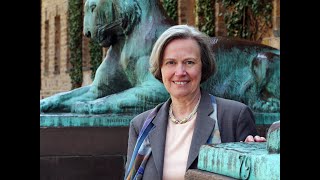
In this interview, Professor Shirley Tilghman recounts her scientific journey from post‑doctoral work cloning the mouse beta‑globin gene to her pivotal role in shaping the Human Genome Project (HGP). She describes the early excitement and skepticism surrounding large‑scale genome sequencing, the inter‑agency turf war between the Department of Energy (DOE) and the National Institutes of Health (NIH), and the influence of early advocates such as Robert Sinsheimer, Jim Watson, Wally Gilbert, and Sydney Brenner. Tilghman explains how the Alberts Committee and the ELSI (Ethical, Legal, and Social Implications) program were established, and how she and David Botstein argued for the inclusion of model organisms as a strategy to develop sequencing technology. She details the managerial challenges of funding novel grant mechanisms, coordinating multiple high‑throughput sequencing centers, and handling egos and competition. The interview also covers the shift from technology‑driven to fundamental‑science‑driven funding, the controversial data‑release and patent policies, and the impact of Craig Venter’s private‑sector efforts. Tilghman reflects on the lasting scientific and medical transformations enabled by the HGP, especially in cancer research and the expansion of model‑organism studies, emphasizing the project’s role in opening new biological questions and democratizing genomic data.
Chapters
My name is Shirley Tillman, and I'm a professor of molecular biology and public affairs at Princeton University. I think the most important mentor I had was actually someone here at the National Institutes of Health. Philip Leder, who— in whose lab I worked as a postdoctoral fellow. He was sort of my mentor at a very critical time in my career where I was trying to decide what do I want to do after my training? Do I want to have a family? What kind of job should I look for? And he was not only immensely supportive during that period, but he was supportive for the rest of my career. So I think, for me, he was the most important mentor. So 1975 was a remarkable time to be a young molecular biologist because the tools of recombinant DNA had just been discovered and published, and they were beginning to be used to study genes. In organisms from bacteria all the way up to humans. And when I arrived in Phil Leder's lab, my project was to clone the mouse beta-globin gene. And at that point, no gene had been cloned out of a eukaryote. The task looked daunting and was daunting, but the tools were finally there where one could imagine isolating out of 3 billion base pairs a gene, in our case, that was about 7,000 base pairs long. I think people started hearing rumblings in the early 1980s. DNA sequencing technology had certainly improved. It was better than it was in the early days when I was sequencing the globin gene. And so I think people had started people started to think about what would it take if instead of going at this gene by gene by gene, and in 200 years finally having the genome sequence, we instead institute a concerted effort to get it all done in one fell swoop. So I think it was early to mid-1980s when people started talking about it. So I think the views of the scientific community were extremely mixed, from those who were absolutely certain that this was the right thing to do, that the concerted effort to get the sequence once and for all was going to be, you know, transformative to the field of biology. On the other extreme were people who, I think, for fairly pedestrian reasons, believed that there would not be new dollars devoted to this, so any dollars that were spent were going to be dollars coming out of someone else's pockets in biological sciences. I think on a less pedestrian, more substantive kind of criticism was that we were going to generate this huge database of 3 billion bases, and we simply did not have the tools to understand what it meant. And so we were going to create a white elephant, if you want. And I think the final criticism was, well, this is going to be so boring to do. Who would want to do it? And everyone imagined enormous laboratories with machines and sort of technicians standing in front of those machines, bored out of their minds. It didn't look like anything that biology had ever done before. Well, you know, I think one of the very first people to talk about it was Robert Sinsheimer at Caltech. He had been an advisor to the DOE, had been thinking about what is the future of biology at the national labs, and my understanding is that he was one of the very first people to go to the federal government, in this case the DOE, not the NIH, and suggest that perhaps the biology labs at the various DOE installations could— were ideally suited for a high-tech project like sequencing the human genome. So, from my perspective, he gets a lot of credit for at least raising the question. And then I think there were people like Wally Gilbert, like Jim Watson, like Sydney Brenner, I think, all of whom were early advocates that this was a grand project and it should be done. My perception was that it was a turf war, a complete turf war. The minute the DOE began to talk in earnest about the possibility of having the Genome Project in the DOE labs, there was an outcry in Bethesda, Maryland, from the NIH saying, wait a minute, we're the National Institutes of Health, the human genome is about health, if anybody's going to sequence the human genome, it is going to be us. So I think there was actually a fairly nasty turf war in the very beginning that ultimately was resolved in a I would say in a pseudo-Solemonic way, by giving the majority of the project to the NIH, but giving the DOE labs a role in technology development. So I think eventually it was resolved, but in the beginning it was a classic government turf war. I think in many respects, Jim was essential at the beginning because he was one of the most iconic biologists in the world at the time. As a consequence, he had immense credibility within the Congress. We knew from the Alberts Committee that this project was going to cost a great deal of money. And we also knew that to get the support of the scientific community, we were going to have to be able to argue that we were generating new money, not taking money away from existing scientists. And so we needed someone like Jim, who was going to be able to go onto the Hill and basically be invited into every single door. And so I think at the beginning, Jim was critical. I don't recall this being a major issue during the Alberts Committee, where we were trying to sort of formulate the outlines of the project. But I was extremely supportive of the ELSI project from the very beginning. I was on the original council for the Genome Project, and I thought it was quite visionary to see that this was a project that was going to require require insight and actually scholarly work coming out of fields other than molecular biology and genomics. So, I think it was one of the smartest things Jim did in the early days of the project, was putting aside about 5%, as I recall, of the funds to support understanding what it means to have the sequence of the human genome. I suspect the Alberts Report will go down as one of the most influential NRC reports that was written around that period, maybe altogether. I think one of the reasons it was so influential is that the committee was composed of the literati of the scientific community at the time. People like Wally Gilbert and Jim Watson, Dan Nathans from Hopkins, who was, as you can imagine, an extraordinary presence on the committee, Lee Rosenberg, who was Yale's Dean of the Medical School, David Botstein, of course, and Maynard did not come onto the committee until Wally Gilbert resigned. And when Wally resigned, the decision was made to bring another person, other than me, onto the committee who had actually sequenced DNA in their lifetime. So the only two people who actually knew how to sequence DNA with their own two hands on that committee were Maynard and myself. And in terms of you know, what contribution did I make that had I not been on the committee, it might not have happened? I think I partnered with David Botstein in particular to argue that we had to include model organisms in the project. And in fact, that's what had to happen first. We had to learn how to sequence by starting with E. coli, working our way up to yeast, to fruit flies, to worms, and eventually up to mice and the human genome. And I think that recommendation was essential to allaying the criticisms that we knew were out there in the scientific community, that this was only going to benefit, you know, a handful of human geneticists and some docs. But suddenly— and this is— I remember saying this at a Cold Spring Harbor meeting in a talk about the Genome Project, that a genome enthusiast is a genome critic who just got a hit in their organism's sequence database. And I think it really proved to be absolutely critical to the success of the project. The other thing I would say is it brought incredibly talented people into the project, people like Gerry Rubin, who otherwise would have had no interest in sequencing the human genome. It brought in people like Maynard, you know, whose interest was the yeast genome. It brought in Bob Waterston and John Sulston, who were not human geneticists, who were not particularly interested in the beginning. In human genetics. They wanted the genome of the worm. So I think that was another reason why that was such an important decision. The last thing I would say is we were all living with the specter of the Superconducting Super Collider disaster, you know, the project that was begun and then canceled in Texas. So we knew we needed victories along the way. The problem with the SSC what you would see is that they would spend years and years and years and billions of dollars, and until they actually turned the key, they had nothing to show for themselves. The Genome Project had victories along the way. As each one of these genomes got sequenced, we could have a celebratory party, we could declare victory, and I think that kept the interest of the Congress. I think it also kept the enthusiasm of the scientific community, both of which I believe were critical to the success of the project. I think the Congress has a limited patience with long-term science projects. The SSC basically couldn't justify itself for the period of time it needed to in order to get completed? '89, right at the beginning. Yeah, no, I was— David Bussstein and I were on the first version of that council. Well, there was so much drama around that time, and it obviously included the the conflict between Watson and Craig Venter. So there was just a lot of uncertainty, I would say, at the time, and a lot of anxiety that the project could go off the rails. Although by that time, enough had been committed to the project that I think it would have been hard to suddenly pull the plug simply because we needed a new leader. I think hiring Francis obviously allayed everyone's fears, and the project, you know, basically was able to ramp up from there. So I don't remember thinking, oh, this is going to be the end of the project, but I think we were all greatly relieved when Francis agreed to come on and be the new director. You know, the first thing I would say about having Francis arrive as the new director is he had tremendous scientific credibility. And it's not that Jim did not. Jim— but Jim's scientific contributions were well in the past, whereas Francis was an active, engaged human geneticist. And I think that meant a lot to not just the scientific community, but to the staff at what was then the Center. I don't think at that point it was the Institute. I think Francis is also someone who is good at managing people on his staff. And so I saw a lot of the staff, people like Jane Peterson and Mark Guyer, Elke Jordan, these are people people who were absolutely critical to engineering the management of this very large project, my sense from talking to them is they were happy as clams and very happy to have Francis as their spokesperson and as their leader. So I think once Francis arrived, everyone felt a tremendous sense that, you know, we have our momentum back. This is going to happen. For me, the biggest challenge from the very beginning— so I would put this all the way back to '89, but certainly I would say continuing through this period that we're talking about— was the NIH learning how to review grants, genome grants, which look completely different. From the traditional R01 grant, or even the traditional center grant, or program project grant, and had to learn how to fund technology development, needed to learn how to fund computer scientists, needed to learn how to fund physicists, because these people were increasingly absolutely critical to the success of the project. So, one of my most vivid memories of being on council during this period is sitting with David Botstein, who, if you've interviewed him, you know that he is not shy. And he would just pound on the table as he read a grant review and said, "Hold the phone! This is ridiculous! This can't go forward as a no, because actually this is exactly what we need." kind of technology. So I think the biggest challenge was learning how to manage in a very different way from any way that NIH was used to managing science. And then, and then I think as the big sequencing centers began to form and expand, How do you manage an enterprise like the Whitehead Sequencing Center or the Washington University Sequencing Center? These are— these have individuals working in them who don't look like anything the NIH has ever funded in the past. How do you give these centers targets without sort of tying them in knots? It was a huge management issue. And then how do you get very, very, very strong egos to play well with one another and to function as a team as opposed to a series of competitive centers? And I think all of those were immense challenges that Francis managed, I think, extremely well. So, the answer, I think, is it was both. I think it— the emphases were different at different periods during that critical 12-, 14-year period. Clearly, we were not going to get to human sequencing if we did not invest in sequencing technology. We simply were not going to get there. So, there had to be a significant fraction of those dollars that were going, oftentimes, to companies to develop better and better and better sequencing machines. On the other hand, as genomes were getting sequenced, we were learning, you know, stunningly interesting things about them. As we got to the point where we could start comparing genomes, one genome to the next, we were discovering things that were sometimes species-specific, but often not. Often these were telling us a lot about how evolution works. So I think as we got more and more sequences, I think we started to realize we were really in a fundamental science business, not a technology business. And I think what was happening as these model organism sequences started pouring into the databases is scientists who would never, ever call themselves genomicists, and in some cases would not even call themselves geneticists, were suddenly poring over those data in those databases, learning things about their model organism that they've been puzzling over for, 20 years. So we weren't funding that at NHGRI, but we were facilitating it, for sure. So the intellectual leaders were all biologists. So if you think about who would I consider the intellectual leaders of the project, Eric Lander, certainly. Bob Waterston. Certainly. Maynard Olson, certainly. These were— John Sulston, certainly. Sydney Brenner, to a certain extent, although he wasn't doing it, he was one of the intellectual leaders. So, the intellectual leadership was absolutely coming from biologists, and largely geneticists, but they couldn't— accomplished the task had they not been able to recruit into the project people with different kinds of skills, particularly computer scientists. And I would say physicists, engineers— it's really important to remember how important engineers were to this project too. I think the, the idea of starting off by letting 100 flowers bloom And letting lots of different people try lots of different ways of getting at the same goal was incredibly creative and very, very rewarding. But by the late 1990s, you had to get down to the business of sequencing. And that was going to be high throughput. There wasn't going to be a lot of time to sit and muse over what the meaning of the sequence was. And I think at that point, it did make sense to consolidate into roughly the 4 or 5 centers that ultimately did the vast majority of the sequencing. I think one of the biggest challenges that Francis had was coordination. And again, it comes down to the fact that the— by the time in the U.S. we were down to 4 major sequencing centers, one in the UK— coordinating them, making sure that they were doing complementary sequencing and not competitive sequencing, was an enormous challenge. And as you well know, that the strategy for the project funded by the federal government was to divide up the genome. Into, you know, regions, and then assign regions to the various sequencing centers. That's a huge management question. It's a huge challenge to get that working and working well. So I think that was one of them. I think the quality always was an issue. You know, what error rate are we willing to accept? And if it is lower than the error rate of, you know, DNA synthesis, are we kidding ourselves? I think a big issue that confronted the project as it was just starting to ramp up into high throughput was, what are we going to sequence? And we had the, you know, the sort of setback where we suddenly realized that the Yak library that was intended to be sequenced we knew whose DNA was in there, and so that had to be destroyed, and we had to start over again. That was a difficult decision to make. I mean, it was the right decision, but it was, you know, a painful decision is probably the right word. It was really the time, and, and, but it was, you know, it was an early benefit of having an ELSI program, because it was the ELSI program that was continuing to harp on privacy, and the issue of privacy, and the issue of how do we handle the kind of information that is going to come out of the genome. And because those issues were on our mind because of Elsie, you know, we were just ready to start sequencing when someone said, "Wait a minute. We have a problem here." Right. This person can— could be identified. Yes, exactly, which would not have been a good thing. I don't remember actually sort of anything the equivalent of the story of having to destroy the library, where you go down a path with the technology and then all of a sudden you have to stop and say, no, no, no, that's not going to work. It may have happened, I just can't at the moment recall. So I did not go to the Bermuda meeting. So I was not part of that final discussion there. But I supported the notion, the idea that came out of that meeting, the really critical issue of data release. I think it was not natural, if you want to think about it that way, to the way that people have always thought about it. If I generate the data, don't I get a little while to actually look at it and figure out what's going on. Isn't that fair? So it was a sea change in expectations and behavior in the community. But I think it was absolutely the right decision. I think it also put the brake on what I call the patenting land grab. And that was really critical, because we were going down a path that we would have deeply regretted had we basically allowed the sequence not to be published on a daily basis, and allowed people out there trying to patent every base pair in the genome. Yeah, I think Craig was an agitator and a disruptor. And for both good and for ill, in my view. So the good was that he really forced the community to think hard about genome-wide shotgun sequencing. You know, everyone was shotgun sequencing a cosmid or a, you know, a YAC. We were all used to thinking about that, but no one had really contemplated what it would mean to shotgun the whole genome. And as, you know, now looking back, what I would argue— I've never done the calculations, but I'm pretty sure this is right— that shotgun sequencing would never have worked, including for Craig, had he not the framework that the public was putting out on the web every 24 hours. And so when I hear him talking about having generated a much more efficient way to sequence whole genomes, and this is the right way, and it's crazy not to do it this way, and look, I, all by myself, I got where the government got almost at the same time. What he never says is that his sequence contained all of the data from the publicly generated database and his shotgun sequences. So, I think he accelerated the pace of sequencing in the public side. I think none of us wanted Craig out there with a finished human sequence before the public sequence. So you could argue that a little bit of competitive pressure was probably a good thing. But I think what he did was unseemly. And I think it was almost dishonest in portraying his project as utterly independent of the public project, which it wasn't. You know, I think it wouldn't have had a major impact on fundamental research, because the research exemption is pretty well, I think, accepted practice across all fields. But it would have dramatically inhibited the biotech industry. It would have inhibited the moment when the pharmaceutical industry got into the business of of looking at genes as targets. And I think that would have been, you know, a tragedy. You know, you've been there from the beginning. We're now at the critical moment. I know how to run a meeting. You know, I know how to keep sort of critical constituencies from getting into fistfights in the hall. I think he thought that I could manage this very big group of people, all of whom had the same goal and were charging towards the goal, but needed to be— there needed to be a few guardrails along the way. I think by 1999, I think there was a sense that the technology was good enough. It wasn't what it is today, to be sure, but it was down to what, about between $1 and $10 a base. And we thought we could do it at this point. We would continue to improve the technology as we went along. I don't think any of us thought it would only be 4 years, but I think it was mainly driven by the fact that the technology looked like it was good enough that we could start sequencing in earnest. So, I would say 2 things, and one, I'm going to go back to the deliberations in the Alberts Committee. I think the Genome Project has opened up biology, to the study of organisms that we never would have been studying in the past. And we are learning so much from the fact that instead of studying only the security council, which is what we used to do, which are the handful of model organisms for which 99.9% of the tools were developed to study We now, you know, people are studying organisms I've never even heard of, and I just think it's blown up the Security Council, and we now have the United Nations instead, membership. So I think that's the second, first thing I would say, and I'm saying that as a model organism biologist. I think from the perspective of human biology, I think it has given all human biologists tools to now ask questions that they could never have asked before about both health and disease. I think we've seen it most dramatically in cancer, where there has just simply been a complete revolution is the only word that I think is appropriate in how we think about cancer, how it, how it develops, and how we should be thinking about treating it. This would not have happened without the Human Genome Project.
More from Joshua







Scientist Stories: Hans Waterham, The value of phenotypic assays in peroxisomal disorders




Scientist Stories: Joel Zlotogora, Genetic carrier screening programs for reproductive purposes