Scientist Stories: Shruti Naik, Epithelial Immunity
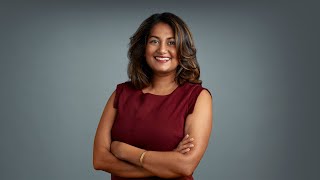
Dr. Shruti Naik studies how immune cells and epithelial cells work together to repair barrier tissues like skin and gut. Inflammatory signals remodel chromatin in epithelial stem cells, creating a long-lived memory that speeds up healing after injury. She launched her lab during COVID lockdowns, which forced the team to pause experiments but deepened their scientific thinking.
Chapters
Hey there, this is a special episode of the Immunology Podcast, AAI 2022, Epithelial Immunity with Dr. Shruti Naik. Hey everyone, this is Dr. Jason Goldsmith and Dr. Brenda Raut. Welcome back to the Immunology Podcast, where we have conversations with immunologists. This week we're bringing you 3 very special episodes of the Immunology Podcast straight from the American Association of Immunologists annual meeting, Immunology 2022. Today we'll be chatting with Dr. Shruti Nayak from New York University to discuss her talks on trained immunity in immune epithelial crosstalk and tissue repair.
But before we get to that, performing multiple rounds of cell isolations can be tiresome and inefficient. Using StemCells Technologies' new EC-250 EasySep Magnet, you can scale up your cell isolation and process large volume samples like leukopaks and whole blood in a single round of separation. Obtain highly purified cells from samples up to 225 mL in a single step. Learn more at www.stemcell.com/ec250magnet. Hey Jason, welcome to another Immunology 2022 Bonanza Extravaganza episode.
Yeah, we're, we're hitting them hard and heavy here. 3 of them this week, I think, is the plan.
Indeed.
And listeners, when you have a chance, remember to follow us at @Immunopodcast and stay up on what's happening at the meeting. But also, we've extended the contest for our podcast to win a wireless Bluetooth speaker. So go to the website immunologypodcast.com/newsletter, and if you subscribe, you can win a Bluetooth speaker. And we've extended this to June 5th because we know you're all really busy at the meeting right now.
I just want to say that the Bluetooth speaker is engraved, is personalized, is ImmunoPodcast special. So it's not just any Bluetooth speaker. So I think that's a reason good enough to sign up for the newsletter.
Well, we're going to hop into this talk here with Dr. Shruti Nayak because they're coming one after another here while we're at AAI.
Joining us is Dr. Shruti Nayak. She is an assistant professor of biological sciences at NYU Langone Medical Center in New York. Where she studies the dynamic interactions between immune cells, epithelial cells, and microbes in barrier tissues that interface with the environment, such as the skin, the lungs, and the gut. And she's going to be talking to us about that and about her talks at the conference. Thank you so much for joining us.
Thank you so much for having me. Yeah, it's been such an exciting meeting, and I look forward to sort of discussing some of the salient findings from our lab. Um, and how they fit into the context of this fast-moving field with both of you.
All right, so let's hop in. I'll start. I'm an epithelial person who also plays immunology a little bit. Um, so you've done a lot of really interesting work on the combination of inflammation and your epithelial stem cells in the skin. Specifically skin, just so people know, you know, there's lots of epithelium out there. And then also the, the layering, and I mean that both as a pun and literally and figuratively of the microbiome on top of that. So I was wondering if you could start with linking some of your work together, because you've had this really good kind of multi-track dendritic cells in the microbiome, and that provides a protective signature. And control of skin immunity by the microbiome, and then inflammation memory sensitizes stem cells. So how do you think that links? So from where you're looking at, and you're talking about a fast-moving field, I don't know if this is related to one of the talks you're here at AAI giving, but how, how does the microbiome condition or the immune system, and what does that do to your skin and maybe other epithelial cells as well? Because I assume a lot of this is conserved, at least that's what I've seen. In terms of regeneration repair post-inflammation, because anytime it's hurt, there's inflammation.
Yeah. So you're saying a lot of different words and concepts, right? And I think that, um, how they tie together is really, maybe we could step back and say you started this conversation with, I'm an epithelial person and you are now venturing into immunology. But I think the big question is first, What is an immune cell, and do non-immune cells have immune function? And I think we appreciate the answer is yes. I think the answer is yes. Before we were multicellular organisms, we were unicellular organisms, and every organism had to defend itself in some way. And so implicit in that is this sense of immunity, right? So, I mean, but that's the evolution of the immune system is a whole different conversation. I think Maybe the broad driving or overarching thematics between how microbes influence barriers, and I think this is true not only in the skin but also in other epithelial barriers, as you've noted, how inflammation or noxious agents affect barriers is this notion of how does our system respond to environmental triggers? Broadly and very generally, there's two outcomes. Either it's adaptive, it learns from it in the context of adaptive innate immune memory and it gets better, or it's maladaptive and you succumb and you have disease, or there's some cumulative effects that ultimately leads to your demise. I think if you place our interactions with microbes, be it commensals or pathogens, if we place our interactions with environmental toxins, with disease-causing agents, with injuries, all of these broadly fall into that host-environment relationship and these two outcomes.
I think maybe to focus a little bit on the— how you're going to present or how you're discussing your research at the meeting, and I hope that this is a good segue. One of your talks, your first talk on Friday was on trained immunity, and it was part of a, what was kind of a back-to-school theme from AAI. And I thought that was very interesting. I would like you to tell us in the context also of your research, what is and what is not trained immunity, and why do you think it made it to one of the 4 topics that immunologists could use a kind of a refreshing on.
Right. So this idea of memory is something that has captivated immunologists, right, from the very start of our field. And I would say going back even 100 years, there was a lot of clinical evidence of trained immunity, which is— there's many words for this— nonspecific memory, immune priming, adaptation. But the molecular basis of these phenomena were not known. Actually, immunity in plants gave us some of the first hints of how they occur. Tobacco plants, for instance, when you have a virus infect or bacteria, I can't recall exactly what the pathogen is. Let's say pathogen. Let's pathogen infect one part of the tobacco plant, after the tobacco plant overcomes this infection, it acquires systemic resistance. So a different part of that plant is now resistant. And so that became sort of the foundation upon which this field of trained immunity or immune priming really came to be. And in my talk, I sort of walk through the history of that field and how it unfolded and is continuing to unfold in the past, you know, 10 to 15 years. So I think the first molecular work were done by the Metcalfe lab in macrophages, really elegantly demonstrating that macrophages have this nonspecific adaptation to microbial triggers. It occurs really at the level of the epigenome. And then in the, you know, 2010s, Mihaly Neta and many others came along and really coined this term inflammatory training. Or trained immunity, right? And I talk about what their seminal findings were and how monocytes and circulating cells have these adaptations. And then I really sort of launch into where our group's work and many others enter the field, which is this notion that if you're thinking about how memory is retained over a long period, it's not— it's going to have to be contained within long-lived cells, right? Just by, by logic, the short-lived cells die off. Even if they're entrained, they're going to die off. So folks have really started taking a step back and saying, let's look at the progenitors. So our work really, one, took it— took memory to that dimension, which is how does trained immunity or immune priming last long-term? And And the other sort of big question we broached was, can cells outside the hematopoietic system remember inflammation? Um, so that's, those are sort of the salient points upon which I discuss in my sort of back-to-school session.
So in terms of that and being able to retain memory, right, there's lots of ways to do this. Obviously you have to live, which you pointed out, and then you think about there's VDJ recombination for adaptive immunity. That's pretty clearly a way to long-term store something, which is change your DNA. But have you guys started looking at epigenetic changes or what else is the mechanisms behind maintaining this memory outside of VDJ recombination and that story? But what's maintaining, how is the memory being encoded in an energy-efficient way long-term in long-lived cells?
Yeah, so adaptive immune cells, right, that undergo VDJ recombination, and then you have a receptor that's selected for, and so the memory is at a population level, right? Here we actually think that that may be happening, but the inherent mechanism of nonspecific adaptation is this change or epigenetic priming of certain stress-related loci. In naive epithelial stem cells, and I must say in SPF mice, they're super clean facilities. These loci are really tightly wound and inaccessible. Then we find that you have this inflammatory stimuli that essentially allows for accessibility of these loci during a primary response. You have this dramatic transcriptional response, of course, during inflammation, there's pathology, there's tissue responses. But then when inflammation subsides, a fraction of these sort of inflammatory loci never revert back to their preinflamed state. They maintain a sense of sort of accessibility. And then when you have a secondary trigger, what happens is this enables any inflammatory transcription factors to be recruited much faster and to have a more rapid response. So you essentially, we think the memory is passed on via this poisoning of chromatin status and enabling a more rapid transcriptional response.
You have also studied the effect on epithelial inflammation, and the, you have a couple also very recent a recent publication in which you're looking to differentiate the differentiated epidermal cells and how this relates to inflamed skin. Can you please talk to us about this part of your research, how there's, there's a crosstalk in the context of skin?
Yeah, so, you know, I think this is the other really exciting field that's moving forward, right? Because this notion that immune cells talk to all the cells of the tissue and they're not acting in sort of isolation, and decoding that conversation both from the perspective of the immune cell, which is what are the mediators that are being secreted, how those mediators are regulating, but also from the perspective of the cells of the tissue. And so we do this, and I'm gonna, you know, I'm gonna talk about this actually in my in my talk for the ICIS session, which happens later on today, we do this in the context of tissue repair because we— my lab is really interested— one of the other areas that my lab is extremely interested in is how we rebuild tissues after infection, inflammation, after damage. Ultimately, this is, in my opinion, an admittedly biased opinion, at the crux of all human disease. Because every disease, no matter inflammation-induced, metabolic, neurodegenerative, they all really ultimately damage tissues and compromise organ function. Rebuilding tissues, repairing tissues is thus an integral part of any condition, any deviation from homeostasis. That's why we study these things. But what we actually mechanistically are getting down into a little bit more detail, do is look at how immune cells interact with stem cells or mesenchymal cells. And the talk I'm going to give later today is about this conversation between immune cells that patrol the skin. So if I come and biopsy either of your skin, there's going to be tons of immune cells there. This is the basis of immune surveillance, right? And we wondered what happens if you have a cut, a scrape, an injury. How do these cells respond? Do they participate in repair? And it turns out we find that there are really a lot of dynamic shifts that occur really swiftly, very rapidly, in contrast to sort of the classical view that, you know, if you have an infection, the immune response takes 7 days to mount, and you have this very defined population of cells that comes out. This acute response following injury is quite heterogeneous. And then we hone in on, um, a Type 17 program across many different cell types that is critical for this. And we start digging into exactly how interleukin-17, which happens to be a key mediator of this, promotes the process of re-epithelialization or making new epithelia, new tissue, which is essentially the process of repair. So we're starting to really decode the molecular mechanisms and programs within epithelial cells. That sort of promote this process. And I will say it's not the usual suspect. So, what we found, and I think people are going to have to come to my talk to figure that out, is IL-17 induces very unexpected and new programs. And I think that it's going to really call for how we think about stress adaptation in epithelia.
To hop on that, you still talk about Th17, which I know your lab is going deep down into. When I think tissue repair injury, I think the classic zebrafish experiments with macrophages, which you watch the macrophage like run over here and then immediately for people haven't seen it, like you, the zebrafish are transparent. And so you can have like, or translucent, and you can have them tagged with all types of fluorophores. So you can actually watch cut a little bit of a tail in this translucent zebrafish, watch the macrophage that was in some other part of the body run to the site of injury, not 7 days later, but pretty dang quick. And that we, they've, they've shown that's really important for tissue repair in that context. I think we've also talked to people and read some papers about fibroblast matrix as being really important and macrophages like relaying that out like crazy little construction. How does the Th17 part link in with the kind of what I think of, I don't want to say classical, but I guess more well-mapped-out macrophage tissue repair path that's not adaptive, not 7 to 10 days later, but how does that mesh up?
Yeah. So it's interesting, right? Because I think first you have to think about how, and I'm going to only speak about epithelial tissues because I think the rules are very different depending on which tissue you examine.
Right?
So, an epithelial tissue, like our skin, our gut, has to do its job of reestablishing an epithelial layer and the underlying mesenchymal layer. And those two things have to happen sort of simultaneously. And this is where I think the broad strokes of we need macrophages for reestablishing, as you said, you know, the granular layer, the ECM, are really critical. We need— we're realizing Th17 cells and likely other signals for reestablishing the epithelial layer, as we're finding, really critical. How and when all of these things happen in concert at a tissue scale, I think, is still to be decoded. And in fact, I think there's a lot of work to be done on how macrophages interact with these sort of immune-surveilling adaptive immune cells or homeostatic resident cells in the skin. So I think these are really open and exciting questions that hopefully either our lab or some lab will get to.
All right. And then a quick follow-up. Have you, have you, is your lab strayed at all outside of skin into other epithelial cells yet? I ask because I spent, I'm a gut person, but I spend a bunch of time looking at skin literature because sometimes the skin.
Yeah.
Know things that are also true in the gut, but no one's bothered to look. And that's a really nice paper.
Yeah, no, we do. So we, we are looking at sort of intestinal repair as well, because the skin is sort of the tissue that's been historically studied for repair. It's a very accessible tissue, makes a good model, right? But as you know, studying the gut is really complicated. And challenging. And I think that exactly what you're saying, which is paralleling, you know, defining unique and universal modes of tissue repair. What are the things that are conserved? What are the things that are going to be tissue-specific or insult-specific? Those are kind of the questions that we're interested in answering. So yeah, we are starting to venture more into the gut. Maybe the lung, we'll see. Again, I, you know, I think it all depends on who joins your lab, what their interests are, how that fits with thematically your interests. Um, but yeah, I think you're spot on in, in that assessment.
I've got to ask then real quick, do skin cells, adult skin cells revert to stem cells like gut and lung cells seem to? Because that's something that's been discovered in about the last—
Yeah.
Years in the gut.
Yeah. Yeah. Ofer's work is really beautiful in, in the third, the reversion. You know, it's sort of interesting because I have not— I don't want to say yes or no. I think that's likely going to be a conserved phenomenon, but it has not been described. What I can say is that when you look at inflammatory moments, you see this enhancement of like stem cell-like programs. And this is where, you know, how does development and repair and cancer and inflammation or inflammatory conditions that are hyperproliferative all overlap? It's tempting to say that they are recycling of the same programs where stemness shows up because the tissue has to grow or the tissue has to repair. But again, I think these are speculations on my end, in the skin at least, but informed speculation.
So changing a bit of subject and talking a little bit about your career experience, we noticed that, sir, you are now a professor at NYU Langone Medical Center. And interestingly enough, you started your lab very close before the start of the pandemic. And I think that maybe you want to share with our listeners, how was your experience and how now some years later you have, are out of the tunnel a little bit, and if there's anything you learned that you might want to share with our listeners.
Yeah. So this is a difficult question because it was a difficult moment and I think it was difficult for everyone across the world for many, many reasons. My lab was at NYU— is at NYU— was— I didn't get fired yet— is at NYU, which was an epicenter of the pandemic. And I think that, you know, starting a lab at that time was challenging for many reasons aside from just the challenges of starting a lab, period, which I think anyone who has understands appreciates that it's not trivial, you know, outside my building were morgue trucks because our morgue was full. And so just witnessing that, there was a moment, you know, with everything that happened, there was a reckoning almost, right? A cultural reckoning with George Floyd and Ahmaud Arbery and many others that that came to light that really, you know, brought to the forefront what was going on culturally and the, the systemic biases that are at play. And so in that context, right, it wasn't just the pandemic, it was that context. I think that the folks in my lab had a really difficult time, and watching that as a for PI was really hard because oftentimes, or at least I know that I do this, when the world is falling apart, I focus on science and I'm like, if I do this experiment, it's my escape from the world, and that escape in some ways was taken away, and so I felt palpably the emotional pressure, the professional pressure on myself and also on my trainees. But I will say that if there was any silver lining, it was that I realized the group that I work with is remarkable. We, because we couldn't do any experiments, all our mouse lines had to be, you know, we're in vivo biologists, had to be contracted. We weren't, you know, rightfully so, again, these were all measures taken because pandemic-related quarantine, we weren't allowed to go to lab. So what we did instead was start taking a look back and reading more historical papers, and our group meetings were no longer about data but about, you know, let's just go through everyone present one paper a week, let's touch base to see how people are doing. And actually what ended up happening is it ended up bringing people closer together. It ended up making people think about science in new and different ways and maybe reevaluate what questions they wanted to ask, what was going to be the most important question to ask, the most exciting question to ask. So that's how we coped with it. And to be honest, I think that it's really a credit to the people I work with that we are out of the tunnel, so to speak. But I think it was a difficult moment for everyone. And I think that, you know, how you cope with adversity and then you move forward.
How long were you guys shut down for where you couldn't do experiments?
Yeah, so we were shut down for, I want to say, approximately 4 months. And then we were at 25% capacity for, I would say, 6 months after that, and then 50% capacity. I mean, these were all, very reasonable measures, right? Like, especially because NY— because New York is an epicenter, um, the quarantine measures made a lot of sense. And I didn't want to put pressure on anyone to come in, um, if they felt uncomfortable, because again, literally outside my building were the sort of morgue trucks. And watching that is jarring.
So did you guys have like one person come in just to keep the mice alive and then that was it and they were basically isolated because they weren't around anyone type of scenario just to keep them safe?
Yeah, I mean, yeah. And then so basically we had one person come in or I came in because of course when you first start your lab, you don't have, you know, 15 people, you have 4 people. So, so people came in down and also the mouse colonies were really, really contracted. There were no experiments going on and, you know, just, just nothing. So A lot of the students ended up volunteering for, you know, help in other labs or volunteering for testing facilities or contributing in those ways.
I also experienced the suddenly you're working from home writing grants and papers and unable to go in because we had someone else who was much more— I live outside, lived outside the city, so I couldn't, you know, taking the train or the car into do the mouse colony. It was not my job. But yeah, I remember those times. I know, Brenda, did you get, did you guys, did you get hit during the lockdown?
Yeah, so we were kicked out of the institute for several weeks, uh, and only— so we, we were allowed to collect, um, human material that was some, some surgeries still, uh, for the few surgeries that were still going on. At some point, a couple of weeks, there was literally nothing going on. But then slowly, we also, with very limited capacity and very few students, very few new people and taking turns, we couldn't all be together in the room. So it was quite a thing. I also volunteered a little bit in our procurement department because the hospital still needed people to make sure everything was well staffed. So at least I had some, a little bit of exercise there.
Yeah, I think it was really this moment in history that we've all survived together. You know, and the one thing I appreciate now is that my group really grew together from it in ways that I had not expected and in ways that I personally found very inspiring, because, you know, people sort of— trainees sort of say, "Oh, well, they're the head of lab and, you know, they kind of know what they're doing," but I think that it's very much a two-way street, and yes, you are in a leadership position and you're in a managerial position, but you also look to your team for inspiration. So, I think that was a teaching moment for me as well in many critical ways.
For sure. And I think that goes to your credit that you could see, you could keep the cohesion in your team and try to leave no one behind in a sense, because it can be really hard, especially when you're in such an exposed situation, when you really see the worst of it. Morale can really take a hit. And then, yeah, no one is better for it. So kudos to, to keeping your head above water. And I'm glad that, you know, their team leaders are taking care of their trainees. Very important.
We're going to have to wrap up. But besides, you know, we always try to ask a question at the end, and I have one for you. But I'm also going to exclude an answer. So the question for you is, if you could have any superpower, what would it be? And it can't be related to COVID, given our current discussion. It has to be something else.
Oh, no. I mean, I think my— well, we already have vaccines. So now it's not going to be related to superpower, right? It's COVID. I'll just take the vaccine. Or I have taken the vaccine. What am I saying? So I don't need to sort of—
You cannot be an omni-vaccine or spawn vaccines with the—
Yeah, no. I'm not interested in omni-vaccine. That would be a waste of my superpower, you know, because people are developing that. Like, why waste your superpower on that? I would say the ability to eat carbs without gaining weight.
You should meet my wife. She, she could only eat carbs, otherwise she doesn't get full, but she doesn't gain weight.
And oh my God, what can I need to know?
What her entire family's this way. Siblings, her father, my children. It's some weird gene. Don't know.
You need to get to the bottom of this.
Oh, I'm eventually just going to sequence her and found my own biotech off of it.
Exactly. I was going to say, like, we should collaborate on this from completely—
Yeah.
Thank you so much. Looking forward to your upcoming talk here at AAI. Yeah, let's see how the immune system can help us get all the things repaired in life.
Awesome. Thank you guys so much for having me. This was a fun conversation.
It was great to have you.
That brings us to the end of our show. Don't forget to subscribe to our newsletter at www.immunologypodcast.com to get the show notes, including an episode summary and links to all the interview and roundup papers. You can also reach out to us on Twitter at @Immunopodcast or via email at info@immunologypodcast.com with feedback or to suggest guests. See you next time.
More from Joshua







Scientist Stories: Hans Waterham, The value of phenotypic assays in peroxisomal disorders




Scientist Stories: Joel Zlotogora, Genetic carrier screening programs for reproductive purposes