Scientist Stories: Siddhartha Mukherjee, New Horizons in Cell Therapy for Cancer
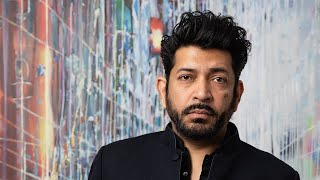
In a live on‑stage interview at Janelia Research Campus, Ron Vale converses with physician‑scientist, author, and entrepreneur Siddhartha Mukherjee. The dialogue weaves through Mukherjee’s family background—particularly his grandmother’s resilience during the Partition of India and a multigenerational history of mental illness—showing how these personal experiences shaped his empathy for patients and his drive toward medicine. Mukherjee recounts his academic path from a gifted biology and English teacher in India to Stanford (MD‑PhD), mentorship under Nobel laureate Paul Berg, and the formative influence of early research on recombinant DNA. He explains the evolution of his writing career, describing how personal narrative, patient stories, and scientific history converge in his bestselling books (The Emperor of All Maladies, The Gene, The Song of the Cell). The conversation then shifts to his scientific work: the history of cancer treatment, the rise of immunotherapies, especially CAR‑T cell therapy, and his laboratory’s focus on genetically engineered immune and stem cells. Mukherjee details the founding of Immunil, an Indian venture‑philanthropy company aimed at producing affordable CAR‑T therapies for the sub‑Saharan and Indian populations, describing the logistical and regulatory challenges of building a GMP facility during COVID‑19. Finally, he reflects on the current erosion of public trust in science, distinguishing factual from methodological uncertainty, and proposes persistence, clear communication, and framing scientific problems as “sand‑in‑the‑eye” versus “eye‑in‑the‑sand” metaphors to restore confidence. Audience questions touch on his bipolar diagnosis, patient impact, and time‑management strategies, illustrating his candid, multifaceted persona.
Chapters
Good evening, everyone. I'm Ron Vale, the Executive Director of Janelia Research Campus, and I'd like to welcome everyone to a very special evening with our honored guest, Siddhartha Mukherjee. And I'd like to also extend special warm greetings to friends from our local Loudoun County community. Many of whom are here in person. But this event was so popular, it sold out. So we've also made this event accessible online through the Loudoun County Public Library. So I want to thank them as well. So welcome, Janelians, and welcome Loudoun County. And I hope that you will enjoy this special Dialogues event this evening. So I'm going to keep my opening remarks fairly short because we're going to cover Sid's background and his work during our conversation. But in brief, most of you know of Sid Mukherjee as being one of the finest nonfiction authors in science and medicine, I would say, of our time. So Sid kind of burst onto the scene in 2010 with his nonfiction book, The Emperor of All Maladies, which is a fascinating historical and personal perspective of cancer as a disease. And for this work, Sid was awarded the 2011 Pulitzer Prize for General Nonfiction. Sid's second book, The Gene: An Intimate History, also made it to number 1 on the New York Times bestseller list. And Ken Burns produced two PBS documentaries on these works, one on The Emperor of All Maladies and the second documentary on The Gene. And then Sid's latest book, The Song of the Cell, which many of you have received tonight, was released last fall, and we'll talk about that in our conversation. And Sid has also written numerous essays and opinion pieces for the New York Times and also the New Yorker. But being an author is Sid's night job. Uh, Sid's primary job is as a physician scientist at Columbia University, where he's an oncologist taking care of, uh, patients with cancer. And his devotion to helping patients is also the driving force behind Sid's also very influential work as a scientist. Sid is a very active and exciting research program that includes genetically engineering immune cells to treat cancer and also engineering stem cells for the purpose of treating osteoarthritis. Which brings me to yet another hat that Sid, Sid wears as an entrepreneur with the purpose of advancing his ideas to the clinic. Sid has founded at least 3 companies that I'm aware of, and Sid and I have co-founded one of these companies together, and it's really been a great pleasure working with Sid in that capacity. But in addition to his professional work, Sid also has a very busy family life. He is married. His wife, Sarah, is an accomplished artist, and they have 2 daughters. And there's a New York Times article devoted just to what Sid does with his family on a typical Sunday, which is called "How Dr. Siddhartha Mukherjee, Cancer Expert, Spends His Sundays," which actually I encourage you to read because I think it really illustrates how much Sid can manage to do so thoughtfully in a single day. So indeed, to me, Sid seems to be the emperor of time and priorities, and we are all the beneficiaries of his time and his priorities because through his work Sid sends so many positive ripples throughout the world. So Sid, it is a great honor to have you at Janelian. Thank you for coming. Thank you for spending the day and the evening with us. And ladies and gentlemen, let's welcome Sid Mukherjee.
Thank you so much.
Brought all your books here.
Okay, well, it's a doorstopper.
Um, so, uh, anyway, Sid, thank you again. Thank you, and yeah, well, this is also a great opportunity for me to ask some questions that I've actually been curious about for a long time but never felt like I could really ask you in a professional setting. So I think this will be a fun conversation. And just as a framework for this dialogue and kind of a roadmap both for you and the audience, I thought we'd cover a little bit about your you know, personal history, your background, your path to science and medicine. And then of course everyone's curious about how you became an author and how you work as an author. And I also do want to say to the audience that we have a new research program at Janelia called 4D Cellular Physiology which is very much in the spirit of this book. So those at Janelia and actually others from the community, I really encourage you to read it because it's a beautiful history of ideas in cell biology and also the amazing future ahead of cell biology as a discipline and for the future of medicine. So It's really kind of foundational, actually, for the work we're doing right now at Janelia. And then maybe we'll cover your own science and your work, particularly as it relates to cell therapy. And then finally, a topic I think that you and I are both interested in, and everyone— many people are, which is, you know, how we hold a conversation with the public about science. Particularly during these times when it's so important to convey what science is, to understand science, and hopefully kind of reverse the current epic of mistrust in science that we're seeing. So anyway, why don't we get started? So I started the last conversation with our previous guest, who was Freeman Hrabowski. By asking him about his grandmother's as kind of a route into his personal history. And I thought that would be a good entry point for this conversation too, because I will pull out my first footnote here from The Gene. And this book, The Gene, is dedicated to your grandmother, Priyabala Mukherjee. And you said, I owe a debt to my grandmother. She weathered the buffets of history with resilience, but she weathered the buffets of heredity with something more than resilience, a grace that we and her descendants can only hope to emulate. It is to her that this book is dedicated. So maybe you can tell us about your grandmother, the kind of historical times in which she lived, and why she was influential to you in your life.
So first of all, thank you, Ron. Thank you, everyone, for turning up. My grandmother on my father's side was a complicated character. We've heard the term tiger mom. She was a sort of tiger grandmom, but for very, very important reasons. So, much like the war in the United States, the definitional event in the history of India is partition. So that happened in 1947. And as you know, the country which stretched across what is now Pakistan, India, and Bangladesh was all under one territory, was then in 1947 split into two territories, what was then called Pakistan and East Pakistan, bizarrely enough connected by no landmass but governed under the same government. An idea that's completely mad. And then India in the middle. My grandmother's family, or my family, comes from East Pakistan, Bangladesh, which— and then they moved, in my grandmother's case, just a few weeks before partition into Calcutta, which is where she grew up, where she brought her children. My father was around 14 at that time, and he had 4 elder brothers. That's when things begin to fall apart, but also are formational in the history of my family. So as many people have known in my books, my books are simultaneously, I would say very broad histories of science, but also very, uh, deep personal histories. And I don't make a distinction between one and the other. They— you, when you read a book, my books, you weave between one and the other. You, you know, it's like moving from one room to another room. So this book, The Gene, is about heredity and the particular heredity, personal heredity that I have in this book. Is of mental illness, in particular of bipolar disease and schizophrenia. So of my father's originally 5 brothers, one of them now in Calcutta post-partition unfortunately dies of a kind of bipolar diathesis. We now recognize as a very manic syndrome. Another one is not diagnosed with, but because we didn't have the words for it, has schizophrenia. That's in the first generation. And then my grandmother takes this second the schizophrenic son sort of under her wing and comes to live with us in Delhi after my father moves to Delhi. So we are in a family in India. We're in a nuclear family. Of course, everyone lives together. She lives with my uncle with schizophrenia. And then the, in The hereditary pattern of disease becomes even more apparent when a cousin from another one of the father's children also is now diagnosed with schizophrenia. Now we have the vocabulary for it and is institutionalized. He still remains institutionalized. And then in the third generation, there's another two people with bipolar disease or some version of bipolar disease. One of them being me. So, and my grandmother, to some extent, watches all of this happen, the, what I would call the diathesis of not just partition and its consequences, but of mental illness and its consequences. And she becomes in her life a kind of fierce protectress of my very ill uncle who lives with us, and then ill to very ill cousin who also initially, you know, lives with us for a little bit, but ultimately is institutionalized. And it's not until I grow up and become a physician myself that I sort of realized the kind of intemperate grace that it required, that is required to do that. You need to become a doctor to understand the simultaneous intemperance and also the dignity and grace that you have to give to people who are unwell. And so that's the— that's why this book is dedicated to my grandmother. Lovely.
So how did this influence you? So you're growing up in this household environment. Did this have any influence on, like, your path to medicine, or—
You know, Again, a lot of this I didn't think about, and it's important we can come back to this idea. A lot of this I didn't think about until I was writing the book, because these are thoughts that get buried inside you, buried inside your consciousness. You don't really think about them. And then you say to yourself, oh gosh, you know, while you're writing a book, you say to yourself, oh my God, this is sort of my origin story that I'm writing. And You know, I was talking to some, some of the postdocs and, and group leaders here, and one of the questions was, you know, how much— what the process of thinking of writing a book is. And it's very much for me, like, like, you know, as I'm writing, I'm kind of realizing things that I didn't understand before. And that's true for science, of course, as well. But it's also true for personal history. And so I was writing The Gene and It's actually Sarah, my wife, reminded me. She said, you understand why she was reading a draft of the book. She said, and this is in 2016. I've been a doctor now for, God, 16, 20 years. And she said, you realize why you became a doctor. And I said, oh, gosh, I suppose I do, because I'm writing about illness and grace and dignity that comes with protecting the ill. And so, yes, so the answer is of course it does, but it was sort of buried somewhere in my unconscious until it came out in this book.
Yeah, I may come back to your upbringing, but just following that thread for a moment, your books are very personal. Which makes them both accessible. And, you know, there's this combination of emotion along with, you know, the real science that makes them very impactful. But you share a lot of stories of patients so beautifully right from the get-go when you open up the first chapter. But as you said, you also share a lot about yourself in an amazingly honest and I would say almost vulnerable way.
It's called oversharing.
It's maybe oversharing. But just following up what you said is, I mean, maybe for me that would be very hard. But, you know, when you think about what drives you to write, what gets you up with the passion to put down words on the page, Is that part of your motivation when you became a writer, that you did have your own story to tell, and that was kind of an intentional part of your writing?
I think most people who write, and at least most people who write well, when you ask them why they've written a book or why they did something, and this is probably true for scientists too, actually something that scientists share, would give you an answer that goes along the lines of— and there are many variants of this— but it goes along the lines of, well, what else could I do? Um, uh, there's really— it's not as if there's a, you know, you have a set of options, uh, and you decide to not write. Um, mostly you're writing, and, and again, to some extent, you're doing science because that's the only thing you know how to do. I mean, otherwise we become bankers or something. But I think that's part of the drive. Part of the drive is letting it out, letting the stories out. I have a wonderful story here because I heard a joke in medical school about it. Medical student who saw a patient in the emergency room with back pain. And he said, so he was a first-year medical student and he said, he went up with the guy with back pain and he said, oh my gosh, you've got pancreatic cancer. And so the guy went through an MRI and a CAT scan and it turned out he had pancreatic cancer. So at the end of the year, the medical student gets the first prize in the medical school for diagnosing pancreatic cancer. And he goes up and the professor of medicine comes up and says, well, that was amazing. I mean, you know, how did you diagnose pancreatic cancer in this person with back pain? And the medical student goes up and says, well, what other causes of back pain are there?
Not also the most wonderful way of sharing the news with the patient either.
So anyway, so it's a little bit like that. What else could I do but to write books about—
Well, before we go on to the next thing, I think you could have written also a wonderful book on these stories of patients, which would also bring this to life. But you added this extra layer on your own life that is—
Yeah. And to be honest, I mean, in the tradition of writing, we can speak a little bit about writing. In the tradition of writing, I sort of fused, unconsciously fused many things together. So I fused a strand of writing which continues from sort of Victorian case history to Oliver Sacks, um, uh, who was, by the way, uh, notoriously private. It's not until a very late book of his that we actually learn anything, uh, about Oliver Sacks. We actually don't know— I knew Oliver myself at Columbia, but we don't know anything about Oliver Sacks, although he tells you everything about patients. So there's that strand. Then there's a second strand, which I would say, again, a big rich history starting from people like Lewis Thomas and others who've written about science in an accessible way. And then there's a third strand of writing memoir. And there are many people who write memoirs, physicians who write written memoirs. Sherwin Nuland comes to mind and others who've written memoirs which have patient stories in them. And I thought, well, why don't we put everything into one big pot and boil it? And which you do so well, which is, which is how these books came about. Yeah.
Well, we'll come back to the books in a second, but let's, let's go back to Delhi for a moment.
Yeah.
Your, your father was an executive at Mitsubishi. Your mom was a schoolteacher. Um, you know, we've heard your family moved from the partition to Calcutta to Delhi. So how was it in that background that you somehow kindled an interest in, in science or medicine?
Well, um, you know, so I, I sort of naturally gravitated towards it. I was interested in, in science. I was interested in medicine, right? From medicine came later. I think I was interested in science. I was, uh, you know, I had good teachers. I had great teachers, great, particularly good, um, biology teacher. Um, thankfully, I think they're extremely influential. Um, as, um, uh, you know, I just, um, along with our common friend Harold Warmus, um, just did a kind of a pro bono event for The New York Science Foundation, which runs a free program for children in the Queens Flushing area. And the reason I did it, I mean, they just wrote me out of the blue. The reason I did it was because I think that those influences as children are extraordinarily critical. And for me, it was a good teacher.
And there are a lot of teachers or some teachers here in the audience too.
Thank you for your work because, I mean, it really makes a huge difference, especially for someone in their formative years. If you have a bad teacher, you know what happens. But if you have a good teacher, you also know what happens. So, I became more and more interested in science. I, you know, was interested in— I would say, by the time I went to college, I was interested in all the sciences. I had a hard time figuring out sort of what science I was interested in, I was not interested in. I also happened to have And I haven't written about this. I'm actually writing a piece about her. I happen to have a very good English teacher who, in the middle of her teaching career while she was teaching me, was diagnosed with breast cancer and died of breast cancer. And this was a time— this was 1980s— where in India, where, you know, you had surgical options but nothing very much beyond that. This was Herceptin had not even entered, sort of, it was around in the United States but not around in India. So I had two very strong teachers, two very strong traditions as it were, very good mathematics and biology and then English as well. So I think those were very formative in terms of my decisions.
And then what about your decision to come to the US? Was there— how did that come about? Was there another path where you could have stayed in—
There were many paths. And in fact, it was very uncommon when I came. So I came to the United States in 1989. There were 4 undergraduates at Stanford. I went to Stanford. There were 4 undergraduates from India at Stanford that year. That number has now swelled to 50, 70, 80. I have no idea what the numbers look like.— but there were 4. This was a time when India was a kind of a Soviet model socialist state. This was pre-liberalization. So in order to get US currency, my father had to stand in line and fill out a form in triplicate and request a bureaucrat for $1,000. And then pay them. And that's, that's the maximum you could get in terms of how much you could get out of the country. So, uh, it was, um, it was, uh, it was, it was very uncommon. Um, and the only other thing I can tell you is that, um, I was admitted. So I applied. Um, I wrote all my applications by hand. I know this because my daughter just got into college and she's going to college next year, but I was remarking on the difference. I wrote all my applications by hand, mailed them myself in, you know, old mailing slips. Everything was done by hand. There was no email. So I went to the— I used to go to what was then the U.S. Council, which was a, you know, one of these buildings at the U.S. Embassy, figure out how to apply for what colleges. I had been to the United States before. And traveled before. I was very inspired by the sort of liberal arts education system here and had been to Berkeley in particular. My cousins had gone to Berkeley, UC Berkeley, where Jennifer Doudna, our common friend, is a professor. I was very inspired by UC Berkeley. UC Berkeley was a state school, so it didn't have any real mechanism for someone like me to sort of be in at UC Berkeley. So I said, well, I'll apply to the nearest college, which must be similar, uh, called Stanford. Um, um, turned out that we're not similar at all. Um, uh, and I got in, and I also got into, uh, Harvard. And I— this is not a joke— my English teacher cried real tears when I told her that I was going to go to Stanford over, um, Harvard University. And She said no one has ever, from India, has ever turned down Harvard University and started crying. And I said, it's got to be a first.
So, well, you started a trend. Um, well, speaking of, uh, Stanford and also mutual friends, uh, Paul Berg. Yes. So, um, Paul Berg is, um, won a Nobel Prize for recombinant DNA. And remarkable person. I was also at Stanford for the, in the MD-PhD program, and Paul was certainly one of my like favorite teachers, role models, and you worked in his lab. So I was wondering if you could describe like how did that influence your path and your thinking about science?
So yeah, I mean, you know, it's a strange thing, you know, you As you grow older, of course, many of these people vanish physically, but they don't vanish from you mentally. Paul died 3, 4 months ago. He was a very, very important, very influential character in my life. He's, of course, very much in the gene, very much in the discussions around the book on the cell, and unfortunately passed away. I was an undergraduate when I approached Paul. I think I may have been the first undergraduate to work in his laboratory and may have been one of the only one of two undergraduates to ever work in his laboratory. I learned about Paul because I had become by that time as an undergraduate, my second year, become very intrigued and interested not only in his scientific work, uh, on recombinant DNA. And people who don't know what recombinant DNA is, Paul was the first person to, um, propose and then stitch together two pieces of DNA from completely different organisms. Um, because the genetic code is universal, um, Paul suggested and thought through the idea, and because DNA is a chemical ultimately, He thought through the ideas of asking, well, what if we took the DNA from a bacteria and a virus, or eventually a DNA from a bacteria and a human cell, and cut them and paste them together to form a single molecule of DNA, which was contiguous. Now, of course, now we think that that's completely normal. But in the time that Paul was doing this in the late 1970s, early '80s, was considered extraordinarily radical because all of a sudden you could do molecular cloning. You could take a piece of DNA from a virus and a piece of DNA from a bacteria and a piece of DNA from a horse and put them all together into one continuous piece of DNA. And if you put that into a cell, the cell would think that it was one part of the same genetic code. And that's how you could make, for instance, insulin in a yeast cell or a bacterial cell or a mammalian cell, or you could make a new protein out of anything. So that was what Paul's scientific discovery was, along with some other people. He's not the only person. But Paul also did something that was very— that was equally important and equally influential in my life, which is that Once he had made that discovery, he organized a series of conferences, the most important one being the Asilomar Conference held in Asilomar, in which scientists led by Paul themselves put a moratorium on this work before the ethical and biosafety implications of this kind of work could be figured out. And the Asilomar Conference, it was actually Asilomar 2, was a landmark event because it was an event that was, we'll come back to it, because it was an event that was not only attended by scientists, but also attended by lawyers, by ethicists, by journalists, by the broad public in order to create a consensus or a view about what should be done while this new technology, which was obviously revolutionary, but obviously could be used in revolutionary manners, could be managed by the community of scientists, communicated to the broader public, and scientists would get feedback about how it could be best managed as we moved along to the future. Paul had done both of these. So the idea of him wearing wearing two hats or multiple hats was very intriguing to me. And they of course have to do with the books because the books also wear multiple hats. So I went up to Paul as an undergraduate, knocking on a door, knocked on his door and said, Paul, I'd love to work with you. And miraculously he said yes. And then I was like, oh my God, to work in Paul Burke's lab. So anyway, and then we became friends. We've been friends for life. And when I would go to Stanford, I'd have dinner with him and talk. And there's a lot of talk with Paul, talk about Paul in all of the books, right up to the third book. And sadly, and when I'd give scientific seminars at Stanford, which I would do now as first a student, then graduate student, then a postdoc, and finally an independent investigator, I'd see Paul on sort of the front of the audience and asking questions, and then have dinner with him afterwards and really talk through what I was thinking about and how things were going. And then the last time I went, actually, this is a somewhat sad story, the last time I went, we were supposed to have dinner and he canceled because he was not feeling well. And that's the last I saw him, saw of him. So that's sad. The one thing I will say is that he lost a bet.
So—
To you?
To me.
Okay. Yes. So every time, our tradition was that every time we have dinner, we'd have a bet and the loser would pay for dinner. And the last time the bet, The bet was actually loaded against me. I can tell you what the bet was. So, the bet was I said that Jennifer Doudna and Emmanuelle Charpentier would win the Nobel Prize in either physiology or medicine or chemistry, but they would be the only two people. They would be the only two. And, of course, it's historic because there was the first time that Nobel Prize was awarded to two women by themselves. Marie Curie won her Nobel Prize twice. By herself, but this was the first time that it was awarded to two women by themselves. Paul said there would be a third person, whoever it was. He said, I'm not going to tell you who that third person is, but I bet it would be a three-way split because you're allowed to split it three ways. Now, the odds were loaded against me because of course, you know, three is easier than two, but I won that bet. So somewhere he owes me a dinner.
So what was the lifetime score?
Was Paul ahead? No, we were sort of 50-50, I would say. And the bet was— he was very formal about it and that made it fun. He would say a bet is not a bet until it's formalized and written. So he would write me an email when I would go back to New York and I'd get an email in my inbox saying that the terms of the bet are the— I mean, it was a formal email from Paul Berg. They would say that The terms of the bet are the following. You have said, you've stated that X, and I have stated Y.
That could be your next book, My Bets with Paul.
Exactly. It's like My Conversations with Morrie, or whatever that book is called. But anyway, I'll spare you all the other details, but somewhere he owes me a dinner, so I'm going to go collect.
Well, Speaking of wearing multiple hats and maybe getting to your progression in your career, learning to wear the many hats that you do, you graduated, you got your PhD, then got your MD, and here you are as a resident and fellow. And then you start thinking about this other urge, which is to get into writing. So maybe I'll even start with what you wrote. The project, evidently vast, began as a more modest enterprise. In the summer of 2003, having completed a residency in medicine and graduate work in cancer immunology, I began training in cancer medicine at the Dana-Farber Institute Cancer Center and Mass General Hospital in Boston. I had initially envisioned writing a journal of that year, a view from the trenches of cancer treatment. But that quest soon grew into a larger exploratory journey that carried me to the depths, not only of the science and medicine, but of culture, history, literature, and politics into cancer's past and into its future. So I'd like you to explain that journey a little bit. But I do want to explain to the audience one thing, that when you are a resident and a fellow, it is probably the most demanding time that people can remember in their lives. It's like hard to find the time to make dinner or do your laundry, and both of which I didn't do, by the way. That's how you got all of your time.
Well, anyway, the message of this, this whole evening is do Don't do your laundry.
Works for me. But yeah, tell us about that journey. I mean, how did you go from, well, let's do a journal to the depth of this exploration and maybe the turning point, well, maybe there's a book here?
So the journal became bigger and bigger. So journaling is something that I do, I encourage people to do. I think it's a very meditative practice. It's a kind of way to think through ideas. So I started one when I was not a resident. To be totally honest, you cannot do anything when you're a resident. I mean, I was so physically exhausted. Now there are laws about residency. There weren't when I started. And I should tell you a little bit about Mass General. Mass General in particular was, uh, very memorable. The culture of Mass General was the hospital would empty out at night, and if you were the resident on call, the entire medicine service was yours. You ran the medicine service, you being the first day intern. Um, and, uh, and it was, uh, Mass General was very special. It had a what was called a 2+1 system, which is you had 2 days off and 1 day on call. So every 3rd night you'd be on for the entire night, then you'd be on for the entire day the following until you went home and went to sleep. Then you'd come back the next morning for the, the 1, and then you were on call again. So I didn't do anything then except for occasionally doing my laundry. But in fact, there was a moment where I lived in the house and there's a moment where the superintendent of where I lived came and said, he saw, so he's looking at my sink and he said, out of pity, I'll do your dishes for you. But anyway, so resident, but fellowship was very different. Fellowship was very emotionally very different too, because you see cancer patient after cancer patient day in and day out. And that's when I did a lot of the journal. And then the turning point really was realizing when I talked to patients, realizing that there was no roadmap.. So here we were dealing with a disease where, you know, you'd find something about cancer in the front pages of the New York Times every day. And yet when you ask patients about their journeys and what they were looking for, there was no history, there was no roadmap, and it was a complete kind of bizarrely shocking. So here is something again, commonplace experience. I mean, everyone that you know, I'm sure in this audience, knows someone with cancer, and there was no book. And of course, without having Ken Burns make the documentary, no film about the history of this thing that was in the newspaper every day. I mean, imagine if this was true for any other aspect of common human life, that you would not find a book about it.
So can I maybe just follow up on that? I mean, maybe You can also explain the impact of this book, and I don't mean in terms of winning awards or honors or all that, but the impact that you've seen this book carry to individuals with cancer.
Yeah, it's been incredible. I mean, you know, I don't think there's a day that goes by without someone from some part of the world writing to me blindly. Saying thank you for the book, or, you know, thank you for, you know, my mother had it while she was— I didn't— not my mother, but the person writing, their mother, you found it useful when they had breast cancer, or being stopped on the street and say, you know, someone's recognizing and saying thank you for writing the book, it made my journey easier. I could So, its impact was beyond, certainly beyond what I had imagined or expected. It still resonates. I should tell you, I'm writing an update now because I had thought I'd do it 10 years after, but it's going to be the 15th year after the book. So, the book came out in 2010. The updated version will come out in 2014 or '15, depending on when I can actually finish it. But 15 years have passed. I think we need to know what's happened and how it's changed. So, but that said, it's been, you know, important in so many ways. And then I guess my own realization of all of this was when my agent, who's been an incredibly important literary influence in my life and been very important in sort of getting these books together. Sarah Tophont. Um, the, um, I'll tell you two incidents. Um, one is, uh, uh, Sarah called me up about two months after the book was published. The first run of this book, by the way, was 5,000 copies. Um, it sold more than several million, but, um, and so they printed 5,000 copies and then my agent called up my publisher and said, 5,000 is not going to cut it. And so my publisher, who's also a great literary influence on me, Nan Graham, great publisher, said, well, what do you think we should start with? And my Sarah, my agent, absolutely shamelessly said, she said, and I remember the words, I was on the phone, on a phone call with them, um, and she said, um, Nan, Emperor is a— the book, yeah, she said Emperor is a phenomenon, um, I want you to publish 100,000 copies of this book, um, first book by an unknown writer, um, and Nan said, well, we'll set it for 50, um, so that was the first run of Emperor, so I don't know if you have a first edition. We should send you one. But yeah, please send me one.
Yes, I know. Um, I was going to ask you about what you're doing next, but I think you already answered that question. But, um, why don't we go to this recent book? Um, because that will also get into some of your science too. But, um, it's The Song of the Cell, and, uh, it says an exploration of medicine and the new human. So that's a very provocative title. But speaking of the treatment of cancer, maybe you could just take the audience on a little journey of where cancer treatment was, and also a little bit about where you see it going with cell therapy and what the difference is between these kinds of treatments, and what is exciting to you about cell engineering as a future for cancer treatment?
Yeah. So, I mean, the pillars of cancer treatments traditionally have been obviously surgery, radiation, and then since the 1950s, chemical therapies, chemotherapy. Then since the 1990s, a new class of medicines called targeted therapies. So these are also chemotherapies, but rather than killing cells indiscriminately, a new class of medicines that are more discriminate in their killing of cells. There's a continuum between one and the other, but so targeted therapies. And now moving on to 2 or 3 new classes of therapies. And that's what I'm going to B, which is part of this new, new updated version. The first is many of you would recognize immunological therapies. So immune therapies. And it's been long recognized that cancers can be treated by your own immune system in various ways. There was a long tradition, somewhat misplaced, in the 1900s of injecting toxins which would activate your immune system. And there were some responses to cancer. And since then, we've learned that in fact you can use your immune system, particularly T cells, to kill cancer cells. So that's one area. The second, which is also something that our lab or my lab along with Luke Cantley and others have worked on is becoming a therapy is to use diet. So we think of diet as completely ancillary in cancer therapeutics. We are slowly realizing that it's actually potentially an independent arm that one can manipulate just like one can manipulate other kinds of therapy, including chemotherapy.. And so that's led to a whole series of investigations about the possibility of using diet to modulate responses to cancer cells. We can go into that in greater detail. But the one that you're curious about is cellular therapy, cellular engineering. So several people realized, along with me, that you can engineer cells, particularly immune cells and stem cells and potentially combinations of immune cells and stem cells to treat cancers. You can take an immune cell out of the body, a T-cell for instance, and using genetic engineering, you can weaponize that T-cell to kill cancer cells. You can take myeloid cells, another wing of the immune system, out of the body, weaponize it to kill cancer cells.. And so, and you can combine it with stem cell therapies in various clever ways so that you can now attack cancers. So that would be cellular therapy. And I would say my laboratory spends most of its time on this third wing, although we have a deep interest in dietary therapies, but it's most of the time on these cellular therapies using genetically modified immune cells of different kinds to direct them against cancer.
Yeah, so you, um, when you read this book, one of the entry points is, um, uh, a young girl, Emily, who was, uh, the first person that was treated with this weaponized— Yeah, first child. First child. Yeah. Remarkable response, alive and well and cured today.
She was treated when she was 7.
She's 18 now. Yeah. One of the challenges with this, what's called CAR-T therapy, which is this weaponized therapy, is that first of all, it's expensive. It's largely a therapy, I would say, of the the first world. And I'd like to hear a little bit about your effort to kind of democratize like leading-edge medicine around the world. So particularly, you recently co-founded a company called Immunil, which is an interesting name. Maybe you could tell the audience about that. Sure. But it's a company in India to try to bring this new exciting CAR-T therapy to the Indian population. So, and you use the word, which I think is a really interesting word, venture philanthropy. So maybe you could just describe a little about your motivation, what this company is doing, and where it is right now.
Sure. So, you know, most of my projects like writing 500-page books on cancer start as somewhat mad dreams. And the madder, the better in some ways. So I was sitting next to this— all true stories. I was sitting next to India's— probably India's most successful biologic manufacturer. Kiran Shaw, um, who started off as basically in brewery because she couldn't get a job. Um, she came back trained as in brewing, yeast brewing, couldn't get a job. And she said— and they said there's no job for a woman in yeast brewing. So she said, well, if you can brew yeast, I can make yeast make proteins. And she founded Biocon, one of the most successful, uh, the single most successful actually Indian biotechnology company. So I was sitting at dinner next to Kiran about 4 years ago, just before the pandemic. And I said, Kiran, you know, we've got 1.3 billion people in the country. We were sitting in Boston. I said, Kiran, we've got 1.3 billion people in the country. There are about 6 countries that have T-cell therapies, CAR-T therapies, why can't we make them in India? And she said, and I said, in particular, I said, you know, you woke up and one morning, not literally, but woke up one morning and decided to make biologics like Herceptin in India. Why can't we make T-cell therapies? We can send rockets to the moon. We should be able to make T-cell therapies. And she said, you're right. We should be able to make T-cell therapies. And so why don't we just do that? Um, so I said, fine, if you're up for it, I'm up for it. Um, so that's how you found— how we founded Immunil. Immunil is, uh, named after immune and neel. Neel means indigo, and indigo, of course, was the basis of the name India. Um, so we called the company Immunil, and, um, uh, and then we Said, well, we've got to raise some money to do this. And so that's when this idea of venture philanthropy came about, which is that we approached people and said, listen, this is not going to be a— this is not going to be Facebook. And it's not going to be Google. We will make you money, but it's not going to be like 500 times your money.. But on the other hand, you'll get the satisfaction, I hope, of bringing a completely new therapy and saving the life of a child with relapsed leukemia who would otherwise be dead. And to be honest, and to some, my surprise, and bizarrely, people said, yes, actually, you know, that's a nice thing to do. We'll put in the seed money to do this. So anyway, that's how Immunio got funded and started. I put my contribution in kind because I took some of the licenses that I had created in my laboratory and that we've been fortunate enough to make some discoveries. And I said, I'll put those licenses into the company. So I licensed out some of the molecules, therapies that we were developing in the lab. And that's how Immunio got started. And we started off in Bangalore, which is the tech hub of India. And it's an astonishing story. Then COVID hits and we created a COVID bubble because we wanted to finish this facility. Now, you have to imagine this a little bit. This is a facility where it's, You have to wear a hazmat suit to get in because one contaminated test tube or one contaminated tissue culture means that the patient won't get their T cells, means that the kid will die, the child will die. So, the stakes are enormous. And, it's an incredible thing that through COVID, these men and women who put the facility together, basically really lived in a bubble, didn't visit their families, lived in a bubble until the facility was completed. It was inspected by the Indian FDA, cleared by the Indian FDA. There was one night when a pipe exploded. I remember staying up all night and trying to figure out what to do, but thankfully it was contained and so forth. But so um, it was completed, and, um, we've just finished our 24-patient study.
Yeah, which is, uh, extremely, extremely positive, extremely fast under incredible circumstances. And, um, you know, in India and really making a difference in people's lives there. Uh, so I, I find it an incredibly inspiring, like, story of what's possible. But let me get because I want to get to the last topic and then open up questions to the audience. And, you know, this gets to explaining science to the public. You are really at the front line, I would say, of science communication. A lot of people look to you, you know, for— as a spokesperson. I would say we need more spokespeople in science, but What is our current epic right now, and why is there this eroding trust in science? And what are your thoughts on how we can change the direction of where science and society are going right now?
So it's an important question. I'm not sure I can— I don't have a magic formula. I think the The magic formula is persistence and resilience. I think, as you very well know, it's really a pandemic of miscommunication led unfortunately by social media, which didn't exist before and has now created a channel, an equal channel of misinformation. I mean, once misinformation becomes equivalent in terms of dispersal to information, you've lost the battle already. And that's the battle we're losing every day. There's no mechanism by which you can identify one from the other. And so that's an incredible battle. How do you win the battle? I don't have a, as I said, I don't have a magic formula. You win the battle by persistence. Resilience and sticking to what you know and sticking to what you can do. I mean, to some extent, I think scientists sowed their own gravestones, or that's a mixed metaphor, but nonetheless, I think there was a lapse in judgment in many ways. There was an overpromise and underdelivery was one of them. The suspicion grew even more deeply because we completely failed to communicate that science is an uncertain topic, that uncertainty is built into science. And often what I try to explain to people is that There's a difference between factual uncertainty and methodological uncertainty. It's a very, very important idea to convey. Factual uncertainty is to say, I don't know the result. I don't know the answer. Methodological uncertainty is to say, or certainty is to say, I don't know the answer, but I know how to get to the answer. I know there's a method by which, or a standard or a set of proofs By which I can get to the answer. Those are different things. Science has a lot of factual uncertainty. Many people in this audience who are scientists, when you ask them a question, will say, I don't know. But if you ask them, how would you know? What would be the criteria of proof? Most people in this audience who are scientists would say that I know the answer to that question. So what happened during the COVID pandemic is that people mixed up those two things. They mixed up what I would call factual uncertainty, which was rampant because we didn't know, you know, what was the direction of the movement? What kind of virus was this? Was this aerosolized? What was the effect of the vaccine? What would this— those are factual uncertainties. There are also a different kind of uncertainty, which is a methodological uncertainty. What is the standard of proof? That is required to call something effective or ineffective. Actually, we know that. We know that there are studies. We know what those studies look like. What is the nature of that study? How that is to be accomplished? Most scientists, even, you know, I would say a well-trained first-year postdoctoral researcher could tell you what are the standards of proof that are required And one of the erosions that I've seen is the confusion between those two. And so part of the way of climbing ourselves out of this pit is to divide those two things up and to say that in fact, the methodological things that, and the standards of proof have actually been around since the 17th century. And they haven't, you know, they didn't come yesterday, didn't come— they've been advancing and moving along, but they're not Johnny-come-latelys. The factual uncertainties have also been around since the 1700s, and often we don't know. We don't know the answer, but we know how to get to the answer. We know the proofs.
So that would be one formula.
I would—
Maybe I can even just follow up on that as the last question, because I think you do an excellent job describing that and the uncertainty of science as part of science and the evolution of ideas. And you have this for— you, you made this metaphor of sand in the eye and the other counterpart to that.
I actually probably remember it, but it was a really interesting—
I understand. I understand. Yeah, it was an interesting metaphor really for, um, um, being what science is, like trying to grapple at the leading edge of what we know and don't know.
And maybe you could describe that. Sure. I mean, in this book, I describe two kinds of problems in science, which I call sand in the eye versus eye in the sand problems. So sand in the eye problems are problems in science where you just have no clue about directionality, and everything has to be changed. The paradigm shifts that are required. So at a certain point of time, if just to give you a historical example, at a certain point of time when physicists were exploring the physical world, they suddenly came up to a sand in the eye problem, which is that they pushed to a frontier of Newtonian physics and began to see that you couldn't go any further, that there was no path further in Newtonian physics because there was a blur like a sandstorm. And an entirely new paradigm had to be— the uncertainties were so deep and the inconsistencies were so deep that you had to create a new paradigm for scientific exploration. So that happens occasionally in science. I would maybe argue that in the first phases of the COVID pandemic, we had a sand in the eye problem. It was a sandstorm of uncertainty. The eye in the sand problem is a very different kind of problem in science. That is when you have a very consistent set of phenomena, everything fits, it's a jigsaw puzzle that fits, but there's one piece that won't fit. And that's an eye in the sand problem. It irritates you like a piece of sand in your eye. And that is a kind of problem where you have to either make the jigsaw puzzle not fit and figure out that the jigsaw puzzle is wrong, or you have to figure out whether the piece is wrong. And both of those could be true. But I think in the late phases of the COVID pandemic, and especially the phase that we're in now, we are sort of in an eye in the sand problem. Which is questions like, uh, questions like long COVID, um, is an eye in the sand problem, which is to say, you know, things make sense, but what the one thing that doesn't make sense is why it is that some people and particular people are having these syndromes that we can't explain. Um, and there must be a methodological systematic way to explain them. I'm just giving you examples of both using Sepp Kornhepri, but those are two broad distinctions that I make in this book.
Well, we covered a lot. I'd like to at least have like 5, 6 minutes of questions, and then there's a reception and we can continue the conversation in the lobby. But there's also a badminton game.
I'm joking.
And everyone's invited to the bat mitzvah.
Exactly. There's a question over there and here. And tell us who you are if you want to.
It's nice to know.
Yeah.
And then we may just take a couple quick questions. You mentioned that you were bipolar, if I heard you correctly. So how do you, in your perspective, how do you feel that contributes to your likeness of being a writer and a scientist?
Do you see that as separation of personalities, such as a perfect confluence that develops who you are? No, I'm sort of, I hope I'm well controlled on medicines. Hard to know because, but You know, your psychiatric psychological state always contributes to your writing, I think, regardless of whether it's, whether, you know, you fall on the spectrum of the ill or the spectrum of the well. But the answer is, I mean, obviously, as many people with manic depressiveness, bipolar illness, can utilize enormous bursts of energy, and it becomes actually quite an engine. If that engine goes off the rails, then you have the sad consequences of that, but hopefully you can get yourself to stay on the rails. But I I do have extraordinary bursts of energy and I try to use them. I recognize them when they happen and my whole family knows them. There are ways that I recognize them. For instance, when I'm tipping over the edge, I tend to repeat words. So I'll start talking faster and I'll say, I'll repeat, repeat words. And those are tip-offs. But I can also, at that, in those times, I can use, I can pull 6 all-nighters in a row. And so they can be, I don't know, I suppose useful in some ways, but not particularly pleasant but useful in some ways. So, but it leaves a mark on writing, of course, like all forms of mental states, some of which tip into the pathological, some of which are actually quite useful.
Did we have a question over here? Yes.
Hi.
Hello. My name is Galilea Isaias, and I'm here at Janelle as a summer intern., with an interest in cancer and immunology. So my question is that you mentioned as a fellow you got to see a lot of, like, cancer patients throughout your time. So did any of them in particular really touch you personally and, um, really made you think about your passion and future in cancer research?
Yeah, I mean, many of them— I mean, I would say all of them touched me personally. Um, and influenced my writing. There's the end of the book has a particular patient who— the problem is actually I only remember their real names. I don't remember the names I gave them in the book. I'm trying to think of what I called her in the book. But anyway, Virtually all of them did, and many of them are in this book. Carla? Carla is one of them. Jermaine? And Jermaine is another one. They might actually know their real names, so that's why they— I forget what names I gave them in the book because I had to think of some name and I thought of the names. But nonetheless, so many of them obviously have influenced how I write and what I write, and they they come up as characters in other books as well, in the subsequent books as well. So, absolutely, you know, virtually all of them I have very, very distinct memories of, and they often come up as characters in other books, in subsequent books as well.
Okay, this will be the last question. Okay. Yes. Okay, good evening. My name is Emmanuel. I'm also a summer intern here at Genelia. I just finished my freshman year of college, and my question is more so in regards to your time management. It's always interesting to me how such influential people can manage so much with the same amount of time that all humans are given. And I aspire to go along the MD-PhD track as well. So I was wondering if you had like any specific specific tips or advice that you would give to, to aspiring students like me who really want to figure out the best way to maximize the given time in the day?
Well, unfortunately, I don't have great tips because I'm not a— I would say that I'm, you know, of course I'm very efficient in managing my time. I, I'm not sure I have great tips about time management that makes sense. Um, so I can give you nonsensical ways of managing your time. But I'm not sure they're particularly helpful because— How do you manage your time? Nonsensically. So I manage my time by doing everything at the same time, all at once, and often many things very badly. This is not recommended for your summer internship. Well, that's why I said don't— this is the advice you shouldn't be listening to. But I mean, there are people who— there are different kinds of people in the world. There are people who are very focused and can accomplish focused tasks. There are also people who can do multitask at the same— obviously at the same time, definitionally multitask. So I do some kind of chaotic— I'm masterful at chaotic multitasking. So I will, in a given moment, try to finish a chapter of a book, go to the laboratory, speak with a laboratory researcher for 10 minutes, come back and do 2 phone calls, then manage another piece of my variously collapsing forms of life and try to do everything at the same time. I have profoundly terrible work-life balance, leaning towards work, but thankfully so does my wife. So we have two— it's a folie à deux, a mutual madness. So that's how we manage our life. And our children have sort of thankfully fallen into that same thing.
So we are All I can say is that your Sundays sound fantastic according to that article. I'd love to spend an entire Sunday day with you. And however you manage to do what you do, I am in deep admiration. And I think from this conversation, I think so is our audience. So I will thank Sid in one second. I do want to say that we have a few Janelia ambassadors. If you could please stand up. Um, where are you in the audience? Oh, okay. Well, they have t-shirts that say Janelia on it. They're here to interact with our guests from, uh, the community so you can also find out a little bit more about what is happening at Janelia. So if you see someone with a Janelia t-shirt, they're there to talk to you, so please come up to them. Um, and Sid, this was an incredible evening, a memorable evening, and, um, We all thank you very much from our heart.
A pleasure. Thank you.
Thank you.
More from Joshua







Scientist Stories: Hans Waterham, The value of phenotypic assays in peroxisomal disorders




Scientist Stories: Joel Zlotogora, Genetic carrier screening programs for reproductive purposes