Scientist Stories: Stewart Fisher, Navigating the Challenges of Degrader Optimization
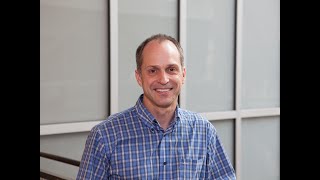
In this webinar, Stewart (Stu) Fisher, Chief Scientific Officer of C4 Therapeutics, outlines the company’s strategic approach to targeted protein degradation (TPD) through the TORPEDO platform. He explains how degraders differ from traditional inhibitors by operating via a catalytic cycle that enables one molecule to eliminate many copies of a target protein. The talk emphasizes catalytic efficiency as the primary metric for degrader success and introduces an enzymology‑based kinetic framework that quantifies degrader parameters (Km, Vmax, Kcat, DC50) and integrates them with pharmacokinetic (PK) data to predict pharmacodynamic (PD) outcomes in vivo. Fisher presents two flagship programs: CFT7455, a highly potent cereblon‑based monofunctional degrader of Ikaros/AIolos (IKZF1/3) that outperforms pomalidomide in potency, selectivity, and in vivo efficacy in multiple myeloma models; and CFT8634, an orally bioavailable bifunctional degrader of BRD9 for synovial sarcoma, illustrating the complex medicinal‑chemistry optimization required to improve drug‑like properties, metabolic stability, and target selectivity. The webinar concludes with broader lessons on the importance of fast degraders, the predictive power of the enzymology framework, and the iterative, sometimes non‑linear, nature of degrader development.
Chapters
Good afternoon, everybody, and thank you for joining us for our latest TPD webinar. It is my pleasure to introduce today Stu Fisher from C4 Therapeutics. Stu holds a PhD in organic chemistry from Caltech and a BA in chemistry from the University of Vermont. After completing a postdoc fellowship at Harvard Med School, he moved on to start his career at the Hoffmann-La Roche as a research scientist. Stu currently works at C4 Therapeutics, which he joined in May 2016 and has served as the Chief Scientific Officer since May of 2018. Prior to joining C4, he also held various other leadership positions, including roles at the Broad Institute, and had spent many years working at AstraZeneca looking for target validation, drug discovery, and clinical candidate support. So today Stu is going to talk to us a little bit about the work that is going on at C4 and navigating the challenges of degrader optimization. So with that, I will hand it over to you, Stu.
Thank you, Briana, and thank you for that introduction and, and certainly an invitation This series has certainly become quite a premier series for degradation, and I feel privileged to be part of it, so thank you. Um, let's start. I have, uh, you know, some of the statements I make here might be construed as forward-looking statements, so the standard disclaimers are here. But I want to get into something that I'm sure this audience knows probably better than anyone. I think we're talking about, with targeted protein degradation, a modality that's now, if not proven, very close to clinical validation on many fronts, and it has the ability to really transform the way we think about drug. And I don't say that lightly. I see so many examples of areas where this approach is going to have a huge impact. If you just take the druggable landscape, something that I've grappled with my, my whole career, you know, you're trying to get inhibitors to enzymes. There's not that many druggable pockets. Most proteins that you can see in a genomic screen are not really amenable. And I think TPD really has the chance to change that function fundamentally. I don't know how many of that 80% of the undrugged proteins will ultimately be successfully attacked, but I'm sure that this approach will open that up significantly. And secondly, I think it does, and we'll get into this a lot, this approach is really very different. It's small molecules, with all, I think it's a combination, one could argue that it's a combination of small molecules combined with the power of genetics. The ability to knock down a protein at will and selectively, and taken by a small molecule is something that I think we have, could only dream about, you know, 5 or 6 years ago. Now to that end, as Briana mentioned, I've been at C4 since really its inception, and we've built a platform You know, so we have our own flavor of how we approach targeted protein degradation. We call that our TORPEDO platform. What we've done is, and I'll talk about that in the next slide in detail, but what we've done is build a platform and then push that platform onto targets to cover, you know, I think some really key indication gaps in our current drug armamentarium. That's areas where we see resistance, where drugs, as I mentioned, that are undruggable. I'll have an example of that. And then, frankly, to improve treatment options, there's ways that this approach can be— you can see evolution even with integrators to have even better treatments than we have currently. So what is this TORPEDO platform? To be honest with you, it's a long acronym, and it has— each one of those letters has a number, has a word behind it. It's basically about optimization of degraders. That's the degrader optimization is the CEO there. We have built this platform with an expectation that we're going to build drugs out of our efforts, and what it really is is a collection of tools, chemical and biological, that when combined allow us to move different modalities of degraders forward to the clinic. Now, there's really 4 themes to this, which I'll get into. That relate to that. These were made on decisions strategically very early in the company, and we're now seeing the full— we're now seeing the full benefit of those decisions. The very first sort of insight that we had, and I'll spend a fair amount of time in my intro on this, is that degraders are different. They act through a catalytic cycle, and that, in our view, is the most important thing about degradation. It's around this catalytic efficiency, and I'll get into it in a bit, but that is our whole platform was focused on making sure we make the best possible degraders for every target we go after. Related to that directly is a set of tools, largely biological, that allows us to make sure that we can measure, understand, and optimize around that catalytic profile of degraders. The second point is really around ligases. There are— we'll talk about this as well. We really like cereblon as our E3 ligase. There's really two reasons for that that was the basis for our decision. Cereblon is expressed in all tissues and cellular compartments, and that we felt from the start was a very strong positive for cereblon because it gave us the widest latitude in target selection. The second is, and that's really rooted in much of the work at the Farber historically, cereblon's the only clinically validated ligase because it's been known now since just before C4's inception through work of Ben Ebert and others that cereblon is the target of the IMID drugs, and we've used the IMID drugs for so long Once that mystery was, was unraveled and solved, it's now clear that cereblon is a ligase that one can use in the clinic confidently, and so we, we took that very seriously in our selection of ligase. The net effect of that is that we invested heavily in finding chemical binders to cereblon. We call that our cereblon toolkit, and it's a collection now of probably almost 5,000 different molecules that comprise roughly 15 or more different distinct series. That toolkit has been tremendously valuable to us, and you'll see in some examples how that has played out. But it has enabled us to now deliver to the clinic, or well on our way towards that, degraders of the two different types that we often talk about in this space. We call them monodacts. They're also known as molecular glues. And bifunctional degraders, we call them BIDACs, PROTACs, there's, there's a lot of names for this, our names for these, monodac and BIDACs, fundamentally that Cereblon toolkit supports both monofunctional and bifunctional degraders, and we've leveraged both of those. So a slide here just to set the context, I realize that this for many of you will be common knowledge, but, but for those new to the field, and to set up my next slide around catalytic efficiency, Let's just, you know, set our sights on what happens in every cell. There's a process much like the ribosome and translation that makes proteins. There's a similar matched system through the UPS to get rid of proteins as they age or aggregate or need to be controlled. And so what you see here is a misfolded protein. This E3 ligase, there's 600 of them in our genomes. They are what you can consider to be the quality control inspectors of our proteome, and so they recognize misfolded or aggregating proteins, and when they recognize them and form this complex, in this case a binary complex, when they need to be degraded, they tag them with ubiquitin, not just once on the surface, but then polyubiquitin them. That polyubiquitination then sends a signal to take that tagged protein to the proteasome, strip off the ubiquitins to recycle them, but then in, in encountering the proteasome, these are digested into peptides, which are then further resolved down into amino acids and for recycling back into new proteins and so forth. So that's the system. There's nothing magical about TPD. We're leveraging natural processes available throughout and required for life. What is really incredibly important is the fact that what we're doing is we're leveraging that system with a small molecule. And so this is this catalytic cycle. So those not familiar with this, really what a degrader does is, I've shown here a bifunctional degrader, similar for a monofunctional, but basically, this green dumbbell shape, one portion of the molecule binds the target of choice, and it then, by having this second moiety here, this separate binding moiety, you can form what is known in the business as a ternary complex, target, degrader, ligase, that ternary complex is the first step of the catalytic cycle, and one could argue binding here is, but you get into this ternary complex, that encounter complex, that's step 1. Step 2 here in that cycle is, once, if the degrader is just right, it will present that target so that a surface lysine can be ubiquitinated and then polyubiquitinated, just like a natural substrate, but this is induced by the degrader binding. Now lastly, and probably, you know, in some ways, maybe the most important is this whole complex, once the ubiquitination process has happened, you release that bifunctional degrader, and that can go back and do this again. So, and meanwhile, these ubiquitinated proteins brought to the proteasome, destroyed. So essentially, unlike traditional small molecule inhibitors, which bind and hold on to the target one-to-one, these bifunctional degraders and monofunctionals basically can take down many, many copies over time of the target protein. So there's a time dependence here, and there's an efficiency. That is the key thing that we think about, is how do we make a degrader that does this cycle of catch the target, bind to a ternary complex, ubiquinate, and release to go back and do it again. Degraders can be extremely efficient at that, and we would argue that the more efficient This is the most important parameter of a degrader. Slow degraders approximate inhibitors. Fast degraders are fully leveraging the benefit of degradation. And so, as I mentioned earlier, our goal is to make the most catalytic efficient degraders we can for every single protein we go after. So what are the benefits of a fast degrader? Well, clearly, I just mentioned one of them is that if you have a degrader that's moving very, very quickly, these molecules punch well above their weight. There's a lot of discussion around how big these molecules are, and are they cumbersome, you know, what's their properties for drug-like profiles and so forth. Those are all good concerns, and we'll talk a bit about how we navigate those. The fact remains that if you have a degrader that's really good at taking out proteins, that single molecule is capable of taking down pools of protein to near zero. Over time, whereas an inhibitor, even the best of them, they are really good at what they do, but they bind one-to-one, and so you catch, you hold that protein, and then you wait for the pharmacology to, to continue upon the effect of that inhibition. Degradation benefits by the fact, by reducing that pool, you now— the only way a cell can recover is to resynthesize that pool. So you have this enhanced potency, and you also have this large, often clearly disconnect between the pharmacokinetics and the drug function. So you can have a lot of degrader, a degrader take out a lot of protein and then wash out and the effect still remains. Again, we'll talk about, about that too. Degraders can be very fast. The faster the degrader, the faster effect you see, and that can lead to PK/PD disconnects. Can also lead to novel biology. Cells may or may not be able to respond to fast reductions of proteins depending on your biological context and That's certainly true in the IMID case where faster degraders induce an apoptotic response, whereas slower ones are not as capable of doing that. This selectivity component is really fascinating to me. This catalytic cycle acts as a filter. Not all degraders will bind to target protein as well, or other proteins, ternary complexes, not all bound proteins can form a ternary complex, and not all of those can be ubiquinated. The net effect is that what we're seeing is that our degraders, when fully optimized, have exquisite selectivity for the targets we're going after, because you keep optimizing against degrading your chosen target, and the other ones tend to fall away as you optimize. And then lastly, I think this is where the field is, you don't need to have a functional site to bind and get good degradation. In fact, you can bind anywhere on that target, and as long as it presents the target and ternary complex in a competent state, that degrader will work, and so you can go well beyond what the inhibitor binding profiles typically require. So catalytic efficiency in an example. Here are two degraders that are pairwise matched. These are very closely related degraders in a program that we had. The green one is clearly not as good a degrader than the one here in blue. So degrader A is the better one. You know that because it's more potent at this given point in time. In terms of its x-axis, it's probably about a 3 nanomolar DC50 here, and it goes deeper. This green compound is just either slower or just not as good. It's weaker in terms of— takes more compound to get to the 50% and doesn't go as deep. That's what you see in cellular dose response. What happens when you go in vivo? You see here is a CNS penetrant PK profile. Both these compounds have roughly the same PK. That's why they're pairwise matched. But you can see as you dose and then the compound is washed out of the brain, what happens, the faster the greater it goes deeper and stays, keeps that target population down for longer relative to the green. This is how these things translate. So this catalytic efficiency has real pharmacological impacts. A point that I raised briefly is, note that all of these processes, the PK is time dependent and the catalytic activity of a degrader is time dependent. This is very difficult to unpack if you don't have a sort of a way to understand what you're dealing with in terms of those two time-dependent processes. This is where I think C4BioEst did the vast majority of its early thinking. How do we capture and understand these degraders on their own terms? Catalytic activity requires time-based assessments of activity, and we want to have a quantitative measure of that. After a deep, you know, fundamental analysis of how these are working, we came to a framework here, which I'm going to call as an enzymology framework, to allow us to understand and quantify our degraders in terms of their fundamental properties. So one way to think about a degrader is that essentially what we're doing is we're training an enzyme, this E3, to process a substrate it never would normally process. So let's call it this target. Let's say cereblon is your E3 and BRD9 is your target. BRD9 is not normally encountered or processed by cereblon. What the degrader does is create a new interaction that becomes an enzymological process, and every time we iterate the degrader, it either gets better or worse at that, at that interaction to make sure that the substrate, BRD9 in this case, and cereblon are interacting better so that BRD9 is more rapidly ubiquitinated and turned over. We're really training cereblon to be a better enzyme. When you think about it that way, you can apply standard enzymology concepts to our, to the dose-response data that you get, and by understanding the time and the concentration function here, one can then have, and we built a mathematical framework to get out standard estimates, quite accurate ones that we believe, on what is the kinetic framework that this degrader is inducing, and so essentially what we get back out is equivalent measures of, say, Km and Vmax or Kcat. And in cases where we get a hook effect, that's really a substrate oversaturation, well known in enzymology as well. So you can get the, the Ki for some oversaturation here. So all of these terms are capturable, they're computable, and that's what drives our med chem. So we use these constants. That's what I'm saying when we focus at C4 on optimizing catalytic efficiency, where all of our med chem is based on kinetic parameters, and then we backfill and understand how does the biochemical measures of binding, ternary complex formation, and so forth, how do they match those kinetic parameters. But again, our primary data points are based on cellular estimates of this, and when you— and so that's been really, really important for us. We took it one step further, and that's, that's also critically important, and I'll demonstrate this throughout my talk. That once you have these kinetic profiles, note that you can compute what is a degrader do— going to do at any given concentration as a function of time. How deep and how long— how deep and how potent will a degrader take down a given target given its concentration? That's really important because when you have that information, you can then combine it with changing concentrations over time. Which is what happens in PK. So if you have the enzymology framework, I know what's going to— what this degrader's rate and depth will be at a given concentration. Compute that for every point on your overall exposure curve. You now have built a PK/PD model, and you can then predict what you're going to get in terms of depth and duration of degradation in vivo. And so I'll show you some examples. We found these to be unbelievably powerful and very accurate. It allows us in our med chem to be able to do a number of things. Certainly do gap analysis. How good is my current degrader going to be? How good is it actually? And then how much further do I need to go to make sure that I have a candidate? So we're informed all the way through from getting cellular degradation and either actual measured or cellular, uh, actually measured or simulated PK we can assess how good is the degrader going to be when we put it in vivo. So we've been quite busy at C4. We've got a very rich pipeline here. I'm not going to spend a lot of time on this slide. I'm going to— but note that we have 4 programs entering or near clinical development. Our lead program, I'll spend time talking about CFT7455. That is in clinical trials now. And CFT8634, that is going to initiate our Phase 1 trial in the first half of this year. I'll talk a bit about both of these programs, but we have two more, a BRAF degrader and an EGFR degrader, that are entering IND-enabling studies. We also have many programs going on internally and three additional collaborations with Roche, Biogen, Calico. The net effect is we have anywhere from 15 to 18 programs running concurrently. There's a lot of activity, so we see a lot of degradation programs. I want to highlight just some, you know, what I want to do in the rest of my talk is give you some case studies on how did we, what did we get when we got there with CFT7455, sort of the highlights of that molecule, why did we go here, and what does it show. And then for 8634, I'm going to give you chapter 1 of a 2-chapter story of how we identified and optimized our degrader. Chapter 2 is coming. In the first half of this year, so keep an eye out for presentations from C4, and the full med chem story also will be given in the first half of this year. So keep an eye out for those presentations. I'm just going to give you the highlights here, and the details are coming in medical meetings. But so let me jump in. One final point, all of these degraders, they're all oral indications. We have made a lot of effort to make sure that our molecules will be driven, be given as a pill, in the clinic. And so we've come a long way in terms of making sure that our programs are going to have the highest patient compliance and ease. So let's get into what we call our Ikaros program, IKZF1 and -3. This lead molecule, CFT7455, is our candidate that's entering clinical, is in the clinic now. And so for those who are not familiar with Ikaros and Aeolus and the IMA drugs, This slide will do two things. It will say, what do the IMiD drugs do? And more importantly, what do we think is needed in this field to make the best-in-class IMiD? And we feel we have that. So let me explain first. Ikaros and Aiolus are two transcription factors that are critically involved in hematological cell line differentiation. So these are at the core of transcriptional program for heme cell lines, Now, in multiple myeloma and some non-Hodgkin's lymphomas, these are the key drivers of the disease. These transcription factors drive signaling programs in those cases to make them oncogenic cells. So the key is that we need to degrade both of these. Often they're compensatory or overlapping activities. There's slight dependencies one over the others depending on the indication, but it's It's clear that both play key roles, and so a degrader that would be active in this space needs to hit both of those and needs to hit them pretty well. As I mentioned, you know, the early studies on the IMIDS was that these molecules bind to cereblon, they attract them in a molecular glue sense, so that surface that is formed upon binding to cereblon attracts E. crocinaiolus so that they are bound, form a ternary complex ubiquitinated, and then degraded. So that's the space. We asked ourselves, why are— what is the gaps? The IMiD drugs are used. They're the backbone of therapy in, in, in the indications I mentioned, at least in multiple myeloma, and could be in non-Hodgkin's lymphoma. But we argued that there's a lot left on the table from pomalidomide and some of the agents that are coming and developing now, because it wasn't clear how these things worked when they were first developed. And not— and having the knowledge of that this process is at work, we could leverage our Cereblon toolkit to find novel hits and then optimize them to make sure that we had class-leading catalytic activity, which would really take these targets down at the most potent and rapid and deep target degradation. We felt that that would be important, that that's going to be important. What we also found was that high binding affinity would also be beneficial, because what is known is that cereblon levels upon sustained treatment with IMiDs can lead to reductions in cereblon levels, which then can lead to a tolerance or resistance mechanism. So higher binding and higher activity could overcome that relapse setting. We wanted a more selective one than sort of the early generation, and we wanted to make sure we had the right PK profile. So this really was lined up for the TORPEDO platform. Optimize on PK, optimize on catalytic efficiency, make sure that we're getting best selectivity. So again, what's the setting? What are we shooting for in this space? Well, when you look at multiple myeloma, we've come a long way and the IMiDs are backbone therapy, but we are not there in terms of the best therapy one can have. We still have relapse happening 3 to 4 years after diagnosis. And that relapse happens with prior IMiD treatment, as I mentioned. Len and Pom, people become tolerant or resistant to those. And so then they're left without options. And importantly, all the IMiD drugs so far out there require co-dosing with dexamethasone to boost their activity. We had hoped that a really potent IMiD would get us— or CelMod, for BMS talk, would be able to give us single agent activity without dexamethasone. That's for multiple myeloma. Now when you look at non-Hodgkin's lymphomas, there are subsets driven by Ikaros and IOLAS that are key drivers of malignancy. Today the approved IMiDs have— they've been approved in some cases, but they have such poor activity that they're not generally used or they can't be used. So we see a better IMiD equivalent would be able to get into these spaces and have a really meaningful difference for these patients as well. So that's what we're going— we need to make sure that we have the best molecule to cover and enhance activity should provide benefit to both those patient populations. So here's what we did. As I mentioned, the full story on the CFT7455 med chem story is to, is to be heard later this year. I'm just going to tell you where we got to. And so what you see here is in blue is CFT7455 on 3 in vitro panel profiling assays, compared to pomalidomide, current standard of care. What you can see is relative to POM, which is around 700 nanomolar binding affinity, Cereblon, we're at just around 1 nanomolar binding affinity here. We've improved that 700-fold, maybe 1,000-fold in terms of binding potency. That was important, but it wasn't the only part. As I mentioned, binding is part, but catalytic efficiency is what we focus on. And what you can see here is Over time, in 1 hour, we're seeing significant reduction of Ikaros. In this case, we see it also with Aeolus, but we're using Ikaros as our sentinel protein. You can see 50% reduction at really, you know, subnanomolar concentrations in an hour. In 2 hours, you're pretty much at steady state, where you have peak molar DC50s and significant reduction in this model system down to less than 20% Ikaros remaining. This is not even close to what POM can do. POM's in the micromolar range, 100 nanomolar range activity. This translates directly to cell kill. See here that CFT-7455, 70 picomolar IC50 at killing this H929 cell. POM is in the 100 nanomolar range. That's what was left on the table from POM to best-in-class monofunctional degrader. Now I mentioned this PK/PD tool. I'm going to exemplify it with CFT745. When you have a molecule that's this kinetically potent, one can then ask, what is it going to do in an in vivo model? And before we ran the model, we ran, ran the in vivo efficacy study, we did the modeling using PK/PD model. So the first thing we do is take the PK, and you're looking at some mouse PK at 1 mg/kg dose, orally dosed, and it just follows, you know, relatively short half-life. In 6 hours, you're pretty much down 3/4, 2 half-lives removed. Um, but then we said, let's predict what we should see based on that enzymology framework and that PK. And that's what this predicted PD looks like. This is what we thought we would see in the animal, and then we ran the study and we collected the data points and we overlay them. And that's what we see. These models are tremendously accurate and predictive. And this is not the only case. We see this probably 85% of the time across all the programs we run. These models, this enzymology framework does translate very well to the in vivo setting, and it gives us that power to predict exactly what we're going to see in vivo. So what did we see in vivo with CFT7455? And I have to say, I still find this data amazing. We're looking at a comparison of POM relative to CFT7455. We dose POM here in red at the corrected dose that we would— at the humanized dose equivalent, which is about 3 mg/kg dose in a mouse. This is what this does on this H929 multiple myeloma tumor. You can see that there's some effect, but it's minimal. That is the clinically approved dose equivalent This is why you need dex. Dex brings this curve down significantly. At 1/1,000th the dose, we're doing better than palm as a single agent here. If you increase that threefold to 10 micrograms per kg in the mouse, you now see where it stasis. Go up another threefold to 30 micrograms per kg, we're seeing regression. That is not something that's ever been observed before with IMiDs. We now can show that the most potent out there can in fact reduce tumor burden. And when you go after 21 days and hold, these regressions are durable. This molecule is showing single-agent activity that is without dex, giving a durable complete response in most of the mice. We are seeing some release escape later in the treatment for one mouse, and over time, we saw 2 more escape, but 3 out of the 6 mice remained durable for the entire duration. That, I think, is the power of a more catalytically efficient degrader in a space, so improved treatment options by optimizing against the key properties. So that's the highlights of CPT7455. I want to change gears here now and take you through a different story. That is, as I mentioned, the first half of our work on optimizing to our development candidate CFT-8634. So this was— CFT-8634 is an orally bioavailable, extremely potent degrader of BRD9. I'm going to give you the story up to a proof-of-concept IV compound. We have subsequently obviously taken it further, but we'll talk about the subsequent steps, IV to oral, later this year. But I think the MedChem story— when I was talking to Brianna before my seminar, I heard that there was some interest on how does C4 and how does the industry perhaps optimize the graders. And I thought that this story would be a particularly useful one to describe what a journey looks like for us. And it's far from straightforward, but it is certainly fun. And here's a chance to take you through our thinking. But first, why are we talking about BRD9 and where are we going with the drug in the clinic? This is complicated biology. And again, I look to the Farber as leaders in this space on both the indication and the biology behind it. So I will take you through, you know, how we look at this and then, and then move on to the med chem. First thing is that we're going after synovial sarcoma here, and that's because BRD9 is a clear dependency for that particular indication. And it's due to this oncogenic SS18-SSX translocation fusion. I'll talk about that more on the next slide. But we also know that inhibition— BRD9, true to its name, has a bromo domain. And we know that inhibition of that bromo domain is not sufficient. Again, I'll talk a bit more about that. What is clear is that synovial sarcoma, while it's not a large indication, there's not many, the incidence is relatively low, It's a devastating disease for those that have it. It's generally diagnosed at median age of 34, but relatively, you know, sort of young adolescents and beyond. And it's 10% of all tissue sarcomas, soft tissue sarcomas. The fact is, when you look at this, this is, this is in years from 1983 to 2012, virtually no change in the prognosis of these individuals. There's been no benefit through that 30-year time span. And the median survival is not long once you've gone to advanced or metastatic stage. So this is a high unmet medical need, a clear indication due to the translocation fusion. So we like it for all those reasons. We know exactly where we're going. And we know why it would be good to use a degrader here. So that's why we, we went into this space. But the biology here is complex. It's very rich, it's fascinating, but somewhat difficult to describe. So bear with me here. There's— when you— what we're talking about is the BAF complexes. This is chromatin remodeling, so transcriptional programming at its highest level. When you look at the BAF complexes, there are 3 known forms: this canonical BAF or CBAF, the non-canonical or NCBAF, and the polybromal PBAF form. They're present in normal tissues to varying degrees. But what is also known is that cBAF can compensate for ncBAF. If you knock out components of the non-canonical, cells can generally tolerate that insult very well. Note that BRD9 is uniquely incorporated in the non-canonical BAF complex. Canonical BAF does not have BRD9. It has different subunits here. Now, what happens in synovial sarcoma is this SS18 protein incorporates this fusion, this SSX fusion, that results in a change in this BAF-C/BAF complex. It ejects SMARCB1 as part of its complex. That changes its transcriptional programming to become much more oncogenic. It also renders the non-canonical BAF complex to be essential. And so if you then take out BRD9 genetically or with a degrader, take out BRD9, you lose that essential function of the non-canonical BAF and you go into growth arrest for synovial sarcoma cells. That's why we like this approach, this approach, because we have a synthetic lethal here. Normal tissues should be fine with BRD9 reductions, whereas the synovial sarcoma cells are acutely sensitive to BRD9 reduction because they're dependent on this BAF complex for survival. We also like it because essentially BRD9 is a it's an undruggable protein by using natural or traditional approaches. This bromodomain, as we've discussed, is there, but if you have an inhibitor, it's not really important for chromatin binding. BRD9 association with chromatin is independent of this bromodomain, so inhibitors have no pharmacological effect, as it were. So that means that there's these other domains, the DUF domain, domain of unknown function, is likely the one that's most impacted through CRISPR tiling studies that has shown to be a sensitivity to BRD9 and its function, but there's no druggable domain here, so traditional approaches aren't going to work. However, if you make a degrader out of that bromo domain binder, now what you see is you dissolve the protein, you blade that protein, the NCBAF disassembles, and it's now rendered inactive. So that's why we see this as an undruggable protein by traditional methods. We weren't the only ones to see this, obviously. Scott Armstrong, Jay Bradner led with a publication on this BRD9, DBRD9 degrader that they developed, and it's a nice looking degrader. It's in the nanomolar range, DC50 selective across other members, the bromodomain 4, BRD4, and BRD7. Alessia Ciulli also has published on this VHL-based degrader. So it's clear, these have demonstrated that BRD9 degraders exist, and they do what you expect, they take out BRD9 in synovial sarcoma cells, and they render them growth deficient. So that was the concept. So we got into this with our own hit, shown here, we use a different targeting ligand, but by and large, they look pretty similar to that which published in the literature. Our goal was to take this hit and make it into a drug-like molecule, and then further advance that into the candidate itself. What we found was we had a profile very similar to that was, that was, that was reported. You get excellent degradation of pERD9, 5 nanomolar potency on DC50, and only, you know, 96% of the protein removed in 2 hours. That's a fast degrader. And we had one of our own, but we didn't like its drug-like properties, to be honest, and we had issues with plasma stability, and the mouse PK precluded any work that we want to do in vivo. So we had work to do. And so on a med chem view, this is how we started the program. Start, you know, picking it apart and saying, what do we want to change? And there's really 3 parts that we focused on. And that is what we call this exit vector. This is, you know, on crystal structure where that portion of the molecule, the target binder, exits the protein. We said that's a, that's a part where we think we want to change. This linker, pretty bland alkyl chain, but we need to do some work there. And then the Ceremon toolkit was a key way of thinking that we— that was the one of the first things we do, and I'll take you through that. But those are the areas of molecule that we changed, but immediately we saw this molecule didn't really have great drug-like properties. High C log P, lots of rotatable bonds, molecular weight— I'm not so worried about that at this stage— but the total polar surface area, all of those things caught our attention. So this is the journey that I'm going to take you through. We basically took a degrader hit, and we changed the physical properties, reduced the linker length, improved the mouse PK, and then came back and improved the selectivity to get compound 27. That's the story you're going to hear, just so you know it up front, but let me take you through the details of what we did, because I think there are fascinating lessons in here. The first thing that we almost always do is take a target binding moiety and a cereblon binder, and we vary the linker. We often vary between alcohol and PEG. We just see what's the linker length dependence, and what you can see for at least for this collection of target binder and cereblon binder pretty strong dependence on longer is better, be it alcohol or PEG, doesn't matter. Alcohol is better by, you know, probably what, 20-fold here. So there is better with alcohol, but it's better than being short. Being short is bad in this case because for whatever reason, that thalamus just can't engage and get it all to work. But what happens when you change the, the SARA1 binder, you get different SAR. Certainly longer does still work. We're taking a hit on potency, but note here you can go to very short binders and wind up with the same potency hit, but not worse as we saw in the thalomid binder. So going to this N-aryl glutaramide fundamentally changed the overall SAR for us. Weaker, yes, but different SAR. And fascinating, in the middle here, long is fine, and then you get a little shorter and it's not so good for a while, and then it gets good. We do see this double dip SAR on occasion. This is not a one-off, and we don't fully understand that, but it is good to note that this is not a linear process here of just putting two things warhead, warhead with a linker, and it's simple SAR. It's much more complicated than that. So that's what we saw. Now let me take you through what we did with what we saw. So the first thing is, as you— as I— this is the one we started with. That was our hit. What did we choose to do? Well, we immediately said, I like this Cereblon toolkit, not because we like our toolkit, but because it changed the drug-like properties. It cut that log P in half, roughly. So that is a much better drug-like starting point, but note what happened. As I mentioned, we lost this potency. We said, okay, potency's taking a hit, but we want to be in the right drug-like space. We haven't done anything with the clearance here. The mouse PK is still terrible, but what we've done is change the drug-like properties by just swapping out that Cereblon toolkit. Noting that we lost 30-fold in potency. That was a hit we were willing to take because we bet that with better drug-like properties, ultimately, we'd be able to get that back. That was the bet. The next thing we did was say, shorter is better. We like shorter because, again, that gives us better drug-like properties in the end. But note, it didn't do anything obvious to— it did improve the overall properties, but no impact on potency. We still had a much weaker potent molecule, much weaker molecule relative to our hit, and we still haven't done much on the IV clearance. So we still have liabilities there, but we, again, we felt drug-like properties in this case. Let's get ourselves in the best possible state and then really go for the potency as our priority. So here's where it got interesting. We said, let's get into understanding this metabolic liability we have in mouse. So what we did is we took the molecules, in this case compound 14, but a bunch of them, and incubated them in hepatocytes and asked, where is this molecule getting chewed up by the liver? What we found was very clearly this exit vector region was the point of metabolic instability. So we were seeing, you know, disruptions in each of these areas of this glycosyl moiety. It's time to change that glycine to something else. We moved to this piperidyl amine. That fixed the clearance for sure, but we also got, amazingly, all the potency back. So that potency all came back by changing this. Again, how does that— how did that work? We can't really rationalize that per se, but we did see that changes anywhere in this molecule are starting to impact all the parameters that you want. Clearance. Sometimes you lose the potency, sometimes you can gain it back. This is very difficult and sensitive SAR to predict, but when you are looking at the right assays, you can hammer on the various parts, get yourself set up, and then when the potency comes, you're in a much better place. That's the way we thought about it. However, this didn't all come all together. We lost the selectivity between BRD4 and BRD7. So what's happening here, this compound 21, we now have potent BRD4 degradation and some BRD7. Even though we have much better potent BRD9 activity, we don't actually have the selectivity we need, particularly BRD4, which worried us quite a bit. We wanted to get rid of all BRD4 activity because we know that that's an essential protein in transcriptional programming, so that would lead us to all kinds of tox. We had to be clean on that. So what did we do there? Again, this field is so full of examples that very minor modifications have dramatic impacts, and this is yet another example of that. What I'll call a single atom change— I think those, you know, chemists in the group would notice that there's two hydrogens going to a carbonyl here. You add that carbonyl, you get all the selectivity back with relatively modest changes to the potency. Potency. So again, subtle SAR, but what we wound up with was a very selective molecule with much improved drug-like properties and pretty close to what we started with potency. That was a tool compound that we said, now we can start doing some deeper understanding of what are we going to— what is this molecule going to do in relevant in vivo models, and what is the selectivity profile against other targets that you need to worry about, and that gets back to this imid-like activity. Cereblon has this ability, even when you have bifunctional degraders, to act a bit like a molecular glue. So we're always looking for some of those known, um, uh, neo-substrates that cereblon binders can, uh, attract and degrade. Gsbt1 being probably our most favorite counter-target, This one is an essential, panessential gene. We like to make sure that we're clean of that. And you can see that compound 27 has no activity here. SAL4, the spot-like transcription factor, well known at the Broad as— sorry, at the Dana-Farber as a molecule, as a transcription factor that's linked to teratogenicity associated with thalidomide. Degradation of this transcription factor has been linked quite closely to that imitate thalidomide syndrome. So we want to be clean of that. You can see we still have some activity against this transcription factor that's coming in through this bifunctional degrader. That's something that caught our eye for further work, but note that we're pretty clean relatively here. And then lastly, we have no activity against Ikaros or Aeolus. We're clean on that protein as well. So what you're seeing is largely a very clean BRD9 degrader with some transcription factor profiling, a little bit of work to do here, but by and large, much better drug-like properties all in all. And so my last data slide here, it works in vivo, which was very exciting for us. We have two different models here, this cell-derived xenograft of this U-mato SS cell line. You can see that when we dose this molecule 10 mg/kg IV, once a day, you're seeing control of this, at least over some period of time, at that dose. And even better, we go to patient-derived xenograft, we're seeing much better control over the dosing interval at 30 mg/kg. So this molecule is doing the job as an IV agent. The goal then, obviously, as I've mentioned, was to take these properties, move them to oral, to make our candidate be an orally available drug, and to prove on the potency and overall profile. That's the story to come later this year. Keep an eye out for that. But I did want to share with you how we got to here. This was not a straightforward path. As you can see, it was several steps backward in some dimensions to get us into the right spot. And that's not uncommon for us. So I figured that would be a reasonable story to convey to you to give you a sense of how we go about our business. So I'll leave you with these key points, my sort of thoughts on now having done, I don't know, 50+ targets over the last 6 years. This is my takeaways. I still believe that degradation efficiency is the number one parameter. Fast degraders make great candidates for drug development. This enzymology framework gives us quantitative measures. It allows us to understand exactly what med chem needs to do, and it enables these robust predictions of in vivo activity that we do gap analysis, candidate selection, and increasingly predictions of human doses. The last point, I think it's obvious in the BRD9 case study, this optimization is a complex process. Changes anywhere in the molecule fundamentally affect all the SAR, and it matters where you start. This E3 ligase chemical toolkit has proved essential for us, not just to enable the mono— monofunctional based degraders, but clearly you can see the impact on bifunctional degraders. I think what we typically do, given this complexity, we try to identify the central issues, solve with optimal properties in mind, even it means stepping backwards, and then you go for— when you have a place on the drug-like space set right, then go for that degradation efficiency, and then make sure that you have the PK that you want. That's kind of the way we think about our degradation processes. And with that, I'll take whatever questions you have.
More from Joshua







Scientist Stories: Hans Waterham, The value of phenotypic assays in peroxisomal disorders




Scientist Stories: Joel Zlotogora, Genetic carrier screening programs for reproductive purposes