Scientist Stories: Stuart Schreiber, Inventor pioneering chemical biology
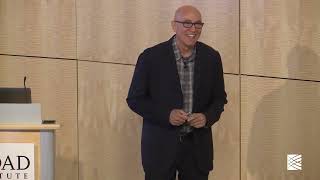
In this inaugural Broad–MIT Chemical Biology seminar, Stuart Schreiber recounts his career and outlines the evolution of chemical biology from natural‑product discovery to modern, data‑driven approaches. He highlights seminal “molecular glue” compounds such as FK506, rapamycin, and Taxol, and explains how these inspired the development of chemical inducers of proximity, PROTACs, and the Binders Project. Schreiber describes the creation of DNA‑barcoded small‑molecule libraries (DoSiDo) and the use of informer‑set profiling to map phenotypic responses across cancer cell lines. A key case study is the pan‑cancer resistance screen that identified GPX4 as a central node in ferroptosis, leading to a practical assay for ferroptotic death based on chemical complementation with vitamin E. Throughout, he emphasizes collaborative screening, the power of “chemical complementation” as a gold‑standard validation, and the rapid, irreversible nature of ferroptotic cell death compared with apoptosis.
Chapters
All right. Welcome, everybody. Great to see such a turnout. I'm Bridget Wagner. I'm happy to welcome you all to the first of our Broad MIT seminars in chemical biology. We've made an effort to bring together the communities of the two institutions, Broad and MIT, and chemical biology. And we've put together a great lineup over the next year. We have monthly seminars. And we're very happy to have an inaugural speaker who you will all know quite dearly. To talk a little bit more about the series itself, I'm going to hand it over to Ron Rains, who's the Sir Furmanich Professor of Chemistry at MIT.
Thanks.
Thanks, Bridget. So to echo what Bridget said, the series was spawned to capitalize on the absolutely extraordinary level of activity here in Kendall Square towards understanding and exploiting the chemistry that underlies all of biology. The series will be another bridge across Main Street, as Bridget implied, as has the recent arrival of Xiao Wang, who is the first faculty member to be appointed both to the MIT Chemistry Department and as a core member of the Broad Institute. The seminar series was formulated through conversations with Bridget and with Amit Choudhury, here at the Broad and with Laura Keysling and Matt Shoulders in the MIT Chemistry Department. And we are grateful for financial support from the Broad Institute, the MIT Chemistry Department, as well as Pfizer, Merck, and Biogen. We have an outstanding lineup of speakers this year, as Bridget said, and I will let Professor Keysling now introduce the very first one.
He doesn't call me that at home. I cannot think of a better speaker to kick this series off. I've been really excited about this day for months since we conceived this seminar series. So it's really a huge pleasure to introduce Stuart Schreiber, who is an icon of chemical biology. So just a little background on Stuart. He was an undergrad at Virginia where he was a whiskey-drinking partier until he fell in love with organic chemistry. And he then went to Harvard to pursue organic synthesis, first under the direction of Woodward, and then after that with Kishi, who he finished his PhD with. He went on to Yale as an assistant professor at age 24, and he really established himself as a creative innovator thinker, innovative thinker in how to build molecules. His syntheses were striking in their originality and creativity. And he got interested in really leveraging that chemistry to study biology. And I'll just give a few examples. His work on the synthesis of FK506, led to this new model for how these natural products could function by really bridging two different proteins. And then he and Crabtree took the intellectual leap to take that kind of modular protein assembly and create molecules that don't exist in nature but that can also do that. And that is the basis for a wide variety of strategies that chemical biologists pursue, including PROTACs. So from there, he really went on to also show not only can natural products and how they work give us new paradigms for how we can manipulate biology, he went on to show that they can be used to discover new biology. And there are multiple examples of that, including the discovery of the first HDAC and also mTOR. So I'm not going to go on and on about these things. And, you know, his work has received many accolades for that, and I'll just mention a few. The Arthur C. Cope Award, which goes to a really outstanding organic chemist, the Nagoya Gold Medal, the Wolf Prize. He's a member of the National Academy of Sciences and Medicine. But, you know, really he has changed the field of organic chemistry not only from his research but from his inspiration to young people. I was once a young person inspired by him. And there are so many of us here. I can look at the audience and see Paul Clements and Bridgette And Angela— Amit. All of us have been really inspired by his work. And one of the things about Stuart that I remember most— I was trying to decide whose lab to join, and I was doing a rotation in the Schreiber lab, and it was kind of a dingy place and kind of dark, and I was just working at the bench. Stuart comes in and he goes— he has a flashlight and I go, "Oh, hi," you know, and he goes, "Have you seen any cockroaches?" He and Konrad Santini had just finished Periplanum B, the cockroach sex pheromone, and he was looking for some subjects to try it on. So that, I think, captures Stuart's excitement about science and his excitement in really using chemistry to understand biology. So in terms of building bridges, he is the consummate bridge builder. So it's great to have you here, Stuart. I'm going to let you go ahead and give your talk, listening to probes.
Thank you, Laura. Wow, thank you. Thank you so much. Let's see, what do I say to that? It's amazing. One, I can say the— when Laura stopped at the whiskey drinking, I can now put a set of Set aside the backup slides I had of Laura as an MIT undergraduate. I don't have to use that. The cockroach experiment actually was really the beginning of thinking about chemical biology. And the truth is, we did find the cockroaches. And we took the cockroach and clipped off its antenna and put alligator clips on an oscilloscope and puffed on our synthetic compound. We got a signal. And it just blew me away because I figured that was a big step towards purifying the target. It was now down to the— we didn't get any— we got a grant to pursue that but never got any further than something in the antenna. But in all seriousness, I will say, listening to Laura, I remember over the years lots of people in the group who are out who start their independent career have asked me, what's the key to success? How can I be successful? And my answer is always the same and probably irritates a lot of people who maybe have heard this. I said, oh, it's really, really simple. You start your lab by finding a Laura Kiesling. And if you can all do that, I promise you it'll have a great effect on intellectual curiosity, intellectual excellence, and also culture. And building up a group which I hope, Laura, your impact has really transcended all these years. Okay, so I thought about this kickoff talk. What could I do? And I decided to do something for me a little bit different because I usually tend to just focus on, you know, one topic. It's a little bit different in that I want to provide a perspective. I want to tell you about some current research, and I'm going to sprinkle in some sort of prospective thoughts along the way. So I hope that works. The title, Listening to Probes, so that's a shout out to the book some of you may know, Listening to Prozac, written by a psychiatrist, Peter Kramer. Somewhat unlikely to be, you know, on the first slide. But I learned about this book by a local very accomplished psychiatrist and a friend, Ned Halliwell. It sat on my desk for some time, about the mid-'90s. I finally got around to read it. And I couldn't believe how a psychiatrist had written a book that was basically chemical biology. Because although in his case it wasn't a probe he was looking at, I mean, it was technically a medicine, fluoxetine, better known as Prozac. He was interested in the human brain and he was interested in disorders of the brain like mood disorders. And he made these amazing observations based on how his patients were responding to this chemical, including we know the odd kinetics of the effects and so forth. He made inferences about the brain. I thought, This is amazing. This is really chemical biology. So that's the title, at least the— oh, what happened here? Yeah. The first part of the title. The second part of the title, individuals and populations. So individuals means like fluoxetine. I'm going to show you some examples. This is the perspective of chemicals as individuals, and we learn things about them. And what I'm going to stress is the chemical insights that we learned about these individual probes. The second part is labeled populations or ensembles of chemicals. That's what the background is— of the slide is symbolizing. And here I'm going to stress how we can also listen to populations of compounds. In this case, looking at a pattern of sensitivity and correlating it with some biological readout that is of interest. And in this In the first case, the individuals, I'm going to focus on the insight that many chemicals are bifunctional and interact with multiple proteins at the same time, the consequences of that. In the second case, the problem that we studied was that of cancer resistance. How is it that so many cancers can respond all too often to so many different modalities and treatments? By becoming resistant. And you'll see that we discovered a pan-cancer mechanism of resistance. I'm going to turn this on so I monitor my time. Okay, we start with individuals. And I'm going to take you back a little bit over 30 years. I think this was a period of time when my lab had just moved from Yale to to Harvard, some of the first experiments that we did involved these three compounds— cyclosporine, FK506, and rapamycin. Indeed, we learned something about biology from these compounds, about calcium calcineurin and FAK signaling pathway, about nutrient response signaling pathway. That's not what I'm going to emphasize today. I'm going to emphasize the chemical feature of these compounds. You know, we did some experiments using synthetic chemistry around FK506 and we recognized and proposed that this chemical has, we called it a binding domain and an effector domain. We had no idea what that really meant, the effector domain, and ultimately we found out the effector domain was another binding domain, that this was a bifunctional molecule. Sometimes the, I often hear these days the term molecular glues. And this— these structures show you the blue proteins are the targets of cyclophilin for cyclosporine, FKBp12 for both FK506 and rapamycin, and yet upon binding these targets that have no measurable affinity for these other proteins, they now engage another protein, calcineurin or mTOR. I confess that at this point in time, I thought, I mean, this kind of blew my mind, but it also gave me a little bit of natural products envy. I thought, this has to be the consequence of a billion years of natural selection, and we synthetic chemists will never be able to accomplish what these natural systems, natural compounds can do. So along the way, next couple of years, A number of compounds, all natural products down at the bottom, ended up doing the same thing, inducing protein associations. They're bifunctional. In this case, these chemicals, Taxol, epothalone. I don't know if Deb is here, but I try to bring some warm memories when she was a graduate student. Deb Hong synthesized this rather complex compound called discodermalide. Its mechanism of action was completely unknown, and she discovered that as part of her PhD thesis that it induces protein associations, in this case alpha and beta tubulin. But a few years later, in a collaboration with Steve Haggerty, who was then a graduate student, Randy King, who's now on the faculty of Harvard, and Professor Tim Mitchison, we were stunned to find really simple, literally off-the-shelf chemicals, chemicals you could make in one step, did the same thing. This is an example we call the synthetic stabilizer A, the simple small molecule both in vitro and in vivo does exactly what the complicated Taxol does, induces protein associations. And this is at the heart of its mechanism of action. While this was going on, all of this was centered around trying to understand signal transduction. How is it that an extracellular protein combine a surface receptor, never enter into the cells, and yet turn on a whole gene expression program in the nucleus. I had imagined that this would have to be some complicated set of allosteric changes, you know, this binds, changes, this other thing now interacts. And it turns out what happened, what was uncovered was something very well known to organic chemists, physical organic chemists and in particular. Physical organic chemists called this phenomenon effective molarity. In chemistry, if you run a reaction, you discuss the effective molarity would be the concentration of reactants required to achieve a rate of a reaction comparable to an intramolecular version of it. And you can have enormous rate accelerations by this accomplishing effective molarity. Well, biological studies of information transfer were showing that the same phenomenon was occurring and that proteins can behave as molecular glues, as scaffolds that simply bring receptor or enzyme substrate pairs in close proximity, increasing the rate of chemistry between them. This was the mechanism by which information was transferred. The analogy was extended in amazing ways. So the organic chemists will remember back then, people like Albert Eschenmoser, Jack Baldwin were dissecting effective molarity. And they came up with ideas like proximity is a piece of it, but orientation is critical. And then we find out that the PDGF receptor is a monomer. The protein PDGF brings the two together as a molecular glue. The kinase domains are in close proximity, they turn on, they phosphorylate each other, this proximity effect. Yet insulin signals through the insulin receptor, but the insulin receptor is a disulfide-bonded preexisting dimer with a kinase that's not phosphorylating itself because, like in Baldwin rules, it had the wrong orientation. And binding of insulin turns things around a little bit and allows this chemistry to take place. While this was going on, we thought we were studying another case of signal transduction. Chris Haaseg and Jack Taunton, two graduate students then, were studying this compound because it had a dramatic effect on the shape and morphology of cells, and we thought, oh, this would be a way to dissect signaling that controls cell shape. It turns out that That's not what happens. What happens is this compound binds a protein that we called histone deacetylase, which affected the acetylation of chromatin. What was the big surprise is that that, instead of what was thought at the time would affect compaction of DNA, actually affected transcription, the readout of the genome. And at the same time this was going on, this literally the same week that this was published, David Allis' lab reported on the histone acetyltransferase, and guess what? It did exactly the same thing. It was involved in transcriptional regulation. Nowadays, of course, we know chromatin marks are involved in transcriptional regulation. But so how did that work? So we started working, thinking about this, people like Brad Bernstein, Jeff Tong, and what we came to realize was that it was the same story again. Molecular glues. Here's that PDGF. It binds, dimerizes, brings the kinases. That's how phosphorylation occurs without the protein ever entering in the cells. That's a docking site for a lipid kinase, which is now brought in proximity to the inner leaflet of the plasma membrane, and that's the substrate for lipid kinase, lipids. Well, in chromatin, this, the acetylation of a nucleosomal tail, a histone tail, creates a docking site for proteins that have acetyl lysine binding sites, bromodomains. And then what are these enzymes? Well, for example, a remodeling enzyme, nucleosome remodeling enzyme that is brought in close proximity to the nucleosome. So information transfer was occurring in the same way in the nucleus. So this— well, this is a real opportunity. We can use chemistry to induce proximity. This is one example. This was a— Laura mentioned a collaboration with Jerry Crabtree and his lab over a 10-year period, incredibly fruitful, wonderful, fantastic collaborators. So here's an example. We would make a genetic construct fusing a myristylation sequence to an FKBP12. We cut out just the cytoplasmic tail of a membrane receptor called FAS receptor, which is the death receptor. When the Fas ligand binds, it dimerizes. It brings the tails together. These have proteolytic activity. They cut each other up and signaling occurs. Death signaling occurs. So when we made a transgenic mouse with an Lck promoter to express it in thymocytes only, the mouse was perfectly normal because these are monomeric proteins. But when we added this compound we called FK1012 because it came in one step from an olfometathesis of FK506, orally to this animal, we could induce the dimerization and thus the selective killing of these thymocytes in an animal. This is spatial temporal control with chemistry. And that proved to be so general, it happened over and over again. A local company made a kit that they made freely available. It's been given to 1,800 laboratories and thousands of papers now on using this technique. It works for over and over for different receptors and over and over for different cellular processes. It's chemical inducers of proximity. We call these kinds of chemicals chemical inducers of proximity. But these were genetic fusion proteins. And as Laura mentioned, the goal then was to go directly for the native proteins. This has been done in a number of different instances, but the one that's had the greatest impact, at least thus far, are the PROTACs, chemicals that have linkers, a binding domain to your target, and then something that binds to an E3 ligase, bringing it in proximity, allowing ubiquitination and targeted degradation. Pioneered especially by Craig Crews and Jay Bradner. So these have— these are bifunctional compounds, but they're really monofunctional compounds with a synthetic linker. One of the reasons I'm presenting this is to draw your attention to the fact that these bifunctional molecules, I'm now beginning to believe, are the norm and not the exception. I'm wondering if this doesn't happen over and over and over. I attended the ACR meeting and found this to be utterly fascinating. This is work of Genentech scientists. They noted that this linker, bifunctional molecule with a linolidomide for the E3 ligase and a binding, binder to bromodomain, this was a BRD4 degrader. I got to guess they were trying to do the same thing, but they did the useful control experiment, you know, with this propargylamine. This is an exceptional degrader. It's a bifunctional molecule. You don't need the linker because they're everywhere. I'll show you another example that was a big surprise in the kinase inhibitory area a little bit in a moment. And so this is some examples now. We're just— we have a project we call the Binders Project. We're trying to systematically discover just How often does this happen? I don't know the answer, but I do know that it happens with much greater frequency than I think was appreciated. And the natural product's envy is now gone. So this is linolitamide, thalidomide. This is a beautiful compound discovered in Matthew Myerson's lab. He studies this here at the Broad. This brings together— it's not a PROTAC, but it brings together PDE3A and an RNA helicase and has profound effects on cells because of it. We will hopefully soon be able to learn from Ahmed's lab, beautiful work where they've been able to bring things together and do really very different kinds of chemical modifications inside of cells. So this got the group thinking about 3 years ago, we really got to get better at discovering binders in addition to understanding what how often they behave as bifunctional molecules. You know, we often think of compounds as inhibitors, but how often are they restoring a function or conferring a neo-function like the examples that I just provided? So this is, in my mind's eye, the way I'm thinking about chemicals binding to proteins in cells. Proteins have— they're dynamic. They have molecular motions. Generally speaking, when you bind a small molecule, you tighten up those proteins, and sometimes this could increase the lifetime. You want to activate something, maybe keep it around longer. Sometimes you tighten it up in such a way that it's now a substrate for protease. I think that's probably what the, the bromodomain binders is doing, and you decrease its lifetime. Here's an incredible example. A lot of people will know this compound, erlotinib, as well as gefitinib. They were famous because they're some of the first of targeted therapies. They target the kinase activity of EGFR mutant lung adenocarcinomas. And we know famously, actually from Matthew Meyerson and others in the Boston area, those compounds in fact kill cells because of their— we think their ability to inhibit this kinase activity that the cancers are dependent upon, and yet I'm not so sure these compounds are actually functionally kinase inhibitors because as fast as you can measure, when you add this in patients or in cells, the protein degrades. There is no protein around to inhibit. So here's even a case of a bona fide inhibitor. It's a degrader. It's a PROTAC, but it doesn't have that linker. It's a— and then I give this example of Tezacaftor, the Vertex compound that upon binding changes the interactome, probably bringing in a chaperone that was needed to get this temperature-sensitive alleles of CFTR, the most common one that's causal for cystic fibrosis. It now binds and moves through the secretory pathway and functions. So binders can do amazing things. They can be with and without linkers. And so I think this is my last slide here. 3 years ago, we developed this collaboration across the street with colleagues at NIBR, Novartis Institute of Biomedical Research. So grateful to our colleagues there for making this all possible. There were a couple of goals. One, discover binders. I mean, there's a number of ways you can discover binders. I really love the Ben Cravatt methodology of cell-based binding discovery. I think complementary to that could be using DNA barcoded compounds. We imagine that the possib— there's the possibility that one of the limitations of the DNA barcoded compounds is the limited kinds of structures you can make as you have to concomitantly DNA barcode and water and DNA compatibility. So one of the goals was to innovate around chemistry, and I'm happy to say we've got lots of progress there. We can make all kinds of compounds now that are barcoded. Each of these represent unique libraries that group members have, have completed, synthesized, barcoded. And just looking at these kinds of compounds, you'll notice these don't look like your typical DNA-encoded library compounds. The second part of this project was to be pre-competitive, no intellectual property, make everything not only the technology available, but the reagents available. Liam Hudson, who synthesized this library, announced at the ACS meeting the completion now of this term, DoSiDo, which stands for DNA Diversity Oriented Synthesis on Encoded Deoxynucleotides. If you don't like the term, it's not my term. It is Jay Bradner's term. He wrote a proposal when he was a postdoc here at Broad a Spark proposal, got it funded, and then left and took a job at Dana-Farber and somewhere else after that. So, but he left us the legacy of the idea. We've executed on that and we're hoping by the end of the year or beginning of next year we'll have a system in place that we can make these freely available to anyone with the barcode, with everything, no trickery, really let anyone do whatever they like with this. The only restriction is that we're gonna most likely make these freely available to academic laboratories because the cost of doing this kind of experiment is prohibitive for the academic community. So that's the end of part 1. And as I told you, the second part I wanna tell you about how we can also learn by listening to probes as populations or ensembles, or here I'm going to call them informer sets. This is based on— we have a lot of momentum to do this because happily colleagues here have been thinking a lot about small molecule profiling, which requires lots of compounds. I really want to make a big shout out to Paul Clemens, incredibly grateful for him for, to my knowledge, the first sort of pioneering database of this sort, which he created called ChemBank.— for the first time allowed you to look at ensembles of compounds across many swaths of biology, many chemical features, and analyze these in ways that you— with a different mindset than coming in with individual compounds at a time. Paul and others at the Molecular Libraries Program pioneered BARDD, BioAssay Research Database, and then more recently Cancer Therapeutics Response Portal, and the most recent, Malaria Therapeutics Response Portal. For the talk today, as I indicated in my introduction, I want to focus on and share with you a pan-cancer mechanism of cancer resistance that was uncovered using this idea of listening to probes as populations. The idea for this was a simple one. We noted that lots of advances in different modalities in cancer treatments, dramatic changes. Unfortunately, the most common ultimate outcome is resistance. And durable responses to immunotherapy-targeted therapy still remain the exception. So how is that? Well, lots of studies on resistance to therapeutics, often on a drug-by-drug basis to, to search for the genetic basis mutations, somatic alterations that could render the drug inactive. But on the other hand, we noted all of these modalities, each of these modalities kill cells by apoptotic death. And it was known that stable cell states can be acquired through cell plasticity that resist apoptosis. It seems like that's like a reasonable thing for cancer to do, exploit that. So the question is, could there be a pan-cancer mechanism, a non-genetic mechanism that confers the survival in the presence of the drug? That's the resistance. This common therapy resistance state. Now we do know that, of course, resistant tumors are picking up mutations clearly, like gatekeeper mutations. But maybe they're not the basis of resistance. Maybe they're the basis of optimizing the fitness of this resistant state and simply allowing the tumor to grow more rapidly in the presence of the drug. That was the thinking. To do this, we used this particular database I'd mentioned, Cancer Therapeutics Response Portal. That took a lot of work up front to enable this, this kind of study. But it was a worthwhile investment. Chemists worked together for over 3 years to handpick and create 500 distinct mechanism of action compounds. That's going to be our population. We call it an informer set. Now we had the benefit of being here at the Broad where we could benefit from an independent project, a Broad-Novartis collaboration called the Cancer Cell Line Encyclopedia. So we used their cancer cell lines and all of the data that they generously made freely available for this project. But what we did was measure sensitivity of each individual compound against each individual cell line at 16 concentrations, get robust reproducible sensitivity measurements. And then Paul's team developed first analysis tools that allowed the correlation of patterns of sensitivity with binary features like presence or absence of a mutation. And then next, correlation of patterns of sensitivity with continuous features like low to high transcript levels or protein or metabolite levels. Each of these measurements that I just alluded to— proteins, metabolites, transcripts, mutations— don't help you understand cell states. And I just foreshadowed that we were interested in whether plasticity, cell plasticity, adopting stable cell states could be. So we needed something else, and that came from Vasanthi Viswanathan. She had this idea. What if we use gene expression signatures as a measurement of a cell state? She was interested in resistance, and she found in the literature 3 patients that had responded to drugs but become resistant, for which there was public gene expression data. She used all 3, got the same answer. We can collapse it to 1. She used those gene expression signatures then to rank order those hundreds of cancer cell lines. From low resistance to high resistance. And then the question is, with that population, could we ever find something that selectively killed the otherwise resistant cells? That was the idea. The project could have been over very quickly because not at all obvious that's going to happen, right? Selective killing in an otherwise resistant cell state. Well, we found lots of compounds that selectively kill the non-resistant cell state. And not surprisingly, these were things like mitogen inhibitors, EGFR MEK inhibitors. But what was interesting is that every one of these compounds induced the death of these cells by apoptosis. We knew we were in business when we saw 10, roughly 10 compounds. There's a box and whisker plot, the high signal outliers. These are strongly correlating with killing in this otherwise therapy-resistant state. So that meant we were in business. We've analyzed every one of these chemicals. To highlight, I can start with the 3 we focused on, these 3 right here. At the time we started these studies, we included these compounds in the informer set. Even though we didn't know the mechanism of action, we just knew that they behaved in very odd ways, very different. So we thought it was a novel mechanism of action. We now know that all three compounds target the same protein. It is a glutathione-dependent selenoprotein called GPX4. And it is a lipid hydroperoxidase. These were big clues as to what was going on, but what was kind of the jaw-dropping moment was All three of these compounds kill cells not by apoptosis, just as we had imagined. They do something else. They kill cells by a form of death that's called ferroptosis. A little primer on ferroptosis. Often it's lumped together with apoptosis. It shouldn't be. In my view, it's a fundamentally different process. Apoptosis is a signaling pathway there to kill cells. It's called programmed cell death in development. Ferroptosis is not a pathway to kill cells. Ferroptosis is a vulnerability when cells are in a certain lipid state, maybe trying to resist death by apoptosis. And it just so happens that they are subject to sabotage. You can sabotage these cells because of this vulnerability and kill them by this iron-dependent form of cell death.
That.
So two of these compounds are chlorocetamides. This one is not. It's not at all obvious what's going on here. It's presuming some kind of alkylation. And indeed, with collaborators at Bayer, crystal structure shows this compound is bound to GPX4 by a covalent bond. This compound was really interesting to us because it was much more selective than these two. But not at all obvious how it was working, particularly when, in contrast to these other two, in vitro purified GPX4, there's no effect of this ML210 compound. We had other clues that this was clearly GPX4-dependent killing, but in vitro, not so much. So Jake Eaton, Laura First, Vasanthi Viswanathan been working very hard. I thought this would be a mechanistic puzzle that frankly would not be solved in my lifetime. It was so baffling and so frustrating, and it turns out the reason is this compound is a pro, pro, pro drug. It's inactive in vitro, But you put it in cells and it undergoes a hydrolysis and then a retroclaisen condensation. Still inactive in vitro. Active in cells. Then undergoes— put it back in cells, a ring-closing dehydration to make a furoxan. You can purify that compound. It requires this ring-opening tautomerization to make this bizarre alpha-oximinonitrile oxide. This is the actual first time a compound is now made in vitro that directly targets GPX4. And now to connect back to the first part. This very selective compound, it's bifunctional. The nonselective ones, they're not. You look at them, they say they're just GPX4 inhibitors. This is an enzyme, it's a lipid hydroperoxidase enzyme. Cleaves a peroxide to an alcohol. But not all inhibitors are alike, and in this instance, it tracks with being monofunctional versus bifunctional. Here's some evidence for this. This is work of Jake, Laura, and Bassanti in Bio Archive. It's in review, in peer review currently. So in contrast to RSL3, when you pull down a GPX4 variant that we study, In the presence of ML210, you pull down two other proteins, an XNA2, S100A10. We do not know the biological relevance, if any, of these, but we find it really interesting and provocative that if you study these proteins and GPX4, they are swirling around the same area of biology, suggesting to us there's something important. The next observation is this one. The RSL-3 chlorocetamide and ML162 in a SETSA therapy, cellular thermal shift experiment. The evidence of binding is that there's a major change. You can see that these are destabilizers. The bifunctional compound is a significant stabilizer. And I had always thought stabilization occurs by, you know, tightening up proteins, making them more stable. I'm now beginning to wonder whether SETSA-positive shifts are biomarker, so to speak, of induced protein associations. I mean, wouldn't that be a great way to stabilize this protein, is to bring together additional proteins and make a supramolecular complex? So, bifunctional compounds arise again. Okay, I'm going to try to pick it up, and I'm going to go through a few things. The main point of the next several slides is to convince you this is not a cell line —artifact. This happens in human organoids that Yu Chen at Sloan Kettering had made from prostate, benign prostate, androgen receptor-dependent prostate, which had very little sensitivity to GPX4 inhibition. But when this patient-derived treatment-induced neuroendocrine transdifferentiation occurred to make the lethal form of prostate cancer, which is notoriously difficult to kill, These are GPX4-dependent. Androgen receptor expression is down. And the expression of a very provocative transcription factor, ZEB1, which is a master lipid regulator— and you'll see that a little bit later. Is it EMT? Well, melanomas are not epithelial. They don't undergo EMT. They do undergo something that's probably related. Clinical oncologists have noted melanomas They tend to be either invasive or proliferative. Aviv Regev's work found using gene expression, using single-cell analyses, discovered biomarkers of these. This is now called the high-axle state and the high-MIDF state. When we looked at our melanoma cells, lots of them in the experiment, and honed in on a number of them, they had a wide range of high-MIDF. Or high-axle. And the high-axle, the invasive state, which is the drug-resistant state, is GPX4-dependent. And you can see this is not some small effect. It's a huge change in GPX4 sensitivity. In general, most cells just don't care about GPX4 because they're not making lipid hydroperoxides. When they make the cell state shift, I think, to resist apoptosis, they become vulnerable to this form of sabotage. And the next couple slides, just to show everything I've talked about is sort of an innate feature. What happens if you induce resistance by making what are called persister cells? You treat cancer cells with targeted therapy, chemotherapy, in vitro. You kill off most of them. There's always some stragglers. You grow them out. Those are persisters. And every time we did this with ovarian, lung, breast, melanoma, chemotherapy, targeted therapy, you get this massive change in sensitivity or dependency on GPX4. Always the therapy-resistant one being GPX4-dependent. And this can be— the scientists showed this works in an animal. Engraft the high-axl melanoma cells in a mouse, remove GPX4, you eliminate the cancer. Put in the high-MITF, which is what most melanoma cancers would present in a human. These are— they don't care about— you can delete GPX4 in these cells. They don't— it doesn't do anything. They still grow. They're fine. But engraft in an animal, treat with a targeted therapy, to get at the high MetF state, the drug-sensitive state, get to this sort of form of minimal residual disease, no detectable tumor, you know it's there, you take the drug away and the tumor comes back. That minimal residual disease we imagine is the GPX4-dependent state. Now when you remove GPX4, you eliminate the cancer. Those other chemicals that were outliers, we worked out their mechanisms of action. They fit into one coherent biochemical pathway. This lipid pathway. Chemicals that inhibit GPX4, inhibit the biosynthesis of GPX4, inhibit the synthesis of its obligate cofactor, they all selectively kill. Other chemicals are used to dissect this. An activator of a desaturase makes polyunsaturated lipids., which increases the flux through oxidases to make hydroperoxides, increasing this vulnerability through to iron-dependent sabotage or ferroptotic death. Haoxin Li, a graduate student, was looking to try to understand this using microscopy. And he found that whenever cells were in this state, they make very characteristic morphology called the phagocytosis morphology, making these big vacuoles. We're hoping this is going to help translate these insights into medicines as a possible biomarker. That was systematic looking at sensitivity. What about other kinds of systematic measurements, like with Clary Clish metabolites? Boy, did that— was that an illuminating experiment. These are the GPX4 non-dependent cells, high always in triacylglycerols. Generally of the saturated or monosaturated lipid state. The GPX4-dependent cell lines have lost these and gained polyunsaturated phospholipids. So lipid biochemistry, very well known. For example, arachidonic acid can go down two distinct pathways. One of them is called the lipogenic state. De novo lipogenesis. The lipids are stored as triacylglycerols. Desaturation comes from a monounsaturase to make saturated or monounsaturated fatty acids in this pathway. On the other hand, the second pathway yields polyunsaturated phospholipids that go to the membrane. This is called the lipolytic or lipid scavenging state. So this is tracking with the metabolomic measurements. Then genome-wide CRISPR suppressor screens. What genes are needed to die by ferroptosis when they're in this state? And the most, the strongest signals are genes that are involved in the biosynthesis of phospholipids. This is a complicated slide just to say that decades of studies on lipogenesis and lipid scavenging, or lipogenic and lipolytic pathways on the left and the right, I figured out lots of enzymes involved in this pathway. This gave Vasanti an opportunity to use chemical tools and probe each one of these. And again, I don't want you to sort of have to work through the mental gyrations, but just suffice to say, pretty much every enzyme she tackled with a probe yielded the expected outcome when you view the world as a MUFA state or a PUFA state, monounsaturated lipogenic state or lipolytic state. If you inhibit acetyl-CoA carboxylase, which is needed to get you to MUFA, you sensitize to pheroptosis. If you inhibit mTOR with rapamycin, which is the brakes on this pathway, you amplify pheroptosis. Why PUFAs? We don't know. Big mystery. You could put up a list of things. It could be lipid raft signaling. It could be— these are precursors to eicosanoid signaling molecules. GPX4 is there to make the alcohol that makes leukotrienes, for example, immune signaling molecules. We don't know. Whatever the reason, what we can say, the consequence is a vulnerability to ferroptosis and a vulnerability to this kind of cellular sabotage by removing or inhibiting the detoxification enzyme GPX4. The— I'm going to finish with some thoughts about how do we translate this into new medicines in the future. So we have GPX4, that's an interesting target. We wanted to see if there were other ones. So here again we're at the Broad and here we benefit from this amazing new tool from the Broad Cancer Program called the DepMap portal. You can go online and find this. In this instance, both Vasanthi Viswanathan and Matthias Wauer in Paul Clement's lab Basically just ask, is there a pattern of sensitivity that's like GPX4 inhibition or like CRISPR deletion? So this is a— this is the outcome. These are deletion of lots and lots of genes, and this is not— this is a binary call. There's either no effect or a dramatic effect. Each of these enzymes— when you delete them, show a pattern of killing that's the same as a GPX4 inhibitor or deleting GPX4. So what are they? Amazingly, they entirely fall on one pathway that is the biosynthesis of GPX4. It takes a lot of special enzymes to get a selenocysteine into a protein. These are all the enzymes. But what about these down here, these blue ones? They're anti-correlating. They're the most dissimilar GPX4. What are they? Amazing. They're all the enzymes on the MUFA pathway. So it's like it's a binary switch. It's either this two different lipid states. And if you inhibit any of these, you see a pattern of killing that's exactly the opposite of GPX4, exactly as you'd think in thinking about the world in these two lipid states. Okay, the last thing I want to show you about translation is an amazing experiment by an amazing then graduate student, recently minted PhD, Haoxin Li. He had a pretty ingenious idea. He said, well, in addition to looking to traditional targets, what about chemicals themselves, including ones that have been in humans that are thought to be very benign, like nutraceuticals. So he did this experiment. He took lipids. He was wondering if instead of like blocking the drain in a high flux of this, creating this vulnerability to ferptosis, what if you just overwhelmed the cell by adding exogenous lipids? Now lipids are supposed to be pretty benign, and by and large they are. Monounsaturated, saturated lipids, they don't do anything. Oh, I'm sorry. This experiment also made possible by technology. Todd Golub's lab has developed the beautiful PRISM assay of barcoded cancer cells. And so, and this is now made available to researchers in the community where you can look at a whole bunch of cells all at once. And now when you look at the polyunsaturated lipids, well, they mostly don't kill cells, but they actually have a strong effect on some. What are they? Well, let's correlate. Pattern of killing with the pattern of killing to our informer set. An unbiased analysis of all those chemicals, the ones that correlate, every one I just told you about, ML210, 162, RSEL3, orastin, two others that induce ferroptosis. So this has led us to what we call the spigot and drain model. The vast majority of tissues, even cancers, have very little flux. They don't care about GPX4. You can inhibit it, you can delete it, they still grow. But if you're in a high flux state, that PUFA state, now you're vulnerable. If you inhibit or delete GPX4, you block the drain. Or what Haoxin has now done, if you add exogenous PUFAs, you overwhelm it by turning on the spigot. I'm gonna— wrapping up here. Some of this work is published. I'm not gonna take you through now. I'm just gonna say that The team has worked really hard to try to understand how does this cell state occur. That genome-wide CRISPR screen was very illuminating. It picked out ZEB1, I mentioned earlier, also some other transcription factors that when you put these together, you find that they have emerged in the past in heart failure. When fibroblasts transdifferentiate into myofibroblasts, they use these same factors. A long story short, we believe this can be induced by exogenous factors like fibrogenic stimuli from like TGF-beta. We think that this GPX4-dependent state is a myofibroblast-like state. We think it's characterized by a turning on of autophagy. We think it's characterized by a resistance to apoptosis. We're even thinking that this could affect the the tumor microenvironment where cancer-associated fibroblasts seem to be doing the same thing. So the rest of this is just a summary, different views of what I've told you. All— anyone who studies cancers knows that cancer cells are vulnerable to apoptosis because all of our major modalities kill cells this way. But now we have this other view. That upon treatment, these cells have cellular plasticity and adopt a stable cell state turned on by those fibrogenic factors, ZEB1, that is now vulnerable to pharoptosis. That's what I've been talking about. Another way to look at this— so one question is, why wasn't this uncovered in the past? Well, the answer is it was, but it was done idiosyncratically by a bunch of different groups that never got together to realize it's all the same thing. The cancer community talks about oncogene-dependent and oncogene-independent. That's the therapy sensitive, therapy resistant. Proliferative versus invasive, I told you about that. EMT and epithelial cancers, that's what we're talking about. Chemo-sensitive and chemo-resistant ovarian cancer, same thing. Androgen receptor dependent and independent or neuroendocrine or indifferent prostate cancer, same thing, fundamentally the same thing. And this just sort of emphasizes how in different experimental systems, we— like oncogene-independent state, this is where tumors progress. They start out oncogene-dependent, targeted therapies work, then they don't work anymore, become oncogene-independent. We showed that this state appears with BRAF-independent, the BRAF mutant melanoma. EGFR independent but EGFR mutant lung cancer. Androgen independent prostate cancer and KRAS independent but KRAS mutant pancreatic adenocarcinoma. Very quickly, just a shout out to two other group members. Everything I've talked about today is this acquired resistance. It turns out that there is a lineage dependency that's intrinsic to certain cancers. And so just point to Tanaj Sharifnia's work on chordoma cancers, which have this physioliferous morphology and are GPX4-dependent intrinsically. And recently, Yilong Zhao has shown that certain clear cell carcinomas like renal and ovarian also have this morphology and also are intrinsically GPX4-dependent. GPx4 dependent. They're intrinsically in this lipid cell state, and that has, we hope, translational implications. Now I am going to finish with what I started with. This was a talk about chemical biology, and I want to tell you, reflect on what I've just told you. Vasanthi Viswanathan, who I've mentioned, did an amazing analysis She used principal component analysis, many of you familiar, a way to reduce the dimensionality of features and look for hopefully biomarkers of underlying biology to illuminate mechanistically what's going on with a big dataset. So she used her chemical sensitivity dataset that I've been describing. She used principal component analysis. The first principal component, some linear combination of those features, everything to do with epithelial biology, cells that line surfaces, replicate, and die by apoptotic death. When she used principal component analysis on the chemical sensitivity dataset, she found a second principal component. Everything about it is about mesenchymal function. Cells that persist their stress responses. They buffer against stress. They don't divide and they don't die. They enlarge by hypertrophy or shrink by atrophy. They're not undergoing apoptosis. This is the second lipid cell state. And key features of the first one, saturated lipids. The second one, polyunsaturated lipids. These are identifying biomarkers of these two principal components. So the question is, why was PC2 invisible up to this point? And I think Vasanti has a good insight into this. So she tried to do the same thing using static markers. She used somatic alterations and genetic databases. She used transcriptional data static from these cancer cell lines. She could find the first principal component. She didn't find the second principal component. So why is that? I think it has to do with what chemical biology provides fairly uniquely, namely chemical biology is providing stressors of many different mechanisms that dynamically perturbs cells in ways that allow us to reveal the similarities in this resistant state. And then when we look around for— this started with, you know, interested in resistance, but I mentioned this myofibroblastic cell state was first discovered by very observant cardiologists. Vascular scientists who saw when people were undergoing heart failure, there was a seeming infiltration of a new kind of fibroblast. It was actually the preexisting fibroblasts that underwent through cell plasticity, a cell state change, the one I've been describing. So it's in heart failure. Well, neurodegeneration, neurons die by ferroptosis, by sabotage. During neurodegeneration, ultimately, there's a cell state. We think it's not just neurons, it's probably microglia, maybe astrocytes. Great projects going on in the lab. I don't have time to tell you about. With Rama Xavier, we're beginning to explore, could this be the wound healing response that's associated with fibrosis? It has all the hallmarks of this. It's a secretory state. It's vasoliferous. Really smells like this PC2 state. And we definitely know that it's central to immune modulation. Activated T cells adopt the PC2 state. Dibifaroptosis. And then lastly, from the translational perspective, we're excited because maybe because this is intrinsically metabolic cell state, there's a plethora of good tool compounds to pick apart this state, some of which are shown in the slide. So it's an eminently modulatable cell state to explore, to uncover new facets, and to understand in these different contexts. That's what we hope to do in the future. Let me finish with profound thanks. First, the first half, I've mentioned Jay Bradner, who championed this project at NIBR, Novartis Institute of Biomedical Sciences. The champion co-lead of this project is Corinne Breiner. She's the head of global chemistry at Novartis. Amazing we get her time and attention. She's very dedicated to this project. Fred Zickri and Fred Burst, who heads up some similar activities in Basel, and we video conference with Fred and his team. He's brought so much expertise to this project. And then these are some of the trainees. I've had time maybe only to mention Liam because he made this announcement very recently, but I didn't have time to tell you about our binders project. And then the PC2 cell state project, work of Vasanti, of Jake Eaton. I had mentioned Laura first. And then I mentioned towards the end the sort of intrinsic lineage cancers, Yilong Yu and Tanaz Sharifnia. Very grateful to everyone, others that I didn't have time to mention, the many collaborators across the road, at a distance, in Berlin, Bayer collaborators. This project has been funded by the Cancer Target Discovery and Development Network spearheaded by Daniela Gerhardt, who's just been a real champion, and really grateful to her. And mostly so grateful for all of you to turn out and spend this time and listen to this. Little tale of chemical biology.
Thank you. Thanks, Stuart. That was provocative and incredible. Let's— so what we're going to do here is take some questions. We have mics all over the place. First question could be from anybody. Second question has to be from a trainee. Grad student or postdoc. So the first question can be from a trainee.
Thanks, Laura. So you had mentioned that the PC2 state was both PUFA-dependent and it was a lipid-scavenging state. Do you see it? Have people seen any effect from feeding animals a bunch of PUFAs, flaxseed oil, or fish oil? Very, very important question, and Hao Shen is dying to know the answer to that. I just— I'm trying to find this. Small point on language: this is not This is language we've invented. We've literally, we try not to confuse the literature in this. Lipolytic lipid scavenging is what one will find when you search the literature. I'm not sure it's the best terms, but whatever. I understand what the words are supposed to denote. So these are the two states. Yes, we know that people are taking, in some cases, very high concentrations daily. Of these same lipids. Hao Shen is very aware of this and is seeing if he can retrospectively go find epidemiological evidence. As anyone knows, whenever you come up with one of these, it's like you find, you know, an effect of a statin or something, you try to think about epidemiologically, you run into the challenge of electronic medical records. So it's not going to be easy, but we're— we'd love to find out, you know, since humans have been running this experiment.
Digging deeper into molecular glues, compounds that work by chemically induced proximity, let's say notation-wise you have functional group 1 that binds to protein 1 and functional group 2 that binds to protein 2. What's your preferred way to decouple the effects of the pure affinity of each monomer for each functional group from the effect that the compound has on the conformational states of protein 1. So you can chop off functional group 2 and find that the compound is no longer active. Yeah. But you won't know whether that's because protein 2 has lost affinity for the compound or because protein 1 is now in a different state.
Yeah, no, you— again, you raise really good questions. You can do lots of things like structure-activity relationships around your compound, try to make really tiny little chemical modifications and then do biophysical measurements of the consequences of binding the two pieces. You can do structural studies to see— like in rapamycin, if you noticed, rapamycin is an amazing case. The two proteins that it's binding simultaneously are very far from each other. So there's no protein-protein contact that's mediated by rapamycin. On the other hand, oddly enough, when you take rapamycin with one half FKBP12, that has a binding constant on around 1 nanomolar. You take that complex with mTOR, it's 200 picomolar. When you take rapamycin alone with mTOR, you can't measure an interaction. Hmm, how does that happen, right? There's no protein-protein contact yet. I think it's, in that case, it's probably entropy. Rapamycin is a very flexible molecule. The FKBP is freezing up all these rotors, freezing it into the right conformation., and now there's no entropic cost. So lots and lots of these biophysical questions to pick apart with bifunctional molecules and molecular glues. We're learning a lot. There's crystal structures recently on linolatamide, thalidomide, and now the indosulam, the, the azide compound that was discovered to be a different molecular glue within different E3 ligase. The new crystal structure has just been reported from cryo-EM, and they're amazing. What the— each one has its own mechanism of being a molecular glue. Sometimes it's entropy, sometimes it's the composite surface. It's creating a neo, you know, docking binding site. Lots of different answers to how it works. Lots of work to be done to figure out the general principles.
There's a question. There's a question in the middle, but while you get to him, I'm just going to ask my question. That's illegal. I'm superseding the students here. So I wanted to ask, because an interesting topic is these sort of hydrogels that can form in the cytosol between Liquid-liquid phase separation. Yes. I'm calling them hydrogels, but they are like— yeah, phase separation. I would imagine that these changes in lipids could actually promote profound changes in those compartments.
I totally agree. In fact, in some respects, what is a lipid raft if not some kind of little phase-separated thing? In the membrane. So I agree. I think that there's a— we're all learning these amazing— what do you call them, hydrogels? Yeah. They're everywhere. And they've been— and by the way, how amazing is that? How many decades of cell biology work? And in fact, people had found them, little bodies here and there. And now it's like they're everywhere. And they're really important. They're another form of concentration. They're a mechanism to make— create high effective molarity. When a super-enhancer forms by creating a hydrogel or phase separating, it's creating high effective molarity of the relevant pieces. And, you know, so that's another layer on terms of the general proximity effect. I think these are going to be profoundly important. And then how do they get regulated?
That's an interesting question. Yeah, this seems like maybe a cool way to shift who's where.
Well, you know what? You can— if you get the directionality— so it turns out HDAC6, if you inhibit it, you polyacetylate, and you change phase separation. So you can— this has to be regulated. And so now the question is, how is it regulated? There's a whole other area.
Chemical biology to figure out in the future. Let's go back to trainee questions.
How do you identify cells undergoing ferroptosis?
Is something happening to their shape or do you measure iron concentration?
Is something happening to the glycocalyx? There are a number of ways. Operationally, nowadays we're so confident in this GPX4 mechanism, you know, we can say if a cell is dying by adding GPX4, it's going to be by ferroptosis. But now that's, you know, you could say that's a little circular. But we have another trick. It's an amazing one, a chemical complementation. It's really the gold standard for proving it's ferroptotic death. If you inhibit GPX4, you know, the cells are ultimately dying through oxyradicals that are undergoing carbon-carbon bond hemolysis. So antioxidants like vitamin E, if you add to cells where you've induced ferroptosis, you will completely rescue them. Those nasty little oxyradicals there's enough electron donor capability of vitamin E, you quench them. And so if you have a death and it's dying by GPX4 inhibition and you can completely rescue it with an antioxidant, like, that's become operationally the definition. Now, it is true that morphologically there's some interesting differences and a lot of work going on trying to figure out, can we use transmission electron microscopy to see things. This phyciliferous morphology is a— well, that's a precursor to ferroptosis. Oh, the other thing about ferroptosis that's quite unique is it's a really rapid form of death. I mean, the cells do not tolerate this. Apoptotic death occurs over a certain period of time. Ferroptotic death is— and it's irreversible. Once you start it, cells are dead, and they're dead very quickly. So there's now a set of, you know, empirical observations that allow you to surmise death is by ferroptosis. And those are unique from other forms of not just apoptosis, but necrosis and other forms of death.
Well, I don't see any more questions. So if you have more questions, you can come down and ask Stuart afterwards, but let's thank Stuart for a terrific start to our symposium.
More from Joshua







Scientist Stories: Hans Waterham, The value of phenotypic assays in peroxisomal disorders




Scientist Stories: Joel Zlotogora, Genetic carrier screening programs for reproductive purposes