Scientist Stories: Stuart Schreiber, Molecular Glues & Bifunctional Molecules
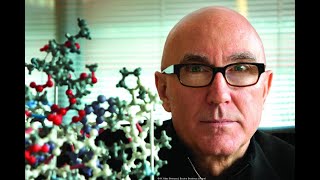
In a recorded Andrews University seminar, Professor Stuart Schreiber (Harvard/Broad Institute) delivers a multifaceted talk that intertwines personal narrative, mentorship philosophy, and cutting‑edge chemical biology. He begins with a striking genetic‑genealogy map of his paternal Y‑chromosome lineage, tracing ancestors from 30,000‑year‑old Nigerians through Central Asia to modern‑day Hungary, and recounts discovering his maternal and paternal families via genetic genealogy, revealing new siblings and a late‑discovered biological father. Schreiber credits his mother, a Cajun “uplifter,” for his resilience and co‑founds the Tamarind Foundation to support similar mentors. He shares career advice emphasizing passion, long‑term commitment, and embracing failure, citing influences from Yoshido Kishi and Theodore Roosevelt. The scientific core introduces molecular glues—small molecules that cooperatively bind two proteins (e.g., FK506, rapamycin, lenalidomide)—and bifunctional compounds that link two binders but can suffer a “hook effect.” He explains how missense mutations and post‑translational modifications mimic glue behavior, and illustrates therapeutic applications such as Vertex’s Trikafta for cystic fibrosis and PROTAC‑style degraders. Schreiber describes his laboratory’s diversity‑oriented synthesis (DOS) and DNA‑encoded library (DEL) platforms that generate three‑dimensional, stereochemically rich libraries, enabling rapid discovery of binders, bifunctionals, and molecular glues via barcoded screening and cooperativity metrics (α factor). Recent examples include a VHL‑BRD4 bifunctional degrader and a highly cooperative glue identified through ternary enrichment. He outlines future directions toward tissue‑specific glues, especially brain‑restricted FKBP12.6‑targeting, and mentions a new venture, Magnet Biomedicine, to develop CNS medicines. Finally, he discusses the emerging role of AI and large language models as assistants for hypothesis generation, while cautioning against over‑hype, and clarifies the collaborative structure of his Harvard appointment and Broad Institute labs.
Chapters
All right, so recording is in progress. So I want to begin by thanking everyone here that showed up for our seminar. We have actually— the school year is coming to a close really fast. We have only about 3 more seminars after this one. So we are coming to the end here, and we do have a very special speaker today. I've described him in some of the communications as one of the most influential organic chemists/chemical biologists today. And also we have the privilege of one of our alumni, David Song, Professor David Song. He is a 1989, I believe, alumni of Andrews University Chemistry department. He also graduated from MIT in 1993, and he's currently a professor at Southern Methodist University and doing some really cool work there. I had a chance to listen to him, I think last summer or something close to that. He's doing some really cool work in polymer chemistry, and he will be co-hosting this session with me today. So actually, David, it's your turn to introduce us.
Very good. Thank you, Professor Murray, for inviting me to be a co-host. It's great to be quote unquote back with the Andrews community, and I bring you greetings from Dallas, Texas, which is where Southern Methodist University is located. And I hope I can be back on campus in the near future. But yes, it is my distinct honor and privilege to introduce today's speaker, Professor Stuart Schreiber. Professor Schreiber is a co-founder of the Broad Institute of MIT and Harvard and is a Morris Loeb Professor of Chemistry and Chemical Biology at Harvard University. Now, if you're not familiar with the Broad Institute, it's kind of like a multidisciplinary collaboration based in Cambridge, Massachusetts with an overall mission of improving human health. Professor Schreiber is a member of the National Academy of Sciences, the National Academy of Medicine, and the American Academy of Arts and Sciences. His research has been thoroughly recognized through numerous awards, including the Wolf Prize in Chemistry, which is certainly one of the most prestigious international recognitions in the field of chemistry. Professor Schreiber's research integrates chemical biology and human biology to advance the discovery of novel therapeutics. His lab discovered the first molecular glues and developed the first bifunctional compounds that recruit neo-substrates to enzymes and cells. I believe He will discuss some of these topics here this afternoon. Professor Schreiber has also developed what's known as diversity-oriented synthesis, which is a method to develop a large number of structurally diverse molecules in a relatively short time. And using this method, he has— and his lab have developed a very large number of compounds for various biomedical applications. Professor Schreiber has extended chemical biology principles to medicine by participating in the founding of 14 biotech companies, beginning with Vertex Pharmaceuticals, whose efforts have made cystic fibrosis a more manageable disease. And these companies or the Schreiber Lab itself have thus far developed 16 novel inhuman therapeutic agents, nearly all as first-in-class reagents. And finally, I will mention that in 2020, Schreiber co-founded Scientists to Stop COVID-19, which is a nonpartisan science-based group that advises policymakers in the U.S. on ways to treat and prevent the spread of COVID-19. It again, it's a great honor to have a scientist as prominent as Professor Schreiber here to join us, and I hope you'll all join me in giving him a warm virtual welcome. Professor Schreiber.
David, thank you very much. You'll indicate if you have any trouble hearing me, but Very grateful for your comments. Actually, they're very useful for some of the things I'm going to talk about. And it's very nice to be introduced by an alumnus. It really speaks well to you, David, but it speaks well to Andrews University. It's obviously a very special, very special university. And then good afternoon, everyone. It's such a pleasure to be here today. When Desmond invited me, he said, you know, come and give us a lecture about your research, but he also suggested that I could spend a few minutes and talk about self-discovery and lessons for young scientists. So I'm taking him up on that, and I'm gonna spend just a couple of slides and maybe just 10 minutes or so, and I want to address these topics, but maybe in a way that's a little bit unusual. So I hope you don't get too confused about this, but So let's begin with what you're looking at. Like, what is this? Well, this is a map of a path of my ancestors. These are men because it's a path based on Y chromosome analysis. And you may know Y chromosome gets passed from grandfather to father to son. It's very unique because the very little few changes occur generation to generation, which is why we can use it to go way back in time. It also is based on carbon dating and ancient genomics. So anthropologists have collected bones from all around the world and carbon dated them and noted their location. Recently, ancient genomics allows us to go to those bones and actually sequence the entire diploid genome. There are now over 10,000 such ancient genomes. So I had this idea, since I had analyzed my Y chromosome, I would go in this database of tens of thousands of Y chromosomes, and I would find the ones that are directly related to me through the paternal lineage. Directly related. Now, I imagined that if this worked, I would get some kind of a smear, some diffuse path that might give me a little bit of indication of the migration. Instead, I got what you see. So what is it that you're looking at? You'll notice there's this linear relationship. It's amazing. The first and oldest man who, uh, on this graph is a 30,000-year-old Nigerian. He is a direct— and he is my direct ancestor, from that man to his son and so on, all the way down eventually to me. The second, 27,000-year-old, uh, man from Chad, and then, uh, the Congo. Kenya, Ethiopia, Saudi Arabia, Iraq, Iran, Turkmenistan, Kazakhstan. Migrates up about 6,000 years ago, a man from Mongolia. His descendants took a path to the west. About 2,000 years ago, they made their way to Belarus. They did a funny little turn in Poland, went back to Belarus. And then they passed through a gap in the Carpathian Mountains and ended up in Hungary. Now, it's like my ancestors dropped breadcrumbs to allow me to find them and find this path. And here, here you are. This is— these are my ancestors. This is who I am. This is where I come from. Now, if I had done this just even 10 years ago, I would have concluded that it didn't work. And the reason for that is that I had this notion from family lore that I might be German, I may be French, some, something to do, but never Hungary. So that takes me to the second second story I want to tell you. It's related. So, um, I did grow up with a lot of mysteries in my life and a lot of confusion, um, not knowing who I was and where I come from. And my mother shared in some of that. I knew my mom, um, and I'll show— I'll introduce you to her in a minute. I knew her, her mother, my maternal grandma, Connie Phillips from Opelousas, Louisiana. But other than that, a lot of mystery. So I had to wait 62 years to figure out who I am, and I, I used a technique that's called genetic genealogy. It's incredibly powerful. I have a lot of fun working with genetic genealogy today. One of the things I learned was who my grandpa is, my maternal grandpa, my mother's father. I would ask her a lot about him, but she, she never really— she wasn't at all interested in talking about him. I learned that she did know him, even though she didn't tell me about him. His name was Dionee Hoda. I discovered him. I discovered his family, his two daughters, my mom's sisters. I have become very close to my mom's sister, although she, she passed just a couple of months ago, and to her daughters, my cousins. We are a family. We communicate every single day. I've gone to visit them many times. Now, along the way, I also discovered my father, my biological father. He was from New Jersey. Um, unfortunately, by the time I discovered him, he had passed. However, I discovered 5 new siblings.
Wow.
I've discovered a second family— my mom's family and, and my family. I discovered that my father's mother, my paternal grandma, is Maggie Gilland from Northern Ireland. I discovered that my father's father, my paternal grandpa, is Alexander Kaliny from Budapest, Hungary. Actually, he was born in Slovakia, but he was moved right away and baptized in Budapest, Hungary. My wife and I made a pilgrimage recently to smell the air and see the sights, and we visited the parish in which he was baptized on the Danube River. Very moving, very powerful. Knowing who you are and discovering new family. I have, it turns out, all the Y chromosomes that I can determine today of living people, they all are in Budapest, Hungary. So it all makes sense. This is my family. This is my home.
Yes.
Now, I've alluded to some turmoil and challenges. I made it through because I had an angel. Who guided and nurtured me. I've alluded to her. I want to introduce you to her. This is my mom. She was born Geraldine Ardois. She was a Cajun from Louisiana. And whoever I am, whatever I've done, I am— it's because of her. I call her my angel because through the turmoil and the challenges with confusion about why these things would happen, there was always my mom. And she never asked me, what did I do? Or how did this happen? She would turn to me and smother me with love. And she would say things like, in her Cajun, sweet Cajun voice, she'd say, sugar, 'Have I told you how much I love you?' Or, 'Sugar, have I told you how special you are?' Now, of course, as a young boy and even a young adult, I would say, 'Go ahead and tell me again.' She created a different universe, and I chose her universe. She never used this phrase, but very early on and throughout my life, I have what I consider my mantra. I refuse to be unhappy. That's what I learned from my mom. My mom was an uplifter, and, um, I'm very happy to say that my wife and I have founded the Tamarind Foundation in honor of my mother. Our vision statement is: gardening the human spirit by lifting the uplifters. My mom was an uplifter. My mom had very limited resources. She uplifted me some very close friends who had great tragedy and trauma in their lives, but she didn't have the resources to spread her magic further. And we hope through the Tamarind Foundation to identify the uplifters and lift them up. Now, Desmond also said to maybe offer some words of advice, so I hesitated on this one because actually my first advice is be very leery of people like me who offer you advice. The truth is, and I mean this very sincerely, each of you, it's your life. You get to live it. You should listen to people like Desmond and me and David, but you can reject whatever you hear. You navigate your own life. So in fact, I'm not going to tell you my advice, but I'm going to share with you advice of another uplifter, a very special person in my life. And he too, sadly, he died just several months ago. Yeah, his name is Yoshido Kishi. I call him Yoshi. Um, I met Yoshi when I first came to graduate school. He gave me a lot of advice, but there was one thing he said that was seeming— it, it struck me as being profound and important, although I must admit when he said it It was also bewildering. I didn't quite understand it, but it resonated. It stuck in my head, and I, I think about it to this day. He said, Stuart, you want to be a scientist, if you want to do something important in science, it's going to take you roughly 10 years. So if you're really lucky and you have a long life in science, you may have 4 decades, 4— he called them shots on goal. And his message was really about choosing what you decide to do very carefully because it's a big commitment and you don't have many opportunities. It turned out what his advice was spot on for me. It turns out I've been around more than 4 decades now, and, and, um, for me it's been 10 years plus or minus 3. I've sort of selected different problems and moved about But, but his real message and what I'm trying to convey to you is whatever you pick, pick that with which you have a passion. If you have a passion, if for you it's the most important problem, you'll be able to love your work and love going to work every day of your life. And if you pick something that's really, really hard or you're not, you know, trained for it or It's okay because, and now I turn to the last inspirational figure in my life. I'm going to just point you to Theodore Roosevelt, a past president. And if you're interested in this, you can Google In the Arena. It's a famous speech he gave. Maybe you can guess already, being in the arena. I often call it myself. I'll explain to my wife, I feel like I'm in the hunt. Right. It's— and what Teddy Roosevelt told us was it's okay to fail. Choose to do something that could impact society, could have a big effect, and it's okay to fail. You probably will fail if you pick something really hard and challenging. But he says at least fail while daring greatly. Whenever I'm down and things are not going well, I go to my little YouTube video or YouTube audio and I listen to his speech. It's very inspirational. Maybe you'll find it for you also. Okay, so that's it. Now I want to turn my attention to to the research topic I want to share with you today. So it's about molecular glues and bifunctional compounds. These are small molecules that induce protein-protein associations, interactions. If you're interested in more than I'm going to share with you today, I wrote a perspective a couple of years ago that I hope you'll find useful. So there's two classes of compounds that induce these protein associations. The difference between them, molecular glues will interact with more than one protein at the same time cooperatively. They may have a weak interaction over here and a weak interaction over here, but put them all together and you get very high affinity. This turns out to be very useful. It makes the action of the compound contingent upon the presence of both proteins. Now I'm also going to tell you about bifunctional compounds. These are compounds that have an element that binds one protein, an element that binds another, more or less independently. In fact, you can— what's appealing about them is you can find a binder and a binder, and you can connect, you can link them up with a connector, and you'll get a bifunctional compound. Despite that ease of design, the shortcoming of them is that because they bind independently, if you increase the concentration of the compound, you'll tend to break apart the complex and bind with 1-to-1 stoichiometry. We call that the hook, hook effect because the dose response is you get more activity and then you get less activity. Now, the reason I want to share this with you is that for many years we think of small molecule therapeutics as, you know, inhibiting an enzyme. It's because of molecular glues and bifunctional compounds we now think about many different kinds of activities that small molecules can increase, decrease lifetimes, change local locations of the therapeutic protein, increase their activity, change their post-translational modifications. And because of this contingency, you can now pick the diseased tissue and find a target and a presenter protein that only coexist in the diseased tissue. That is to say, you can have tissue targeting of drugs. So I want to begin with a common framework. I'm going to introduce concepts like binders and hotspots and missense mutations and post-translational modifications. So here's the way to think about this. When small molecules bind dynamic proteins in cells, they change their biophysical properties. And we can think of the small molecule protein as a neo-protein, a whole new protein. These altered biophysical properties often manifest in the change in the interactome, the induction of new protein-protein interactions. Now, small molecules don't bind proteins randomly. Jim Wells, 25 years ago, taught us that these small molecules bind in what he called hotspots, regions of the protein that are usually involved in protein-protein interaction. So the first concept I want to share with you beyond binders and hotspots is the similarity of small molecule glues and missense mutations. Missense mutations are mutations that change the identity of an amino acid. And it turns out from human genetics, we now know that missense mutations under natural selection do not appear randomly. Mutations occur randomly, but the ones that are selected that we can detect have functional consequences. So not surprisingly, they land in hotspots. This was shown very nicely by a study by Haiyan Fu at Emory University. He looked at all of the missense mutations that are known in oncogenes, cancer-causing proteins. And he systematically studied these and found that time and time again, the missense mutation changed the interactome resulting in neo, new protein-protein interactions, just like molecular glues. Here's, here's a related example. Scientists at Novartis were studying a neurologic disorder. It's, we call it a Mendelian disorder. A single mutation causes this disease and it affects children and it's lethal and there's no current treatment for it. The mutation in the MALT1 gene changes a tryptophan side chain with its indole into a serine. These researchers discovered a compound that binds to the, the native protein, the wild-type protein, but they noticed that the indole ring of that tryptophan had to flip out of the way in order for the compound to bind. So that gave them the idea maybe the disease protein with serine here is playing some kind of a glue effect holding regions of the protein together and that losing the indole ring causes it to fall apart. So indeed, they took cells derived from patients with this disease and they added their compound. So normally having a serine here, and it rescued the effect. I call this a molecular prosthetic. It's like losing a limb and adding an artificial limb. This protein had lost its indole of the tryptophan, but this compound replaced its function by gluing together regions of the protein. Rather amazing. Now, the next topic is post-translational modifications, which you're going to see are also like molecular glues. In studies of signal transduction, especially in the 1990s, we learned of the importance of induced proximity. So, for example, a cytokine is a kind of protein glue. It binds its receptor, but with a 2-to-1 stoichiometry, brings the two together. The receptor has a kinase domain, which then phosphorylates the other kinase. There are proteins inside of cells that bind these phosphorylated residues, like a lipid kinase. Well, a lipid kinase, by this mechanism, is brought in close proximity to lipids in the membrane, so the rate of chemistry is increased. Signals go into the nucleus where nucleosomes and histone proteins become acetylated. That creates a docking site for proteins that bind acetylated lysines, including nucleosome remodeling enzymes, which lo and behold are now in close proximity to their substrate. So the rate of chemistry increases. So post-translational modifications are nature's molecular glues. I'm going to tell you a little bit later about small molecule molecular glues like lenalidomide, the drug called Revlimid. A number of labs, including my lab, discovered around the same time that this drug is a molecular glue. It binds a protein called cereblon, but in the process, it recruits neo-protein-protein interactions, proteins that would normally not interact with cereblon, which turns out to be part of an enzyme complex. And the enzymatic activity is to put a ubiquitin chain on the protein and lead to its degradation. Being in close proximity that now can occur with this drug. Well, recently my colleague Christina Wu, a professor in the Harvard Chemistry Department, discovered amazingly that proteins themselves can become unstable, and when they do so, they can undergo a post-translational modification, an intramolecular one, where a glutamine or asparagine side chain reaches into the main chain and forms an imide. She note these are unstable proteins. She noted that the drug Revlimid has an imide, and sure enough, she found that these post-translationally modified proteins bind to cereblon. Cereblon ubiquitinates the unstable protein and leads to its degradation. So our drug is mimicking this, recruiting other proteins to become ubiquitinated and degraded. So again, this PTM, post-translational modification, and a small molecule molecular glue, they're mimics of one another. Now this whole idea that small molecules can be molecular glues was discovered over 30 years ago. By Jun Liu. He was then a postdoc in my lab, and Jun was studying the, the molecular mechanism of action of these two natural products, cyclosporine and FK506. He found out that these compounds target a phosphatase called calcineurin, but the way they do so is very unusual, or at least at the time. They themselves don't bind calcineurin, cyclosporine, FK506, but they do bind, I'll call a presenter protein, FK506 binding FKBP12, cyclosporine binding cyclophilin. Neither of these bind calcineurin until you put them together. They bind cooperatively to calcineurin. And that's where the name molecular glue came about. Now at the time, we thought that this was some quirky, you know, odd circumstance, probably never to be repeated. But then 10 years later, a graduate student in the lab discovered a very simple synthetic compound, does more or less the same thing. It takes two other proteins, alpha and beta tubulin, it induces their interaction and actually forms microfilaments in cells. Turns out the same thing that a very complicated natural product called Taxol is able to do. So what this told us was that even simple chemicals can do the same thing. And nowadays, I'm beginning to think that this is more often the case than not. When a small molecule binds, it induces neo-interactions. We just weren't looking for them along the way. We discovered that another natural product called rapamycin is also a molecular glue. It binds that same protein FKBP12. That's the target of rapamycin. But it then, as a molecular glue, binds a protein we— it was previously unknown. We called it mTOR for mechanistic target of rapamycin. So target of rapamycin and mechanistic target of rapamycin. We now know a lot about this protein. By the way, it was simultaneously and independently discovered by David Sabatini when he was a graduate student in Saul Snyder's lab, and we published our work at the same time together. So this compound inhibits the kinase activity of mTOR. There's the ATP binding site. It doesn't do so by binding in the enzyme active site. It blocks the entry portal of certain substrates to mTOR, an amazing mechanism of action with a molecular glue. And recently, a third natural product shown here was found to also bind the same protein, FKBB12, but now as a molecular glue targets yet another protein. In fact, it binds the coiled coil region, which is an otherwise featureless element that Most people, drug discoverers, would say small molecules can't bind coiled coils. Yet, as a molecular glue, taking advantage of small molecule-protein interactions and simultaneously protein-protein interactions, this cooperativity yields highly specific and high affinity interactions. The next point I want to make is that molecular glues can work intramolecularly. So there's a lot of interest in the immunomodulation area in drugs that would target the inflammasome. This is a molecular machine. It doesn't have an enzyme active site. How do you inhibit the inflammasome, a machine? Well, these researchers, Decker et al., found a simple small molecule that binds 4 subdomains and acts as an intramolecular glue, taking this dynamic protein that has to cycle through different conformations to function and lock it into an inactive conformation. An intramolecular glue is the root to an inhibitor of the inflammasome. And then David mentioned to you my interest in a company that I founded, co-founded with Kevin Kinsella, in 1988 called Vertex Pharmaceuticals. And Vertex was tackling a problem, again, at the time, unthinkable to target cystic fibrosis. It seemed impossible. We knew it was caused by a single allele in a single gene. We call it, again, a Mendelian disorder. But that mutation causes phenylalanine 508 to no longer be incorporated in the protein. How do you make a drug that would correct that defect? Well, it turns out many years later, Vertex has an amazing drug, a life-saving drug called Trikafta. Trikafta actually comprises 3 different drugs. And each of these compounds in the same pill binds 3 different regions of the protein CFTR that when mutated is causal for cystic fibrosis. And what these compounds do by acting as molecular glues and inducing protein-protein interactions, they contort the protein to adopt an active conformation even when phenylalanine 508 is missing. So just another example of the amazing activities that are now available to drug hunters through molecular glues. And here's my last example. I give it to you because the phosphodiesterase family is a nice way to illustrate both intra- and intermolecular glues. These are structurally related proteins. One is called phosphodiesterase 3A. A compound has been discovered recently that binds a hotspot. And in so doing, it recruits another protein to interact called Schlafen 12. It's a ribonuclease, and this glue activates the ribonuclease, increases its activity. Whereas an approved drug called rolipram binds a different PDE4D, but in the same hotspot, but now causing another domain of the same protein intramolecularly to fold on top of it, causing a decrease in the phosphodiesterase activity. Two drugs, two different mechanisms of action, and yet fundamentally acting as glues, either inter- or intramolecularly. And now we know that, as I said, they're all over the place. They're everywhere. They're complicated. They're simple. They're natural. They're synthetic. Bifunctionals came about just a couple years later. I was talking to a very good friend and to me, one of the most creative scientists I've ever met in my life, Jerry Crabtree. And we were wondering how do we could extend this idea of inducing protein-protein interactions, particularly because signal transduction at that time was becoming very evident with a series of induced protein-protein interactions. We wanted to mimic that with drugs. So we came up with this simple idea: find a binder, find another binder, link them together with a connector. And then one other thought we had was because there were just so many different proteins to try to glue together coming from signal transduction, we thought if we could fuse a small molecule binding domain onto a signaling protein, like an Fkbp, make a fusion protein, then we would only have to find a binder to one, a binder to the other, one connector, and we could use this over and over again with different fusion proteins. Well, this has worked incredibly well. Here's an example of a transgenic mouse. It was caused to express a fusion protein where an Fkbp12 is fused to a signaling domain called FAS of the FAS receptor. The animal is completely unremarkable. We can't tell a difference of this animal when it expresses this, which we caused to express the protein only in a certain cell type called a thymocyte. However, when we treat the animal with a dose an oral dose of this compound we call FK1012 because Steve Diver, a postdoc in the lab, used an olefin metathesis reaction to convert FK506 into FK1012. In so doing, he blocked the calcineurin interaction, but he gained the ability to bind two different FKBB12s. And so now you see the linkage here. FK1012 binds these two different FKBB12s. It brings the, the FAS protein together, which has a proteolytic activity and cleaves the FAS domains off, which is the mechanism of the apoptotic signaling pathway, causing cell ablation, cell degradation in the animal, but with a single cell type with spatial and temporal control with a chemical. And it works in humans. Jerry and I started a company called ARIAD Gene Therapeutics. They partnered with Bellicum Pharmaceuticals and made an FK1012-like compound called remeducid. They reported recently, 10 years ago, in New England Journal of Medicine, the results of a trial of leukemia patients that had undergone bone marrow transplantation. But prior to transplanting the donor hematopoietic stem cells, they caused those stem cells to express the FKBp12 FAS protein. They called this a kill switch. Just in case anything goes wrong, they could eliminate the untoward effects. 5 of the patients found something did go wrong. Their grafted immune system attacked their own body. That's called graft-versus-host disease. All 5 received a single dose of this compound, and the autoreactive immune cells were completely eliminated by one dose of remeducin. Now, we also learned that we could induce protein degradation. So this work was inspired by another friend, Peter Howley, who has studied the mechanism of the papillomavirus causing cervical cancer. A key step in that process is the viral protein E6, which turns out to be a protein glue. And he showed that, uh, it would induce a proximal relationship of an enzyme that can ubiquitinate p53, the guardian of the genome, inducing oncogenesis. So we said, well, let's use our fusion protein and fuse an FKBP onto E6. And then we would put an FKBP onto any protein of interest and induce the degradation with a chemical FK1012. That was first done by Martin Pruschi in 1995. Martin was the baymate of someone I'm going to mention in a, in a minute, a former trainee named Craig Kruse, Maybe some of you have heard of Craig. He's championed the area of PROTACs. And this, in fact, this compound in this context is a PROTAC. But we made these reagents available through Aria Gene Therapeutics freely to academics, no strings attached. 1,200 kits were distributed, and over 2,000 papers were published, gaining control over all kinds of signaling proteins and all kinds of nuclear gene expression, gene regulation processes, some of the most impressive examples coming from Jerry Crabtree and his lab. Many of my trainees exited the lab with the idea of extending this to native proteins. So I mentioned Craig Kruse. Craig has been making what are generally called TACS, This stands for targeting chimeras. Craig and Ray Deshaies made a ProTac, a protein degrading compound that binds the VHL domain of an E3 ubiquitin ligase. And then another element binds a target protein and then link them up with a linker. Jay Bradner, who was also a postdoc in the lab, simultaneously the same time as Craig, He came up with the same protac, he called them imids, that binds cereblon, and then a protein of interest with a linker in between, but now native proteins. This has been extended to lytacs and abtacs and forks and fics, all tacs that cause, you know, post-translational modifications. It's just amazing what you can now do with bifunctional compounds. Okay, so let me take a time check. Good. In the last, you know, 8 or 10 minutes, I want to tell you about some recent things we're doing. I want to tell you first about some work of Liam Hudson. It's available for you to read on bioRxiv, and it's a late stage of review. But basically, as David mentioned, my lab has been interested in chirality and three-dimensional structures in biology. We use this diversity-oriented synthesis in cell-based screens, and recently we've extended to binders. And here we adapted the technology invented by Sydney Brenner and Richard Lerner called DNA encoded libraries. So if you go to the bioRxiv, you'll find a new library that's merged these two highly three-dimensional structures, chiral molecules, wherever you see a stereocenter, We make every possible stereoisomer as a way to get structure-activity relationships. These are going to be, as soon as it's accepted, we're going to make these freely available thanks to the Novartis Institute of Biomedical Research with whom we have collaborated in an open-source collaboration. We file no patents, we make everything freely available to the academic community. This just maybe give you a little sense of the, Many DNA-encoded compounds tend to be very flat and sp2-rich. Now you have access to compounds that have three-dimensional structures. And wherever you see a stereogenic element, you have every possible combination. The first time we tested this library was work of a postdoc named Xuan Liu. She screened her favorite protein, which is a missense mutation of a citric acid cycle enzyme called IDH, which when mutated causes certain cancers. She used the DNA barcoding technology where you find binders and then PCR amplify the barcode that tells you which compound is bound to the protein. And unbelievably, just by chance, After solving the crystal structure, the binder, which is very potent, right out of a library, no, no medicinal chemistry, stabilizes the protein. And from the crystal structure, we now know how it induces protein-protein interactions. It sits at the dimer interface as a glue stabilizing this protein. Now lastly, we've been looking at new screens using these barcoded compounds to discover either bifunctional compounds or molecular glues. So this is the work of a very creative former postdoc, Jeremy Mason. His work is also available to you on bioRxiv and in the late stages of review. So normally, you, with Dell technology, you take your library of compounds, millions of compounds, each with an unique identifier, a barcode, and you incubate with a target protein that's bound to a magnetic bead, and then you wash away, you sequence the DNA, and you compare it to the magnetic bead alone. So what he had was a simple idea that he would incubate with both a presenter protein and a target protein and see if we saw barcodes that were dependent on the presence of the two. Maybe these would be bifunctionals. Right out of the screening collection, no optimization, came a bifunctional compound that interacted simultaneously with the two test proteins. So VHL, part of an E3 ligase, and BRD4. In cells using a Nanobit assay, the compound in a dose-dependent manner induces protein-protein associations in a stereospecific way. And we picked these because the VHL will induce the degradation by ubiquitination of the target. And indeed, in a concentration-dependent manner, this compound induced the degradation of its target, BRD4. Now, the crystal structure of this compound shows that part of it binds the target, BRD4, part of it binds the presenter, VHL, and then there's a connector in between in a low-energy conformation that is simultaneously binding both proteins. So in one fell swoop now, you don't have to find a binder, find another binder, optimize for a linker, you just directly find the bifunctional compound with this technology. And then lastly, in the last couple minutes, Xuan Lu, I mentioned before, has extended the idea to directly discover molecular glues, who, remember, their hallmark is cooperativity. They may bind one target weakly and they may bind another target weakly, but when all three are together, they bind with very high potency. To— they're a molecular glue. And she had a really simple idea. The experiment I just told you about that, that Jeremy ran was to incubate the V8, the, the, the presenter and the target and the library on a magnetic bead, and then compare that to the magnetic bead alone, because that bead is made of cobalt and DNA had nonspecific interactions. That's called the ternary enrichment. And it worked as I just described. But Xuan said, why don't I compare barcodes that are present here selectively to when both proteins are present versus just one of them? Screening for cooperativity. That was her idea. And it worked beautifully. So normally, we, in Jeremy's work, we always looked at the ternary enrichment. And sure enough, these compounds are bifunctionals. In Chuan's idea, looking at the presenter ratio, the ternary versus the binary complex, we get a bunch of compounds that, you know, they have an okay enrichment, ternary enrichment, but they have a really strong presenter ratio. So she synthesized one of these and one of these and found that the compounds here, 9.1, it, it induces interactions, but it shows the hook effect. At high concentrations, you get that 1-to-1 ratio. But the green one over here, 13.7, it's a molecular glue. It never comes apart because it binds cooperatively. You can quantitate cooperativity by what's called the cooperativity factor, which is the ratio of the Kd of the binary complex over the ternary complex using surface plasmon resonance. Schwan would measure the binary binding constant, and then add the target protein and measure the ternary. So, and then that ratio is called alpha. And here I'm plotting alpha. So look at the ternary enrichment, these bifunctional compounds, you know, a little bit of cooperativity, a little bit more, a little bit less, like almost not uncooperative. But look at these compounds over here. These are highly cooperative. In fact, this compound with a cooperativity of 2140, 2140, that's as good as the gold standards of FK506 and rapamycin. And yet, look at the structures. This is the bifunctional compound. This is the turn— this is the glue. It's very similar. There's no way— certainly I wouldn't know how to design in not only in one step simultaneous binding to two proteins, but to design into the screen cooperative interactions. Turns out the cooperativity has a lot to do with the difference of this connector versus this connector in completely unpredictable ways. So mindful of my time, I— that's all I'm going to present today. I will give you a little hint of where we're going in the future. I already alluded to it, but I kept mentioning FKBP12. Well, it turns out that's a member of a family of proteins. A very similar one is called 12.6. It's only expressed in the brain. If we had molecular glues like rapamycin, FK506, that required FKBP12.6, these systemically distributed compounds throughout the body would have no effect. Until it finds 12.6 and the target. And 12.6 is restricted to the brain. So we're thinking this is a way to make CNS medicines who will only become active in the brain or other tissues of interest. So we started a company, my friend, a neuroscientist, Michael Rossbach, a Nobel Prize winner, and Ben Cravatt, a famous chemical biologist, called Magnet. Biomedicine. So that's it. I want to just— some thanks. I've mentioned my trainees working on this project and past trainees. I have a big shout out to my friend Jerry Crabtree. I'm so grateful that he befriended me and worked with me for all these years. He's been a powerful force in the area of induced protein-protein interaction. So I hope that was useful. It was interesting and I know many of you have a class you have to run to. If any of you want to hang around, I'd be happy to take any questions.
All right. Very nice. Thank you so very much. The span of what you just talked about from the personal to the research is amazing. And actually, I did find the name. I did find a name. Of the very famous actor.
You're gonna embarrass me in front of all these people.
No, it's not the embarrassment. He's really good. Who is it? That is John Malkovich.
I see it. Yeah. Real compliment.
Yes, he is good.
Actually, my wife claims that I'm like the quirkiest, strangest person she's ever met. And if there's anyone who could compete, it's John Malkovich.
That's correct. Exactly. You guys should meet up sometime. Anyway, yes, David, you want to make comments, ask questions?
Get us— Well, yeah, tremendous seminar, and thank you again, Professor Schreiber. And I don't know exactly how it works, but I imagine that the students are more than welcome to ask questions.
Yes, everybody is welcome.
Yes. And I'm sure Professor Schreiber, you'd welcome questions about the first part of your talk, the family issue, the family part of the talk, as well as the science. Is that correct? 100%. Okay. Okay. Let me ask one question just to start off with then. This is regarding the science part, if I may. And you know, you talk about screening, and you know, we— I introduced the aspect of the diversity-oriented synthesis. So I imagine some of the screening is through like you making— your lab making massive numbers of molecules. But what role What role does computational modeling play in this? If you know the structure of the binding pocket, are you using computers extensively more and more in recent years to design molecules for glues, for example?
What a not only brilliant but prescient question. Historically, insufficient amount of that. Today, with what we're all hearing about with large language models and AI, there is now for the first time, I think, the ability to take protein structure databases, small molecule databases, training sets based on biophysical interactions, and use and link them through language and be able to interact with— like, I think of these GPTs as our own personal assistants. Who can suggest ideas and interact with us through the common— the connection of these training sets is language, so we can interact with these. So I'm very, very excited. I could go on forever about this. I have some friends that are very tightly connected to, for example, Sam Altman and Greg Brockton of OpenAI. We're looking to collaborate and to build our own personalized sort of GPTs to help us in the future.
My goodness. Wow. That'd be something to hear about for sure. Well, thank you. And I guess I'll open this up to anyone in the audience.
David, I think I see a number of the students may have used the chat mechanism. There may be some questions in there.
I think they're also keeping attendance that way.
It looks like.
Oh, yeah, you can ask questions in the chat as well. Please do put those in attendants. But yeah, I mean, I think Professor Schreiber would love to answer questions. What a great opportunity it is to ask questions here.
Yes. So I want to ask a question that sort of builds on what you started off here, David, which is, okay, so we are going towards AI and automation and all of that. But I have a sense that still the human imagination, because like, Are you in the billions of compounds that you've made since you started, you know, diversity organic synthesis? It has to have a starting point, like, yes, certainly millions of them.
No, Desmond, you're exactly correct. And despite the fact that I think you could see in my response to David, I have a genuine excitement and enthusiasm for the, the, the new roles that I think AI can play. I will simultaneously tell you that in my opinion, some of the advocates in this area are extraordinarily naive, including one who I asked at OpenAI about interacting with us. Actually, a postdoc in my lab asked about interacting, and he said, are you serious? Don't you understand? Human science is over in 3 years. Now, this is a software engineer speaking. All due respect to software engineers, but I can assure you that's a false statement. Yes. So, I look at this not as replacing at all human imagination. We absolutely need human. That's why I call them assistants. Maybe we interact and they make suggestions and 9 times out of 10, we'll recognize that there's a shortcoming in that suggestion. But 1 time out of 10 is enough to cause some synapses to occur and say, well, I could take that idea and run with it in a very different direction. I think this is going to be very powerful and useful and helpful. But it's not the panacea that some of the AI people are claiming.
Right, right, right. Okay, other questions?
Well, if I may just ask for the benefit of students who are here, uh, Professor Schreiber, can you kind of explain the relationship between your lab at Harvard and what you do at the Broad Institute and kind of see how they're connected for the, for the students here?
Yeah, yeah. So my— I am a professor at Harvard University. I've been there, you know, I first came to Harvard in 1977, but I've been on the faculty for almost 40 years, and that's my academic faculty position is at Harvard. I teach undergraduates at Harvard. I have for 40 years. I love it. I have, you know, good— I'm a good citizen as a faculty member. I participate in university committees, but my labs are resident to the Broad Institute. My students get a Harvard degree, but they actually do their research in the Broad Labs because we built the Broad Labs to be very collaborative and to do science at a scale that was hard to do in the typically more traditional labs at Harvard. So that's how it works.
Okay. Sort of like piggybacking on that to some degree, yeah, when I was in graduate school, you know, I learned of you and your work, and your path began as I would describe a traditional organic chemist. 100%. Right, and then all of a sudden we are seeing these papers and this stuff that traditional organic chemists are like, What is going on here? What was that transition for you getting from traditional organic chemistry to more chemical biology?
Yes, Desmond, I think I can give you a pretty concise answer. You know, the first, like, 10 years or so, plus or minus 3, I worked on purely organic chemistry challenges that I'd learned from my advisor, R.B. Woodward, you know, how to build complex natural products. But along the way— and I, I absolutely— I've never had a course in biology. I never— I didn't know any biology. But, you know, one day I was looking at like a protein, and I saw the side chains— leucine, valine— and I, I started thinking in terms of conformational analysis. Like, the leucine side chain, it's got rotors, but in fact it's got a gearing effect. And I thought, I wonder if that's actually seen in crystal structures. And sure enough, there's really just two side chain conformations of and I went and talked to the structural biologists, and I was shocked that they hadn't been thinking about it that way. So I thought, well, maybe organic chemistry can bring something to bear and started with structure. I was more comfortable with structure. Once I started looking at protein small molecule interactions, then I just got curious about, well, how does this work in a cell? You know, how does that work? And I, first time I ever saw a cell, I looked under a microscope. And I just thought, in this cell, it's just a sack of amazing organic chemistry. It's running through the Krebs cycle. Like, how on earth does that happen? And I discovered that these chemicals that we were using could probe and explain, you know, we, like, you had a rheostat. We could dial up and down activity and make inferences. So it was a very logical transition each, each step along the way.
Very nice. And I think we are all better, better friends. Other questions? So I do have another question. It looks like several of those molecules, and this is just a small, very small percentage of what you what you've made, but a number of them have the capacity for hydrogen bonding. The ureas, the sulfonilamides, all of those. Is that part of the core of these sort of binders and the bifunctionality? Is that hydrogen bonding plays a significant role?
Yeah, I think what happened was, again, by luck and chance. It was a win-win situation. I actually love, you know, these sulfonilureas. I think that, you know, just from structures you see, there's a whole lot of energy to be gained by these directed hydrogen bonds. But it also turns out in building up these molecules, forming a sulfonamide, for example, or a urea, is a very powerful way of forming bonds. So they came together and we happily incorporate them, you know, into our libraries of compounds.
Yes, yes. Can I ask a question about the first part of your talk? Yes, please. Your ancestry, that little map, and you said 30,000 years ago you had an ancestor in Nigeria. Is that correct?
Yes, I am Nigerian.
You're Nigerian.
There's an interesting trail going through Hungary, et cetera. Is there any way you could determine historically, was there a motivation for this movement at all? Was it a climate-related thing, or do you have any idea about that?
Well, not from my own analysis, but anthropologists, they think a lot about this, and your intuition was spot on. The, you know, we think about the arid, you know, Saharan Desert, but actually there was a point in time when it was very lush. And as it dried out, people just naturally moved to what we call today the steppes, S-T-E-P-P-E-S. These are, this is where agriculture emerged, but it moved up and down, you know, 30,000 years ago was still the Ice Age, and it would be very difficult to go up and thrive in Eurasia because much of it was frozen. But as it melted and the climate changed, we humans, we just migrated to where the quality of life was best.
That makes sense.
Yeah, yeah. So you also mentioned in, in, you know, conjunction to that, two methods, one called genetic genealogy, the other Y chromosome analysis. Are they, are they the same thing? Or are they different?
Genetic Y chromosome, I guess, is the easiest because you need to, you know, if you have a Y chromosome, and half of us do. Then you, you sequence it and then you can just ask in a database which of all the humans extant or current, which ones have my, we call it haplotype, my version of the Y chromosome. It turns out I have a fairly rare one, which is why out of all of those extinct individuals, you know, 10,000, 20,000 of them, I found 40. 40 are my ancestors. 40 out of, you know, 20,000. So that one's pretty easy. It's just a computer lines up and tells you, are you this haplotype or another one? And you can't miss it because it's like the next one over, uh, has virtually no identities. And this— mine is highly identical. Genetic genealogy is a little bit more interesting. And more complicated, but it combines classic, you know, genealogy, going to the records. And, you know, today we can use newspapers.com, and we can use the internet and do a lot of sleuthing. You know, it turns out my grandma, my grandpa, and my other grandma and grandpa were all Catholic. And so I've used the Catholic Church. It keeps great records. And that's been a goldmine of you know, marriage certificates, death certificates, records of baptisms. And so that's called genealogy. And then the genetic part is that if you genotype your DNA through— you can do it either on your own, or you can use a commercial vendor like Ancestry, or— and then, and then you put it into a public database or a private database. I do both. I do everything I can. I put it as much out there as possible. Then you can start to see weak interactions. You know, like, like I'll find someone, um, I discovered, believe it or not, that, you know, Brett Favre, yeah, was related to me. It turns out his mom was my mom's cousin. Oh wow, second cousins. But the amount of DNA told me he was probably a second cousin. So now I know that, which means we share great-great-grandparents. So I build a tree up of mine, I build a tree up of his using genealogy, and I find the ones that are identical. And then, then I got it. Then I know how I'm related. So I just do that extensively. Um, turns out when you spend 62 years of your life not knowing who you are and not knowing who your family is, you do develop a voracious appetite for learning about your family. And so I have so many family members that don't know who I am because I never stop. I build my tree. It's, it's very, very satisfying.
Wow. So the, the Y chromosome analysis is commercialized too, somewhat, you know?
Yes, yes.
Oh yes, there's a— there's only one firm that I'm aware of. It's called Family Tree DNA.
Family Tree DNA.
Okay. And you can pay for a service and they will analyze your Y chromosome, and then you're in business.
All right. All right. Sounds good.
I know— oh, sorry. I was going to say, let me jump in because there is a question in the chat I noticed. And Brandon is asking, what opportunities did you take advantage of so that you could end up at Harvard? I'm guessing he's referring to you ending up there as a faculty member, but you were also a graduate student there. So maybe you can answer that from both perspectives.
The main thing I want to share is that I can assure you the likelihood that I would end up at Harvard or anywhere, honestly, other than maybe prison, was very, very, very low. I was an angry young man. I had a lot of things happen in my life that to this day I— it's hard to talk about. I don't understand them. And, um, I had a lot of anger. And what happened was I quit college. Actually, I went to college on a fluke, and then I quit. But my sister, who's another angel in my life, she encouraged me to— she didn't like the fact that someone had told me I couldn't do something, which is why I quit college. And she said, you can quit college, but don't do it for that reason. And I went back by chance, and I went into the first science lecture I'd ever seen. I had no idea what the— but it turned out to be beautiful d-orbitals and blue and white chalk, and I was mesmerized by it. My life changed in that instant. I found a purpose in life. I found this was so much more healthy than the things that I was doing, and I stopped everything that I was doing. I stopped being angry, and I just loved science. So science saved my life. Um, And then it was a bunch of lucky circumstances, you know. I, I, I, I, um, I, I got lucky over and over. I had people like Yoshi Kishi to be— to nurture me. And Yoshi was a professor at Harvard, and when I, when I finished, he told the faculty, you know, we got to keep our eye on this guy. So a lot of, a lot of luck.
You went to Columbia first? Wasn't it Columbia?
No, I went to University of Virginia.
Virginia. Okay. Somehow I had you with Columbia for some reason. I don't know. No. Yeah. But d-orbitals.
For today, you can see them, see a d, dx, dy, dZ squared. They were bizarre. I, I thought, I thought science was unbelievably dull. I didn't know what it was, but it just knew that it had to be, you know, dull and uninteresting. And in fact, the first thought was, this is art, right?
Right.
And I was always— I found art very appealing, but I didn't know that art and science were the same.
Yeah, I think you were on here for a little bit when we had Roald Hoffman. Yes. His blend of, and his imagination that blends science and poetry and writing is like amazing.
I love Roald. He's a very, very special man.
Yes, indeed.
He's also been very kind to me. Over the years. So if you're lucky, you have a Yoshikishi and a Roald Hoffman. Oh my, yes. You know, if they're generous, they have time, they share it with you. It can be very inspirational.
That's correct. That's correct. All right, so I think maybe we could bring it to a close, but this was really good, very special on many different levels, because I've been, you know, learning about you since graduate school and stuff. And so it's a great opportunity to actually not meet you in person. Maybe that's a later time, but maybe at a later time. Yes.
Yeah. We may find out that we're cousins.
That is true.
Never know. You never know.
That's right.
You never know. So thank you. And David, thank you very much. I would like us to continue having our alumni be part of seminar programs. And I know I've already told you that, you know, next fall probably we're going to be here in your seminar.
Okay, fair enough.
Yes. So thank you. And again, thanks to everyone.
Thank you, everybody.
Thank you, the students. Thank you so much. Thank you so much, Stuart. We appreciate it.
Bye-bye. Okay, bye-bye. All right.
And fellow Andrews folks, great to see you again, and hope to stay in touch with you all. And Ryan, I got your email. Thank you. That's very interesting. Let's continue that, you know. And, uh, yep, that's not your response. Yeah, and it's cool that you're training students on this. They're doing stuff that I've never done, so that's really cool. I think— thank you for sharing that. Awesome. Yeah, good to see you, David. Yeah, let's continue to stay in touch, and, uh, yeah, we'll see each other again, I know.
Yes, we will, we will indeed, for sure.
All right, and Desmond, thank you again for inviting me to co-host. I appreciate it.
That's a good idea. Not a problem at all.
Thank you. All right, bye-bye, everyone.
Bye-bye.
More from Joshua







Scientist Stories: Hans Waterham, The value of phenotypic assays in peroxisomal disorders




Scientist Stories: Joel Zlotogora, Genetic carrier screening programs for reproductive purposes