Scientist Stories: Sydney Brenner, Linking Genetic Analysis to Cell Division and Organ Formation
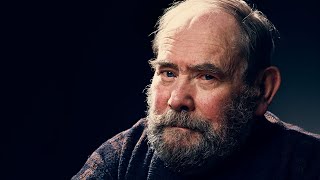
In this extensive videotaped interview, editor Aravinda Chakravarti converses with Nobel laureate Sydney Brenner about his personal journey, scientific milestones, and his vision for genetics. Brenner recounts his South African upbringing, self‑directed experiments, early work on cytogenetics and bacteriophage resistance, and the pivotal moment of reproducing the Luria‑Delbrück experiment at Oxford. He describes the excitement surrounding the discovery of the DNA double helix, the formulation of the genetic code, and the initial skepticism within the scientific community. Brenner explains why he chose the nematode Caenorhabditis elegans as a tractable model for wiring‑diagram neuroscience, detailing the strategic, interdisciplinary team he assembled. He reflects on the evolution of molecular biology, the challenges of interpreting the human genome, the mismatch between our ancient genome and modern lifestyle, and proposes ambitious “Cell Map” and “Humanity’s Genes” projects to bridge genotype, cellular function, and disease. Throughout, he emphasizes a philosophy of single, well‑designed experiments over massive data collection, critiques current bioinformatics resources, and advocates for integrating engineering and computational thinking into biology. The interview concludes with Brenner’s continued enthusiasm for research beyond formal retirement.
Chapters
Hello, I am Aravinda Chakravarti. I'm one of the editors-in-chief of Annual Reviews of Human Genetics and Genomics. Each year our volume carries a prefatory chapter by a scientist and a clinician who's made significant contributions to our science and shaped it in a major way. From now on, also available as videotaped interviews. Today I'm at the Geneelia Farm Research Campus of the Howard Hughes Medical Institute, and I have the great privilege to be speaking with one such luminary, Professor Sidney Brenner. Sidney needs little introduction to our readers. His phenomenal contributions to deciphering the genetic code and other aspects of gene function, almost single-handedly developing the roundworm C. elegans as a model system for understanding the nervous system and more generally multicellular biology, directing the laboratory of molecular biology at Cambridge. Being a cheerleader and orchestrating the UK's involvement in the Human Genome Project, championing the pufferfish fugu as a model genome, and developing research and biotechnology in Singapore are all very well known. He has also been one of the most articulate spokespersons for modern biology, displaying his vast knowledge, his lucid style, and frequently his irreverent wit. He's an iconoclast, a model, and a geneticist. François Jacob, his friend and collaborator, called him the most successful biologist of the century. Professor Benner, we are delighted to have you here, and I really thank you for spending this afternoon with me. Perhaps before we visit your personal history and many research accomplishments, you can tell us a bit about where you think the field of human genetics and genomics are today. What are its most significant biological questions, and how much progress are we making towards those goals?
Well, I think the field of genetics for humans is just beginning. We haven't made much progress. I think the signal progress was, of course, sequencing the human genome. The genome. As you know, not much has been done on interpreting the structure, mostly because the only people who've read the genome are very few, and most of the things that have looked at the whole genome are computers, and as you know, computers are not very intelligent, although they may be obedient. So I think that there is still much to gain from this, but it's no doubt about it that the knowledge there has revolutionized our approach to medicine, and I think we are going to see much more in the future.
We will return to the current and future challenges again, but First, how did your interest in science generally and biology in particular develop while you were growing up in South Africa?
I went to a meeting in Japan where we came on a television program, a number of scientists, and the interviewer asked one of my colleagues who was a physicist asked him for how he got interested in science. So he said, well, when he was young, he had got a crystal set, a very ancient thing, and the important thing, he learned how to take it to pieces, but more importantly, he learned how to put it back again. So when I came to reply, I said, well, you know, I had the same experience. I was interested in plants, animals. I was particularly interested in frogs. I learned how to take them to pieces, but I haven't yet learned how to put them together again. So I think the, the natural world is the most amazing discovery that I think almost every child it makes, and I think to explore and understand everything that's in it is, I think, a kind of natural human tendency. Of course, most of that is knocked out of people by going to school and university and doing that, but I became very interested interested myself in trying to find out why plants were— why the petals had the colours they had. And so I was an early garage chemist. The other thing that I think is most important is a book I read called The Science of Life, written by Wells Huxley. Wells. I got the copy out of my local library. It was a marvellous book because it covered the whole of biology. I actually stole the copy from the local library, and it's only last month that I rediscovered it. So I have this. It was printed on It was printed on very thin wartime paper. And I think that that opened my mind to everything about living animals, living plants, and of course it also opened up the whole of evolution to me because that was a very important part of the upbringing, and I had become interested in genetics at a very early stage, so that when I finally got the opportunity to do some research, I got into— I was the first person to do cytogenetics in South Africa, learning, studying at from Darlington's book and also using this little book of Darlington and Leclerc to look at chromosomes. And in fact, I worked on a little animal called the elephant shrew in South Africa.
So were there particular people who urged you on in this, or was this largely—
Well, you know, this was all This was all very spontaneous. Certainly at school there was no one to do this. At university I came because I went to study medicine. It was the only subject I could get a bursary because my parents were not very well off and it's only this bursary allowed me to pay the university fees. And so I would get up in the morning and ride my bicycle and then catch an early morning train about 7 AM so I could be at the university in Johannesburg in time for the first lectures, which were at 8 o'clock in the morning, and bringing sandwiches for lunch.— and of course commuting back at night. But of course there I was learning about real things, chemistry, physics. There was a very interesting lecturer there who had started to do experiments which I now realize was chromatography. And I asked whether I could come and help him in the botany department, and he allowed me to. And so I learned a lot how to fractionate plant pigments. It was very early days. And later, when I started to do my own research, because I had to deviate from medicine because I was too young to qualify, as I started university when I was 15. And I learned how— I built my own ultracentrifuge, and I had a real great pleasure in doing science for myself, learning what had been I've always been known by reading books. It's a habit I've never given up. And I think that this is one of the most big differences from today. Today you have to go to a course or you have to do this. But the idea that you, everybody, anybody can be self-taught, it's all available, that's what libraries are for. That is now gone. Everything has been formalized completely. And we did a lot of interesting things there. And of course, I wasn't a very good medical student because I spent too much time in the lab doing experiments. So I came to my final years of examinations. I did— I failed medicine. I had to go back for 6 months to do it, and I did complete it in 1950, and then really felt I must go abroad.
So sometime during this same time period, you came across some remarkable intellects in paleontology and— Yes, well—
and zoology as well. Sure. The person who taught us paleontology in the science here, the head of the department of anatomy, was of course Raymond Dart, who— and we were amongst his students— got him interested again in this field. Because he had discovered the first australopithecine. That was 1929. And we organized expeditions to Makapansgat and also to Sterkfontein. And we got interested in this, and in fact it was very, very fascinating. Subject. Robert Broom himself was a paleontologist, and he taught us the paleontology, but he had amassed huge collections of dinosaurs mainly by getting in with the construction people who were building roads, and he was an expert on this and of course had discovered early hominids in the Stockfontein region. But it was becoming much more than just an interesting hobby, and so I decided to stop and get on with the other side.
During your familiarity with Raymond Dart and, say, paleontology and anthropology, is this sort of the beginning of your interest in human genetics in a broad way, or did that come later?
No, I think, you see, the thing about human genetics was I was interested in anthropology and of course in early human evolution, but these things just seemed impossible to do at the time. It should have been medicine that got me interested in humans. But as I said, I wasn't too good a medical student. I just didn't like the way, you know, patients became objects. It wasn't the sort of thing that I was comfortable with. Although I did extremely well at obstetrics because I was shipped off to shipped off to a hospital 400 miles away where I had nothing to do for 3 weeks except deliver babies, but I got very skilled at that. It's when I think much later, when it now seemed possible that all the things we were trying to do later with classical all this. But it took, as I said, it took another half century to arrive at the point where you could contemplate now finding out something about humans.
While you were in medical school and this exposure to medicine, did you ever consider becoming a physician?
Well, my mother would have liked me to be a physician. But I, as I said, I didn't have much talent for it because I was much more interested in things, I think, than people, if you can put it that way, in a crude way. And I was much more interested in taking things apart and trying to find out what was going on with them, which of course you can't easily do with humans, but you can with flies and frogs and so on. But I think that it was only when, you know, we had turned the entire last part of the last century that one came to realize what amazing opportunities that there were now are for the most important organism in the world, which is ourselves, and with our unique biological properties, that here for the first time we could actually probe these mysteries.
One of the things you were taking apart and doing research on at the same time period was— would you yourself have described as cell physiology. Yeah. And so how far did these studies go and where was— where did you feel that progress was halted?
Well, I thought that we had to explain living things in terms of physics and chemistry. I got to that point quite quickly. So I, in fact, had never— that they would be, as many people thought, there would be vitalistic questions, I just put that on one side. But a lot came from reading the books, the book that Joseph Needham wrote called Biochemistry and Morphogenesis. And all the writings of Waddington. And we tried to understand development and we began to grapple with the words like induction.
Yes.
You know, what was embryonic induction? In fact, many of these questions came through all the way and none of them were ever answered, by the way. They just disappeared because we began to think about them and talk about them in different ways. And that is now— that one learned is amusingly the fate of many of the controversies in science, that effectively what people fought bitterly over and discussed within 50 years, nobody knew what they were talking about, they were worried about, because everything has been set in a different way. So I personally don't think consciousness is a problem that will ever be solved, but it's a problem that will disappear. And we won't talk about, you know, consciousness in the terms now. It'll disappear just like embryonic determination disappeared. And I remember attending a meeting in Woods Hole in the late '60s. I was invited to participate in a very select group to discuss developmental biology, and they were discussing the following question: is differentiation a state or a process? And this went between people argument, and of course I then gave them the sort of '60s interpretation of it. I said, yes, let me explain, it is both. In fact, it is as much as in order to reach the laid-back state, you undergo the mellowing out process, you see. So, this is the thing there. We don't talk about that in those words anymore, and I think the problems just evaporate, disappeared.
Let's talk about October 1952. You come to England and you are convinced by that time in your mind that you only want to pursue research, and you come to Oxford to do a doctoral degree. And so What prompted this choice of Oxford?
Waddington came out to South Africa in the late '40s. I got to know him rather well, and he said he heard what I was interested in, things I had done, and he said I should write to Cambridge, which I did, but I never got a reply to my letter. I say I was turned down, but actually I just didn't get a reply, so they didn't even bother to turn me down. And so the principal of my university was an Oxford man, and he said— and he knew a professor there called Hinchelwood, who was the professor of physical chemistry, a very erudite, a very clever man. And he said he'd give me an introduction and I should go and work with him because I just thought the biochemistry is not what I want. And so I wrote to him and so did the principal of the university and he accepted me. And so I went to Oxford to study the physical chemistry of the bacterial cell. And what he wanted me to to do, and I hadn't read anything about this, but prior to coming he said he would like me to look at bacteriophages. Now bacteriophages, what he was interested in was something which became a huge matter of discussion, is whether bacteria adapted to drugs. Or became resistant. He wasn't— it's not a question of whether he didn't believe in mutation. He wasn't satisfied that people had demonstrated that that was the mechanism. And in fact, after a while, he got hardened to the fact that this would be the the best way to tackle it would be, you know, to say it could be adaptation. But he thought that with bacteriophages, which are viruses which attack bacteria, he could make a decision about this. I hadn't learned, but I picked up a book called Viruses, 1950. It came from Caltech. I began to read about these things, still very confused. They hadn't been clarified exactly how they grew. There was, you know, it wasn't— there was a lot of debate about this. So I got very excited by this field, and I came to Oxford and started to work on that. And of course, the first The first thing that I did was to repeat the famous Luria-Delbrück experiment. This is a physical chemistry laboratory, and I was given a pressure cooker and 30 very thick glass Petri dishes and some agar. So every Every day I would do this. I would sterilize my own petri dishes. I would pour my plates and have to make them up. And then we would often, in the middle of the day, we would wash the ones that we had done. So we did everything from making the media. And so I did the Luria-Delbrück experiment. And it worked, you see, and exactly as they said. And of course meant my learning quite a lot about phages. I then started to work on phage resistance. And some of the resistant mutants also lost the genes for part of tryptophan biosynthesis. It was a deletion that, as we know later, took them out, you see. And of course I got very interested in this, and so I started to work on biosynthesis of tryptophan on the side, and also on the biosynthesis of glutamic acid. Led me to do things which I was pretty accustomed to. In South Africa, if you wanted to make it, get a chemical, you got into a lab and you made it. But I had a friend who worked across the road in the Dyson Perrins Laboratory, and he introduced me to let me use a corner of his thing to make this intermediate in tryptophan biosynthesis. And there's a very famous chemist who was in charge called Robert Robbins, and he came around and he asked me what I was doing, and of course I told him, and he didn't ask who 'Why are you here?' He just thought I was— and so I quickly finished my synthesis and cleared out across the road. But I'm told that he kept on asking, 'Where's that young guy? He was very interesting.' You see, he was interested in biosynthesis and he thought that there would be interesting ways of making these alkaloids, and he proposed various things which, by the way, were all wrong. It's not made that way. But as I say, this is where I began to learn the nuts and bolts of this, and I finally proved to Hinschelwood, to Sir Cyril, that there was a difference between resistance and tolerance. And I put it to him in the following way. I said it's the same as the difference between chastity and impotence. Okay, the end result is the same, but it's the difference between can't and won't, you see. And adaptation is willing, you know, you do this. But of course, if you just cut it out, you can do it. So I learned that, and of course it wasn't the thing you'd likely say to a very distinguished professor in Oxford of those days. But he was, I think, slightly amused. And I've used that often. To distinguish, you know, in many debates, people say, "We will never change the germ line of man." Is it chastity or is it impotence? Because if they could, would they? Of course, if you're impotent, you can be chaste.
You have written that that Oxford wasn't especially interested in scientists in those days. Graduate students in the life sciences in particular were considered second class, and being South African, I gravitated a lot to the colonials, and of course we were in the second division of the second class. Now, this is shortly after World War II, but I'm wondering whether you could reflect on why biologists were considered this way?
Well, it was all scientists in Oxford. See, Oxford's a very different place from Cambridge. Oxford, you had to be an arts man and study the arts subjects. The undergraduates were The idea of being a graduate student, this was very, very often. I think what I've said is that we were 3 times over outsiders. One, we were graduate students. Two, we were doing the sciences. And three, we all came— we were colonials, you see. So fortunately, there was a place called Halifax House. Which had been set up and in which people could go and take lunch. And that's where I met most of the interesting people in Oxford in the sciences.
So this is where you met and came across Jack Donitz and Leslie Orgel? Yes. So how did that change your view and your—
Well, no, Jack was also— Jack was a grand Jack was a postdoc, which was even worse. He was neither a teacher nor a scientist. Jack had known— Leslie was an Oxford man. He was a theoretical chemist. Jack had the connection. Jack had, as I said, I came to Oxford having two theories about DNA, both of which were wrong, but at least I had some theories. So Pauli made the joke that when he criticized someone, he says, "Your theory is not even wrong." But I at least had two wrong theories, so I still stand hard. And what I think is— what's interesting about that place was that Jack had been at Caltech. So he knew Jerry Donahue and he knew all about Pauling and so on. He knew Leslie. In fact, they were collaborators in certain things. So we formed a little clique that talked about DNA and discussed various things. And then Jack came and he said— he told me, I can remember it, it was in my digs, it was a very cold night, it was a one-gas fire, and he said, "There's this fellow, you know, Crick and Watson." they've solved the DNA structure. So we all got into a car and we went to Oxford to see it. That's where I first met Jim. It was about April 16th, just before the paper was published in 1953.
So I want to come to that, but I wanted to just get our for listeners to understand, I presume by this time you were absolutely convinced that getting to the physical structure of the gene was the central problem.
Well, the problem was that here one had this polymer, DNA, it's a polymer of 4 different components, and how did How did that work to make all the things? There was a huge gap there. The idea of a code had occurred to one. In fact, Hinchlwood wrote a paper in 1952 on how nucleic acids can code, but he actually said the sugars could stand for things, you know, and so on. But the idea that it was a code of some sort, but of course we didn't know except its repetitive structure and the 4 different bases, that was quite interesting. In fact, I had a collection of very early papers where people had tried to see, you know, there was a great theory that it, that there was Fourier analysis of the DNA and that it carried the information this way. But of course, that once you saw the structure, it just all snapped into things. Well, I knew that nucleic acids, because I'd worked on it, had something to do with protein synthesis. I had actually done work on that myself to prove that all these big centers of RNA in the cell were the same as these little particles that people had isolated, cloned, and had isolated and called microtomes at the time. There was all this writing that tissues that made a lot of proteins, like the pancreas, were loaded glutamate as neurons. So we knew there was this rough relationship, and in fact I thought there was a code, and in fact I tried to write one for this because I thought— I got fascinated by the same as the repeat distance, the chemical repeat distance. And so I actually I tried to make— that's one of my wrong theories— that the DNA or nucleic acid was synthesized in parallel with the protein by using a combined amino acid nucleotide high-energy phosphate, you see. But I mean, that's totally wrong. And of course Downs had written that there was this, so there were these ideas that at that level, but until you saw the structure, boom, you know, it all became clear. This took less than 5 seconds. Immediately you could see that there was some kind of linear structure and immediately we could ask questions like, you know, how does this make proteins? It was a little bit of protein sequence information, but it didn't take very much longer than that to get into understanding what Francis later called the adaptor hypothesis. But now we're much further along. About a year later. But as I said, that was an amazing structure. And I asked my Professor Hinchwood what he thought about it. He was not impressed at all. You know, he said, well, that's it. That's because I don't think he really got anywhere near this conception of that you can reduce, so to speak, a human being or a fly or a plant to the sequence of things. So it was an absolute revelation.
So would you say that beyond what it's taught us since, that this was sort of the moment when and it was quite clear as to what the importance of molecular biology was.
Well, I think molecular biology was created by the DNA structure, you know, because it became central to everything. And anybody who still thought, as lots of people did, because what most people don't realize is that nobody took it seriously to begin with. It was just, you know, a passing thing. You mean the structure? Everything said about DNA, you see, the structure is there, but of course the interesting paper, the biological consequences, was only written a few months later, published a few months later. I'm told that they wanted to do it all together, but because of the X-ray crystallography, they decided to separate this because it's a second paper that contains the real guts of what it is about replication, mutation, and of course, translation into the protein language, you see. And I think that what is interesting is that, as you know, at the time most people imagined the gene not to be a string but kind of a ball. And this ball, because they were like beads on a string, And the balls were unitary, and in which the gene was at once the unit of recombination, expression, and mutation. And when a gene got an attack, it went to a different allelic state, and people were writing about this, you know, with all these strange terms. In fact, Later, in the following '54, when Seymour Benzer really just blew the whole story of the unitary nature of the gene as an entity and giving up the idea, you know, I'm just saying, well, we had exceptions, they were called pseudo and they alleles, because they behave differently, had a different function, but you could still recombine between them. And when he showed that you could go by recombination down to levels of physical distance about the distance between adjacent base pairs, I think that was the other thing that put the nail in the coffin of everything. So those of us who were convinced were convinced from day one, but nobody— not everybody was, you see. One of the few people— I mean, I had many days, many years later, the opportunity. Francis Crick had been put up to be a fellow of my college in Cambridge Cambridge King's College, and he didn't get it. But somebody showed me the letters of reference. All those written by the Cambridge biochemists were nonsense. They didn't know what they were talking about. There were some good letters there, but, you know, one of them said, 'This could be a flash in the pan, you know, we don't know, it remains to be seen,' all those words. Like that instead of, you know, recognising this as the light that would enter everything.
So I just wanted to speak about that time just for another minute or so. There was obviously the famous Owen Chargaff, and Chargaff had apparently said that people such as yourselves and Crick and Watson and molecular biologists scientists were practicing biochemistry without a license.
Yeah, well—
Why did this come about?
Well, because you see, Chargaff had got what is called Chargaff's rules. He found that the constant, the amount of A equal T, the amount of G equal C in DNA, even though the absolute amounts, the absolute proportions could vary in different DNAs. But you know, that's an observation. It's like saying there are a lot of stars up there, but until you know what it means— so although he felt he'd been sort of scrubbed out of the game, and because he was a very precise biochemist, chemists trained in Vienna, as he said, that nobody even just mentioned, you know, this follows Chargaff's rule. But until you know the meaning of it, it makes no sense. It could be a rule, could be, you know, fortuity. But it was Jim who saw that this, once he got the concept of the base pair, Then that just clinched it. I think then it just becomes another thing that one adds. I think Chargaff thought we were doing biochemistry, but let me explain, you see, that apart from the thing that it had a lot to do with genetics, of course, or shall we say genetics had a lot to to do with DNA. The big thing was it began to tell us something about how you made proteins. The concept that there was a code that you could translate from one language into the other, and that became the first thing— well, became the object of trying to solve that code. What are these triplets? And as you know, Gamow produced a model. I managed to prove that all Gamovian models were of that kind, were impossible. It was very nice writing a paper.
You're speaking of this overlapping versus non-overlapping collapse?
Yes, you see, I found very be nice to write a paper that began with the title "On the Impossibility of Oral Overlapping Codes." And then of course it became a matter of determining it, and we all set to work to do this. And what was interesting, you see, is that the biochemists were preoccupied with where did the energy come from to make the peptide bond? And our view is the energy, there'll be a way. We never worried about energy, you see. What we worried about was how did you make the sequence, how did you generate the sequence? And energy would be— but they were preoccupied with high-energy phosphate bonds. And they kept on asking these questions. And later, much later, people like Lippmann began to talk about patternization, you see. Well, once you have that, then you have a completely different picture. You get the idea that this is what you're doing, and therefore this becomes very important. To understand, and it's the whole core of everything. But as I said, it had got so bad that when I used to go and give— later, when I returned to Cambridge, '56, I used to go and give talks in London, and people would say, 'Where are you going today?' I said, 'I'm going to preach to the heathen,' you see, bring the light. And I think it was a very small group initially that really got to grips with this. And it's just, you know, and when you think about it, by 1961 it was all over. It has all been done in principle, you see. And some of us had begun to think of new things. Things to do. And if you think it only got going really in about 1955, '56, we're talking about less than a decade to just revolutionize the whole lot. And that's been the picture ever since, ever since that with regular regular things, there's new things discovered, and in the '70s there's another revolution, and in the end of the century there's another one, and there's another one baking now which is going to change, I think, a lot of scientific research in the life sciences.
So you've made this quite clear that after you saw the double helical structure, that within a few months it was quite clear that how the structure made protein, that is, the genetic code, was the central problem. Yeah. But I presume you're also saying that, as others have said, that the double helix had a quiet debut and that this view was not widely shared.
Well, first of all, You see, having been in the life sciences, I knew the one thing which everybody knows, that when it's too difficult to study function, you study structure. You do anatomy when physiology becomes too difficult. And once you know anatomy, you get bits of physiology. Free, so to speak. So the idea that we should do the structure of these molecules, you know, became just a reflex here. And the idea was that if you knew this, you see, in the adaptor hypothesis, which is the central thing, which was written by Francis about 1956, but became published in a paper he gave, and it is the idea, not so much of the adapters, but the idea that to make proteins, which people thought were very complicated things, all you had to do was make the linear sequence, and then the protein would fold up by itself. Now, of course, like many things in biology, that was a good thing to say, and if there were problems, then we always used to have the explanation that nature will have done, will find an enzyme to catalyze it, you see. Same with the unwinding of the strands. Everybody said the double helix is wrong. Because the strands need to be unwound. But we said, well, there'll be an enzyme that will unwind the strands. Sure enough, there are more than one.
There are more than one.
More than one. And the same thing there. Now, then later we found other proteins which help things to fold. And I think that that— so many of the things were made as kind of drastic simplifications to begin with, which people thought very unlikely, but I think they were very important to do it this way, you know, to guide one's thought.
So, Sidney, what did emerge as the next big challenge once the genetic code was solved?
The big challenge, I think, a lot of it still exists, is basically to explain how in complex organisms, because most of our work had been done with bacteria and viruses, in complex organisms, how is this DNA tape translated in an organism which has lots of different cells all coming from a single cell, and that is still a challenge which we are still involved with. And in order to do this, and especially in the most complicated cellular network of all, which is the nervous system, because in most organisms the nervous system is built under instructions, so to speak, from the genome, and to understand how that is implemented and what is more, understand how it evolved. So I think this is what we're in now, and I thought to at the time that instead of going to work, because I had done a lot of neurology as a young man in South Africa, I'd reconstructed brains at a macroscopic level on beeswax slices, you know, the old stuff. I knew how to use a camera a little but that was all something else. And what I needed to do now was to find an organism that I think we could tackle these in the same analytical spirit and methods that we had developed in the molecular biology of my microbes. And I think that I set about then looking for such an organism. And Francis Crick and I had long discussions about this, you know, what next to do. We dismissed many of the things like the structures of the ribosome So she said, "Oh, there'll be a lot of Americans will come along and they'll do it all, so let's go somewhere where there are going to be new things." He, of course, decided to work on consciousness, higher nervous function, and I decided I wanted an experimental animal that I I could actually get the entire nervous system structure in detail, because I came to the conclusion that what we had to do was to be able to use what I called wiring diagrams, that is, the wired-up nervous system, and find out how behavior was produced by it. I decided to hunt for such an organism and finally alighted on these little nematode worms. And one we started, C. elegans, and I started working on it early in the '60s. And needed an organism with which I could do proper genetics. I needed an organism that I could get accurate structure, and since you had to see where one cell ended and another began, that had to be with the electron microscope. And so I needed a small organism. That I could fit into the window of the electron microscope. And so we launched ourselves into that program, and it was quite amazing because at the time I had to write a short thing for our— the MRC to get another building, another extension of the lab. I think it's the shortest grant application ever done. It was half a page. It just said what we were going to do. And actually, 20, 25 years later, we'd actually fulfilled all of it. We actually delivered. Took a long time. I don't think you'd be allowed to do this anymore. More, but I think the whole of this was very exciting. It was a completely new field, and fortunately I was joined by a lot of people, young people who came to work, and I think it just took off then. Now it's a whole industry now. Working on this little worm. But we decided it was very different from our previous work. In our previous work, we had everything set up so you could have a discussion about things, and then you could leave at 11 o'clock of the discussion over coffee and go to the lab and do the experiment to test what you said was right or not. Or not. This involved enormous preparation. It was strategic. And as you know, same time my colleague Seymour Benzer decided to work on Drosophila. He said he chose Drosophila because it was the geometrical average between E. coli, with can't have more than one neuron, and humans, which have 10 to the 10 neurons, Drosophila has about 10 to the 5. And I said I chose the elegans because it was the average between Drosophila and the nematode, which has 300 neurons. So we set about doing this computers, and we were able— we started on a very foolhardy venture. We thought we could automate getting these wiring diagrams, but what we had in terms of computers was laughable at the time in the '60s. I mean, it's only in the last decade or so that you can begin to contemplate using these tools, which are now commonly used over here and in other labs to do these reconstructions. And it's interesting to see because nobody— I mean, all we wanted was to get talented people to join us. And so the very first people that came in, one had done synthetic organic chemistry, one was an algebraic topologist, a mathematician, and we just took anybody because nobody was qualified to work in this field. All we wanted were talented amateurs, no professionals. They didn't exist. And I think that got that going, and it actually became self-launching after a while, and it has grown to be a very important thing now. Of course, we began to ask questions about how many genes has a nematode, because, you know, we knew E. coli, we knew lambda, we could guess how much E. coli had. And then you could start to ask these questions about humans and older people like this. And so it wasn't It wasn't very long, until the early '80s, but beginning there to start to think you can do genetics by looking directly at the DNA. And that was largely due to Fred Sanger, who worked out a method of sequencing DNA. So that, and that really took off, I think, much later than that, but already the principles were there. And so when people began to say, well, we'll do the human genome, we'll sequence it, I then said to myself, I'm sure, you know, there must be animals, and I happened to know there were animals with small genomes. But they couldn't be, you see, the argument is— that was this pufferfish. The argument is the pufferfish is about as complicated as you are, certainly shares a lot, but of course the argument was it's got 8 times less DNA And of course people would say, well, that figures because it's 8 times less attractive, it's 8 times more stupid than a human being, so it'll have 8 times less genes. But I mean, it is just a joke because complexity depends on the way complexity is encoded. However, once the motion got going on sequencing the human genome, the growth of all the sequencing over the late '80s and '90s, then I think that this became very useful because at one stage it was the only privately own genome project in the world because most of the other projects were real government-funded and people were talking in terms of billions of dollars. But we learned a lot, we learned a lot. In fact, we then started to do— we started to ask the following question, which you could now because We could ask this: if I take myself and I take out an enzyme, just imagine this is a Gedanken question, and I take out a fundamental enzyme like glyceraldehyde phosphate dehydrogenase, I take it out of my DNA and I put in the same sequence for E. coli but I can see it's very, very similar, would I still look the same? In other words, it's a funny kind of way of crossing yourself with the E. coli. It is genetics, as I point out to people. So the question arises, can I do the same? Can I cross myself with a fish and see what's common to to us because then I'll know. And so we began to take pieces of genes out of the fish and put them into mice and see whether they did the object. We started doing this in the early '90s before we had much sequence. We struggled to get some early sequences, but I think the concept of doing evolutionary genetics this way is absolutely marvelous because in principle I could cross myself with a chimpanzee and see the difference. Of course, I can't put the chimpanzee into me. I would have to put both the genes into a mouse or something and see whether they performed in the same way under that regime. View. So I think this kind of partial genetics, which I think is going to be very important, and I think there are going to be ways of doing it for human beings as well, but we'll come to that later. So all of this led me You know, to the idea then, I had become director of the Laboratory of Molecular Biology in about 1975. I was made the proleptic director. I often called myself the epileptic director. That is, I took over the finances and we were in terrible mess. Our lab was being underfunded to the extreme that we spent most of the budget before we actually started the year. But anyway, I then had— I then decided when I was 58 what I wanted to do, because in the Medical Research Council, the Directors retire at 60 unless asked to carry on. So at 58, I said, no, I want to go at 60. I've had enough. 7 years is long enough, and I'm going. And what you should do is find another director. I'm going back to science. And I never regret that because I've learnt a big lesson: never retire from any job unless you've got the next one fixed up. And then I think— and so I've been doing continuous science since the day of my official retirement from the MRI. C, which was in 1992. So I've been retired officially for 20 years, and as I say often, I regret that I have not just reached the age of retirement now because I'd have still 20 more years of good research. So I think that, that that is the important important thing. Now, what I think is— I just will say a few words on the human thing. So once I think we had the sequence, and once— because you have to remember, people said when we get the sequence, of course it became obvious obvious, we would get all the proteins. That had become obvious right from the early days that you won't have to make a protein, you won't have to extract a protein anymore, you'll just make it. You'll make lots of it. So it opened up the whole of structural studies. And I think that once we had the sequence, people then said, well, we've got to find out about disease. And of course, there are two kinds of diseases. Diseases we know quite a bit about, called Mendelian diseases, single monogenic diseases. We've learned a lot about the functions from but there is this whole area of complex human disease, and there's been a lot of discussions of how to track down the genetic factors in this. And this has given rise to a lot of controversy of, you know, who should know your genome? And I've been involved in some of these discussions. Many things are obvious, you see, but in fact, we can talk— they don't bear any talking about now. But I think the most important thing is how we're going to understand human physiology. From this. And the first thing you have to do in terms of human disease is we are the first organism who has escaped the bonds of Darwinian evolution. So our genomes are suited to conditions of 100,000 years ago. We've got a 100,000-year-old genome in our bodies and it has specified our brains in a particular way. It has just said, told you, eat as much as you can, when you get it, convert it into fat because that's the most efficient way of storing energy and you'll be a survivor. Now, of course, because the famine would always come. Now, of course, the brain is still dictating this to ourselves from this message coming down from long ago. And of course, the famine never comes, and so we go eating. In fact, as I've often often said we have moved from the survival of the fittest to the survival of the fattest in this whole game. But it is to understand that once Darwinian evolution stops, once natural selection stops, then you're in difficulty. And we, of course, as organisms, didn't have to wait like many other animals might have had to wait that when it got cold we would grow hair. What we did was we simply went out, we killed another animal, we put on its skin, right? That is all accomplished in a very short time. Didn't take a few million years of evolution to do. So having escaped from that, And as we've progressively moved, we have come to a situation, I believe, where our genomes are not matched to our environment. And that's the core thing to try to understand, why that is, how that has come about, why that is so, and the consequences of it. And of course, the whole thing, as you know, there are two ways, three ways of doing this. One is the way we adopt, which is, oh, well, we'll just patch up the organism. That's pharmacology, you know. We'll do a drug, we'll try and suppress your appetite, or we'll cut out as fat or whatever it is. They'll do a patching job. There's more radical people who say change the genome to suit the environment. That'll be quite hard to do, to find an efficient genome to live in New York, let's say. I mean, you wouldn't even know how to construct one. The other one is, of course, change the environment environment. But somewhere between patching, changing the environment, getting people to understand that their performance is related in some way to the lack of demand the environment makes on us, I think this is going to be the big challenge. But very recently, I can see we have a new thing to do now. See, we, as you know, everybody is— human experimentation is illegal, but it turns out everybody's doing it. The government is doing it to you, McDonald's is doing it to you, you are doing it to your parents, your parents are doing it to you, parents are doing it to you. But we've got to understand these, how all these factors now move in order to change our behavior. This is a very difficult thing, but I think in terms of bringing the benefit to people, from the human genome, I think we— I think it is now possible, it's now possible to make a human in a dish. He'll be separated, you see. A human is very different from most of the other things we think about because you have a big area of growing neurons, cells, and then most of the cells stop growing and change. And you are— you just have to deal with the neurons you get. They're never going to grow any new ones. Many parts of your body are like that. So the question then arises that if we're going to try and patch those things, help you do this, we have to be able to make mature neurons in addition, make lots of them. And I think this is possible to do. So I think to be able to have— we can now turn cells into stem cells, that's done. We're beginning to learn how to take these cells and I would love to make all the components of the retina in separate dishes. I believe this to be possible. But this will be a way for us to understand at the molecular and cellular level function in man without being invasive. I mean, perhaps terminally invasive in some cases. And I think this is a marvelous thing because, you know, so somebody finds, say, there is a mutation and they say, oh, genetic background affects this. Some people have very bad, some people don't have it. So what we should do is take ourselves, make the mutation in it. We don't have make it in different backgrounds and see if we can study the effects of the interaction. But we have to make it so it works in the target cell, not just in any old cell. But I think that this will be, this will be the thing to do. And I think, I think the drug companies would actually love to test things in this way because they test things on mice, but as you know, many of the things don't have— are irrelevant in terms of man. So we're at a kind of interesting stage where we can get hold of the genomes of humans, we can get hold of their final physiology and study them in the in clinic or in groups, but the missing mechanisms in between are hard to get at. So if we can fill that gap, we'll come to understand. And I think the most important discoveries will be made in this area, fundamental discoveries. This is not applied or translational science in any sense. This is doing basic research on the human species.
So is this a new incarnation of, you know, you've often spoken about two signature projects of yours. Yes, this is it. Gedanken projects, the Cell Map and Humanity's Genes.
This is it? Yes. I mean, you can conceive this is the way to do it. Because we can find out, I think, about mechanism. Now, of course, today people preach all kinds of new things like systems biology. Yes. But you see, systems biology tries to solve an inverse problem. All right, so let me give you an example. You have a man in a room playing a drum, and what you are doing, you're sitting outside the room and you have microphones there and you are recording all these sounds, and you're asked to say from the sounds, what are the physical properties of the drum? That is the inverse problem. Because given the physical properties of the drum, I can do the forward problem. I can generate these by the application. Now, I can't get it the other way because, first of all, there are cancellations, there's interference, I lose information on the way, and I can't devolve it, I can't deconvolute it. So I think that this is exactly the It is very hard to find the internal workings of a system without you having a good model for how to interpret this. And I think we are very good at the forward questions. We've had year upon year, decade of decade of success in answering forward questions. Forward questions. And I think that is still the route to go. So I think if this can be done, then I think we will just open up a whole new era in the whole of human biology. And anyway, as I point out to people, mice have got no money, so they can't buy drugs. We don't want to solve mouse disease. We can leave that when we've done all the human stuff. We'll still need to amuse ourselves with science.
So if we are going to go forward and do this kind of human biology and disease biology and mechanism, let me ask you a couple of questions about how to go about doing it. How to go about in the following sense: you've spoken about and written about this aspect, and you've often given advice to geneticists and others that your preference has always been to do a single good experiment that gives a precise answer to a well-formulated question, as opposed to a mass attack on parallel fronts to provide a database of all information. So much of genomics at this stage, at this still very early stage, is collection of information. So do you have any advice as to the way we should attack these future problems you outlined?
Well, I think there are two— yes, I can tell you what I'm doing, actually. Yes? So I've taken a very interesting disease called Down's disease. Now, people with this extra chromosome, it's about 1 in 800, fortunately a lot of them are diagnosed. I can take the diagnostic amnion and I can actually turn them and take those if I could call them those events, because there are no people with that structure anymore. I mean, they never were born. And I can take those events, and if I could create the terminal cells and make an assay of them. All right, so one of the interesting— I just give you an example. One of the interesting features of the Down's case is that they seem to age prematurely. They most get Alzheimer's, and it's typical Alzheimer's in their 40s. Now, in Cambridge, there's a group who've taken Down's stem cells made from Down's patients they've then turned them into neurons and they claim in a paper published a few weeks ago to see typical Alzheimer's things after a few months. Now, that means you've got an assay at the cellular level. There may be better assays. Now, what we can do is we can now take that thing and we can take every single gene, the technology exists, on that chromosome, the extra chromosomes, and knock it out. People make knockouts in mice. This is my— this is a little— I make a cellular knockout, but I'm going to just look at the branch of this that goes through neurons. I can do the same with Huntington's. Disease, and I can do the same with any of these. So I think that is the paradigm. The technical problem is how easy is it to make eyes or bits of eyes in here. That's what's going to be— needs to be developed. But I can see that, you know, that I think is just technology. People, we've got a way, I think, of doing this. But then we can answer this question. We can answer it very, very clearly in this case. We can also— I mean, this already can be done— we can take any person and turn and make liver cells from him. Yes. Okay, and then we can ask, how does this liver cell handle exotic chemicals? So that I think we can actually investigate all of this. Now, of course, there are system— whole body systems— we can't reconstruct his blood pressure, but we may be able to reconstruct pieces of arteries that show— that act as signals for this. The field is wide open. And I think this is really what one needs to work on, and I think everybody should down tools and get on with it.
What's preoccupying you these days and the next sort of scientific challenges you see? Is mostly, most of these problems having to do with trying us to infer or rather figure out what the genomic information means Yeah. Using at the cellular level at least?
Well, I think there is another level which I've been working on for a long time, which is, as you know, large bits of your genome have been duplicated in the past, and I think I've been doing a very detailed discussion— analysis analysis of this, and it has tremendous— gives you tremendous insight into the evolution of the components of the body and why they are that way. And of course, this means we are reconstructing the genome of animals that has existed ended in the Cambrian, 600 million years ago. That's the last duplication took place there. And of course, if we're going further back and you can find things that are older, we won't probably recognize them all there. But it's very interesting how all the pieces are connected in a very interesting manner because of this age-old, very ancient homologies. So I can tell a lot that how rods differ from cones, I can tell when that happened. I can also tell how smell got into the act, and recently we found some evidence that hearing may be related related in much the same way. So hearing may be related— rods are related to smell. But of course what was related to smell wasn't a rod or a cone, it was something in between. We could call it a crot or a crone if you like, or a cod. It was a different kind of cell. But I think we can reconstruct it and see how it changed into all of these. And so I think this is all done on— it's not done experimentally, but I think then it gives one a great insight into how all these genomes evolved. And it gives you an insight which for the first time I can understand how you can take a simple thing in a simple unicellular animal and parlay it into something like an eye or a nose. And that, I think, is necessary. The insight comes through the molecular connections at the genetic level of these. It's a kind of linkage analysis. So that's what I've been doing, but I think the time now has come to, you know, get on with doing the other thing.
So that's very exciting, but that argues for a very strong experimental component in all of this. And I'm wondering, you sort of said half in jest, I presume, that You've distinguished many kinds of genetics, or 4 kinds of genetics, that you've called forward, reverse, inverse, meaning comparative genetics, and also perverse genetics, meaning all computation with not much experimental evidence.
Well, there is, you see, I think the computation that people have done.
Yeah, so what's the role of computation?
You see, first of all, I think the present databases are useless, okay, because they do not provide the tools for people really to work with gene numbers, right? And so I've been trying to get people to build these tools, but nobody listens to me anymore. I mean, I don't know if they ever listened to me. So I think this is the cell map idea. The cell map needs to be built because if we just focus on the genome, we're going to lose what is the units of function, because the units of function are assembled from different components of the genome, and they function as an entity, as a device. And so unless we do this and we understand that the information that we have in the genome is not just this or that, you see. So it must be precisely defined. Now, of course, somebody pointed out the other day— there was an article in the newspapers— that junk is gone. Yes. Yeah, but I think this is rubbish as well. But I always just— you see, there are always two kinds of rubbish. There's the rubbish you keep, which I call junk, and the rubbish you throw away, which is garbage. Every language distinguishes between these two kinds of rubbish. And I think there is a lot of rubbish in our genome. And in fact, it's not even worthwhile asking the question of what is it doing. I mean, it's there. It's tolerated. If it wasn't tolerated, it wouldn't be there. They'd already kill the animals. And if it's got some function, it's very hard to discern what it is. And I think— so what we have to do first is to say, what are the pieces with known function, clearly delineated? Recreate that and see what else is missing. It's no use saying, well, there's dark matter. It isn't because we know exactly, and you can actually trace how bits of the genome have disappeared in the course of evolution. Bits of— very few extra things have happened in the course of vertebrate except amongst teleost fish, but bits have disappeared. Chickens had more genes than us in the vision. We've got— mammals have got rid of one of these. Mice have got rid of one of the components of the retina because there's a second one, it's redundant, so it's finally disappeared, it's cleared out. You can see that many of these genes are just there because they're redundant functions. So I think we— and the thing is dynamic. It's not just standing still. Of course, for human genomes, it's hardly moving because we think about these things in the times of millions and tens of millions of years. So I think that the different perspective of doing this means we must have a database which of course contains all the information, but you don't have to look at it. You can have it abstracted, compiled is what I would call it. We also need a way to be able to manipulate this data just so we can get it into our heads at the same time. We want to be able to compare things. It's now terrible. You have to log in to different internet things. It's a waste of time. And people love the internet, but I'd like to have it all in my computer. And I can carry around— I carry around the whole of the human genome in my laptop, and I could carry around much more with this. So I think there's a lesson, and then of course there is a very big challenge which I don't know how to do, except how are we going to communicate all of this to the people who are going to use it? How are we going to teach students? Do we want them all to learn the hard way? Can we get a shortcut? Can we get a concept of this? And so I think there are big challenges to be met. And unfortunately, since now it's hard to find people who will take these things up, because it's much easier just to do the the same thing again, you see. And that's what I think we're going to need. I feel if we continue to import people from other fields, like engineering, who think differently about these things into biology, it'll be of benefit to us. And that's the only hope.
So that's a great place to end our conversation.
Session.
I want to thank you for spending this afternoon, and I want to thank you on behalf of everyone else for all your contributions to science, and we wish you a long and healthy life. Thank you.
More from Joshua







Scientist Stories: Hans Waterham, The value of phenotypic assays in peroxisomal disorders




Scientist Stories: Joel Zlotogora, Genetic carrier screening programs for reproductive purposes