Scientist Stories: Uğur Şahin, mRNA and their role in COVID-19 & Cancer Vaccines
In this webinar, Prof. Uğur Şahin (co‑founder of BioNTech) recounts ~20 years of mRNA research that began with tumor immunology in the 1990s. He describes how early work showed that dendritic cells can take up naked mRNA, leading to systematic engineering of mRNA (UTR, cap, poly(A) tail) to improve translation and stability. By exploiting macropinocytosis and designing lipid nanoparticles (LNPs) that preferentially traffic to lymph nodes, the team achieved potent CD4 and CD8 T‑cell activation in vivo. This platform enabled the creation of personalized neoantigen cancer vaccines: tumor sequencing, mutation prioritization, multi‑epitope mRNA design, rapid GMP manufacturing, and clinical testing that demonstrated strong immunogenicity and reduced tumor relapses. When the SARS‑CoV‑2 outbreak emerged in early 2020, the same mRNA‑LNP technology was pivoted to develop the BNT162b2 vaccine within 10‑11 months, achieving >95% efficacy, robust neutralizing antibodies, and high CD4/CD8 responses. Şahin also discusses manufacturing scale‑up to billions of doses, real‑world effectiveness, and future directions such as self‑amplifying mRNA, dose‑sparing, nasal IgA responses, variant updates, and off‑the‑shelf cancer vaccines. The talk concludes with reflections on the critical role of ERC funding, interdisciplinary collaboration, and the importance of public communication.
Chapters
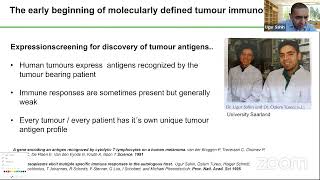
who is my partner and my scientific colleague now for more than 30 years. And so we had the same passion, immunology. We are both MDs and we worked in the morning and until afternoon in the hospital taking care of cancer patients. And in the evening and on the weekend, we went to the lab and did research on tumor immunology. And the '90s, when we did our research, were a special time. It was the early time of molecularly defined tumor immunology. It was known for decades that immune cells can recognize tumor cells, but it was completely unclear what kind of targets are recognized. And in the '90s, several groups came up with cloning technologies based either on T cells. I will try to activate the pen laser pointer. Either using T cells, tumor-specific T cells to identify tumor antigens, or as in our case, we use antibodies from cancer patients to identify tumor antigens. And the learning from this research was that human tumors express antigens recognized by the immune system. And these tumor antigens turned out to be highly tumor-associated, sometimes tumor-specific. What we learned is that there are in some cancer patients immune responses, but these immune responses were generally weak. And what was also an early learning is that every tumor and every patient has had its own unique tumor antigen profile, which made it clear that there is no universal immunotherapy approach. So we were in the community of cancer immunologists and cancer vaccine researchers, and this community was a small community, not very well regarded by other cancer scientists because it was an early time where the cancer vaccine research was not yet fully established as a research based on missing tools. It was difficult to measure immune responses. It was difficult to see what we are doing. But this did not reduce our enthusiasm for immunology. And so we were studying all all these new publications about new immune cell types, how immune cells interact with each other, how they regulate immune responses, how tumor antigens might be recognized. And the particular fascination for immunology was that there are so many immune cells and all of these immune cells are genetically diverse and adaptable. And we believed that this a genetically diverse and adaptable army could be able to deal with tumor cells, which are also genetically diverse and adaptable. So we came up with, Özlem and I came up with our vision. And that means these tumor antigens could allow us to attack tumor cells without harming normal cells, because tumor antigens are expressed on tumor cells and not on normal cells. That could give us the opportunity to attack tumors without having toxicity. And the type of immune responses that we were interested in was antibodies, T cells, and K cells. And the mechanism that we wanted to initiate is to induce, to use vaccines to expand this tumor-specific T cells so that their number could be sufficient to control tumors. Since every tumor had a different type of antigen profile, we came up with a concrete plan to work on a concept to identify the antigens in a patient tumor to make an individually tailored treatment for the patient. And of course, since cancer is growing in this patient, we had to figure out how to do that in real time for the sake of the individual patient. So, and the question of course was what kind of technology, what kind of vaccine platform can we take to do it, to do this fast, identify antigens, make a vaccine, and make it available for individual patient. And one of the early studies that inspired us was from, Eli Gilboa's group, and his group was the first which used mRNA to transfect dendritic cells. Dendritic cells at that time turned out to be the crucial cell population directing T cells. So it was an established idea to bring the antigen to dendritic cells, and Eli Gilboa's group published a paper showing that mRNA can be taken from tumor cells and then loaded in vitro onto dendritic cells to induce an immune response. And his idea was, I don't care about tumor antigens. If I take the total mRNA, there will be mRNAs encoding tumor antigens, and we might get an immune response. And this was a clever idea. But he, in this paper, he used also a control, which is using a defined antigen for vaccination of mice. So that means this mRNA was encoded for a defined tumor antigen, and this was actually one of the best working groups inhibiting tumor growth in the mice. So, and there was a lot of enthusiasm to use this approach in clinical trials. A number of clinical trials in the early 2000s dealt with that, but at the end of the day, it turned out that the immune response that were observed in patients, in cancer patients, were just too low, two magnitudes too low to deal really with established tumors. So we were fascinated by the idea to load mRNA on dendritic cells and started our research research with one postdoc and two PhD students in Mainz. This was early 2000, and systematically studied what happens if we take mRNA and put it onto human immune cells. And one of the fascinating observations that we made is that even though, so a messenger RNA is configured often like a normal mRNA. It has the open reading frame which codes for the protein. We often use reporter proteins, for example, luciferase or EGFP. And then it has regulatory elements. And we produce that by just in vitro transcription, purified the mRNA, and incubated immune cells. And one of the really fascinating observations was that you can just load dendritic cells without electroporation, without any transfection reagents, and dendritic cells take up the mRNA and translate that to the reporter protein. And this is really something which is linear, dose-dependent. We found that you can do that to several LOX. The uptake of the mRNA in dendritic cells happens fast. So after a few minutes after loading, the translation starts, and then it reaches maximum translation. And what we found is that that most immune cells were not able to take up mRNA, but dendritic cells were able to take up mRNA. And this was in vitro studies. And we realized that this could happen also in vivo. Because we were not interested to take out cells from patients, incubate that, and then load the cells with with mRNA and bring the cells back to the patient because this was too complex. And our idea was to directly provide the mRNA in vivo. Yeah, so for an in vivo off-the-shelf therapy. And what the immunology taught us at that time point is that we need to bring the mRNA to specialized immune compartments. So what turned out from a number of basic immunology studies is that immune responses are not generated in the periphery, not by dendritic cells in the skin, for example, but immune responses are only generated if the antigen reaches the lymph nodes or the spleen, so in the lymphoid compartments. And so that, and in this lymphoid compartments, the dendritic cells are the most potent stimulators. So taking this, we hypothesize that, that we have to bring our mRNA directly into the lymph nodes, or even to all lymph nodes, by figuring out a mechanism for in vivo delivery of mRNA so that dendritic cells can take it up, translate it, and ideally form an immune response in the lymph nodes. To address that, we knew that the potency of the mRNA with which we have started, and this was the standard messenger RNA vectors, everyone worked with the same type of mRNA, and we realized that this type of mRNA does not have a good translation. And we systematically started to evaluate how we could improve the mRNA translation in dendritic cells. So we started to systematically analyze different elements of the mRNA, structural elements, the UTR region, the 5' cap, the 3', the poly(A). We systematically evaluated different chemistries, cap chemistries, and we even did discoveries, discovery library based screening approaches to identify mRNA elements which improved the translation from baseline, provided a higher translation and a longer stability. And as you can see from this experiment, and this is really research over many years, systematic research, there were a number of improvements which could increase the stability and translation of the mRNA in dendritic cells. The second type of research was directed to the question, how can we bring our mRNA selectively into dendritic cells, either into the lymph node or directly in the body? So coming up with this type of improvements, we realized that if you— if we combine this improvement, this molecular, molecular, molecular changes, yeah, and include it into an mRNA vector cassette, then we can prepare vector cassettes where we can just replace the antigen and keep everything as the same and get a very highly improved translation and activity. So we found, for example, modified caps which increase to increase the translation. We've identified regulatory sequences in the 5' and the 3', which dramatically improved the translation in dendritic cells. We improved the poly(A) tail, and we found— figured out how to translocate the mRNA into compartments that could allow us better presentation for CD8 and CD4 stimulation. The combination of this different optimization resulted in a dramatic amplified net effect with increased potency. And this type of mRNA, when it was directly injected into the lymph nodes, resulted in an extremely potent stimulation of T cells. This is an experiment where we where we infused antigen-specific T cells recognizing either CD4 or CD8 into mice. And the T cells had markers so that we could stain them, and this is the staining of the T cells in the lymph node. These are the red dots. And a single round of vaccination, even after only 72 hours, dramatically expanded these T cells.. And so we figured out how to stimulate CD4 T cells and CD8 T cells in an antigen-specific manner, because if we used a control mRNA, it did not have the same effect. We further investigated the mechanism of the uptake and found that the mRNA by the dendritic cells is taken up by a mechanism which was described by other researchers two decades ago, macropinocytosis. This is a solid-fluid uptake mechanism, which is a specialized mechanism, particularly high in dendritic cells, and markers for macropinocytosis showed that mRNA is co-localized with these markers. And this mechanism could be inhibited by macrophages panocytosis inhibitors like Otlaryne, and this worked in vitro, and it was also possible to inhibit the macropinocytosis in vivo by these inhibitors. And if we inhibited this mechanism, we completely lost the immune response that was generated by that. So we knew the mechanism to deliver mRNA was related to macropinocytosis. So, and we asked the question, how can we exploit this mechanism, this macropinocytosis mechanism, mechanism to ensure that we have a maximum uptake of the mRNA if we deliver the mRNA intravenously. So we started to do experiments with lipid nanoparticles or lipoplexes. So we combined the mRNA with this type of liposomes, and this protected the mRNA, so we could intravenously inject the mRNA. And we used reporters for systematic testing and evaluation what happens if we change the size of the nanoparticles, if we change the charge, and we could see, we could see that depending, depending on certain parameters, and it's here the charge ratio, that means the amount of the mRNA and the lipids here, we could deliver the mRNA to the region of the spleen, so we got a specific spleen signal,. And in the spleen, we could show that the mRNA— this is the luciferase signal— is delivered to dendritic cells, because when we depleted the dendritic cells, yeah, and the signal was gone. So we had now for the first time an opportunity to deliver the mRNA really to the compartment dendritic cells in the spleen, in the lymph nodes, where immune responses are primed. And this was exciting. And so this was our work, and in parallel, a number of other researchers did research. And because the idea of using mRNA, I would not say it became viral, but we had an mRNA research community building slowly, and other groups came up with other ways of optimization and using different type of chemistries, for example, For example, a group from University of Pennsylvania, Drew Weissman and Katie Carrico, came up with the observation that if you use nucleoside modifications for the mRNA, also for the coding regions, you can reduce the immune stimulatory capacity of the mRNA. Other researchers found that if you purify the double-stranded RNA and eliminate that, that this could result in dramatic improvement of translation. So we had now the opportunity really to use this type of optimization and go into applications. This is the list of applications. So the research that I described here was research in the university. And we realized that we have to start a company to bring these technologies into really the clinical stage and into development of medicines. We founded BioNTech, and in the last 8 years, we developed different type of mRNA vaccines for treatment of cancer, using, for example, vaccines to stimulate CAR-T cells, to stimulate shared tumor antigens, personalized neoantigen vaccines. I will share more details about that, but also for infectious disease, disease and autoimmunity. And today I will just focus on two projects or two applications: the personalized neoantigen vaccines and the infectious disease vaccine approach. So the idea or the motivation for the personalized neoantigen vaccines comes from the need or from the observation that every patient has a different tumor. So why is that so? Because, because tumors happen by random mutations, and these random mutations accumulate over time. And the result is because of this randomness, every patient has a different cancer. And the second outcome is that every cancer is composed of heterogeneous tumor cells. And these two problems are key problems in cancer treatment. Because it is difficult to find a treatment which matches all patients. And the way how personalized medicine is addressing that, it is always asking what are the shared mutations. For example, here in this case, we have here 3 patients with a number of mutations, and you can see, or you cannot see, but here the BRAF mutation is shared shared by the 3 patients, and the patient can be treated with a BRAF inhibitor. But the problem is most often, most often only a fraction of patients have these mutations. And the second problem is that the current way of treatment is ignoring all the other mutations. So our idea was not to ignore the other mutations, but really, really identify all these mutations and make a vaccine which selects the right mutations for an individualised treatment. And the advantage of that is that you could really not only individually treat the patients, but also address at least in certain parts the heterogeneity. So this is a project which is also supported by our ERC advance grant, and we did here as first evaluation, of course, studies in mice. And we found that mutations can be identified by next-generation sequencing. We established bioinformatic prioritization tools to enrich for those mutations which can induce an immune response. And then we built our messenger RNA vaccine and evaluated the immunogenicity and antitumor activity.. And what we could show in different type of tumor models is that this type of personalized or individualized neoantigen vaccine, mutanome vaccines, are able to control established tumors. And the exciting aspect of this technology is even though it is individual, it is a universally applicable approach. So every time go identify the antigens, make a vaccine tailored to the patient, and then deliver the vaccine. So we, after having successful proof in preclinical approach, we brought this approach into the clinical testing. And here in the few slides, the scheme is depicted how this works. So what we need is blood and tumor material from the the patient, the material is shipped to the laboratory, and then we do sequencing. We analyze the tumor DNA and the normal DNA, and by comparison of the DNA, we identify the mutations and we analyze RNA to see which of these mutations are expressed, and this provides the information for the cancer mutanome. Then we generate a computer model computer-generated list and use prioritization algorithms based, for example, on the fact that certain mutations could bind to HLA or certain mutations are expressed at a higher level or certain mutations are clonal. And then we get a prioritized list. And this is a personalized list of mutations for a given patient. This is the gene, this is the mutation position, and this is the score for this mutation. And this is done by computer prioritization authorization, and then the expert verifies that, yeah. And then the vaccine manufacturing starts. There is this design of the vaccine, and what we did here is we combined multiple mutations within one mRNA, and this is again the optimized vaccine backbone, and the only difference instead of of including one antigen, we included multiple, multiple mutations prioritized by the computer. The vaccine is produced and delivered to the patient. So we did this study in the first trial in 2014, evaluated this in melanoma patients. We found that this approach is feasible. We had about 3 to 4, 5 months of time needed to, from sample acquisition, mutation discovery, until vaccine administration, we could show that about 60% of the mutations were able, selected mutations, were able to induce vaccine-induced immune responses. No immune response here in the ELISpot before vaccination, and after vaccination, you can see the spots, these are the T cells, and these T cells were measured with a number of different assays. And what was really encouraging is that the numbers of T cells that we could generate with this vaccine was very high in some patients, reaching several billions of T cells. And this was a single-arm study. There was no control. But what was interesting in this population is that all this patient had multiple tumor relapses before starting of the treatment. These are the triangles, the red triangles. And after the treatment, the number of relapses was dramatically reduced. So that in combination with the immunogenicity and some mode of action data, we could see that this approach provides encouraging data, and we decided to bring this approach into randomized larger clinical trials. And this was in 2014, where the vaccine manufacturing took free 3 to 5 months, and we use automation and a lot of optimization to reduce the time to 3 to 5 weeks. And this was actually one of our plans in 2020 to really ensure that this type of treatment is evaluated in several clinical trials in cancer patients. But in 2020, in January, as everyone knows, we were encountered with an outbreak in China, and this was the SARS-CoV-2 virus. It was an outbreak. It was not the first outbreak of a new virus somewhere, and in the past, we had repeated outbreaks, Ebola, MERS outbreaks, And every time, after a certain number of weeks, the outbreak could be stopped. And it appeared to be, from the reports in the public, that also this outbreak can be stopped. These are the number of infections in Wuhan. You see that the infections are increasing, and then the infection numbers are dropping. And it appeared to be that this this outbreak is under control. And one of the outbreak measures was to really do strict exit screening of people, so that people had to stay in Wuhan if they had any symptoms, for example, fever. And by this, it was believed that this could be stopped. And we were not concerned, but then on a Friday evening, we were reading a paper about this outbreak. It's the first paper describing this disease, and after reading that paper, we became extremely concerned because this paper included a number of information, and one of the key information was that the virus is able to spread in an asymptomatic manner. And that asymptomatic individuals were virus positive by PCR. And the conclusions from reading this paper was that this is the full set of criteria of an outbreak with a high pandemic potential. And it was clear that this measure of measuring fever to keep people in Wuhan was not sufficient. So doing some additional quantitative research, we understood that Wuhan is one of the mega cities in China, with international airports, with train stations, with a number of flights, and it was very clear that this is not any more local. But given the past weeks, the infection had already spread spread globally. So we understood that this outbreak will become a global outbreak and decided and felt the responsibility, having a technology which could allow us to make fast vaccine, decided to start vaccine development. We pivoted our company research from cancer to start to make vaccines, and of course we are cancer scientists, I'm a biologist, not virologist, but luckily there was a lot of information published, not about this virus, but about the SARS-CoV-1 virus, which gave an epidemic 20 years ago. So we studied the literature and tried to understand which could be the right target. Of course, it turned out that the spike protein could be the right target, target. And so we came up with the concept to evaluate multiple immunogens. We designed more than 20 immunogens addressing either spike, the full spike, or the receptor binding domain. It was the first publication indicated that the spike has really a high binding affinity to its receptor in the range of 10^-8. And this was really concerning because it is difficult to neutralize a virus with a high binding affinity. So we really tried to get the best candidate out of a preclinical research program. So to make a long story short, we went through the discovery of preclinical candidates, we started clinical trial in Germany. This was about 2.5 months after starting the program, and we brought 4 candidates into the clinical testing. We did a partnership with Pfizer to ensure fast clinical development and partnership with Fosun, a Chinese company, to ensure also vaccine supply in China. And we evaluated evaluated the immunogenicity of our candidates in, in, in, in, and identified the dose, analyzed CD4 and CD8 T cell responses, and neutralizing antibody titers. And in July '24, we were able to identify a candidate for Phase 3 development. And this is the candidate, it's the BNT162b2. Spike protein, it provides strong antibody responses and neutralizing antibody responses, very high neutralizing antibody responses, significantly higher than the antibody responses that were observed in patients who had COVID-19. So this was encouraging. At that time point, there was an indication that patients who had COVID-19 might be might be protected at least certain time. We analyzed T cell responses, and based on the engineering of our vaccine and all the experience that we had in the cancer field, we were able to see really extraordinarily strong CD4 T cell responses, CD8 T cell responses. We use actually the same type of assays that we used in the personalized cancer space to rapidly evaluate and immunomonitor And we evaluated the immune responses using different assays. This is a so-called tetramer-based assay where you can quantify T cell responses before vaccination. And you see here the dark green dots are missing before vaccination, and after vaccination, every subject has some sort of a different immune response because these immune responses are dependent on the HLA type of the of the subjects. And we analyzed, analyzed, quantified the immune responses using also assays that we had developed for cancer. And what was really encouraging to see is that up to 25% of the body's CD8 T cells were directed against the spike protein. This was vaccine-induced, so no T cell response before vaccination. And all these different colors colours show different types of T cells or different T cell receptors that popped up after vaccination. And then, of course, we were extremely happy to see that the vaccine has a high efficacy with 95% protection over all subjects and most importantly high protection levels in the elderly subjects. We could see that the immune response is really, really coming in after the first injection already, yeah, and it's further boosted after the second injection, so that a combination of T cell and antibody responses are responsible. And of course, this virus is mutating, and we are continuously analysing mutations and asking the question, is the immune response that we have generated with this vaccine, is this immune response also able to protect against new variants? And so far, the data are encouraging. We have more or less stable neutralization of most of the variants, including the UK variant, which is now dominating worldwide. Here in Europe, I think, I believe I believe over 90, 95% of cases are now based on the UK variant. So this was the clinical development. And parallel, of course, this provided us the data, provided us the opportunity to get approvals globally in Europe, in UK, or authorization in the United States and many other regions. We have started to supply, supply these countries. We have now in the meantime supplied almost 400 million doses of the vaccine. And supplied first to Europe, of course, to the United States, but also to distant regions, for example Hong Kong, or Africa, Iraq, and many other regions. What I did not share with you is the years that we had spent to to work on manufacturing, and this really helped us to scale the manufacturing, manufacturing. So in 2019, we had produced 10,000 doses. In 2021, together with the colleagues from Pfizer, we are going to produce 3 billion doses. And because the scaling-up technology was so stable, that it allowed us to scale up a factor of 300,000. We are happy to see that the clinical data that we had obtained are now confirmed by real-world data. This is a study in Israel, real-world study in Israel, which not only confirmed the disease prevention but also prevention of infection in a very high rate, reduction of hospitalization and severe COVID-19 cases and of course, of course, this was a dramatic process. This was a 10-month journey from starting vaccine development to have a vaccine which has been shown to be effective and safe. It is the fastest vaccine development. So these are the time ranges for development of other vaccines. The shortest time frame for vaccine development was was so far 4.5 years, and development of our vaccine was in about 10 to 11 months. And of course, this is on the one side, this is an accomplishment of the mRNA technology. It is an accomplishment that we had this personalized vaccine technology in place. It is an accomplishment of a wonderful collaboration, international collaboration, with partners, with scientists, with clinicians, and with regulatory authorities. And it enables us now to see an encouraging situation where we can reach, might reach herd immunity in Europe in July or maybe August. And of course, this is not a popular which is only for Europe. So we are only safe if everyone is safe. So the question is, how can we deliver more vaccine doses? So our vaccine is 30 micrograms per injection, so we need 60 micrograms. And if you want to deliver vaccine for 8 billion individuals, we need to make about 480 kilograms of mRNA. We struggled at the beginning with supply of raw materials. This is now addressed, and we hope that in the next 12 to 15 months we could be able to deliver this amount of vaccines. And of course, there are a number of other vaccines, and so that we can deliver our shares and combine that with what others the liver. The question, of course, is how this innovation continues. On the one side, of course, this type of innovation can be used for, most likely used for other types of infections, but we are continuing to do research. And one of the exciting research fields is amplifying vaccines. Self-amplifying vaccines are known for almost 30 years, but we came up with a trans-amplifying mRNA vaccine concept concept where we co-deliver the mRNA with an independent replicase, and the replicase itself is not replicating, it's just translated, but it ensures replication or amplification of the target mRNA. The target mRNA is designed almost like a normal mRNA with a signal sequence, and this type of vaccine, at least in the preclinical model, allows to reduce the vaccine dose to 50 nanograms, and in preclinical assays is 100 times more potent than the current vaccine. We have to see if this translates to future vaccines. If this would do that, of course, that could give us the opportunity to be even faster with delivery of vaccine. For the next generation of projects. I would like to thank for all the support. So, this is 20 years of academic research and research in companies. Of course, we had investors in the companies, but academic research was supported by the Deutsche Krebshilfe, by the Deutsche Forschungsgemeinschaft, by the BMBF, We got support from the 5th Framework Programme and 7th Framework Programme. And I'm particularly happy to get the support from the European Research Council for our Mutanome project, which also helped to accelerate this. This is— this was 20 years of— a summary of 20 years of research. I can't thank all the collaborators, but of course I would like to thank the collaborators of the— really from the very beginning, like Mustafa, Sebastian, Rolf, of course Özlem, and our partners Christoph and Katie Karikó, who also provided a number of innovations to ensure that this type of vaccine work in a beautiful Thank you for your attention.
Well, thank you so much, Ugur, for this wonderful and inspiring presentation. It's really amazing, and congratulations on this success. So now that your partner and colleague, Professor Özlem Türeci, has also joined us in the webinar, I would like to take the opportunity to welcome her as well. It's a great pleasure and honor to have you here also, Dr. Türeci. She's professor at the Johannes Gutenberg University in Mainz and co-founder of BioNTech. InTech. And Ugo has already mentioned to us that as a couple in science, they are used to handling questions together. So questions may go to both of you. I would now like to take questions from the panel members first, and we begin with Professor Pascal Gossard, who is a bacteriologist at the Institut Pasteur in Paris and the acting perpetual secretary of the French Academy of Sciences. Professor Coussart obtained numerous awards for scientific work, including L'Oréal UNESCO Award for Women in Science and the Bazin Prize. Professor Coussart, I know that you were just in a meeting with the French president, so thank you for being here on such a tight schedule, and the word is yours.
Okay, so thank you for giving me the opportunity to congratulate Hugues Tarik and it's really a pleasure to start the second part of the event. So first, I want to congratulate you, Guillaume, but also your wife, Ozlem, that I heard last week presenting at the meeting co-organized by you and, and EMBL in Portugal. And also congratulations to your colleague, Catalin Cariu. So I think your achievements in generating this mRNA vaccine are a breakthrough in the field of vaccinology. And this has not been sufficiently said, I think. You deserve to be congratulated over and over. And your approach is revolutionary. So it resulted from a number of circumstances that you told us, but it's essentially resulted from your long-lasting efforts, and it's fantastic. I think you have contributed to show to the world that we continuously need Science, good science, fundamental science, with interdisciplinary collaboration. In your case, between chemists, biologists, immunologists, and MDs. I must admit that when I heard you speaking last July at the meeting that I co-organized in Heidelberg with Nassos Tipas and Pedro Beltrão, I was not convinced that people would start to receive a vaccine at the end of the year 2020. But people, I remember, like Rino Rappuoli, as he claimed during the roundtable that we run, was— were much more optimistic. He was right, and I was too suspicious. Your achievements really demonstrate that fundamental science can push limits that previously seemed unreachable. So to make a vaccine, as said by Maria Grazia Pizza from GSK last used to take more than 10 years, as illustrated by the recent meningococcal vaccine. So now you show us that from the day the viral sequence is known, in the case of SARS-CoV-2, releasing a vaccine was possible in less than 12 months. I think it's just fantastic. So again, congratulations. And since I'm allowed to ask questions, I have two questions. So the first is that I have the impression that I heard that immunity to coronavirus immunity to coronaviruses are short-lived. I am talking about immunity to the same coronavirus. So why is that? There are vaccines you receive once in your life and vaccines that you need to receive again and again. So I would like to comment on that. And do you think that you could solve this problem by generating a vaccine which would be long-lasting? So this is one first question. And the second question has to do with the prevention of dissemination that you mentioned at the end of your talk. What is the status of the antibody production in the nasal cavity with your vaccine? I have been vaccinated with your vaccine, so I would like to know if I have antibodies in my nose.
Okay, thank you. Pascal, thank you, thank you so much. It's such a pleasure to meet you. We had read your Listeria papers, and this was somehow the basics for all the tumor immunologists understanding the immunology of intracellular pathogens. So it's a wonderful pleasure to meet you. And so to your first question, so I believe the immune response is— so every vaccine has a somehow waning immune response, the antibody titers go up and then they go down. The challenge with this coronavirus is that the spike protein has really a high affinity, 10 to the minus 8, yeah, and these are trimers and these are, you know, that these are about 24 trimers on one virus and this provides an incredible avidity, yeah, so that means we need to have really high, highest titers of antibodies to ensure that all the spikes— that's my hypothesis, that's my hypothesis, we don't have proof for that— and to ensure that the spikes are neutralized sufficiently. And there seems to be a direct correlation between the neutralizing antibody titer and the infection control. But the good message is is even if the virus makes it into the cell, the T cell response provides a second layer of protection. So this is particularly true for CD8 T cells. So our assumption is that we don't have data, it's just a hypothesis. Our assumption is that we will have, we will see a waning immunity from 95% to 90%, maybe 80%, 75% after 1 year. But we will still be able to protect against severe disease because of the fast T cell response. So that is something we have to see, yeah. And the good message is mRNA is ideally suited for really stimulation. We do that in cancer patients, and we have cancer patients who receive 30 revaccinations with the same vaccine and still seeing this boosting of the T cell response. The second question, I have no direct answer. I know that some colleagues did IgA and found IgA responses in the nose, but it's not from our lab and it's not yet published. Therefore, therefore, I trust my colleagues. I trust that they will publish the data soon.
Okay, so thank you, thank you so much. We, we want to move on because we have 3 members, if that is all right for you. I'm so sorry, but we are on a tight schedule. Um, so, uh, we now go to Dominique Liglu, who is a nuclear physicist by training and is the editorial director of the French science magazine Sciences et Avenir.
Dr.
Le Glou is one of France's foremost scientific journalists, and we're thrilled to have you here. Dr. Le Glou, please go ahead.
Thank you.
First, allow me to thank you, Wu-Hua Shaheen, and Ozlem Tureci. Really, it's a— I'm overwhelmed to be with you. One very quick question which is the continuation of Pascal's question. If you make a new vaccine, I mean a new one for a variant, let's say a dangerous variant, how long does it take you in the lab to have a new vaccine? Is it only one week because now you know everything? And after that, how long does it take for the production? That's my first question. And the second one, because now And now we're talking about adolescents, teenagers between 12 and 15 years. What is so different? What is really different in a vaccine for adolescents, for teenagers, compared with adults? It's not clear to me. And then another question, and that will be the end. There's been a lot of talk about the end of the marriage of Bill and Melinda Gates. Does this divorce affect you as far as money is concerned? Helped you, and in what areas could it affect you in a way, because you're going to go on with your cancer research. So it's 3 questions, 3 quick questions. Thank you, Karin.
Thank you, Uğur. Uğur, do you want me to take the middle question, the one which is not sensitive? Please take all questions. So I can answer I also have a question regarding the pediatric population, Dominique. In fact, there is not really a difference on the scientific basis, but the fact that we have to test pediatric age strata separately is a regulatory act. We have shown in our Phase 3 trial for the 16 to 17 years, so for the adolescents, that the vaccine in principle works the same way at the same dose. We are now in the 12 to 15-year-old strata, and also there we have observed that in terms of reactogenicity, which is the main side effect of this vaccine, we see— we make the same observations, the same tolerability profile, as for the adults, and a slightly better even neutralizing antibody response. We have submitted the data to regulators and hope that we will get approval for these children as well. And now we are working our way down from 11-year-olds to the 6-month-old kids. Here what we are exploring is lower doses. So can we use lower doses than 30 micrograms in order to save vaccine and have the same effect? This is something we will see in the third or fourth quarter of this year.
Wonderful. Thank you so much. So Is there still 1 minute left for the other questions, or shall we move on? This was the middle one. I think we actually should move on, and we maybe put the, the answers to the other questions in the, in the Q&A, because I would love to also have time for Professor Eva Kondorosi, who is a biologist by training and has been associated with many prestigious institutions over her career. She is a research professor at the Biological Research Center of the Hungarian Academy of Sciences. And as a research director of the French CNRS at the Plant Science Institute, she's also particularly close to us as ERC grantees, as she is a former vice president of the Scientific Council of the ERC, where she was responsible for the life sciences domain. So, Professor Konderosi, please go ahead.
Thank you very much, Karin, for this very nice introduction. I must tell you that I was fascinated by the talk of, of Ugur, and the work is really more than excellent. So this is absolutely outstanding, and I could only repeat what Pascal already said, so I will not do it. And this messenger RNA technology, really a revolution in medical research and therapies. So there will be so many applications in the future that we cannot even imagine. So I would like to— I have many, many questions, but the time is short. So one question is that you started to tell that dendritic cells can take up messenger RNA. If you make these nanolipid particles, then you can deliver it better, and even you can select the organ where you want to to deliver the messenger RNA. And finally, now when we have the vaccination, we are just getting a vaccination in our arms. So how is it? Do you have to make really a specific delivery, or it can be just a general delivery, and anyway the immune system will work?
Yeah, this is my question. I can take this question. So what we What we did is also for the lipid nanoparticles, we engineered lipid nanoparticles and lipid compositions that gave us a strong lymph node signal. So that means if we inject the lipid nanoparticle into the muscle, it will continue via the lymphatics to the regional and distant lymph node. That is what we have seen. Only minor part of the mRNA is really directly translated in the muscle. So that means we have still lymphatic targeting of the mRNA, but this was again based on a screening of dozens of formulations. Some formulations give you just the signal for the muscle, others are systemically distributed, and we have selected a formulation which is enriched in lymph nodes.
Okay, thank you. How do you see— now we can make vaccines very rapidly, or you can make vaccines very rapidly, and it is foreseen that we are going to have new virus infections and new pandemics, maybe even in the future. So can you make already some kind of preparation for which kind of viruses and whether one can make some general vaccine which can protect for a family of viruses. So this would be one question. And how do you see it also for the cancer research? Because if you have to take for each patient separately the samples and identify mutation, it's still quite long, and I don't think it's feasible for for the population, and there are so many people, millions of people with cancer identified by year in the EU. So how do you see whether one would have also something more generic way for the cancer treatment?
Özlem, do you want to take the questions?
Yes, I can take the cancer question. So what we are doing, Eva, is that we on the one hand have this personalized personalized approach, which really is a unique composition for each and every patient. And you are right, maybe this approach works, but the framework is not mature yet for this in healthcare. And a second approach, therefore, we are pursuing are off-the-shelf cancer vaccines also based on mRNA technology. However, what we do there is that we identify for cancer types those antigens, and these are combinations of antigens which are frequently expressed and together cumulatively cover as many cancer patients as possible. For example, in melanoma, melanoma, we are developing a vaccine which is now in a Phase 2 trial, which has 4 melanoma antigens, and together you get more than 95% of patients with this vaccine. So that's the alternative and complementary way.
And sorry, go ahead.
No, no, sorry, I didn't want to interrupt. The first question was about preparedness.
For the first question, I think we have to move on time-wise because we would love to have some time left also for the audience who placed questions in the Q&A, and Simon Filoteau will handle those. And we also would like to keep also the time for the closure by Jean-Pierre Bourillon, the president of the ERC. So therefore we have to move on, but yeah, thank you so much for these wonderful questions, Professor Condorozzi, Dr. Leglu, and also Professor Cozzao. Very interesting. We will now take questions from the audience, and for that I'll give the floor to Simon.
Thank you very much, Karine. First of all, really warm thanks to Özlem and to Gür for being with us again. I think we will never say it enough. And thank you very much for the panel and for all the attendees who are present with us tonight. I will focus on a few questions only for the sake of time, so I will take those that received the most votes. And the first question is, if I had COVID before and I had one vaccine dose, should I get the second one? And along the same lines, Do I need to be vaccinated every year? What should I do?
Özlem or Uğur, as you wish. I can take the first question. So we had in our clinical trial also subjects who had COVID-19. So these subjects were not excluded. And they received also prime-boost vaccination. What we know is that the prime only results already in a strong induction of antibody responses. It appears to be that the second boost provides only little benefit, but if you would ask me, I would stick to the clinical protocol. That means means just do the normal prime-boost, because it does not harm, and the only prime is not investigated.
Thank you, Hugo. Then I will ask the second out of three questions. The second question is, how is your research on mRNA as a treatment for autoimmune disease progressing, and what probably are the application perspectives on that area?
Özlem, would you like to take? I can take this. We have in January this year, we have published the paper which shows that also in autoimmunity, and that was specifically multiple sclerosis mouse model, we are able to use mRNA for quite serves the opposite purpose, namely to induce antigen-specific tolerance. And this is by antigen-specific activation of Tregs. And this is definitely a path we want to follow further, which needs to be further explored in the preclinical stage and at some time point will also be pursued clinically by us.
The last question, which will make the link with Jean-Pierre: What was the impact of your— what is the impact of your ERC grant on your scientific and professional career?
I can take this question. So first of all, our My RC grant is really coming up with the next generation of a personalised vaccine. And this is about understanding the mode of action, but also understanding which type of antigens drive the immune response. So that means future generation of personalised vaccines would benefit from the better understanding of the vaccine approach. It is the name of the grant is Stepping Up Mutanome-Based Cancer Vaccines. So that means really coming up with the next generation where we have better antigens, better mRNA, better treatment protocols, and hopefully also better clinical responses.
Thank you very much, Ugo. Thank you, everyone. I think it's time we come to conclusions. Karine, I hand it back to you.
Thank you. Thank you. Thank you, Simon, Ugo, Özlem. Some very interesting questions in there also from the audience. So now, to close the event, I'm delighted to give the final words to the president of the ERC, our dear Jean-Pierre Bourguignon, who has has supported our association from the start on. It's a great, great pleasure and honor that you're here, and it's great that you want to, yeah, take the last 5 minutes and, and come to a closure. Thank you so much, Jean-Pierre.
The floor is yours. Thank you very much, Karin, for giving me the opportunity to say a few words First of all, congratulations to, of course, to Uğur and also to you, Özdem, because I think you proved that the approach of really funding frontier research can actually save us in critical moments where nobody knows where to look. And so it shows that these long-term investments are absolutely critical. And one thing I like very much in the article you both of you wrote for the magazine of the European Commission, was how often you use the word understand, which for me has been really my, my keyword all the time. I think one cannot solve problems until one has, until one has really understood the whole, the whole process. And of course, it means discovery, and, and discovery is not something you program. Of course, you have to create the condition for this to happen, but it requires people, it requires people with a critical mind, It requires really opening the space for new initiatives, taking risks, and so on. And you did that, both of you, beautifully, both on the knowledge side and also on the technology side. So thank you so much, and it was wonderful. Concerning the association, if you allow me to say a few words, I'm very, very pleased to have this grouping of ERC grantees really now functioning I know it was a long process. I'm sorry that it looks like the Scientific Council was a bit slow in getting its act together to accompany you in some way, but I think now this is behind us, thanks to your fantastic dedication. And I'm very pleased because this community of ERC grantees has been really my pleasure. I mean, I've had the extraordinary privilege privilege of being the president of ERC for 6 years. I'm again back, it was not planned at all, but really meeting so many of you in so many different circumstances and really fantastic experiences, personal experiences. One thing I always say concerning the— I was interviewed by a number of journalists these days because we have the 10,000 guarantee coming up tomorrow, is the fact that really one thing which pleases me when I hear some of you tell me, you know, the project I submitted to ERC, already submitted it to my national agency, and they said, no, we don't fund you, it's too risky. And you see that the fact that ERC accepts to fund risky research is fundamental because it shows it is worth being ambitious it's worth being really daring, and, and that's what ERC is trying to do. I'm sure we make mistakes, but I think it looks like we are not always making mistakes, because if you look at the outcome of the support we gave to now more than 10,000 grantees, has been an incredible impact. So I'm very pleased to all of you for your engagement, your passion, and the way you have been really pushing the boundaries of knowledge. And really, but we need you as a community now really to express yourself, because I'm afraid the years to come are going to be very difficult for the scientific community altogether, because so many governments are sure that they should tell you what to do. And you should not be told what to do. You should really have the initiative, and, and we count on you to really really speak up, and I'm sure the Association is going to be one of the instruments for that. The last word I want to say concerning the Association, I'm very pleased also, and this is of course connected to your seminar, the webinar you organized today, the first one, is your intention— I'm sure you will follow on that, follow up on that— is the intention of really trying to attract a wide public, because we need the public to more aware of the reality of what science can achieve, of the challenges of science, the difficulties of science, the fact it's always hard work and, and dedication. And of course, when I see— recently I saw some panels saying, you know, getting a shot from, for example, the BioNTech-Pfizer shot means that you are getting really inoculated with some kind of a chip just makes me crazy. And so we need you, we need you to provide proper information so that we can really make all these fake news and really obstructions that you are getting from here and there really under control. And then this will require a lot of work, and I'm sure you, you are going to contribute very significantly to that. My last word will be to tell you both, to you Mrs. Tureci and you Mr. Sahin, that I got a shot from your— from that you produced. My second shot is in exactly 6 days, and my wife already got 2 shots. So we are old enough to get this kind of vaccination, and of course we are extremely grateful to you. Thank you so much for all the work and all also for the Association to organize this wonderful event.
Thank you. Thank you so much, Jean-Pierre.
Thanks a lot. Yeah, thank you so much, Professor Bourguignon, Jean-Pierre, for these last words and also for endorsing us. So with this, we come to a closure. Thank you. I want to express thanks to many people, actually, to Fernanda, Simon, Axel, Paulo, and also the Necker Institute for handling this event. Thank you to our wonderful panelists, Pascal Gossard, Dominique Leglue, Eva Condorossi. Wonderful, your questions. I'm so sorry that I sometimes had to cut you short, but yeah, time-wise we had to do that. But most of all, thank you so much, Ugur, and of course also Özlem, for sharing your experience and your science with us today. As a reminder, the recording of this event will be available on the ERC's YouTube channel, so it will be available also for later. We will now close this event, but please please all stay tuned. This was just our first of such events, and also please all become members. Tomorrow there is this great event, the 10,000 ERC grantees. Please all go there too. It's promising to be a beautiful event, but also all become members because we need the society, as Jean-Pierre was already saying to us. So also keep following us on Twitter for more news. Our account is here, @ERCGrantees. Thank you all for joining today and have a great evening, and goodbye everyone.
Thank you.
Thank you so much.
Thank you. Great event. Thank you. Thank you. Good.
More from Joshua







Scientist Stories: Hans Waterham, The value of phenotypic assays in peroxisomal disorders




Scientist Stories: Joel Zlotogora, Genetic carrier screening programs for reproductive purposes