Scientist Stories: Uri Alon, Systems Biology
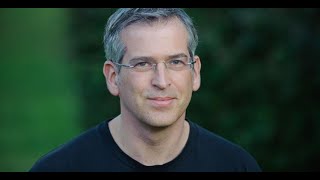
In this live talk, Uri Alon recounts his personal journey from a theoretical physics PhD in Israel to a postdoctoral career in systems biology, emphasizing the pivotal role of mentors like Mike Sorett, Michael Elowitz, and Stan Leibler. He narrates how a chance encounter with a recombinant cell biology textbook sparked his shift to experimental biology, the challenges of choosing a postdoc project, and the importance of resisting easy, physics‑centric problems in favor of biologically meaningful questions. Alon highlights the collaborative, supportive lab culture that enabled his experiments on bacterial chemotaxis and integral feedback, and reflects on his own evolution from experimentalist to theorist and mentor. Interwoven with humorous original songs, he critiques the peer‑review process, offering practical advice on becoming a constructive reviewer, maintaining mindfulness to avoid becoming a harsh “reviewer 2,” and fostering a healthier scientific community. The talk concludes with a discussion on how creative individuals can thrive in academia, suggesting improvisational theater and personal hobbies as tools for effective communication and resilience.
Chapters
All right, hi everybody. For the last talk to close out their evening, we have Uri Allon, who I think is the perfect one to end this great series of talks. So with that, I'll pass it on to Uri.
Thank you. I'm really moved by Daniel's talk and I thinking about, and that I would share with you, like, a moment in my career which was moving between PhD and postdoc and transitioning from theoretical physics to biology, microbiology, or biological physics, and, and what happened at that, at that particular point in time. And I want to say I wouldn't be here without Mike Sorett. Mike Sorett was a postdoc when I came to Princeton. I knew nothing about biology except what I read in the back of a cereal box—protein, carbohydrate—and Mike made me feel like no question that I asked was—he was the person that that maybe Daniel wanted. He was the friend. He made me feel that no question was silly. And so I want to start off by singing a song about Mike. And if you have someone like that in your life, then you can think about them when I'm singing. And Mike comes from Canada. So this song, the music is by Leonard Cohen. And I wrote the words together with Michael Elowitz, who was a PhD student in the same lab, Stan Leibler's lab.
Mike takes you down to a place by the centrifuges. It's your first day in the lab, and you don't know what a centrifuge is. And he hands you precious flasks And you drop them and they shatter. And you look at him quite meekly, but he says it doesn't matter. They were only the controls. And he gives you of his buffers and he gives you of his strains. And you wish you had his genome. Or at least you had his brain. I came to him one morning, an idea I had been forming. My transformants weren't transforming. Transforming and my swarmers were not swarming. I said, Mike, I'm a failure. I'm gonna work at Happy Burgers. I think I'm quitting science, but he says, now don't be hasty.
You may have to, I don't know, we may have to have a—
like the cafeteria, sometimes nasty, sometimes tasty. And he soothes you so discreetly and you trust in him completely and In your mind it has been freed, and you know that somewhere something will succeed. Now Mike is packing his papers in a folder, there's a knapsack on his shoulder, his pipette is in its holder, and as he leaves the floor, the shakers all stop shaking, the columns all run dry, and the autoclave stops baking. It'll never be the same. And you know that you must keep him, or at least that you must clone him. And you know that you will miss him, and you know that you will phone him all the time. Heartache takes you down.
So I wonder, does anybody in the audience have someone like Mike? If you can unmute and say their name. Jasmine? Sorry? Did you ever have someone like Mike in your career? Not yet, but I hope to. Or you can be.
Maybe, yeah. I, I had a whole string. James Stametov, um, uh, Enrico Gratton, um, uh, a theorist, uh, Akira Inamata. They're, they're just— and they seem to string one into the other.
Yeah. So they don't have to be your mentor or something like that. They can be someone like a postdoc in another lab, but they still— I think those relationships are super important for a lot of Scientists, and we heard from Daniel how important they could be. And, and so, and I just want to sing about them just because to highlight them. And certainly worked for me because, you see, I was doing a PhD in Israel in theoretical physics, working on turbulence mixing, like how coffee mixes into milk. And I was— I love to see a moment where you see simplicity, like a moment where things look simple. That's what I love about physics. And at some point in my PhD, I found that the problems around were too hard for me, like turbulence, and worked on for too long. And they were not so close, like cosmology or particles were far from human experience. And I wanted something that I could feel, kind of touch. So I looked for different topics where you can use physics. And a friend gave me a textbook called Recombinant Cell Biology, which is a paperback. The first chapter is DNA duplicating itself. The next chapter is DNA being read by polymerase. I said, wow, this matter is dancing. There must be new physical laws here. It's— I can't— and so I bugged my advisor. If after a year he let me go to a biology lab to do a rotation, I made a big mess in the lab running gels, but I loved the way that you can just see a band and see, you know, one molecule out of thousands in the cell where it is. And is there a band, not a band, you can make logic inference. I admired that. And I decided to go for a postdoc in biology, but how do you find it? And then, so I asked a lot of people, physicists, and they all pointed to one group called Stan Liebler's lab at Princeton. This was 1995 or '96. And he was a physicist that moved into biology. And I went, that's one lab I interviewed and he accepted me luckily. I think he accepted me because as we were walking back from lunch, I stepped on a little ketchup kind of thing on the floor and splashed my very fancy pants that my uncle gave me when I landed in the US and said, you have to wear fancy pants. And Stan said, look, you got your pants dirty. And I said, I don't care about those pants. And he said, yes, you're accepted. I don't care about pants either. And so it was lucky, a lot of luck. And as I said, I didn't know much about biology. And I think a very important thing that I wanted to focus on is how to choose a problem in a postdoc. So postdoc, you have a short amount of time, high risk, and you're so stressed to start that sometimes you choose the first project and that's a mistake, I think. So the first project I saw I could do, is this work on bacterial chemotaxis. There was this Petri dish where the bacteria were like a lot of bacteria, very, very dense, touching each other in a 2D fluid. And they were swimming in these vortices. And since they came from turbulence, I could say this is like turbulence in 2D based on the cell swimming and injecting energy from short scales. It was very easy for me to do that project, but something inside me said, No, that's more physics than biology. You came here to learn biology. And so I had the power to resist it, and I was lucky to just wait. And at that time was another Israeli postdoc, Nama Barkai. She's one of the most amazing scientists I've ever met. She has fantastic theoretical ability. And she was studying bacterial chemotaxis and came up with a theory of how chemotaxis circuit can navigate precisely despite the fact that each of the proteins levels is a random number. It can change in the cell. One cell has 100 proteins, another of 200, other one's 50, but still make a circuit out of it. And she figured out how that can work with a special kind of feedback that later called integral feedback. And I somehow got the idea that what I could do was the experiment to test that theory, to actually change the protein levels in the cell and see if they can still navigate precisely just by genetic engineering. And it somehow after 3 or 4 months dawned on me that I can do that. But then, you know, I was just clueless in the lab and that's when Mike Sorett and also Michael Elowitz were just there for me and guided me and helped me when the plasmids weren't being cut, etc. Transformers weren't transforming when I wanted to quit. And Stan Leibler was very good at keeping us just focused that it's a very good problem and just keep working on it. And we felt like we were a special place. And so this group of people, I'll never forget, was very It's kind of fertile for— I discovered also that I couldn't be an experimentalist, so I could go into that Zen mode of doing, you know, I had 6 points on the graph and each experiment took a week growing the bacteria, putting them in the microscope, looking at them, swimming, analyzing that. And I just went into a 6-week Zen mode of just, this is really wonderful flow where you can't even do any calculations. You can't calculate you know, weight divided by volume to get molarity. Nothing. You can just do the experiment. And now I mentor experimentalists. I think you can mentor experimentalists after you did one experiment. You know a lot about the limitations of experiments. But what I love to do is theory. And my house is full of envelopes with equations, and my kids know that if they leave their homework, I'm going to write equations on them. And And so maybe I'll end up with another song. That's another song about community and that has to do with the feedback we give each other. So this song has two parts. The first is called The first is called "Decision." Email, like, regarding decision. Dear authors, we have now heard from 3 referees. Their comments are attached below.
As you will see, they've raised concerns about your interpretation of the facts, your choice of model systems, your references, and the style of your prose. Oh yeah.
Referee number 1 says the topic is interesting, the results are incredible, correct. Referee number 2 says the topic is— the results are okay, but the topic isn't interesting.
Referee number 3 suggests 14 additional experiments, although tangential to your main point, would be nice to have. Oh yeah. As a result, we regret that we cannot offer publication at this time. Please know that we value your work and would like to see more of it in the future. And the future at the same time. We remain committed to the high standards of the Archival Journal of Upper Nasal Cavity Research.
So we don't teach each other in science how to review papers. And we all know what a good review looks like. What to keep and what to improve, remembering that we can't have the whole truth, but like truth is always full of open questions. And that there's people on the other side So in light of that, this is the last song. But I think we can teach each other how to review. And in fact, kind of change the culture of science with broadcasts like these.
When I get a paper to review, I think of— I look at what is fresh and new and how to realize it's full potential. Of course I note what to improve, but I always let the authors choose. After all, they know their own work better than I do. Hallelujah, I'll review ya. Hallelujah, I'll review ya. You know I've been reviewed before, and I lay crushed upon the floor, but I won't pass on the aggression to ya. 'Cause science is a social affair, we help each other to get there, to find the truth and help it to shine through.
Yeah, oh, hello!
Hallelujah, I'll review ya. I'll review. Hallelujah, I'll review ya. Hallelujah, I'll review.
Ooh, yeah. Thank you.
Bravo.
That was great. I'd heard the legend of Uriel and his guitar, but that was my first time actually experiencing it. Do you also like, uh, make sure that your students also represent the research talk with songs? I think— I don't think songs, but I think everyone can— I always think you can always become a better presenter. And I sometimes, for some of them, I recommend doing improv theater classes because they're so well done and they really look like— if you don't, even if you're very shy, they make you laugh very quickly and it's very safe. And then they can use whatever they love to do to infuse it into their talks. I'm sure Daniel knows how to help people write that way. So if it's you like to draw or to build a physical thing or to make use your experience in some kind of hobby into the talk as a metaphor. And really the thing about life I find sometimes when you're young, you have these parallel like strings in your personality that seem unconnected. And then a certain age you start tying them together. In weaving an unexpected combination that you bring to the table with your, like, the yarn, the colors of yarn that you happen to have. Interesting.
Um, Puri, I feel like somebody must ask the boring question, which is how, how does one become a good reviewer?
Good reviewer? You know, I think it's a lot of, first of all, you need to psychologically be aware that when you're anonymous and given power, you automatically have some tendency to aggression. And that's the Stanley Milgram experiment where people are given authority and power and anonymity and then they electrocute people, even though, you know, the actors do it. So you need to be in a good frame of mind. And I think to keep it, really remember those principles. Half of it is what to keep and half of it is what to improve. But I think giving the authors a lot of choice and not overloading. So it's a lot of self-awareness. I think it's not, it's actually, as I'd say it, there isn't really a good resource for how to review that I'm aware of. Maybe it's worth writing an essay. We don't want to give up review because it's so precious to have the feedback, and it could be very tough. And sometimes the best review is, don't publish this paper right now. Yeah, it needs a lot of fixing. That's like— people did that favor to me. I'm very glad sometimes. I mean, when it's really take Finding a big flock. Interesting, yeah. I see people are speechless.
Jasmine, can I ask a second then? Yes, of course. I think Suraj also has asked a question in the chat. I don't know if that been asked yet. So he asked— oh, well, no, no, I think it's a very good question. So how can one not become reviewer 2?
Everyone can be reviewer 2, but I think the question is, what is the motivation of reviewer 2? Like, I think the first talk said you don't think of people as evil, but you try to see where they're coming from. So you can be like a guardian of a field and not let low-standard papers come through, and therefore the So I think the way to avoid it is to realize that you're like that too in a certain way. There's a part in you that is reviewer too. And then to just examine things in that light. What's my motivation for doing it? And what's the impact on the other person? So it's more about mindfulness, having a little camera observing, what am I doing here? And rereading it. And so I'm not saying not to be tough and critical. But to balance it with awareness of where you're coming from. Are you now, let's say, are you insulted because they didn't cite your work from 1982? Are you, is this, sometimes it's just colliding with your deep identity. Your identity is married to a certain paradigm. And then when you notice that, maybe you can be more open. Okay, this is colliding with what I think cells do, but Let's see what happens if I understand that reaction, emotional reaction, and put it aside and look at the paper. You see what I'm saying? It's like a really mindful exercise. Oh, Daniel says, Uri's covering the foundation of how my writing classes proceed when it comes to peer review. That's great. Yeah. Yeah, I'm so grateful for your talk, Daniel. It's like such a— Moving talk. Yeah.
Shall we wrap, Jasmine, or shall I ask my burning question? No, I think we have time for one. If people, you know, have to trickle out, then feel free, but I think we can all stick around for one more burning question. Uri, are you able to?
Okay, if it's short.
Super short. Creative person in academia, how do they survive?
Yeah, it's first of all, I think human relationships. So having one or two other like-minded people in the same situation, like for me, Michael Elowitz, I talk to Michael almost every day and we go through— that's just enough. It's like solidarity and hope. I would say, because he deals with things and I see how he can cope with it. So there's relationships, lifelong relationships you make in science, in my opinion. Second thing is exercise your creativity muscles by doing something you like outside of science so science doesn't become your single tunnel. Not— that's not for everyone, but I think for some people, nothing is for everyone, but for people like me, let's say. And, um, so I have other interests, my family, Playback theater and music and hiking and stuff like that. And not to burn out, so sabbaticals, like I'm on sabbatical now, is a great way to just take a year off and refresh. My wife's also in academia, same thing, burnout. Burnout is because you do a lot of things you don't want to do. Like if you want to sitting a lot of committees you don't want to sit on because you haven't said no, like in Susan's talk, because you said yes on the phone without saying, I'll call you, I'll write you back, I'll think about it and I'll write back to you. You're doing a lot of things, you don't have your autonomy, then you get burnt out and then sabbaticals, vacations, very important. And yeah, I'm very sensitive to criticism. That's why I wrote the song about the therapy after getting that review. So over time, using what you can to humor, etc., to separate other people's opinion from your own identity. You don't take it in too hard. So a lot of artists take the one bad line in the criticism and insert it into their identity. It's like a machine that— so that's very important to know and just And I don't know. I mean, I love this job. I love mentoring students. I love being free to change problems, to work on what I want to with who I want to. And there's a lot of freedom and just, yeah, try not to be cruel to people. Thank you so much.
More from Joshua







Scientist Stories: Hans Waterham, The value of phenotypic assays in peroxisomal disorders




Scientist Stories: Joel Zlotogora, Genetic carrier screening programs for reproductive purposes