Scientist Stories: Walter Gilbert, Reminisces of Genomics
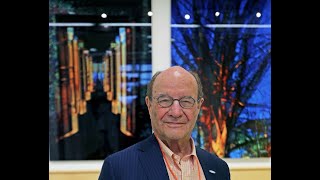
In this keynote, Walter "Wally" Gilbert reflects on his diverse scientific career and the evolution of molecular biology over the past six decades. He describes the early, amateurish culture of the 1960s, when physicists and theorists entered biology without formal training, and recounts hands‑on experiments that uncovered unstable RNA in E. coli. Gilbert explains how his group developed the Maxam–Gilbert chemical DNA‑sequencing method, its rapid adoption alongside Sanger’s enzymatic approach, and the exponential scaling of sequencing throughput that mirrored Moore’s law. He narrates his 1985 proposal to sequence the human genome, estimating a cost of $1 per base and arguing that large‑scale industrial production could make it feasible. He then forecasts the dramatic drop in sequencing costs, predicts consumer‑level genome sequencing, and warns against genetic determinism. The talk concludes with a question about kitchen‑scale species identification, to which Gilbert replies that fingerprinting methods already enable such applications.
Questions this video answers
You don’t need full sequencing; fingerprinting can identify species. The technology already exists for rapid species identification, and similar approaches could be adapted for consumer‑level devices.
Chapters
It's really great to have you back today, and it's particularly my pleasure to introduce this morning's keynote speaker, Wally Gilbert. You may have been noticing during this meeting this photograph here, which is of Jim Watson and Francis Crick, and this is the 60th anniversary of their paper in Nature. Yesterday was, actually. And it's also Rosalind Franklin and a number of other people published that day, but the reason that we're focusing on Wally and Jim is that they continue to be involved in this field from the time they met each other shortly after this photograph was taken all the way to the present in the field of genomics. Wally was one of the founders of sequencing technologies going back to RNA sequencing, and Jim was heavily involved in the Genome Project, as was Wally. Now, you could say that Wally is one of these people who needs no introduction, but I actually think he needs 14 introductions because he's had 14 jobs, and I'm just going to briefly mention them. He is— he was a physicist all the way from undergraduate and graduate school through associate professor, and then he was overlapping that— almost all of these were decades of work with few exceptions. He was a bacterial physiologist in a certain sense, a messenger microbiologist, chemist, immunologist, a CEO and other businessmen for Biogen and Myriad, architecture— did architecture for the Fairchild Building as he was chairman of the department. He's did archaeology. He's done venture capital. He's been head of the Society of Fellows of Harvard. Since '96 and a member since '78. And most recently, he's exhibiting photographer, I think doing on the order of 25 or so one-man shows. And you can see his photographs out in the front lobby. Take a card if you'd like. And he's also been a participant in a long-term project that Garry and Rufkin and I and he have have conspired on a mission to Mars for sequencing Martian DNA, if any. So his two mentors— he was surrounded throughout his life with people that were destined to become Nobel laureates in the future. His two mentors in particular, Salam, when he was a graduate student in Cambridge, England, And then Jim Watson mentoring him in his transition from graduate school to a professor of biophysics. Salam took 12 years between his seminal paper and his Nobel Prize in physics, and Jim took 9 years. And Wally, of course, got his neither in the physics nor in medicine physiology, but he got it in chemistry instead. And it took him only 3 years from his seminal paper. But of course, that represented already by that By that 1980, he had a lifetime achievement of about 16 years in molecular biology despite his transition relatively late in his career to physics. And of course, 1980 was just the beginning of all these other careers that he's contributed to. So without further ado, it's my very great pleasure to introduce Wally Gilbert.
Thank you, George. I was going to reminisce a bit about the science that we did back at the beginning and the science that you're doing today. I was struck yesterday by a number of themes, some of which I want to share with you, one of which was the notion of amateurism. And the other was a sort of discussion of the publication and are you going to be able to publish and how well that's going to work. The picture over here is of Jim and Francis, the DNA model. And their discovery was essentially 60 years ago. You don't realize when you're part of the act of science how science changes. Quite rapidly, but extraordinarily rapidly over a period like 60 years. I wasn't present in Cambridge in 1953. At that time, I had just graduated Harvard, and I went to Cambridge about a year later to study theoretical physics and met Jim and Francis there and heard Francis lecture about the DNA sequence at some point in my student days there. One of the great changes of science is that the number of scientists grows by a factor of 2 every 10 years. The number of papers grows by a factor of 2. The number of topics people write on grows by a number— factor of 2, the number of journals and all of that. And while that's not too much over every decade, it's actually a factor of 64 since that time and now. —so that this equivalent room then would have had maybe 3 or 4 people in it. And you should realize that that expansion totally changes finally the way people do science.
In the—
we began doing molecular biology in— I began in 1960 because Jim Watson could come and say, we had been friends since the middle '50s— he could come and say something very exciting is happening in the laboratory. And I went over and joined in the laboratory. I followed Jim around— Jim and François Gros— around one day, went back home and read 6 papers, which was essentially the total literature on T phage and messenger RNA, messenger RNA at that time was simply a hypothesis— that there might be an RNA molecule made by DNA that went out to the ribosomes and served as a template to encode proteins. We, of course, did not know the genetic code at that time. There were arguments about what it might look like, but there were no actual facts about it. The previous thinking had been that the ribosomes themselves were the RNA molecule that encode for proteins. But just at that period, right at the— during 1960, people began to realize that there might be a separate intermediate, and it would be unstable. It would be made from DNA, taken out into the cell, used to dictate the structure of proteins, and then broken down. As I said, I could read a few papers. I was a physicist, a theoretical physicist actually, not an experimentalist. I followed Jim and François Gros around for one day. Next day I came back and joined in doing the experiments. And the three of us, in fact, experimented trying to find this unstable RNA in E. coli. François would hold a gigantic flask, a 20-liter flask with a liter of bacteria, in which you'd be shaking this vigorously to keep it aerated. I'd be standing there with a bottle containing 20 millicuries of P32, and Jim would be standing there with a stopwatch. And then he would shout, go. I would pour the P32 into the flask. Francois would shake it vigorously. 20 seconds later, we would pour it over a— into a 50-gallon barrel full of ice and azide to chill the bacteria— stop the bacteria. Then we'd centrifuge this all down. Quite radioactive. We would harvest the bacteria, grind them up, and then separate the molecules by size in a centrifuge, sit around, we would collect the samples, and then to determine the radioactivity, we would actually count them by hand with a Geiger counter. And we'd sit there again with a stopwatch, put a sample under the Geiger counter, start the counter, start the stopwatch, at the end of a minute, stop the stopwatch, stop the Geiger counter, write down the answer, and go on to the next sample. Um, very simple ways of doing experiments. They were in fact successful. We published later a description of the existence of an unstable RNA in bacteria, and that was my introduction to biology. And I became fascinated with experimental biology and continued doing it off and on for a while, and then officially after I was promoted at Harvard in biophysics, continued doing it for a number of years after that. We were molecular biologists, and the molecular biologists thought of themselves actually as amateurs in some of the senses being used yesterday. We were not trained in biology. Jim would have been trained in biology in the sense of phage work, but there he was doing something totally different, and in fact his X-ray crystallography was not what he had been trained for, as I said earlier. I was a theoretical physicist, and I never had a course in biology after I left high school. So we were doing the biology, and we considered ourselves amateurs as compared to the biochemists, and the biochemists actually looked at the molecular biologists and said, "You're practicing biochemistry without a license." That's the way they defined us. We were functioning as amateurs in the sense that wasn't used yesterday, but it was a true definition of amateur—people who are doing it for the love of what they're doing. We were actually being supported by teaching or by doing other things, but we were doing this science out of the curiosity that drives you when you do science. The search for new knowledge and new truth. And we were part of a strange, almost guild of people. It was a curious period of publication. When I was doing theoretical physics at that time, the papers that we published took 2 years to appear. And you have to realize when the publication structure is like that, that in fact all the knowledge is being held by exchange between people. And somebody like Francis Crick would travel around the world passing information back and forth, and the way in which you'd find out what was actually happening in your field— and this was true in the biology also that we were doing— was personal conversations, preprints being sent out, and discussion, constant discussion, constant talking about ideas. That's not true in all sciences. The biochemists traditionally never spoke about their experiments until they were published. They would not tell you what they were doing until they had published the enzyme that they had discovered so they could name it and be sure no one else would steal the name. The molecular biologists talked all the time because, in fact, it was a sort of friendly guild. You knew everybody else. And if somebody published your work, they'd be essentially banished from the guild. It was a lovely, lovely period of science. It has, in fact, disappeared from most of the science that we do today. Lots of this has disappeared. Some of it's disappeared for economic reasons. Some of it's disappeared just for the size reasons that I mentioned. Some of it's disappeared because of the economic shifts, because as science becomes more tied into business or tied into medicine and patient care, the constraints around what it does become very different, and the motivations of people become very different. But the motivations back then for the phage group and the group of microbiologists grew out of that Was this search for knowledge in a purely— in an interesting social forum in which the group is communicating constantly, the students are being told, go out and find the information, talk to the other students, talk to the professors, it's an open world. Actually, as a side issue, one of the flaws in our current world is in fact that the journals destroyed that record-keeping that was necessary in that open world, because when you published a paper, you actually footnoted all the people that had talked to you, you know, the origin of the ideas, so-and-so suggested this experiment. The journals have moved away from that, insisting that you only footnote publications, and that entire record which used to exist back in the '60s and '70s of the discussion that underlies all of science disappeared from the public record. In some ways, it's coming back. And some of the themes we were hearing yesterday about essentially the ability to work to effectively publish through the computer, I think, will bring it back. You should be aware that theoretical physics now exists primarily through computer-based publication. There's an archive of all papers in which you publish instantly. It's unreviewed, and that was actually a good idea because Nature reviewing is not terribly good anymore. You should be aware that peer review once upon a time in the classic days of chemistry in the 19th century meant that the reviewer repeated the experiment so that he could assure the journal that the claim of 'I can do this synthesis' was actually true. That's disappeared, of course. No one repeats the experiment. The reviewer— if you're unlucky, the reviewer will repeat the experiment and publish it, but otherwise— but the physics archive is an interesting example, and it's something we should think about more in biology, because the archive is an instant publication. You send your paper in, it's published at midnight and distributed. And if you are feeling nervous about it, you pull it back before it's published because once it's out there, everybody can criticize it. They'll write in, they'll make nasty comments, and you have mud on your face as a theoretical physicist if your ideas are bad. The experimenters are caught up in some of the same way the biologists are caught up in these 3,000-people experiments. There were two experiments behind the Higgs boson. Each of them has 3,000 people. They have to sort of agree on the publication announcement. And of course, the way in which you keep track of everybody is not at all through the publication, but through an entire network of who knows who and who is actually getting credit for doing what. I continued in biology working on a number of topics. At that time, we phrased what we were doing in terms of very broad questions. In a sense, Jim and Francis knew they were trying to answer the question of how is it possible to have genetic material that passes from parent to offspring and can contain information, and the DNA structure in fact solved that problem as they noted in passing in their paper. We continue to work on questions like how does the DNA do anything? The answer to that question is the mechanism of protein synthesis. I worked on the question of how are genes controlled? And that question has become of larger and larger form since that time, but back in the middle '60s, that question was essentially yes, answered by the statement, yes, genes are controlled by there being other genes that make protein products. Now they could make RNA products as well. Make protein products that go and bind to the DNA and stop or prevent or activate a gene. And I worked on that problem. I became interested, of course, around 1970 with the question of if I have a protein that binds to DNA, what is the DNA it binds to? What are the sequences of DNA? And actually, in the early '70s, I isolated a particular DNA fragment. It was 20 bases long, and it was the fragment that the lac repressor, the protein that controls the lac the lactose genes binds to when it turns off the neighboring genes. And of course, I wanted to know what the DNA sequence was, so we sequenced that DNA. It was one of the first pieces of DNA to be sequenced. It took us 2 years to work out the 20 bases of that little DNA fragment, approximately 1 base a month. That was the situation in the 1972-'73 period. We knew that genes were much larger than these 20 bases. Of course, we knew by that time, we knew the genetic code entirely, so of course we knew that a typical gene in bacteria would be at least 1,000 bases long, 2,000. One thought that genes in our bodies would be some reasonable length, a few thousand bases. And at one base a month, it was clear you were never going to be able to decipher any of this. Jim would have thought, and did think, that it was going to be— and this is the early '70s— that it was going to be at least 10 or 20 years before people could sequence DNA. I probably would have thought the same. I had done this small DNA sequence. Another group had copied the— I had a student do, in fact, the neighboring sequence by doing RNA sequencing. The technique we used in those days was to copy a piece of DNA into RNA, to break the RNA into little tiny fragments, 2 and 3 and 4 bases long, and decipher all those tiny fragments. And we used gigantic electrophoretic machines, big sheets of paper in gigantic vats of airplane fuel. In rooms which you'd have 20 of these apparatuses, rooms filled with fire extinguishers. So if anything burst into flames, you would be killed in the room because the room would be blanketed with a fire extinguisher. High voltage apparatus, tremendous technology, great vats of airplane, 50-gallon major drums, oil drums, full of airplane fuel out in the halls of the bio labs. Tire technology, which is then brought into being and then disappears again. And I had lost interest— I didn't think I was interested in DNA sequencing until a Russian, Andrei Mirzabekov, came through and in the way in which information actually moves around biology, had lunch and tried to convince me that I should do an experiment experiment using a chemical reagent, dimethyl sulfate, to explore how the protein repressor bound the DNA by methylating the DNA, changing its shape, and then trying to detect whether or not the protein would protect the DNA against that chemical attack. And after he came back a few months later and had another lunch and tried to convince me again, I finally did an experiment based on that. I knew the sequence across that region. Because it had been determined in another laboratory, and I figured I could break the DNA with a chemical agent and I should be able to deduce where that breakage was by knowing the sequence. But when I ran a gel with that pattern, both that experiment worked— I could detect how the protein bound the DNA— but the pattern on the gel was so clear that I could look at it and say this must be a sequencing method. That we can break the DNA from some organized— from some point which you label, and we could break it and separate those fragments by size. It took about— having that realization, it took about 9 months to find the 4 reactions that we used, and we had developed a complete sequencing method. At the same time, Fred Sanger in England developed a method also separating fragments by size, but by making the fragments with a synthetic method rather than a chemical method. We actually gave the method away. I was asked years later why we didn't patent it, and at that time no one had thought of patenting anything, which is just as well because the method would not have become commercially interesting for another 20 years and the patent would have already expired. We gave the method away by simply writing it up and at the Gordon conferences simply distributing how-to-do-it methods. We published a paper on it about 2 years later. So when George commented about the Nobel Prize and the paper, that paper is actually several years after people are already using the method. People would come visit our laboratories, learn the method, go home and do it. People began sequencing immediately. I had a graduate student do a gene, 1,500 bases of DNA, as his thesis. Next graduate student did 5,000 bases of DNA, did an entire sequence of a plasmid as his thesis. Then we stopped giving theses for sequencing. One of the later sequence— several years later, a graduate student of Jeffrey Miller's did 4 million bases of DNA, did an entire bacterium. And had to interpret the sequence in order to get a PhD thesis. The world changed abruptly and completely because we moved from doing one base a month to, at the very beginning, being able to read hundreds of bases in an afternoon. Within a few days, you could read 1,000 bases in, again, an afternoon's experimentation. And the world began the sequence rapidly and completely at that time, starting around 1975. The amount of sequencing then proceeded to increase following Moore's Law. It did not follow the doubling every 10 years. It followed a rule in which it doubled every 18 months, went up by a factor of 10 every 5 years, a factor of 100 every decade. So in '75, there were about 10,000 bases of DNA sequenced that year. By 10 years later, it's already— a million bases of DNA are being sequenced every year. By 10 years after that, it's 100 million. And by 10 years after that, it's 10 billion. I was delighted, of course, with this development of DNA sequencing. And in fact, the method that Allan Maxima and I that Bob devised and the method that Fred devised were used roughly equally that first decade. Around 1985, machines came in and Fred's method became the dominant one. The chemical method is used occasionally, I think, today, but there's probably almost no one who can do it anymore. And that's the normal course of science. Science constantly changes. And in fact, of course, the DNA sequencing machines we use today are totally different again from the machines that were being used a few years ago. And so it goes. Around 1985, the DNA sequencing was going very well. As I said, by that time, we're already— sequencing is already of the order of 1 million bases or so a year. I got invited to a conference that Bob Sinsheimer organized to raise the question, would it be possible to sequence the human genome? And I went to the conference thinking, this is the silliest thing I've ever heard of. I mean, it was just— it was still very far away in my thinking at that moment. Went to the conference, learned where the sequencing technology was at that point. And after the conference, coming back, flying back on the plane, I realized that it was technically perfectly possible to sequence the human genome and proposed such a project first to Bob in some ways and then at a Gordon conference later that summer. And the Gordon conference, I actually put a price tag on the genome estimating it would cost about $1 a base, and therefore for $3 billion, you should be able to do the human genome. What I realized was actually the way the project worked out is that the problem of doing the genome for the most part is a purely linear problem. You can essentially start at one end and go through it. The sequencing method is a purely linear method. The technology— I became convinced the technology was perfectly adequate to do the job if simply applied on a sort of large enough scale and an industrial-like scale. And since by that time in 1985 I had already had a holiday from the university and been running a biotechnology company, I was used to thinking of large-scale industrial-like proposals. The scientific community sort of reacted to this proposal thinking, oh, this is crazy. Who wants to do the sequencing? Not realizing that the nature of what you do, and we do a lot of it, throughout the pharmaceutical industry and industrial side, a lot of what you do is done by people specializing in doing certain things that are large-scale production efforts done by people who enjoy doing large-scale production efforts and working on them, and there's all sorts of jobs involved. So I became, as I said, an early proponent of the Genome Project in the late '80s. Argued for it in many ways. What I was arguing, which actually has worked out quite well, is that we could do the genome, we could do it accurately enough to make a reference standard, and by doing it, we would then create effectively a database of information that we would mine as scientists for the next 100 years. And that's in fact what the world is doing. Two parts of this were obvious when you thought about it, I thought, in the late '80s. First, that technology could do this. Secondly, in scaling the technology up and doing a production, the technologies that you use become more efficient in time. And the cost of production always falls. It falls both because the underlying technology used is constantly being improved in detail. And that's a fall of about 15% in cost per year. And it falls because, in fact, novel technologies are then invented that then change the structure even more dramatically. So I could look at the problem and say, well, if we once do the human genome, we will have a reference genome. Doing more genomes will, of course, become easier and easier as we go forward, and we'll be able ultimately to figure out what that genome does because we'll be able to decipher it in the computer, and we'll be able to do experiments using that knowledge. I go around giving seminars saying to the graduate students, you know, we're about to break your rice bowl. You have specialized in finding a gene for your PhD, And 10 years from now, all the genes will be known. You'll go look them up. You won't go to the laboratory and get a thesis by doing that sort of gene isolation. And that in large part has happened, and what we're talking about at this conference and we're talking about as these— the clinical genome sequencing becomes more and more prevalent is the outcome, many of the outcomes of that. I would also in the late '80s talk about, as I just did, how the cost of the DNA sequencing would be falling, and I would try to make an extrapolation. In fact, I'd say to everybody, somewhere around 2020, 2030, the cost of DNA sequencing will fall to a few hundred dollars, and you will go down to your local pharmacy and you will get your sequencing. And they'll give it back to you on a compact disc or DVD disc like this. And the world will be entirely changed. I would generally always try to stress a fear that I had at that time, and it's a fear I still have, and that is the fear that people feel they are determined by their sequence. That there's a— one can fall into this viewpoint that you are just the product of your sequence. You are much more than that. We actually change our brains by using them. We change our bodies by many aspects of our behavior, not just by our sequence. The sequence is relevant to much of our biology and very relevant to what we're now calling precision medicine, but I am delighted with the sort of current outcome of the world. The world has actually moved faster than I thought. It hasn't yot— yet. We haven't yet gotten to the $300 sequence sold in the pharmacy, But we are rapidly getting there, and I think we will get there before my prediction that we would get there in between 2020 and 2030. We'll probably get there within the next 5 years, long before 2020. Well, thank you very much. Enjoy the rest of the meeting. And there's, there's probably a moment for questions if somebody has A question. Yes.
What a pleasure to hear you speak. I'm one of those kids who start— I started out in Charlie Cantress' lab, and I had one of those hand-typed protocols for Maximin-Gilbert sequencing that I used to work off of, so thank you. And then I went on to Peter Lamedico's lab So, and of course he did the insulin gene with you. He was your postdoc, so I guess I'm your grandchild. Anyway. Well, thank you. So I wanted to know, we're talking about human sequencing, but I see all this application for sequencing as an identity thing for food, for all kinds of things. Do you ever see that someday we'll have in our kitchen something that if you want to reverse engineer a recipe, or you want to find out if that fish is really the fish you think it is, that you'll just pop it into a machine on your kitchen table? It could happen.
I mean, the sequencing— in fact, you don't even have to do a whole sequencing. You can effectively do fingerprinting to identify the species and things like that. But in fact, of course, as you've probably just seen this discussion of horse meat in the meat in Germany, the discussion that's—
Oh, that's been great for the DIY Bio groups, let me tell you. Bring in your meat and we'll help you. That's right.
Let's say your meat, the fish that they're being sold, every now and then there's a revelation in the papers that all the fish is wrong. And that's all being done by sequencing, which is actually the easy way of doing it all by now rather than probably even antibody methods. Yes, you can devise little sequencers on a chip. I mean, the cheap sequencers haven't gotten quite down to the few-hundred-dollar level, but that probably will occur at some point. Other questions? OK, well, thank you very much.
More from Joshua







Scientist Stories: Hans Waterham, The value of phenotypic assays in peroxisomal disorders




Scientist Stories: Joel Zlotogora, Genetic carrier screening programs for reproductive purposes