Scientist Stories: Wendy Chung, Human Genetics and Precision Medicine
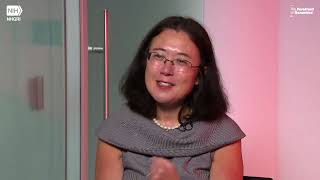
In this interview, Dr. Wendy Chung, Kennedy Professor of Pediatrics and Medicine at Columbia University, discusses her career trajectory, scientific discoveries, and perspectives on the future of genomics. She credits her long‑term mentor, physician‑scientist Rudy Leibel, for shaping her approach to patient‑focused research. Chung recounts entering the MD‑PhD program alongside the launch of the Human Genome Project, describing how early mouse genetics led to the identification of leptin and its receptor, which later informed the development of the obesity drug setmelanotide for rare monogenic forms of obesity. She explains how studying rare variants illuminates mechanisms of common diseases and emphasizes the need to translate genomic findings into rapid, affordable clinical diagnostics while acknowledging gaps in access and interpretation. Chung delves into communicating genetic risk, advocating for quantitative, transparent risk estimates that incorporate monogenic, polygenic, and environmental factors, and warns against deterministic interpretations of polygenic scores. She stresses building patient trust by avoiding overpromising and being honest about uncertainties. The conversation moves to ethical, legal, and social issues: responsible gene editing, lessons from past gene‑therapy setbacks, and the importance of cautious advancement. Chung shares her “Don Quixote” experience fighting restrictive gene‑patent practices to improve testing access, and reflects on the broader impact of the Human Genome Project, highlighting the shift to team science. She defines precision medicine as patient‑centered, family‑aware care, critiques the NIH All of Us program as underpowered for the nation’s diversity, and discusses barriers to equitable implementation. Finally, she looks ahead to innovations such as non‑invasive prenatal sequencing paired with targeted therapies, while noting the accompanying ethical considerations.
Chapters
Wendy Chung, and I'm the Kennedy Professor of Pediatrics and Medicine at Columbia University.
Who were some important mentors in graduate and medical school?
So when I was an MD-PhD student at Cornell and Rockefeller University, I had one mentor who actually continues to be a mentor to me today. His name's Rudy Leibel. He was a physician scientist and really taught me both how to be a physician and how to really learn something from listening to my patients and how to be able to apply that to my science.
Can you discuss some key discoveries from your study of the genetic architecture of diabetes and obesity?
When I started my MD-PhD program, it was actually the year the Human Genome Project started. And in fact, the reason I went in the track I did is because I saw the possibility of what the Human Genome Project was going to give us. And I thought to myself, it's going to take a while, but there aren't going to be people who are actually going to know what to do with all of that information. And an MD-PhD program and a lot of training, it takes a long time anyway. So, even though the Human Genome Project is going to take 20 years, it's going to take me 20 years. And so, we should both finish about the same time. So, the Genome Project finished ahead of schedule. I finished ahead of schedule, so we still actually ended up converging. And since then, it's been a love affair in terms of the information and what we can do with that. In the early days when I started this, again, you know, think back to 1990 when we started the Human Genome Project. Rudy Leibel, my mentor, had an audacious and bold idea, which is that he had always been interested in obesity and what we could do in terms of being able to understand fundamentally that process and do something to help individuals. And there were these mice that were actually genetically obese, and they had obvious names. Obese was one of them, and diabetes was another one of them. And at the time, we didn't have the tools to do positional cloning, but the audacious idea was that in the mouse, this was segregating as a monogenic recessive condition. And so, with the appropriate tools, we would perhaps be able to identify those genes, and with that, that would be a very firm anchor upon which we could build our knowledge and our understanding of how body weight was regulated. It certainly was not trivial to do that in the early days because we didn't have a map, we didn't have clones, we didn't have any of the infrastructure we currently have. And so, as I said, in the early days for the first gene that we cloned that way, it took us about 10 years. For the last gene that I cloned, it took us about 10 hours. And so, the difference in terms of what you can do has just been light-years different. And obviously, it's taken a lot of work from a lot of people to get to that point, but we're in a very different phase of discovery now.
How does studying rare variation allow for insights into common disease?
Fast forward, we realized from the mice that we were studying that obese is something called leptin. It's a hormone. Diabetes is actually the receptor for that same hormone. They're basically a lock and key and work together very closely. And it became relatively soon thereafter apparent that what we saw in the mouse was actually also something that we see in humans. That is that there are human individuals who had similar mutations in leptin and leptin receptor, similar problems in terms of obesity associated with that, as well as some other endocrinological issues. One of the things that I have to say has been incredibly exciting for me, but only has come to fruition in the last couple of years, is that on the basis of that knowledge, as well as additional knowledge that we did from understanding other monogenic forms of obesity, we now have a much better understanding of in the hypothalamus, in the brain, what are the molecules that actually regulate hunger, satiety, food intake, energy balance, but all of these things that ultimately determine what your body weight is. By knowing that, we have now started using therapeutically a medication, something called setmelanotide, which you can now do to be able to trick that system in your brain so that individuals actually don't have that feeling of constant hunger. So one of the problems with individuals who have these genetic forms of obesity, they literally never feel full. That feedback loop just doesn't work. We can now give them a medication, setmelanotide, which makes them for the first time in their lives actually feel full, and so they're not constantly fighting this losing battle. And so what's exciting is the same patients that I saw, I saw them when they were little teeny tiny, We genetically figured out what was going on with them. I've now been able to come back to them 20 years later, but still 20 years later in terms of being able to do something and being able to see that full circle as they're losing weight now and being able to keep it off and having very different lives because now they actually can literally move and feel better about themselves and can get rid of some of the health issues that have been plaguing them. It's just incredible to be able to see that, within my lifetime, we've done something with that information.
Could you have predicted this application?
Well, I guess, in the one sense, you know, I think naively, a lot of people think, well, you clone a gene, you identify the gene, next day, you know, you just fix it, right? Now, many of us realize it's not quite that simple, but still, the fact that we can do something, and the fact— let me give a little bit more sort of clarity to this. This medication, this strategy is not just for the— there are 1 in a million, but these 1 in a million people with these very rare genetic forms of obesity. The wonderful thing about this, and it's still in the hypothesis testing stage though, is by understanding the fundamental biology of how the brain works in terms of, again, feeling hunger, feeling full, how we burn calories, that's not just applicable to these 1 in a million individuals, right? They gave us the clarity to understand it. They were incredibly generous by now explaining to us the biology by listening to those few individuals, but it's the same exact biology that works in your brain and my brain. And now the question is, can we use that same way of tricking the brain for a lot of other people? Not just those rare, unusual cases who have genetic differences in that fundamental biology, but a lot of other people that might have differences up the— downstream in that same pathway, other individuals who have other reasons. But now, potentially, and I have to say, for a country where over half of our population has weight issues, this could, at the end of the day, have huge public impact.
What are some of the factors influencing the clinical implementation of genomics?
We've come a long way. By knowing the genomic sequence and by advances in sequencing technology, We can sequence a human individual within a day or two at a cost that we can argue about it, but is affordable, at least in the right circumstances. We can't always understand all of those 3 billion letters, so we still have a ways to go in terms of interpretation of that, but we are making incredible progress. And in fact, it can be done, I would say, for a lot of the diagnoses we routinely make in the laboratory within 5 minutes. So literally within 5 minutes of appropriate sort of loading the data and analyzing the data, we can make genetic diagnoses on scale in many circumstances. I think the question is being able to now get access to all of the individuals who need it. And to me, that's the biggest gap we face right now is because with that and knowing the right diagnosis for an individual, we can both get them on the right treatment path and off the wrong treatment path in some cases. Now, that isn't to say that for all of those conditions I can just snap my fingers and we've immediately got a solution. Our next big gap after that is really being able to come up with, in part we're doing supports now, but even in the future, I hope really transformational treatments for many individuals. And to be able to scale that in a way that, you know, like many patients would like us to do, you know the gene, the next day let's have that treatment. As we get to more advanced molecularly-based treatments that are fundamentally based on what that genetic change is, Hopefully we can make that translation much faster.
In a clinical context, how do you think genetic risk should be communicated?
For us, I think part of our issue with communication and clarity in our communication is we're still a little bit confused, and sometimes we are fuzzy in our words because we're fuzzy in our thinking about this. So let me give you an example. So as we're trying to communicate risk to individuals, one of the challenges is that We understand for something like a BRCA1 or a BRCA2 mutation that these are high risk, right? But with those, that still might be 50-60% lifetime risk of breast cancer. But I think the more we can make that quantitative and be able to say it's not 100%, it's 50%, and in the next 5 years, it's whatever percent that is based on your age, your sex, your hormonal status, a whole bunch of other things, be able to quantify that, and the complexity is that it's not any one factor. So as we're thinking about this for most conditions, at least most conditions that affect most people in their everyday lives, it's a combination of, as I tell people, genetic factors, you know, really strong, powerful genes, and then also genetic factors, which are sort of the wimpier genes, but in the aggregate, people like to call that polygenic risk score, and how you aggregate all of these and put them together. But there are strong monogenic factors, medium, sort of moderate risk factors, wimpy polygenic factors, and then there's development. There's what was happening in utero, there's what's happened over the course of your life, all sorts of other things, and that complexity is what we struggle with, because we don't know the real answer. I mean, that's the honest truth. Right now, we don't really, really know the answer of risk in many cases. But we need to be able to communicate to people both, I believe, a number and a confidence interval. How certain are we? Be honest and transparent. Sometimes we're not so certain, but just convey that uncertainty and that risk in real time. And so for people, if they know what their risk is, what I call your forecast, I think of as your lifetime risk, and your nearcast is what your risk is for the next 5 to 10 years. If you could give people that type of information, that would be news they could use. And then more importantly, if you could say, now here's what you could do to reduce that risk, and for someone to actually see a measurable change and know that they are modifying their risk, that's what modifies the behavior or behavioral change in terms of being able to then mitigate some of that risk. So with obesity, to be honest, it's easier to see. You look in the mirror, right, and you look in the mirror and you can be able to see what effect you're having on that. And for certain individuals, I think really what matters most is that, to be honest, it's not so much in the genes, right? So if you think about our society in the context of obesity, a generation ago, or, you know, from one generation to the next, our genes haven't changed, right? It's not like we've all been mutagenized in this. But as a country, our body mass index has changed mightily. That didn't have to do really with our genes. It had to do with how much we could supersize meals, how little we had to do in terms of physical activity. It was mostly about our environment. And so At the end of the day, I'll be saying what your, you know, mother's doctor said to her, which is that, you know, physical fitness, activity, eating a balanced diet, you know, those are the things that are from a public health point of view probably most relevant to obesity.
Do discussions of polygenic risk scores risk becoming deterministic?
Right, so I'll give you an interesting factoid. There was a survey done actually for couples who were thinking about having children to see if they could use preimplantation genetic diagnosis, what traits they would check off in terms of what they'd like to do. Obesity is actually one of them, one of the ones they really, really would like to be able to select for. And people do come out with— and there are actually polygenic risk predictors for obesity or body mass index. And, you know, I would hate personally, from an ELSI point of view, I would hate to think that that were something that people were going to make decisions about in terms of the next generation based on that. Number one, because I don't think it's that accurate, but number two, I don't think that's actually something something that's all that meaningful or important. But I do think that there are misunderstandings, great misunderstandings for the public about what genetics mean and the assumption that this is a Gattaca situation, you know, you can do this, you can do a heel stick, and you can now forecast your entire lifetime based on that genetic information.
[Speaker:JOSH] Do you think clinicians have to be as focused on communicating environment as they are on genetics?
Well, I think within all of this, to be honest, it needs to be accurate, whatever it is. And different conditions are going to be a different mix of environment versus genes, nature versus nurture. I think the important thing is to be accurate about that information wherever you can get that data source. And as I said, to be transparent. When we don't know, be honest about it and say what we don't know and how certain we are of what we do know.
In a clinical setting, how do you build trust with a patient and not overpromise?
So I think it is interesting, a question of trust fundamentally in terms of patients. And I think the one thing I've learned over my career is that, you know, when you try and overpromise, I think that's when we lose the trust of patients and the public. And so I think it's being— and sometimes we haven't ourselves as scientists, especially in this era, known the correct way to forecast. And so I think there's been this public perception that we've overpromised and underdelivered. And I I can certainly— I don't fault us in the sense that to a certain extent, we didn't know ourselves what to be able to promise, and we were doing the best that we could. But as we get better at that, as we do have better understanding, I do think it's important for us not to be hyperbolic about this and not to try and oversell it. But on the other hand, where there are real promises, to be transparent about the necessary steps it takes to be able to realize that promise.
Can you discuss 2 or 3 key pressing ELSI issues from your perspective?
Well, certainly. So I deal a lot still with rare diseases, and so, you know, the big opportunities and the big challenges right now are for individuals to be able to use gene editing technologies, gene replacement, but essentially genetic manipulation at this point. And it certainly holds a lot of exciting opportunities. I come from an era having worked on spinal muscular atrophy where we literally made a quantum leap forward to go from the most common genetic cause of death for children or infants less than 2 years of age, to now being able to do newborn screening and to do potentially, I underscore potentially, a one-and-done treatment for these newborns to completely change their lives and completely change the natural history of this condition has been phenomenal. It's with that excitement and on the heels of that excitement, we wonder how many more times can we do this and how quickly can we do it for other monogenic conditions? And as we do it, number one, it's trying to make sure that we're not overly enthusiastic, shall I say, that we take the necessary precautions, that we don't put any Jesse Gelsingers at risk in terms of repeating what's happened before in gene therapy, as well as to be very, very careful about what we're doing to the genome in terms of the editing, and to realize that we're not always as smart as we think we are in terms of this. And to have a measure of caution as we go forward.
Can you discuss some of your experiences with the gene patenting issue?
Well, I'm— so I'll answer sort of your question, and I'll try and think as I'm answering. So the— for me, the biggest LC issue that I can personally say I was a part of was what I call my Don Quixote experience, right? So this is changing how we think about gene patents and the ability to patent genes and use that information. And The reason I say this is because as a practicing clinician, it was oftentimes very difficult for my patients to get access to the genetic testing they needed. So I'll go back to the BRCA1 and 2 story. All right, so when I was doing this initially, I mean, this was a test that would cost $4,600 for a patient to be able to get. It was— and I'm sorry, I think I misspoke in terms of saying that. It was $2,600 in terms of a patient being able to get access to that test for just 2 genes. And it was something that a lot of patients needed. It was a common, sort of commonly ordered test. And so with that, you know, came some other tests, Long QT syndrome as an example. And again, there were bundles of genes that we needed to look at for that, and so we couldn't do it just one gene, and it brought together the need for access and licenses to be able to do this testing. And for Long QT in particular, there was a period in history where no laboratory actually could do the testing. The one laboratory that had the licenses went out of business. They didn't issue the licenses to any other laboratories, and so there was actually no laboratory in the United States that could do testing legally. It was on that that I had this frustration for patients in terms of how were we going to deliver care under these circumstances, both the cost and the access issue. And so this brought up the whole Don Quixote experience of being able to eventually go to NIH, eventually go to Congress and the Hill, and eventually the ACLU of all folks at the time, you know, sort of taking up this cause. Cause. That, although it took a while to eventually get through, I think is, from my own personal point of view, been the most transformational issue that's happened within the LC space within my lifetime in terms of really transforming what we could do in terms of implementation of medicine. With that, I would say the things that thankfully haven't been as big a deal, and I think because it's been people being very thoughtful about this, are issues about at least overt discrimination. In terms of genetic information. So, you know, people have been worried a lot in terms of would they lose their health insurance, would they not be able to get the care they needed based on sort of some genetic pre-existing condition. And it was in large part, I think, because the LC community made people aware of it, made sure that everyone knew people were watching in terms of monitoring this, as well as finally legislation in place to be able to protect for this. And so, although I will say that patients still come to me with subtle questions of discrimination that are not provable, they're also not sort of life-changing. They are subtle things. I really have not had any cases in terms of individuals who really have not been able to get the care they needed to. And that reassurance has been, at the end of the day, incredibly important and good to be able to put aside many of the concerns.
What is your definition of precision medicine? How does it relate to the All of Us program at NIH?
So precision medicine to me is the right treatment or support for the right patient at the right time in a way that's accepting for them, that meets with whatever their value system is. The one other part about this for me as a geneticist is that the patient to me is actually the patient and their family. They share their genes with their family, and so it's comes in that context. Within this, I think it's important that it's, though incredibly important, that it's patient-centered. So it's all about them and what works for them as we try and do this. The All of Us program, in theory, is going to help us in terms of being able to achieve those goals, right? So within this, we need sample size. We need power to be able to figure this out. We need power because within the United States especially, we have a very diverse community. It's not the same. It's not the same answers. Obviously for men or for women, for individuals of different age, depending on geography, depending on ancestry, depending on socioeconomics. I mean, there are so many different dimensions that to be able to get personalized or precise about this, you need to have enough in any one cell that you can actually say something about this. You need to have enough people who are women in their 50s who lived in Florida and, you know, have issues with a certain body mass index or whatever, but you need to be able to have the sample size to do that. I will be so bold as to say, though, that All of Us is still very much underpowered. So even though you think about audacious, it's a million Americans, we're going to be able to do all these things and learn so much. And it's true, we are going to be able to learn a lot. I'm not saying we won't, but a million is not going to be enough. When you think about a million with the dimensions of diversity that we have, it's not going to be It's a good start. It's a good start to work out the kinks, to think about how you put the infrastructure for this, how scientists think about how to use the information, how you gain the public trust in terms of doing this. But mark my words, we're not going to have enough information with a million. So hopefully, it will eventually be a global initiative where it's going to be all of us in the United States, it's going to be the UK Biobank in the UK, it's going to be lots of other groups where hopefully we will find ways of being able to share and harmonize our data to answer some of the bigger questions. But ultimately, it's going to need to be many, many more of all of us.
Can you discuss how All of Us is breaking down barriers typically associated with precision medicine?
In theory, All of Us is trying to break down some of those barriers in access, break down barriers in terms of— in theory, if you've got a smartphone, you can register for All of Us, and you don't have to be in one of the clinical centers that's recruiting. You could be any place in the United States, in theory. But even still, even though that is the case, let's fast forward and pretend that in a couple years we're returning genetic results to individuals and someone does find out they have one of those BRCA1 mutations. If that woman doesn't have access to be able to get a breast MRI, even if she could get a mammogram, and, you know, that obviously we've got some centers in place to be able to do that, most people aren't giving away free breast MRIs. And free breast MRI is actually going to be the most sensitive tool she has to detect an early cancer. If she doesn't have access to that, how good is that information that she's gotten from all of us, you know, knowing that it was something where people were trying to give her access? Getting halfway, I would argue, potentially is even more bothersome or worrisome than being able to really truly engage and work with our participants in that way. So we're still going to have a ways to go. Hopefully we will have ways in the United States of increasing access in multiple dimensions of care. But it is a work in progress.
What are a few innovations that came out of the HGP that you think have been most important?
Well, it's obvious, and it was what the original great thinkers thought about, is literally you just have the encyclopedia now of life, right? I mean, you do actually have foundationally the information we need to be able to know all of our genes, and with that, then the architecture of diseases. In different human traits. And that just is foundational in terms of transforming biology, and that goes without question. I think one of the things that's been— and it's more of a cultural thing for me personally— but it's the fact that you learn to do team science. And that's not something that all areas of biology have definitely sort of grown up in that culture. Genomics, I think, is one of the areas— it's, to be honest, more like physics in terms of just the culture of how science is done. I actually find it incredibly rewarding just from a personal point of view because it keeps me on my toes. I always get to learn something from someone else because we're all bringing something unique to bear in terms of doing that. It is a very different way of doing science from an academic point of view in terms of just the way things are incentivized and how teams are formed. And so I do hope that that's something that scientifically we continue to evolve, at least in the biological sciences that have tended to be more siloed and not necessarily as translational. But it is definitely a different way of organizing teams and being able to get things done.
Looking forward, what potential developments in genomics are you most excited about?
So there's going to be technology that I do think is going to be developed in the next 5 years that is going to allow us to make more prenatal diagnoses with non-invasive methods. So many people know we can always already do this in terms of picking up Down syndrome or other chromosomal disorders. Are conditions. It is possible increasingly to do that now at a sequence level for certain— in a targeted way for certain genetic conditions, and I won't go into the details, but to do that in a focused way. And as we get better at doing this, and as the cost of sequencing hopefully continues to come down, you can expand the list and portfolio of things to be done. That's interesting because I'll just give you one example. For instance, Achondroplasia might be one of those conditions that you could easily define because it's a very specific gene, a very specific mutation. And the exciting part for me is there are now treatments that are likely to be very, very effective for achondroplasia. And so it's this yoking diagnostics with therapeutics, the one-two punch, and being able to do that very, very effectively. But there's also the ELSI issue, right, which is that now you're opening up the opportunity, the window, or the possibility of making all sorts of prenatal diagnoses at a very, very early stage where, even though ethically it's no different to me, certain people might make different decisions at earlier stages of gestation than later stages of gestation. And it becomes an issue of forming the next generation. Sort of judgment, value judgments in terms of who's more worthy or not of being born. I think based on potentially flawed data we have of what the outcomes are of those individuals and some ascertainment bias in terms of what we project and what what we expect, and also differences in terms of the haves and the have-nots in terms of who may have access to that technology, given that it's likely to be very expensive, at least at the beginning, and not something that's going to be covered by insurance for everyone as we do this. And so I think there are some powerful opportunities for good. I think there are also some opportunities where that could be used in ways that I hope it isn't.
More from Joshua







Scientist Stories: Hans Waterham, The value of phenotypic assays in peroxisomal disorders




Scientist Stories: Joel Zlotogora, Genetic carrier screening programs for reproductive purposes