Stem Cells to treat Alzheimer's Disease & Related Disorders
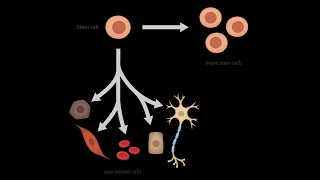
In this live Ask‑the‑Doc session moderated by Josh Grill, three UCI experts—Dr. Eileen Anderson, Dr. Matthew Blurton‑Jones, and Dr. Ed Minuchin—discuss the role of stem cells in Alzheimer’s disease (AD) and other age‑related disorders. The conversation begins with a basic definition of stem cells (self‑renewal and pluripotency) and how stem‑cell function declines with age, potentially contributing to neurodegeneration. Two therapeutic strategies are outlined: (1) reactivating endogenous neural stem cells by modulating signaling pathways (e.g., immune signals) and (2) transplanting exogenous stem cells. Dr. Blurton‑Jones describes mouse‑model work showing that transplanted neural stem cells secrete high levels of brain‑derived neurotrophic factor (BDNF), enhancing synaptic density without altering amyloid pathology, and suggests exercise as a non‑cellular way to raise BDNF. Dr. Minuchin raises safety concerns—tumorigenicity, surgical injury, immune rejection—and explains regulatory hurdles, emphasizing that no FDA‑approved stem‑cell therapy exists for AD. Dr. Anderson expands on stem‑cell categories (pluripotent/embryonic, induced pluripotent, mesenchymal, autologous vs. allogeneic) and their differing risk profiles, and she highlights the importance of rigorous clinical‑trial design and FDA oversight. The panel also covers research tools such as 3‑D brain organoids and choroid‑plexus models, the use of CRISPR for gene correction and functional screens, and broader applications like disc regeneration and CSF‑based diagnostics. Timeline expectations are discussed, with the consensus that incremental advances (5‑15 years) are realistic for AD‑focused stem‑cell therapies, while some cell‑based treatments for genetic diseases are already in clinical use. The session concludes with a reminder to consult reputable academic centers for trial participation and an invitation to join UCI’s research registry.
Chapters
Good afternoon and welcome to our 2020 series of UCI MIND's Ask the Doc, where this year live viewers get to ask questions of our renowned faculty experts from here at UC Irvine. My name is Josh Grill. I'm the director of UCI MIND and will moderate today's Ask the Doc session, which is specifically titled Stem Cell Research for Alzheimer's Disease and Related Disorders. Thank you for joining us today. We are very excited about this program. And the unique expertise that UC Irvine holds in stem cell research. And we're joined by some really outstanding experts, national, international experts, colleagues from here at UC Irvine, who I'll now introduce for our viewers, and they will be taking your questions live here in, on this virtual platform. So first, Our next presenter today will be Dr. Eileen Anderson. Dr. Anderson is a full professor in physical medicine and rehabilitation in the School of Medicine at UCI, but more importantly, she's the director of the Sue and Bill Gross Stem Cell Research Center here at UC Irvine. Dr. Anderson is a renowned expert in the role of stem cells as possible treatments for brain injury and spinal cord injury. She trained here at UCI and at Harvard., and is doing an outstanding job of leading the Stem Cell Center here at UCI. Next, we will be joined by Dr. Matthew Blerton-Jones. Dr. Blerton-Jones trained at UC San Diego and then here at UC Irvine. He is an associate professor and will soon become a full professor. Congratulations, Matt, in neurobiology and behavior. And he's the core leader of the induced pluripotent stem cell core for the UC Irvine Alzheimer's Disease Research Center. And last but certainly not least is Dr. Ed Minuchin. Dr. Minuchin is the Warren L. Bostwick Professor and Chair of Pathology and Laboratory Medicine here at UC Irvine in the School of Medicine. And he is also the leader of our neuropathology core in the Alzheimer's Disease Research Center. Dr. Menukhi trained at MIT and then also at UC San Diego before moving east for finishing his training at Harvard and Mass General Hospital. Dr. Menukhi is an expert on stem cells and their role of brain development, but he's also an expert in studies of the choroid plexus and its role in neurodegenerative disease. So I am sure that, like me, you are in awe of the expertise we have assembled here today to, to take your questions. Just— there's Dr. Manooki, um, and I'm gonna get us started. I'll be monitoring the chat and other platforms so that we can take your questions live, but I'm going to begin with Dr. Anderson. Today's session is all about stem cells. Can you please, for us, tell us what is a stem cell?
You know, so you warned me about this question, and still it's a hard one to answer, I think, for, for people out in the public. I think the simplest definition we can say for a stem cell is it is the cell that makes up your body during development. These are the cells that have two really critical characteristics. At their most basic level, they can form any tissue, any organ that we have as a Homo sapiens, or or as a, you know, your cat, your dog, whatever. Everybody's got stem cells, and it makes up all of your organ and tissues. The other critical thing about these cells is that they can make more of themselves, and that's a process that we called self-renewal. And that's a really defining feature of a stem cell because it gives us the capacity to think about how organs and tissues repair themselves. You get a cut on your skin, and in fact, you're able to heal that wound. And the way that healing that wound works is you have stem cells that get involved and do the job. And we're able to think think then about those cells and do the sorts of things that we do at the Sumo Stem Cell Research Center and think about using them for regenerative medicine applications because they've got that critical quality of self-renewal.
And Ed or Matt, do we have any sense of whether these cells change as our bodies and brains age?
I can start and then can fill up. Yeah, absolutely. As we age, all of our stem cells start to change. Some of them have been very well studied. For instance, our blood stem cells, we know they start to age and get worse and worse, and they shift in terms of what types of cells they can make. In the brain, there's quite a lot of evidence that one of the cells that resides in the brain, neural stem cells, it's a cell that I've studied in the past, Eileen studies a great deal. Those also, the generation of those is restricted to a couple of key areas, one of which is very important for learning and memory, and so it's been implicated in Alzheimer's. But the generation of those cells can decrease dramatically as we age.
And Ed, do we think that that could matter to diseases of the brain?
Yeah, I think that matters, that can matter quite a lot. And I think, you know, some of the interesting things have to do also that the aging-related changes in those stem cells kind of matches what happens earlier in development and also can sort of impact other diseases like cancer and the types of cancers that one gets when you're younger versus when you're older. And those sorts of things. So there's some interesting parallels in the kind of the biology of the stem cells and related to aging. And I think it impacts what will be possible to some extent in terms of stem cell-based therapies. And there are kind of two parts of that, of course, as well. One is what can be given given to a patient that they didn't have before, stem cells that weren't part of their body, but also their own, the stem cells that they have, and what can be harnessed in terms of their own stem cells. So there's sort of those two different parts of that that I think the natural evolution and the aging of the stem cells will kind of play a part in.
Yeah, so maybe we can, we can run with that a little bit. Eileen, I know your work is largely around stem cells as possible therapies, and Ed's outlined these two ways that we could try to harness the power of stem cells. Maybe we can spend some time on each of those. Would, would you get us started in how we can think about stem cells as, as possible treatments, either as, as administered or getting our bodies to utilize our natural capacity?
Yeah, so actually, I'm gonna suggest, because Matt did some of the really foundational work that came into play along with Frank LaFerla for thinking about transplanting stem cells, certainly in the context of Alzheimer's disease and neurodegeneration in that sense. So I'm gonna hold that and hand the football off to Matt for that., and maybe address the other component that Ed laid out, the idea that we might be able to activate our own stem cells. So let's talk about that for a second. Every tissue in our body, we now know, has a stem cell population that stays there past development. It hangs in there when we're adults. And in many cases, it's capable of contributing to repair. I gave the example of a wound healing, a burn or a cut on your arm, for example.— the stem cell population that gets activated there. But that's also probably true in our brains. We now know since the late '80s, early '90s, that there's actually a really active stem cell population that's present in the human brain. And the problem in the case of aging and Alzheimer's disease is that slows down over time. And so could we speed it up? Could we bring it back into play in a way that's going to help us form new memories and retain them is a really important question. So there's two ways that we can think about doing that. And this is where understanding basic science, I think, is super important. One is we can find some magic switch to turn them on and reactivate them, right? And there are many people that are doing work in that sort of area. Another thing, which my lab has actually worked on a lot over the last couple of years, is understanding what signals are changing in the environment that those cells live in that may be artificially putting on the brakes and having the negative effect, right? Then we could think about getting rid of those signals or changing the way the cells are interacting with their environment to reactivate them. And there, I think we've made really a lot of progress, not just my lab, but a number of groups, you know, nationally and globally in that direction. We now know, for example, that immune signals are really, really important in communicating to stem cells. And in some cases, putting on the brakes, stopping them from doing that process I mentioned of self-renewal. So they can't make more of themselves very efficiently, or just hanging them up so that they're not doing the job that they're meant to do in terms of maintaining your brain and contributing to function. And so one way that we might be able to make a difference is by understanding that biology, going in and targeting those signaling pathways to reactivate that population. Matt, that's your cue because transplanting is the other game.
Of course, thank you, Eileen. So yeah, as Eileen mentioned, back when I was a postdoc with Frank LaFerla, who was one of the initial leaders of iMind, We asked whether neural stem cells, which are the type of stem cell that normally resides in the brain and that we mentioned decreases with age, we asked whether we could add those into an Alzheimer's disease mouse model and whether it could provide some benefits. And in fact, we found some really striking, surprising benefits when we transplanted these cells even in mice that have had a lot of established pathology. They had the plaques and tangles that you we often talk about in these seminars about Alzheimer's disease, and they had behavioral deficits. But we put in these fresh young stem cells, and they were able to improve the function, the cognitive function of these mice. And then as scientists, we went to try and figure out how, what's, what's the mechanism, how are these cells doing this. And that surprised us even further, because what we found was that the neural stem cells, they weren't affecting the underlying pathology in any way., but what they were doing was enhancing what we call synapses. So synapses are the connections between our brain cells. Every brain cell can make up to about 10,000 synapses, and those connections are really what allows our brain to function. And there's very good evidence that in Alzheimer's disease, there's a loss of synapses, and that loss of synapses is very correlated to how severe one's cognitive function declines. And the cells were actually increasing those synapses. Synapses. We went on to try and figure out how and found that these cells made really high levels of a protein called BDNF, or brain-derived neurotrophic factor, which is a quite well-known and quite well-studied neurotrophic factor. It's essentially, if you like to think of it, fertilizer for brain cells. It helps the brain cells to survive, to function, and to form those synapses. And BDNF, there's actually other studies related to BDNF that have been going on for years here at UCSD.
BDNF.
So for instance, Karl Kauffman's work showing that exercise may be a useful intervention for Alzheimer's disease, a lot of the benefits of exercise seem to be mediated by that same BDNF. So by studying and understanding this mechanism, that gives us new clues. Maybe instead of putting cells in, we can find ways to elevate BDNF. But that's certainly one approach that we're continuing to do experiments and thinking about. And other groups have sort of validated and found very similar findings. Not only with neural stem cells but with some other cell types, that they can increase BDNF and increase these connections of these neurons.
So you're saying that we could inject stem cells into our brain, or we could exercise, try to get our BDNF levels up and protect our synapses?
Yes, we don't know which will be more effective, and perhaps both combined would be the best approach of all, but. But for now, I would certainly suggest exercise is the way to go.
Ed, what do you think about that? And, you know, what are the potential risks that would come from trying to use stem cells as therapies, you know, being injected into the brain or really any organ?
Yeah, I think it, you know, we can think a lot about the potential benefits of them, but as a pathologist myself that is sort of charged with studying things when maybe they go wrong, there are certainly things to think about with stem cells in that regard as well. In terms of the basic safety issues of stem cells, one of them is sort of the side effect or adverse event of having tumours. So, you're injecting additional cells that have the benefit of being able to expand, but then there's been, you know, sort of an accompanying risk if the cells for themselves are not, say, properly manufactured, for example, that there might be a risk that those cells that get injected could form a tumor. So, that's certainly one of them, I think. The other thing with the brain is, obviously, the brain is a very highly evolved, very sophisticated, very complex organ. And so, the other, you know, one of the other things that we constantly think about is what of the normal structure of the brain we might be disrupting. And it's the reason that, you know, neurosurgeons, when they go into the brain, they're very, very careful about, you know, where exactly they might be placing a needle or catheter because it's a very delicate and very complex organ. And so that would be the other thing to consider with stem cell-related therapies, cell therapies of any sort, really involving the brain and spinal cord.
Yeah, thanks, Ed. And of course, you know, these things have been tried in some clinical trials for neurodegenerative diseases, but in Alzheimer's disease, we're talking about a very widespread loss of synapses in many brain regions compared to some other conditions where there might be a more focal loss. Conceivably, opening the door for trying to replace cells, but much more difficult in Alzheimer's disease. And sadly, you know, we haven't really seen a lot of efficacy even in some of these more focal brain diseases where replacing those lost cells might be more feasible. Eileen, I know you and Matt and Ed and others have done other important work around, you know, what kind of quality the cells are going to need to have as well as we move towards clinical trials, and, and thinking about cell therapies. Any other thoughts you have about how do we go from the lab to, you know, taking some of these exciting discoveries into human clinical trials?
Yeah, so I think I can start, and I'm sure that Matt and Ned have some comments also. This is uncharted ground, really, you know, despite the proliferation of kind of, you know, shopping mall clinics that purport to have stem cell therapies, doing it in an ethical and a responsible way that has good safety behind it is something that's only come on the scene really over the last 10 years, right? So we've made incredible progress in so many ways. In fact, my lab from UCI and Hans Kirstedt, who was at UCI, had, you know, did all of the basic science research to support two of the first-in-man clinical trials with stem cells that happened for a neurological condition ever, right? And that was in 2010, respectively. So only 10, 11 years ago did we really move very far down that path. And those are very early stage trials. So the field has, has gone incredibly fast. With the support of our colleagues in the community at UCI, with the support of California Institute for Regenerative Medicine, in particular in California, but we can't kid ourselves. This is still largely uncharted territory. And so we know a number of things, right? There are different kinds of stem cells that we might look at using for neurological indications, and they have different risk profiles.. And so we're at sort of different stages of developing those. A cell, as Ed was mentioning, that we're thinking about transplanting directly into the central nervous system, into the brain or spinal cord, well, that has a pretty high hurdle to meet because once we put it in, we can't take it out. So we need to be super careful with those cells in terms of safety study, in terms of characterizing them before they move forward. Other sorts of approaches have been less well regulated by the Food and Drug Administration and regulated very differently in the US. Compared to some other countries that might involve infusing a kind of cell, a cell that comes from the bone marrow, for example, or a cell that comes from adipose or fat tissue as a way to, in an unclear mechanistic kind of way, kind of maybe amp up or improve your body's function overall, maybe with some ancillary effects, some extra effects in terms of brain disease or spinal cord disease. Those have a slightly lower hurdle because we don't expect them to survive to engraft in your body long-term. We expect them to have a short time of effect and then be basically cleared. So we have very different paths with different kinds of cells that we're still kind of feeling out in terms of path forward. That said, I guess one comment that I, that I would just make is there are safety concerns with all of them, and we get questions certainly all the time at the Stem Cell Center about, you know, what is a clinical trial, what's okay to think about participating in as a clinical trial, and that's really where the rubber meets the road, because the confusing network of regulation for these and what can be called a minimally manipulated cell— that's an important term to understand— doesn't require the same high hurdle that might be the case, for example, for a neural stem cell that we're thinking about transplanting into the brain or the spinal cord as part of a therapy.. But even minimally manipulated cells need some regulation, and the FDA has really been struggling with this. We had a case of two companies in Southern California, maybe just at the end of 2019, where the FDA was starting to become more active in terms of regulation for minimally manipulated cells, who just did a bad job of cell production. And they were putting in these, you know, bone marrow or cells that were isolated should be relatively little to be concerned about because they're autologous. So one person into the same person, or expected to stay all peripheral. So not into the central nervous system, but, you know, from person to person in terms of transplants. And these companies just didn't do a good job of producing them. They weren't on it enough. And so we had a number of people that had really severe adverse events. FDA had to step in, shut those companies down, and start to get a handle on what we need to do better in terms of cell production, um, as a field. So, um, there are lots of things that we're learning in terms of thinking about— as a general piece of advice, I think what I would emphasize for folks is that this is something where you want to work through an academic medical center if you're interested in a stem cell clinical trial. You want to be sure that it is that the science has been reviewed by the Food and Drug Administration, and at least it's a part of an FDA-authorized Phase 1 clinical trial before participating. And there are just some checkboxes that you want to make sure that you meet before you even consider participating. You and I spoke before, and I pulled it up on the side. I'm going to drop into the comments box for people that might be watching a community lecture link that we we did at the Stem Cell Center just at the tail end of 2019 as this was all happening, that's kind of sums up a lot of things to look for in terms of regenerative medicine and cell therapies, in terms of hope versus hype, and how to decide when you're in the position of thinking, should I be in a clinical trial? What might be okay to go ahead with and where you really wanna pause and give some thought?
Sorry, that was kind of a long answer, but— Oh, that's great, that's great. There was a lot of great information in that answer, and we really recommend people check out that other talk that Eileen's going to post, Dr. Anderson is going to post. I think I'll just reiterate just a couple of really important points. First, I'm going to say that there is no FDA-approved stem cell therapy for Alzheimer's disease. I think that's an important point to make. Secondly, you know, we are in the business of discovering better treatments, and stem cells are exciting technologies that warrant study. But before any treatment can get approved, it has to go through careful testing in human clinical trials. There, there is often confusion about things that might be out there available to people and whether they truly are clinical trials or are being, you know, for example, misconstrued as approved treatments. No one should pay to be in a clinical trial. And again, there are no approved stem cell therapies for Alzheimer's disease. So getting extra opinions and talking to experts, like at the Stem Cell Center, like at UCI MIND, or of course, your, your clinician, or a second opinion if needed before you make decisions about what you're signing up for. And in particular, if it costs money to you as well. Those are all areas to be very cautious, careful about, and to get a lot of feedback before you decide to do those types of things. And this is just the way science works. It takes a long time for these things to make it to a place where we feel comfortable and confident and achieve FDA approval for things to be used in wide-scale clinical use. So there are some great questions in the, in the chat, and I'm going to read a few of those, but Ed or Matt, maybe we can also achieve a couple of other definitions, because, you know, we hear about embryonic stem cells, we hear about mesenchymal stem cells, we hear about allogeneic stem cells. Can we give some definitions for folks so that, you know, people kind of have a sense of when we say stem cell therapies, what all might we mean?
Yeah, that's a great question. I can start and then Ed can add to it. But there are lots of different flavors of stem cells, and they're defined partly from their source and then partly by what they can do. So, At the top of it, if you like, is what we call a pluripotent stem cell, which is a cell that can give rise to any other cell in our body. And initially, the only way to study pluripotent stem cells was from embryonic stem cells that came from an early-stage blastocyst. So, early, I think, just within a week or so, or 10 days of fertilization. That's where stem cells first appear that are pluripotent, but then subsequently give rise to the entire organism. And then I think now, what, it's about 14, 15 years ago, there was a real amazing breakthrough with the development of what are called induced pluripotent stem cells, where a couple of scientists figured out how to take a normal cell, like a blood cell or a skin cell from someone, and by adding 4 key genes to those cells, they could reset the clock and turn that cell back into a pluripotent stem cell. And that's been incredibly advantageous for us as scientists and has a lot of promise in terms of therapies, because that allows you to actually make a stem cell from each individual person. And so that relates to one of the other terms you brought up, Josh, allogeneic versus autologous. So autologous— auto is self— autologous means taking one's own cells and putting them back into that person, right? So with these iPS cells, these induced pluripotent stem cells, we have the potential for an autologous therapy, which if you think about it is probably the ideal approach if you can achieve it, because you've got your own cells and they're being made into the right type of cell you need for a given disease, put back into you. The alternative is an allogeneic approach, which is where you are trying to match the cells as best as possible. This is similar to what they do with bone marrow transplants, but they are coming from a different individual who will have different genetics. And so when you put those cells into you, your immune system is going to reject them unless you do something about it. And so when you use an allogeneic approach, you have to give that patient some sort of immune suppression so that their immune system won't reject the cells. And so, that's the big difference between autologous and allogeneic is one's going to require immune suppression, the other one potentially not. But in terms of what Eileen was talking about, all the steps that are taken to make that cell safe and proven with the FDA, that is more straightforward. It's not straightforward, but it's more straightforward to do with an allogeneic approach where you can have a cell that you're going to be able to test and treat many, many people with. With an autologous approach, you're going to have to do it over and over again for each individual. So, that financially is going to be very challenging, and also regulatory with the FDA is going to be challenging. That said, there are companies starting to work. I know of one, for example, down in San Diego, working on Parkinson's disease with an autologous approach, trying to work towards that. So, I think we're going to see more and more of these autologous approaches with stem cells being tested. Great.
And what about mesenchymal stem cells? Yeah, what about mesenchymal stem cells? So they are a— so they are the— they don't fall into the category that, that Matt just talked about, the sort of pluripotent stem cells that can give rise to every other cell type in the body. Mesenchymal stem cells are, you know, so-called tissue-specific or adult stem cells that can give rise to a small— smaller subset of cells in the body. And in this case, cells that fall into that category of mesenchyme, which are sort of the support cells, if you will, for a lot of different tissues. I think one of the interesting features with mesenchymal stem cells, and the reason that probably other than hematopoietic stem cells, so blood stem cells, probably more clinical trials currently with mesenchymal stem cells than with any other type, is that they do have— seem to have some broad potential benefits for a lot of different conditions. And part of that relates to, I think, the immune system. And part of that has to do with what Matt was referring to, the rejection of cells, that they seem to be less prone to getting rejected. They— and so at least at that sort of one of the potential benefits of this, I think, you know, Eileen, Dr. Anderson may have some other thoughts about mesenchymal stem cells. And she has some familiarity with that, and particularly with regards to the immune system. But there do seem to be a lot of different applications people are imagining with mesenchymal stem cells. And if one does look, for example, at that clinicaltrials.gov database, there are probably more trials with those cells than other types, because they have this sort of broad benefit. And I don't know, Eileen, you probably have some other thoughts on the, maybe the reasons for that and some of the benefits of those cells.
I think that's spot on. The, I also think this highlights an area of, that is really important to communicate, that understanding basic biology is what informs us in terms of clinical progression, right? So when stem cells were kind of, you know, first coming on the scene, certainly in the, you know, late '90s, early 2000s, a lot of talk about mesenchymal stem cells. It was unclear what their mechanism of action was entirely. And we know an awful lot more about that and what this, you know, the broad base of how they can have some effects is. And along with that, we have learned a lot over that last 10 or 15 years about how important communication between the central nervous system, the brain and the spinal cord, is with the immune system and vice versa, right? And it's that nexus of communication that we think mesenchymal stem cells taps into. And so, because there's so much more interaction than we ever imagined between the immune system and nervous system, by affecting what the immune system is doing outside the brain, outside the spinal cord, in fact, you can have a big effect on brain function and on spinal cord function. And that's how we think that mesenchymal stem cells work at this point. There's quite a lot of evidence detailing different ways that that works. So that's important for a couple of reasons, not just the idea of understanding how these things work, but it lets us think about making more targeted cells. It lets us think about understanding disease in a different way. It lets us us think about small molecules and not just cells to be able to affect these pathways in a positive way. It lets us think about, you know, basic biology. How does— is exercise tapping into the same thing, right? Can we look for ways to bring the cost down to make these sorts of approaches that might have some effect much more effective and much less expensive so that we get something that can really be a true regenerative medicine therapeutic.
We've got to understand all of those different pieces of the equation.
Great.
I'll just take one opportunity. Ed mentioned clinicaltrials.gov, which is a tremendous source of information. It can be difficult to navigate for non-scientists, non-clinicians, and it, it's worth pointing out it's not tightly regulated. So something appearing on clinicaltrials.gov is not equivalent to it being of the highest scientific standards. And so it's a great source of information. It's intended to make information available to the masses, which is important. But if you see something on clinicaltrials.gov, you may still want to bring it to your doctor or to other experts before you act on it. Eileen, there's one question in the chat about whether stem cells might offer unique therapies for deteriorating discs, vertebral discs.
I don't know if you have thoughts on that one. Yeah, so first I would just second all of your comments about clinicaltrials.gov. This is really, I think it looks official, and so it seems like it's more than it is. What it really is is just a registry, and so it's a very important distinction to make. In terms of disc function in vertebral discs, I think there's tremendous potential there, right? So this is something that is pretty common in terms of aging to have degenerative disc disease. It leads to pain, it leads to loss of mobility, it causes all kinds of things that have secondary effects for those of us who are getting a little bit older. And there are a couple of ways. I think that stem cells are going to have a big impact there. One is in terms of the potential to rebuild those discs and provide, like, actually replace cells that are degenerating as a part of disc degeneration to stabilize that process. And that's in its relatively early days, but organ and tissue engineering is a big thing in terms of stem cell research right now. It's where stem cells meet bioengineering. And I think there's been tremendous progress. In that direction. So that we may come to, I think we will come to stem cell-created biomaterials that are going to have applications in that process with very minimal risk in terms of what we normally think about stem cells doing. The other thing that's relevant and kind of taps into some of our own research is one of the things that happens when you have that kind of disc degeneration, the reason you get pain, is you have impingement on a nerve. The nerves get squeezed, they get crushed. It causes them to lose their insulation called myelin, and it causes pain because of the impingement process. And that's another area where stem cells have made, we've made tremendous progress with stem cells in terms of being able to generate cell populations that have the capacity to replace that insulation and probably do it with a pretty strong safety profile. So this is an area, there's some ongoing clinical trials, there's some that have already been completed, but I think that is going to be, I hate the term, but kind of low-hanging fruit for us to be able to make some progress on over the next 5 or 10 years.
Yeah, and that is very exciting. There's a few great questions from Facebook. We have multi-channels incoming now, and I'm trying to monitor them. And one, I think, Matt, really speaks to a larger question of how else might we use stem cells as tools in our research. But one specific tool was asked about in the form of 3D brain organoids, which I think you'll need to define for our audience. But I'm also happy for you to talk more generally about stem cells as research tools as here to developmental therapies?
Yeah, that's a fabulous question, and I think a really important topic. So many scientists are, all of us included here, also are using stem cells as research tools in order to study human biology. Really, until the development of stem cells, we really had to turn to things like mouse models to study Alzheimer's disease. Well, mice don't develop Alzheimer's unless we do all sorts of things to them to try and force them to develop Alzheimer's disease. And so there are so many differences in our genes and our behavior that being able to study human cells and study them in detail and even manipulate them in detail is such a powerful tool for us as scientists. And with stem cell technology, with the development of pluripotent stem cells and the ability for for each of us in our different labs to take those pluripotent stem cells and make them into the cell type we want to study. And we each have different interests, and we're studying different sets of stem cells. And in fact, in all of our labs, we've developed ways to differentiate those cells, to coax them to become a given cell type. And that now allows us to study those cells from patients who do or don't have Alzheimer's disease, or do or don't have a genetic risk factor. And we can try and understand how those cells are behaving in response to, for example, a genetic risk factor. So in my lab, we've been studying the last decade or so a set of cells called microglia, which are the immune cell of the brain. And some genetic studies looking at tens of thousands of Alzheimer's patients have really pointed towards microglia as being important in the development of Alzheimer's disease. There's various genes that seem to be predominantly expressed by microglia where you can have different mutations of them, and they can influence your overall risk for Alzheimer's disease. But we don't understand how. What is it those genes are doing to microglia to change their function? What is making a microglia detrimental versus beneficial? But with these induced pluripotent stem cells, which here at UCI, we were sort among one of the first groups of all Alzheimer's disease research centers where we started in earnest making these cells from our patients and being able to ask, how do these different genetic backgrounds affect the function of cells? And we're learning a lot about, for example, what microglia— we might want microglia to do. There was actually in Alzheimer's for a long time a sort of an assumption assumption that inflammation is all bad. And, you know, we all think that way. Inflammation is a bad thing. It turns out the more we learn about these microglia is they actually need to be inflamed to some degree. They need to be activated to some degree to protect us from some of the pathology of Alzheimer's disease. And those studies really wouldn't have been possible without stem cell approaches. So, and then the question was specifically about brain organoids. So, Quickly touching that. So this was a further development that came, you know, about a decade after pluripotent stem cells were developed, with the recognition that you can actually get stem cells to form 3-dimensional structures. They're small, they're about half a centimeter or so in diameter, but they can have the different cell types that occur in the brain interacting and developing, and in a way mimicking some of the more complex complex structure of our brains. And you can do that with human cells in a dish. And so, for example, you can test drugs on how they might change those different cells. You can, you can test how a genetic mutation in one cell might affect the other cells. And so there's, there's work. Brian Cummings here at UCI is doing a lot of work with organoids. We've done a little bit. I imagine Ed and Eileen are doing some as well. So it's a very powerful way to look at the more complex structure as opposed to just looking at one cell, you can now look at how those cells are interacting, because our brains are made up of multiple different cell types interacting.
Ed, has the first organoid been made that has a choroid plexus yet?
And do you want to explain for our audience what the choroid plexus is and why it's important to study? Sure, yeah. I'll be happy to try to keep it reasonably short. So the choroid plexus is sort of a— I think of it as the liver and the kidney, but for the brain. So the way the liver and the kidney condition the blood and cleanse the blood, the choroid plexus does those same things, but for the fluid of the brain and spinal cord, the cerebrospinal fluid. And it also sits right at the interface between the blood and the cerebrospinal fluid and actually produces the fluid. So it's really at this important nexus between the communication of the body to the brain. And because it's really born to produce things, it's a natural-born pump. It creates all of this fluid for our brain, about 2 cups a day. So we turn over our entire fluid volume 3 to 4 times a day. It's a very important tissue, but it's been one that has been very understudied. And so we have decided to focus a few years back on this and try to bring it to the recognition of neuroscientists a little bit more and thinking about the ways it could be applied and leveraged in thinking about therapies and regenerative medicine. So that's sort of the choroid plexus in a nutshell. And that is similar to what Matt said, we use stem cells as a tool to be able to derive choroid plexus cells in a dish. And then we can then use those cells in a dish for other types of applications like drug screening, like disease modeling, such as Alzheimer's disease, and to explore things in ways we would not have been able to without human stem cells.
And members of our community who participate in research will be familiar with the fluid you described, the cerebrospinal fluid, which we measure proteins in that fluid as a way of trying to understand what's happening in the of the brain after something called a lumbar puncture or spinal tap. And this too is a tremendous tool for our understanding what's happening in the brain without being able to examine that tissue directly while a person is still living. So, you know, really fundamentally important to our scientific advances. Ed, could you also, would you mind really quickly just commenting about the notion of abnormalities in the pressure of the ventricles or fluid and how it can result in cognitive problems?
Right. So, in addition to having problems directly in the brain tissue itself, sometimes there can be problems in the fluid, as Josh was alluding to, including change— different abnormal pressures in that fluid. And so there are conditions, a relatively common one, for example, called normal pressure hydrocephalus, that actually can be confused with also the dementia and the cognitive problems associated with Alzheimer's disease. And so that is probably is really maybe one of the first things that sort of comes to mind in terms of problems in the fluid and the pressures in the brain that can cause cognitive problems that can get misdiagnosed in some cases as Alzheimer's disease and dementia. So the fluid is very important. It is, as Josh was alluding to, sort of one of the windows we have into a particular patient's issues that we can that we can look at over time in addition to things like brain imaging that can kind of give better clues about an individual's cognitive problems.
Thank you. We have about 14 minutes left, and people can keep their questions coming in the various platforms, and we'll try to answer them. Eileen, I'm going to turn to you, and there are several questions along the same lines. And we've talked about a lot of different avenues of research and therapeutic development, but several questions ask about timelines. When will these great therapies be available? When will we have our answers? So I'm going to paraphrase that question, and I'm going to go around the horn, if you will, and start with you. What are you most excited about when it comes to stem cells as a tool or as a potential therapy, and how long do you think it will be before this this yields fruit for patients everywhere?
Oh, but you're muted. Thank you, and Hero is being so good. I think that is a— it's a multi-layered question. So there are a couple of areas in terms of stem cells and regenerative medicine where we have already had enormous progress, right? And these are mostly about genetic diseases. So, for example, severe combined immunodeficiency in kids, beta thalassemia, which are really devastating conditions. And being able to isolate, control, manipulate stem cell populations has allowed a number of investigators around the state of California to do things like repair that genetic defect, replace with a repaired stem cell population and have an effective cure for what would otherwise be a devastating disease. So we have some home runs that have been developed over the last 15 years. I think the audience here is more interested in neurological conditions, and there we have a more complex scenario to play out because we're just talking about a more complex organ. The amount of time it takes to do the studies, the amount of understanding that we need to have for how these cells work and how we, whether we need to do cell replacement or we need to change something else about the environment that these cells are living in to really get that kind of home run is research that's still ongoing. So when I first started doing stem cell work, which was in about 2002 on spinal cord injury and doing spinal cord injury transplants, I got asked this question a lot. I said, look, we'll be lucky if we're able to move forward any of the things that we're doing in the lab for, you know, a 10 or 15 year timeline. In fact, we went to clinical trial 8 years later, right, in 2010. So that was, as science goes, that's kind of light speed fast. But a clinical trial is not the end of the road. That's kind of our first test. And I think that's where the challenge is, is really difficult for people to understand. So we had some positive results from that clinical trial, but it's the first in a set of steps that's going to lead to more clinical trials before we really get to something that's effective as a therapeutic. I hope we're going to have the opportunity over the next few years to try again for spinal cord injury as a degenerative neurological conditions. Other people are, of course, working on this for Parkinson's. In fact, UCI and our Alpha Stem Cell Clinic here is going to be a site for the current cell transplant trial for Parkinson's disease that's just getting off the ground with, with a combination of federal and sponsor-driven and CIRM funding. For Alzheimer's disease, I think there are a number of conceptual plans going forward to move ahead with clinical trials. But this is going to be a long road, and I would be kidding your audience if I said anything else. These are early stage studies. It's going to be quite incremental until we get to something that we could genuinely call a therapy. That said, I think we shouldn't ignore what Matt's was just talking about, and that's the use, this powerful tool that comes from having human stem cell populations that we can study because we've differentiated them into single cell types, or because we put them into 3D organ and tissue environments to use for things like understanding disease and drug screening, and identifying new small molecules that actually are able to move forward in many cases faster through testing, and with better support. In, oftentimes, from the pharmaceutical industry, which is really critical in terms of being able to move these things forward. So timeline is a tricky beast. Timeline of understanding disease, we've launched ahead incredibly far in lots of areas. Timeline of getting to the first clinical trials, we're already there. And we have, like I said, some real home runs and some early studies in other cases. Timeline to getting to something that we can say, this is a cure for Alzheimer's or Parkinson's or other age-related diseases is going to be a lot longer if we're talking about cures. If we're talking about treatments, slowing disease, making things work better, that's in between. And it's a bit of a sliding scale, but I think it's in that, you know, 5 to 15 year range of when we'll start and continue to see those advances happen.
Ed, that's probably a good place for you to kick in. Well, I was going to go to Matt. I was going to give Matt the next opportunity to say what he was most excited about. And also, there was one follow-up about CRISPR, Matt. So maybe you can just give a minute or two on what CRISPR is, and maybe that happens to be what you're most excited about.
You never know. I can combine the two because that is what I'm most excited about. So, so probably a lot of the audience has heard about CRISPR in the news. It's a technology that allows scientists to more readily change a gene, correct a gene, for example. So if you have a given mutation in a gene, CRISPR allows us to correct that gene. Now, right now, most of us as scientists use that in a dish, for example, with our cells to correct that mutation. There are efforts underway to try and figure out therapies where you could actually do that in a person., and there are several approaches being developed, especially for blood disorders, combining CRISPR to repair genetic mutations and put back in blood stem cells, and very promising potential there. And so at the level of Alzheimer's disease, we've been using CRISPR quite a lot in my lab to try and understand those genes. So if we have a given gene that we know is mutated, that will increase Alzheimer's risk, Well, we can take one of our stem cell lines and we can use CRISPR to fix that gene. And now we've got two versions of these cells, one with the mutation, one without, but otherwise completely identical. And that's a very powerful approach for us to understand what that gene does. So that's one thing that we and many others are doing with CRISPR. The other thing in terms of the question is there's a lot of work going on, and we're starting to do this collaboratively, to look with a CRISPR screen. So that is where you actually go in and you modify all the genes and you actually look for which modifications change the function in a way you might want those cells to function. So for instance, if we want to make microglia eat more amyloid, which is one of the things they can do, we can do a CRISPR screen and then identify which genes did we change that actually led to microglia that could eat more amyloid. And that teaches us a lot about the disease. And depending on what we find about those genes, you could develop drugs. There's also drug screen approaches, as we've talked about, that could be very similar. So it's a very powerful technology that when coupled with these stem cells, with human stem cells, we can now really make huge strides doing things that up until now we were relying on a mouse tumour cell line to do these kind of experiments, right?
So hugely different in terms of how how meaningful this could be to human health. Thank you. Ed, our colleague Harry Vinters taught me that the neuropathologist always has the last word.
So what are you most excited about in the area of stem cells for Alzheimer's research? Well, I'm most excited that you used a Harry Vinters quote there, actually. But no, I actually— just sort of echoing on on the comments from Eileen and Matt. I like the sort of the sliding scale analogy, and I think in addition to the fact that, you know, some of the stem cell technologies have already become home runs recently, we can even really take back that home run analogy back many, many years. If we, we didn't know why bone marrow transplantation was effective. We only learned later that it was because of the stem cells, the blood stem cells, the mesenchymal stem cells that are in bone marrow that are providing the benefit. So in a sense, we've really had stem cell therapy clinically approved, safety validated in the clinic for, for half a century. And so now we're just applying it to all of these other tissues, and that, that's where the sliding scale analogy I think is really great, because some of them are going to be easier and we're much closer, if not already there. And others, like the brain and spinal cord, will be more challenging. But then that also brings back a lot of the different ways that stem cells help us get there. It's not just stem cells being used for replacement of damaged brain cells, but it is the way that they can be used to, say, harness other parts of the nervous system, the immune system, the other ways that they can harness that, the other tools that we talked about that can be developed in a dish to identify better drugs that have a different timeline and faster, more well-paved timeline to application to the brain. And then thinking about the other ways that fluid. They're thinking about the fluid rather than the brain itself as a way to deliver therapeutics. That would have a different sort of timeline.
So we—
I think that the exciting part is we've really captured a lot of the parts of the timeline, and stem cells kind of fit into that in many, many different ways, including much more immediate timelines than one would typically I think is possible, so.
Great, thank you. So I think that will bring this session to a close. I want to thank each of you, the three of you, Dr. Anderson, Blerton-Jones, and Mnookin, for giving our UCI MIND community access to your expertise and knowledge. I learned a lot today, and I'm sure our community members did as well. For those of you who attended, thank you for taking the time to join us today. We are excited to bring information to the community as the COVID-19 global pandemic, we hope, is coming to a close. We'll be excited to actually go out into the community and deliver this education in person in the near future. Hope and are beginning to plan. And you can in the meantime look forward to more opportunities through channels such as this one, but please look to our website for upcoming virtual and in-person activities at mine.uci.edu. You can see a link here to a new channel that's been created to post content in a variety of forms, some really outstanding lectures, caregiver spotlight, blog. There's some increasing content and all of it extremely valuable to our community. If you're interested in participating in research, keep an eye on that website or consider enrolling in our consent to contact registry, the C2C registry that links members of our community with investigators at UCI, at UCIMIND, and well beyond. We've referred more than 4,000 people to participate in research studies at UCI to date, and our goal is to get to 10,000. So if you're interested in a safe, confidential way to be informed about research opportunities with no obligation, think about joining the C2C registry. So with that, again, I want to thank our esteemed colleagues for their, for the fantastic and informative session today. Ask the Doc is always very fun, and we're really excited to bring this program to our community and to do so in person again in the near future. So stay safe, stay well, and we will hope to see you very soon.
Bye-bye.
More from Joshua







Scientist Stories: Hans Waterham, The value of phenotypic assays in peroxisomal disorders




Scientist Stories: Joel Zlotogora, Genetic carrier screening programs for reproductive purposes