Inhabit Yourself Podcast S2 E1 Why Human Design Might Be the Missing Link in Your Business Strate
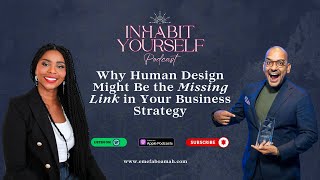
In this episode, host Emefa Boamah interviews Human Design expert Masrur Huq to explore how the five Human Design types (Manifestor, Generator, Manifesting Generator, Projector, Reflector) and their decision‑making authorities (Sacral, Emotional, Splenic, Heart/Ego, Mental, Self‑Projected) manifest in personal life and business contexts. They break down each type with vivid analogies – a Manifestor as a Formula One driver or ship captain, Generators as energizer bunnies or master gardeners, Manifesting Generators as Swiss‑army‑knives or chefs handling multiple dishes, Projectors as GPS systems or luxury‑brand designers, and Reflectors as a restaurant’s ambience‑curator or immune system. Pain points for each type (e.g., exhaustion for Manifesting Generators, invisibility for Projectors, resistance for Manifestors, decision‑making lag for Reflectors) are discussed, along with how gender, socioeconomic status, and cultural conditioning affect the experience of each type. The hosts share personal stories of how discovering their own designs (Emefa as a Protector/Projector, Masrur as a Manifesting Generator) transformed their workflows, client work, and team building, including the use of AI assistants and virtual‑assistant staffing. They explain how Human Design informs branding, marketing, and operational strategies, and they promote an upcoming live workshop – “Decode Your Human Design Business Blueprint” – that will help participants identify misalignments, pause‑pivot‑merge, and walk away with a personalized actionable plan. The episode concludes with reflections on “inhabiting yourself” through the lens of Human Design.
Chapters
Hello and welcome to the Inhabit Yourself podcast. Here in this podcast, we're having conversations with people like you who are doing and being big things in the world. We're having conversations that will make you say, ah, that sounds like me. We talk about everything from building a life and a business in alignment with who you are, to how to create structures and systems that will support you in sustaining that life. So if you found yourself here, welcome, tune in and enjoy the show.
How they're making their decisions, but one of their biggest pain points is like, I'm exhausted, but I can't stop. Manifesting generators, as you mentioned, yeah, multi-passionate. Also gut responses, but they have the ability to kind of do it through a a bunch of different interests. And, and that's kind of the fun part. Uh, if you can align yourself that way and, you know, I'll talk a little bit more about how that kind of shifted what questions I was asking myself. But one of the biggest pain points there is, um, I feel scattered and I can't focus.
Mm-hmm.
Um, projectors, mm-hmm. Natural guides, which makes sense.
Yes.
Makes sense. Um, thriving when invited to share their insights rather than pushing or self-promoting. Um, but one of the pain points there is you feel in invisible like unappreciated to some degree. And manifestors are like natural initiators. They're, they're key with being the information to others and reducing like the resistance to plans happening. But one of their biggest pain points is people always resist my ideas. And then a very small population is reflectors. They're kind of like the mirrors. And they take time making major decisions, but it's one of their biggest pain points is people just don't know who they are. They don't really know who I am is kind of the way they feel.
I like how you describe that. And for context too, so generators who are the energizer bunnies, make up 37% of the population, and the world is built around generators. That's why people like people who work regular 9 to 5 are fantastic at that. Manifestors make up 33— manifesting generators make up 33% of the population, which they are a combination of the generators and the manifestors. So they can conceive an idea and they can execute it, as you put it, 80%. And then they need someone to do that 20% to take it home for them. The projectors are the people that can zoom out and see. So if you think of like a business context, they're the managers, right? They can zoom out, see what's happening, and create efficient systems to make it work. But just like a manager, if the individual contributor doesn't come to you to ask for help and you insert yourself into the situation, there's a lot of resistance, right? Because you're not invited to ask for opinions, then you're micromanaging me. And that's when people are upset. And then the manifestors are the people that can be like, okay, I'm looking at what's happening. How can I actually help you make it So if they have an idea and they don't inform, that's where their resistance, their pinpoint comes in. Because like, why are people resistant to my ideas? Because I can see it. And then the reflectors, I describe them as the people that are like, I'm just here watching.
Yep.
Because they have no defined centers and they're just absorbing everyone's energy.
And I think that's like a mood ring.
Yes.
It changes based on the temperature around it, but they're actually really good thermostats. So if they're feeling some sort of way, you can, you know, that there might be a problem.
Yes. Yeah. And they have a good way of— in their name, they have a good way of showing it to you if they're invited into it.
And so part of that is like the decision-making and how all of these different types are making decisions. So I mentioned earlier about like kind of gut yeses and nos. So even just the other day, I felt overwhelmed, but I really like took a step back and understood like, okay, out of all these things, what's the immediate, uh-huh, let's do it, or, uh. And that's as simple as I needed to make it to be able to move forward on each one of those things. So that's called a, it's a sacral authority. So it's coming from the gut. We got emotional, splenic, heart and ego, and then self-projected, and then mental. And so that was for the gut yeses and nos. Emotional authority, you get a little bit more of, it's kind of like checking the weather for a picnic. You need to see the full forecast and not just like right now, but you go, you have to kind of honor these emotional waves and kind of go through the entire, you never decide at the peaks or the valleys, you're kind of running through the entire system. You want to talk about splenic?
I do, because I'm a spleen protector. Spleen is— you either know immediately or you don't. It's when someone says like their intuition— spleen is connected to the intuition, right? So it's like sometimes you get an idea to do something and it hits you and it doesn't make sense initially. I think a lot of the, um, a lot of the challenge comes in when people want it to make sense before they move. Right. So splenic is like, okay, gut. I like this. I don't like this. Do this. Don't do that. And then we run into the challenge where they think about it and then it doesn't make sense. And then the idea falls on the wayside and then we're like, why didn't we do this thing?
Yeah. It's like a— splenic is like a, like a Spidey sense.
It is. It is. Story of my life.
Because you kind of just immediately know. It's just natural to catch it that way. I feel like you're— you like the heart and ego authority as well.
Yeah, because people have a connotation about ego as this evil thing, because I think that's like the real meaning of words and the connotation of them, right? Your ego is not evil. It's really just there to like inform you of like how big you can get and how small you can get. So there's a communication between the heart and the ego part. I think that's like a beautiful back to the mindset and the spiritual, the emotional. It's like, how are you checking between your mind, right? Because your mind has the stories. That's where your ego lives, and your heart, but cycling between those two.
And I talk about the peacekeeper's journey for when we're talking about ego a lot. And you're right, it's, it's kind of the championship athlete. What are they— they already know what they're willing to what they want and what they're willing to do to get there. And so they let that ride and let that run with it. So it's actually really interesting because some people don't make decisions that way.
No, no, no, they don't.
Well, and it's, and it's, it's interesting to see when you see all these different types of people and you start asking how they're able to do it. They do it so naturally. But that's kind of, you know, whether they've done human design or not, they've tapped into— they tapped into it either which way. Yeah, I use human design, kind of just give you that vocabulary and kind of give you those words and give you an ability to do the pattern recognition on your own.
The power of language. I hear this in my clients all the time when they do something unconsciously, something they're really good at, and then they see someone struggling with it and doesn't make sense to them why this person is struggling with this seemingly easy thing. And then they get Human Design, they're like, oh, again, this phrase, it makes sense. I can explain myself to myself. I can explain why my decisions make sense. And it also gives them permission, really, because, yeah, like, projectors need a lot of sleep. Reflectors need— we need naps. Reflectors need 28 days to make a decision. And if you think about it in the context of the world and how we move so fast, especially as a business owner or an employee, it's like, what do you mean by I need 28 days? It's a lunar cycle. It doesn't have to be that, but it gives them permission to be like, I need time. It doesn't have to be 28 calendar days, but it's like, okay, just take a step back, really, really cycle this before you make a decision, right? And in manifesting generators, when people are like, why are you working on a million things at the same time? Because I can.
Well, and it's not because you can, it's just you're just wired that way.
I was going to say that, like, you're literally built to do it.
You're built to do it. And you know, I just, I was, um, I have a client that's a CEO, and she's like, I didn't know that there was other ways of making decisions. I just figured that this is kind of just the way to do it. I didn't know that there was another way.
I'm like, oh, I didn't know that was another way of making decisions.
Yeah. And I'm like, oh, I didn't— that's a baseline thing.
Yeah. I really like that. I think I'm going to take that with me.
Well, and, you know, it's you have to be able to use the right tool for the job. Like, and so if you don't know what tools you're given or what you have, then you're hammering like screws, right?
Like when you get— yeah.
And it'll work for nails, but it won't work for screws.
Screws.
Yeah. Just makes sense. You just have to go to Home Depot and buy a drill bit, which that's part of like, you know, kind of understanding your team and how you're able to build out the people that you need around you to kind of fulfill some of those aspects. For example, for me, yeah, I blatantly know that I'm 80/20. I can get a lot of the 80% knocked out, but there's a 20% gap that I know I need to build a team off of.
Which brings me to— we've talked a bit about what human design is like in the general context, their pain points, how they make decisions. Let's make it land for people in the business context and then we can talk about our experiences, right? But you had a few analogies that I absolutely love. So I'm going to have you share the analogies and then I'll add to my, my part to it a little bit of like I'll do my projector thing.
Well, and so there's, there's two different contexts that I want to make sure I address because it's not necessarily just business. And I think if we take a context of professional, because You know, if I'm a W-2 employee, why would it matter to me? Or how would that affect my life versus if I'm a small business owner or an entrepreneur? Totally set, totally different game altogether. So let's take manifestors, for example, as a W-2 or an employee, you're like a, you're like a Formula One driver. If you get an open track, you can go ahead and break records. Like that's, that's your jam. But if you put them in stop and go traffic, you're going to, you're going to make them go crazy. Like that's, that's just natural. So you have to align their projects or their tasks or their, you know, deadlines accordingly so that way they have that open track and be able to kind of pursue that concept. And at the same note, as an entrepreneur, I consider it like more of a ship captain. So you're kind of setting the course and then navigating the storms accordingly. But you need to be able to make sure that the crew stays informed and involved because otherwise you're going to have to mute me.
That part.
So totally different context and totally different use cases. But that's how you can just, just a manifestor in general. Those are the two ways that that kind of show up professionally.
So let me repeat that. So manifestors in the context of a W-2 is tell me it's like a Formula One driver, like you said, tell me what I'm supposed to do or show me what the plan is and then I'll run with it.
Give us an open track.
Right? And then just let them go. Don't micromanage them. And then as a business owner or an entrepreneur, they set the course like the captain, and then they navigate the storms. But they have to tell the crew and the people on the ship what's happening and not just driving. The people in the back are like, what are you doing?
Right?
Okay, I like that. Okay, that's manifestors.
Okay, uh, generators, um, as employees, they're like, uh, they're like a craftsman's favorite tool. So if you, if you put them in the right hands, they can do the right work and it never breaks down. They could just, they could just keep trucking. And as a W-2 or as an entrepreneur, they're kind of like a master gardener. And I talked about this before, gardener versus carpenter. So it's really, it's interesting to see that as a generator, as an employee is more of the carpenter type, but as a generator in a business, you're more of the, the gardener. Gardener type. So you're, you're nurturing, you're cultivating, you're, you're, you have patience, you have care, and you're creating something that feeds, um, uh, many people. And so it's a totally different context, but even the same type of person. Mm.
So let's, for a generator, because they have a lot of energy as an employee or someone that works in an organization, if you give them assignments and tell them what to do, they'll do it because they have countless, like limitless amount of energy. I mean, it's limited, but their energy. They have a lot of energy, so they can go without burning down, without breaking down. They do have to take time though, right? Because they, they have to respond.
And so it's not— yeah, and so it's treating them well. So you still have to treat them well, but they'll stay loyal and they'll work their heart out.
It's like worker bees. Yeah. Okay.
Serving the queen bee.
Okay. And then as their own employees, they— the— as a gardener, they are able to work on multiple things, and that Tends to feed people because they have the consistent energy to keep doing that.
Mm-hmm.
Okay.
And they, they kind of craft their, they, they perfect their craft over time. Mm-hmm. Um, and being able to do it that way allows them to kind of build more of a loyal following behind them accordingly.
Mm-hmm. And then I, I've heard this concept of how they're like rechargeable batteries as well. Yeah.
Like they just, well, and you gotta plug 'em into the right socket at that part.
Yeah. Like you can't use a, A UK plug into a US.
It just, it just wouldn't work. Yep.
There we go. I always think of like generators, just like, but like batteries, because energized bunnies, right? Because they say crowd is defined so they can recharge if they give the right amount of time. And if something doesn't feel right and they don't respond, then their not-self theme is frustration because they get frustrated very early. And they also looking like, why aren't you keeping up? Like, Yeah, we got it. Let's go.
Let's go. And that's kind of, it leads into the manifesting generator energy. Cause that's, it's almost overpowering to some degree.
Mm-hmm.
To some people as far as the energy that they can, that they can bring because a manifesting generator, they're as an employee, uh, they're a Swiss Army knife. Mm-hmm. They can, they can kind of cross paths in multiple functions and kind of do all these little things all over the place and kind of fix all these little things. Mm-hmm. Uh, and so they can, they can kind of switch roles without necessarily switching tools because they're the same embodiment.
Switch roles without switching tools. Yeah, that's a good one.
And so as an entrepreneur and a business owner, you know, I consider it like venture capitalists is kind of one of the, one of the considerations that I think is best for manifesting generators because you have to look at the whole, the whole deal spread all the way in multiple industries or whatever the case. Yeah, there are some ventures that venture capitals that specifically focus on an industry, but if you're looking at it holistically, you kind of have to know a little bit about everything, everything, market conditions, like everything. And so that's kind of, you know, also like a chef, you, you just, you're kind of making the 10 dishes at the same time. You can run that, you can do that. It's natural to you. It's, your mind can handle it.
And in the, in both situations, right? Like in the, both the chef condition and the, Swiss Army knife. It's just the Swiss Army knife is just like one, it's contained in one, but you pull out which tool you need for what.
Yeah, you don't have to necessarily switch the tool itself.
Yeah, I like that. And then the chef is like, you have all these ingredients and it's really how you put it together into your 80/20 rule, which may not apply for every single person, right? Like they can make the plate, but they don't necessarily have to serve it. Someone else can take it and serve it to the people, or someone else can help them put it together, but they know how to put the ingredients together.
Oh, got it. Yeah. They're not necessarily cutting, they're not peeling the vegetables and so on and so forth. Yeah.
Right. That's probably what the generator would do because they like give me instructions and tell me where to do, and then I'll do it.
Let's let, let's let it ride.
I love that. Yep. Okay.
Uh, moving into projectors as employees, you're looking like it's more like a, like a personal trainer. You kind of, they're able to see exactly what you need to do to improve. Mm-hmm. Um, and they can, they can only help, but only if you're willing to listen.
I think this is why projectors make like really fantastic coaches, because— and I think in the, in the business context, in the business, um, blueprint, because I got mine— they're the managers, right? Like I said earlier, they're the people that— they're the guides. And I can speak to this because they If you don't invite me to share something, I won't. Because so my strategy is, is to wait for invitation. And my not-self theme is bitterness. So, and even this works in like, I'll speak from the context of a small business owner, not small business owner, and then I'll speak in the context when I was an employee. I did not know that I was an employee. I didn't know that I was a projector. So I was running as a generator. Like, I was up 6 in the morning running a space, doing all these different facets. I would get home and I'd be so exhausted. I'm like, why do I feel I was so tired. It wasn't only because I was moving so fast, but it was also because I was absorbing other people's energy. That's part of what happens when you're a projector, right? So I, I think of projectors as like a GPS system.
Yep.
We can see what's happening and we can tell you, go here, go here. But if you don't turn the GPS on and put an address in it, I can't take you anywhere.
And, and even above and beyond that, you're catching traffic, you're catching construction. Mm-hmm. So you're like, you're a, you're like almost an efficiency expert. Cause you're able to kind of spot the waste and bottlenecks and kind of adjust accordingly. 100%.
Yeah. 100%. But you have to turn the GPS on and put a direction in.
Yep. Otherwise you're not going anywhere. Where am I going?
Yep. Okay.
And then as a business owner, I consider it more like a, like a luxury brand.
Yeah.
So, so you're not competing on price. It's more about the exclusivity and expertise. So you're kind of bringing people into that.
So if we go back to the chef analogy, because I like analogies and I want to make this land for people, I'm the Michelin 5-star restaurant. I— you choose to come to me and then I make you a meal. I'm not I'm not going to mention a restaurant. So they're like, why is it coming for me? But I'm not. I'm not for everyone. Projectors are not for everyone. And once you choose and invite them in, you get the best of them because they can take you deep into a customized experience.
Well, and imagine how that adjusts your brand, your marketing, your messaging, all of the things. You know, we were just talking about how the, the website for Honda versus the website for Aston Martin, the call to actions are totally different. So it's Honda is shop now because they're talking to buyers that want to buy quickly. But Aston Martin's call to action is explore. Totally different.
Yeah, I'm going to take that with me. I'm about to change all my CTAs on my website. No, for real though. Well, yeah, we'll talk when we get to how that has actually changed my branding. Because I talk a little bit with Ryan about this a bit in a previous podcast episode about just how I got here and how that influences my business. Because something shifts when you create visibility for people to invite you instead of calling them to come to you.
Yeah. And you don't have to fight against the grain, especially as a business owner. Like, this is your baby, so make it more about you and how it feels natural to you.
Yeah. And some people don't wanna have kids, so you might show them a really cool kid, beautiful baby, and just like, meh. You're like, but this is my child. Like, I just don't like kids. It's nothing personal. Yeah.
100%.
You just move on. Mm-hmm.
Um, and then the last is reflectors. Um, and, and reflectors are actually very, very interesting cuz they're only like what, 1% of the population?
Yeah.
So they're, they're very rare and they're the most recently discovered too. Mm-hmm.
Yeah.
And I, they're like, um, I, I've, it's like a, almost like an HR. I, I call it, um, like an immune system. Like they're as an employee, they're a company's immune system. So when they're struggling, there's something toxic in the environment.
Mm-hmm.
And so you can, you can pick that out automatically. So you can pick out the one person if they're struggling and they're a reflector, we gotta fix some things.
Mm-hmm.
Um, and so they become more of like a barometer and kind of in, uh, again, like that mirror of what's happening around them. Hmm.
Oof, I felt that. Okay. And then as a business owner?
As a business owner, they're a master host. So they create the perfect atmosphere. They create the perfect environment where magical things happen between all of their guests, that they're the curator of that experience.
Hmm.
So back to the Chef analogy, they open the restaurant, they run the restaurant, invite people in, and that means they're picking their, their understanding what the furniture is, what the lighting is, what the music should be playing, how the atmosphere is laid out. You know, all of those things are all of that consideration because they have to, they have to create and perfect that environment. Hmm.
Okay. So we have 5 types and this is, I'm going to, this is what I'm going to reflect what I'm hearing in terms of because we use the show analogy for like 3 of them. So we have a restaurant, right? And there are 5 roles in the restaurant. We talk about the manifestor. So the manifestor is probably the person that's going to be like, hey, what's the menu, right? What is the menu that we're designing? How do we want this to look, right? And then we have— so their strategy is to inform before they act. So they're going to say, hey, these are the things that I see, the menu. This is what I think would make sense for us to do. Right. Is that accurate?
Yeah. So they need autonomy and communication. The protocols is kind of their main— Yep.
Beautiful. And then we have the manifesting generator. We have the generator who is probably likely to like, okay, this is the— sorry, this is the ingredients that we have. I'm going to cut them, put this here, put this here, put this here, because you put them to work.
I would almost say If like a better, better version to look at that would be like if they are people, they're people people. If they're a people person, then they would be the waitstaff. Because if you give them, if you give them work that they love, then they can do that all day long.
So they could be both of the people that prepare and because they're responding to something instead of initiating it. So that's their strategy. Okay. Beautiful. And then you have the manifesting generators, who are the people that we— that's where we started, that they see this entire thing, the whole menu, and they can actually think of the menu and prepare the meal to make everyone see that, okay, this is 10 dishes. While other people like, how are you preparing 10 dishes at the same time? They're like, I've got this, just I'll call you if I need you.
And that's where they thrive because they, they need that variety. But they also— you mentioned permission. They need the permission to multitask. So it's— everyone might see like, how are you doing it? But they just needed the permission to do it and they can rock it out, right?
So then they respond, I've got this. And then when it's done, they inform, come get this. Okay. And then the projector is the, the luxury restaurant that is actually housing these, like the, the brand itself is because the projector has designed it because they've been able to see, okay, this is where we need a manifesting generator, this is where we need a generator, this is where— but they're able to see the big picture and then put— invite people into their roles.
Yep.
Okay. And then the reflectors are the ones that create the ambience for the people to come into.
Yep.
Okay.
100%. 100%. So now there's a whole different dichotomy of like even just the employees and how, how it works in their world and also entrepreneurs and how they work in their world as well.
Okay, I like that. That is actually very helpful to land. I hope it is for the people that are listening as well.
Yeah. And I mean, there's a ton of other considerations to make. So to kind of address this in a quick conversation, it's kind of tough. So there's age and life stages that you're kind of considering. There's gender, cultural conditioning. There's the nature versus nurture concept. There's You know, one of the things that you and I talked about was like, like the people being in specific socioeconomic status, like if they're in survival mode, they have bills to pay. Yeah. Like, why am I gonna look at human design for, right?
Yes.
Um, and so there's all these other conditions that we have to kind of factor in. So it's hard to kind of get into on a quick conversation. Yeah. But yeah, it, it, those are all different ways to how they show up.
Yeah.
In our world and how we can kind of Um, yeah, yeah.
And I want to speak to this because I see it in my clients, right? So while I work with women a lot, when a woman is a manifesting generator, she's usually told that she's doing too much. When a man is a manifesting generator, it makes sense. They're like, oh, that makes sense. When a man is a projector who's needing more time to rest and make decisions, they're like, why are you being lazy? You should be moving around because they expect it to be on all the time. And I'm yet to meet a man who's a reflector, because I can't even imagine what that must be like for him to be like, have all open centers and be living in a world that is run by mostly manifesting generators and generators. I think that's really hard. So that even from the view of like gender, that's huge. And then we think about nature versus nurture, where you're born, like what you're born into. Do you have access to resources? How does that determine how you go about your life. If you're thinking of putting food on the table and you're a projector, you don't have time to take a nap. You don't have time. You're like, yo, I have to take care of my family. And if that means burning myself to the ground, it is what it is. So I like the fact that we're bringing into consideration that what we're making, we're talking about like general, and there are so many nuances to consider that I want people, especially the people that are listening, that what we're saying is not prescriptive. We're really just like describing the various or the main ways that it shows up.
I consider pattern recognition— that's true— just, just that, just that baseline alone is just the ability to have some pattern recognition and look at experiences in your own life and say, okay, what felt right to me, what didn't, how and why. We have a little bit more context on how to answer those questions because, I mean, yeah, imagine a projector being raised in a family of generators and they're having to force energy that they don't have. And that's tough, you know? And also, like, what if, like, a manifestor is living a life with very strict rules? Then they're learning to suppress a lot of their natural inhibitions at that point.
Yeah, that's actually really, really important to know. Thank you for bringing that to the conversation.
It's, it's wild and it's enlightening. And again, it's not prescriptive. But if it can help you just reflect and know that you can use these kinds of considerations to then design, that's the point.
That's the point. That's the reason we're talking about this. Okay. So, so far we've covered what human design is, how it shows up in like a personal life. We use the chef reference to land for the different roles that we play in the world to make it a whole experience. And now I want to draw it into because they say stories, facts tell, stories sell. I heard this from my partner. I'm like, that's so cool. So I want to bring it to like our personal experience, like what we've seen in our lives work, what we've seen in our clients, um, and experience, 'cause we both use this very extensively. Um, and then have a little bit of conversation around those.
So it's interesting because we're, we're, we're opposites. So in my head I was like, okay, As a projector, what's it like being in a world full of hustle culture?
How much time do we have? Oh man, I think I spoke a little bit to it before, so I will give this answer again. I'm bringing Ryan into the conversation because we talked about this. So when I was running in the world as a— in a full of culture. So I don't know if you know that there was a name change. I had a near-death experience and there was a name change. Jocelyn was like hustling in the world because that's what I knew. Jocelyn was like climbing the corporate ladder. Jocelyn was everywhere. Jocelyn was like at all the events, all the restaurants. She would work a full week, go out on Thursday, Friday, have brunch on Sunday, show up at work ready to go until she crashed. And then I began to learn. I was like, oh, this doesn't— that's manifestor energy right there. I'm like, I can do all the and do it well. And I was also— I say this, my mom knows this— that I feel like I was trained and not raised. So I had to be first in everything that I did. And I was like in class, if I got— if I came home and I was like second in spelling bees, like, what happened? Did you not read? So I was trained to be the best at everything that I did. And then when I started my business, I attributed to a lot of like spiritual growth that happened. But when I remember the very first day someone told me I was a projector, It was in, I think it was like 2022, 2021, 2022. And I read, that was the first time I heard of human design. I remember reading it and sobbing because I was like, oh my gosh, this makes so much sense, right? But it would take me a very, very long time to implement that in my business. Back to your point about socioeconomic status, like when you were almost homeless, you're not thinking about how do I optimize my human design? You're like, listen, if I'm going to take 10 projects at this amount of price, I'm not going to go to a Michelin star when I need food, when I don't have— I'm going to go to— I'm going to go to a place that I'm not going to mention and pay $1.50 for a meal because that's what I can afford.
Yeah. And it's in that survival mode. It's like, it's like using a credit card for everything. It'll get you by right now, but it's going to catch— it's going to catch up to you.
Very true. And it did. Which leads me to ask you— to ask you, so you're a manifesting generator, right? When you learned about waiting to respond, because I think a lot of people, um, and, um, waiting to inform— I think a lot of people think manifesting generators can do whatever they want whenever they want and they're fine. So when you realize that you had to inform people, right, what was that like for you?
So it's Going back to pattern recognition, I used to work at AT&T retail sales and I was a great salesperson and I can handle multiple clients, no problem. But one of the major considerations of why I knew it worked was because I was in a store and the door was open and so people were walking in. But as soon as I started my real estate business and I had to go door knocking and cold calling, there was a lot of friction. There was a lot of resistance. I'm like, why does it feel weird for me? I couldn't figure it out. So now it's totally different in the realm of, I know that initiation phase is not my cup of tea per se. And so I will put in a team or an automation or whatever the case. So that way when it shows up on my inbox, I'm just responding and informing. Totally game. Totally.
Yeah.
Oh, because I can handle that once it's here. I just can't do the initiation. That's not my— I don't like that.
We both can't do initiation. I remember my, my, one of my mentors that I'm working with in a program called Constantly Converting by Design. So she uses— she teaches you how to use your human design to create content. And she said to me that if you consider your sales funnel as an invitation, right, as a projector, how different would that feel? So if you put systems in place where people are already coming to you and you're not chasing, it's a completely different ballgame. And I'm having an aha moment that while we may be on like seemingly different ends of the spectrum, our commonality is that we don't initiate because we have big energy. When we do initiate, some people just like withdraw from it because it's too much. So it's like, We're taking different ways of like just asking people to come to us and then we can do what we do.
And it's super interesting. So even when networking, I've learned that, I've learned that it's easier for me to ask questions through the, through the networking. Um, because as soon as someone is asking for my feedback and if I have very little information, it's intense.
Yeah. Yeah, that's the word. I think if people ask me, what does Major do? Or who is he? I'm like, he's intense. And no one knows what he does.
It's intense. And so it's, you know, recognizing that even just upfront, even as simple as networking, those are little tweaks and little considerations that again, once I have enough information, I can respond and inform.
No problem. I like that. So how do you, in your workflows, what has changed in your work, your workflow based on that as an entrepreneur? Because for the workshop that we're going to host, we're hoping to get people that actually are W-2 employees and people that are running their businesses. So how is that? How is your understanding of human design influenced your workflow?
A ton. And it's somewhat accidental and it worked out awesome.
This is, this is his usual frame. I just did a thing and it worked out.
If, if you ask any of my friends, they'll just be like, he got away with it again. He just got away with it. That's just how it happens.
Perfect.
Um, so it was cool because, um, COVID was somewhat of a blessing for me. Mm-hmm. In the fact that it gave me some space to kind of organize all my context and all the things that I was doing. So adding a little bit of context there. In 2018, I got married to a woman in France.
She's gorgeous, by the way.
She is.
She really is.
I got away with it.
Yeah.
Two weeks later, my father passed away. My mom is a dentist and my father used to manage the dental practice. And so my mom's in California, I'm in Phoenix, and my wife is in France. And so I'm fighting multiple wars at this point. And I then had to run a dental practice overnight. So COVID actually gave me some space to organize all of the things that I was doing. And then coming out of COVID I had a friend that was running a virtual assistant staffing agency. And so she saw how organized I got. And to that point was I was naturally doing a lot. And this was before I got into human design per se. So I was naturally doing a lot and I didn't necessarily know how I was I was doing it, but I was and it was, it was fine. But she had this virtual assistant staffing agency and she's like, hey, can you do this organization for me? And I'm like, all right, cool. So I ended up— we now have— she's one of the partners. We have the virtual assistant staffing agency, but that turned to the point of like the 80/20 rule for me. So I can get the 80%. How do I, how do I figure out How to do the rest of the 20? How, what teams do I need to build? What systems do I need to build? What automations do I need to have for that last 20%? Because I want to do 100 different things.
Yep.
And I need to know how to do 100 different things, not how to do, you know, there was Jarvis. I'm shouting you out, Jarvis. I don't know. It was funny. So I met him at an event a few years back and literally 99% of the population would be like, focus on one thing. Focus on one thing. And when I was talking to Jarvis, he's like, nah, man, do more. How do I get you— how do I get you to do more? Like, that— you're not doing enough, right? I'm like, what are you talking about, man? And so he, he's the morning hero, um, and so he, he gave— I think I told you about the, the heroes, the Heroes Day.
Yeah.
Um, and so he laid it out, and I'm like, oh, that, that makes sense. And like, I just needed to kind of just create more of a system on how to do more versus doing just the one thing. And so I started asking different questions, and that's what kind of started unlocking for me.
I keep getting this image and not any— like, different types of dogs, right, require different types of, like, walks because they have different types of energy, right? So if you take, like, I don't know, I don't know why this is coming, like, a a golden retriever or German shepherd, they require a lot of movement. I see manifesting generators as like if you take them on a short walk and you don't give them the energy to— the opportunity to expend a lot of their energy, you're going to bring them back home and they're going to be antsy because they still have energy, right? So it's like, how do you know how to run them so they make sure that they are— they get the exercise, the energy, and things that they need and are not like stuck keeping the energy And then it's like a nervous thing.
And so that's the point of the dogs. The people that are listening and they're saying that they're not spiritual.
Yes.
What would you say to them?
Oh my gosh. Okay. People who are listening to this podcast know that part of the reason why I started Inhabit Yourself is to bridge that gap, right, between spirituality and strategy, between body and business, between practicality and magic, right? And for the people who are saying they're not spiritual, I think I would tell them that take the test. If you know your date of birth, you know your time of birth, you know your location of birth, take the test. And if that doesn't ring true for you, come back and, come back and talk to me. But I also know your time, right? You have to know your time of birth, which is the, the only limiting thing.
Yeah, that's the hardest.
That's the hardest because not a lot of people— which is another one of considerations to add into how Human Design works, right? Like, we talk about age, gender, all the things, but if people don't know their birth time, which is hard, I want to give them full permission to listen and see what might feel true for them and then identify with that and work with it. Um, but in the beginning, I described Human Design as a complex system that comes from different facets, like different— we have the I Ching, we have the Kabbalah, we have— but it's also based modern science. It's based on the time that we put— is based on both astrology and there's a scientific part to it. There's like quantum physics that goes into it. So it's not just, um, I have nothing against— right, it's not like I'm, I'm— yeah, it is NASA-backed actually. It's not just astrology. I love astrology, I have nothing against it, but there we go. But it works for you, it works for me, right? So it's not it's more comprehensive than spiritual. And I bring it back to why we're doing the business, the Decode Your Human Design Business Blueprint as well, because this actually works in helping you figure out how to run your life and your business. It's not all woo-woo, it's not all feeling, it's not all— but it's like practical, proven strategies why it works.
When's the first time you felt relief? From, from kind of operating by your design?
I think the very first day I heard it, and I also just relaunched my website, and I had someone reach out to me. I talked to someone actually 2 days ago, and she said to me— I asked her, what do you think I do? And she told me spot on what she thinks I do. And I was like, wow, that is so— how did you know that? And she was like, well, I went to your website, it made sense. I went to your Instagram, and your Instagram matches your website. And that cohesion for me was like, oh, and she's like, I know exactly what you do. I know how much you cost. I know when I walk to you, I know when I can. And that, I remember that very, like, very, very fully in my body. I think I cried on the call after the call because I was like, ah, this is what it means to work as a projector. It's like making the, making it known that this is who I am, this is what I stand for. If you feel called, come through the doors. But I'm not going to stand on the side and hold a sign and say, oh, come into my restaurant. Right now, like, either come or you don't.
Right.
That, that most recently was when I felt relief. I was like, now I can lean on my systems. I can do the things that I love, which is guide people that are already in my walls. Right.
Which we were talking about. We were talking about embodiment and AI.
Oh my gosh, that's a whole other conversation. I have— for those who don't know, this is excitement— I have a whole AI team that I've built on Claude and ChatGPT, and they do the same thing. They give me relief because when I have a client session, I can dump it in there. It comes out. I also just hired an assistant. It comes in and I just give it to them to go do what they do. My assistant is a generator. She's like, tell me what you want me to do. Boom. And I'll do it. And I can step in and out of a business. And that kind of relief as a business owner, I would not arrived at that if I didn't know that I was a protector.
And that, that's, it, it's so interesting because to that point is you're building the team based on kind of what, what suits you and what, what's required at that point. And that's the same consideration, you know, even on the, on the consulting and private equity side when we're hiring and we're, where I'm coaching or consulting on that front, we're looking at the different types of people and not just human design per se. There's a bunch of other tests. Tests or personality tests out there that's available, but you're, you're kind of doing it by design and not just kind of willy-nilly.
Yeah. Which brings me to a question that I want to ask you. You asked, you asked me the question about relief. For someone who's listening and they're like, okay, you guys have shared a lot about how you work with your design. I would like to hear a story that you have from a client about how this has worked for them. And what were the things that she noticed?
It's interesting. So even recently I had a branding client and we were actually— we did their, their brand strategy, but then we did their human design alongside their brand strategy. And when we went through their human design, how do you— how'd you know that? That sounds exactly like me. And above and beyond that, Part of Human Design too has the, the solar returns and the lunar returns. And so those are solar is what you're from your birthday for that full year. And then lunar returns are monthly. And so we were actually looking at it and it turns out that the month that we were doing his brand strategy was the month that he was built to do the education. He was built to do all the informing, and the month thereafter is all the responding. And so he was built to do all of the groundwork that month. And he was meant to do all the responding to all of that groundwork the next month. And so we're like, oh, so there we go. That makes sense right there. We're right on schedule. It's fine. And so there's specific channels to be looking at or focusing on or kind of just having on the top of your mind of what to consider. But that's exactly— it gave him almost a relief to that degree of like, oh, okay, like this doesn't— it's like I was wondering why it didn't feel weird because it was his first business that he was building on his own. And so it didn't feel weird to that degree. It felt a little bit more natural just because it was kind of aligning with a lot of these things. And he felt it goes back to permission. Now that he's reading these these patterns that he can have some words to kind of relate to, he felt the permission of being able to kind of pull all and go all in on it.
One, I love the fact that this is a male because it goes to what we were talking about. Because to tell a male that in this lunar cycle, which can be woo-woo, or the solar return, like, you get to do— this is what you're built to do. Because men are like, no, I just want to do all the things, right? So one, I want to highlight and appreciate that and his willingness to actually listen. And two, I want to ground it in the fact you asked me a question, like, for the people that are listening that think that this is spiritual, how different is that? Because you just gave an example of, like, branding. How do you educate, inform, and then how do you respond in living in alignment with a male?
And the branding too was like luxury, you know, like, it's, it's, it's, it's just strategy. It is all it is. And, you know, that's kind of That's, that started with me in real estate the same way. I, I started in flipping, wholesaling, rentals, Airbnbs. I did the gambit of strategies and I was always looking for a different strategy that felt more aligned. And once that hit, I'm like, cool, I can go all in. And now in the private equity side, that's all I do is that one strategy because I felt the most aligned. But it's kind of doing the same thing for any of the businesses. It's kind of doing the same thing for just you as a human. There's a bunch of different things, whether whatever it's your morning rituals and routines or whatever the case, it's the habits. And if you do it by design, it just makes it easier.
Yeah. I love that. I was actually trying to remember a client of mine that I have who's like one of my most successful clients. I love her. I adore her. I would say her name, but I think— I don't know if she wants me to say her name, but she's a generator. And when we first started working together, she would get these bursts of energy. And when we paired her human design with my Rites of Passage program and her execution and seasonal— so she goes through these seasons where, like, the four seasons where she knows— it was actually very, very cool. To see her plan out her life seasonally because she used to think that she had to be doing the things all the time. So like summer, she spends a lot of time with her family, so she doesn't have time to sit in the morning and do her meditation and do her— because she just wants to be outside right now. Winter and fall, she's able to spend some time inside. And, and that— I remember the very moment we were like coaching and we built out her week and her month and her quarter. She was just like, just makes so much sense.
Yeah, this feels better.
It feels better.
It's like the, um, like the jars of the jar of time video.
Mm-hmm.
Uh, and if you put the big rocks first and then the pebbles and then the sand, yeah, you can, you can fill up the time jar.
What are you big? Yeah.
And so what, what are the priorities that you're putting in first?
Right.
And how do you wanna run it?
Right. Okay. Let's talk about the actual event we're putting up on August 5th. Oh yeah. Right. Let's talk a little bit about what it is, what people can expect, right? And then how we intend to ground people, why, why they should get the business blueprint to begin with.
So all the lead magnets out there and all the different PDFs and checklists and everything else, they're standardized. But this is like It's like 80. I think yours was like—
Yeah, mine was like 100.
I saw it and I was just like, it was like 100 pages of you.
Just me.
Just.
And like, which sounds a bit narcissistic, but.
But like, how do you get an entire book that's personalized to you to speak your language and how you need to show up in the world like that in and of itself is a major deal. But translating that, integrating that merging that into your normal day-to-day, into your life, into your business, into your work, whatever the case may be. That's kind of what we're there for, for the, for the Activation Lab, essentially.
Yeah.
Is to be able to talk you through what is, what are some of these patterns that we need to recognize? How do we kind of pause? How do we pivot? How do we merge?
Pause, pivot, merge. Okay. In addition to that, one of the things that you and I were talking about in the workshop is you're right, it makes sense for people to get a whole page, but translating that can be overwhelming. So I think when we were building this, part of our intention is to pick one thing that we— one thing that we're in misalignment with, and we're actually going to sit with a participant.
So just FYI, that's, that's the projector energy that I will give you Everything. And I think that was one of the— that was one of the things that, that was like magnetic to me about you. Because I'm like, I don't know how you pick one. Okay, fine. Just the one thing.
Okay. Because I think there's something about translating things for people to land. It's the embodiment part too. It's like, how do we move things from here into here? Right? So like, how do we— what do we see? I mean, what do we see? What do we hear? And how do we put it into our experience? How do we actually make it land so people can walk away with like, oh, this is the type that I am in human design. This is my strategy. This is one thing that I'm in misalignment with. What one shift can I make over the next week, the next month to bring me closer to alignment? And how does that show up in my, my business? How does that show up in my life? But that's the point. It's like, bring one thing. And if they're manifesting generators, like, I can do 2 or 3 things. That's beautiful. We're not going to limit it to one thing, but we're going to say, okay, this is yours. And that's the beauty of it too. Like, for my projector minds, it's like, how do we modify it to meet the needs of the people that are in the variety, the variety of people?
Because it's like, you know, how many people have paid to be in a workshop or a business course where, all you do is find out that the real problem was you being yourself.
I know.
Incorrectly. Like, wait, I wasn't—
I think some people might see the pricing and be like, this is expensive. But I— and I'm going to call some people out. You can see me. Maybe you can't see me. How much have you spent buying templates, signing up for a course, a 5-day course that you— some version of yourself thought, oh, check in every day and we'll do it. And you never do it? Or have you gone to an actual workshop where someone else is giving you their strategy for you to do something with?
Yeah, like, and then how many Gary Vee videos have you watched and you feel like you just want a smoothie and a nap? Like, wait, this doesn't— yeah, this— I'm like, that's just— it just isn't aligned.
It's not. So anyway, with all those, that's what we're doing at Bamboo. It's Tuesday, August 5th, 10 AM to 12 PM. We'll have 20 minutes of like actual activation because we're going to take you through Majerus manifesting generator energy. It's going to help you spot what the things are, how to execute it. I'll guide you, and one lucky person will get a live— I call them hot seat coaching— where we're going to walk them through if they're willing to raise their hands, and then we'll make it land for you and what it looks like. So the whole goal is you walk away with your personalized blueprint, which will be printed for you You walk away with one actionable step that you can take, or two or three, depending, over the next however long you decide to.
But just reading that, just reading even on a quick skim, even highlights and like headers, you're— there's going to be things that light up and trigger automatically. You're like, oh, oh, how did I not notice that? You know? And so I think, I think even on a quick skim, you'll find a lot of things that resonate. And kind of pull you towards a little bit more pattern recognition. But to your point, what are the exact things that we need to be doing to align ourselves?
Right. Okay. So this would be, like I said, 10 AM to 12 PM, August 5th. Information will be linked at the bottom here. Is there anything that I, we haven't addressed before we head out?
You can do the report without doing the activation lab.
However, Wouldn't you? Wouldn't you?
Wouldn't you want to hang out with us? Wouldn't you want to hang out with us and kind of figure out what it's saying? Because it's a lot. I think especially in the phases of life that we're being exposed to, some of this vocabulary and pattern recognition again hits us differently. To your point, some people have gone through entire careers and then realize that, why, like, why am I burning out? And they've also gone through entire careers and realized that they're not meant to be in a career. They're meant to be an entrepreneur or whatever the case. Like, so there's different ways of seeing a lot of these things. So I think the only other homework aside from the 3 questions, date and time of date of birth, time of birth, location of birth. The only other homework piece is come with an open mind to be able to kind of listen and kind of take this stuff in because it, I like, I thought it was rude the first time I read it. Like, oh yeah, hunting me out. Yeah. Like that definitely, that definitely sounds like, what do you, what do you mean?
I say that it's like being seen and called out at the same time. You're like, okay. Yeah.
And that's, I think that's the fun part because it's it's literally, it's like journaling, you know, the hardest questions. If you're able to ask yourself the hardest questions, that's when you get the true beauty of journaling. But knowing what questions to ask in the first place is actually really tough. And so this just gives you some of that, some of that mapping to be able to say, okay, great, if I feel this way, and this is my scenario or context, what are the questions I need to be asking in order to align myself accordingly?
Okay, beautiful. Yeah. Okay. I'm going to ask— I'll summarize what we've talked about to make it land for people. And then I always end my podcast with what does inhabiting yourself mean to you? This time I'm going to— I'm going to ask you through the context of your human design, right? Like what you've known. So I'll give you time to think about that and I'm going to summarize this. So we've talked about a lot of things. We talked about what Human Design is. We talked about the different types, the 5 types. So we have generators whose strategy is to respond. We have manifesting generators whose strategy is to respond and then inform. We have manifestors— well, we have projectors whose strategy is to wait for the invitation. We have manifestors whose strategy is to inform. And then we have the reflectors, whose strategy is to wait for one lunar cycle or 28 days or whatever that looks like for them. We've talked about those in the context of what a restaurant would be if we're running it, right? So the generators are the people that get the job done based on what lights them up. The manifesting generators are the people who can see the entire menu and be like, I can make 10 dishes at the same time., and I'm going to respond to you. But once I have it done, I'm going to inform you for you to take it and serve it. We have the projectors that are the people that run the luxury design. They can see the whole thing and be like, you do this, you do that, this is your role, what lights you up, then do this and do that. The manifestors are the people that can see the menu from a very high point and be like, okay, this is what we can use this for, right? If we give them brain to create that. And then the reflectors are the people that create the ambience for people to come there because they know what this person's favorite thing is, where to seat them, what they like, right? So we have that landed down. We talked about our own experiences running our businesses, as you being a manifesting generator, me being a protector. And we landed on this really unique thing that I didn't think about, which is that we don't initiate. We have different ways of, for, of like doing, living in alignment with our strategy. But one thing that we don't do is initiate, which leads to— so how do we create systems or people or pull people around us that will help us do the initiation and the invitation, and then we can step in and do our part, right? And then we talked about the event that we're co-hosting, which is Decoding Your Human Design Business Blueprint at Bamboo on Abber on Tuesday, August 5th, 2025. 10 AM to 12 PM, and we'll drop the registration link in the bottom. Is there anything that I was missing in that recap?
No, you caught the recap. I want to add, like, definitions of words make a lot of difference. For example, initiation. I wouldn't have done this workshop by myself. And it's not that you initiated that we should do it. It's that we were kind of just having a chat back and forth, and it turns out that we should to do it. And so that initiation wasn't necessarily like a cold call or, you know, anything like that. So there are different ways to look at what initiation really, really comes out to be if we're defining things accordingly. And so depending on the types of people that we're working with, those are different, those are different definitions.
I like that. Okay. So to the question, what does inhabiting yourself mean to you in the context of your human design?
When people ask me what I do, I get lit up because if you give me no context, I will tell you everything that I do, whether— and, and that's kind of the hard part is how do you do it? So if it's real estate specific versus sustainability specific versus branding versus marketing versus CRMs versus virtual assistants, whatever the case may be all the way across the board. I am kind of agnostic to it, which I love that, that, that actually part of that is made me more enthralled in a lot of the fundamentals and the first principles of things, which then allows me to be a lot more agnostic. So now I know what to look for and which is really rejuvenating because I like to be an extreme generalist.
The most manifesting generator thing I've ever heard. And that's—
but, but to your point, that's permission, right? Like that's— it allows for your passion of all of them and you don't feel pigeonholed anymore.
So to you, inhabiting yourself in the context of your human design is it gives you permission to do all the things that you want without the need to feel pigeonholed. Because you just know that that's how you're wired to live and be.
It's not even necessarily what you want. It's more about what feels right or what feels frictionless. And so, you know, it's like the flow state. Why do athletes get in a flow state and how do you get there? And so it's more about the permission to be in your flow.
Permission to be in your flow.
I love that because I don't know if I would have wanted or if I would have even known to want any of those things, you know, in the big picture of things. But I just kept being able to pull the thread.
Yeah. Okay.
Where can people find you? Masrurhuk.com. M-A-S-R-U-R-H-U-Q.
That's pretty much the same on all my socials, LinkedIn, Instagram, Hey, if you, if you type his name in and you don't see a man with his eyes open and his mouth open, then it's not him. You have the wrong person.
It's not my energy, like manifesting generator energy, whatever that definition looks like. You should see it in my picture, 100%.
Oh, thank you for taking the time to have this conversation with me. I'm really, really excited to host the workshop, the live activation, um, and I'm excited to see what what kind of people we bring into the room and what kind of magic we create together. Perfect. All right. Thank you again for joining us for this episode of the Inhabit Yourself podcast. All details and links will be in the show notes, and I look forward to seeing you at the next one. Until then, continue inhabiting yourself. Thank you for joining us for today's episode of the Inhabit Yourself podcast. If there was anything that landed for you, I would love to know in the comments. In the meantime, we'll drop all the links for the episodes. Please share, like, and comment so we can reach more people that need this episode. Thank you, and I'll see you on the next one.
More from Emefa
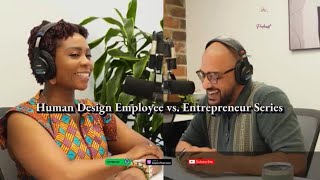
Human Design for Business: How All 5 Types Thrive as Employees vs Entrepreneurs (Complete Guide)