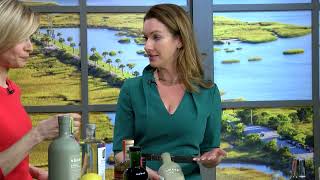
“Alternative Drinking” w/ Emily Heintz, founder of Séchey, Charleston’s popular no/low beverage shop
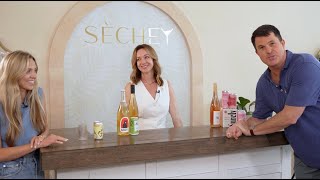
In this Champagne Problems podcast episode, host Robbie Shawl and co‑host Charlotte sit down with Emily Heintz, founder of the Charleston‑based alternative beverage shop Sashay (also called Séchey). Emily explains how her background in luxury retail led her to create a store dedicated to "alcohol flexibility" – offering non‑alcoholic, low‑alcohol, and functional drinks as genuine alternatives to traditional alcohol. She describes the store’s evolution from a 2021 launch to a fourth location, a pop‑up in New York, and a national partnership with Target that distributes curated brands online and in stores. The conversation covers the cultural shift making it socially acceptable to not drink, the wellness‑focused consumer demand, and the variety of products Sashay carries: de‑alcoholized wines, non‑alcoholic spirits, functional sodas with adaptogens and nootropics, Delta‑9 hemp‑derived THC, and other clean‑ingredient options. Emily details the curation process—tasting, brand alignment with the "drink less, live more" ethos, and education through tastings and "sessioning" (replacing a second alcoholic drink with a non‑alcoholic one). They discuss market trends, pricing challenges of de‑alcoholized wines, production methods (centrifuge, heating), and regulatory quirks. Looking ahead, Emily shares a billion‑dollar global scaling ambition, plans for a tasting bar, private‑label de‑alcoholized wines sold at Target, and the goal of making "sachet" a household verb. The episode blends personal anecdotes, entrepreneurial challenges, and optimism about the growing alternative‑drinking movement.
Chapters
Welcome to Champagne Problems Podcast. I am your host, Robbie Shawl. Join us as we explore mental and emotional well-being, physical optimization, and the journey to discovering your highest self. Champagne Problems is brought to you in proud partnership with Bond Buzz, the alcohol-free social spirit. Bon Buzz is an award-winning, alcohol-free functional beverage company creating adult drinks that are health-forward, all-natural, and uncompromising. They're on a mission to create a future where feeling good and getting buzzed exist in absolute harmony and not at the expense of your health. Their bold concoctions offer focus and energy while calming the nervous system for a night on the town or a productive afternoon. Bon Buzz uses only natural ingredients and a hyperfunctional blend of nootropics, adaptogens, and functional mushrooms to amplify the sensory experience. If you're looking for a drink to help you cool off after work or a drink to stimulate your mind and body without the harmful, icky hangovers, drink Bon Buzz for good days only.
Welcome back, everybody. We are set up and situated down in Charleston, South Carolina, at the very popular and local alternative bottle shop, Sashay. We're standing here with Emily Heintz, the founder. Emily, welcome to Champagne Problems.
Thank you. Wonderful to have you guys in the shop.
Thank you. Happy to be here.
I've got my co-host Charlotte with me today. If you want to wrap around the table, we'll get a—
just do a little swing around.
Come around here.
All right.
Um, Emily, it's nice to meet you.
Nice to meet you as well.
I've heard a lot about you for a number of years. I think Charlotte met you, I don't know, a little ways back.
How many years ago was that?
When the store— that store, 420 King, I was early 2023— no, 2022.
2022.
Yeah, yeah, 2022.
7 years now.
Yeah.
Did you just celebrate 2-year anniversary kind of thing?
So we actually launched our formal anniversary is September 9th, 2021. So that's when we celebrate. But we opened multiple stores in that time and this is actually our 4th location. So we have customers.
Okay.
You don't have 4 total.
This is your 4th. This is our 4th store location.
Very cool.
Yes.
Very cool. All right. Why?
Well, no one believed that non-alcoholic was a thing.
Yeah.
And, you know, leases are a big commitment and expensive. So I, as an entrepreneur, wanted to test the concept. But once it worked, I wanted more than a 6-month lease. And then Charleston King Street are incredibly in demand. Yeah, it took us a long time to find our current home. We are at 420 King, and then we actually had a quick 6-month pop-up in New York. So some customers that walk in recognize us from our West Village location.
Very cool. What was your reasoning? What was the kind of lead-up to your desire to go into this area of business?
Well, my background is in retail and luxury apparel, so I always wanted to have another business. I, I had a clothing company in the very early days of the internet, and then I saw an opening for these beautiful brands. We've got some of them displayed here where I thought if I was exploring my relationship with alcohol, then other people must be as well. And I recognized the opportunity for a new category, alternative beverages. Yes. And then the idea for Sashay was born.
Got it.
So a little background on, just so everybody has context, you drink, drink a little bit, don't drink at all. What is your personal, the short version of your personal version?
So I am personally alcohol flexible.
Okay. Love that phrase.
Love it. Never heard it. Alcohol flex.
Yeah.
And I was an early adapter of what I called, what we call alcohol flexibility. I just celebrated my 5th Dry January. And it was through that journey, looking at my relationship with alcohol, that I came up with Sashay. Sashay technically means dry-ish.
Dry-ish.
Dry-ish.
So formal definition has an ish in it.
Truly, my original logo says noun dry-ish. And it's a nod to the French word for dry, which is sèche. Our 2B drives to share, but it is clearly made up. We are a brand around this idea of alcohol flexibility. And I always say, look, prohibition did not work. No, we don't speak sobriety.
Shaming doesn't work.
Shaming doesn't work. It's not your business what I have in my glass. Yeah, right.
Yes.
Oh, yeah. Yeah, I love that.
So that's really what's, I think, taken us to New York, now nationally, because customers relate to that, right? Alcohol is pervasive in our society. It is the center of how we connect, socialize, and celebrate. We're just here to offer alternatives, right? If you want to take a night off, a day off, a week, a month, or you live a completely alcohol-free life, Sashay has something for you.
I love that.
I mean, talk about aligned missions. Like, that's— I mean, that's just to give you a little background. That's, that's why we started our podcast. I mean, Champagne Problems, it was all designed to discuss alcohol but through a wellness lens. So not in the shaming, not in the you should or shouldn't, or are you addicted, or are you an alcoholic, but how, what does it do to you, can you just look at it, can we talk about it. That's it.
It's your personal relationship.
Totally.
And I don't know where in our society we decided it was okay to ask someone why they're not drinking and why drinking means alcohol.
Yeah, this is a full circle moment for me because I came into the store when it first opened because of the podcast and was trying to learn the area and the category a little bit more. And coming into the store not only completely introduced me to brands I did not know about, but other people in my life who I think had no interest in really being remotely alcohol-free or reduced alcohol or alcohol flex before, and then started trying brands that I would get at the store and take to dinner parties. And as a result, have completely adjusted their life. So I think the store is really such a physical manifestation of what we've been talking about as well and what we all really care about.
So thank you. Yeah, and that's the idea behind the concept and why we still exist 3 years after— 4 years after I bought the domain name.
Oh my gosh.
Yeah, really resonating with people, and it's very fun to talk to customers about why they shop with us.
Yeah, it is. Uh, why do you think this, you know, I hesitate to use the word trend because trend makes it sound like there's going to be an end to it. Why do you think the escalation, the increase in this industry?
It's a movement. I agree with you on the trend. Yeah. And we're really seeing a shift in our society that it's okay to not drink. And if you want to drink, that we may have something alcohol-free and doesn't mean you have a problem. So I look at the cultural shift and then also the awareness that there is something else you can do besides consume, which is basically a carcinogen. So we're opening our eyes and it is a wellness movement.
Yeah.
And alcohol does impact your mental health. So the first thing to do is look at how you're consuming alcohol in your relationship. And a lot of people start to do that and then they never turn back. Yeah.
Yeah.
Once you know, you can't unknow everything. Yeah, that's right.
There's some statistics about when you try Dry January or when you take 30 days off, how many people then choose to moderate and some completely go alcohol-free. But 80% of our customers drink some kind of alcohol and 20% live a sober life. And that's either way, it's okay.
Yeah. Yeah. There's, you know, I get asked that question a lot, which is why I ask it, but specifically towards why does your podcast, you know, why do people listen to it? And I, I kind of equate, you know, the success of it partially to the pandemic because there was a huge, you know, surge during that time of drinking initially and then a step back from drinking, you know, just naturally. And often people were coming and, and wanting to educate themselves on it. And then you look at the internet and the accessibility to information. And now it's— there's all this kind of new science coming out. And maybe there was some there previously. There was, obviously. But now there's a lot. And you can access the things that alcohol has the potential to do to your brain and body. And I think that kind of all coming together is making people really want to take a look. Talk, think, try some new ways.
It is a strong pull, though. The alcohol.
Yeah.
Which is why I say alcohol flexible. There's not, you know, it's still very pervasive in our society. Of course. While we're seeing bars and restaurants embrace nonalcoholic alternatives, we've got a long way to go. And it's not a mocktail. No, there's nothing funny about it. It's a cocktail.
Doesn't have alcohol.
It's not a parody drink.
Yeah, yeah, yeah.
We have talked about that on the podcast before.
Completely agree. Hate that phrase.
Oh no.
Okay. I don't want to derail us, but I have so many questions because you have so many brands in here. Even since I think you and I met and I started exploring the space. I mean, there's so many new brands. What is the process here? Like, how do you go out? How do you find these brands? How do you figure out what to put in here? What's the experiment process and how does that resonate with customers? Do you see I'm just curious about all of it.
Yeah, it's very complex. This is a new category. So most of the brands that we carry are early-stage beverage brands. But then some of them, as big alcohol has taken notice of the overall shift, big alcohol is introducing versions that are 0.0. So the way that we approach it, we really think about what our guest is asking for. We taste and try everything we put on the shelf. And then of course there's these brands that we've built strong relationships with that that were with us in the very early days and that believe in our vision and align with our view of alcohol flexibility and our messaging around drink less, live more. So it's a combination. We're constantly curating. I think we'll get to the point where by holiday we'll have a set number of brands that we align with, and then we can be partners. Okay. And do things like tastings and window takeovers versus just a warehouse.
Okay.
Full of all the brands, which is very confusing. Yeah, really?
Okay, so I would have assumed— well, I mean, I guess that makes sense from a business standpoint. I would have assumed, would have assumed that you just want to carry it all, but I understand that now the industry is, is booming, there is probably too much to carry all.
Yes, but there's still a long way to go. I mean, alcohol, if you walk into a community wine store, you're going to have brands you probably never heard of. So there's plenty of room, and I think So Shae's job is to really curate those brands for our consumer and then educate along the way regardless of what's on the shelf. We look at branding, we look at the juice, we look at, you know, the taste obviously, and if customers resonate with their overall messaging. But we want it to be a place of education, discovery, and just general awareness because a lot of people walk in off King Street thinking that we are a traditional alcohol shot.
Yeah, I can vouch for that. I've been in here several times when people come in and they're like, wait, you don't have any real gin in here?
It looks exactly like one.
Yeah, I know. If you're only listening to the podcast and not watching, you should go check out the YouTube episode because you can see a little bit. You're going to see some of the products we're going to taste today, and then we'll try to make sure we get some good behind-the-scenes photography to showcase because it's, it's a lot. You all have a lot and it's really some really beautiful brand work.
Yes.
Right? Some of these, these new brands, I don't know. I'm impressed with the branding.
Well, everything is available online. We ship nationally and all of the brands have their own D2C business. So it's really about driving, you know, the availability. And fortunately, some of the national retailers have now started to include nonalcoholic beverages in their adult beverage aisle. So you want to be where you're mimicking adult drinking behavior. So Sashay curated a small assortment at Target nationally. And if you go to target.com and search for some of the brands that we carry, they have a great assortment. So it's supporting—
Congratulations.
Yeah, that's amazing.
Yes, it's a great way to bring Sashay to local neighborhoods without me actually having to physically open a store.
Okay. And that's in Targets. I know it's not every store, but around the country. It's not just in Charleston, right? Yeah.
Okay, great. So We partnered with Dissoir, Guia, Canuforex, who I know you know both, Guia and Cam's founders. Also Shirley, which we're tasting today. We have our own de-alcoholized wine line now. So Sachet now has an alcohol-free wine, which is super exciting.
That's exciting.
Yes. And then we also worked with Mocktail Club, and I'm going to forget all of them, Mingle and Free AF, which will also be tasting today. Okay. It's new to me. So yeah, I have to remember off the top of my head, there are 10 brands as well as Starla, which is another de-alcoholized wine and it is sugar-free. So when you think about wellness, yeah, someone's usually walking in with that mindset and thinking about what they're putting in their body. So the education piece comes in, right? It's not just about alcohol-free. It's about, well, how many calories are in that? We just had a guest come in and she doesn't have any sugar in her diet. So she has to have something that's alcohol-free and— or not alcohol-free, sorry, sugar-free.
And what about chemicals and like the cleanliness of the brand? I don't know if that's the right word, but are there brands in the store that are really focused on sort of clean ingredients?
Yes. So organic ingredients, plant-based botanics, a lot of the, the funk, what we call functional category. They have adaptogens or nootropics to replicate the feeling that alcohol might give you. So they might be using non-psychedelic mushrooms or 5-HTP or GABA, L-theanine, valerian root, like all the things that might give you a feeling, whether it's to to bring you up, let you relax, or just help you feel good. Okay, great. That's a whole nother thing. We happen to also carry legal THC. It's legalized D9 hemp-derived THC, Delta-9. It is federally legal through the 2018 Farm Bill. So we do have people, we call it California sober. You may have heard of that term before.
Yes.
But again, back to dry-ish. Yes, you do you. Yeah. You know, if you're looking for that, We carry it. We're launching a site of Delta 9, uh, products because they do so well, but it is a separate site because you cannot ship just like—
okay, yeah, yeah.
So, you know, I come from a world of, of stopping drinking as a result of a problem. I was absolutely an alcoholic, severe, runs in the family. I'm in recovery, sober, all that, all that world. And so, and this is exciting for me because that's been 18 years ago. So I am in a place where I'm very comfortable and I don't get triggered. And so I enjoy kind of the ritual of, you know, kind of mimicking cocktail hour or relaxing or traditional or community, you know, that kind of thing. I love that. A lot of people in recovery don't, but that's okay. I'm thinking about the people who walk by here and walk in and are interested in this stuff. And I can imagine there's people who might have never had alcohol in their lives who find this intriguing and come in and want to have something that is shiny and exciting and tastes well and isn't a soda or whatever. Is that a little demographic there?
Listen, it's all ages, all mindsets. We have a great supporter and customer, Mickey Bax, who's here locally.
And yes, yes, he started— what's it called? Ben's Friends. Yeah, yeah, Steve Palmer was on our show.
Steve and Mickey started Ben's Friends, which is for recovering alcoholics in the food and beverage industry. Uh, he hasn't had a drink in 40 years, but he loves Three Spirits Livener. So he was in here last week taking a photo with Three Spirits bottle that he drinks with ginger ale every day while his wife has a glass of wine. So we're definitely— there's that mindset where I'm going to try something. And then there's the other mindset where, you know what, I think it's triggering. I'm going to stick with water and coffee. I don't want to ruin, you know, 20 years of recovery.
I'm a friend of Bill.
We don't believe in, you know, that. And that's fine. We've got adult sodas that really are just healthier versions of, you know, a Coke or whatever you might be having. So my go-to is Wilson. Nobody wants to toast with coffee or water. So if you have a de-alcoholized champagne available for your guests, just have it there as an option.
Yeah, totally. I mean, I've got friends who, you know, generations back had alcoholics in their families. And so they're— that person's son didn't drink, and now this— his son doesn't drink, and now my friend doesn't. And they never did.
So they grew up—
they grew up— yeah, they didn't—
they didn't drink and then stop. They just never drank. And so I mean, this is like kind of the answer to that is to be included. It's all about inclusion, right?
Inclusivity is a big theme. Wellness is a big theme. Yeah. You know, a lot of women who are having their first children are introduced to alcohol-free wine at that time, and then they continue with it because they've got young kids and a job and a house to manage, and they don't want the ill effects of alcohol. The generations above us, alcohol might mix with medication, so they may be exploring, you know what, my doctor said I can't have alcohol. That's a great— what do you have? And we'll recommend, you know, a distilled spirit with no alcohol, like a gin. You can have your gin and tonic. It's healthier, less sugar, less calories.
No alcohol.
You feel like you're— yeah, no alcohol. And you feel as though you're still drinking your nightly gin and tonic.
Yeah. Yeah, I've tried some of the functional stuff. Not the— I don't partake in the THC anymore, um, but the other functional stuff, the ones that kind of claim to give you a little this, a little of that. And, uh, I mean, you know, it gives you something.
Yes. So kava is a thing.
It ain't like a glass of bourbon.
It's not like a glass of bourbon.
Well, and it's hard to compete with that.
Yeah, it is.
Alcohol triggers dopamine receptors very heavily in the first 20 minutes. So very hard to compete. And it's also very hard to— our society and culture, it's the center of socialization. Yeah, everywhere you go someone's having a glass of wine, or do you want to meet for drinks? Dating is that way, the whole thing. So family celebrations, work, work, honestly, why are we drinking? Yeah, at work happy hours.
Yeah, hangovers.
I mean, you know, yeah, whatever works. Um, all right, so let's move a little bit. Well, I just want to ask about Sachet. And I mean, clearly this is— you've been around for a number of years now. You're expanding, you're evolving, you're in Target. What's next? Where are you trying to get? Do you think there's some franchise opportunities?
There's a lot ahead of us. I have a billion-dollar goal globally to scale Sachet. Yes.
So there's job openings in sales roles.
There's some time and money that need to get us to that billion dollars.
Does that look like— is that stores? I mean, without diving into your business plan. Yeah. What is that?
Yeah, I would say initially I thought it was going to be the retail concept because I very strongly believe in physical retail. It's the best place to display.
That's your background.
It's my background. Right. And you've got a captive audience here where you can show them and talk to them about the Brands on the shelves, the founders, the stories, do a tasting. But my bigger vision for that is to have a tasting bar, an actual on-premise bar where you can come in and it's a cocktail menu, but you can have alcohol-free or alcohol. And again, no judgment. Very cool. We tested this concept with events. It worked really well. However, it's very expensive and difficult to scale physical retail.
Okay.
So that's why we've partnered with national retail partner. This is why we have our own branded product now. And I own Sachet, the trademark, Dry-ish in multiple classes. So we really want to be now a lifestyle brand where we are all about the alcohol-flexible lifestyle. Dealcoholized wine, merchandise, all the things. And I thought it would be easier for us globally.
Very cool.
To scale. So, and I own Soshea in every country in the entire world, which is great. We even own it with alcohol. So there is a day where we could have a still rosé that's alcohol-free and a still rosé that might be organic, low sugar, but still have ethanol alcohol.
Yeah.
Amazing.
So good question.
We'll see.
I mean, we're only 2 years in. I'm very committed to Charleston as our headquarters, our home base. I think it makes us a little unique from all the brands that are coming out of LA and New York.
Yeah, yeah, I agree. It is. It's so much fun. It's so much fun to be in here. And then it is fun when you're out in the wild and you have a moment where you can have an NA option unexpectedly. It was last summer, I think I was at the Surf Lodge at a concert and they had— I think it was Kin on the menu. But I was so excited because I just completely would have never expected at a concert venue on the beach where everybody's drinking. I mean, it's such a drinking hub there to all of a sudden be able to enjoy. I wish every concert venue in the country now would carry any options, but it's—
They're starting to.
Yes. It's getting there. So surprising and delighting with alternative options. Long way to go, but the coasts have done a great job of it. And I think we'll start to see that more adaptation. And then the more people that are demanding it, the more that opens the door for Sashay to curate more menus or for us to work with our brand partners because at the end of the day, like we're here because these innovative founders, you know, somewhere between 2, 3, 5, 7 years ago founded these non-alcoholic brands before it was a thing. Yeah.
So are you working with food and beverage industry leaders here in Charleston on curating non-alcoholic cocktail menus or helping them understand what's in the marketplace or how are you working with the industry in that way?
We would love to. We've done a few things. We used to host tastings in the store so they could get introduced to brands. Today it's really just a bandwidth problem. Yeah, there's so much demand. Yeah, for what we're doing, and we have a very small and lean team. Yeah, but it's nice to see some of the distributors in the area add non-alcoholic options so that they're delivering wine or spirits, they can also deliver a non-alcoholic. We just had someone in here who popped by to pour a brand new de-alcoholized wine they brought in from Loire Valley. So we're open to all of it. I want to hear new things, what's going, what's trending, and if we love it, we'll put it on the shelf.
Do you get a lot of that? Just pop-ins like, hey, check this out?
From people, no, but we'll have customers or distributors that know we carry non-alc come in and say, hey, I saw this somewhere, or I know we're now carrying that's what you consider it for sachet. And then now that we are nationally partnered, there's a lot of brands that come to us and how do we go through the curation process. Very cool. Which is fun.
Yeah.
Because then we get to try the newest to the country.
Yeah. That's so exciting.
Well, should we try?
Let's drink. Should we try? Let's drink. Okay.
So you guys have a little assortment. Because you've had Jen from Canon and Melanie from Gia, we were just reminding you guys of them. And we do carry them in their newest flavors. And then I've curated a few things for us to try. So we've got Dissoir. This is in our Target Dacquilized wine section. I love a VAC. It's an adult, adult soda. It could be a mixer. It could be enjoyed on its own. This is my favorite. It's pomegranate, lime, hibiscus. But they— we talked about wellness. Like, this is a, like, a wellness version of a mixer. Love that. And then Shirley, one of our earliest partners who carried from the very first time, did a 4-pack sparkling rosé and non-alcoholic fruit. So they're by the can, which are fantastic for summer and spring. We do carry these on sashay.com. It's a variety pack that says exclusively for Sashay.
I was going to ask about that.
Yeah, for Dry January. So we can try those. And I think sometimes people love a smaller can, like a cocktail in a can. That way they don't have to have a whole bottle. But we also have Sochet's de-alcoholized still rosé. We import this from Germany and it's wonderful. A little fruity, not too sweet. And then I— we don't have to try this today, but our friends in Austin, this is an example of a hemp and valerian root. This is equivalent to a French 75, which is Sachet's signature drink.
Okay.
So on this side we've got Free AF. I talked earlier about an alternative gin and tonic. This is a New Zealand brand. So we do carry brands from all over the world, not just the US. It has afterglow. It's an ingredient that replicates the, like, not the feeling, but the burn that you would get from a gin and tonic. Okay. So anyway, yeah, let's start with that.
Okay.
Because I'm not a, you know, liquor before wine. I don't know.
Beer before liquor.
Beer before liquor.
I never get that. Gin and tonic, when I do choose to consume alcohol, is one of my favorite things.
So this is supposed to mimic a gin and tonic.
This is supposed to mimic. We have— I'd love to hear your feedback.
Don't get the bubbles in your eye.
Don't get the bubbles. Yeah.
Oh, it tastes like gin and tonic. It really does. With a little cucumber, maybe?
This is a cucumber gin and tonic. Yeah. So some people like lime, some people like cucumber. You can add to this. I mean, you can even add alcohol if you want.
Yeah, there's a little, little burn in there. It's like I ate a thistle.
We are doing a collaboration 4-pack with them for the summer. But yeah, they, they're wonderful. They just came to the US last year.
I like that.
Great.
I like that.
It's really good. I will say, if you're listening and you drink gin and tonic or alcohol and you don't, and you miss that little bit of warmth afterwards, it does have that.
It's my favorite part.
More than some of the other stuff I've tried in the past.
Learn to love the burn is what I used to say.
Yeah. Learn to love the burn. They have an Aperol. They have a Cuba Libre, which is like a rum and Coke. There's a whole line. That's nice. So this is a Vek. It's a premium carbonated drink. Adult soda, again, like sachet-ish, dry-ish. Alcohol flexibility, you can enjoy it on its own or you can mix with spirits. It only has 4 grams of sugar, so it's low calorie and all natural. These are carried in health food stores. There is 12% of juice in there, but you don't— you're not consuming a lot of sugar.
It's all natural. It's not sweet at all. I know, which I like that.
You think from the pink can it would be sweet, but it's not. It's hibiscus and pomegranate.
It's almost like a carbonated tea.
Oh, it's delicious.
Yeah, it is.
It's really good.
So we'll move on to De Soie. So some of the brands do have a celebrity angle, but it's typically, you know, very enthusiastic and authentic to the way that they live. So this is Katy Perry's— she co-founded De Soie. This is their Très Rosé. Thank you. So it is adaptogenic. I wanted to pour this because we talked a little bit about adaptogens and this is more of an aperitif, not a wine, but it's very bright. Should be like a little bit of florally.
See it again.
Yeah.
Oh, it's also good.
I thought it was going to be sweeter and it's not.
Again, which I like.
Yes.
It's really nice to taste all of these I'm not having a lot of success.
I like that one. I like that one better than that one.
I mean, listen, just like alcohol.
Yeah, I like that a lot.
It is personal preference. So something that I might like that you might like, you might not love. Yeah. No, I do like what I like. And that's why we carry variety. And that's why my team, we have recommendations. So with Canguilla de Soie and Shirley and another company we love called Nope, they all have variety packs that they did exclusively for Sashay, and they're only available at sashay.com. So if you want to try 4 different kinds of these brands we're talking about, the variety pack is the way to go.
Yeah.
So online you can go, you can try a collection.
There's a collection. Yeah, this is one of my favorites.
That is phenomenal.
I would say, let's try— this is a verjus. We're going to move on to some wine.
Okay.
I'm just going to do a tidge of this. If you haven't had a verjus, it's a really nice balance of— it's not wine— of acid and smooth. Thank you. Chardonnay grapes. But again, like a tiny bit of carbonation, a hint of sweetness.
So it maybe applies here. I know it's going to apply when we taste your rosé. Can you talk a little bit about de-alcoholized options, what that means, what that process entails?
Yes. Very good question. So I think price sticker shock is a little in order for alcohol-free products because with wine you are making the wine. Typically you are removing the alcohol and then you're balancing it. So it's 3 steps. So you're going to find de-alcoholized wine or alcohol-free wine typically a little bit of a higher price point.
Okay.
But if you're going to enjoy a lovely bottle of wine, most of our guests don't mind paying because they're going to have one. They're not going to have 7. Yeah, yeah. But that— there's— and there's different ways. There's the cone centrifuge method. Sometimes you can remove alcohol by heating.
Oh man, that's good.
So it's Chardonnay grapes.
I love that.
That tastes like Chardonnay. Yeah.
Wow.
So, I mean, I've, I've tried so many of these things over the years, and recently I often hear, oh, now this is the one. This is the one that tastes exactly like— and then it This really tastes like wine.
Yeah.
So they have a— and they're wonderful. A lot— that's the cool thing about a lot of the brands. You know, it's solo females. A lot of times they're male and female married couple.
Very cool.
And they've been— all the brands here have been wonderful partners.
That is, uh, so I've always found that the issue with the de-alcoholized wines is they, they're very thin, whereas when you drink a real wine, there's a little bit of a thickness. The texture. To it, like a— and it's maybe the fumes of the alcohol, I don't know, but I always felt like that was the one thing that was really hard to replicate, especially with a red, because the red is typically a little thicker. Uh, but that, that almost had a little bit of a, a mouth coat, not a syrupy mouth coat.
So we call it the mouth feel. Okay, it's very hard to replicate. Uh, wine— there's— and you were talking about innovation and how far this category has come, especially with wine. Red wine is still— has still a way to go.
Yeah.
Some of the brands are experimenting with tea, with kombucha, with fermentation, looking at the terroir. Like, do we make the wine with a specific grape and make it alcohol-free from the beginning instead of making a wine and then de-alcoholizing it? So I think we'll see a lot more, but certainly really far from the days of sparkling grape juice.
Yes. Right. Yeah.
I think that's the most surprising thing besides the price sometimes. And just curious questions about, well, how do you actually make it alcohol-free? We do have some brands that make phenomenal sparkling wine that are 0.0, but most wines are going to have a tiny bit of alcohol, 0.5% ABV. However, orange juice has alcohol in it.
Bananas, kombucha.
I never knew cough syrup. Cough syrup, yes, I did. The banana one, the cough syrup is a little different, but the FDA says anything below 0.5% is considered a natural food product.
Okay.
Now that's federally, but legally, state by state, everyone considers it different. In South Carolina, de-alcoholized and alcohol-free products are actually classified as alcohol. So from the beginning, we've had an alcohol license for sachet. That's so wild to me.
It's very surprising.
Well, that's why they ID you for NA stuff at the grocery store.
Do they?
Oh yeah.
Interesting.
Yeah.
Okay.
I didn't know that. I guess I buy all my nice stuff here.
We're supposed to ID over 21. Okay. Some of the products, if they contain a little bit, but certainly, you know, a water or kombucha or something that doesn't have any alcohol in it, we would not.
Okay.
So we're going to try Shirley. It's a— I should have done this after the gin, but this is champagne-like. It's a brut.
Okay.
Yeah, Shirley. I've had Shirley before. I've had the bottle of red over there that I believe your associate here sold me. It's very good.
Okay, so this is a—
this is a made-in-California brut. So it's similar to champagne. You can't say the word champagne.
You can't say the word champagne?
No, unless it's champagne Wow. Right. Yeah.
I need a little more sweet.
You need a little more sweet?
Oh, I like this. This does not—
this tastes—
I'm a sugar guy.
Not de-alcoholized. I think this tastes— Isn't it crazy? Yeah.
These are great for weddings, baby showers, just like boating.
It also smells like champ— it smells like champagne.
Feels like you're celebrating.
I like it when I'm cooking. I may fill up a big old glass of alcohol-free champagne.
Just a big goblet.
Yeah, but yeah, I used to always drink wine while I cook, right? Yeah. And then who knows if I got to the end of the recipe and if I remembered it and I would forget an ingredient. So now I drink alcohol-free wine when I cook. You get it all right. And it's, it's just to your point, Robbie, it's like I pour the glass, it's the, it's the ritual, it's the ritual. Oh yeah, it really doesn't matter because you feel more relaxed. And cooking is relaxing.
Totally.
Hanging out with your friends is relaxing.
Beer. It's, it's— I take it, I crack the top, I take a big old thing, I burp, and then I put it down and I don't even drink it anymore. But that's it. It was all for that.
It's just the learned behavior. Yeah.
Yeah.
And I think the hardest thing for people who are examining the relationship with alcohol— I really want to stop drinking, find it really hard. Sometimes it's just about replacing it, right? And the routine. Yeah. And the more that I give up alcohol, the more that I want to. I just did 60 days completely alcohol-free and it was wonderful.
That's amazing.
You look great.
Thank you. I feel great.
Yeah.
And I'm 46. So I think about how long I've been drinking alcohol. 30 years, right?
Yeah.
Well, of course. Before.
You're supposed to.
And I did go to the University of Georgia, so, you know, there was a little drinking. Yeah, just a tidge in sorority and fraternity life. Yeah. So again, selfishly, I added sachet too because of my own exploration of these cool products. And now I have so many.
Yeah, well, I'm really excited we tried this one. For me, I think This would be a really good replacement for a glass. I don't drink a lot of champagne, but this does taste— I wouldn't know the difference. I don't think that if you served this to me and didn't tell me it was de-alcoholized.
So one of the cool things about this too is that if you have, if you have an early morning and you happen to have a drink and you just want to switch something alcohol-free because you, you don't want to feel bad, you can do that. We call it sessioning. Okay, where you're replacing the second drink with something alcohol-free.
You call it sessioning.
Sessioning. Okay. Yeah, I like that. We in our little circle start using sachet as a verb. So my friends will say, do you want to sachet tonight? And sacheting means like we're not going to go hard, we're going to drink alcohol-free products and feel great tomorrow. Oh, I like that. So my dream is that sachet is a household word. Do you own that verb?
I own the whole thing.
So yeah, I mean, We own Drink Less, Live More.
I love it.
But, you know, we only own it in certain classes, whatever. But I'm just— I say if you say sachet, I don't care how you're saying it, as long as you're saying it. I'm saying with Drink Less, Live More, like, that's like our—
we're going to start using that.
Yeah, I like that.
Well, so that brings me to something that I had always had a plan for but didn't know when we were going to be able to actually launch our own product. Products because we sit here all day long and I've been doing this for 4 years tasting products. So we went on our own and I'm, I love our brand and customers really resonate. So we came out with a line of wine. These are all de-alcoholized. Still rosé, a cuvée blanc, similar to the champagne-ish, you know, Prosecco-type wine, and then a Pinot Noir. It's all sold out. So we're only tasting the still rosé right now. We hope to get it back. It's currently at Target exclusively. We're working on getting more here in the States. So you've had some sparkling. I don't know if a sommelier would approve of my flight that I just took you through, but I, I'm very proud of it and I think it's great. I didn't make it. I just—
Oh, it's so good.
It's really good.
That's nice.
Can you talk us through the process of creating this product a little bit? I'm just really curious.
About our own brand?
Yeah, your own. Yeah, like how did that— I mean, how does that work?
So I had the idea for it, and we had the data on which wineries our customers loved, and we went to those wineries and we asked if they would do a private label. We have a national retailer that's interested in putting it on the shelf, and this was maybe over a year ago, and most of them said no.
Really? Interesting. Even with a national retail partner?
Even with that. Wow. And I think this is just a test to the struggles that entrepreneurs face. Yeah. You know, just from me trying to find someone that would sign a lease for the building to, you know, I mean, you're always selling. Yeah. To saying, hey, we promise you if you do a wine for us, right?
Like, yeah, yeah.
Now it's permanently in a national retailer, which is really exciting, and we're expanding it and working with some other wineries, and that's really fun. But yeah, the process is like, I know you make a good wine alcohol-free.
Can we—
it's called private label— private product, put the Sashi label on it and import it.
Okay.
And so do you—
are you giving them tasting notes during that initial process on what it is that you like about their grapes or what it is that you want?
Yeah, I mean, this is This is already— was already made.
I knew the variety.
I knew we loved the juice. I just wanted to put the Sashay brand on it. And you can bring a little piece of Sashay home. And that— it's like page from luxury apparel. You typically will have a wholesale business, a retail business, and a direct-to-consumer, right? Like online. And that's really why I wanted to do it. Because it allows us to control the supply chain and also like bring our brand into your home. Whereas before, when we were tasting and trying things, as much as I love all the brands, like you may not remember that you bought Kanergi at Sashay, right? Yeah, we hope you do. Um, but that was a little bit of the longer-term vision about the lifestyle brand, having our own product. And it's not a competition, it's complementary. So this could sit lovely next to Shirley.
Yes.
To the Cali you tried.
We're all on the same page.
Yeah, we're all— look, it's just like the wine store. You walk in, there's hundreds of wines.
Yeah, it wouldn't work if there was only one wine to sell.
Exactly.
Yeah.
Well, we would be remiss not to bring up Bon Buzz. That's one of our favorites as well.
I was just thinking that because Faye mentioned that about the support within the new category and it can't get on the shelf if everybody doesn't try to get it on the shelf. Shelf first. So if we just compete from the beginning, like, we're not ever going to be on shelves. And it's always stuck with me.
Yeah, yeah, she's wonderful. She was— Bombas and Faye— early supporter of what I was doing at Sashay. So again, one of the very first products I launched on e-commerce in September of 2021 when I was driving my car around Charleston to people's houses. Wow, that's how it started. And now people recognize recognize my Fiat. It's just, it's very cute. Yeah, and I mean, I might need to move it because people now know where I live. They see it, but it's fine. Uh, that is how I realized there was a demand. So we had a lot of early support, not only from the brands when I shared my vision for Sashay, but also locally, the Post and Courier, Charleston City Paper. They've all been really wonderful about sharing with their readers what I was doing. And that's how people discovered Sashay because I still— it's hard, right? Like advertising. Yeah.
You know, awareness, man.
Awareness. You don't have that in the beginning.
Yeah.
But I know that there are guests that visit Charleston. It's a food and beverage heavy town.
Oh yeah. And you're in the right spot for sure.
We should be doing weddings and bachelorette parties and things like that.
Yeah, is that an option for how people could work with you?
Yeah, I mean, we're happy to curate a menu.
Okay.
And we've done some weddings where people have come in and ordered by the case from us, which is fun. And we've had bachelorette parties in here.
Oh, that's fun.
You can do a tasting. That's good. We'll do more in the future. But if we can make Sichet work in Charleston, which is a drinking town, tourist drinking town.
Very much.
We should be able to make Sichet physical retail work anywhere. And that was my thinking when I first launched. So if I had to drive my car to our earliest customers' houses, it's a little weird. I know where they live, but it's great. They're so excited to have options.
Yeah. And they have their own product.
They have their own product and we know them by name. Yeah. So yeah, big shout out to all the early supporters. You were also one of them, Charlotte. Yeah, it's nice.
I wish I had known even earlier. I mean, I wish I had known when you were in the car, but But it's been fun. It's been a really amazing way to learn so many new brands and help other people in my life who do drink just try products that they wouldn't otherwise have access to.
It's nice for me because entrepreneurship, regardless of what you're selling, because you're selling, right? You're building a business, it's hard and it's not for the faint of heart. So when I'm having a really bad day—
We definitely know.
We're in the startup world right now.
So I'll have a bad day and I'll come into the store and someone will share a story with me or I'll do a podcast like today, right? And share why I started it. And it feels good to found a company that actually brings joy to people's life and wellness and healthy behavior and supports them in their journey. And surprises and delights because I don't think most people know there's this many options.
No, I definitely don't think so.
Yeah, you do not have to drink. Yeah, you do not want to.
Yeah.
Well, Emily Heintz, it was a delight meeting you.
Thank you.
You're a delightful person. This is an incredible establishment you've got going on, and you've got more potential that I wish I was a part of than I can imagine. Thank you so much for having us.
Well, I'm so happy to have you both in here and experiencing and tasting all the options. The brands are great, um, and the support's wonderful. So thank you.
Thank you.
More from Emily


‘Cream Will Rise To The Top.’ How Emily Heintz Is Raising The Bar With Sèchey.