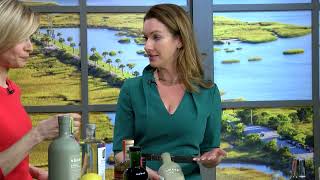
‘Cream Will Rise To The Top.’ How Emily Heintz Is Raising The Bar With Sèchey.
In this Taste Radio interview, host Ray (Speaker A) sits down with Emily Heintz, founder and CEO of Sashay (also stylized as Sèchey), to discuss her non‑alcoholic wine brand. The conversation opens with a live tasting of three Sashay products—a limited‑edition sparkling Sauvignon Blanc, a Pinot Noir, and a rosé—followed by detailed commentary on flavor, aroma, and the de‑alcoholization process. Emily explains how the brand was born during COVID‑19 as a way to enjoy social moments without alcohol, leveraging her retail background to create a multi‑brand boutique concept that curates both non‑alcoholic and traditional beverages. The interview uses a “true or false” format to explore topics such as: the advantage of coming from outside the traditional alcohol industry, the perception of alcohol conglomerates, why wine (vs. beer or spirits) offers the biggest growth opportunity, the role of retail partners like Target, the importance of on‑premise (bars and restaurants) distribution, generational differences in branding, functional‑beverage trends, ethical considerations of marketing to under‑21 consumers, and the need for strategic partnerships and investment to scale. Emily emphasizes quality as a differentiator, the “cream will rise to the top” metaphor for superior products, and the brand’s vision of a lifestyle platform that offers flexible, health‑focused drinking options across generations.
Chapters
Hey folks, it's Ray with Taste Radio. Right now I'm honored to be sitting down with Emily Heintz, who is the founder and CEO of Sashay. Emily, great to see you.
Great to see you. Thanks for having me on.
Yeah, thanks for your brand new podcast setup, set up just for me and the team at Taste Radio. I appreciate that. Thank you. It looks great. Looks really, really good.
Thank you. We love a podcast.
Yes. and I love the fact that you're joining us today in the midst of dry January. And I have in front of me, or to the left of me, 3 of your wines, your Pinot Noir, your rosé, and your limited edition sparkling Sauvignon Blanc, which I am very excited to open right now. Do you mind? Can we do a quick tasting before we get started here?
Let's start with the sparkling.
Okay.
As you know, point it away from your face.
Well, obviously, Emily, come on. This is not my first time.
I don't think she's ever seen me before.
But you know what? Someone told me, I was talking to a bartender and he said you're supposed to keep the cage on as well. You're not supposed to remove the cage. So you take the whole thing all off at once. Like even the foil, if there were foil on this. So yeah.
One would think I should know that, but I'm learning it alongside you. And I'm going to open one that is the same juice, but a different format that we're gonna talk about.
Okay.
At the same time. So both me tasting the same product.
Okay. So your closure's a little different than mine. My closure's different.
But someone's gonna hear the pop. Everyone's gonna hear the pop.
Pop here. Okay, this is sort of away from my face. Emily, this could be the end. So it was nice knowing you. Here we go. Oh, well done.
Make it look so easy.
Yes. Okay, I'm gonna pour myself some here. Let's see, without breaking this setup here. Oh, drinking in the middle of the day. I love it.
Yeah, that's one of the occasions we would love to steal.
Okay.
The midday work occasion.
First, Emily, thank you so much for being on Taste Radio. Cheers to you.
Cheers to you.
It is really delightful. That is— and I don't know, you know, I said really, that is really delightful, as if there were some hesitance or questionable thoughts in my head before even tasting this, and I'm sure you get that a lot, which is, could it actually be good if it's non-alcoholic? And it is really a delicious wine.
Yes, thank you. It should be crisp and clean. It's a nice nose. It does taste shockingly familiar to the— what you can either say traditional, or some people say the real sparkling wine. It's a Sauvignon Blanc grape. It is from the Bordeaux region of France and was made especially for sachet, and de-alcoholized. So this was a wine, the alcohol was removed, which also removes sugar and calories. So bonus there, it is the health and wellness investment in yourself when you are trying an alcohol-free sparkling wine.
This was a wine, as you mentioned. I think it still is a wine, just as it's de-alcoholized, as you said. And I think it's very expressive of a Sauvignon Blanc and a sparkling wine. And yeah, I don't really taste anything missing. It doesn't feel like, and I think that's something with, that's great about wine is you're not necessarily supposed to feel any kind of burn like you do with spirits. And perhaps that's why this works so, so well. I mean, I almost said perfectly, and I think perfectly is an apt term.
Yes. And we've had feedback that our guests and consumers have shocked and delighted, surprised their friends and family with a bottle of sachet wine. And it is a bestseller in our multi-brand retail location. And it's limited edition because we know that we continue to innovate in the nonalcoholic wine category. This happens to be organic and vegan. Those things matter to you, which we find exciting. And we were so impressed by the expression of a sparkling Sauvignon Blanc in the 750 that we introduced a 200ml so that the bar to purchase was lower. People felt more comfortable trying a smaller format size.
What is the price point on the 750?
The 750 is $29 at sachet.com and the 200 milliliter was exclusive to Target at $8.99 over the holiday season and now is available exclusively at sashay.com for $10.
Okay. I mentioned to you before we hopped on the mics, and I've mentioned this to a lot of people, I've talked about this on the podcast before, I've always been a little let down, sometimes a lot let down by non-alcoholic wines because I love wine and I just want the same flavor, texture, aroma that I have come to know and love. Basically what I'm saying is I want no compromises. And I know that's really, really tough, but I think what you've created with the sparkling is one of these wines that I, I, want because I don't feel like there's any compromise here. And perhaps even better, I know I won't feel it in the midst of this interview.
Yeah, you can continue on with your day.
Exactly, exactly. When you were thinking about non-alc wines to begin with, and when you were venturing into your own journey as it relates to this category, what was it? I mean, what really moved the needle for you and got you sort of out of the idea phase and into the I'm doing this phase?
Well, like most of us during COVID we were celebrating and socializing at home as best we could, right? Not, you know, part of that was drinking traditional alcohol. And I went through my own personal journey thinking about traditional alcohol and how it made me feel and started discovering alternatives. And that I could still have something in my glass and stay connected to the party without alcohol. So that was really the fundamental idea behind this. And because I have a retail and a brand background, I came up with the concept for Sashay, where, you know, it's a place where you can discover, explore alternatives, but you can still stay connected and socialize and celebrate. And then for, for Sashay, the embodiment of that is the wine bottle. So as a brand, we wanted to put our label on wine so you can take it home, you can have it at a bar, you can bring sachet to your friends and family and continue to celebrate, but not have the ill effects of alcohol.
And when you realized that you wanted to moderate your consumption of alcohol, I think a lot of other people were feeling the same way. Not a lot, not a lot of other people opened or created a non-alcoholic wine brand, you know, going from A to B, especially when it comes to a relatively new category, or at least one that people hadn't really considered before 2020 is a big step. It's a big step in your life. And I do want to talk about your journey and I do want to talk about how you think about the development of sachet and the non-alc beverage category as a whole. And as we have talked about, I'd love to kind of frame it as a true or false session here, a true or false session for sachet as it were. And, you know, Emily, we can start here by, me asking you, you know, true or false, your background or lack of experience in this business was helpful to you in getting the brand off the ground and getting to where you are today. True or false?
True. So I think the non-alcoholic category has a lot of nuance and early entries have been struggling against the existing guardrails for alcohol, right? And a lot of early brands have really embraced sobriety. And for me, not coming from the alcohol industry and not having preconceived notions of how to scale a quote-unquote alcohol brand, um, I brought fresh eyes to it. And I also understood that this nascent category really needed a laboratory to understand how consumers would react. And then how do we, you know, bring awareness and education to the category? So that's— I think that helped me and led me to develop a nonalcoholic wine without, you know, some traditional beverage background making me stay in one lane.
True or false, when you started out, were you perceived as a pariah by alcohol conglomerates? Were they not happy about you doing what you're doing now?
False. I think that traditional alcohol didn't believe in non-alcohol as a movement, so it didn't really pay enough attention to it until more recently. Um, they— big alcohol also looked at spirits and saw that as the entry point for non-alcoholic. But what we are seeing is that it's actually wine that has the biggest growth potential.
If you can follow up on that, why wine versus beer or spirits?
Well, 94% of non-alcoholic beer Today has the— is the investment in the category itself. Wine, non-alcoholic wine is only 5%. I think it's because while, you know, early, early investment into, into beer and the arrested fermentation process for beer, it's very close to what you might get in a traditional beer. Wine has a way to go with the technology, the decarboxylation process, the price point. And so I think that's what you're seeing reflected in the numbers.
Well, you also operate a business in South Carolina where you sell a variety of non-alcoholic beverages and alcohol analogs and seems to be doing well. And in some cases it feels like, say, Shay, the brick and mortar business is the prototype for a lot of these new non-alc bottle shops that we're seeing pop up all over the country. But just from your experience, this is not a true or false question, but just from your experience, are people gravitating more toward wine? Are people going in there to find wine more than they are other types of beverages?
Yes and no. It's really evolved. And in the early days, so I founded Seche in 2021. While it's always been a non-alcoholic element, we're, we're truly a modern bottle shop. So Seche means dry-ish, which means our license in South Carolina allows us to carry traditional wine and beer. So while I was happy to be categorized as a non-alcoholic bottle shop, we are really an alternative bottle shop, a new way of thinking about the category. So most of our customers drink alcohol, and most of our customers are coming in either replicating or looking for something that they currently drink that's traditional, and wine happens to be one of those things. The other opportunity for this category is around functional. So alcohol does, you know, give you a feeling, whether it's the perception that it helps you sleep at night, that it gives you a, like a buzz, that you maybe have a hit of dopamine, feel better. So the functional category is another one where consumers are coming in looking for, well, I like the way that this makes me feel. What do you have to help me sleep, or what do you have that's going to energize me?
I think about that a lot because a lot of the folks I speak to in this space talk about the fact that they are agnostic about their customers consuming alcohol. They think, you know, it's totally fine for you to make your own choices and have optionality in your life. And that's what we're there for, to give you an option when you don't want to drink alcohol. But the reasons for why people don't drink alcohol vary. Sometimes it's just, I'm— it's a Tuesday, I'm not drinking this week. Sometimes it's, you know, someone has had a moment in their life when they're like, I'm just done with this. Some people for religious reasons don't want to drink. But true or false, the future of non-alc beverages is directly tied to consumers' perception of alcohol and the negative effects of alcohol.
True that the industry will grow tied to alcohol, uh, and that the customer is more mindfully drinking. So yes, they drink alcohol. That's the key to growth. Typically what we see is someone who is fully sober is not turning to an alcohol-free wine, a distilled spirit that's 0%, or a cocktail in a can. And if they are, it's for special occasions. The most common use of alternative beverages, non-alcoholic, beer, wine, spirits, is through sessioning, taking a day off, a month off is what we're doing this month. But then it ends up being, how do I mindfully drink throughout the year and making a choice if I am gonna consume traditional alcohol? I call it gifting my hangover, right? So if I'm gonna go out on the town and I know I'm not gonna feel great the next morning, like it's it's worth it because I'm socializing, I'm having a good time. And I think more consumers fall into that category about choice. And Sashay, our ethos is drink less, live more. It was— my vision was never don't ever drink again because alcohol is a carcinogen. It's, look, we know it's bad for us. We do a lot of things that aren't that great for us, but it's okay if you do drink. When you feel like you don't want to drink, come to Sashay to discover some options.
You know, I will say that sachet to me expresses sophistication. In some cases, I think it feels like a traditional wine in that people perceive wine to be an elevated beverage and have for years. And sometimes I think that is to the detriment of the wine category. We're seeing people drink less wine and people always saying, oh, I don't know what to drink. I'm a little confused because there's just so many parts to the industry and so many parts to wine. There's varietal, there's vintage, there's region, there's style, there's all these different things. And oftentimes wine producers will say, well, just drink what you like. I think that's fair, but drinking what you like and drinking what you like from the standpoint of packaging and marketing and communication is another thing. And I see modern wine brands pop up that are, um, trying to be fun and young and lively. And I wonder how you think about that in the context of, you know, the, the development of your brand. So true or false, does Sachet need to evolve with younger consumers' perception of wine as much as it needs to match the sophistication of the wine category or the perception of wine as it is today.
True. I think that there is room for Seche to, yes, have a premium price point, a sophisticated, elevated bottle, right, that appeals to generations who are used to consuming wine. And I think there's space for the younger consumers who may may not have ever tried traditional wine where they might be celebrating and they don't drink wine. So again, playing with formats, boxed wine, different varietals, adding functional ingredients. But for sachet, we think that, and we can see it, that a bottle, regardless of what's in it, at the, in your table or in your home represents connection. So I think that is applied to any generation regardless of their flavor profiles or what they've had to drink in the past. So I hope that answers your question around where the brand is going and who is resonating with the brand.
Yeah, it does. I guess I'm going back to a brand I saw on Instagram yesterday and it was in a traditional 750ml 750ml bottle. Actually, I think it was in a champagne sparkling wine bottle, but with a different kind of closure. It was with the crown closure. And it kind of looked like a cartoon, but it seemed like a lot of people were interested in this brand. It was a lot of hot pink, and it definitely felt like it was for a Gen Z consumer. I don't know why I'm associating hot pink with a Gen Z consumer, but anyway, I think you know what I'm talking about here. And again, this is the complete opposite of what Szechuan currently represents, though when you're thinking about connecting with millennials versus Gen Z consumers, it feels like there's a pretty wide gap there. Am I wrong?
No, you're correct. They both drink differently, and I use drink to cover whatever that is in their glass. In some of the ways that we can achieve and like bridging the gap is through collaborations with some of the leading brands. So, you know, Sashay is a lifestyle brand around alcohol flexibility, but we do have a multi-brand strategy so we can align with some of the other brands that might appeal to a younger consumer and create a product just for them as a partnership. So that's— and that's part of the Sashay portfolio. We've already done some collaborations for our retail partner. We're discussing doing more. And I think sachet with a dry-ish ethos gives us that flexibility. And because I have a laboratory, I have a physical location with multiple brands, we kind of know what's resonating with each generation and we can build and grow our portfolio and where we focus our innovation based on that data and on now the data we have across the entire country.
Emily, when you refer to your retail partner, I assume you're referring to Target. Is that right?
Yes, we curated an assortment to introduce nonalcoholic beverages into the adult beverage aisle for the first time.
So true or false, and I assume that the answer is true here, but Target is the best representation of, or at least has the best cross-section of consumers in America such that it is the perfect place for this category, this nascent category of nonalcoholic beverages to grow.
Yes, Target is a trendsetter. They are a leader. They do an amazing job operationally. And Sashay for Target was a perfect partnership to introduce and to, you know, validate this movement that guests are asking for it and that guests use Target as a discovery retailer.
Okay. So that, this is kind of a, that was kind of a leading question or maybe a leading true or false question in that I would think that the future of this category hinges on its ability to be sold seamlessly with alcoholic beverages. And where do you buy alcoholic beverages? Well, you certainly, you can buy them in Target, but I think most people, at least in the Northeast, buy them at liquor stores, buy them at a, a Total Wine, a BevMo, what have you. So true or false, the future of this category is tied to its ability to align with and be sold seamlessly in beverage alcohol stores.
False.
Okay. All right. Let's, let's hear it.
I believe that the best place to discover brands and the majority of where consumers are finding things to drink is it's at bars and restaurants. And yes, we do need to have those brands available in liquor stores and grocery, upper grocery stores, in mass retail. But from a discovery perspective, going into a bar and a restaurant and, and sips on lips is actually going to propel the industry forward a lot faster because you're out, you're there, you're trying it, you're seeing it on the menu. So while we are excited about the retail partners that have embraced non-alcoholic beverages, I think the next frontier is how do we get more bars and restaurants to embrace cocktails alternatives and not just create a mocktail with some sugar and bitters behind the bar?
Yeah, I don't like when a blueberry lemonade was the only option that you had for a non-alcoholic cocktail. First of all, it's not a cocktail, but I remember those days and they don't really exist anymore. I always talk about one of my favorite restaurants in Boston. It's a place called Estragon. It's a tapas restaurant. And I know the bartender pretty well. And he says at this point, their non-alc cocktails are outselling their regular cocktail, their traditional ones. And they have a non-alc version of every single one of their cocktails. And I mean, That kind of blew my mind because I don't think that ever would have been the case, say, 5 years ago. So things are moving pretty quickly. But I think one of the reasons why they do so well with non-alc is because their cocktails work really well with their food. So true or false, the growth of this space in bars and restaurants Is directly tied to the beverage's ability to pair well with food.
False in some ways, true in others. I know you're looking for black and white, um, but you're not always consuming food when you're consuming alcohol or non-alcoholic beverages. So in some ways it's important. I think in other ways Going into a bar or restaurant and feeling confident that they have a menu and that the beverage tastes great with or without alcohol is the number one priority. Pairing well with food is great, but you could— there are scenarios where I go to dinner, I'm at the bar having a drink before dinner, I consume an alcohol-free sparkling sachet Sauvignon Blanc, And then with dinner, I have a Barolo, right? Or a Pomerol with my prime rib or steak, you know? And, and so that we call that sessioning. So I think that there's a little bit of both there. Um, yes, it should pair well with food, but in not ev— in every instance, it doesn't have to.
Okay. Well, what do you typically pair, uh, a lot of dishes with? You pair it with a Pinot Noir, and I have your Pinot Noir in my hand here. I'm gonna open it up.
Great.
It's a screw top. Let's—
there we go.
And this is a type of wine, red that is, which gave me the most pause when I was considering non-alcoholic wines, obviously, because red wine has a very familiar and specific flavor. But let's give this a whirl here.
Yes, red wine is the hardest to replicate because you are not going to have the burn that you do from traditional wines. Um, but this does have notes of dried currants. Um, it's really well-balanced, dark red fruits. Feedback has been super positive on it. We do have customers coming back for it. Uh, I think the hardest thing to get over, especially for red wine, is people want real true depth and the burn, and non-alcoholic red wine, we're just not there yet. There's a lot of, um, alcohol-free red wine out there that you may not like. Don't. Dump it down the drain, make a sangria, make a spritz, do something with it. But we find that our Pinot Noir consumers like it on its own.
So true or false, the lack of quality is the best way I can put it, is to the detriment of the category such that it is a problem right now for the category.
True. When I founded Sashay, the number of brands out there were very small, right? And it's really exploded. But part of my job as a curator and as the owner of not only Sashay's Wine as a brand but a multi-brand specialty retail concept is to try everything, right? And so we go through that process before even considering bringing a brand onto our shelves. So I think as we grow, both— I'm talking about Sashay and the industry in general— the consumer is going to be a little bit more wary, especially if they tried something that isn't of high quality. And what we hope is that the consumers will turn to a retailer like Target in their neighborhood because they trust the curation, or to Sashay because we've gone out there and tried, versus the marketplace approach that which you see pretty often today, um, starts with an A, uh, won't name the name, uh, and, and most brands are going to be available direct. But how do you know if they're good if you're ordering direct from the site, right? You really do need like a tastemaker to kind of say, hey, here's what you're looking for, um, and here's what I recommend. So that's, that is why original concept for Sashay, a place where we can increase the awareness, the availability, and the convenience for nonalcoholic products, but also education. It's why we have a tasting bar in our store. And now while we'll continue to do that, and there is a place in the future where Sashay would have a retail store in the front and a full bar in the back with both alcohol and nonalcoholic choices. So, you know, I think it's difficult when there is, there has been this gold rush. But at the same time, I'm very grateful for early entries into the category like Athletic Brewing, like, yeah, like Canuforix. You know, they started this movement. Toast is another one that's a great example of early. So, you know, kudos to everyone for getting us to where we are and then working together with brands that are high quality to bring them to the consumer is really where I I see Sashay's role.
How concerned are you, though, that someone's going to try something that isn't great and then say, I'm never trying this stuff again?
Well, we've already been there, right? You know, most consumers have tried some version of nonalcoholic beer or nonalcoholic wine in the past because they were there. So I don't think it's anything's changed, but the proliferation of brands and the partnership with both retail and bars and restaurants to only put things of quality on the menu is going to help overcome?
I hope so. And I think it does help to have influencers and thought leaders participate in this space and be very open and communicative about what's good and what's not. That requires trust. How do you trust someone? You know, people trust celebrities all the time. People trust chefs. But true or false, the messaging that people want to hear is from people like you. They need to hear it from the founders. The founder's voice is the most important voice. True or false?
True. I think consumers can see through when there's not an authenticity. So in this category, It's really exciting that smaller founded brands with limited resources have grown and scaled, right? Even sachet. I mean, we've raised a minor, minor, minor amount of capital compared to some of the other players in the space and definitely compared to big alcohol who can afford to heavily invest in non-alcoholic. So I think consumers can see that, right? It's great to have a 0% alternative to a traditional brand people love, but that's not always going to be the most innovation. I think the most innovation is going to come from a founder who's super passionate about the space and creating a product of quality. And it's a— it's, as you know, like building a beverage brand from scratch is a labor of love.
I think about Gen Z and I think about the generation behind them, Gen Alpha, and how many of them may, how many of their first sip of adult beverages may be a non-alcoholic version of that adult beverage. So true or false, it's a good thing that non-alc can be the introductory opportunity for Gen Z Or, you know, would it be— would it benefit the category? Would it benefit sachet and other brands like it if alcohol were the first sip, an alcoholic version were the first sip?
True that nonalcoholic should be the first for the younger generations. They're, you know, we have a 21-year age restriction on alcohol in the US. And most, you know, of the younger generations are celebrating and socializing well before they hit 21. So giving them something in a glass that allows them to participate in the party and in socialization is great. And then you don't necessarily have early, you know, adoption of a carcinogen in their socialization. So I, I think it's a benefit. I think the younger generations also are gonna move more towards functional. So, you know, we're seeing the adaptogens, plant-based nootropics, legal THC added to beverages. And that seems to be where the younger generations are gravitating because they don't know what, you know, a gin and tonic tastes like. They don't understand a French 75. They're just looking for something that tastes great to put in a glass or in a beautiful bottle.
I asked Bill Shufeldt this a couple of years ago when I sat down with him. About the potential to market to consumers that are not of legal drinking age. And I know it's kind of a taboo subject to say, hey, you should have a beer, you know, even if you're only 17 years old. But I mean, what's wrong with that, I guess, if it's non-alcoholic? So true or false, do you think it's fine for NA beverage marketers to go after and promote their products to those who are under 21?
It's hard for me to give you a true or false answer because ethically we are mimicking adult drinking behavior with these beverages, right? But according to the FDA, these are okay to consume. They are food product when they're less than 0.5% alcohol by volume. So, you know, I think it's too early to really for us to determine what those guardrails are. But I know that collectively as brands and, you know, partnering with retailers, we are making those decisions together, whether to card, who to market. At the end of the day, I still think it's a positive, net positive for the industry in general. Again, like, again, like it's hard for me to say true or false to that.
No, that's fair. And I'm not— I'm not giving you a lot of gray area here, Emily, but I— and I think your answers are appropriate. It's a really, really early time for this category, for this industry, and there's a lot of unknowns. And, you know, to that point, what is the biggest unknown for you? I mean, how are you trying to manage what you don't see and what you may be worried about? I mean, if it were me, I would wonder, you know, how many people are going to be turned off buy bad versions of non-alcoholic beverages. I mean, for years, I think that's why NA beer was ostracized and considered lower quality than anything else. It's probably why a lot of people didn't drink it because everyone said it was bad. And then Athletic Brewing comes around and they have something that people are like, oh wow, this is actually very, very good. And then you have a whole bunch of other brands that come out too. So again, in some ways, I think the biggest issue And the biggest question for me out there is how much of the good stuff can, you know, get out there before the bad stuff reaches other people's, other consumers' lips?
Just like anything in food and beverage, the, the good stuff is going to rise to the top, right? It's through word of mouth. It's through trial and error. We'll see a shakeout right there. You mentioned earlier this gold rush and investment and the proliferation of alcohol-free beverages like that. That's naturally going to shake out. And the ones that consumers are returning for the second and third time, not just buying to try because they're sober curious, like those are the brands that are going to win this race. And for Sashay, because we have a multifaceted business where we curate assortments, we have a nonalcoholic portfolio, we work on collaborations, we have a flagship laboratory where we can test and learn from real customers, like we will survive this, you know, shakeout. But we're playing the long game. Like this is a lifestyle that we've launched through Sashay. It's not a singular branded product, which is a much different approach than a lot of the brands out there and a lot of where the investment has gone. And I will say that we have bootstrapped this business to today and Imagine what we can do when we go through a formal raise and have some fuel in the tank and the data and the customer feedback to support what we've already been doing for the past 4 years.
Well, last question here, Emily. When you think about the future of Sashay and the potential for the brand, Do you think about strategic alignment? You know, the big companies, the big conglomerates have a lot of power. They have a lot of distribution muscle. They have a lot of money for marketing. So I would think it's important, but true or false, does the future of this brand, of your brand, require strategic investment or alignment to really thrive? True.
Yes. You know, the existing distribution system has been in place for decades. It works. We are excited about working within that. We love some of the innovation coming out of big alcohol and some of those products. I, you know, I built this brand based on collaborations with partners leading the industry. I just launched our own product in January. So I, our future is dependent on continuing to align from a marketing perspective. This past month we did sampling with Athletic Brewing Company. Those store windows were a partnership with Blind Tiger and Ritual Spirits. So we'll continue to do that. And I think us working together as a nonalcoholic category is the path forward because we do have some walls to break down with distribution. And how do we get these products, the best ones, in the hands of the end consumer? And there's multiple ways to do that.
Outstanding. Emily, thank you so, so much for taking the time to sit down with me. You know, I'm just looking at my calendar now and I forgot that we had allotted half an hour and we've been talking for an hour and I apologize. And if your team is yelling at me right now, They're going like this. Are they really? I am so, so sorry. I didn't realize. Thank you so much for taking the time to be with me. And I would love to meet up in person whenever you're up here in the Boston area or whenever I'm down in the South.
Yes, absolutely. We're happy to host you at the store, and I'm sure we'll meet in person as we continue on this journey of sachet.
Thank you again.
More from Emily

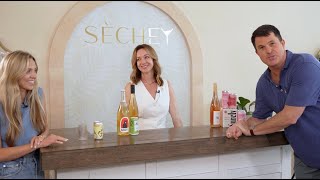
“Alternative Drinking” w/ Emily Heintz, founder of Séchey, Charleston’s popular no/low beverage shop