Calm COVID Fear, Anxiety, and Stress: Strengthen Immune System
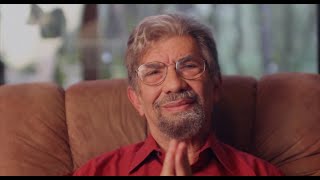
In this 20‑minute guided audio, Dr. Emmett Miller, a mind‑body medicine specialist, explains how the pandemic’s uncertainty triggers a primitive stress response that can become chronic (Type 2 stress) and impair immune function, cognition, and behavior. He describes the neuro‑physiology of fear—activation of the limbic system, sympathetic “fight‑or‑flight” surge, and the downstream sacrifice of internal organs for glucose—highlighting how modern, uncontrollable threats keep the stress system engaged, depleting immunity and fostering maladaptive habits (smoking, drinking, irritability). Miller then frames the situation as an opportunity to “upgrade” the brain’s operating system using mindfulness, meditation, guided imagery, and self‑hypnosis. He introduces the Serenity Prayer as a two‑step model: (1) accept what cannot be changed and relax the body, (2) muster courage and intelligence to act on what can be changed (hand‑washing, distancing, following medical guidance). The core of the session is a step‑by‑step deep‑relaxation script that leads listeners to close their eyes, release muscular tension, breathe consciously, and visualize a calming scene that energizes the immune system. He encourages repeated practice to rewire neural pathways, strengthen the prefrontal cortex, and embed health‑promoting behaviors. The talk ends with a call to continue to Part 2 of the program and to use supplemental resources at drmiller.com/covid.
Chapters
Hi, I'm Dr. Emmett Miller, specialist in mind-body medicine. Some of what I share with you today you may have heard before, but bear with me. I'm going to show you how to put it to work in your life to deal with COVID-19. The pandemic, and the disinformation coming your way. We're all facing a crisis different and much more threatening than any we've ever experienced in our lives. And as quite natural, our stress reaction is triggered and we feel anxiety and fear, as well as frustration, anger, loss, and despair. These reactions, however, They feel bad. They don't help. They trigger negative behavior patterns. And studies suggest they may even make us less able to resist a coronavirus or to heal from it if we do become infected. As in any crisis, in this crisis there is danger, but also opportunity, if we are wise enough to seek it. For nearly 50 years now, I've been teaching people how to use mindfulness, meditation, guided imagery, and self-hypnotic skills to not only relax away stress, but also to harness the energy of stress for creativity and for personal transformation. So the opportunity here is for you to learn some of these powerful mind tools and put them to work to stop your subconscious mind from creating fear. Anxiety, frustration, anger, despair, and to rewire your brain, literally, and redirect its energy to protect you and enrich your life. So why are we anxious and afraid? Why do we feel paralyzing fear, anxiety that has us uselessly worrying, that keeps us up at night? Because we are human beings, we like to be in control. When we feel in control and on top of things, there's a feeling of relaxation, of satisfaction, competence, and flow. On the other hand, when we don't feel in control, when we feel that we're confronting a dangerous challenge but feel helpless to do anything about it, we feel anxiety, we feel apprehension, and we feel fear. —And that is exactly the kind of situation in which we find ourselves these days. That world in which we were feeling relatively successful and on top of things is gone, and we don't know for how long or whether it will ever return. Instead, we are under attack from all sides by an invisible enemy, with seemingly nothing to do but run away and hide. When human beings are prevented from doing things that usually bring comfort, feelings of belonging, or mastery, we tend to feel frustrated and get angry. And that's just what we feel when we can't go to work, we can't connect with people, we can't interact successfully, we can't even scratch our noses. We even end up feeling trapped in our own homes. And perhaps worst of all, fear distracts us from discovering the things that we can do to protect ourselves and others. So what is fear? Although fear was very helpful and essential to our survival in the world we evolved into, uh, half a million years ago, in today's world it sometimes becomes our enemy. So in order to get control of it, it's very valuable to understand just what it is. Fear is the reaction produced in the limbic system of your paleocortex, the ancient monkey brain, when it believes you are in an immediate life-or-death situation. Stress, which is your nervous system's nonspecific reaction to a potentially harmful or lethal threat, is an automatic attempt by the subconscious level of your brain to ready your body and mind for immediate physical fight or flight, the perfect reaction to an attacking saber-tooth tiger. The fear, the physical tension, the elevated blood pressure, shunting of blood from the internal organs to the muscular system, and all the rest of the full-on alarm reaction of the sympathetic nervous system continues for the next few seconds or minutes until we have escaped the tiger and we can relax, "Ahh," and the stress turns off. But in our current situation, there is no specific action possible, like wrestling with the tiger or running away. So the stress state is not relieved within minutes, as it is designed to do, and we stay in a semi-panic chronic state we call Type 2 stress. In this state, basically, the deeper organs of your body are continuously being sacrificed, dissolved, turned into glucose for the muscles to use. As you're probably aware, this activity of the stress reaction is part of the etiology of most of our illnesses. Each day our reading of the ever more scary stories and dire warnings in the news adds adds fuel to this internal fire. Add to this the conflicting stories that we get from our politicians and our scientists, and the situation is made even worse. So the bottom line is that this stress reaction not only accomplishes nothing, it feels awful, and it triggers maladaptive escape behaviors like smoking, drinking, using drugs, being irritable, getting in arguments, and so forth. And especially treacherous, it actually depletes the immune system and both increases your susceptibility to getting the infection and it slows or blocks recovery if you do get it. And to add insult to injury, the stress reaction inhibits your higher cortical functioning, like the careful evaluation, rational reasoning, Strategizing, developing clear plans, and following through on those plans, as well as being creative—all of those require the use of your system too. Nature doesn't want you reading a book or writing poetry when you have 20 seconds to deal with an attacking saber-tooth tiger. Our goal today, then, is to dispel the fear to maximize our health, and to activate the best strategies for preventing infection and minimizing its effects if it should take place. What we really need is a system upgrade, a global reset, because these automatic stress reactions of the monkey brain, though perfect for that ancient world, hurt us here in the 21st century. Therefore, we need to upgrade our central nervous system. Just like you have to upgrade the operating system of your computer every once in a while, we have to upgrade the functioning of our nervous system to cope with the world in which we now live. The caveman didn't have to worry about viruses or pandemics or disinformation. So for the last 50 years, my work as a physician has been designing tools to do this, to upgrade our mental operating system. This means developing mental behaviors for disengaging the stress reaction along with its fear and anxiety and frustration and the exhaustion that comes from it, accessing the rational, intellectually competent and highly creative prefrontal cortex of your brain. Learning ways of thinking and managing your emotions to maximize the internal health and immune function of your body. Creating trusting, supporting, and loving relationships in your family and community, because having such relationships has also been shown to lower stress tension and decreases susceptibility to illness. Establishing and participating in healthy physical behaviors, like staying aware of the need to wash your hands frequently, avoid touching your face, keeping the proper social distance, and so forth. Perhaps the most fundamental principle of this upgrade is not only to understand but to systematically install the wisdom known as the Serenity Prayer. Perhaps you know the first line of the so-called Serenity Prayer. It recognizes that sometimes there are things that happen in our lives that we do not have the ability to change. You can't change your parents. You can't change the weather. And if you spilled milk, you can't unspill it. To get upset about this is of no value. The Serenity Prayer tells us to relax and to accept with serenity the truth of the present moment exactly as it is. Not accepting it is unwise, doomed to failure, and is a source of Type 2 stress. Right now you are confronting a mysterious invisible enemy. That's true, and the most healthy thing you can do is to accept that this is true. The most effective way to do this is to relax the tension that's built up in your body. Relax the emotions which are not helpful at this moment—worry, fear, blame, doubt, and so forth—and relax your mind by emptying it of those unnecessary thoughts. How? Hm. I'm going to offer you a powerful technique for doing just this. It's called entering the state of deep relaxation, a state of mind very similar to that which is reached during meditation, self-hypnosis, or deep prayer. After finding your deeply relaxed state, I will teach you to use guided imagery to visualize the empowerment of the cells of your immune system and prepare them to block, weaken, and kill any viral particles that should enter your body. The second line of the Serenity Prayer is about having the courage and the intelligence to confront and change the things that you can change. When it comes to confronting the challenge of a viral infection, that means having the courage and the intelligence to train yourself to follow the guidance of the medical personnel you trust and employ the behaviors that will protect you and others from infection. These include such behaviors as washing your hands and so forth. The affirmations in Part 3 of the program will help you program your behaviors in this way, as well as to reinforce the other behaviors that you will have learned by then. Now let's apply the Serenity Prayer to this current situation. This means finding a way to access your ability to relax and feel calm and confident when confronting situations you cannot change, such as the fact that there is a pandemic with a potentially deadly virus. That means accepting reality as it is. To not accept reality as it is is what psychiatrists call neurotic behavior. It's an old medical school joke. Do you know the difference between a normal person and a psychotic? And a neurotic? Well, a normal person, if you ask them how much is 2 and 2, they say 4. If you ask a psychotic how much is 2 and 2, they say 17, or purple, or Elvis Presley. If you ask a neurotic how much is 2 and 2, they say 4. That really pisses me off. But it makes no sense to react emotionally to the fact that 2 2 4. That's simply a fact. Similarly, we are in the midst of a pandemic and it makes no sense to react emotionally to it. In my professional work of teaching people how to manage stress, what I found over and over again to be the most effective single skill is the ability to enter a deeply relaxed, or meditative state at will. Whether or not you've ever done this before, you need to know that everyone can do it. And in a few moments, I will share with you some specific mind tools you can use and then provide you with a longer experience that you can practice with. Practicing is extremely important because what we're doing here is teaching your brain to override a pattern of behavior that has been present for thousands of years, as well as for all the rest of your life. So, for the next 2 minutes, let your body be in a comfortable position, sitting or lying down, and become aware of the fact that at this moment in time, there really is no other place that you need to go. Just remind yourself internally, there's no tiger attacking, There's no landslide. I am safe and secure right now where I am. There's no place I have to go at this moment. There's nothing else that I need to do. There's no problem that needs to be solved at this moment, and therefore I give myself permission to relax. You may allow your eyelids to remain open if you wish, staring at a point on the wall or the ceiling opposite you, but most people will find it easier to relax if they just allow their eyelids to gently fall closed. Let your eyelids relax. Let your eyes roll upward behind your closed eyelids, as if you're looking at the back of your forehead, and imagine that there, on the back of your forehead, you can see the word "relax." Good. And now imagine your eyelids so relaxed that they don't want to open at all. And when you have that feeling in your eyelids, Gently test them. See if you can feel their resistance to being open, because there's really nothing that you need to see. And let that relaxation from your eyelids flow throughout all the rest of your body. If your eyelids are instead choosing to be open, notice that they're relaxed and open. And if you try to close them, they resist being closed. And as you Feel that resistance, that relaxation. Let it flow into your forehead and your scalp, through all the muscles of your face, down through your neck, through your shoulders and your arms, down through your wrists and your hands, down to your fingertips. Take another deep breath in, and as you let it out, let it be a feeling of letting go completely. And then stop breathing. And let the air do the breathing for you, just as it does when you're deeply asleep at night. Feel your chest and abdomen rise with each breath in, and with each breath out, feel your chest and abdomen releasing tension. Let each breath in breathe relaxation in, and each breath out breathe relaxation out. Throughout all the rest of your body, throughout your back, your pelvis, and your thighs, and your knees, your legs, and your ankles, and your feet, all the way down to the very tips of your toes, growing more and more relaxed, more and more comfortable with each breath. Good. Take one more deep breath in, and as you let it out, releasing completely, let yourself sink into that little pause after you breathe out and before the next breath comes in. It's the quietest time of all for all your mind and body. And whenever any unnecessary thoughts come along, let the unnecessary thought be breathed out with the next breath out. Let the next breath in clear your mind and carry relaxation through your body. Gradually, there are fewer and fewer unnecessary thoughts as you let them go, and you can allow yourself to be here in this moment, feeling peaceful, open-hearted, in this spacious presence that we call here and now. Good. And now, in your mind's eye, picture a really beautiful experience. Maybe a place that you were on vacation, a beautiful scene that you saw, a fantastic sunset. Or perhaps you were with someone that you love, or a family that you love. Any place at all that you can imagine in the past, or place you can imagine in the future. Picture it in your mind's eye. See the colors and the shapes, the movements. Hear the sounds around you, and most of all, feel the feelings. Feel the joy. Feel the openness. Feel the energy in your heart and breathe into that energy. Good. Let that energy burn brighter, like breathing on coals. Let them burn brighter and let that energy be breathed throughout all the rest of your body. Good. And always know that that this energy is within you. And when you become distracted, when you go off into unpleasant emotions— fear, anxiety, or anger, or frustration— close your eyes for a moment, come back to this deep inner peace, feel this place within, and remember this energy that you have. Now you're free to direct your mind to what it's really worthwhile to think about. Become aware of what you want to do next, what your plans are for today, what you wish to accomplish. And then, in your own time and your own speed, bring yourself back into being wide awake, feeling alert, refreshed and clear. Good. You can listen to this several times a day. Just takes a few minutes. And you find it's a very rapid way of centering. And soon you'll learn to do it without my voice. Then you will have embodied it. Into your body and rewired your brain, and you'll have it, and it will belong to you. You have to keep it up, you know, just like you have to maintain other things in your life. But now, in order to learn some deeper skills about how to keep yourself healthy, relaxed, and very calm, go on to Part 2 of this this program. Enjoy. It's been wonderful to be with you. The imageries and resources at drmiller.com/covid will support us all to stay healthy and keep our communities and nation healthy as well. Be present. Be kind. Be well.










