Dr. Emmett Miller's Son Interviews President Obama 2011
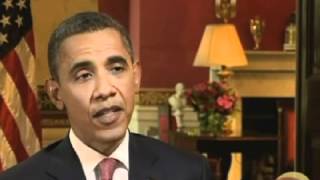
In a BET News exclusive broadcast from the White House, Dr. Emmett Miller interviews President Barack Obama about the $447 billion jobs bill and its impact on the African American community amid the worst economic crisis since the Great Depression. The conversation covers the bill’s components—school and bridge reconstruction, veteran hiring incentives, tax credits, summer youth jobs, and unemployment‑insurance reforms—highlighting how these measures aim to lower the 16.7 % Black unemployment rate, nearly double that of whites. Obama stresses that the program is not targeted solely at Black Americans but benefits all low‑ and middle‑income families, while also addressing specific community needs through neighborhood‑stabilization and on‑the‑job training. The interview touches on the political context: declining African American approval ratings, criticism from Black leaders, and the upcoming 2012 election. Obama reflects on the 2009 expectations, the depth of the recession, and lessons learned about communication and storytelling. He outlines strategies for getting the legislation through a resistant Congress, including public pressure and the prospect of a new Congress if necessary. Throughout, Obama repeatedly affirms his personal commitment to “kids on the South Side of Chicago” and other marginalized groups, framing the recovery as a test of how well America supports its most vulnerable. The broadcast concludes with audience‑submitted questions about the timeline for economic improvement, health‑care access, and the political feasibility of the jobs bill.
Chapters
It is a test for America how well those at the bottom do, not just how well those at the top do.
In his first television interview on Black America since introducing the JOBS Act, the President talks exclusively to BET News.
I am spending all my time in this office trying to make sure that if there's some kid in the South Side of Chicago that doesn't have a shot right now, that I'm fighting for him.
Can President Obama's new jobs bill provide relief for African Americans, the group hardest hit by the crisis?
With patience and firm determination, I'm gonna press on for jobs.
Can he fix the economy in time to fend off his political rivals?
He has failed the African American community.
Good to see you.
Yeah, good to see you. It's been a long time.
Tonight, a BET News exclusive. Exclusive: The President Answers Black America.
Good evening, I'm Emmett Miller, and welcome to our broadcast from the White House.
The weak economy has claimed many victims, and it's affected all Americans, but the impact on African Americans has been especially devastating.
And that's the focus of our conversation this evening with the President. Let's begin with jobs.
9.1% of all Americans are unemployed. Compared with 16.7% of African Americans, the highest in a generation. By the time President Obama got into office, black unemployment was already almost 13% and climbing. So he did inherit much of the problem. Still today, he owns it.
You've just announced a new $447 billion jobs bill, right? And we all know that African American unemployment is running really, really high, above 16%, nearly double that of whites. How does this bill specifically target them?
Well, first of all, I think it's important to remember that we are going through the worst financial crisis and subsequent economy that we've seen since the Great Depression. And so the challenges for everybody out there is tough. You're right, it's especially tough for the African American community. The steps we took in the first 2.5 years made a difference. It made sure that a lot of folks were still on the job that otherwise wouldn't be. It made sure that states were able to stabilize their budgets so they weren't laying off as many teachers or firefighters or civil servants that are providing services every day. But what we realized over the last couple of months is that because of a whole range of issues, including what's happened overseas in Europe, that the economy needs another boost, and we've got to focus more on putting people back to work now.
And that's what this jobs bill—
So the jobs bill overall is designed to make sure that we're rebuilding schools and bridges and putting construction workers back to work. It makes sure that we're putting teachers back in the classroom. It makes certain that we are providing incentives to hire veterans who have been out of work, but also the long-term out of— unemployed who are out of work. And it makes sure that we're providing tax breaks and tax credits to just about every family and every middle-class person and every small business around the country. Now, with respect to the African American community, they benefit from all of that. But in addition, we are making sure that summer jobs for youth are included in the package, making sure that we reform our unemployment insurance so that In addition to 1.4 million African Americans getting unemployment insurance, we're also providing them a pathway so that they start getting some on-the-job training. All those things are going to have a huge impact in the African American community. That's why we've got to get this bill passed now.
Why not target the African American community? Why not say then, this is for you, this is for African Americans? If there was a banking crisis, then you'd target money for the banks. If there was a national disaster, you'd target your money for the national—
for disaster relief. No, no, no, no, no.
That's not how—
that's not how That's not how America works. America works when all of us are pulling together and everybody is focused on making sure that every single person has opportunity. And so when we put forward a program like, for example, the health care bill— our focus is people who don't have health care. Now, it turns out that the majority of folks who don't have health care are also working families and are disproportionately African American and Latino. But that doesn't mean that it's only for them. There are a whole bunch of folks all across the country who need help, and we are going to help every single person who needs help.
[FOREIGN LANGUAGE] [Speaker:NARRATOR] This weekend, the President took his message to the annual meeting of the Congressional Black Caucus, urging his supporters to join his jobs bill fight and challenging congressional Republicans.
[FOREIGN LANGUAGE] You say you're the party of tax cuts? Pass this jobs bill! And every worker in America, including nearly 20 million African American workers, will get a tax cut. Pass this jobs bill and prove you'll fight just as hard for a tax cut for ordinary folks as you do for all your contributors.
[FOREIGN LANGUAGE] [Speaker:NARRATOR] Reaction to the president and his speech was reminiscent of the crowds of January 2009.
[Speaker] So help you God? [Speaker] So help me God. [Speaker] Congratulations, Mr. President.
[Speaker:NARRATOR] Back then, all of his supporters had high expectations of the new president, and that was especially true of African Americans.
Were their expectations way back when, in 2009, too high?
I don't think their expectations were too high. I think that people understood that it took us a long time to get into this mess, it's going to take a long time to get out of this mess. Um, and I look folks in the eye all the time who don't have a job or who've lost their home or who are struggling otherwise, and what they tell me is, as long as as long as I feel like you're fighting for me, as long as I feel like you have my interests at heart, then we are going to stand behind you. It is a test for America how well those at the bottom do, not just how well those at the top do. And what's always made this country great is the belief that everybody has got a chance, regardless of race, regardless of creed. And that's a vision that I think the vast majority of Americans still share. It's been tested over the last 3 years, but my job is to keep on pushing in that direction.
Up next, the president on his critics.
There's always going to be somebody who's critical of the president of the United States.
That's my job. Distress over the dismal unemployment rate and other factors have led some African American leaders to openly criticize the president.
Our people are hurting. The unemployment is unconscionable. We don't know what the strategy is. We don't know why on this trip that he's in the United States now, he's not in any black community. We don't know that.
African American leaders have been critical of late. And it's true, you've said you're the president for all people, not just for one group. If I'm a 16-year-old kid, on the South Side of Chicago, okay, my dad's gone, my mom's working 10 hours a day for peanuts, all I see around me is blight, there are no help wanted signs, and you won't even say, look, I'm going to help you, a young African American, how do I feel?
Emmett, that's not— first of all, that's not what people are saying. What people are saying all across the country is we're hurting and we've been hurting for a long time. And the question is how can we make sure that the economy is working for every single person. And the truth of the matter is, the vast majority of African Americans understand that. They understand that when the economy goes well, then everybody does well. Now, there are certain communities that have been struggling even when the economy does well, which is why, for example, the neighborhood stabilization program is going to be targeting communities that are having the toughest time. But the other thing I want to make sure that you don't just kind of slip in there is this notion that African American leaders of late have been critical. There have been a handful of African American leaders who've been critical. They were critical when I was running for president. So there's always going to be somebody who's critical of the president of the United States. That's my job, in part, is particularly when the economy is going as badly as it is right now, people are going to have concerns, and they should.
In fact, the president's popularity has suffered in recent months. A new Washington Post-ABC News poll shows that back in April, 83% of African Americans had a strongly favorable view of the president. By last week, that number dropped to 58%.
I think you're seeing all across the board, in every community, is that when unemployment is high and people are having a tough time, then they have to, you know, feel as if there's some hope, there's some prospects out there. And right now, the economy has been bad for a long time. It was bad before I got elected, and it has continued to be very tough for a lot of folks.
This weekend, the president admonished his critics with some tough love.
Take off your bedroom slippers, put on your marching shoes, shake it off. Stop complaining, stop grumbling, stop crying. We are going to press on. We've got work to do.
Until people actually feel better about the economy, they're gonna continue to have problems and they're gonna continue to hope that the White House can do more.
You and me, we're all a little bit crazy, but hopefully a good kind of crazy. We're a good kind of crazy because no matter how hard things get, We keep the faith. We keep fighting. We keep moving forward.
Coming up, the president gets personal.
What would you say to the man who stood on the podium back in 2009 that he didn't know then that he knows now? It's been a grueling 3 years for the president. Even he admits it's been tougher than expected.
And we knew the road ahead was going to be difficult, that the climb was going to be steep. I have to admit, I didn't know how steep the climb was going to be.
What would you say to the man who stood on the podium back in 2009 that he didn't know then that he knows now?
Well, look, there are a lot of things we know now that we didn't know then. I mean, the day I took oath of office, we didn't know that the economy had just contracted 9% in the previous quarter. We didn't know that 400,000 people had lost their jobs the month before and another 600,000 were going to lose their jobs the month after. So I think the depth of the economic crisis worldwide was something that had— was glimmering on the horizon, but I don't think we fully appreciated. The decisions we made were the right decisions. Making sure that a U.S. auto industry still existed and we didn't lose a million jobs— that's a controversial decision, but it was the right decision. The Recovery Act, which saved a whole lot of jobs in America, even though the folks who didn't lose their jobs may not have known that they might have otherwise lost their jobs— it was the right decision. So what I would tell— myself, if I traveled back in time, I would say, "This is going to be a long, hard slog, and the American people are going to feel kind of worn down after this much difficulty." But I'd also tell that less gray person, to hang in there because the American people are resilient and they have good values and they care about the right stuff and we'll get through this.
What would you have done differently? You talked about the things you did right with respect to jobs. You talked about the programs you were able to put through. You talked about some of the objectives you had. What would you have now done differently in retrospect?
You know, I think if we had had had I had better information, it would have been important for me to be able to communicate to the American people the fact that this was going to be a long process, that we weren't going to fix this in 6 months. This was not your usual recession. This was a once-in-a-generation recession. And I think that might have helped. Brace people for the difficulties that were to come. The other thing that, you know, as I reflect on it, is that in the first year or so, we spent a lot of time just doing the right thing and not worrying about selling what we were doing. And I think that the more you're in this office, the more you have to say to yourself that telling a story to the American people is just as important as the actual policies that you're implementing. And they've got to have a sense of where it is that we're going to go, particularly during hard times.
I sat down with you 5 years ago in the hallway of a junior college when you were still Senator. It was the Audacity of Hope book tour. Do you ever think back on those times? What reflections do you have considering who you are now?
You know, Michelle tells me, at least, that I'm the same man now that I was when she met me when I was still in law school. I have a pretty clear idea about what's right and what America is all about. And it involves a belief that everybody gets a chance, that there's a sense that we're in this together. We're a country that values individual initiative, and everybody's got to work hard, and everybody's got to be pulling their weight, but we look out for one another. And my politics really is based on those values. And those values haven't changed. They're constant. And the longer I'm in this office, the more I I believe that when Americans are working together, there's nothing we can't accomplish. I've seen it time and time again. When we're divided, then we get less done than we need to. And part of my job is to help usher America through a very difficult time, but still maintain that sense that we're in this together.
Up next, your questions for the President.
We'll get some of it through Congress. And we will just keep pounding away until we get all of it through Congress.
We asked social media followers on BET.com, Facebook, and Twitter what they would ask the president if they had a chance. And their pain and frustration read loud and clear.
Marie D. of Missouri City, Texas says, "Mr. President, I know that this mess that our country is in is not your fault." I would like to know, when do we expect our situation to get better?
One of the questions that we had was, when? When is it going to change? How long are we going to have to wait?
Well, look, you know, right now we are in a situation where the economy stabilized, but it stabilized at too high an unemployment rate. And I think if we get this jobs bill passed, that's going to make a difference right away. Some of the things, though, that have been plaguing the African American community for too long, those things are going to take years to change. The school system in particular.
Another question was on health care, asking whether people are still being denied coverage.
Young people, it was just reported, are one group that, for example, is more insured than it's ever been because of the American— or the Affordable Care Act. But how we think about our health habits, all the things that the First Lady is doing in terms of what we're eating, getting exercise, instilling good health habits in our kids, those are things that will take place over the years to reduce the diabetes rate in the African American community, for example.
A question on the minds of many Americans today is whether the President and Congress can get anything done, including the pending jobs bill.
How do you get it through Congress? Through Congress? How do you make it successful this time?
The President: Well, we'll get some of it through Congress. And we will just keep pounding away until we get all of it through Congress. And if we don't get all of it through Congress and we haven't seen enough done to help the American people, then we'll get a new Congress. Because the bottom line is, is that the vision that we put forward in the jobs bill and the ways, by the way, that we intend to pay for it by making sure that millionaires and billionaires are paying their fair share, that they're not paying lower tax rates effectively, than folks who are making $50,000 a year. That combination of efforts to rebuild America, put people back to work, get teachers back in the classroom, and paying for it in a responsible way— that vision is one that the American people believe in. I mean, you were citing polls earlier. If you look at specifics of the jobs bill, overwhelmingly people support it, including a lot of Republicans. When you look at how we propose to pay for it, overwhelmingly the American people support it, including a number of Republicans. Now, this particular Congress may not be responsive to the American people, but we are going to keep on putting pressure on them until we can get as much of it done as possible. And if they're not doing enough to help the American people during a time of great need, then we'll make sure that we have a new Congress.
African Americans are going to be watching you and asking themselves, who is this man and does he care about me? What is it that they don't understand about you, do you think, that you would have them understand?
All I get from the African-American community as I travel around the country is, "We know it's hard, but we're praying for you," and, "We're behind you." And so, you know, I think the main thing I want the African-American community to know is just, those prayers are appreciated, them rooting for me is appreciated, and that I am spending all my time in this office trying to make sure that if there's some kid in the South Side of Chicago that doesn't have a shot right now, isn't going to a good school, parent doesn't have a job, that I'm fighting for him. And that is true if they're in a barrio somewhere in Los Angeles. It's true of some kid in Appalachia. That the values that brought me here to this office are the ones that I'm going to carry with me when I leave office. And that's all I care about. Is making sure that I'm delivering on behalf of those folks who've invested so much in me.
Mr. President, thank you.
Thank you.
Appreciate it.
This broadcast is the first in a series that BET News will produce as part of our special coverage of the 2012 elections.
Thanks for watching. From all of us at BET News, I'm Emmett Miller in Washington. Good night.
For more White House and political coverage, Go to bet.com/politics and follow us on Twitter @betnews.










