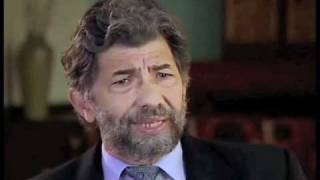
In this monologue, Dr. Miller argues that the modern U.S. healthcare system is fundamentally flawed because it is built on an outdated Cartesian, specialist‑centric paradigm that treats the human body as a machine of isolated parts. He claims that 80‑90% of illnesses stem from lifestyle choices, chronic stress, and interpersonal dynamics, and that addressing these root causes would eliminate most disease. The current system, he says, merely patches symptoms through brief, costly visits, fragmented specialist care, and pharmaceutical interventions, while neglecting the holistic, empathetic relationship once embodied by family physicians who made house calls and knew patients’ families. He traces how corporate health plans emerged in the 1960s to attract employees, turning healthcare into a profit‑driven industry that inflates costs and further distances care from its true purpose. Dr. Miller advocates a return to whole‑person, preventive medicine that treats the underlying imbalances—emotional, nutritional, environmental—by fostering empathy, patient‑centered dialogue, and upstream interventions, thereby reducing disease incidence and healthcare expenditures.
Chapters
Our current healthcare system is failing because the very paradigm which underlies its formation is the incorrect paradigm for the world in which we live. That fully 80 to 90% of our diseases, if not more, are the results of our lifestyles, of the way we handle stress, stress, uh, and the way we treat other people. If we were to address those issues, 80 to 90% or more of our illnesses would disappear. Instead, our current healthcare system merely treats the symptoms of the imbalances that are there. A proper paradigm would treat the source, not the symptom. And we would approach people differently. So our current healthcare system suffers because with the Cartesian, Newtonian model of thinking, where you think the world is made up of little tiny golf balls that bump into each other, the thought of a human being was like a machine, lots of little parts. And so in medicine, instead of having one physician who treated everything, you begin to have more and more specialists. You know, specialists for the lens of the eye, specialists for the left auricular appendage, and so forth, on and on. And the problem is that you end up with— in each of these specialties, you learn more and more about less and less. So you end up knowing everything about nothing. What's missing in there is the human being. What really causes health and what really brings about healing comes from within. All a physician can do is assist holding things in place to make sure there's adequate nutrition coming in. Nature is what does the healing. And that nature can be passed on from one human being to another. A mother passes it on to a child when she kisses the, the finger that got caught in the door and the pain goes away. There's a communication that went on between the old-fashioned physician, and I still include myself among that bunch, who used to make house calls, and you knew the entire family. And so when a person came to you, you treated that person. In today's world, you have what, 6, 7, 8 minutes for every visit with a physician, and it costs a huge amount of money. For it to happen, but the human being never gets addressed. And so the family physician would include in the relationship the kinds of questions that gave rise to an understanding of what the underlying problem was. You know, you need to get more exercise. And if it was doctor's orders, in those days you did it because it came from someone that, that cared about you. The doctor was drawn from the tribe, from the group. The most trusted of the elders were the healers. Those were the doctors, those are the ones who were entrusted with the poisons and the ability to breach the barriers of the body. And these were the people who loved you the most. And so there was a lot of love, sense of togetherness. When I would see you in my office, it wasn't just you that was having the pain. You know, I would imagine maybe that could be my father sitting there, and that might be my child. It might be me. And so I have empathy for you, and I feel it. And so I'm not willing to say, "Oh, you have a headache? Take these pills and it'll go away." And I'll say, "Well, tell me more about when the headache came on." And I'll listen and I say, "Well, you're furious at him for abusing you. You're a battered woman. No wonder you have a headache. Here's what you can do to begin to deal with your situation." But that won't happen in today's clinic. And then the next time he may shoot her, and that may generate $20,000 worth of medical care. But as that money comes in, of course, it nurtures the beast, and the beast is a very greedy beast. So medicine, instead of selecting for physicians who cared for patients as a whole, we found those people who were the technicians, who were interested in focusing here and focusing there. And then in medical school, we put them through such a terrible experience of training that they lose any sensitivity they had left for themselves. So we have not raised a crop of human beings who are the compassionate, caring Albert Schweitzer kind of physician. And so you go into a medical office now and it's a horrible experience. You're not treated like a loved one, you're not treated like a friend, you're not treated like someone who's cared about. So, and then in around, so of course in the '60s, Corporations figured out, "Hey, I know how we can get better employees. If we offer a healthcare package, we can compete better in the employee marketplace." So then the other one had to do it, and pretty soon you have competing healthcare. And now nobody wants to go to work for a company that doesn't have a healthcare plan. And so everybody has to have it, so the healthcare plans come along. So now the physician sees a patient, doesn't touch the heart, of what's going on within the patient, doesn't really see the patient, doesn't deal with the underlying imbalance, but makes a charge. That charge gets passed on to the healthcare, health plan, that gets passed on to the corporation who pays it. And healthcare costs therefore, of course, keep ratcheting up because we're being pushed further and further away from the true cause of our illnesses and diseases. And more and more into a system that basically abuses people, abuses them because if I give you medicine for your headache and I don't guide you to see the underlying anger or fear that's underneath that, you know, maybe that headache comes because you're afraid to do what you need to do for the next step in your growth. But if I stop at numbing your headache, and the same thing goes if you've got a pain in the stomach or high blood pressure or any of the other illnesses that come along if instead we went to the heart of what's going on. 'Cause that's what my practice has been for 35 years, is really going to the heart of what's there. It's amazing how many diseases never get to happen. It seems like medicine as it's practiced nowadays is like pulling drowning people out of the water. And what I've decided to do is to go upstream and close the fence off so people aren't falling in the water. Far more effective, far more efficient, makes a lot less money for a lot fewer people.
To find out more about Dr. Miller, his recent articles, podcasts, videos, his Healing Times radio show and free e-newsletter, or to find out more about his self-healing and peak performance CDs, DVDs, and books, visit drmiller.com. That's drmiller.com.