How to Access the Power of Inner Wisdom To Transform Your Life
In this 2022 YouTube webinar, Dr. Emmett Miller combines a guided relaxation and visualization exercise with a comprehensive lecture on the nature of wisdom, the brain’s hierarchical structure, and the cognitive mechanisms that shape our choices. He begins with a step‑by‑step meditation that leads listeners into a imagined "tower of wisdom" where they can observe past, present, and future possibilities. He then explains how the nervous system is organized from the primitive reflex arc, through the reptilian brain, limbic (emotional) system, up to the neocortex and prefrontal cortex, arguing that true wisdom resides in the highest, conscious level (System 2). Miller contrasts this with the fast, automatic "monkey mind" (System 1) and illustrates its dominance with optical‑illusion demos, the 9‑dot problem, and classic experiments from Kahneman, Bernays, and other behavioral researchers. He shows how modern media, advertising, and attention‑engineering exploit System 1, hijacking our choices. Finally, he offers a practical framework for cultivating wisdom: deep relaxation, entering the control‑room visualization, mentally simulating alternative choices, feeling the future outcome, and committing to concrete action plans. The session ends with a brief invitation to explore his Serenity Prayer product.
Chapters
The study of the history of science shows that the difficulty lies not so much in developing new ideas as in escaping old ones. John Maxwell was a Scottish mathematician who's responsible for the classical theory of electromagnetic radiation and showed that electricity and magnetism and light were all different manifestations of the same basic phenomenon. Of course, it was Mark Twain who said it even much more simply: "It ain't what you don't know that gets you into trouble, it's what you know for sure that just ain't so." For more than 50 years, people have been coming to me when they've been lost lost in the valley of delusion, suffering from physical, mental, and emotional challenges, lost in the valley of pain, suffering created by our inhumane and foolish culture and its manipulative media. Today we're going to be talking about wisdom, what it is, how to achieve it, and how to use it to transform our lives. And there's never been a time in history when it's been more important for us to learn what wisdom is and how to use it. Today we're going to explore some different directions. If you've ever been lost in the woods, you know how important it is to get up to the top of a hill so that you can look around and see in all directions, and that way you can make wiser choices about which direction you want to head in. Similarly, I like to begin today by going up into a tower of wisdom so we can look around. And we begin this, of course, by going within. So allow yourself to find a comfortable place to be in, where you can relax comfortably and be aware of the fact that there's no other place that you need to go right now. Ignore those drives and feelings and any emotions that come up because there is no place that you have to go. It's okay for you to just simply be present in this moment and relax. And you know, those thoughts and feelings that come along when you begin to relax like this, they come from a part of your mind that thinks there's an emergency and that something has to be done right now. But you know that's not true. Right now, you don't have to do anything whatsoever, and you can turn off your mind and quiet your body and be present in this moment. Good. Relax your eyelid muscles, and when you have them relaxed all the way down to that point, they just don't want to open at all. Gently test them and send that feeling of relaxation flowing throughout the rest of your body. Ripples of relaxation flow out of your eyelids, relaxing your scalp, relaxing all the muscles in your face. Your neck and shoulders relax, and your arms, and you feel that relaxation reach the tips of your fingers. And when you do, take a deep breath in, breathe that relaxation up through your arms into your chest. And as you let that Breathe out, release, and slip into that little pause after you breathe out and before the next breath comes in. Bringing in pure oxygen, pure white light, breathing in peace and calm, and feel your chest relax with each breath out and sink into that little pause after you breathe out and before the next breath comes in. Feel your stomach and abdomen relaxing, your pelvis, your legs, your knees, all the way down to your feet. More and more relaxed. Aware of the fact there's nowhere else you need to go at this moment. There's nothing else that you have to do. And as your body continues to relax, peacefully relaxing, notice any unnecessary thoughts that come along. Put them on that mental blackboard, and as you test your eyelids, erase the unnecessary thought. That's it. Allow yourself to be in this moment, because this is the only moment that actually exists. The past is gone forever. No need to think about it. The future has never existed. Simply allow yourself to be right here and right now, and be aware that in this moment, that in each moment, you have the ability to choose, and that you have the ability to choose wisely. I want you to imagine that there's a tall tower right in front of you, and at the top of this tower there's a control room. And in that control room you have the ability to look into the past, to look into the future. You have the ability to tap into a huge brain, like a vast computer, that in turn taps you into everything that you've ever known. It taps you into other things that have been known to other people. It taps you into your wisdom, wisdom, into the universal source of wisdom, the spirit that moves through all things, and that there's an elevator at the base of this tower. I want you to go to that elevator now. The door's already open for you. Get onto the elevator. And as you turn around, look up over the door, and you see the number 1. And as the door closes, you're going to see the numbers go from 1 to 10. And when it reaches 10, you'll be up inside of this little control room, your own special control room. Watch now as the door closes. And now you feel the elevator beginning to lift. 1. You see the numbers changing. 2. 3. And as the elevator goes up faster and faster, you feel yourself becoming lighter and lighter. 4. As you leave behind all unnecessary tensions. 5.
6.
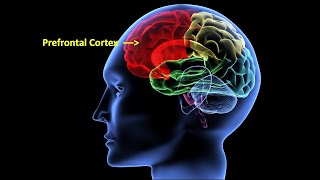
Letting go of all unnecessary thoughts, just letting them flow out of your mind as you rise higher and higher. 7. 8, 9, and you feel the elevator slowing. 10, you feel it stop with a little jerk. And as the door opens and you step out, it's like you're high above everything in a special room designed perfectly for you. You can design it right now. What color do you want it to be? You want it surrounded by windows, maybe a few screens that you can look at if you want to look at the past or the future, or to tap into any knowledge or wisdom. You can zoom in on whatever you wish. Good. And here in this special place, you can even look down upon your body where it rests peacefully down on Earth. You can also look out and see the challenges around you, and you can see all the possibilities of choices. Just be comfortable in this room. Nothing to do now. Find yourself a comfortable place to sit or lie down and know this room. You can return to it any time you wish just by thinking about it, picturing it, riding up on your elevator as you count from 1 to 10. But for now, we're going to go down and explore a little bit more. So let yourself stand up, go back to your elevator, step onto it, turn around, watch the door close. 10, as it starts down. 9, 8, 7, peacefully sinking down. 6, 5, back into your peaceful body where it's resting comfortably. 4, 3, 2, 1, 0. As it slowly comes to a stop, you return once again to your relaxed and comfortable body. Good. And take a moment and notice how comfortable you feel. We'll come back to that tower shortly. But we're here to talk about wisdom, so I'd like to make a couple of comments about wisdom. What is it? It has to do with making mental choices. To choose wisely is to make the choice today that you will look back upon next week or next year and think to yourself, "That was a wise choice. I'm glad I made it." In other words, to have the presence of mind and the power of imagination to create a mental representation of the desired future, and from that positive perspective evaluate your present options. And then choose wisely. We know about knowledge. What's the difference between knowledge and wisdom? Well, you get knowledge by learning more. You get wisdom by letting go of that which is not needed for the task at hand. Knowledge comes. Wisdom lingers. You gain knowledge by learning something every day. You gain wisdom by letting go of something every day. So in order for us to get perhaps even a better idea of what knowledge and wisdom, the difference, and especially of how to understand what knowledge is, Let's take a look at the human nervous system, starting from that basic reflex arc. That's just one afferent neuron and one efferent neuron, one to carry a message and the other to bring it back. To tap on the knee and it jerks. Simple. And then you have a small brain that connects several segments together. You need that for, let's say, a withdrawal reflex if you step on a tack. The next level of brain is your spinal cord. That's why you cut off the chicken's head but it still runs around the yard, because it has a brain. It's just a very primitive one. Now you come up to the reptilian brain, which is responsible for immune function, digestion, hunting, sex, blood pressure, things like that. None of this is available to your conscious mind. These are all brains that are below the level of the conscious mind. And at the top is the limbic system, the emotional brain. Nature developed this emotional brain to control the reptilian brain, and it controls the reptilian brain by emotion. So if you feel happy and joyful, then your body is put into shape to enjoy it. If you're feeling amorous, then the reptilian body responds by giving you an erection or the other phenomena that happen when you are sexually aroused. If you're angry, then your muscles tense up and your blood flows faster and so forth. So the limbic system is what creates the emotion, and this is where the monkey brain is. We call this the paleomammalian cortex because all mammals have this same part of the brain. But then at a high— and that's also an unconscious level of the brain, but at a higher level we have now the neocortex of the brain. And the neocortex is the one that allows us to think and to visualize things and to call on just the vast stores of memory and knowledge that we have. There's a special part of that neocortex which is called the prefrontal cortex. It's in the front of the brain, up above your eyes. That's what's called the brain's brain. And this is where System 2 thinking takes place, conscious thinking. And this is the part of us that's capable of wisdom. So we have all of these different parts of the nervous system, and they're all nestled within each other like, like Russian dolls, and they function well as a system. A system is a set of connected things or parts working together as part of a mechanism or an interconnecting network. The product of this working together is a complex whole that can produce far beyond what any single part could produce. And in our system, we have this conscious mind at the top. Underneath there's the monkey mind, the limbic system, and below that are all those other lower systems— reptilian mind and so forth. And there's a hierarchy, and every system has a hierarchy. There's a higher and a lower, and that as you go up in the hierarchy, there are abilities that emerge that are not present at the lower level. Of the hierarchy. And that's very, very important because we want those parts of us with higher abilities making the major choices in our lives. You may know of those systems, subsystems of the brain, as being the physical, the basic, the emotional— because the emotions contain can control the physical, the mental, which has the possibility and should be in charge of the emotional, and then the spiritual or philosophical system, which is a little more difficult to understand, but we'll touch on it today and at other times. And the point, the point of this hierarchy is guidance and control must come from the upper levels down toward the lower levels. The lower levels in turn must send good high quality information up to the higher levels. You can think about it like an army. You have a general at the top, gives the orders, but he's got to get the right information from the private who's down there on the battlefield, passing it up. So our, our minds must work that same way. Our nervous systems, our brains must operate in that way. Unfortunately, that's not what happens. It Sometimes we see a chocolate chip cookie and the stomach and the tongue say, "I want that chocolate chip cookie!" And the brain says, "Well, you know, you're on a diet now, you can't have that chocolate chip cookie." And the stomach and the tongue say, "Ah, me want cookie!" And you find yourself eating that cookie because you've just had an insurrection. Too many of the choices that we're making are making, because subcortical parts of us are making the decisions for us. Again, just a quick look at that limbic system: the thalamus, the hippocampus, the amygdala, hypothalamus, and the olfactory bulb. And The capacity of— I just want to look at just the different levels of the brain. If we think, if we look at the brain of a fish or a frog or crocodile or monkey, chimpanzee, or a human, we can see that the brains all look the same. They have the same parts, except the higher and higher mammals begin to have this big neocortex that allows us to do this special kind of, special kind of thinking. So if you throw corn on the ground, a chicken will, will eat it up. If you throw it through a fence, the chicken will try to stick its head through the fence to get it, but it won't be able to get it because the fence is in the way, and it won't think to do anything else. But if it's a dog on one side of that fence and you throw a piece of meat on the other side, Well, that dog will go over that fence, or that dog will go under that fence, or it'll run around the edge of that fence, but it will get to that meat. But if there's a latch on the fence, the dog's brain can't quite figure out how to open the latch. But if you have the brain of a monkey, it can open that latch, because it's a higher level of brain, higher thinking. But if it's a combination latch, oops, monkey's not going you're not going to be able to open that combination lock. But if you have even the mind of a child, you can open that lock, and so forth. So we have these higher and higher levels of mind. What we want to be able to do is to use those higher levels of mind, because those are the ones that can reach the level of wisdom. And far too many of us unfortunately have the brain of Homer Simpson, which operates a little differently because that little ADD monkey inside keeps changing things and keeps saying, "Look here, look there, look at this, check this out over here," keeps distracting us. And so we end up being distracted far too often not doing the things that we want to do. We get stuck. We all know about that, I'm sure. Sometimes I talk about what I call the tyranny of the monkey brain, because that's the part of us that distracts us from what we should be doing. And we know that the limbic system, which is the monkey brain, the thinking that emanates from it Tends to dominate the higher levels of our thinking to an unbelievable degree. The vast majority of all of our diseases, illnesses, social dysfunction, wars, addictions, broken families, racism, failure, unhappiness, the human suffering as a result of all of that is a very, very— is all the very result of that simple process of those lower levels of the mind overcoming the higher levels. And that's why we need to upgrade our mental operating system. The monkey mind worked perfectly 100,000 years ago, even 50,000, even 10,000 years ago. You know, it could— you could do just about everything with that. But more recently, we have this very complex world, and we've got to upgrade our thinking. And that failure of our upgrade in thinking has been taken advantage of by the system. And so our problems are magnified by the depredations of the mind control techniques of our media and the billionaires and the sociopaths that are using it to hijack our lives. Once again, wisdom is the choice Now, to do what you will look back upon tomorrow and think, "Mm, that was wise." And the hijacking that I spoke of, we've been hijacked into believing that happiness we gain from getting more. We gain prosperity by going into debt. We gain health by going to our sick care system. Patriotism is controlled by fear and propaganda instead of community shared effort. Our thinking has been hijacked because we've been taught to think in the old paradigm and not in the new paradigm as we've been learning. So let me review just briefly the two basic systems: the monkey mind and then the higher mind. The monkey mind thinks in the form of what we call System 1. It's fast. Its defining characteristics are that it's unconscious, it's effortless, automatic, without self-awareness or control. And as far as it's concerned, what it sees is all there is. There's nothing else. That's what the monkey thinks. The role is to assess the situation and react. That's automatic. System 2, the slow system, its defining characteristics are: it's deliberate and conscious, it's effortful, controlled mental processes, with self-awareness, control, it's logical and skeptical. And its role is to seek new and missing information and to make intentional decisions. So let's go on and have some experience of System 1. You've probably seen this before, but still look at it. You see that long— what appears to be a long line and a short line. If you measure it, you find out they're exactly the same. But when you look at that optical illusion we all know about, you find that they look different. And that's because the monkey mind has decided that they're different before it ever gets to your consciousness. The dot in the middle looks smaller on one side than the other. Take my word for it, they're exactly the same. And then there's the 9-dot problem. Your goal here is to draw 4 straight lines without lifting your pencil from the paper, and you have to go through all the dots. Try it: 1, 2, 3, 4, 1, 2, 3, 4. Do it on a piece of paper and try it. I'll tell you later what the— what one answer is. It can be done. And here you see lines, those lines going from left to right. Are they parallel or not? They don't look parallel, but they are. The monkey mind has interpreted this before it reaches you. And read this out loud now. Now read it again, but proofread it this time. You didn't really see what was there. The monkey mind already interpreted. And here you see 3 men who certainly are obviously not the same height, but in fact they are. Here I cut one loose and moved it up, and you can see they're all the same. Now we call them optical illusions, but what they really are, decisions that are made by the monkey mind before anything even gets to consciousness. Okay, now let's go back to the 9-dot problem. The solution? It's right there. Simple as you can be, right? Why didn't you see it? Because your unconscious mind put an invisible box around it. And you didn't think that you could go outside the box. So the master of hijacking your mind, the guy who started it all in a really big way, is named Edward Bernays, who was a nephew of Sigmund Freud. What's a standard breakfast we get in this country, right? Eggs and bacon. It used to not be that way. Nobody ate eggs and bacon. People would have, you know, like a little bit of cereal, maybe a little fruit. But Mr. Bernays, working for the Hormel Ham Company, sent out a letter to thousands of doctors and saying, since people have hard work to do, is it a good idea that they should have a heavy breakfast in the morning? You know, like, like, uh, before they go out. And then the farmer— and a lot of the doctors answered. And some of the ones he sent out, 3,000 of them say, yeah, that sounds like a good idea. So he put out an ad: 3,000 doctors agree a heavy breakfast in the morning, like ham and eggs, is a healthy thing. And guess what? We all turned into bacon and eggs eaters. And working for the Lucky Strike company, Lucky Strike wanted to be able to expand the number of sales of their cigarettes, but women didn't smoke. It was considered very gross for women to smoke in public or anything like that. So he got several— Bernays did— several high-fashion models to walk at the beginning, at the beginning of the Easter parade, and at a certain signal at a certain corner, they were all to take out their cigarettes and light them. And he made sure that the press was on that corner to see that something special was going to happen. And at a certain moment, that's exactly what happened. They all pulled out their cigarettes and they smoked them. It went out in all the papers, and the story that accompanied them was that they were holding their freedom torches. They were liberated now because they could smoke. And that was the beginning of women being able to smoke. And so the advertisements continued, you know, do you inhale? Because at first women didn't inhale. Well, we had to get them to inhale first, so we promoted that. So this was a fellow who started us thinking in this way. Up until this time, people bought things because they needed them. But ever since Bernays came along with his ideas, there was a different idea that people had. People bought things because they wanted them, not because they needed them. And that was really the beginning of this world we have now with our attention engineers by the hundreds of thousands trying to control our eyebrow— our eyeballs to get us to pay attention to what they want and to sell us what products they want. And I have quite a bit of notes on this, but I think I'll move ahead because of time. I'll share the rest of these with you in a little bit, a little bit later time. But do want to tell you a little bit about Daniel Kahneman, who won the Nobel Prize for studying what motivates people to make the choices they make. Here's a couple of words, okay, what There's a couple of vowels missing. If you fill it in, what does it come out to be? There are two main answers that people come up with: wash and soap, or wish and soup. It turns out that if I had been talking about getting the dishes cleaner and I showed you this, you'd see wash and soap. If I was talking about feeling hungry, you would see wish soup. Without your planning it, that's what would happen. The Florida effect: you have your subject and you talk to your subject, you tell a story that talks about Florida, about someone being kind of forgetful, a bald-headed guy who lives in Florida. And then the idea is you say, okay, now you need to go down the hall and there's someone who will give you the next part of the test down that hallway. And then they measure the people walking down the hallway, and whenever the story has any kind of words like Florida, forgetful, or bald, or gray, or wrinkle, people walk slower because their unconscious minds are thinking about being older, and then automatically they work— they walk more slowly. When people were shown various Far Side cartoons Some of them, they had them hold a pencil in their mouth. You know how it makes you, makes you sort of smile when you hold a pencil in your mouth? When people held the pencil in their mouth, they thought the cartoons were a good deal funnier than when they weren't holding a pencil in their mouth. In other words, when your unconscious mind feels your face smiling, it thinks things are funnier. It's one of the good reasons you should wear a smile, right? Let a smile be your umbrella. In another study, the experimenter comes into the room and gives the subject a cup of coffee. He says, "Would you hold my coffee for me while I set my things on the desk?" And 30 seconds later, he takes that cup of coffee back from them and then You know, talks about whatever, who cares, doesn't make any difference, because the real point of the test is on the way out they interview the subject and they say, "Do you feel that the experimenter had a warm personality or a cool personality?" And when people were given a hot cup of coffee, they thought he had a warm personality. When they were given a cup of iced coffee, they thought he had a cool personality. It's the most amazing thing. In another study, there was a— at a certain kitchen in a British university, they had a coffee pot, and you're supposed to put in a quarter every time you take a cup of coffee. Well, they were using up a lot of coffee, and they got very few quarters. Well, there was a poster that was sitting right there next to the coffee pot. And so they started an experiment and they put various pictures on the posters. Sometimes, sometimes they would have flowers, sometimes they would have eyes, other times leaves, and other time other eyes. Well, On the right side of this chart, you can see how much more money they earned, they collected from people when there are eyes. Nobody said anything, but the simple presence of eyes on the poster makes you be more honest, and you have no idea that it's happening. All right. And finally, here's a problem for you: a bat and a ball cost $1.10 total. The bat costs $1 more than the ball. How much does the ball cost? Pretty easy, right? Well, your answer is probably wrong because you probably thought the ball cost 10 cents. Well, that couldn't be. Because if the ball costs 10 cents and the bat costs a dollar more, it costs $1.10, that would make $1.20. So the ball has to cost 5 cents and the bat costs $1.05, and they come up to $1.10. But just to show how the immediate thoughts that come along are often not the best ones. They're not the best ones. When you use wisdom, you have to go beyond the automatic response to a higher level. You all know about Solomon's choice. Two women each claimed ownership of a certain baby, and Solomon had to decide which was the real mother. And this is before the days of are being able to look at genetic profiles. And so he said, "Oh, it's very easy. We'll just chop the baby in half." And the woman over on the left says, "Okay, that sounds fine with me." And the other baby says, "No, no, no, go ahead and give her to the other woman rather than cut it in half." And Solomon immediately knew who the real mother was because the real mother would not have allowed the baby to be cut in half. And so we do have that kind of wisdom within. We can figure out things, and our goal is to be able to develop that wisdom. Samurai went to the wisest man of all of Japan and said, "I want to know the answer to my question. No one's been able to answer it. What's the difference between heaven and hell?" And the wise man started laughing and says, "You, a samurai, somebody goes around killing people for money, you want to know the difference between heaven and hell? Hahaha!" Laughs in his face. And the samurai gets furious, raises his sword, and starts to kill the monk. And the old man stops laughing and says, "That is hell." And the samurai gets it. And the wise man said, "That is heaven." It's right there. But how do you get to that wisdom? Gandhi said, "The ally you must always seek is the part of your adversary that knows what is right." Think about it. In your arguments, in your disagreements, The ally you must always seek is the part of your adversary that knows what is right. In other words, there's goodness within every one of us. There's something good and loving and beautiful. We are both part of a sacred whole, and we can connect with each other at the level that knows this. The seeming problems that we have disappear. Those are some fragments of wisdom that I think give a sense of what we're talking about. Or my favorite one of the two girls who are fighting over the orange, and the father said, "Well, I'll cut it in half and you each have a half and you should be happy." And the mother comes along and says, "Well, what did you want the orange for?" The first one says, "I wanted the flesh of the orange to make a fruit salad." She asked the other what she wanted it for. She said, "I wanted the rind of the orange to make marmalade." And so she carved it up differently. And so it's the ability to step back from a situation and to look at all of it and then make your wise choice. And you can do it, but you have to practice doing it. So helping to make sure that the decisions that you make are wise ones. Step 1: Enter a deeply relaxed state. This quiets down the monkey mind, takes the monkey mind out of the situation because it's not wrestling with something or thinking there's an emergency or being addicted to something. The next step is to go to a place such as your control room, your happy place, a safe place where you can look beyond the immediate situation and look far into the future and the past. Then mentally go through the imagery of each of the choices that are available to you now. Play them out into the future and see what they're likely to lead to. Then choose the one most likely to bring about the future you most desire and visualize yourself achieving it. Create a step-by-step plan to accomplish this and put it into action. And now let's do that using our tower that we started with a little while ago. Once again, find yourself a comfortable place to rest in. A place far away from anything that could ever disturb you is where you want to go. Sitting back comfortably, be aware there is no other place you need to go at this moment. Take a deep breath in. As you let it out, Let your eyelids close, sink down into that little pause after you breathe out and before the next breath comes in, releasing and relaxing. Let every breath in breathe in peace. Let every breath out breathe out all discomfort and tension. Feel the ripples of relaxation flowing out outward from your closed eyelids throughout your face, your scalp, your neck and shoulders and arms, all the way through your chest and your belly, through your pelvis, your thighs, knees, legs, and ankles and feet, all the way down to the tips of your toes, allowing yourself to be aware of the fact that there's nothing else that needs to be done at this moment. There's nowhere else that you need to go, no problem that has to be solved. Anytime an unnecessary thought comes along, with your next breath out, breathe that unnecessary thought out through your nostrils. Coming more and more into this present moment. Good. And now picture before you you, your tower. It can be any tower you like. It can be a metal tower, a stone tower, a wooden tower, or a tower made of roses. But there's an elevator in the center. Go to the elevator in the base of this tower. Step on, turn around toward the door. And as the door closes, watch the numbers go up from 1 to 10. 1, 2, feel the elevator lifting. 3, watch the numbers change. 4, you feel yourself growing lighter and lighter. 5, leaving behind all unnecessary tensions. 6, letting go of all unnecessary thoughts. Just letting them flow out as you rise higher. 7, 8, lighter and lighter. 9, feeling the elevator beginning to slow to a stop. And then 10, as the door opens, you step out. You're high above everything. Look around your beautiful control room. Find that comfortable place where you can sit. Realize you can look at the present. You can turn to your future machine and project yourself forward into the future. You can project yourself into the past. You can make the choices that you want to make. But right now, I want you to think about some choice that is available for you to look at in your future. It could be where you want to move, or where you want to work, or how you want to approach the next problem in your life, or how you want to design your daily schedule, the diet that you want to be on, or how you want to exercise. Or maybe there's someone you need to talk to. To repair a relationship? Think about it. You can pause for as long as you want to. And now think about the different ways that you might handle it. What are the choices that you see that are available to you right now. Now, one by one, trace those choices out into the future. How are things going to be next week if you make choice number 1? How's it going to be next month, or next year, or in 20 minutes? Whatever you choose on the time frame. And then take your second choice, visualize it, visualize yourself making that choice, and notice how you're going to feel in the future. And feel it. One by one, you go through your choices, and generally you'll notice there's one choice that stands out above all the others. And imagine yourself making that choice. You may find that the choice that has to do with Being patient, being accepting, having the courage to make the right choice, which is often the hardest choice. Often it's about love and caring. It's about being honest. It's not about comparison or judge— comparison or judgment. Has to do with accepting people as who they are, has to do with being a good friend, a good participant, a good member of a group. However it is, picture yourself making the right choice and being really successful, and feel the feeling of success. Feel the joy. Yeah, that's it. Because the stronger you can let yourself feel that feeling, the stronger a case you're making to the rest of your nervous system and the rest of your body. Good. Now, as you return back to the present moment, Think about what are some of the automatic negative thoughts you need to just drop out of your mind and out of your life. What addictions do you want to drop? What's the creative behavior that you need to perform in order to accomplish it? What are the resources you need to call on to create this future that you have in mind? Think in terms of your friends, the internet, library, resources within yourself, your talents, your passion, your own drive, your own self-confidence. Think about what you need to bring to bear to make that wise choice. Visualize yourself doing it. Make a promise that you're going to create the schedule that you need. And imagine yourself being catapulted toward the future. Imagine you can feel yourself already moving in that direction. And then when you're ready, Go back to your elevator, climb on board, face the door, watch it close, come back down. 10, 9, 8, 7, 6, 5, 4, 3, 2, 1, 0. As your elevator stops, the doors open. Be back in your body, resting comfortably, feeling really positive, having a sense now that there's a clear way for you to make wise choices in the future.
Good.
Remember, anytime you want it, find yourself back in your tower just by counting yourself up there. Make the wise choice by visualizing it in the future. Picture yourself accomplishing it. Very simple and yet very, very powerful. Good. If you'd like to explore wisdom a little bit more, I suggest that you look at the product that I have created. It's called the Serenity Prayer. You can find it at drmiller.com, drmiller.com. We go much more into exactly what it means to have the serenity and the wisdom and the courage.
As I bid you adieu until our next session, I'd like to share with you the fact that I truly love bringing this extraordinary material forth and sharing it with you. And it is the result of more than 50 years of highly focused research and product design. My goal has been to create extremely affordable programs that are far superior to anything else that's available for your personal healing and life transformation, as well as for the healing of our planet as a whole. Even though I love sharing it with you, it is extremely time and intensive to gather the material, put it in an easy-to-understand format, and then record it in my studio, edit, add music, and mix down the final product. It's also quite financially taxing, requiring tens of thousands of dollars worth of equipment, salaries, and significant day-to-day overhead. In order In order for me to continue doing this, however, I'll need a vote of confidence from you, every one of you, in the form of financial support. I welcome any and all contributions in the form of donations. You can make those donations directly via PayPal, directing it to accounting@drmiller.com. Alternatively, you can go to my website shop.drmiller.com/donate, shop.drmiller.com/donate, or simply mail a check to Dr. Miller, Post Office Box 803, Nevada City, California 95959, and just write donation on on the check so we'll know why we're receiving it. Products you will find at DrMiller.com are available as instant downloads, CDs, books, and even some cassette tapes, all 100% guaranteed. Those that are directly related to the subject of today's webinar are Serenity Prayer which consists of a collection of ancient wisdom from men and women whose teachings have been our guides, plus two guided imagery experiences in which we break down the concepts of serenity, courage, and especially wisdom. An excellent way to learn to be more wise in your thinking and your choosing. Personal Excellence is a 12-part training in applying all the techniques of selective awareness, mindfulness, and guided imagery meditation. You will find 6 stimulating lessons and 6 different guided imagery experiences focused on learning deep relaxation meditation, freeing yourself of bad habits from the past, developing new wise behaviors for the future, creating a powerful life vision for your future, and developing effective future plans for achieving it. Because making any significant changes in your life involve being able to let go of all the attachments and behaviors from the past, you will find it Accepting Change and Moving On of great value. It features two guided imagery meditations applying the wisdom of the Tao Te Ching to empower you to set yourself free from the past. If you haven't already done so, it's probably time for you to read or listen to my book, Our Culture on the Couch: 7 Steps for Global Healing. It is is an effective guide for you to let go of all the old paradigm thinking and to embrace the new paradigm. This is the most recent book I've written, and it reveals the source of the negativity and conflict that is building up and destroying us as individuals, and also threatening to destroy our planet right before our eyes. As a special treat. It is my voice that performs the audio version. You'll also find the Love Meditation and I Am Awakening Self-Acceptance to be quite useful. And remember, a portion of all product sales goes to support these webinars, so give us a hand. It's been a pleasure to be with you here today. Please take Take care of yourself until we meet again. Namaste.










