How to Heal Your Physical Body with Selective Awareness, Mindfulness and Meditation
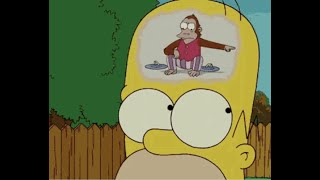
In this 2022 YouTube presentation, Dr. Emmett Miller combines a lecture on his proprietary "Selective Awareness Exploration" with a guided meditation and a series of practical exercises aimed at self‑healing. He begins with a Sherlock‑Holmes anecdote to illustrate how hidden, often unconscious, traumas can be the root cause of physical disease. Miller outlines a stress‑response model that pits the fast, automatic "System 1" (the "monkey mind") against the slower, conscious "System 2" (pre‑frontal cortex), explaining how chronic mental conflict creates muscle tension, spasm, and downstream organ dysfunction (headaches, back pain, hypertension, GI distress, asthma, bone loss, immune dysregulation, etc.). He then leads listeners through progressive relaxation (eyelid‑drop, full‑body scan), visualization (special place, laser‑submarine bone tour), Feldenkrais‑style arm‑head coordination, and a hand‑clasp tension‑release exercise, all framed as ways to re‑wire neural pathways via neuroplasticity. Throughout, Miller intersperses case studies— a young woman saved from bowel resection, a infant‑trauma‑induced chronic tension, cancer patients defying prognoses— to demonstrate how age‑regression and guided imagery can uncover and resolve the original emotional trigger. He situates his work historically (Pasteur, Claude Bernard, Hans Selye) and critiques modern medicine’s profit‑driven model, arguing that mindfulness and selective awareness are the most powerful, low‑cost tools for personal and planetary health. The talk concludes with promotion of his books, audio/video programs, the "Live Life" film, and upcoming webinars that aim to upgrade collective mental software and counter media propaganda.
Chapters
[MUSIC] Today we're talking about how to heal your body, your mind, with mindfulness, guided imagery, meditation. Really pleasant to be here with you. It's exciting for me to realize that every time I'm here, I'm actually speaking and showing some of my thoughts and ideas and experiences with several hundred people. I appreciate you all being here, but I especially appreciate those 4 or 5 who actually do send a donation, because it's— I love to share with you, and the expenses, it's pretty huge in terms of time and money and output and so forth. So thank you so much for those who think to share, and I'd like to encourage the rest of you. I don't want to be insulting, and you know, perhaps everyone is very impecunious at the moment. I know I am. So it may feel that you don't have anything to share, but if you like what you see, share and I'll be certain to keep bringing it to you. At least that's, that's the plan. So I like to begin by telling a little Sherlock Holmes story. It's when Holmes and Watson go camping, and it's the middle of the night, and Holmes elbows Watson awake and says, "Dr. Watson, look up and tell me what you see." And Watson says, "Well, Holmes, I see stars, stars everywhere against the black, black sky." And Holmes says, "Yes, and what does that tell you, Watson?" Watson replied, "Well, astronomically, it tells me there are millions of galaxies and even billions of stars." 'Theologically, it tells me that God is great and everywhere, and that we are small and insignificant. Meteorologically, it tells me that we'll probably have a nice clear day tomorrow. What does it tell you, Sherlock?' Holmes replies, 'Elementary, my dear Watson. Somebody stole our tent.' Uh, why do I tell that story? Well, the 1970s were amazing breakthrough years for me when I discovered the incredible power of hypnotherapy, and especially age regression analysis in the way I had developed it, which I called Selective Awareness Exploration. And that by using these incredible tools It was possible to reveal the source of the imbalance that was at the root of most of the problems that I was seeing in my medical practice. And today I hope to show you how traumas from the past, traumas that you may not even be consciously aware of, may be the root cause of your disease and your illness. And this is whether this is a new disease or a new illness or an old one. We'll talk primarily about your physical illnesses. We'll also touch on your emotional and behavioral ones, and then discuss how the tools that you've been learning about here can help you bring about healing if you're willing to use them. And you can save a lot of money on medical visits as well. I'll introduce you to some of the extraordinary techniques I've discovered, and perhaps even some of the extraordinary people, and how they've revealed the precise manner in which our emotional conflicts that we may be unaware of can trigger our out-of-control stress system to cause disease or allow disease and dysfunction to occur. You'll learn how your ability to relax deeply and to use your guided imagery and your ability to use mental image rehearsal to rewire your nervous system, reprogram the behaviors of the cells of your body. In our previous sessions together, you learned how dramatically your thoughts and images can make changes in your physical body. Today we want to apply these same tools to specific illnesses. I want to talk about self-healing techniques for problems like headaches, back pain, healing of bone fractures or osteoporosis, osteopenia, high blood pressure, GI problems, infection and immune system— all 5 or 6 of the major killers, medical killers in our system, infections, immune system problems including COVID-19, and pain relief. But first, I'd like to recall that most powerful tool for transforming our lives individually, our relationships, and our beautiful planet selective awareness, or as it has come to be known, mindfulness and meditation. So allow yourself to find a place where you can sit or lie down comfortably and give yourself permission to go within. Because you've been practicing it on your own, many of you will find that you go into the deeply relaxed state even much more quickly than my guiding words. That's okay. You can use these skills to simply go to a deeper place. I'm not sure that you can ever go too deep, and there's always a deeper place to go to. So in your comfortable position, take a deep breath in. As you let that breath out, and let it be a feeling of letting go. Let go of the tension in your eyelids and allow them to fall closed, just as if you've been up really, really late at night and you're so tired your eyes just don't want to stay open, and your eyelids fall closed, allowing your eyelids to fall closed and allow your eyelid muscles to relax. Roll your eyes upward behind your closed eyelids as though you're looking upward into the prefrontal areas of your brain, the higher levels of your brain, to indicate that you are now opening to the highest levels of your awareness, to the spiritual level. If you will. And imagine your eyelids so relaxed they just don't want to budge at all, so that even if you try to open them, feel how they resist being open. Each time you test them, they relax even more. And as you test them, imagine ripples of relaxation flowing outward from your eyelids. Throughout all the rest of your body, you know, that feeling of having the relaxation flow all the way through the muscles of your face, over your scalp, as if you can feel every hair on your scalp relaxing. Feel the relaxation flow through the muscles around your mouth. Your jaw muscles relax. You may notice just your teeth drift apart very slightly as your mouth kind of droops a little bit. Let that relaxation flow down into your neck, down into your shoulders, relaxing feelings of peace and calm relaxation flowing down through your arms and your elbows, through your forearms and your wrists and your hands, all the way down to the tips of your fingers. Good. And as that relaxation reaches the tips of your fingers, take a deep breath in and draw that relaxation up from your fingertips into the center of your chest. And as you let this breath out, let it be a feeling of letting go completely. And let yourself sink into that little pause after each breath out. That quiet pause of peace and calm, and let the air do the breathing for you. No matter how relaxed you become, no matter how long you allow this pause to become, a little burst of energy always starts a new breath in. Breathing in peace and breathing in relaxation. And with each breath out, imagine you're letting go of tension, letting go of anxiety, letting go of stress, of frustration, of anger. Letting it go. Breathe it out. Sink down into that little pause and allow the air to breathe relaxation through your chest and down through your back, relaxation flowing into your abdomen. You feel the rising, falling of your abdomen with each breath, a gentle massage of relaxation to all your internal organs, relaxation flowing through your pelvis and your thighs, down through your knees and your ankles and your feet. Right down to the tips of your toes, more and more relaxed and more and more comfortable with each breath. That's it. You'll find that no matter how relaxed you become, you can always become even more relaxed. Let your relaxation double now. And to do that, in a moment I'm going to ask you to let your eyelids open and let them close again, and you'll find that eyelids, as they open and close, double your relaxation. Open your eyes and let them close and feel the relaxation doubling. And when you can feel that doubled relaxation in your eyelids, are twice as relaxed, test them. And as you test them, let that doubled relaxation flow throughout every cell of your body, all the way down, right out through the palms of your hands, all the way down, right out through the soles of your feet. More and more calm and more and more comfortable with each breath. Good. And as you become more and more physically relaxed, then you become aware of unnecessary thoughts that come along. They're unnecessary thoughts because you are not asking for any particular thoughts. They're flashes of memories from the past, imaginations about the future, thoughts about other people, other places, and other things. But they're all unnecessary to you at this moment. They're all coming up from your monkey mind, which continually wants to be on guard. But you know that you're in a safe place right now. So whenever an unnecessary thought comes along, imagine you can see that unnecessary thought like words written on a blackboard in your mind's eye. Then remember the relaxation in your eyelids, and as you gently test your eyelids, imagine you're drawing a wet eraser across your mental blackboard, erasing the unnecessary thought and sending another wave of doubled relaxation throughout your body, all the way down through your arms and legs, more and more peaceful. Good. If that same unnecessary thought comes along, or any other thought, put it on that same blackboard, and as you test your eyelids, erase that blackboard and drift deeper and deeper relaxed with each breath. Breathing in peace, and calm. Unnecessary thoughts, thoughts about the past, are unnecessary because the past doesn't exist anymore. Not even one second of the past can ever come back, so you may be free of those thoughts. The future hasn't even happened yet, so thoughts about the future is just imaginings. Allow yourself to be free of trying to imagine an unknowable future, free of the past, erasing all unnecessary thoughts and feeling lighter and lighter, as light as if you're floating on a magic carpet through space and time to a very beautiful place, someplace far, far away from anything that could ever disturb you. Picture this place around you. Feel yourself there enjoying the colors, the sounds around you, the textures of anything that you touch, the movements of your body. You can be lying down and relaxed, or you can be running, or you can be flying— whatever feels best to you. That's it. Good. Now give yourself your signal for returning to your special place, squeezing those two fingers together. That's always a signal that says to your deeper mind that this is a safe place and a time that it's good to relax. And you'll come right back here again. But for now, gradually allow yourself to return to where your body is resting comfortably, allowing your eyelids to feel lighter and lighter as they begin to open and you begin to slowly discover the light and colors that are around you. Allow your body to stretch and move. Take a deep breath in, let it out. Eyes open, wide awake, and take a moment to notice how comfortable you've allowed yourself to become. Good. I'd like to share with you just this Just this little cartoon that someone shared with me. First day of medical school, the head doctor is at the blackboard, and written on the blackboard is, "Remember, a patient cured is a customer lost." Pretty sardonic, and of course that's not true. But when we talk about mainstream and modern medicine, We're not talking about doctors. We're not talking about healers. Because Wall Street has taken over medicine. That used to be when I began medicine, way, way, way back. Every doctor owned his or her own office. Weren't a lot of hers around, but they owned their own offices. And we were responsible to our patients and to our beliefs and to the Pythagorean theorem and the Hippocratic oath and all of those things. Things. But gradually over time, doctors have become more and more employed. And now more than 50%, probably 75% or more of doctors are employed by companies that far too often care so much more about the bottom line than they do about the experience of the patient. Uh, and this is a miserable experience for many of the doctors I know of who are caught in this system. And many of them leave it for that reason. Many others fight on to do the best they can in the face of it. But it's true, when people ask how come the tools and techniques that I use aren't well known throughout the profession, well, they do save an enormous amount of money. Sometimes I see a person who's having a panic attack and having pain in their chest and they're sweating and they're short of breath, and, you know, within 10 minutes I I have them feeling peaceful. And with an hour or two of work, I've showed them how to bring their anxiety under their control. And that's it. And they don't have it. But that same person can go to the emergency room and easily have $8,000 to $12,000 or $15,000 worth of tests done, all the way up to including cardiac catheterization and MRIs and CAT scans and blood tests. And when they're always say, well, We're pleased to let you know that there's nothing physically wrong with you. You should go to a psychiatrist. Oh my goodness. Well, anyway, that's our little joke for the day. So we should get on to what's, you know, what's a little more— it's a little more serious than what we're here to talk about. You know, in our previous sessions, we demonstrated in some very simple situations in which normally unconscious involuntary behaviors can be brought under our conscious control. We can't voluntarily control our salivation, but if we visualize sucking a lemon, we salivate. We can't voluntarily increase our heart rate and blood pressure and so forth, but if we visualize standing on the edge edge of the roof of a 50-story high building, looking over the edge, our heart rate and blood pressure go up. That's because your monkey mind thinks that this is a real situation and it's reacting to it. Okay, now I want to show you something also, just a little more of contact with the unconscious part of the mind. Let yourself stand up and stand up about with your feet about shoulder width apart. And I want you to begin by just being in that comfortable— and your legs, your feet aren't going to move from where they are on the ground for this whole experience. But I want you to lift up your right arm and hand so it's right in front of you, and I want you to stare at your thumb. And then gradually move your right hand to the right and turn your head to the right also so it follows your thumb all the way around as far as you can easily and comfortably go, and then wiggle your thumb and make a mark on the wall for as far around as you went. Bring your hand back to center and then let it relax. Don't move yet, let your feet stay where they are. Now, a very simple and gentle exercise: raise your hand again in front of you, looking at your thumb, your arm, Extended. Now move your right hand and arm to the right, but turn your head to the left as far as your head easily goes and your arm easily goes. And then bring them both back to center again and repeat that exercise again. Right arm and hand to the right, head turned to the left. Come back around, right hand and arm straight ahead, head straight ahead. And one more time, head to the left, right arm to the right, and then bring the boat back to center. Then let your arm rest for a moment, and again, without moving your feet, extend your arm in front of you again, and once again move your right arm to the right, but let your eyes follow it around. Go as far as you can go now. And make a mark on the wall, right? And notice how much further you went. Well, what happened? Very strange, huh? Because there was a possibility of you going further than you thought you could go. Now I want you to do this with your left hand extended in front of you, looking at your left thumb. And now we're going to do the same test to the left side. Move your left hand and arm to the left and turn your head to the left, feet staying where they are, but as far as you can comfortably go. Make a little mark on the wall by wiggling your thumb. Bring your hand and arm back in front of you again. Let your left arm rest for a moment. Lift your left arm up again in front of you. And we're going to do the same exercise but the reverse of what we did to the other side. So move your left arm to the left as your head turns to the right. Well, better still, let your, let your left arm rest in your lap. Instead of lifting your left arm, I want you to just imagine that you're lifting your left arm. Close your eyes and imagine you're lifting your left arm You're looking at your thumb. Now imagine your left arm moving to the left and imagine your head moving to the right, but don't actually physically move. As far as you can comfortably go, then bring them back to center again. Then let's do that two more times. Imagine your left arm moving to the left and your head to the right. Then bring them back to center again. And one more time, imagine your left arm going to the left, your head turning to the right. Bring them both back to the center and then lower your imaginary left arm. Good. Now lift your physical left arm and turn your head and your arm to the left. And go all the way around and see how far you can go. All right, so isn't that interesting? This is an old Feldenkrais exercise. Feldenkrais is a wonderful system. Um, yeah, you can be in your comfortable place again. So you could go further than you thought you could go. And we did it with the left hand. Just by visualizing yourself doing the exercise, you could make yourself go further. Now we could imagine that left arm going even further around and bring your physical arm up after you've imagined it, and it might go even further. That's a little bit of how we take material at the conscious level and have an effect on what's going on at the physical— at the unconscious level. So remembering that, that's at the basis of what we do. And you're remembering that experience isn't something that happens to you. Your experience is the result of how you interpret what has happened to you. And your experience has a direct impact on your health and on your ability to heal your body. And we also learned that neurons that fire together wire together. —so that when you hold certain images in your mind, you organize the neurons of your brain. You actually rewire your brain, create new algorithms, and new algorithms—the proper algorithms—tend to bring about healing and transformation through the process of neuroplasticity, which is the ability of the adult brain to change itself in form and in function. Now, we talked about before how our nervous system consists of, or it can be thought of, it's useful to think of it as consisting of three, three different systems, and that is the very basic reptilian system, which are the survival mechanisms, your blood pressure, blood flow, digestion, stuff like that, way out of the control of your conscious mind. Then there's the— that's the brown stuff. The red stuff, that's your limbic system, that's monkey brain. It's an old part of the brain, it hasn't changed much in the last few million years. Above that, we have the neocortex. and this is the part that makes us mammals, and especially us primates, so smart and able— and able to think. And that limbic system, our monkey brain, consists of thalamus, hippocampus, amygdala, hypothalamus, olfactory bulb— all of those are included in that in that area of the brain, the monkey brain. But we also talked about the fact that the prefrontal cortex there at the front of the neocortex— that's the highest level of the brain, the brain's brain. That's where we make the highest levels of, of decisions. It's where we should be making our highest levels of decisions. We also talked about the fact that even though we have a brain that's set up to work well for the caveman, the world has changed enormously and our brains are simply not working well. And that's why a huge number of— yeah, probably 80-90% of our illnesses and dysfunctions and sufferings and diseases ultimately come down to our failure to have adapted to the new world that we live in. We have System 1, that's part of the monkey brain. It's fast, its defining characteristics: it's unconscious, it's effortless and automatic, no self-awareness or control. A higher level of the brain, particularly in the neocortex and in the prefrontal cortex, is System 2. It's much slower, it's deliberate, it's conscious, it's effortful. You need awareness, self-awareness. It's logical, it's skeptical. My image is if you're— if you're a driver and you come to a stop sign or a red light or something, You hardly think about it. You automatically slow down, stop, or turn a little, whatever needs to be done. As opposed to if you're parallel parking, you don't do that unless you're a really skilled chauffeur. You need the higher levels of your mind: how close am I to that car, where's my front wheel, where's the curb, etc. And in the good old caveman days, the stressors that we had were physical, they were life or death situations. That's the way the paleomammalian cortex or limbic system works, calling forth fight-or-flight reactions. But the world that we live in now, most of the time we're not confronted with something that's going to kill us within the next few moments. Yet what happens is that the monkey mind takes over. It's directing our attention rather than let us look at what we need to look at. We're being distracted. And of course, we live in a world where there's enormous amounts of money being spent to try and distract us, to make us feel like we need something, namely the product that those people are trying to sell. To us, and so we end up being thrown out of balance. I'd like to talk a little bit about the history of, uh, of, of our science, because we've, you know, all at some point heard about Louis Pasteur, who realized that in many cases, if you have an infection, then you have to have these little, what they call, wee beasties, bacteria, microscopic organisms. He said that's what's causing our diseases. The same time, however, there was Claude Bernard who had a different way of looking at it, and he felt that the source of illness is when we go out of balance, and that the idea is to keep our systems in balance. And when we're in balance, then we can fight off infections and other kinds of diseases. Well, it was much easier for people to understand the wee beasties because they could see them, but the notion of balance— so Bernard didn't get as much attention as he should have. But I think now, as we look at the illnesses that we have, from our personal illnesses to our family and relationship illnesses, all the way up to the illnesses that is sending our planet down into the manure pit, because we're out of balance. We're out of balance in the air, we're throwing the ocean out of balance, the climate is going out of balance, relationships between nations are going out of balance. Even in our grand United States, you know, our political parties can't even be in balance with each other. Something is wrong there. The other thing that was really important was Hans Selye, who came along and taught us the, the things that we want, that we got to learn about stress. And that what he called stress was a non-specific reaction that we have to any alarm that goes off. That alarm consists of a bunch of chemicals going into our bloodstream and every part of our body, and they are to prepare us for fight or flight. In other words, you're going to be dead in the next 3 seconds if you don't react. That's what stress is. And The reactions that it causes are fine. Among other things, the stress chemicals basically dissolve the organs of your body to turn them into glucose so that you can run faster or hit harder. And that's fine if it's only going to happen for 30 seconds while you fight off the bear or the lion or whatever. But then right afterward, you recover So it's a two-phase reaction, and we relax during that recovery phase. That keeps the stress in balance for us— the reaction and then the recovery. And over time, stress is balanced. Yeah, there's stresses on Monday and Wednesday, and then Sunday was one, but you know, they all balance out because we take a break between them. But in the world that we live now, The stresses are continuous, and the reaction, the stress reaction, doesn't help. It makes us sick. Not only that, but it blocks us from seeing a higher-level wise response. And this is why we need to upgrade our mental operating system, just like you have to upgrade your computer system. Because our system is designed to work so that the higher levels of the mind control and guide the lower levels, and the lower levels give honest feedback back up to the level of the mind. But that's not how it is now. The stress will cause us to feel needy, and so we eat. It makes us feel sad, so we take a drug to make us feel better. It makes us feel angry, so we take, take alcohol, and on and on and on and on, just in terms of what, what we do rather than to solve the problem in the ways that we need to be solving the problem in the world that we live in now. And I want to— I want just to take a moment because something, something really interesting has happened in my life. And the stress, of course, is not the only function of the Mind Tools we're learning here, but it's a very important first step. And I like to show some of what can be done By using the healing potential within the mind. For a long time, many decades, I'd witnessed the virtual miracles I was seeing in my practice, and I would wish that there was a way I could share them with others. And a number of years ago, an opportunity to do that came along by participating in a movie that had just been perfect— that now some years later has just been provisionally released, and the name of the movie is Live Life. And I'm going to try to let you see the trailer for this movie, and then I'll tell you how, how you can get a copy and see it. For me, it's cancer. All the doctors said, "You may not live another year." I felt like a bomb went off in our house. And I was stamped permanently disabled. I want to be able to walk. I want to be able to eat. I wanted to be able to digest food. A stranger appeared and raped and robbed and burgle and beat me up. He did almost break me. In one moment, your life is changed forever. When all hope is gone— I really spiraled into a very, very bad depression. And the end seems near— I became suicidal. A power within you— I said, "No way." I'm gonna live. I'm gonna be born. Can turn it all around.
I had her go back, relive that image as a child, and write a new script. And we can change the physical behaviors of our body through changing those stored images.
When you start to learn that you are creating what's in front of you, then you are free to travel any path that that you would like and create anything. Visualize a different existence. Starting to retrain my brain to approach problems differently. I try not to have any fears. I try to live today like there's no tomorrow. Live Life. Awaken your inner power. That's a little bit about Live Life. It's available on amazon.com. .com/live-life/dp/b09zl3bw37. You can go to amazon.com and search for Live Life the movie. You may have to go through several pages before you get to it. You can watch, get the whole movie, or you can just purchase it one episode at a time. Beyond stress, I want to talk about the diseases of tension and spasm. These are things like headaches and backaches and stomachaches and leg aches and calf spasms and neck pain and asthma and hypertension. All of these illnesses that we have come down in large part— the symptoms go down to the tension of muscles, either muscles of your back, of your neck, muscles in the walls of the arteries causing the blood pressure to go up. Okay, well, this is how muscles in the body work. If a muscle is injured, so like if you stick a needle in a person's arm in the muscle, it will automatically draw away from it. It tenses up to get away from whatever is causing the damage and constrict, so if it got damaged it will stop the bleeding. You may as a kid have done this thing where Guys take the muscle, take the knuckle and hit the muscle like that, and what they call making a frog in your muscle, but just tense up and go into spasm. That's a demonstration of how this works. So that's good for dealing with physical injuries, but now let's consider a situation where as a person in our time and place who is worried about taxes or the mortgage or how they get their kid to behave in school. Now, because the world's not going the way we want it to, there's a conflict in our consciousness. This is what I want, but this is what's happening. And the monkey mind sees it as being a conflict, which means it calls on the life-or-death stress response. I mean, it's not quite the same thing as if you're walking down the street and you look up and suddenly you see a piano hurting down toward you from the 4th floor. Those are real life or death. You need that burst of glucose and you need the muscles to run before that piano hits. But how many times does that happen? Instead, we're worried about the mortgage, we're worried about the job. But the monkey mind then tenses the relevant muscles. I tense my shoulders so I'm ready to fight. I'll stop sending blood to my internal organs so I can send it out to my muscles running away. But then this creates disease in the gastrointestinal system. The muscles in the shoulder, from being tense like this, begin to cut off the blood flow to themselves. And as they do, injury begins to appear, and the chemicals— histamines and prostaglandins and cytokines, whatever— chemicals that are in there are— that begin to cause irritation and pain. The muscle then constricts because that's what it's trained to do. But when it constricts, that makes the injury worse. And the worse injury makes it constrict more, and pretty soon you have a muscle spasm. Oh, real pain in the neck. Oh, my aching back, etc. And so many diseases of muscle spasm—backache, GI distress, blood pressure, asthma, and so forth. Now, one of the best tools for dealing with these kinds of situations are what, uh, what are what you might have heard in my CD or download, which is called Letting Go of Stress Part 2, and it uses the hand clasp. Now I'll show you how that works. Take one of your hands and slowly make a fist with it, slowly and carefully tighten it, curl your fingers around so you can feel them press your palm, wrap your thumb around your fingers, squeeze, make it really tight until your whole hand is like a block of tension. Feel that tension. Feel how much it wants to let go. Let go. Relax your hand and let your hand just be limp and loose lying next to you. Feel the difference, the lack of tension. Good. And that is the basic technique that we use. What the next step is, you need to teach that to your monkey mind. And here's how, how you might do that. Close your eyes for a moment and think of some place in your body where you have tension, or where you had a headache or a backache, or whatever it might be. Relax, go to your private place, Relax your eyelid muscles. Let your body relax. Come into the moment. Touch those fingers together to give yourself that signal to return to your special place. And be aware of that part of your body that does not fully relax, where the tension remains. In a moment, I'm going to count from 1 2, 3. As I do, I'm going to ask you to tense up that hand again, make that tight fist. And then I'm going to ask your deeper mind to really perceive how similar the tension in that hand is to that tension in the other muscle in your body. And then as I count from 3 back down to 0, going to relax that hand. And at the same time relax that other muscle within your body. So, ready? One, slowly begin to tense that hand, curl your fingers around. Two, until they come in close to your palm. Feel your hand as it begins to get tense and notice how similar it is to the feeling in that other muscle. 3, make it really tight. Notice the similarity. Imagine that you're reaching inside your body with that hand and that you're actually squeezing that muscle and making it tense, so that as I count from 3 down to 0, imagine that you're letting go of that muscle. 3, slowly let your hand begin to relax. 2, till your fingers gradually open. Imagine your hand releasing that muscle in your scalp or neck or back or wherever it is. 1, let your hand become entirely limp and loose. Imagine that other muscle becoming just that, limp and loose. Remember the relaxation in your eyelids, and then test your eyelids and let that feeling of relaxation from your eyelids flow down through your arm into your hand and relax it even more. And let it flow from your eyelids into that muscle that needs to relax. And if you like, you can take your relaxed hand and place it right on top of that other muscle that needs to relax and let go, and let the peace and calm flow from your hand lovingly into that muscle, gently, caring. Good. And you can remain in that place for a little while, but I'm going to go on. And of course, this was a 3-minute guidance through the basic pattern that really takes somewhere between 12 and 18 minutes when you are using it listening on, on one of those, one of those CDs or downloads that, that I've, that I've produced. And they are one that's called Headache Relief. Next one's called Healing Your Back Down with High Blood Pressure. And if you want to learn more in general about healing the physical body, I have a video that's called The Power of Your Mind to Manage Stress and Heal Your Body, which is a, which is a DVD and can demonstrate many of these techniques to you. For dealing with stress in general, there's letting go of stress. On my DVDs and MP3 programs in general, it's not just one 10- or 20-minute imagery or meditation, but there are at least 4 of them on there. So there are 4 different specific techniques for letting go of stress to appeal to people with different, I would say, mental orientation. On the Down with High Blood Pressure, we not only talk about how to lower the blood pressure, but we also look at the source of your high blood pressure. And my early work in the 1970s was developing what's called the Selective Awareness Exploration and it's what I published in my book in 1973, Selective Awareness: The New Science of Mind-Body Medicine, that I had created. Um, and but I'll— these are the kinds of cases that I would see. This young woman had for years suffered from a gastrointestinal problem, had been through everything that medicine could offer, and at this point, as you can see, was in terribly malnourished condition and a great deal of pain, very sad and very unhappy, as you can imagine. And they were about to remove most of her bowel at this point, and for some reason the doctor called me in and said, 'See what you can do with her,' because he just said, 'Young woman, I don't want to have to do this to her.' Well, we use these techniques that I'm talking about here. I saw her for, I think, maybe 10 or 12 sessions, and there she is, really healthy and very juicy. Uh, I— last time I talked to her was last year, and that was 30 years after we worked together. I haven't seen her again since then, but the healing has stayed. She's rebalanced herself and she didn't need to have the surgery. She rarely has to take any medication or anything for her gastrointestinal problem. Okay, now the way that I worked, and I'll share this with you briefly, I had been an electrician, not an electronics specialist. I used to build and repair radios. And in repairing a radio, let's say you get a radio and there's a hum at the level of the speaker. Well, you take a signal tracer and you hear the hum at number 1, right near the speaker. Then you go back to just before the audio amp and you test there and you see if you still hear the hum. And if you still hear it there, then you go to just before the demodulator and to see if the hum is there. If it's still there, then you go back to 4, which is before the intermediate frequency amplifier. And if you don't hear the hum at 4, then you know you've isolated the problem to within your IF amplifier filter. And so that's how you end up not having to test everything. You just need to focus on what's happening at that level. So I said, gee, why couldn't that be what's happening with human beings? And that would be a way of explaining the phenomena that I was seeing in my work. So if a person came to see me and they were having a certain problem last week, I'd ask them to describe it, what it felt like. You know, they would feel chills and there would be a pain here, and this would go on. They would have frantic feelings in their mind. Okay, So in a deep state of relaxation or hypnosis, I would say, "Okay, let that memory go for now and let your subconscious mind bring up a time, maybe last month, just one moment before you had that same feeling and that same reaction." And the person would say, "Oh, I'm there. I'm in an office and I'm talking to someone." and he's getting angry and I'm suddenly having that feeling. I say, okay, let— feel the feeling, then let it go. Let that scene fade away. Now let's go back a year or two or three, and maybe several other times in your life when you felt it. I write down what each of these scenes are. And finally I'll say, let's go back to a time in your childhood and even to the very first time in your life that you ever had that particular feeling. And when you look back at the series of memories that have come up, and you can see exactly how the trauma at the first event in their life set them up to continue to have the same reactions, the same illness, the same pain, the same fear, the same reaction throughout their life. and gradually as they get older and older, they begin to have diseases related to that reaction that they have. A lovely case that it's just easy for me to tell you really quickly is a woman who came to see me because she was tense all the time and she had never really been able to relax. She started working with some of my imagery. She had gotten a CD or tape But she would relax and she— it was just wonderful. But just as she got to this beautiful garden image of peace and calm, suddenly there would be this feeling of panic that would go through her, and she'd sit bolt upright in bed, you know, which is, uh, kind of an odd thing, but okay. She came to see me, so I did that with her, went back through time And we went back to her sensitizing event. She was 6 months old. She was lying in her bassinet late in the afternoon. The setting sun was filtering through the lace curtains. The gentle breezes were calling— causing the shadows of the lace to dance on the wall in the most beautiful way. She had just eaten and she was at peace looking at this. And she was just in a state of infantile bliss. Meanwhile, her jealous 6-year-old brother sneaks into the room, sneaks over, and turns over the bassinet and throws the baby on the floor. "Bah!" And that was it. Basically, whenever she gets as relaxed or gets nearly as relaxed as she was back at those times. So therefore she stays tense, because as long as she's tense and defensive with the world like that, doesn't feel good, but at least it's not bad. So the tension we carry around, the anxiety that we carry around, the anger that we carry around, the frustration that we— the jealousy This— the envy, the resentment, the shame, the guilt— all of these things are emergency reactions by the unconscious mind, but they're all producing disease for us. Disease that begins at the emotional or neurological level then gradually with time, 5, 10, 20, 30 years goes by, and it gradually shows up as high blood pressure or Parkinson's disease or cancer or whatever it might turn into. So this was what I felt was, you know, my, you know, my greatest contribution to the field of medicine was the Selective Awareness Exploration and the resolution through the use of guided imagery and mental image rehearsal, at which you rehearse in your mind's eye the, the appropriate behavior of those parts of your nervous system that need to be retrained. I published it for the first time in 1973 in the book called Selective Awareness: The New Science of Mind-Body Medicine, which is now available again. You can get it at shop.drmiller.com, and I think you'll you'll enjoy it. Of course, you know, I'm in my 20s at the time, and I really wasn't that good a writer and didn't have a good editor, but this has got all of the imagery that's in it, and every chapter has exercises that you do at the end to train it. And this book and the audio cassettes that I made to go along with it was what I first used as guerrilla marketing to get these concepts out into the world. Unfortunately, it wasn't really the physicians for the most part that, that, that learned them, but psychologists did, and marriage family counselors and clinical social workers, they learned it gradually. It's It's begun to catch on. The imagery began to catch on in about the 1980s, and about the 1990s, everybody decided to go out and everybody publishes, um, um, audios and videos of relaxation. And now there's apps that do it. It's not the same as mine. I think there's something special about the original. Uh, let's see, do I— well, I'm going to try to do one more thing, um, just to show you how we use that imagery to, uh, to heal if we have a broken bone or if a person has osteoporosis. This is a little segment from Osteoporosis and Osteopenia which is a program I've made recently.
And now imagine your awareness is being focused like a laser beam, shrinking down to a tiny point. And imagine your awareness is entering a tiny little submarine that is capable of traveling around inside your body, through the vessels of your body. And just as if your body is swallowing a small bite of food, imagine your body now swallowing this little submarine. And in this little submarine, imagine your awareness can travel around inside your body. Imagine yourself in this tiny submarine traveling within the very bones of your body. And as you look about, you can see that your bones are not solid, lifeless things like rocks or metal. Your bones are vital and alive and flexible, just like the stem of a rose. And as you look even closer within your bones, let yourself see that there are many, many cells throughout the substance of the bone. And as you can see, each cell dwells within its own little cave within the substance of the bone, like the monks and nuns that lived in the caves in the mountains meditating. Imagine you can see them, hear them, sense their presence And looking more closely, you notice there are two different kinds of cells. One kind, the osteoblasts, produces the bony substance that is the structure of your body. And the other kind of cells, the osteoclasts, remove excess and shape the internal architecture, removing what is not needed. Reshaping, fashioning, and maintaining the health of your bones. Visualize or imagine these bone builders, these osteoblasts, receiving the healthy nutrients and supplements or treatment your body is bringing them each day, converting these nutrients into new bone through the vessels of your body, laying down the calcium them over the network of collagen and feel your appreciation and gratitude to them for their service. And imagine that as you let the love and light flow from your heart into these little workers, you can see and sense their increased activity. Feeling. And if any of them have been feeling lazy or sleepy, notice them waking up as you breathe love and appreciation into them.
Oh, that's our little segment, um, but showing how we can use imagery adapted for the different parts of the body, and it's amazing that you— parts of your body really do seem to respond incredibly well. That's been my experience and that of the students that I've taught and of their students and their students' students. Another program you might be interested in is called Change the Channel on Pain. Maybe one day I'll go into the details of why that one works so well. Um, this is the Cancer Support and Education Center, which we founded back in the 1970s to teach patients how to take care of themselves when they have cancer, how to fight off the cancer, and These are— this is the manual that we used. I also, if you go to shop.drmiller.com, there's also a video on, video on there featuring 5 or 6 or 7 of our cancer patients who had incurable cancer, all of whom were given a year or two to live. And this particular CD. It was made some 20 or 25 years later, and of course they had, uh, didn't live up to their doctor's prediction. But they also talk about what it is that they did, the changing the attitude and changing their imagery about themselves. Much of that is also present in the, the CD that I made called Healing from Cancer. It has 4 different experiences on there to learn how to do it. Resisting and preventing viral infection, um, like COVID, right? Are you kidding? Well, I've just had a— I can find a some notes on the— that what, what, uh, the exact quote I don't have here, but it's from a recent study done by the, by the CDC, and they said surprisingly the presence of anxiety and fear increases the death rate in people with COVID by 25 to 35%. Right? They're watching, they're saying, "Oh, that's strange. How could that be?" Duh! So this was a program I made back when the pandemic began, "Resisting and Preventing Viral Infection." That puts these tools to work there. And "Victory Over COVID." These are people who actually have gotten the infection and teaches you how to speak to your immune system to prevent cytokine storm and all of those complications that come, while at the same time relaxing. You don't need fear in the body. It's not helpful to you, not helpful at all. And these are in harmony with the with the theory and techniques that we have, and they're available to you also at shop.drmiller.com. And then of course the classic book that I wrote in the early 1990s, which is Deep Healing: The Essence of Mind-Body Medicine, and I, I go pretty deeply into the things that we've been talking about here. Most of the things I'm sharing with you now are the things I'd already developed by the '90s, and really since then I've been working at a higher level of system, working at the level of wisdom and spirituality and at the global level, because I'm— I figure if, uh, since I know what can heal us at the global level, it wouldn't be fair of me to not be working at it. So that's what I do. On July 7th, tune in for a new paradigm thinking. We're going to go up to another level of how to think about ourselves, how to upgrade your mental software and defeat the media propaganda that has hijacked our lives and our world. And then to watch the Live Life trailer or to watch Live Life, you can go to amazon.com/dp/B09ZL4Z2KH/ There you have it. It's been wonderful to be with you. Thanks so much. I guess that's all for now. Take care and have a wonderful week.










