Mindfullness and Your Mind Step 1
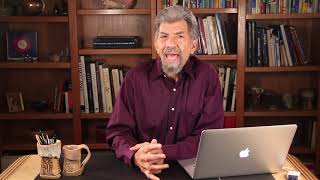
Dr. Emmett Miller introduces mindfulness through the lens of selective awareness and the mind as a self-regulating process. He shares how a poem by Vietnamese monk Thich Nhat Hanh sparked his understanding of interconnection, then teaches the first mindfulness step: watching your breath without changing it to bring your mind home and slow your thinking.
Chapters
The mind is a self-organizing emergent process that is both embodied and relational, and it serves to regulate the flow of energy information. Selective awareness is the ability we have to direct and focus our awareness on a single object, thought, feeling, or mental image—idea. It is through proper use of this selective awareness that we can achieve what has come to be called mindfulness. Once upon a time, back in the mid-1970s, I was visiting with my friend Gabe high in the mountains of Big Sur. And while I was there, I met a young man. He was an Irish radical who seemed to be traveling through at that time. And we're sitting at the table under candlelight, and I noticed he had a journal. And I asked him if I could look at his journal. And he said, "Sure." And as I was flipping through that journal, I found this poem. And I read this poem and I cried. And I realized that I was learning something very important, that The man who wrote this poem had something very important to teach me. I'd like to share that poem with you. Call me by my true names. Do not say that I'll depart tomorrow, because even today I still arrive. Look deeply. I arrive in every second to be a bud on a spring branch. To be a tiny bird with wings still fragile, learning to sing in my new nest. To be a caterpillar in the heart of a flower. To be a jewel hiding itself in a stone. I still arrive in order to laugh and to cry, in order to fear and to hope. The rhythm of my heart is the birth and death of all that are alive. I am the mayfly metamorphosing on the surface of the river, and I'm the bird which, when spring comes, arrives in time to eat the mayfly. I am the frog swimming happily in the clear water of a pond, and I'm also the grass snake who, approaching in silence, feeds itself on the frog. I am the child in Uganda, all skin and bones, my legs as thin as bamboo sticks, and I'm the arms merchant selling deadly weapons to Uganda. I'm the 12-year-old girl, refugee on a small boat, who throws herself into the ocean after being raped by by a sea pirate, and I am the pirate, my heart not yet capable of seeing and loving. I am a member of the Politburo with plenty of power in my hands, and I am the man who has to pay his debt of blood to my people, dying slowly in a forced labor camp. My joy is like spring, so warm it makes flowers bloom in all walks of life. My pain is like a river of tears, so full it fills up the four oceans. Please call me by my true names so I can hear all my cries and all my laughs at once, so I can see that my joy and pain are one. Please call me by my true names so I can wake up and so the door of my heart can be left open, the door of compassion. The poem was written by a Vietnamese monk. He had left Vietnam and was in Hong Kong at the time that the boat people were fleeing from Vietnam from South Vietnam at the end of that conflict over there. They were packed into boats the way refugees often are, and in their attempts to escape from Vietnam and make it to Hong Kong, they would encounter pirates along the way. The pirates would come along and rob these people of whatever little bits they were carrying with them and sometimes rape the women. And he wrote this poem soon after a boat arrived in Hong Kong, and a mother told the story of her daughter who had been raped by a sea pirate and in shame had thrown herself into the ocean and drowned. And after I read that poem, I knew I had to find this man. It took me quite a while to find him. But I did. His name is Thich Nhat Hanh, and at the time he had a place in France called Plum Village where he was helping people. And I read his book. He has a wonderful book called Being Peace that I read. And he also teaches what's called mindfulness. I found his approach to mindfulness something that really appealed to me. And in teaching his groups, he had a chime that he would ring. And much of this learning of mindfulness is being able to stop and come into an inner quietness. And whenever he rang this chime, whatever was going on, the rule was at that moment everything stops and everyone goes into silence. And they go into a mindful, peaceful state. And that might be for 30 seconds or it could be a minute or two or five. He would ring the chime and people would come out again. And he described how in the Vietnamese language you don't ring the bell, you invite the bell to sound. So I'm going to invite the bell to sound and then I'd like to teach you the first step of Thich Nhat Hanh's 5 steps to mindfulness. This first step is called mindful breathing. Take a moment and make sure that you're in a comfortable position, sitting or lying down. And give yourself permission to be present. You'll find this first step is simple, but it's extremely powerful if you practice it. The idea is simply to identify the in-breath as an in-breath and the out-breath as an out-breath. Begin to do that now. Notice you're breathing in, and as you breathe in, know that this is your in-breath. Then breathing out, be mindful that this is your out-breath. Recognize each breath, and in so doing, you're bringing your mind home to yourself. Your mind is what recognizes the in-breath as breathing in, and the object of your mind is the in-breath. Now, of course, you're always being mindful of something. Either you're mindful of walking, or you're mindful of dancing, or you're mindful of washing your hands, or you're mindful of writing. And right now, It's about the mindfulness of your breathing. Don't make any effort to stop your thinking, just be aware of the breath. But gradually you'll notice that as you continually refocus your attention on your awareness of your breathing, soon the thinking slows down. With each breathing in and out, you can be celebrating life. Celebrate the spark of life that comes with each new breath, and let your breathing find its own rhythm and its own tempo. And an in-breath could take 3 or 4 or 5 seconds, it depends, but that's the time to be alive. Time to enjoy your breath. And you don't have to interfere with your breathing. If the breathing in is short, let it be short. If the breathing out is long, let it be long. No effort to force it. Simple recognition of the in-breath and the out-breath. That's enough. Do that now. Good. Now, just take a few moments and notice what you're experiencing. Notice what you feel in your body. Notice your emotional state. Notice the number and quality and speed of the thoughts going through your mind.
You've been listening to Dr. Emmett Miller, author of Deep Healing: The Essence of Mind-Body Medicine and over 60 guided imagery and meditation programs. You can learn more about Dr. Miller and download more of his programs at drmiller.com. That's drmiller.com.










