Selective Awareness Exploration pt 1 - Effective Therapeutic Intervention for Deep Healing HD 1080p
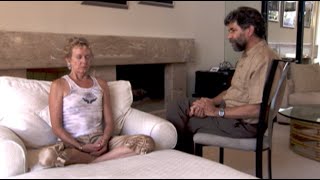
Dr. Emmett Miller presents Selective Awareness, a therapeutic method combining hypnosis and guided imagery to treat stress-related illness. He argues 90% of modern disease stems from stress and demonstrates how the technique rewires emotional responses by revisiting past memories and rehearsing new coping strategies. The presentation includes a live guided session.
Chapters
The Selective Awareness Exploration, my most effective therapeutic intervention for deep healing and transformation. This is Dr. Emmett Miller.
Many years ago, one amazing set of experiences, I discovered a tool for transforming mind, body, emotion, and spirit. I called it Mind Body Medicine. It was a holistic approach because it dealt not only with mind and body, but also emotions, habitual behaviors, relationships, and even spiritual enhancement. It was built upon the use of a specific state of deep relaxation, a hypnoidal process by which the internal programming of the mind and the very wiring of the nervous system can be altered significantly. My goal was to transform the medical profession, to go beyond the symptoms and treat the true source of our illnesses. Having no money and still in debt from medical school, I created these tapes containing the essence of my theory and practice and made them available for the ridiculously low price of $10 and disseminated them throughout the country, especially to healthcare workers. By the way, a couple of days ago I received this email which warmed my heart considerably. I want to share it with you. Dear Mr. Miller, I took a meditation class at San Francisco State University 33 years ago. We used your cassette tape. It got me through nursing school and a lot more. When the tape finally disintegrated, I couldn't find a replacement. About 10 years ago, I found it and bought it on iTunes. I want to thank you from the bottom of my heart. Your voice has been the only voice telling me for decades that I could take 10 minutes to slow down and be present. Wonderful-bolide. My 3 boys all practiced it with me from memory while growing up, and often it was the only way to get them to sleep. I continued to use the meditation almost daily and have told others about how rewarding your guided meditation has been for me. When I was a surgical floor nurse, I even used a modified progressive body part version of it to help patients relax the night before surgery. I finally retired from UCSF nursing in July. It turns out retirement has its own stressors, and I know I will continue to enjoy listening to this meditation for the rest of my days. Thank you for your contribution to myself and many others. Best regards. I can't tell you how those Bits of information like that are just so, so very, very pleasing to me. In today's presentation, you will learn the essence of my approach. In grade school, I was kicked out of my class so often for misbehaving that finally I was assigned to simply report to the dean's office every morning and to stay there throughout the entire day. They told me this was going on my permanent record, so probably all of you know this already. I was only bored for a little while, however, because I discovered that immediately adjacent to this bench where I had to sit all day were the complete works of Arthur Conan Doyle. I picked up one book and fell in love with Sherlock Holmes and the way he thought, the way he saw things that other people didn't see. I admired it. I think I read every one of those books that was over there in that really quite a while they kept me out of class. But I'd like to share with you an apocryphal story of my hero. Seems that once upon a time Sherlock Holmes and Watson were camping, and long after bedtime, probably about 2 o'clock in the morning, Sherlock elbowed Watson, said, "Mr. Watson, look up and tell me what you see." Watson said, "Why, I see stars." Stars everywhere against the black, black sky. And Holmes said, yes, yes, and what does that tell you? Watson replied, well, astronomically it tells me that there are millions of galaxies and billions of stars out there. Theologically, it tells me that God is great and everywhere and that we are small and insignificant. Meteorologically, it tells me we're going to have a nice clear day tomorrow. "Wha— why? What does it tell you, Sherlock?" "Elementary, my dear Watson. Someone stole our tent." I use this story as a metaphor for the experience that I had as I went through my training in medicine. People are talking about all of these technical things, but they're really— they're missing the main— they're missing the main point. I mean, I had trained at one of the top schools in the world, Albert Einstein College of Medicine, well-known for respecting patients' different personal and spiritual needs. And yet I was amazed at the amount of failure to pay attention to patients' thoughts and feelings and expectations and sensitivities and an awareness of how that might relate to how the person deals with the treatment, how quickly they may heal, and how much it may have had to do with the very production of the illness that has them in the hospital anyway. Very seldom were there any attention paid to these kinds of things. It was evident to me, however, from my experience, that people's susceptibility to illness and their speed of recovering greatly depended upon these factors. I mean, Western medicine had done a great job of taking care of acute injuries, infections, and emergencies and so forth, but by far Most of the problems we see here in the 21st century are quite different from that, quite different from, from those kinds of acute illnesses and infections. The Western diet and lifestyle underlies many so-called diseases of civilization, including coronary heart disease, obesity, hypertension, type 2 diabetes, epithelial cell cancers, autoimmune disease, osteoporosis, and others. Medical research estimates as much as 90% of all illness and disease is stress-related, including high blood pressure, cardiovascular disease, heart disease, ulcers, obesity, type 2 diabetes, allergies, asthma, and migraine headaches. Mm-hmm. Um, this was true back then when I was beginning my practice in medicine, but only recently have these studies come out to demonstrate scientifically that that's true. Um, because I think most of the research is funded basically by drug companies that are simply not extremely interested in discovering to what degree that this may be true. The Center for Disease Control says that 83% of all deaths for adults between the age of 21 and 65 are related to lifestyle. What you think, what you eat, how much you drink, how fast you drive, whether or not you're sustaining happy relationships at home, and so forth. Now, you know, most of these things are known to us these days. They don't surprise anybody, but I just want to tell you how surprised I was when I discovered it back then. Basically, what I began to see is that— and what you can see now— is that a vast number of our illnesses and diseases, perhaps most of them, ultimately come down to the results. They're being the results. The disease, the illness, is a result of how people think, their beliefs, their emotions, and their behaviors. But the problem was, how do you convince people of this, even if you suspect that it's true? Now, you can try it in your practice saying, well, you know, yes, I realize that you're really suffering, but, you know, have you considered that it may have something to do with how you think about things and how you're dealing with your relationships and your emotions? But nobody wanted to hear that. I mean, they quickly leave and go to a doctor where they can get a pill. They have more, more faith in the pill furry than they do in this young whippersnapper. Anyway, what I want to do is to show you how I managed to overcome that and to share with you those mind tools, and particularly the technique of selective awareness. Which I learned to use to great effect in my practice. And what I would like to do is to show you how these mind tools can help access the healing state, how to guide thoughts, imagery, and passion, how to heal mind, body, emotion, and spirit, of course, how to experience deeply relaxed states that can access that inner power that we have, how to upgrade the mental operating system. So it was, it was quite, quite by accident. Well, either it was accident or maybe it was divine guidance. I ran into a group of doctors who were practicing hypnotherapy, and that was right there in my town of Monterey where I was. Toward the end of the '60s, and I discovered that this doctor was using medical hypnosis in his practice. I joined his practice and sat with him as he worked with people. He had been doing this for many years, um, and it was a steady stream of people coming wanting his help. Nobody else was practicing hypnosis at that time, or very, very few people. He let me become his sort of protégé, and I sat with him as he worked with people and learned what he knew. It was very surprising to him, and he used to say that I was a sponge. I just gathered in everything that happened there. But, but I watched then in, in quite amazement how people could be operated on without anesthesia. I watched how panicky moods and despair could melt away, how hypnotic experience could relieve a person's panic or anxiety or their anger. They could let go of resentment. I listened to the chest of the child with asthma as the wheezes gradually diminished and evaporated simply by telling the person, by telling the child, that as you, as you touch the chest with your stethoscope, they will feel the wheezes going away, and they would go away. Children are very, very susceptible to hypnosis. I saw how hypnosis could relieve pain in childhood— childbirth— and how people's desire for smoking and alcohol could vanish. I mean, I had just had this incredible period of study in the greatest institutions around, and nobody had even mentioned that this existed. And here I was seeing it on a day-by-day basis. In addition, Peter Mutke was teaching at Esalen Institute. The practice was in Carmel, California. And in 1969 or 1970, he started to take me with him to his classes as he was teaching. I assisted him in his class, but since we got to stay at Esalen for the whole weekend or week, I got to learn about these Eastern religions and Eastern philosophy were brand new to this country, certainly new to me, but they were all landing right there in Big Sur— Buddhism and Taoism and Hinduism and so forth. Amazing. And particularly amazing was that this whole world of philosophy had a whole different approach. They believed something opposite from what I have learned about in my country. Whereas every American knows that bigger is better, we know that getting and winning is better than losing, and that you should cling to everything that you own. And as that old bumper sticker in Silicon Valley said, "He who dies with the most toys wins." On the other hand, these people from the East were focused on surrender. On letting go, on emptiness, of being non-attached. Amazing. Now here we are in the middle of Western culture, filled with anxiety and insecurity, surrounded by TV commercials and airbrushed models, fast-talking politicians. Every one of them is telling you you're not enough, and you won't be enough unless you buy their product or vote for their candidate or join their gang or whatever. And the message underlying them all is, "You're not okay. You're in trouble. And it's going to get worse. It's going to get worse. In fact, it's worse than you can even imagine. But here's something you can do." So underneath, of course, what you do never, never solves that anxiety that they've created within you. So as I learned more and more about these Eastern techniques, I learned how to meditate, how these things were done. And I combined what I had learned in— with those Eastern techniques, with what I had learned from my now recent study of hypnosis, and put it together to create the most powerful antidote I could to the fundamental problem that was underlying all of the illnesses, which was the stress. In other words, I tried to create the antidote, the antidote to stress. The other thing that was fascinating to me were the studies of Ivan Pavlov. And Pavlov, of course, worked with dogs. And what he would do, of course, and we've all heard about this, he would ring a bell at the same time that he fed the dog, and the dog would show the signs of getting ready to eat. You know, his stomach would become active, he would begin to salivate, his eyes would open wide, pupils would get large, and all of the physiological movements that go along with eating as he fed the dog. But after doing this a half dozen times, you could simply ring the bell and the dog would react in exactly the same way as if it was being confronted by the unconditioned stimulus, food. In addition, and this fewer people know about, he put wires on the floor of the dog's cage that he was in. He electrified those, you know, electrified those wires and would ring the bell. And this time when he would ring the bell, he would deliver a shock to this poor unfortunate dog. The dog, of course, would scream and yell and lose control of its bowels and its bladder and so forth. A few trials of that, you could simply ring the bell, and of course the dog would do exactly the same thing. But whereas if you train the dog to expect food when you rang the bell, if you stopped feeding the dog, the dog would stop responding to the bell. But not the dog who you were shocking with the bell. It got worse and worse and worse. In my book Selective Awareness. So how could you relieve the dog of what he had learned? What you do is give the dog food in a quiet room, and as the dog is eating, play a recording of the bell at a very low volume, not enough to distract the dog from the delicious food, The next day you do the same thing, a little bit louder. The next day a little bit louder. The next day a little bit louder. Pretty soon you can ring the bell at full volume while the dog is eating, and the dog doesn't show any reaction to it at all. Then the next day what you do is you don't feed the dog, you just ring the bell. What do you think happens if you ring the bell? And did you get it? The dog salivates because it now associates the ringing of the bell with the new joyful stimulus of being fed. Healing. So I said, well, if you can do that with dogs, you can do that with people. After all, it's our unconscious mind is the part of us that gets programmed, and why can't we deprogram it in the same way? Interesting how a stimulus can completely flip around what it causes. Brief story of a woman who came to see me. She was deathly afraid of heights, never went up to heights. Um, she's afraid to even look out the window of a second-story room. That's how frightened she was. And but she worked in an office in San Francisco, and the office was going to move to the 17th floor of a building in San Francisco. And that, of course, was very frightening to her. She came to see me because she didn't want to lose her job. I worked some with hypnosis, and I spoke to her unconscious mind, and I said, what is the purpose of the fear that you feel at heights? And she said— and well, her unconscious mind responded— was to protect her. And so I asked that part of her, what would be a different response that could have the same effect of protecting her without having the downside of having the fear of heights. And they came up with the answer: smile. Okay, a lifelong fear of heights, and I'm gonna— okay. So I had her visualize riding her elevator, going up to her building, and being able to work on the 17th floor, and had her go home to practice imagining that. Two weeks later, she came back to see me with a big smile. The office had moved, and she had showed up at the office the first day that she was supposed to. She got on the elevator, she began to feel the fear inside that usually comes up, and she found herself smiling. And suddenly everybody else in the elevator started smiling back at her. And she felt so good, and it just connected to these people. The door of the elevator walked off. She was on the 17th floor, and she got to see something she'd never seen before— what it looks like when you look at something from a height. And that was it. She didn't need to come to see me anymore. One of those— one of the gifts I would have had— a lot of these one-visit cures early in my career— that, that was good. It was really good for my self-confidence. Anyway, about 2, 3 years later, I run into her in the Macy's as we're shopping, and she comes over. She recognized me. She says, Dr. Miller. I said, how you doing? She says, fine, better than you'll imagine. I said, what do you mean? She says, I've taken up rock climbing, and next week we're going to climb partway up El Capitan. 'in Yosemite. I'm not afraid of heights, but I wouldn't climb up there, but I'm sure it's beautiful.' I mean, because she had never seen it, she had never experienced it. That's the kind of thing, like, the kind of thing that's possible. And that's because we possess neuroplasticity. The adult brain can change itself in form and function. And our goal is to choose in what ways we want it to change and to do that wisely. So that's basically what my work has been— it's been about ever since then. And in particular, I want to show you this technique of selective awareness. And I like to begin by just having a moment of relaxation, because the most powerful tool of all is the ability—
is the ability to react. So let yourself be in a comfortable position and to be aware that there's no other place you need to go at this moment in time.
There's nothing else that you need to do there's no problem that you have to solve, and therefore you can give yourself permission to relax.
Take a deep breath in, and as you let it out, let yourself be consciously aware of the fact that right now there's no place you have to go, there's nothing you have to do, there's there's no problem that you have to solve at this moment. Therefore, you can give yourself permission to relax. Take another deep breath in, and as you let it out, allow your eyelids to close. And behind your closed eyelids, let your eyes roll gently upward so that your eyelids become very relaxed. And behind your soft, warm eyelids, imagine that you can see there on the back of your forehead, the word relax, or some other image or word or symbol that represents relaxation to you. And let your eyelids relax all the way down to the point they feel like they just don't want to open at all. Feel the heaviness, the peaceful relaxation in your eyelids. And when you feel your eyelids so relaxed, you can test them and feel they're so heavy they just won't budge at all. Test your eyelids and feel how relaxed they are. And as you do, let that feeling of relaxation flow out from your eyelids like ripples flowing outward from a stone thrown into the quiet still surface of a mountain pond. Ripples of relaxation flowing from your eyelids into your forehead and over your scalp, relaxing every muscle in your scalp, flowing through all the muscles of your face, relaxing and letting go. And let that relaxation flow down through your neck and your shoulders and your arms down to your fingertips. And as that relaxation reaches your fingertips, feel the heaviness in the fingertips, or the warmth, the tingling of the relaxation as it reaches there. And as you feel it, take another deep breath in and draw that relaxation up through your arms into your chest. And as you let it out, release all tension from your chest and back. And let the air do the breathing for you. Right now there's nothing to do, just relaxing and enjoying the rising and falling of your chest. And as your chest rises and falls, feel all the muscles of your chest wall relaxing, relaxing completely. Good. And as wave after wave of relaxation and peace continues to flow down throughout all of your body, allow yourself to feel very light and peaceful, as if you're floating, floating gently on a magic carpet of relaxation, floating gently through time and space. To a very pleasant experience, perhaps one of those happiest moments in your life, one of those holy moments, such as when you first saw your newborn child. Or maybe it's a time when you had a particularly wonderful vacation, or a certain time or a certain place in the world that you really love. Maybe sitting on the beach watching sunset, or maybe it was being close to someone that you love, or someone who loved you. Let yourself float to this place and picture it in your mind's eye. Good. Allow yourself to be there, enjoying the colors and shapes around you. The textures of anything that you're touching, the sounds that reach your ears. And anytime any unnecessary thought comes along, imagine that unnecessary thought is like words written on a blackboard in your mind's eye. And then remember that eyelids— remember the relaxation in your eyelids. And as you gently test your Imagine you're drawing a wet eraser across your mental blackboard, erasing the unnecessary thought and sending another wave of soothing relaxation flowing through your entire body as you simply allow yourself to be in this special place. Feel the love and the peace and the serenity of this moment. Feel the joy and wholeness, and let that feeling sink deep into your being. And notice where you feel it most strongly in your body. And as you focus on this place in your body, squeeze two fingers together as a signal so that anytime you wish to come back to this place and this feeling, you may do so by relaxing deeply and squeezing these fingers together, picturing this scene. That's good. Letting every sound that you hear serve to relax you more and more comfortably, more and more deeply. Good. Now take a deep breath in, and as you let it out, allow yourself to return gently back to this room where your body is resting comfortably, coming up feeling pleasantly rested and relaxed until it feels as if your eyelids are lightening and feeling ready to open. And as they open, allow your vision to be soft so you can simply enjoy the colors and shapes as you come back to full wakefulness. And take a few moments and notice how comfortable you feel.
And of course, this is just a brief experiential introduction. Some of you may have found yourself yourself becoming profoundly relaxed, whereas others may have held on to tension.
You may have let your thoughts wander off into the future or elsewhere. However, if you truly wish to have these experiences that I speak of, you'll be much more successful if you give yourself an opportunity to learn those techniques. I teach, and here's a very good way for you to do that.
You can let yourself go to the website that's called shop.drmiller.com, and you'll find several products that are very good for doing this. One's called Creating Your Island of Peace. A second is called Letting Go of Stress. That's the most popular famous recorded stress reduction CD or recording that's around. Works beautifully, has 4 different experiences to teach you how to let go. And then there's one that's called Writing Your Own Life Script, 4 imagery experiences to build confidence, rescript the past, and create an exciting new future. And it allows you to apply the techniques of the Selective Awareness Exploration that I'll be sharing with you in a few moments. So I want to review with you just for a few moments. The most important fact of all is that stress is not something that happens to you, it's something that you do with what happens to you. That is to say that stress doesn't happen to you. Fear doesn't happen to you. Anxiety doesn't happen to you. Anger doesn't happen to you. Resentment, jealousy, stage fright, rage— they don't happen to you. None of them do. Because nobody can make you feel anything, and the world can't make you feel it. Those feelings have to do with your reaction to what's happening, just like the bell and the dog. How you react is up to you. It's not up to the bell. The bell doesn't determine— the events in your life aren't determining it. It's simply how you're reacting to those, those events. And like I said, most of the world does not want you to realize this Because they control you through fear. You are controlled through fear, whether it's a political organization, whether it's the tyrant that rules your, your country, whether it's somebody that's insisting that you buy their product, whether it's a politician. That's what it is. They want you to be terrified. And then, because of— I'll explain this elsewhere, but not here— but when you are terrified, your unconscious mind will leap at the first thing that promises some relief. Stress is merely the nonspecific reaction to what you perceive as a demand, developed by Dr. Hans Selye back in the mid-1930s. And people are just learning the word, but most of them don't understand what it means. And the important thing is that stress is a a two-phase process. Type 1 stress, the kind we had 100,000 years ago when the stress response developed, the things we ran into—tigers and, and landslides and snakes and so forth—the stressor was finite and short-lived. The demand was from an easily identified source. You could deal with it in the present, and it could be resolved by responding immediately physically to the situation. But the situation was over in a few seconds. I mean, either you got away from the saber-toothed tiger or you didn't. Either you got buried in the landslide or you didn't. And so a few seconds later, it's like when you're almost in an auto accident and you manage to get your car to the side of the road and you go, We relax. You become more relaxed than you were before the stressor came on. And that is the recovery phase. It's natural, it's normal. You breathe in, it's active. You breathe out and you let go. The heart constricts— action— and then it relaxes and it lets go. And if you try to restart the heart during the relaxation phase, you throw your patient into a terminal arrhythmia, which is not good for your practice. So there's a period of needing to relax. Sexual stimulation reaches a peak, you have an orgasm, and then there's a refractory period in which you don't respond. Overall, this is a natural process. You, you're awake during the day and you sleep at night. Take away sleep, you soon get really sick. Take away the recovery process from your stress and you get sick. But when you do have that recovery process, then day after day things happen, but you recover. It happens and you recover. It happens and you recover. That's how Wei Wei was. But today in the 21st century, it's different. The pressures on you are social, not physical. The demands and challenges are like, how's your job going to be? Are you going to get the date with that person you wanted to date? Are you going to be selected to be on the team? Are you going to be successful, et cetera, et cetera, et cetera. So these kinds of stressors are not helped. In fact, they're hindered by tension and anger, resentment, tox stress chemicals, the kinds of things that might have helped you out back during the fight or flight times 100,000 years ago. In fact, the stress chemicals in your body injure your organs gradually throughout your life, bit by bit. The drop of drip, drop, drip, drop of cortisol into your body breaks down your organs because in stress, your stress chemicals basically trying to melt your organs to turn them into sucrose into glucose so that you can fight the lion or run away. Those chemicals shorten your telomeres so you die earlier, and they invite illness. They lead also to escape behavior, that what we try to do to get away from the feelings of stress— alcohol, drugs, We withdraw from situations that produce tension in us. We become addicted to behaviors. We become addicted to violence, to being a bully, and so forth and so forth and so forth. Plus, when you're having these kind of feelings inside of stress, you inhibit the prefrontal cortex because nature doesn't want you doing deep thinking and contemplating when you've got 3 seconds to save your life. And unfortunately, the things that we need to deal with in our current-day lives in fact need, need that time of contemplation, because the type stresses we have now are future-oriented. They're not present. They're intangible. They're social, not physical. There's no clear way for you to solve the problem and get rid of the stressor. And those stressors continue. The stress builds up week after month after year after decade after decade until gradually you begin to notice the symptoms of illness, which turn into actual diseases. And they leave us like Homer Simpson, Homer Simpson, Being distracted by this. Okay, but here comes the last, next piece of information. Okay, wait a minute, here's the next danger. Here's the next headline. Oh, a flood is coming. Oh, here's the next danger. Here's next danger. The neighborhood has more and more crime in it. Oh, here's— and that's, that's the way it goes. The secret of how to get out of all of this is what I call the power of now. And what I mean by that, it is a most wonderful thing that if you practice relaxing deeply and coming into the present moment, you can choose it whenever you know there's no life or death threat that you need to respond to within the next few seconds. Instead, you can choose to come into the now, to let unnecessary thoughts pass by. How this works, once again, let's look at the neurology of it. We have this reptilian mind that is basically about instincts. It keeps your heart rate regular, it governs your breathing, it controls your body temperature, your balance, and so forth like that. It's the oldest part of the central nervous system. Above that is the mammalian brain living in the paleocortex of the brain. That's where your amygdala is. That's a little tiny almond-shaped nucleus in there that is the source of all stress. It's the source of all fear, of anger, of disappointment, of sadness, of rage, of jealousy, of envy, on and on and on. That lives there in that limbic system. The monkey brain. There it is, your amygdala. And that's where your hippocampus is too. That is very much part of the same system. But above that is the neocortex. This is a higher part of your brain that can think about the past and about the future. The monkey brain has no past, it has no future. Everything is now. That's why the soldier dives under the couch now, even though it's been 20 years since he had that bomb go off nearby in Vietnam. But the moment that boom comes in, the monkey says, "Oh, we're back there in that trench." And then the highest part of the brain, which is the prefrontal cortex, that is the executive level of the brain, that is the brain's brain. That is the place where you want to be able to, um, live and guide everything below you from that part. Because how the whole system is designed is that you have higher levels and lower levels. Information should be traveling from the lower levels all the way up to the higher levels. And guidance and control coming from higher levels down to the lower levels, because that's the smartest part of you. And of course, when we suppress our feelings, we're suppressing information, and we will make the wrong choices and so forth. So transforming the brain and mind involves using meditation or some other way of quieting down And then once you're quiet, you use mindfulness to analyze the situation. And finally, through using imagery, you direct your imagination in such a way as to rescript the algorithms in the lower levels of your, of your human biocomputer. And we'll be working with the brain, and— but I want you to know, and it's, it's very good for dealing with the brain, with feelings, with emotions and responses and things like that, but it also works for us to change our physical bodies. And so most of the time when I'm seeing people, it's for headaches, it's for chronic abdominal pain, it's for various agonies like that. But it's also very often— it's extremely valuable in serious illnesses. Um, and I'll just share one with you because one afternoon I got I got a call from a local physician. There was a young woman whose ulcerative colitis had reached an extreme point. Her weight was down to less than 70 pounds. She was seriously malnourished, and she'd had this for years. She'd suffered with continuous bloody diarrhea. It was pretty bad stuff. And so here she was in the hospital, at virtually death's door, and the only way he knew of to save her life was to remove her entire large bowel because it was all inflamed. But he didn't want to do it because she was a young woman and this was a major change. So he had heard of some of my work, so he gave me a call and asked if I would see her, and I came to see her, and worked with her using the techniques that I'm teaching you today. I don't know, I think we worked maybe a dozen times, maybe once a week or something like that, and that extreme illness that she had abated. And by the end of those 12 weeks or so, she was healthy. She was up moving around, living her life. And out of curiosity, I called her about 30 years after this, see how it was going. Fine. She still didn't have any real problem. She had some loose bowels once in a while, but, you know, no biggie. And that's her, just off at a conference, just having a good time, living a good life. So, you know, I don't know what the limits may be because I'm just one person, but I have seen so many amazing things happen that I'm willing to try. Whenever somebody says, I think maybe we can do something with this using my mind, I say, okay, let's try. Okay, here you go. Here's Clara. Who came to see me complaining of ongoing feelings of anxiety, GI distress, frequent headaches, irritable bowel syndrome. And she had those feelings as far back as she could remember in her life. And when she was in my office and we had reached a satisfactory state of relaxation, I had her go to her special place. I then asked her deeper mind to guide her back through time to a few minutes before one of her more recent attacks. And in the scene, her teenage son was threatening to quit school to take a low-paying job. Her feelings were fear and panic that the good grades he had obtained up until now would be wasted if he never graduated. He didn't have much of a life left if he went in the direction he was threatening. She felt shortness of breath, a racing heart, anxiety, and stomach cramps. And she was feeling them right there in my office as we went through it. So I guided her gently back to her safe place and she calmed down again. Next, I suggested that she go back a year or two to another time when she had a similar reaction. And that was when she was told during the pandemic's beginning that she may be losing her job and she had nowhere else to go and no other source of income. And again, she felt the same symptoms. We proceeded to go back in this fashion to a few more events that fit that same pattern, all the way back into high school. Finally, I requested of her deeper mind that she go back to 1 minute before the very first time in her life she'd ever had this reaction and these feelings. And people often go back to memories that they did not know that they had, that they hadn't thought of for many years. Sometimes that they never thought of again. When there's a traumatic event, the mind will squash the memory because it doesn't do any good for a person to remember it. But they can come up when a person is in the hypnotic state, and the deeper mind has no problem in the hypnotic state of going back to 1 minute before this event happens. And in this scene, he's seated around her family, around the dinner table with her family, She's just finished eating a huge delicious dinner, and then what quite unfamiliarly, her parents begin to argue. The argument increases to the point where father threatens to divorce the mother. He gets up from the table, knocks over his chair, stomps out of the house to drive his threat home. And Clara became aware of enormous feelings of anxiety. My family's over. My father's left. What's going to happen to me? What can I do? I'm just this little 5-year-old child. Inside of her body, she's in severe stress. The digestion of her dinner was interrupted by the stress reactions, shunting the blood away from her digestive organs, leaving them cramping and in pain. In her mind, she's afraid she's going to die. So she of course buries this memory, but as is typical in this kind of situation, there's a split that happens in the psyche. So there is this extremely frightened child, but then there's a split, and then there's this child over here that's going to figure a way out of it. I know what I'll do. I'll quickly clean off the table and I'll wash all the dishes and and I'll clean the kitchen, and things are going to be— because they're always happy when I clean up after— and then Dad will come out, everything's going to be fine. This is going on at an unconscious level of the brain. Some of it, but not much, is happening with some conscious awareness. So that begins it. This becomes the neatest little girl you would ever want to have. Family was very very proud of her. And the mom and dad got together, and the father had just had too much to drink. You know how it goes. But whenever she was threatened with someone leaving her or abandoning her or of her losing something, then her monkey mind flashes back to that memory and brings up all of these pains within her body and the feeling that she's got to take care of everything, make everything better. So what I do in that kind of situation, I have her come back now to being, uh, being in her adult self in her safe place, and I say to her, suppose you saw a child in exactly having exactly that same thing happen to them, except that you could invisibly whisper in her ear, what would you want to tell her? From this relaxed adult place, I would tell her, "Relax. Parents sometimes fight. They don't usually split up. And your parents love each other too much to split up. You can relax. You can trust things are going to be okay." And visualize holding that little girl and telling her that. Now go back and become that little girl in your imagination and hear your adult voice telling you, you're going to be okay, and feel yourself relaxing. Sure, it's time to clear off the table. You might clear off the table, but not in order to chase the tigers away. She relived that, and then I had her go back to the next memory, next oldest. And the next and the next. I brought her back through all of the original memories I had taken her through, but I have her live, relive each of them using this technique of having an adult part of you there to suggest the right thing. Visualize yourself going through it, dealing with the situation the way you wish you had. Or the way that you would advise anybody else to do it. So as you're doing that, really rewriting, rewriting your own script. And then finally, I have her go into the future, and I said, think of some loss that might occur to you in the future. But as you go through this future scene, I want you to imagine yourself handling it peacefully and calmly without, without any fear. And then of course I record that imagery for her and send it home with her. In the beginning I used to do that with audio cassettes, but now I make a recording and I send it to her so she can listen to it on her iPhone or her computer. And then she practices it 2 or 3 times a day. Remember, you are training training a part of your nervous system. It has to learn. Your nervous system learns through repetition. That's why you can't sit down and play the violin the first time I show you a move on it, or piano. You got to practice. And the reason I came upon this technique— let me share this— was because I had been a radio repairman when I was in high school. And so if I have a a radio, and let's say there's a hum coming out of the speaker. So I'll take a signal tracer and I'll test between the speaker and the audio amp to see if the hum is there. Of course it is, because it's coming out the speaker. Then I go back to step 2, which is between the demodulator and the audio amplifier. If the hum is there, I know it came earlier than that. I'll go back to step 3 between the intermediate frequency amplifier and the demodulator, and oh, no hum. That means I've isolated the hum at this area of the demodulator, and then it's very simple to go into that level and find where the hum is coming from, as opposed to looking at the entire radio and just randomly going through to see if I can— I hear it here, can I hear it here, can I hear it here, can I hear it there? I figured maybe that can happen with a human being. We weren't born with this disease, we weren't born with these depressed feelings, with these anxieties. So let's go back through time the way we went back through the stages in the radio receiver. And presto chango, it worked wonderfully. And, uh, what I used almost exclusively for the next 25 years, um, the next 15 years in my practice until I had mapped out the unconscious, conscious mind and learned what I needed to learn about helping people get better and, and be healed. And that's what I do. I go back to last week, to last month, to last year. Go back to the first time in your life. Now, it's not necessary always to go back to that very first time in your life, although there's, there's something very, um, very beautiful about being able to do that. But if you can go back and just really relive a few events in the past and then rewrite your script And then future script yourself writing it, writing your script the way you want it to be. And then do that 2 or 3 times a day for the next couple of weeks. Magic happens, like the little— what I read you from, from the person who wrote to me. You simply have to use it. It gives you this phenomenal power because it puts you in charge of your brain, and through your brain, you're in charge of your body. Remember a fellow who was on the way to Carnegie Hall and he's driving through the city of New York, a lot of traffic, and he's late. He's looking at his watch, he's late, and he's going, oh my gosh, how will I ever get there? And so he finds himself sitting next to a taxi cab driver and he says, he leans out the window and says to the taxi driver, he says, Hey buddy, just how can I get to Carnegie Hall? And the taxi driver says, practice, practice, practice. A little New York joke for you there. Okay, now you can, you can learn if, if you're interested, and that's as a 50th anniversary I have republished my original book that I wrote back in 1973, which is called Selective Awareness: The New Science of Mind-Body Medicine. That is present as— and I haven't printed it yet, but it's there as, as an audiobook for you. That's one of the things that you can find there at shop.drmiller.com. Good. So what I'd really like to do now is to give you one final experience, because I want you to— I want you to imagine that we had just had a going through and we had identified these situations in your life I want you to sit in a comfortable place. I want you to think of some patterns in your life that you would like to change. Maybe something that has been difficult for you in the past, that you felt on a number, on a number of different occasions. Maybe a way of reacting to the world, or maybe a symptom that you've had, or behavior pattern, drinking or overeating. See what it is that you might be able to find that you would like to change, some habit or illness that you would like to change. And then we're going to have an experience of how you would go about changing it.
Okay, let's begin.
And right now, bring yourself into your center, body in a comfortable position, being aware of your body, feeling everything touching your body. Be aware of the fact that you're in a safe place and there's nowhere that you need to go. And think to yourself, there's no place I have to go at this moment, there's nothing I have to do, and there's no problem I have to solve.
And therefore I give myself permission to let go and relax.
So when you're thinking that And holding those thoughts in your mind, you're actually guiding the monkey mind to relax.
Take a deep breath in, and as you let it out, let it be a feeling of letting go completely. If you haven't already, let your eyelids close, you may let them close now. Gently looking upward behind your closed eyelids, see the word Relax or your symbol of relaxation on the back of your forehead. Test your eyelids and let the feeling of relaxation from your eyelids flow throughout all the rest of your body. Feel the ripples of relaxation through your face and your scalp and your jaw muscles relaxing. Your upper and lower teeth gently drift apart. Relaxation flowing down through your neck and your shoulders and your arms, all the way down to the tips of your fingers. And as you feel that relaxation in your fingertips, take a deep breath in, draw it up through your arms into the center of your chest. And as you let that breath out, let it be a feeling of letting go completely. And then let the air do the breathing for you. Doing nothing with each breath out. Think, it breathes me, it breathes me. And let yourself sink down into that little pause after after you breathe out and before the next breath comes in. It's the quietest time of all for all your mind and body, always there for you to return to. And anytime any unnecessary thoughts come along, just put them on that blackboard in your mind's eye. And as you erase your mental blackboard by gently testing eyelids, send another wave of relaxation flowing from your eyelids throughout the rest of your body, right down, right out through the soles of your feet, throughout your body, right out through the palms of your hands. And allow yourself to have that floating feeling, floating through time and space. And squeeze those two fingers again. Squeeze together those two fingers as you did before, and let that feeling take you back to your special place of peace and calm, of serenity, of beauty, of safety and tranquility. Just the breathing and the beauty of the colors around you, the sounds, sensations. Very peaceful. Good. And here in this relaxed place. Comfortable. Let yourself think back to one of those times in the past when you found yourself reacting in that way that you prefer not to react. Remain completely relaxed as you think about it. See that scene. Visualize it all the way through as if you're watching a videotape, video clip of it. Good. And now for a moment, if you wish, you can go back and imagine you're there going through it. And let yourself have the feelings inside. What do you feel? Where do you feel it? You feel in your belly? You feel it in your chest? In your head? What are the thoughts that go through your mind? What are the emotions you feel? Now take a deep breath in, and as you let it out, let that scene fade away. Come back to your special place. Erase all unnecessary thoughts. And here in this safe place with your adult mind, think to yourself, what would be a better way to handle this situation? And now imagine that you can go back and talk to your yourself and give yourself the advice that you wish you had had at that moment, to go through it as I count from 1 to 3. But now you relive it in a different way. 1, in which you behave intelligently. 2, you make the wise choice. 3, and you're successful. And imagine yourself being successful at this scene end. Good. Then let yourself go to another time in the past when you found yourself behaving in that way that you'd like to extinguish. Picture it in your mind's eye. See how you handled it and decide how you want to handle it. Good. Now go back into that scene and relive it, but this time find yourself able to be relaxed. There's a moment at the beginning, because it's not life or death, you just close your eyes, squeeze your fingers together, go to that pause in your breathing, that place of peace, and think, "What's a better way to handle this stressor?" And then live it through, dealing with the situation the way you really want to.
Feeling really good, like it's the most natural thing in the world, most logical.
You leave that scene feeling great, being really successful. And of course, you can go back and write a few other scenes in the past. And whenever you go back in the future, you can go to these scenes or other scenes that come up for you. The more experience and practice you get, the better, as you allow yourself to just practice going through them. And then let yourself come back to your special place, to that quiet place, and let yourself look into the future. Visualize yourself in future. And imagine yourself being able to handle this situation perfectly, the way you'd really like to.
Good.
Keep rehearsing this success in the future, and then when the future actually arrives, all the parts of your mind and body will know exactly the right way to respond. Good, very good. Now gradually begin to let yourself return back to being wide awake, feeling alert and comfortable and clear, very peaceful. Good.
And you can continue this process of re-scripting.
And if you do it a couple of times every day You gradually notice the changes that come about, and each time you find yourself beginning to feel any of those anxious feelings that you used to feel in the past, in the past, be aware that you have a different way to deal with things now.
Just go ahead and touch those two fingers together. Take that moment and relax. Allow yourself to come all the way back to being calm and peaceful and making the decision that you really want to make.
Good.
Well, good. Thanks for hanging in there with me through this. Ah, I should have had twice as much time to do this presentation. Maybe I will sometime in the future. But at any rate, let's, um, let me just share with you, for those who want to learn a little bit more, go go more deeply into these different processes we've been experimenting with, learning something about, go to shop.drmiller.com. Check out Creating Your Island of Peace or the Love Meditation, which is a wonderful one, or Letting Go of Stress. You might also check out, as the next wave of COVID comes over us, Victory Over COVID, which is organizing your mind and your body to do everything that they can to help you prevent COVID-19. Or if you have COVID-19, how to survive it best. Gotten very good responses from people on this, from COVID as well as other viruses. I Am Empowering Experience. This can be either— all of these can be either CD or instant downloads. I Am Awakening Self-Acceptance. Then there's Change the Channel on Pain. Healing Journey, which is a magical experience, healing experience. The classic book I wrote 30 years after I had made my initial discoveries called Deep Healing: The Essence of Mind-Body Medicine. Everything's in there, including directions at the end of each chapter as to how to apply the tools for yourself, or if you're a professional, how to use it with other people. I think I'd gotten the idea then that I wasn't going to have crowds of millions like Michael Jackson. So I'll try to write these books and do what I'm doing here, which is creating a website that's going to carry this information on into the future until people are ready to hear it. I got the picture now that our culture usually is around 20 to 30 years behind the areas that I've been working with. Um, back around 2010, I wrote Our Culture on the Couch, in which I psychoanalyze our entire culture. Our Culture on the Couch: 7 Steps to Global Healing. And, and that's the book in which I revealed this bizarre notion I had, that it is our negativity, that it is the polarization that we're beginning to experience is going to expand until our— unless we do something about it, our country is going to fail and we're going to destroy, destroy our planet because we're so negative and we don't know how to work together and we don't know how to respect each other. And I think, uh, the Congress of the United States is giving us an excellent demonstration of how my unfortunate predictions are coming true. But I tried in this book to give the techniques that would allow us to solve the problem. They're still valuable, world. And you can get this in book form, or you can get it in audiobook form, or you can even get my voice reading it to you. And then to apply those kind of techniques, I have Healing Our Planet, which are 4 experiences for attuning to healing at the global level. Others are like Healing from Cancer, and there's also many, many different videotapes of presentations I've done that you can shop and enjoy at shop.drmiller.com. And around the end of September, the beginning of October, of 2023 will mark the publication of my new and hopefully final website that will have all of these and so much more. Check out the website now, drmiller.com, but especially check it out sometime from the 23rd of October on. I think you'll like it. It's been, uh, It's been great spending the time with you here. So till next time, namaste.










