The Essence of Life, Love, Healing PART 2 - Mindfulness & Second Order Thinking
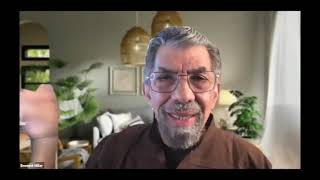
In this 2021 YouTube lecture, Dr. Emmett Miller MD presents a comprehensive framework for personal and planetary healing that begins with understanding and harnessing the body’s stress response. He argues that the dominant "monkey mind"—the limbic, fast‑acting system—keeps humanity trapped in fear, anger, and polarized thinking, while the higher prefrontal cortex offers the capacity for deliberate, compassionate action. Miller outlines practical tools: deep relaxation, guided imagery, and post‑hypnotic suggestion to release tension, expand awareness, and rewrite unconscious algorithms. He differentiates "Love" (capital L) as an integrative, inclusive, coherent state and "Violence" (capital V) as a fragmenting, either/or, judgmental mode, linking these to societal issues such as media propaganda, attention engineering, and the spread of misinformation. The talk weaves neuroscience (system 1 vs. system 2, brain hierarchy), philosophical anecdotes, and vivid stories to illustrate how second‑order thinking can resolve seemingly impossible dilemmas. A guided meditation segment walks listeners through a relaxation sequence, anchoring love in the body and teaching them to recall a personal love memory to re‑program emotional responses. Miller concludes with a call to collective action, encouraging listeners to practice these mental tools, share the message, and join a mailing list for ongoing support.
Chapters
Hello, this is Dr. Emmett Miller. So good to be with you here today. The title of this presentation is Essence of Life: Love and Healing, Part 2: Love and Violence: Tools for Healing Yourself and the planet. I've become convinced over the last 50 years of deep psychological work with individuals, families, and groups that the key to global healing begins at the individual level first, that it involves releasing and then harnessing the energy of the stress response. I know we're used to thinking of stress as being something negative, and if you don't handle it right, like nuclear energy or fossil fuels, etc., you can get in big trouble. But if you harness it— hmm. So it begins with first releasing the tension of the stress response, and then we will look at the possibility of intentionally rewiring the algorithms of the limbic system of the brain, what I call the monkey mind, then we can apply second-order thinking to transform our health, our lives, our relationship, and our planet. The challenge, of course, is that this will only work if we choose to use our higher minds intelligently. In this presentation, you will learn to understand and use the key tools for accomplishing this. When you're a physician practicing general medicine as well as psychiatry and psychology, and when people come to you with really serious problems in their life, and, you know, maybe they've gone through 15 other healers or doctors or psychiatrists or whatnot. Finally, this is the bottom line, and they, they see me as being an authority, and they listen and they pay careful attention because this is really important to them in their life. So, and it's because I have that attention, because I have a person who's willing to be aware of me, be aware of what I'm saying. And when I suggest that you think about the thumb on your right hand, you think about the thumb on your right hand. Because of that, we're able to guide the awareness. And that's the secret to making phenomenal change and making transformation in yourself and other people, is direct your awareness. I'll talk more about how we've been suckered into— well, We have, what is it now, 350,000 attention engineers, PhD psychologists and the like, whose whole focus is how to get your attention. Because if you can get your attention, I can get you to buy the car, I can get you to buy the new wash day detergent, I can get you to vote for this idiot over here. And we'll talk about how that happens. So try to keep your focus here during, during the show. Again, this is Dr. Emmett Miller, and we're here on looking at the concepts of the essence of life, love, and healing. Love and violence: tools for healing yourself. And the planet. We gain the ability to transform ourselves and our lives and our world only by upgrading our mental operating systems. Currently, the mental operating systems of the majority of humanity in this world is being dominated by the monkey mind. By the paleomammalian cortex, by the limbic system. And that's why everything is going— I don't know, where are we going and why are we in this handbasket? Instead, we're trying to focus on the world with this monkey mind to try to deal with the incredibly misinformation-dense world we find ourselves in. So what we need to do is to develop the tools to combat the intensely weaponized propaganda that's aimed at us by these information specialists for our purpose rather than their purpose, which is to paralyze us, steal our money, our votes, and our life energy with no concern as to what happens to us. Something that Nikola Kazantzakis said a while back: by believing passionately in something that still does not exist, we create it. The non-existent is what we have not sufficiently desired. Fascinating thought, huh? So we're surrounded by a world which is sick, with the pandemic even sicker than usual. It's burning, we're drowning, we're destroying life all over the place. And people are meaner than ever to those who should be friends. And I think the pandemic has just multiplied it. Rather than becoming closer and seeing each other and connecting and caring about each other and being able to read each other's emotions, being able to talk openly and intimately, instead we're looking behind a mask like this and so you can't see a person's face, and all you got is these eyes, and you don't know what they're doing, what they're thinking. So it blocks us from each other, and we need to reverse this trend. Can we create a peaceful world where people treat all other people with respect, with caring and compassion? Can you imagine that happening? I know, oh, I'm right, yeah, you can say it, yeah, from your lips to God's ears. Absolutely, from our lips to God's ears. Can you imagine it? Most people instead feel helpless. They've given up hope, which is a sign that their propaganda is working. That's what they want, because when we don't have hope, then we'll buy their dope. Okay, you heard it first here. But I'm a scientist. I'm under no illusions as to the dire conditions that exist in the world and the scope of the healing that's necessary to reverse these trends. But I'm also a physician who's worked for 50 years searching for the holy grail of healing. A set of simple principles and procedures that can, if followed, bring healing to the mind, the body, the emotions, the spirit, the behavior, and relationships for individuals, for families, and communities of all kinds. How about that for Holy Grail? It's been worth spending my life doing, and I'll tell you that. Anyway, I have found a simple set of mind tools that have worked in amazing ways to bring healing at all levels and peak performance, and even help bring back— bring about a sea change in thinking in this country and around the world about healthcare, because now people recognize the role of stress. They don't really understand it, they don't quite get it, but at least it's there. And the transformational power of guided imagery is familiar to people. No one knew about this in the '70s when I first started publishing those, uh, tapes. When that cassette tape was invented, I loved it. I started putting this world out. My idea was a kind of a guerrilla marketing— make these available throughout the world so people could listen And it was scary for me. I said, "Oh my gosh, what if somebody drives into a tree while they're listening to it?" Right? Primum non nocere. That's first do no harm. That's the basic rule of the physician. But gradually it turned out that people didn't drive into trees and they started taking care of themselves. More and more people started using these tools I started teaching around the world. And although I'm not totally responsible for everything that's happened— happening. Those of us who felt in similar ways have helped to transform the world already, because we know about relaxation, we know about meditation, we know about imagery, we know about guided imagery. So what I want to do is to provide you now with more direct access to the fruits of this long search of mine. They're easy to understand if you simply focus your attention. And they're powerful when they're learned. It's easy to see the negatives around us, and one of the biggest and most successful multi-billion-dollar businesses in the world is dedicated to flooding you with these negative images to build up stress and anxiety in your limbic system, repeatedly reinforcing that anxiety with more and more horror news stories with a clear goal of convincing you that they're not solvable. So therefore you're triggered to run and hide your head in the sand, or become angry and polarized, thus creating still more anxiety. That makes it easy for them to get you to buy their product or vote for their candidate. I just read a couple of days ago, you know, you— if you're on the Facebook and you go to your news, you don't get the news as it comes in. Facebook looks at all the people in your, in your community, your Facebook community, and they decide which ones to put on top, and those are the ones that you end up seeing. Well, guess what goes on top? If someone likes a certain story, they give it a value. But if a person is made angry by reading a story, they give that 5 times the value. So all the negative floats to the top like a cesspool. Floats right up to the top. And so you read it, and so you get more and more of this programming to see the world through negative, negative eyes. My original work was with hypnosis, and I began to realize that whenever we are highly emotionally aroused in what is usually thought of as a negative way, that is anger, fury, Hatred, fear, anxiety, depression, envy, greed—all such emotions cut us off from the higher levels of our brain and instead give us a limited view of reality. But at the same time, not only negative emotions, but positive emotions also will cause us to think and behave in unusual ways. We can be swept away by beautiful music, moved by poetry or art or drama, or maybe we can fall in love or experience an awesome wonder that takes our breath away. And when that happens, we can also behave unusually. Suddenly we're positive about the world. The whole town's talking about the Jones boy, the Jones boy. He hops, he leaps so merrily over the water pumps, he stops, and then he'll come to a pump and he'll jump again, right? Jones Boy is in love. And you suddenly— your behavior is different, you see the world so differently because emotions can cause this. But especially those people who use the fear in hypnosis, it's an excellent way to bring a person into hypnosis. Stage hypnotists use it all the time. You'll come up on the stage and you this kind of an, you know, in front of all of these people, and then he'll reach up and hold you behind the head and kind of snap your head forward faster than you— not that it wouldn't hurt you, but it disorients you for a moment, and your mind goes inside, "What's happening here? What's happening here?" And then he'll say, "Sleep," and you accept that suggestion. So whenever a person is in a state of high anxiety or fear, you can induce hypnosis very quickly and give suggestions, what we call post-hypnotic suggestions. So if I can make you really scared by telling you that this dandruff on your shoulder is probably why you're not gonna ever be able to attract that woman that you're really, really interested in, you go, oh my God, oh, that would be awful. They get you that. Now they say, just buy Head Shoulders. And you know what? Suddenly said, I think I'll go get Head Shoulders. You don't know why. So fear and anxiety are, are the key. And all of these negative emotions— a very important fact, it's crucial to understand it, and then if you're wise, to use it to decide how you want to handle the world— is that the stress response in the monkey mind is there for those situations that we run into, not unusually, when we live out in the jungle or in the savannas of Africa. Suddenly we see a tiger that's about to jump on us from a branch. We're dead within the next 3 seconds if we don't do something. At that moment you have, boom, the fight-or-flight response. So your body tenses up, your heart beats faster, you start beating faster, your blood clotting time speeds up, and all of these these things, you feel very uncomfortable inside, and the internal message is, get out of here, scram, beat it, run. I mean, if it turns out that you look at this thing and you have a stick and you think you can beat it back, or if it's about to jump on your baby, then you don't run, then you're in the fight. But the whole goal is to Get out of here! So one of the things that it does, in addition to all these well-known stress responses that end up being toxic in our body and making us sick if we don't take care of them, it shuts off the higher levels of your mind. Because if you're in a life-or-death emergency, you don't want to be writing a poem or singing a song or thinking, oh, Gee, here comes a saber-toothed tiger, huh? I think maybe we should build a fence over there. Maybe we could build a pit. No, you can't do that. So when that part of the higher part of your mind is shut off, then that's part of the stress response. But then you are susceptible to believing someone who comes along says, I know what to do, you'll start following this guy, you know, for no good reason other than it sort of feels like the right thing, the truthiness factor. Most of the time, the feelings of fear, anger, disappointment, frustration They don't help us. They don't feel good. We didn't choose to feel that way. I don't know, nobody says, "Hmm, I think I'll, maybe I'll feel furious. Okay, furious. No, no, no, maybe I'll feel anxiety. Despair, that's it, despair." No, you don't choose. The monkey chooses, and the monkey doesn't know what the hell is going on out here, because it's, we live in this complex world. So as we're programmed more and more and more to feel helpless and to be confronted with these things— okay, so I'll see this terrible news about some, you know, some madman's gone into his place of business and shot up the office he used to work in. Should I be tense? I don't have to do anything. I mean, if there's something I can do, I can do it. But feeling upset about it? Okay, you'll feel some sadness, you'll feel some shock. Okay, how long you going to hold on to it? What are you going to do about that? Holding on to it doesn't spur us to do anything useful. It feels bad. It begins to make the organs of our body sick. It destroys the enthusiasm we would have about life. And it shuts off the part of our mind that could analyze and create a strategy to I should do something about it. And so we end up not doing anything but being stuck. Every other animal we know of on Earth has— whenever they confront fire, forest fires, lightning strikes make fire— they run. Only human beings were willing to face the flash and harness that energy. And so what I'm asking you to consider doing is going against the flood. To ask you if you are willing to believe that there is the possibility that we can heal ourselves and our world. Do you dare dream that it might be true? In fact, maybe it's true whether you believe it or not. But if it's true, you will have a hard time seeing it if you think it's impossible. The best way to discover a truth like this is to be willing to imagine that it could be true. So what our steps are going to be: first, to access deep relaxation because that's the point at which we calm the monkey mind and all of its effects. And then we can view things from a different perspective, looking at the world differently, discovering that things are a lot better than we thought, that we have possibilities we didn't dream of before. It's hard to do that because there's some part of us that doesn't like to be wrong. Even if the news is good, Oh my gosh, you mean I was wrong? You mean I've been doing for all of these years, I've been treating these people poorly because their skin is a different color? Oh, and they're just as good as I am? There is this distraught, you feel ashamed of yourself, you feel guilty, or like the alcoholic looks and says, you mean I'm really messing my life up by drinking? That's so painful, it creates so much cognitive dissonance. That we run from it because it's a stress, and the same thing happens again. But when you relax, then it's possible to see things differently. So let's begin by going within, by relaxing, to clear your mind of unnecessary thoughts. Find a comfortable place to be in, a place where you can comfortably relax, and grant yourself the space and time to settle your body into a comfortable position and focus your awareness on a point in the distance and be aware where that the deep healing of yourself or of a relationship or of a planet rests upon a deep feeling of safety, openness, compassion. Love. It begins within you, so give yourself permission now, right to go to your personal private island of peace inside. If you've been working here with me before, you probably know exactly where that is, or if you've studied meditation or deep relaxation with someone else, go to that place, recognizing there's no other place you need to go at this moment. Nothing else you need to do and no problem you need to solve. Take a deep breath in, and as you release it, breathe out unnecessary stress and tension. Realize you can make wise choices when you are at peace within. And remembering you can access a powerful mind tool simply by clearing your mind of distractions, traveling to your special place of relaxation, at peace. Allow the air to breathe easier. And sink into that little pause after you breathe out before the next breath comes in. Feel each breath as it breathes out stress, tension. Each breath out erasing from your mind any thoughts of the past or future. Allow yourself to settle into the spacious silence welcoming you into this present precious moment, the only moment that actually exists. Now. Here. The only place that exists in this moment. Good. Feel the warm, soothing, peaceful feeling of relaxation. Gently draw your eyelids closed. If you haven't already closed, you may. Let them be so relaxed they don't want to open. And as you gently test them, how heavy they feel, and feel the waves of peaceful [FOREIGN] Soothing ripples of relaxation flowing from your eyelids throughout your scalp, through your head, through the muscles of your face. Your jaw muscles relax because there's nothing you need to say. Relaxation soothes down through your neck, your shoulders, down through your arms into your fingertips. Feel it there. And breathing in, breathe in peace and serenity from your fingertips up throughout all the rest of your body as you float on your magic carpet to your special place of peace and calm. Relaxed, opening to your inner wisdom, to your deeper spirit guide, okay? Allowing yourself to touch in your heart that place that knows your deepest and highest desires for this relationship. Highest desires for your family and friends, your willingness to go to that place of open-heartedness and commitment and faith within you, to be in touch with the patience and acceptance that true empathy and compassion that you can feel. As you go deeper within to that place of love, choose your most powerful memory of feeling love and hold in mind the image of someone that represents most clearly the quality of loving. A child, a cat that has cuddled with you, A dog that was always so overjoyed to see you. Maybe a first love, innocent first love. Perhaps a sacred being, or an experience of loving, being loved. Choose the purest recollection of this quality of love that you can find in your life at this moment, and hold in mind a clear image of that time when you're feeling the presence of this love, of this being. Be there, feel it, and let it flow throughout the rest of your body. Squeeze two fingers together to anchor this feeling, or touch your heart with your hand so you can return to this awareness of the value of this precious quality. And maybe give it a name, you can call it back into your awareness whenever you wish. Because all true relationship is based at the deepest level on this felt sense of connection, of union, oneness. And when the challenges and stressors of the world distract from your true source of connection and relationship, you now have the power to reconnect at will, as you do it right now. Feel it. Kai. And anytime you go and remember that word, remember this place, put your hand on your heart or squeeze those fingers together, you can come back to this feeling. But for now, bring yourself back to the space outside your body. Take a few moments and notice how comfortable you feel. Good. One of the greatest powers that we achieve when we go to that internal focus is that we have total control over our imagination. Then we can choose to use it to maintain relaxation in meditation and call upon our higher brain centers. To think wisely. This exactly, this kind of imagination that's been possessed by all the most creative, inventive, and artistic minds throughout time: Einstein, Gandhi, Freud, Bach, on and on and on and on. To imagine that something has the possibility of exist— of existing is the first step to discovering it or inventing it. I want to review some of the things that we talked about before. About love and violence. Again, we're talking about Love with a capital V and Violence with a capital V. So I don't mean just the usual definition that we have, but a fuller definition. Love has to do with all of those situations in which we feel shared values, There's an integration. It's an integrative experience where we bring different parts and people together. There's an inclusiveness, both and. It's not me versus you, it's both and. Caring, intimacy, balance, harmony. We're singing together. How sensitive we are. To each other's voice as we sing our harmonious tone to go along with the others who are singing. Empathy, to feel with. Compassion, not only feel with but to care. There's a sense of wholeness, of collective intelligence, and a quality of coherence. One day I'll share with you my originally my original theory of healing that I developed back in the '70s called the coherence— the Coherency Theory of Healing. That incoherence is what creates illness, and we'll be talking about that today under the heading of stress. That life and love and healing are all words for the same process, and we've, we've seen that, we've talked about that before. And if you've seen the video I made, that's what that's all about, that life couldn't exist, couldn't exist if it didn't know how to heal. And healing means loving in that sense of love with a capital L. Violence just doesn't mean just punching someone in the nose. Violence is what I'm calling this other quality It's analytical. It's either/or, black or white, me versus you, good versus bad, black versus white. It's constantly differentiating, discriminating. It fragments things. It's exclusive. It's critical. It's judgmental, often contemptuous, rejecting, debating, and attacking. All of those different qualities are part of that capital V violence. I want to call it something else, but because sometimes the violence is necessary. You have to eat. You're a predator, you probably eat meat. Well, guess what? An animal died. That was pretty violent if you ask that animal. Or if you're a vegetarian, well, you You eat a carrot, you've killed that carrot. You know, you go over and all those tomatoes that you have been eating, none of those seeds will ever get to grow. You're killing their babies. Okay, all right. Oh, I'm being a little bit facetious, but all of these things are a way of approaching the world which has these qualities of either-or, black or white thinking, you know, 'I want to live, I don't care about the carrot.' It's System 1 kind of thinking, to use the term that was developed by Daniel Kahneman, who wrote this incredible book that changed my life. It's called Thinking Fast and Slow. He won a Nobel Prize for his thinking, and there's wonderful He's a scientist, and it's absolutely incredible. But one of the biggest problems in our whole education is that we are not taught that we have two minds: a conscious mind and an unconscious mind. There are two systems for operating the brain. Now, nearly all of our miseries are the result of our failing to know that we have two brains, two minds and learning how to balance them so that they're used wisely. And so here we are living in this millennium, but we're approaching it with our Neanderthal brain. It's like giving a Neanderthal a laptop computer. What are they going to do with it? System 1, as Dr. Kahneman says, has these qualities: it's fast, quick, run, run, clear, clear, okay, you guys, through the window, through the window. Yeah, you're not thinking slowly, thinking fast. It's unconscious, it just— you move because it feels right. It's effortless, it's automatic, without self-awareness or control. As Kahneman says, "What you see is all there is." So its role: it assesses the situation and delivers updates—what to do next, to use the kind of a computer language. System 2, on the other side—on the other hand, and this is one that the higher mind is good at. It's slow, it's deliberate, and conscious. It's effortful. You have to work to do that. You see a truck coming at you down the street, you use System 1 to get the hell out of the way. But if you want to parallel park into a narrow parking space, you have to go to System 2. Effortful, controlled mental process with self-awareness and control. It's logical and skeptical. It doesn't just accept, "Quick, run!" No, wait a minute, we don't have to run just now. Let's think if there's a better way to do that. Its role is to seek new and missing information and to make wise decisions. So here we have this brain, it has 3 main parts: the reptilian brain, which takes care of the basic functions, keeps the blood flowing; and then we have the— then we have the subconscious part of the limbic system, the monkey mind; and then at the top level we have the neocortex. That's the part that is involved in sensory perception, generating motor commands, spatial reasoning, language, and that sort of thing. And at the front pole of the brain is the prefrontal cortex, which is responsible for abstract thinking and reasoning, decision-making. It mediates conflicting thoughts. It is capable of choosing right and wrong. It can predict the future. It focuses on thoughts, makes plans. It's the home of consciousness and emotional control. It's responsible for balancing and coordinating all the levels down below. Well, we haven't learned how to use this part of our brain to get what we want, but the world out there, by using hypnotic processes to cause you to think certain ways And you have been hijacked, to use David Gruder's words. He wrote a book called The New IQ a few years back, and he said you have been hijacked. Your happiness has been hijacked because you've been made to believe that more is better. More is better. Well, certainly if you have more money, then you can get in one of those rocket ships and go up to the you know, and orbit around the Earth for a little while like the millionaires are doing. But someone I saw asked a couple of weeks ago, you know, what if all the unidentified flying objects that we see up there once in a while, what if those are all billionaires from other planets who are just up for a day's look around this funny planet? Your prosperity has been hijacked. By those who have taught us that debt is the way to wealth. Our health has been hijacked by a healthcare system— it's not really a healthcare system, it's a pathology management system designed to make huge amounts of money. It does not serve our wellness, but it profits massively from our sickness. Fearmongering and propaganda of the most feculent variety have hijacked our patriotism. And our thinking has been hijacked by media filters that lead us to see things only from the either-or paradigm, the violent paradigm. Okay, so let's talk about what it is that we see and how we see it. In 1909, the biologist Jakob von Uexküll developed a term, "Umwelt," that expresses a simple but often overlooked observation: different animals in the same ecosystem pick on— pick up on different environmental signals. The small subset of the world that an animal is able to detect is called the Umwelt of that animal. So when we— in the blind and deaf world of the tick, the important signals are temperature and the odor of butyric acid. That's all it experiences. The black ghost knife fish is blind also, and it can't even hear anything. But it picks up on the electrical fields of the environment around it, and it can find food and avoid danger in that way. Blind as a bat, for the echolocating bat, it is air compression waves that give it the ability to catch those tiny little insects. So here we are, and each of us has an Umwelt— those are the things we're aware of. But outside of that, there's a huge world called the "umbigong," which are all the things we're not aware of. But "what you see is all there is," wisyawadi, which is what Dr. Kahneman says. If you take a kitten and for the first 3 or 4 weeks of its life you let it live inside of a barrel that has only vertical lines in it, that kitten, even when you take it out of it, it will have lost the ability to see horizontal lines. If you raise a kitten in a barrel with horizontal lines after the age of 3 weeks, you bring that kitten out, it won't be able to see vertical lines. So it'll walk around, bump into chair legs and table legs, which really freaks the cat out, you know, because it cannot see, it just boom, some ghost bumped into it. So I want to say a little bit about post-hypnotic suggestion, because that's the kind of process that's being— it's being used to control us. We want to look beyond our Umwelt. We want to expand it in order to see new vistas beyond the fog. We need new eyes. Let's take a look at how people get stuck. Okay, here's the mask: "You put me and my family at risk when you don't wear a mask." And on the other side, the guy says, "You put me and my family at risk by mindlessly obeying the government, doing what the government and the media tell you. They both deeply believe that and they will argue. Or in this picture we have Batman slapping Robin who's saying, "Masks cause hypoxia," and Batman hits him and says, "COVID has been proven to give people hypoxemia." Yeah, I could say that again. And here's one you've seen recently. Amy Cooper and Christian Cooper, no relation, were revealed. And here you have this picture of this woman who picks up her phone and there's a bird watcher and he wants her to put her dog on the leash, and instead she's calling the cops and saying there's a Black man who's threatening me in the park. Right? And how did you feel about that? Well, but the deeper story is that before that, Christian told her to leash up her dog and she didn't want to do it. So he said, "Well then, you're not going to like 'What I'm going to do to your dog,' and I think started to call the dog toward him or something like that. So she felt he was threatening her dog, who of course she loved. So she figured she wanted to scare this guy because he might hurt her dog. And so she did the best thing she could, which is say, 'Here's a Black guy who's attacking me,' which is usually a good way to get the cops to respond. Well, it didn't work because Christian clearly wasn't worried. He didn't feel for a hot second that he was going to become Ahmaud Arbery. He felt pretty confident that the, that the police would side with him. So this flies in the face of the narrative that Christian was victimized. In fact, maybe the contrary: he was the provoker. Yet he never faced any backlash, and in fact he got rewarded and given micro-celebrity status. And so what happened to Amy? Well, she received national revulsion, she was fired, she had her dog taken away— it was later returned, but hello— she was doxxed, I mean destroyed online, charged with lying to the police, terrorized, and eventually had to flee the country. Huh. Wow. Another way of looking at things you might not have known because that didn't play well in the news that's out there now. If you haven't already, check out Christopher Wylie's book Mindfuck, which explains how Cambridge Analytica harvested the information of tens of millions of Facebook users and then use that data to target people susceptible to disinformation, racist thinking, and conspiracy theories. They went ahead and flipped elections in the Caribbean, in an African country, then they turned to Brexit and of course brought about that Brexit, uh, and then they went to work and were hired by the the Trump election group. And he— and at that point, Wiley said, my gosh, what we're doing is immoral. And he wrote this book. It's a good book. He's a good writer, and it will open your eyes as to how vulnerable we all are. The result of that vulnerability are things such as the violence that we see around us, the violence that we saw on January 6th. And then I'll try to play you this little video. It's kind of Fox News, which partakes in focusing on the war on building, a war on growth. This is a war on police now. It's a war on achievement. There is a war on hot dogs. A war on white journalists. Great point. The government The government's war on the Attila's Gym in New Jersey. War on men. War on cars. War on appetizers. The war on Christmas. War on Thanksgiving. This war on fun. The war on straws. War on meat. Joe Biden declared war on freedom yesterday. It's a war on small businesses. The war on dogs. There is a war on parents. The left's war on children. War on privacy and Middle America. It's a war on business, a war on building, a war on growth. This is a war on police now. It's a war on achievement. There is a war on hot dogs. A war on white journalists. Great point. The government's war on the Attila's Gym in New Jersey. Okay, that's enough. There's a lot of wars going on, right? You know, it's not a disagreement. It's not a disagreement between two people who have, uh, the right to speak and who care, and maybe there's a maybe there's a worthwhile conversation to have. No, there's a war. The Proud Boys are ready to go to war, and then individual people decide to go to war. This is an interesting little graph of the number of mass shootings in the United States since the 1960s. Look at how the numbers are going up every year. More and more people are picking up an automatic weapon or a shotgun and going in, "Let's kill the people at work. Let's go, let's— why don't we kill some of the kiddies? Let's go to the kindergarten first and see how many kids we can shoot." Right? This is the orientation and this is what's happening. The result of it, of course, is how we're cooking our planet. White House intelligent agencies Pentagon issues reports warning that climate change threatens global security. That's really true. Article last week in the New York Times: from cradle to grave, that place where civilization emerged down between the Tigris and the Euphrates, climate change is poisoning the land. Intense heat and drought are chasing people. They can't even live there anymore. This is the place that we're talking about, Al-Qurnah in Iraq. Kind of an interesting place here. That's— well, this was in the 1950s. This is now. No one lives here anymore. The mud brick buildings are empty, just the husks of human life that became impossible on this land. Wind whips the bone-dry reeds for miles. No water to be seen. This is a land once known as Mesopotamia. So unfortunately, it's easier to fool people than to convince them that they've been fooled, which is a takeoff from what Mark Twain said once. Now, as we said, we talked about each of us having a, having an Umwelt, and each animal is limited by seeing things, but we as human beings are limited by our thinking itself. We're not incapable of understanding or seeing. How easy it is to make people believe a lie and how hard it is to undo that work again. There are three ways that we can learn wisdom: first, by reflection, which is noblest; second, by imitation, which is the easiest; and third, by experience, which is the bitterest. So, so where I would like to go today is to point out that we do, as human beings, have the ability to change our brain in form and function. We actually can grow new nerves and new connections, really write new algorithms, new algorithms for our unconscious mind, which creates a different environment and the brain, which supports us in thinking wisely. That there is a conscious mind, there's an unconscious mind, and then there are all the behaviors of the body. And how it's supposed to work is there's a hierarchy, so that the higher levels of system should give instructions to the lower. Levels of system, because there is wisdom and intelligence and creativity and understanding that emerges as you go up in the system. You know, from when you start at the simple— and you start at the simple reflex arc, it just requires two nerves, that's all, that's the whole brain. Then there's a little bit bigger brain on top of that to get a a withdrawal reflex. And then several segments of the spinal cord create a little bit better but still primitive brain. And then it comes up to the spinal cord brain, which means that a chicken can run around after you cut its head off. And then you have the unconscious, the paleocortex. This is The hippocampus in the, in the monkey brain, that's the part that is actually dissolved by stress, and it's responsible for thinking, for short-term memory, and learning new things. The more stress you're under, that hippocampus will go down to like 3/4 of its normal weight because the nerves just dissolves. This is your amygdala, which is where anxiety and all the negative emotions originate, a little almond-sized thing in the side of your brain. Then of course there's your neocortex for higher thought, and your prefrontal cortex, which is designed to guide all the lowers, all the levels, all the levels beneath that. So our challenge is We want to shift to a new paradigm of thinking, and that's what we need to do, is to shift to second-order thinking. My story, you know, story of the sisters and the orange. Two sisters come into the kitchen, they see an orange, they start fighting over it. The father comes in, says, "We'll cut it in half, each of you gets a half." And that's— the girls are kind of satisfied, at least they didn't get less than their sister. The mother comes in and says, "Well, what did you want that orange for?" 'And the first one said, "I wanted the flesh of the orange to make a fruit salad." She asked the other, and she says, "I wanted the rind of the orange to make marmalade." So she divided that orange differently, and both girls were twice as happy.' There was a time in ancient Greece when the young women, teenage and 20-year 20-somethings in Greece were committing suicide. It was all the rage. And the more that you told them not to do it, the more they did it. You know how it goes. And there was one wise man there who figured out a way to solve it. And so they issued a decree that every girl who killed herself, who committed suicide, would be carried down the main street nude on top of a plank. And of course everybody would come out to see it. Guess what? They all stopped killing themselves. Ha! Ha! And one more little story, and that is second order thinking is when a It was during this, during the French Revolution, there's a certain captain and he and his men were taking care of a certain town, and the people started revolting and rioting in the town square. And he got a message from the general that said, "Fire into the rabble." And when this captain said, "My God, I know these people, I've been here for 2 years, I just can't murder them all." On the other hand, you can't say no, otherwise they you get guillotined right away. So he was stuck. That's a tense situation. You can't go left or you can't go right. But I guess he thought about it a moment and he became creative. And he said, he turned to the men and he said, "Point your rifles into the air and fire on my command." And he commanded, "Fire!" And suddenly all the rifles went off at once. And that town square was filled with such a huge noise, everybody stopped shocked. What? What was that? What was that? At which time the captain says, I have been ordered to fire into the rabble. However, as I look into the town square, I see some fine upstanding citizens of our town, so I will give you 2 minutes to leave the town square, and then I will fire into the rabble. He waited 2 minutes and orders his men to fire. Of course, there was nobody left in the town square. Now, what I'm saying is that there are impossible situations that have an answer, but you cannot find the answer unless you go to a different kind of thinking. It's what's called second-order thinking. Uh, we'll pick that up in our next one in this series. In the meanwhile, practice some of what you've learned here today. Go back to that place of silence inside. Find that place of love. And when you find that there's a conflict, what Gandhi said— think of what he said— the ally you must always seek is the part of your adversary that knows what is right. The ally you must always seek is the part of your adversary that knows what is right. Imagine that there's a friend dressed up as an enemy. Quiet the emotions within. Find that place of peace and nurture it. Look for people that you can see beauty in, who can reflect to you Love and compassion. Love with a capital L. You can come back and take a look, listen to this again, because I went fairly fast through it, even though I didn't finish. But you can come back and go to drmiller.com life meditations. drmiller.com/lifemeditations. It's been very good to be with you here today. Uh, I look forward to you in our next presentation, which will be in 2 weeks. Um, if you're on the mailing list, you— if you just go to drmiller.com, you can get on the mailing list. So until I see you again, namaste. Take care of yourself. Be well. Be well and love. We can make a very big difference together. Tell all your friends about what we're doing here, have them join us. The more of us that we can pull together thinking the way, the way we're thinking, the quicker we can turn around the planet. So be well.










