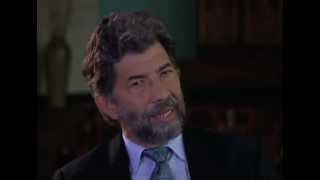
Dr. Emmett Miller argues that many wealthy elites lack empathy either through inherent sociopathy or trauma-induced emotional detachment, allowing them to climb to power and cause harm without remorse. He compares a corporation hoarding resources while others starve to a single landowner controlling a wheat field, and warns that without embedding ethics into business, society will face continued abuse and inequality.
Chapters
[FOREIGN LANGUAGE] A great number of people earn money, and with their money they buy social status, and at the same time are very abusive, very cruel, and very violent to those that they come into contact with on a daily basis. Those people tend to be of two kinds. is one kind of person who doesn't really have much conscience, if consciousness or conscience. Sometimes if we have to attach the labels, we say that they're sociopathic or that they have a mild form of autism that's called Asperger's syndrome, where these people actually have an extremely difficult time feeling what another's feeling. They simply, they seem to not have compassion or empathy. And other people to them are kind of like objects that they move around. And it's okay for them to abuse you as long as their abusing you doesn't impact their ability to make money or be successful or get the girl or whatever their goal is. They're There's simply no remorse within them. And of course, those people rise up to the top very quickly, and there's quite a number of them that run large organizations and large companies, and they get there because they're absolutely ruthless. They do things that other people would never dream of doing. And if you talk to them and they say, "You know, you did a terrible thing," they go, "No, I didn't," and they really believe it. On the other hand, there's a kind of person who has the capacity to feel empathy for the person on the other side, to feel compassion for their administrative assistant or to their client or the vendor or the guy who's asking for a handout on the corner. They have the ability or they were born with that ability, but through their abuse they have lost that ability. So now they're hard and cold and they're cut off and they have no emotional responsibility. Often they are the directors of movements, of organizations, of corporations and the like. But, you know, think about it. Let's say we all lived in a town and let's say that this town had one area that could grow wheat. It was owned by one man. And we all live on bread in this town. And it's really been difficult. There's hardly enough bread. We're all really hungry except for this guy who has fields and fields of wheat that are growing. And what he does is he goes out and he harvests the wheat and he makes a big bonfire every Friday night. And he and his friends dance around the bonfire. While we're starving. And we'd say, you know, we're sorry, you know, but it's not okay to do that. We're part of your community. We're part— you're part of this community that we are a part of. And that wheat really belongs to all of us. You just have stewardship of that land and you're not stewarding it properly. And so eminent domain, we are going to take that over because you're not dealing with it. If a corporation, however, comes along and causes enormous damage in the culture, in the society, kills people, creates all kinds of problems in the world, if it has really good lawyers, it'll take years and years and years and years to work it through the court if you possibly can. And even if you do, the man who is responsible for it or the woman who is responsible for it has long ago left. They've taken their bonuses. And left. So we do not have a way to have businessmen and corporations be good citizens, and that's a very terrible thing. Unless we figure out a way to bring morality and ethics into what we're doing, we're going to continue to abuse ourselves. So until we learn how to live our lives and all the aspects of our lives, including our business lives, according to a certain set of values and ways of treating each other humanly and fairly, we're going to have the abuse and we're going to have the depression.
This has been a DrMiller.com production. Rate, comment, and subscribe at YouTube.com/emmettmillermd. To find out more about Dr. Miller, his recent articles, his free self-help resources, his internet radio show, Conversations with Extraordinary People, and his free e-newsletter, visit drmiller.com. That's drmiller.com.