Lawyers who master prompt engineering will WIN the AI-Age. #ai #law #legalai
17 Nov 2025 · 2 min
1:35
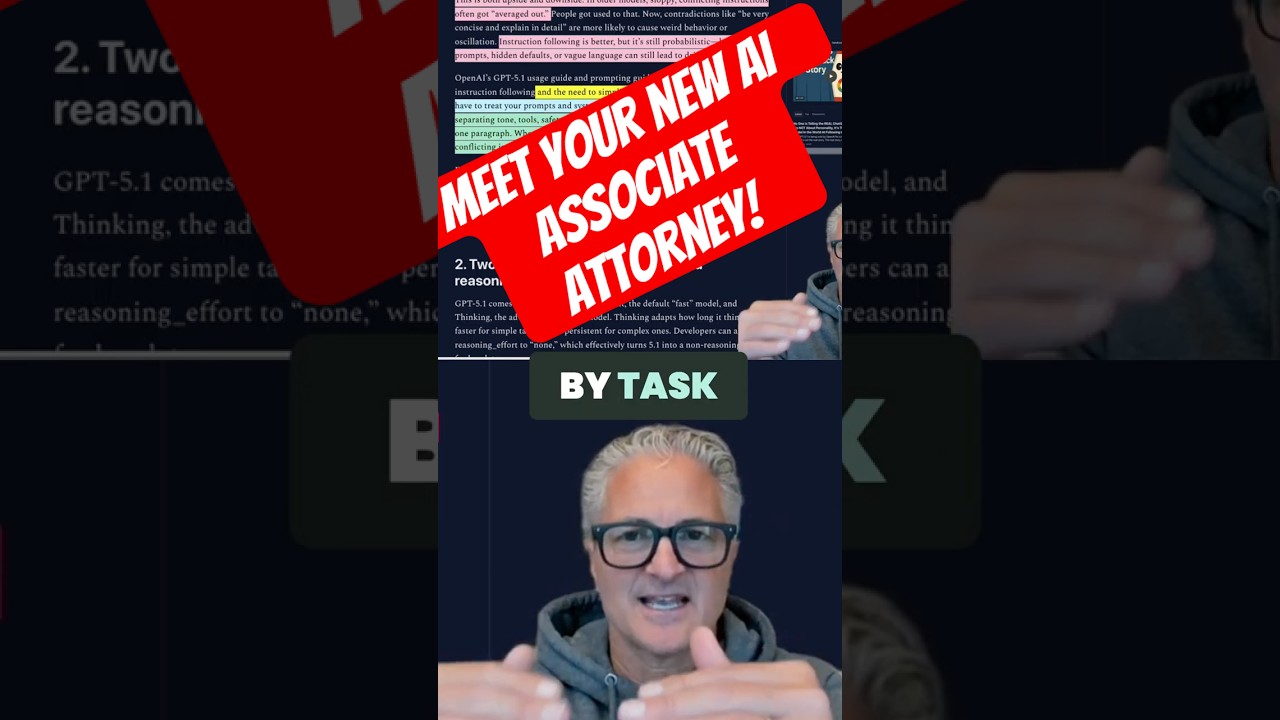
Enrico Schaefer argues lawyers should treat ChatGPT like an AI associate by building precise, step-by-step prompt sequences instead of vague requests. Break complex tasks into simple, non-contradictory pieces and separate concerns like tone and safety, the way a project manager breaks work into tasks and milestones.
Chapters
More from Enrico




youtube.com
How to fix the most common problem with ChatGPT. #ai #chatgpt #personaldevelopment
10mo ago





youtube.com
If you want to learn about ChatGPT 5., Follow Nate B. Jones. @chatgpt #ai #lawfirms
10mo ago


youtube.com
Build Your Project's Ground Truth: Reliable AI Results Start with a Strong Foundation Thread
10mo ago