Texas Judge bans the use of ChatGPT and AI (kind of). Why this is a big mistake.
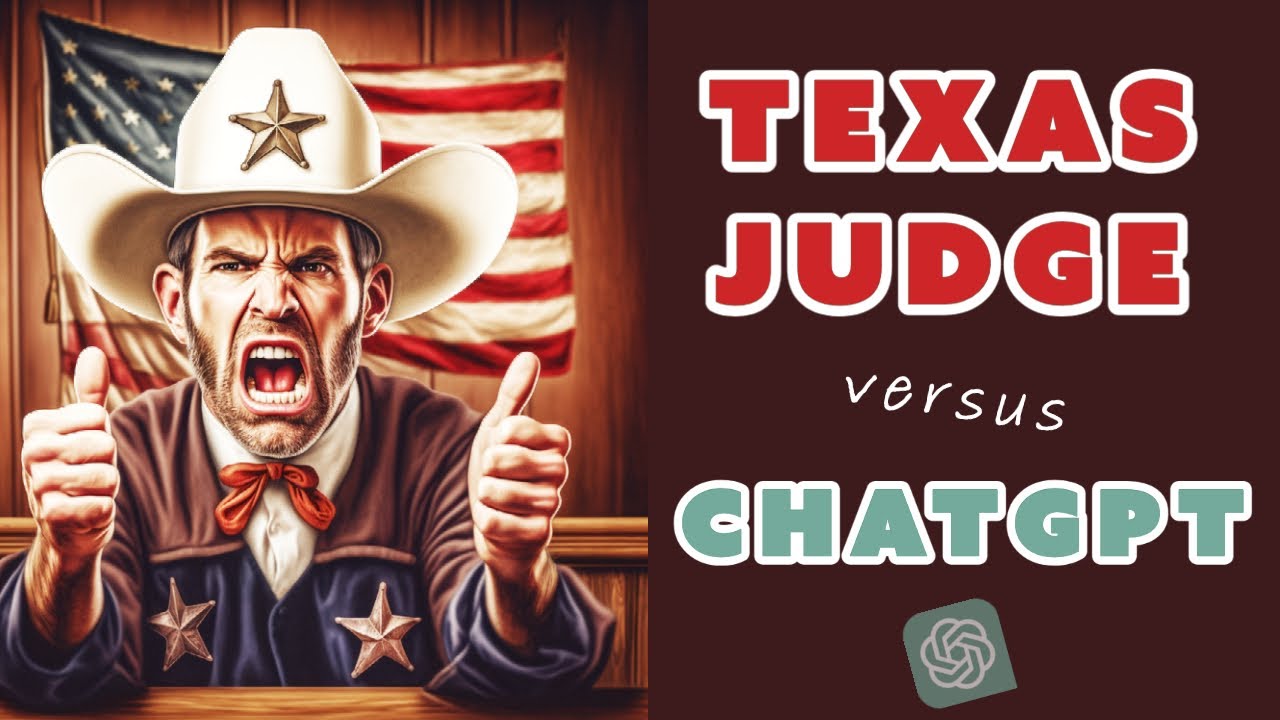
In this video Enrico Schaefer examines two recent AI‑related incidents that have shaken the legal community. First, a New York lawyer used ChatGPT for legal research and inadvertently cited six non‑existent cases, prompting a sanctions hearing before Judge P. Kevin Castille. Schaefer uses this episode to illustrate the limits of general‑purpose large language models, which generate text by predicting the next word and can fabricate citations when not anchored to a verified legal database. He contrasts this with specialized, vertically integrated AI tools such as Casetext’s CoCounsel, which are linked to authoritative case law and statutes and therefore provide reliable assistance for legal research. The second incident involves U.S. District Judge Brantley Starr (Northern District of Texas), who issued a mandatory certification requiring every attorney filing in his court to attest under oath that they did not use generative AI (e.g., ChatGPT, Harvey AI, Google Bard) or, if they did, that any AI‑generated language was verified for accuracy using traditional print reporters or legal databases. Schaefer critiques the order as overly broad, redundant with existing ethical rules (Rule 11), potentially unconstitutional, and likely to create a chilling effect on the adoption of beneficial AI tools. He argues that the rule could force lawyers to prove a negative, be subject to perjury sanctions for alleged AI use, and set a dangerous precedent for a patchwork of judge‑specific AI certifications across the nation. Schaefer proposes a softer, educational approach: judges should simply warn attorneys that general‑purpose AI lacks reliable citation data and must be double‑checked, without imposing oath‑bound certifications. He emphasizes that competent representation may eventually require AI assistance, and that regulation should focus on transparency, data security, and proper verification rather than blanket bans. Throughout, he calls on the legal community—judges, lawyers, clerks, students—to collaborate on responsible AI integration. The video concludes with a call to action for viewers to like, share, and comment, and offers links to further resources and alternative certification language.
Chapters
Today I want to talk about 2 different events where the issue of AI and the practice of law have intersected. Over the course of the last week, we've had 2 big things happen in the AI space specific to lawyers, law firms, and courtrooms. In the first instance, we had a lawyer who used ChatGPT to cite bogus cases. The lawyer had used ChatGPT to do legal research. ChatGPT provided case citations and authority which were not real cases. The lawyer ended up getting called out by adverse counsel, and of course now that lawyer is headed for a sanctions hearing in front of a New York judge. So that was big news, and you saw a lot of articles and clickbait about that particular issue. The, the lawyer, um, who I'm not going to mention his name because, look, this could have happened to just about anyone at this early stage of, of the use of AI and specifically ChatGPT. Everyone's excited about it, very few people understand it. So hopefully, my vote is that the judge does literally nothing in this case except Instruct them moving forward to be more careful. The judge in that case is U.S. District Judge P. Kevin Castille, and I think that it'll be interesting to see what happens. We'll do a show on that once the court rules on that particular issue. There were 6 cited cases that did not exist in that particular brief. All right, so that was, that was the first big event that got a lot of attention, and I'm sure lawyers started to think, Oh my gosh, we, we should not be using any AI or AI assistance in my legal practice. That's not really the takeaway from this. It is that we have to understand that ChatGPT is general intelligence and it's trained on a data set. That data set includes the internet. The internet has a lot of information about particular cases and in, you know, reported cases, case law analysis of cases. But the way that generative pre-trained transformers work— GPT works on LLMs, on large language models— is it guesses the next word. So in this particular instance, guessing the next word meant guessing a false case name, and potentially the citation still, uh, is, is, is, is bad, but the case law is good. Who knows, right? So it could be that the statements of law were correct, but the cases were in fact bad. All right, so that was pretty interesting, and from my point of view, a good event because it's bringing attention to the limitations of AI for lawyers. Now keep in mind, that's a general intelligence. We have a number of tools, and we're going to talk about this in a minute. We have a number of tools, legal research tools. Casetext is a company that's already integrated AI into its vertical data, which are all cases, statutes, and, and it's had a case, uh, research tool in effect that lawyers have been using for a long time. It added AI to that tool. It is better than other tools without question. It's the best tool out there right now. So AI-assisted legal research, when it is connected to a database of cases and statutes, is an amazing thing. And courts and judges should be telling Lawyers, use that, use that. And, and judges should be using that AI system to see if the, uh, the citation matches the proposition of law that the lawyer is arguing, because oftentimes that's the bigger issue. They say a case says X and it doesn't really say X, right? And lawyers can use these same tools in order to check that and have a link to the actual case at the actual page, at the actual reference point. to be able to check it themselves. So, so, so this first big event then fed into what became the second big event. And this happened just yesterday, and you're starting to see some press on it. But it was a U.S. judge that ordered lawyers to sign a pledge to certify under oath that they did not use any AI in the work product submitted to the court in any sort of court filing. And we're going to talk about this because this is a big thing that could become a trend that could really become a big problem for everyone, including the judges involved. You're going to hear that the intention of the judge and why the judge did this may have been for the right reasons. But in my opinion, this is dangerous precedent. It is not the way courts should be addressing AI. It is going to have unintended consequences, and it's probably unconstitutional. So we'll talk about all of that in a minute, and I'll let you know why. Now, the judge in question is, um, is a judge in the United States District Court for the Northern District of Texas. He's relatively new, he's relatively young. He's a, um, a Trump appointee with a very, you know, controversial— at least from the libs' point of view, right? Uh, controversial background because of his embrace conspiracy theories and arguing cases where the evidence did not support the argument or where the evidence was not at all credible. So Judge Starr, in his history as, as a litigator working for the State Attorney General Office of Texas, has by at least one side of the aisle been accused of spinning conspiracy theories in court Arguing things that don't really exist in fact. And so it is a bit ironic here that he is the first judge to issue a set of rules for his courtroom, which include a certification, mandatory certification regarding generative artificial intelligence. We're going to dig into what he actually is requiring, and we'll show you why it is that it's misguided. in my opinion. We'll talk about, you know, how the judge clearly doesn't understand AI, and that's the real danger here. Are we going to have regulators regulating AI who don't know anything about AI? And this isn't Congress where there's hearings and debate and voting. This is a judge who can make up any rule and impose it on the the, you know, the, the court, the lawyers, and specifically affect the representation of clients by lawyers and the constitutional right to selection of counsel, to the best counsel that's out there. And the best counsel that's out there is going to be the AI-enabled lawyer, not the lawyer inhibited from using AI by draconian rules such as this. So, so Judge Starr issued this mandatory certification after going to a conference of judges where one of the discussions was on AI, where it was noted that AI, ChatGPT, and other tools can generate in response to a question about what is the law in, in Texas about this particular issue, and then if you ask it to provide case citations, those case citations may or may not be accurate or real. And so in response to that panel, he comes back to his court And Judge Brantley Starr issues this mandatory certification requirement, and then he publicizes it and actually provides interviews to the press about it. So we're going to talk about what his potential motivations might have been in being the first judge in the country to get this kind of recognition on the issue of AI. And and we'll talk about what the the good intentions may have been, and and we'll talk about what the the bad intentions may have been. We don't know. I don't know Judge Starr, but we'll talk about what might motivate a judge to do something which could end up having a chilling effect on the practice of law, on the ability of lawyers to represent their clients. So let's just go back to what. Judge Starr has said about why he did what he did. And, uh, in an interview, Starr said that he created the requirement to warn lawyers that AI tools can create fake cases and that he may sanction them if they rely on AI-generated information without verifying it themselves. And we'll get into, uh, the specifics in a minute. He said we're at least putting lawyers on notice who might not otherwise be on notice that they can't trust those databases. They got to actually verify it themselves through traditional database. Now, all of that sounds actually really good, and if the motivation of Judge Starr was clickbait, notoriety, and press, the good news is that we all need to understand how AI works. And this is probably going to push out into the legal community. And for all those lawyers who don't know anything about AI, don't even know what ChatGPT is, and, and, you know, maybe kind of very slowly moving in that direction, they're going to go into it knowing that simple ChatGPT with general intelligence is not a tool to do case, uh, law research, right? And so that's good. But, but he didn't limit it to ChatGPT. He, he actually banned all GPT tools, um, from, from use by lawyers. And when I say banned, I say that in the sense that the way he did the word— the wording of his certification says you cannot use GPT tools, but if you do, you have to make sure that they're accurate. And kind of sounds innocuous on its face, but Is it really that innocuous? And my argument is, I don't think so. I don't think it's as innocuous as it appears. It certainly sounds reasonable, and the motivations that are articulated here by Judge Starr seem to be good motivations, right? Let's go, let's go and make sure that lawyers know not to rely on GPT so they don't screw up. And I fully support Judge Starr in his efforts and motivations, if that's what they are, right? We all need to make sure that lawyers understand The limitations and opportunities of AI. So let's dig in a little bit on the specific certification language, and you can find it at the website. I'm going to put a bunch of links below in the description so that you can take a look at the specific documents, the mandatory certification requirements, some of the news articles, and the rest. And so go ahead and take a look at those if you want to see the actual Certification requirement. And before we jump into that certification requirement, if you are getting value out of this video or many of the other videos I've done to the legal community on AI, please consider subscribing and liking the video. Because if you like that video, it's going to push it up the ladder so that more lawyers get to see this critical information and participate in the discussion. My famous quote, we are all in this together. Judges, Lawyers, law clerks, paralegals, secretaries, law students, law professors—everyone—we're all in this together. We got to do it together. All right, so let's jump to the mandatory certification and talk a little bit about what a lawyer has to swear under oath in Judge Starr's courtroom with any filing. All right, so it starts out by saying all attorneys and pro se litigants appearing before the court. Must, together with their notice of appearance, file on the docket a certificate attesting— that means swearing under oath under threat of perjury and jail time— either that no portion of a filing will be drafted with generative artificial intelligence such as ChatGPT, Harvey AI, or Google Bard. Okay, so that's the first part. So That kind of feels like, oh my gosh, I better not use any AI tools, right? But then he's got an out here. He says, or that any language drafted by generative artificial intelligence will be checked for accuracy. That sounds reasonable, but here's where we get into trouble: using print reporters or traditional legal databases. And we'll talk about why that makes no sense with regards to most of the uses, but Um, involving AI. And so, and then the last part, by a human being. So a human being must review any generative AI content that is submitted to the court. All right, again, sounds reasonable. When I first saw this, I thought, okay, well, this could bring attention. I, I kind of agree that it's important to bring attention. But the more I thought about it, the more I dug into the language, the more concerned I became. So before we get to his explanation as to why he is doing this, let's take a look at the actual language that he has. So this attestation under oath is something that lawyers already have to do under Rule 11 and other ethical obligations that are required of lawyers. So the reality here is that this is completely unnecessary. Because Rule 11 already governs providing, you know, improper purpose pleading or using, you know, the court for an improper purpose. And we'll talk a little bit about Rule 11 in a minute. But what I want to stress now is that this rule Certainly smacks of a warning that, you know what, I probably shouldn't be able to use AI in, in this court. And here's the, here's the issue, right? Really, the issue comes down to what is the actual impact if Judge Starr were to literally apply this rule? Uh, what would that be? And what is the chilling effect? that this kind of rule might have on lawyers and their ability to represent their clients. In a world where if you're not using AI, you are, you are, you are leaving your client behind, you are charging too much and providing too little, you are violating potentially your duty to provide aggressive representation and competent representation, which incorporates the requirement that you're using technologies that make you competent, right? So you could make the argument that the rule should say you must use AI As much as you might want to say you shan't use AI, right? In order to provide competent representation, you must use AI. And that day is coming. It's not here yet. So here's my concerns about the certification mandate. So at the core of the issue, you know, we want to ensure that lawyers do not misquote or misconstrue case law. And as I noted, we already have rules in place that hold attorneys responsible for the accuracies of case citations. But rule— this takes Rule 11 to a whole different level. You could potentially be in compliance with Rule 11 and fall afoul of Judge Starr's mandate. So it's expanding the rule in ways that, that are going to potentially impact the ability of lawyers to effectively represent their clients. Rule 11 was more than adequate. So it's worth questioning whether the certification adds anything new or just simply complicates the existing process. And my concern is that in a rush to either regulate AI or get press, this judge has enacted a rule that could inadvertently create a chilling effect in the legal community. Lawyers may become increasingly fearful of sanctions imposed by a judiciary that might not fully comprehend the intricacies of artificial intelligence. The allegations of violating a certification could in many instances be based on hearsay or unprovable suggestions, leading to a climate of uncertainty and apprehension. Let me say that again. It would be in many cases impossible and endlessly debatable and potentially contrived to say that a lawyer used an AI tool. That when they didn't. And we've already seen that in, in schools, right? All over the place where, uh, where, where teachers are providing grades of F because they say AI was used when it wasn't. Okay, so if we have that in court, the stakes are much higher. So if I regularly practiced in front of Judge Strong, I would be unnecessarily unnerved by a false allegation or suggestion about AI use. Or using AI as a, as a reason to retaliate. The sense of uncertainty is going to affect lawyers and the ability of the lawyers to provide that representation required by the Constitution. So let's take a— let's just take a different tact on this. So the concern is lawyers who use technology and information tools in a way where they end up providing, um, false, false information. Well, let's think about how lawyers are using the internet. We use the internet as lawyers oftentimes to do legal research. We find other briefs online, filings by other law firms. We find articles and analysis about cases. Today's lawyers heavily rely on the internet, which undeniably includes a host of inaccurate information amongst a lot of useful content. Should we then propose a ban on the internet from being used for any legal purposes in working on filings that might end up in front of a court? Just because it has the potential of providing misinformation doesn't mean that we should be regulating it. And just like we shouldn't be regulating the use of the internet, we shouldn't be regulating the use of AI. The, the, you know, the enforcement of it, the regular, you know, the regulation of it is untenable. And, and parallels can be drawn with many other technology applications that lawyers use where, um, hey, are we going to regulate them too? Let's talk about the various legal research tools out there. You know, we know Westlaw and Lexis, but in recent years there have been many other case research tools that are out there, and some are less powerful than Westlaw or Lexis. Some don't do a great job or any job at shepherdization to make sure that the case is still good. You know, they may not provide a full history of the case in an easy, accessible format. Should judges and courts be assessing the effectiveness of dozens or hundreds of legal research tools and say which ones are allowed and which ones are not? Is it even necessary? Lawyers can. Uh, you know, cite cases that don't exist. There's a ton of rules. Everyone knows that, right? If the goal is to say lawyers be careful about using these tools, you didn't have to do it in the way that Judge Starr has done it with a mandatory certification under threat of perjury and/or sanction under Rule 11. Um, it's draconian. It's draconian, in my opinion. All right. So The other concern I have is that, will there be a different version of this certification for every judge, right? So is this going to catch fire and all of a sudden you've got hundreds of different certification requirements by judges? And so the danger of this certification requirement is not merely in its immediate impact, but also the precedent it sets. It could trigger a wave of similar misguided regulations around AI, which may end up hindering rather than helping the practice of law. Such regulation risk is, is potentially violating a client's right to select counsel who leverages AI to provide the most comprehensive and efficient representation possible. It could impair the ability of lawyers to offer their best representation available in this rapidly evolving field. We also know that there are a lot of judges out there, many of them older, who still barely use email. And we're going to trust these judges who may have a severe bias against technology or AI to now regulate the way we practice law, the way we run our business of law. This is a massive potential overreach if we end up with many different versions of certification requirements across the country. And I am specifically discouraging any other judge from going down this road. So I hope this video gets out there far and wide. I hope that other judges and and their clerks review this video because you need to consider the other side of the equation. And I'm going to give you at the end of this video some proposed language which I think would work really well in order to accomplish the stated goal of Judge Starr, which is to put lawyers on notice who might not otherwise be on notice that they can't trust those databases. All right, that was his quote-unquote reason for doing this. Noble, altruistic, potentially, yes. Misguided, in my opinion, yes. So rather than leaning towards such reactionary measures, we should focus on fostering a more nuanced understanding of AI and its potential applications within the legal system. This way, we can ensure that it— that the incorporation of AI into legal practice enhances the legal process rather than obstructs it. And we always want to have a clear focus on accuracy, transparency, and accountability, for sure. So let's take a look back at, at this certification and talk a little bit more about it. So remember I said that AI does a lot more than legal research, so I want to talk about that. So this particular rule makes no distinction between the types of things that we might ask an AI assistant to do in a particular court filing. There could be deposition testimony based on summaries prepared by AI. There could be medical records that are summarized or organized or have some overlap with AI. If not today, by the end of this year, almost all of it will be. And yet this particular certification says no portion of any filing be drafted, generated by artificial intelligence, or any language drafted by general artificial intelligence will be checked for accuracy. So I, you know, this, this word drafted here, I think, is, is interesting because it depends on how broadly you view that word, right? So if, if will be drafted, if that's very literal and it's just like having the, um, the artificial intelligence literally do the drafting and it's, and it's only that, less harmful. But drafted in the sense that, you know, that certain language, sentences, paragraphs of, of summaries of depositions or whatever might come out of the AI Um, you know, now all of a sudden, how does a lawyer even figure out at the date of filing how to audit all of their staff, all of their attorneys, all of the attorneys who came before them when they're leveraging prior work product, whether or not any of that was drafted using general artificial intelligence? The audit requirement on this certification, taken literally, is, is probably impossible and growing more impossible as more and more lawyers use AI. The other thing is that I think that one of the, one of the things that I think that Judge Starr fails to realize is AI does more than draft. So I use ChatGPT AI to dictate everything. So everything that I draft comes from AI, even though it's just me speaking. Okay, so again, there is this out, or that any language drafted by, uh, general artificial intelligence will be checked for accuracy. And, and, you know, okay, if I'm speaking it, I'm not even sure how that translates, you know, in dictation sense, how this rule would apply. But here's where the, you know, here's where the issue, the disconnect is: using print reporters and traditional legal databases. Well, I'm using AI to dictate, and I now have to certify under oath that I used print reporters and traditional legal databases to check my dictation or summaries, which you— there, for most of the, the stuff that AI is going to be used for, you can't check it with a print reporter or traditional legal database. I think what the judge intended here is to say something like that you cannot cite any case law using AI without checking print reporters or traditional legal databases. But that's not what this says, right? It is very broad. Any use of general artificial intelligence has to be checked using print reporters or traditional legal databases for accuracy by a human being. This is impossible on most of the uses of AI that is going to spit out work product that goes into a case filing. All right, so let's talk a little bit more about what comes next. So that's the, the basically the certification requirement. But then Judge Starr goes on to kind of explain himself, and I, I do think there's some value here in the sense that, you know, what he's trying to do is bring awareness. I'll give him the, the benefit of the doubt, trying to bring awareness. And he says, these platforms are incredibly powerful and have many uses in the law. Form divorces, discovery requests, suggested errors in documents, anticipated questions at oral argument. But legal briefing is not one of them. Okay, that is just flat out wrong. There are legal briefing tools that are available today that are connected to legal research databases that are way more powerful, useful, and accurate than anything else out there, Westlaw, Lexis included. So legal briefing is not one of the things that he wants AI used for. Well, that's just misguided and wrong and demonstrates in fact that he does not understand where we are with artificial intelligence and certainly not where this is going in the coming days, weeks, and months. So he provides an explanation here. Here's why. As such, these systems hold no allegiance to any client. What is this all about? No allegiance to any client, the rule of law, laws of the Constitution. No technology in the history of mankind would meet this test. The judicial system is well-designed. We have advocates for both sides. They are there to aggressively advocate their client's position within the bounds of the law. They have a duty under Rule 11 not to use the courts for improper purpose or knowingly provide false information or unsupported information to the court. Any party believing a platform has the requisite accuracy and reliability for legal briefing may move for leave and explain why. Okay, now this just doesn't make any sense because up, up top it said you just had to verify that you checked it by a human being using a traditional legal database or print reporter. Now he's saying something that is truly scary because this makes it sound like if I want to use any AI tool or anyone on my team upstream or downstream happens to use an AI tool, I have to file a motion swearing that I believe that it has the requisite— this tool has the requisite accuracy and reliability for legal briefing. Holy schmoly guacamole, right? I mean, in a month, in 6 months, every legal tool, Microsoft Word on up, is going to have AI baked into it. I got to file a motion and get leave in order to use Microsoft Word? In order to use the internet, which may in the in the case of Bing be connected to AI. It's just shows a misunderstanding of AI and the danger of this type of approach to trying to bring awareness. So it says accordingly, the court will strike any filing from a party who fails to file a certification on the docket, attesting that they have read the judge's court. judge-specific requirements and understand that they will be responsible under Rule 11 for the contents of any filing that they sign and submit to the court. So this is interesting because it is— this is true. This is basically, you know, we, we as lawyers, we have to comply with Rule 11. Let's just take a step back. Let's just take a breath before we start doing mandatory certifications. Now, I told you I was going to provide some alternative language for Judge Starr or anyone else, any other judge or clerk that's assigned the task of looking into this, right? And that alternative language would not be a mandatory certification. It would simply be a judge's rule that the attorney, when using AI for legal research that's based only on general intelligence and doesn't have access to a database of current case law and statutes should be aware that they have to check all those citations. A request by the judge that the attorney acknowledge that general artificial intelligence that's not connected to specific intelligence databases Has limitations. That's it. Make it soft, make it fuzzy, make it awareness. The judge can bring it up at the beginning of every case. They could send an email at the beginning of every case. I mean, if the, if the goal here is education rather than to gain fame or get in the papers, right, then there are many ways to make sure that the lawyers in your courtroom are aware of the limitations of AI. That do not go down this dangerous path. My name is Enrico Schaefer. I help other attorneys, judges, law clerks, law students, law professors understand how they can use AI to better represent their clients, to do so in a secure way where the data that is being input into the AI cannot be used to train the AI model, that it's kept private and deleted from the servers after it is checked for appropriateness under strict policies by the particular vendor such as ChatGPT. So I've got videos on all of this stuff. So I invite you, if you enjoyed this particular, particular show, I would invite you to go ahead and like it because that'll move it up. And I think that we need to share this particular show. We need to spread the word with this video because, man, we could end up with a lot of these certifications just running rampant across courtrooms across Texas, across the United States in a very misguided effort to make sure that attorneys better understand AI, right? So like the video, share the video, comment if you have any questions or you have a different take. Go ahead and leave them below. I will always respond to those comments. All right, my name is Enrico again, and we will see you next time.
More from Enrico




How to fix the most common problem with ChatGPT. #ai #chatgpt #personaldevelopment





If you want to learn about ChatGPT 5., Follow Nate B. Jones. @chatgpt #ai #lawfirms


Build Your Project's Ground Truth: Reliable AI Results Start with a Strong Foundation Thread