Your Ratings As an Airbnb Host And Reputation Are Your Most Valuable Asset.
In this live Q&A, Enrico Schaefer (legal expert) and Svetlana (East‑Coast short‑term‑rental manager) discuss why online reputation is the most valuable asset for Airbnb/VRBO hosts and how to protect it. They outline the various ways hosts can be harmed by false or misleading reviews—defamation of fact, defamation by implication or omission, and extortion. The conversation explains the legal framework (defamation elements, opinion vs. fact, Section 230 immunity, EU vs. US differences) and practical remedies: gathering written evidence, sending threat letters, invoking platform policies, filing arbitration under Airbnb’s terms of service, and, as a last resort, litigation. They compare platform responsiveness (VRBO vs. Airbnb), describe how arbitration can pressure Airbnb to act, and give realistic timelines (4‑12 months, with possible emergency court relief). The hosts are encouraged to leverage legal leverage, use arbitration strategically, and access resources (online guides, 10,000hosts.com) to safeguard ratings, which directly affect revenue.
Chapters
We should be live, Svetlana. Welcome everybody. Yeah, welcome everybody. We had Svetlana was battling storms and downed trees, and I was battling my computer. So we are a few seconds late today, but welcome to this week's kind of ask me anything and ask Svetlana anything for short-term rental business. Players, Airbnb hosts, VRBO hosts. So welcome, Svetlana, to this week's show.
Thank you. Thank you for having me.
Yeah, so look, we're gonna run this the way we have been running these every Wednesday. You can post any sort of question that you want, and we will answer them in stream. And if you don't want us to post your name, then let us know, and we'll just read the question. Otherwise, we'll show you at the bottom of the screen We're going to run about 30 to 40 minutes today max, and we're going to run through some topics that I think are becoming really even more important. They've always been important to hosts, and that is ratings and reputation. So Svetlana, I mean, you're a property manager, one of the biggest, uh, on the, on the East Coast. You run a lot of short-term rental properties. How important is reputation?
Very important. I'm actually going to share my recent experience that just happened last So on Google, we have 4.8 stars rating. And because we had to cancel a large party very short notice, 4 days in advance, due to damage to the property, the host got— the guest got extremely angry with us because we canceled on short notice, even though it was completely outside of our control. So she had 7 other people post— I think it's more than 7 now— post negative reviews, so 1-star reviews overnight. And we went from 4.8 to 2.3 overnight in Google. She also submitted multiple reviews on Facebook, on BirdEye, and in VRBO as well. So when questions like this come up, you need to ask yourself, is this legal? Is, is there something I can do about this? And this is where we come in and to, to, to shed light on this.
Thank you. And I, you know, Svetlana, you hit the nail on the head, which is, look at— if you get an honest review and it's just an opinion and it's legitimate review, you know, that's the way the game is played. That's the way it's supposed to work. But all too often, hosts are getting defamed by false statements of fact, or extorted, where the general approach is, hey, I'm going to report that you had a mouse in the house unless you give me a refund, and I'm going to post a bad review. And of course, there are policies that Airbnb and others have in place that are supposed to stop that type of extortion. Definitely, if you're a host, you're going to want to get that in writing, either a text message, email, or otherwise. But look, it's more than just just the Airbnb platform where your number of stars shows up and where the guest experience shows up. It could be in any number of different platforms. It can be on Google, on your Google Places ratings. It can be in a variety of different directories. It can be in Yelp. It can be everywhere. So what we want to do today is really help hosts understand how to manage their reputation online. And in future shows, we'll talk a little bit about how to proactively increase the ratings that you're getting on your short-term But today we're going to really focus in on what happens if you're defamed. What happens if a guest posts a false statement of fact about you, either on the Airbnb platform or outside the Airbnb platform? What kind of rights do you have? And I think one of the things, Svetlana, that you and I talk about a lot is sometimes hosts just take it. They don't realize that they have legal rights. They don't understand what the law is and how the law protects them. They, they burn out on customer support with Airbnb and they just give up. You know, how often do you hear that from hosts?
All the time. All the time. And to add to that, HomeAway have had their extortion policy for, for a few years at least that I know of. Airbnb did not want to follow the same policy as HomeAway had. So if you have in writing that, for example, I'm not gonna pull post a negative review if— so that is a definition of extortion, right? So if that review gets posted, you can send her email or her text message to HomeAway and that review will be removed. Airbnb is just catching up, uh, to this, uh, in the— in— they started in 2019. I had multiple conversations with, um, Airbnb, uh, executive managers About this process, and they finally updated their review policy to include extortion. So it is the same policy for Airbnb as of right now. However, this is not working well. So this is how it's supposed to work. It does not work well. I have had reviews, my reviews of the guest removed for absolutely no reason, and I have had my reviews who which was supposed to be removed was— were not removed because of their customer support.
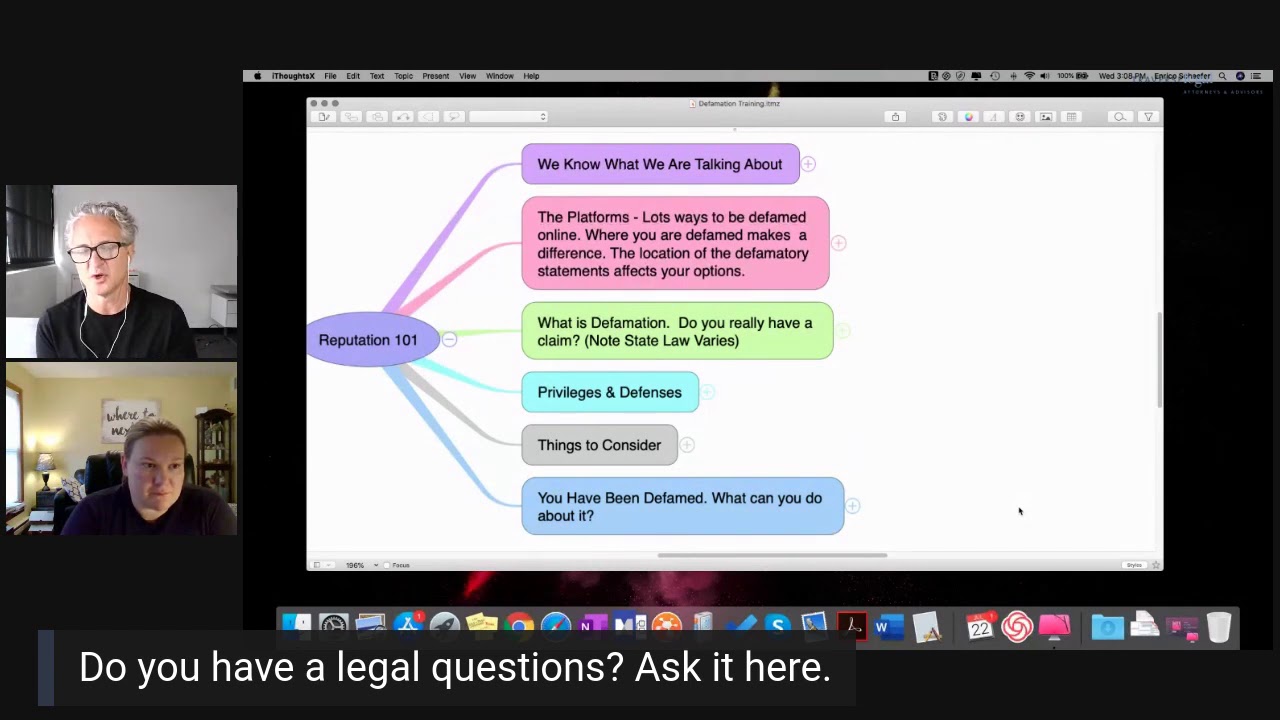
Yeah, or lack thereof, right? And we know that, right, after COVID with the layoffs, um, the customer support on the, on the host side of the business— and Airbnb, for those of you who don't know, it really does separate its departments up into a variety of different pieces— but basically you've got the traveler side of the business, which gets a tremendous amount of resources, which gets all the love from Airbnb. And then you've got the host part of the business, which, um, doesn't get any love from a lot of hosts' point of view and very little support. You're the ones that are waiting for a long, uh, in a long line to get a support representative, to get escalated up. Uh, and of course, you know, that's the problem. Sometimes Airbnb doesn't get you where you need to be in terms of having a review removed. So just some broad principles here. Can you sue Airbnb for a third-party, a guest, uh, review when that guest review is defamatory? Generally no. Under the Communications Decency Act Section 230, platforms such as Google and Airbnb and VRBO have immunity from what's called user-generated content, and, and causes of action include defamation. So if a user posted a defamatory thing on the Airbnb platform, you can't just sue Airbnb for defamation, but you can sue the person who posted it. You can threaten the person that posted it. You can, um, typically you've got their email or their cell phone number by this point. You can create what we call a consequence. So Here's the dynamic. We we get thousands, maybe tens of thousands of inquiries on online reputation issues every year, and the the dynamic is this: when someone posts something on the internet about you, they tend to have this this sense that ha ha, I can do whatever I want. I can be negative. I can be nasty. I can post false stuff. I can harm you intentionally by by posting false. Information, and there's nothing you can do about it. And that sense of lack of consequence is the thing that emboldens them to engage in extortion, for instance. So you have to, as a first step, create a potential consequence. What can that consequence be? Well, it could be hiring an attorney. It could be threatening to hire an attorney. It could be having the attorney send a threat letter alleging defamation. And it can be a lot of non-legal leverage. If you've got a group coming to your home and the, the person who booked the property is the, is the mom or the dad who's 75 years old, and all the kids went and defamed you online on Google reviews. Well, threatening to sue the parents usually results in those being removed. So it's all about leverage and consequence. So today what I want to talk a little bit about is, um, is what are the different ways you can be defamed? What is defamation under law? So you understand what is actionable, what is not actionable, what are some of the defenses. This is a very complicated outline that we use that we actually sell for $80 online for people who are trying to understand what their rights are. I'm going to use parts of it today to help you as a host understand what your, what your rights are. So the first thing that we want to talk about is there are lots of ways to be defamed. Obviously, where can it be posted? Blogs, news sites, comments, social media, reviews and rating sites. That's Airbnb, right? Email, video, text, all these different ways for people to defame you. And we're going to come back to why that's important, and it deals with how you have it removed, or can you have it removed, in a minute. What I want to talk about mostly today, Svetlana, is like, what is defamation? Do you really have a claim? Do you really have legal leverage? So the key elements of defamation are false statement of fact published to others that tends to harm your reputation. The one I want to talk about today is false statement of fact because that's usually the one that is the most critical legal issue. What is a fact versus what is an opinion? I can say I think my host really sucked. Everyone understands that's my opinion. It's not a fact. It can't be proven true or false. The First Amendment in the U.S., less so in the EU— for you EU folks, you've got far more rights than the U.S. folks— But that is an opinion that's going to have more protection. So a fact is something that can be proven true or false. Sally stole money from my wallet. That either happened or it didn't. And if it didn't and someone says it, then it is a false statement of fact. An opinion cannot be proven true or false. Sally is a dishonest person. Well, you know, that really smacks of an opinion, merely linking someone's name to the word Satan conveys nothing more than the author's opinion that there's something devilish about that person. So in the US, it has to be a false statement of fact. Published to others, if it's a review, it's online, it's been published, tends to harm your reputation. That's usually not a problem unless you really do suck, in which case you can't possibly be harmed, right? Yeah. So there are people who are what they call libel-proof because their reputations are so poor that really there's nothing bad that you can say about them that would cause them any harm. It's not going to be true for for the host. Okay, a defamatory statement that disparages a host and a host business or a host efforts at short-term rental is going to be trade liable, and it's going to be defamation per se. So you have added benefits under law if it's harming your reputation, and in that case, damages are going to be presumed. All right, so I'm going to stop right there, Svetlana, and see if I've gone way over your head. Everyone else is. said, like, what questions do you have, um, about what we've gone through thus far in terms of defamation?
So with the, with the reviews about, um, with the online reviews, so if we're talking about defamation, so a good example would be something that literally happened to my company last month, right? So the— if you look at my Google account right now, it looks like I have canceled multiple reservations with multiple guests and multiple properties, that is a definition of defamation because that— the, the guests specifically ask other guests to, um, uh, solicit a negative review to, as I quote her, bury me. Um, so that is one, uh, one subject we're talking about here. Another subject to bring up is a review based on their own experience but has nothing to do with your property. For example, I just got a 3-star review: great house, great company, will rent again. One bad thing, the pool was cold. Okay, well, does the listing say that the pool is heated? No. The pool most likely will be cold in May in the Poconos in Pennsylvania. Yes. So that kind of review is not a defamation, right, uh, Enrico? But it also falls under wrong, wrong reviewing process here, right?
So that's the other part of it, which is the policies. But, but let me, let me just say that could be defamation, Svetlana, and let me show you how. So here's the trick. This is very— can be kind of convoluted, but look, you have a sense of it, right? And you had a sense of it, like, okay, if someone posted the pool is cold, the implicit thing is that the pool was supposed to be warm. Yeah. And so yes, it's a true statement factually that the pool was cold, but the implication is that you misrepresented to them the pool and you didn't. So let's talk a little bit about defamation by implication and defamation by omission. Sometimes, even though the literal statement is true, it creates an impression that they were a guest when they were not; that you know that they actually checked in when they did not; that that in fact that you misrepresented the listing when you did not. And that's a big one, right? Because if someone rents a house that is very inexpensive in a in a in a marginal neighborhood and all that's disclosed and obvious from the listing, and then someone comes in and says, you know, this house was, was not in good shape and was, um, you know, was really poorly maintained, and oh, the neighborhood was bad, but all of that was, was obvious in the listing, that's what they agreed to, creates an implication that is not true. It creates an implication that the host misrepresented the home and the property to the guest, which factually is untrue, right? Mm-hmm. Factually, it's all in the, in the listing, and it was in it, and the home was as represented. So that's defamation by implication or defamation by omission. They failed to say something that, that completes the, that completes the information. They forgot to say that, oh, by the way, all of this was disclosed in the listing I just didn't like it, right?
Yeah.
So, so that's what you really— that's where you really have to kind of be creative and think about, okay, trust your gut. This is more than just someone saying an opinion. This actually feels like they're telling people things that are not true. If your gut tells you that it's saying something that's not true, it probably is an accurate assessment. And you want to go back and you want to look at your listing, you want to look at what they said, you want to say Hey, wait a minute, you know, like let's just use a COVID-19 example, right? So, uh, if it's a 50/50 split for a pandemic risk and, and now the guest is going to flame you on Google reviews because you didn't provide a refund, but that's what the agreement was, a 50/50 split on pandemic.
Yeah.
Then it's defamatory if they suggest in a Google review that you, you know, that you stole the, the money from them because you failed to provide a refund. without also saying, well, although that's what I agreed to when I signed, when I made the reservation, I'm now not happy. So again, defamation by omission and implication. Does that make sense?
Yep. The same thing, another example would be, the house was great, it was, everything was great as described, but, you know, it was 18 of us and there's only 3 bathrooms. That was very inconvenient. Okay, well, did you read the listing that it sleeps 18 people including children, but it only has 3 bathrooms. You have rented the house with 3 bathrooms. The fact that you didn't like it, it's— shouldn't review— you shouldn't review me, you should review yourself, right? So yeah.
And we all know that there's a lot of times where guests just don't read anything in the darn listing, and then they've got all kinds of questions that are answered in the listing, and then sometimes they do reviews. That are inconsistent. So let's kind of shift gears now. Okay, so you've had this bad review, you don't think it's a fair review, you think it's either factually false or fails to include things that are important for the reader to make an assessment of truth or falsity. So what are the things that you can do about it? And so there are 3 basic approaches here that you look at. There's the threat letter. Leverage up and send a request to the person who posted the review and say, hey, I saw your review. I— this is false. Uh, it's false because it's factually— the statements are false, or because you failed to let everyone know that's what was included in the listing, right? And now you've given me 1 star based on that false statement, or you extorted me with bad stars as a result of a, of an extortion scheme, you need to consider, is a threat letter the way to leverage up and then request the person who posted it to take it down? Now let's just talk about that for a second. Sometimes the platform doesn't care that both parties or the posting party wants it taken down. They're going to leave it up, in which case you— in Airbnb's case, you've got the right to arbitrate that to force it be removed. Under the arbitration provision of the terms of service, right? Even if you can't sue them for defamation, you can sue them because the, the, the poster's agreeing it was false, it should come down, and the arbitrator's got the authority to remove it. Chances are, Svetlana, if you filed an arbitration on one of these review issues, they would settle it by simply removing the review pretty quickly. Um, the other thing is a policy violation, which is something that you raised. If it is extortion and you've got the evidence to show that it was a tit-for-tat, right, then you can go to Airbnb customer support and say, hey, look at this, violates your policies. Now sometimes you get, um, you know, the wrong response from customer support. Sometimes you try and escalate and that doesn't work, then you got to go to arbitration. But you can threaten a policy violation and request that the platform remove it. Same thing happens with Google and the rest. If it's, if it's a racist or a threatening review, many of the platforms will remove those from the system. Now, if it is a Google review, the user can edit it or remove that review at any time. So, making that threat, showing that, you know, it's defamation, and then demanding that it be removed can cause them to simply run for the hills and remove the post. The last big category of things you can do is file litigation against the poster by, you know, hiring an attorney, going through the process of drafting the complaint and filing it either because you want damages or you want it removed and you need the leverage of litigation in order to be able to have that removed. So obviously you don't want to start with litigation typically, but hey, Look at Svetlana, you know, and I know that these bad reviews, these bad ratings can cost you a lot of money, tens of thousands, hundreds of thousands of dollars, millions of dollars over time if they're allowed to stand.
Yep.
So, yeah, so the ROI on this from your point of view, Svetlana, is, is make some sense, right?
Yeah, sometimes the only way is to go through litigation and have this removed. This is literally where I am at now, is that my Google account looks like I'm an asshole who cancels on people at the last moment and just doesn't care about any, you know, people, groups that have vacations coming up. This is the definition of, of, of defamation, right?
Exactly. And I think that, you know, what, what, what I've learned as a result of getting involved with these COVID-19 refund arbitrations that we're filing for hosts is the number one issue that they ask me about in addition to the refunds are, are false reviews, are extortion, are, you know, defamation. Is this defamation? What, you know, and, and the story is almost inevitably something to the effect, if it's not extortion, of Look at in my listing. It said there were three bathrooms, and now they're flaming me because there were only three bathrooms, or they're not even saying is that specifically. They're simply saying I had a terrible experience. But I know from the message thread that I had with them that the thing that they're displeased about is the very thing that was right there in the listing. So that can result in a defamation claim. Getting that removed can. can save you a lot of business down the line. I always tell clients, like, what is more important than your reputation in the internet age? Money? A lot of times it's not. You know, it translates into money, but your reputation, if it's disparaged online, that's there forever, and that really hurts.
Yep.
The other thing, Svetlana, you and I talked about is this concept of, You know, Airbnb especially, you know, getting through the customer support part of it on a bad review. What are the policies? How are they being implemented? Like, what's your experience? Is there any consistency? Is there any reliability that if you make a complaint that you know what the policy even is and whether or not it's going to be applied fairly?
HomeAway— and HomeAway is now VRBO— VRBO is pretty consistent in my personal experience. So whenever I did reach out this over the years, I'd say maybe five different experiences with VRBO removing the reviews, and that was done professionally in a timely manner and according to their policy. Airbnb has not been consistent nor fair to hosts, as we have seen. You know, we're seeing this unfairness in a. Many, many different ways. So this is another way. I actually posted a review of the guest and the negative review of the guest, and the guest review was removed. I was not given any reason why. I know the policy. I've read it multiple times. I can cite it by heart at this point, and it was just saying it violated the policy and said, show the link to the policy, which I clicked on, read again. No, nothing I have said about the guest violated the policy, but the guest made a big stink about it. Um, she's not dirty, she did not leave the kitchen, uh, full kitchen sink full of dishes, um, even though she actually sent a picture with a sink full of dishes to Airbnb. She sent it to me and to Airbnb, and I'm saying, well, that's my point. You left sink full of dishes and Airbnb still removed review of my review of her.
Yeah, and so let's talk about that single thing because that's exactly what we're seeing with the COVID-19 refunds is this guest traveler is always right. Why? Because Airbnb wants that traveler to come back again and again and again. So anything to make the guest happy, the policies are meaningless, the, the lack of of any sort of objective standard, which is actually required under law, is completely ignored by Airbnb because no matter what, the, the traveler is getting, uh, all of the nods. And, and, and that's a problem, right? And that's why we're encouraging hosts to stand up to Airbnb by filing arbitrations, by pushing back and requiring Airbnb to comply with its own terms of service. If you are a host who requires Airbnb to comply with its terms of service, I guarantee you Airbnb is going to be far more likely in the future to not trample your rights, right? To abide by the terms of service. So by arbitrating claims, which is great— I did it, we did a show on like how great consumer arbitration is for hosts. Unfortunately, hosts don't often access it, but it's this gift from Airbnb to you to be able to resolve your disputes. And when you access it, you become the squeaky wheel And you're going to get a lot more consideration from Airbnb because they—you know—and I know that the fact that you filed arbitration is all in the back end of the Airbnb system. So don't mess with me, right? I will hold you, Airbnb, to the terms of service. So it's important to—it's important on on the the reputation issue, on the review issue, and it's certainly important on the COVID-19 issue as well. to be able to get through the navigation, through the arbitration system, so that, you know, they know you're not going to just take it time in and time out. All right, anything else, Svetlana? But we've got 3 more minutes here that, that you think is important to talk about in terms of, of the rating system and the importance of the rating system.
Um, I— a question to you: will we be able to include, um, this access to Uh, as an addition, at an additional cost for your firm, obviously, uh, to these documents for, uh, online, uh, reputation in, in a 10,000hosts.com.
Yeah, so I'm gonna post on this thread, I'll post a, um, a link to, to the video that actually goes through all this stuff. This video is going to be available online forever into the future, and so, um, we're going to continue to make resources available to 10,000 Hosts folks, the people who are in our email list who are looking to grow their, their, you know, their short-term rental business so that we can help them up their game. And upping your game on, on your ratings and your reputation is perhaps the most valuable thing that you can do. All right, we have a question from Jim. Uh, would you please discuss the typical time frame for an arbitration issue to play itself out? In other words, how long does it usually take to get a claim to arbitration after filing it with AAA? Jim, good question, and the answer is too long. It can be anywhere from 4 to 8, 6 to 12 months to actually get to hearing. So that's the bad news. However, the good news is that if it's something like getting a, you know, a review removed, you can go to court on an emergency basis because that's excluded from arbitration. And even going through the early arbitration process is likely to bring Airbnb to the table. Do they really want to spend $5,000 or $10,000 or $20,000 on their attorneys to leave one review up that they probably know should have come down? If you file arbitration, if you, if you pay the $200, you put yourself into the arbitration system, you're typically going to get contacted by either in-house Airbnb counsel or or their outside counsel early in the process about trying to resolve the matter. There's another piece of the puzzle that, that is there that helps you increase the leverage to try and get to an early resolution. Under the Airbnb terms of service, you're required to let customer support know you're arbitrating your claim. Now, sometimes that doesn't go anywhere, but it depends on how you play it. If you let the customer support know that you're arbitrating the claim, they have no authority. But you have to tell them. They have no authority. If you ask to escalate it and you get a manager involved, right, then that manager certainly has the authority to remove it and to arbitrate it at that point. And of course, you can continue to push for as long as you think is reasonable to try and get that early resolution before filing. If you don't think that's going to be worthwhile or you get exhausted on that, Pay your $200, go to arbitration. 10,000hosts.com handles COVID-19 claims, but any other type of claims, you can put your custom information in there and we'll walk you through the system that's going to get you into the process. You may have to wait too long, Jim, to have that, that defamatory rating and review taken down, but I will guarantee you the next time won't take as long. All right, so, uh, Svetlana, that's all I've got for today. We will continue this thing, um, into the future. We're gonna try and keep these to under 30 minutes for hosts who are trying to build out their, their short-term rental business. Um, what do you think? What, what do you want to do next week?
Um, I actually just spoke to a CPA, and I want to bring him and his team up, uh, either next week or the following. to talk about, um, the conversion of unearned revenue for travel credits. So if he, if he, if he has time next Wednesday, then we'll bring him on as a, um, as a guest speaker because that is a very, very deep and interesting subject on travel credits, uh, being turned, um, being converted into earned revenue.
Yeah, the kind of the fraud of travel credits, right, of what Airbnb does all the time, including with the COVID-19 refunds. I mean, how long are hosts going to allow Airbnb to get away with this nonsense? It is— it's actually just stealing your money in many cases. So you gotta fight back. So the other thing I think might be interesting is, you know, helping hosts to navigate the customer support system, which you've got expertise in. We've got some other folks that we can bring on to help hosts understand, you know, how to play the game within the system so that they can get results short of arbitration if possible. So we'll, we'll slot some guests for that into the future. Until next Wednesday at 3 o'clock Eastern, uh, go rent some properties.
Thank you.
More from Enrico




How to fix the most common problem with ChatGPT. #ai #chatgpt #personaldevelopment





If you want to learn about ChatGPT 5., Follow Nate B. Jones. @chatgpt #ai #lawfirms


Build Your Project's Ground Truth: Reliable AI Results Start with a Strong Foundation Thread