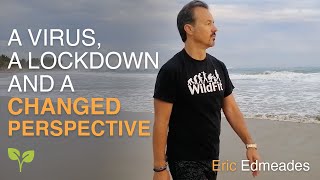
Eric Edmeades points to what happened during lockdown: beaches stayed clean without resort crews, Los Angeles and London had better air, Indians saw the Himalayas for the first time in decades. He warns pollution will roar back the moment restrictions lift unless we change how we manufacture and live.
Chapters
So when the lockdown started, I became concerned for the beaches here. You see, the local resorts clean the beaches every day. All the litter that's washing up all the time, bottles and plastic pieces and cans and garbage that's washing up all the time. And they go and clean them every day. And of course, when the lockdown started and the tourism stopped, nobody was going out to clean the beaches. And I was really worried about it, that, like, we would just end up with piles and piles and mountains of garbage. But you know what's crazy? We're like, six weeks in, there's no litter on the beach, and nobody's cleaning the beach. You see, I thought that litter was just ocean flotsam. I just thought it was out there all the time. But it turns out it wasn't. It turns out it was the daily deposit, it was the daily litter that was just accumulating. And, you know, what we're seeing all around the planet is ecological recovery. The air quality in Los Angeles is better now than it's been for over 30 years. The air quality in London, England, same thing. We're. We're talking about Indians being able to see the Himalayas for the first time in 30 years. And while that is intriguing, and while jellyfish floating in the canals of Venice is fun, here's what's really fascinating. What's going to happen when it's over. You see, the thing is, most of that damage took decades to take place. And so, you know, we didn't really notice it. In fact, you know, it's stuff that one generation saw a little bit of it, the next generation saw a little bit more. But over the space of 30 or 40 years, that it just kept getting incrementally worse and incrementally worse, and it wasn't shocking. But what's going to happen when the lockdown ends is that within a month, air quality in London is going to be back to what it was before. Where you used to be able to see the sky during lockdown, smog will return. And Los Angeles, same thing. What took three decades to happen is now going to happen in a month. And the same thing will happen here. The beaches will be covered in litter within days of the lockdown lifting. And that is a gift. It's a gift of perspective. It's a gift of opportunity. Because, you see, if we had seen ourselves destroying the environment that quickly before, we might have stopped. We might have changed something. We might have changed our buying patterns, or we might have changed the legislation that governs these things. But you see it happened so slowly that we just kind of eased into it. Now it's going to happen really fast. And with that, we're going to gain this perspective. And so when it happens, if you're in one of these places, if you're in a place where the air has gotten clean and the water's gotten clean and the litter is not there, and it suddenly starts coming back at the end of the lockdown, remember this message, because that's exactly the time when you need to remember to change your own behaviors, and you need to write to your local member of parliament or congressman or senator to change the manufacturing regulations around these things. We need to change. And maybe the lockdown, maybe the end of the lockdown is going to give us the perspective. We need to recognize how much we're damaging our environment, which is, after all, our only home.