My Greatest Strength and My Greatest Fear
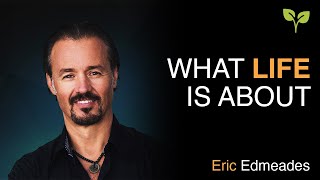
Eric Edmeades reflects on his primary strength—maintaining calm under extreme threat—and on his central fear (his own reactions). He outlines principles of behavioral change dynamics (why motivation alone fails, importance of emotion and storytelling, incremental success to build self-esteem, minimizing failure opportunities, and community), illustrated with personal anecdotes and examples from his WildFit program and responses to COVID-19.
Chapters
Maybe my number one strength is my ability to respond with calm in the face of disaster. And whether it's business disaster or like, no kidding, being in a casino in the Bahamas when four guys walk in with assault rifles and start shooting. And I did not lose my cool. I held on. I did all the right things. I was like, I handled it. And I think sometimes that the reason that I've got that. And it's funny because little stuff can get to me. I don't want to. I'm not. I'm not some stoic over here like you want to annoy me, cut me off in traffic, and I'll have to manage my state. I'm not going to pretend that's easy for me. But hold a gun to me or threaten my family in a major way, or shut the world down for a massive pandemic, and I will process that much more quickly than many, and I'll be ready to fight that quickly. I consider that from a fortitude perspective to be one of my biggest strengths. And then from a teaching perspective, I think there's this envelope of understanding what we call behavioral change dynamics, like, what is it that actually stimulates transformation for people and storytelling. And the combination of those things together, I feel are probably one of my biggest strengths when it comes to educating or facilitating transformation. You know, I worked for a sales company when I was a kid, 17, 18 years old, and they would bring in these speakers all the time. And they were good. They were really good. I remember this one guy, I think his name was Larry Nichols. Oh, my God. It's weird that I even remember his name, Thor, 30 years later, because I've never heard of him since. But, boy, was he funny. And I enjoyed the talk a lot. And the thing is that I felt inspired, but the next day I wasn't any different. And over the years, I watched a lot of speakers that would come in and they'd motivate. But motivation is always short term. You only ever need to be motivated to do stuff you don't want to do. So if you don't change what somebody wants, you don't actually facilitate transformation. So there's one of the keys, and then the other one is, is that you can share really great models and strategies with somebody, but if you don't share it with emotion, they're not going to remember them and they're not going to use them. And so that's another aspect of it is recognizing that in order to engage somebody's memory, in order to change something about the way they Think you actually have to evoke emotion in them. So some years ago, when I started taking a look at how to do business coaching and, you know, I took a couple of coaching courses and I. And I. And I studied some, you know, nlp, neuro, linguistic programming, and I studied sort of Ericksonian speech patterns from hypnosis. And I was just looking at what are the different. And advertising. Oh, my God, I studied advertising. I mean, that's one of the big ones right there is looking at the way manufacturers use advertising. And in the end, what I really took a look at is how had I facilitated change in my own life as a kid? I didn't suck my thumb, I sucked my fingers. How did I stop myself? And I was older when I did it. I was 11 or 12 when I did that. So I really was cognizant of how I did that. When I was 18 years old, I made the decision to quit caffeine. That's a pretty mature thought at 18, as far as I can tell. It's not very common at that age, but I know exactly what happened in my mind to put myself in a place where, A, I wanted the change and B, I was able to stick with it. And then at 21 years old, I completely and radically changed my relationships with both business and work ethic and also with food and nutrition. So I think, in a sense, I was kind of the first guinea pig. And I just look back at a lot of the lot of the things that stimulated those changes in me. And one of them was that I went to a number of workshops that changed things for me. I went to a workshop by Wayne Dyer, and when he was done speaking, I was different. Like, there was something about the way he spoke that it was like it rewired, you know, like I. When I would bump into a problem, his stories were in me and now part of my life experience. And I was like, that's transformation. Information alone is not. But integration, if you don't integrate the knowledge into somebody's being, you can't transform them. And so I suddenly began to think. And of course, even at that stage, I was so fascinated by human history and anthropology and stuff, I started thinking about fireside chats and how important they are in the integration of information into young people. A young hunter cannot go hunting at 12 for the first time. He needs to be a good hunter before he goes hunting. Well, how's he going to become a good hunter if the information isn't integrated into him? It can't simply be shown to him. It has to be integrated. Then I saw Tony Robbins speaking and the same thing happened. I went to work after seeing Tony Robbins and I was like, I'm making more sales calls, I'm making them more effectively. I'm not falling into old patterns. And so I was really inspired in my twenties to dig deeper into that stuff. And some of the things that I turned up about it, like, you know, in order to understand transformation, the first thing you have to do is understand, not transformation. So okay, here's not transformation. Boring. If it's boring and there's no engagement, there's not going to be any transformation. It just isn't going to be that way. The other way is restrictive. The minute it becomes painful and restrictive, you're going to filter out a lot of people. You'll get a few because a few people have really internal fortitude. And a lot of like they're stubborn and they've got really powerful willpower and they'll hold on long enough to. But that's 1%. I mean the vast majority of people, if you create a really structured rule based way for them to change within a few hours, days or weeks, if you're very lucky, they will have abandoned those rules. And here's what I began to notice. Every time they abandoned the rules, they damaged their self esteem. So if you gave somebody a rule like don't eat this, you're on a diet now. You're on a diet. Garfield's Die with a T. You're on a diet now, don't eat this. Then you go, okay, I won't, I won't. Probably won't. I don't think I will. I might, I'm gonna, I'm definitely eating it. You know, I mean that's the trans. That's what happens. And each of the steps that go through that are erosion of self esteem because your higher consciousness doesn't want you to do it, but your body does. And when you give in to the crew, the captain up here, it's mutiny and you lose. And so I realized that in order to facilitate transformation, one of the things we had to do is build something in that was a process of steadily building self esteem in somebody. When by the time somebody's completed the first two weeks of WildFit like they feel better about themselves. And you know what's crazy? You could ask them like you go to a class with a thousand people and go, you're two weeks now. How many of you, this is the longest you've ever stuck with any kind of health program. And it's like 85% of them. They've never made it two weeks, and all of a sudden, now they've made it through two weeks and they feel good, which means we can up the ante a little bit. So there has to be an incremental increase in the threshold, in the burden and the weight that has to be created there. That plugs into another concept of behavioral change dynamics, which is minimum opportunities to fail. A great example of this within the WildFit community. Everybody wants me to integrate this intermittent fasting, which I'm a big fan of. I completely agree with intermittent fasting. The trouble is that it's one more thing to fail at. So if I construct wildfit with a lot of extra things, then there's more opportunities to fail. WildFit is set up right now. If you can fail WildFit, that takes some effort. I mean, it does. It takes some effort to fail that. It's incrementally so easy. And people, they come out the other night, I can't believe what you did. Can't believe you got me to do that. Can't believe it. Well, if we'd asked them to do it all too fast, then it would have just been like any other diet, and they'd have been out. Another big component of behavioral change dynamics is community. When one of the things that we really changed about the industry, and we're seeing more and more of this now, but we've been at this for seven years now, is that most of our clients will go through the process on a timed class rather than the old traditional Internet education model where you buy the class. And many still run on this model. But you go, you know, buy the class and you watch it on your own time. Which means what? You don't watch it? I mean, statistically speaking, most people don't. And if they start, they don't finish, and so on. So one of the reasons that the programs become incredibly sticky is because there's a team going through it. And so that creates a level of cohesion. Matter of fact, speaking of sticky, one of the founders of Zumba did the program, and he came to me afterward, and his exact words were, everybody out there is trying to find a diet to stick to, and you found a program that sticks to them. And you're about to transform the diet industry in the way we did the fitness industry with Zumba. Well, that was one of the components, is that there was this constant sense of team. And then one more, there's quite a few. But one more that's really powerful is story. It really is recognizing that in any presentation, what is the percentage of lecture and what is the percentage of story? And then even within story, what is the percentage difference between high level storytelling, which you might call establishing shots, or really deep storytelling that integrates experience in somebody's head? Now, if I tell a story well enough, you might remember it as though it happened to you. And if I can tell a story so well that you remember it as if it happened to you, then you will learn the lessons I learned when I went through the story. And that becomes an incredibly important part of behavioral change. I tell stories to people about times I've walked around the corner and there's been a lion behind the bush, or rhino's tried to kill me, or the time that we found the ripe fruit on the trees, or there was the baobab thing over here, or the time that the guys taught me how to make fire with sticks. And when I tell those stories to people or in entrepreneurship, I tell the story about the time that I ran out of cash and I thought I was going to lose my business and had to find my calm, or the time that I absolutely had to fire somebody and I didn't want to fire them. And I realized that anytime, anytime you have to fire somebody, it's your own fault. And that was a really deep thing for me to realize that it's my own fault. Because if I have to fire them, it's because I either hired them wrong or I didn't give them the chance to change. It's on me. And when I share the stories of that stuff, you know, what's really great is it saves the entrepreneur having to live through that experience to gain that knowledge. In other words, they get to have it through mine. And so really compelling, low level, in the moment. Storytelling is a major component of behavioral change. There's only one thing that causes me fear. Me. I think that's a very important thing to understand is that there's a distinct difference between danger and fear. And so danger is a factual, logistical reality. And then fear is the meaning that the person places upon that either consciously or unconsciously. So, you know, for example, when the COVID lockdown took place, I responded initially with fear. And was there danger? Yes, there was danger. Danger of the virus, danger of food chain distribution disruption for all we knew, danger of lockdowns, danger of, you know, there was danger out there. But the thing about fear is that fear is supposed to get triggered when all other options have been exhausted. It's like you know, so the danger is facing you, and you still have your intelligence, you still have your empathy, and you still have your connection with logic. You still have that, like, you know, if you know that there's like six lions six miles away and they're walking toward you, you have a danger. But you don't need to be afraid. You need to be aware. And so you're intelligent. You go, well, they're walking this way. All right, so what could we do? Well, we could take a look at climbing into trees. We could walk in another direction. You know, we could cross a river that they wouldn't want to. You know, you think logically, right? You think slowly and logically, but you also think with empathy. Oh, we can't cross the river because we've got the little ones with us and they can't swim. So we have to figure out, you've got empathy, you have intelligence now, but if the lines are 100 meters away, intelligence is not so useful to you anymore. And frankly, you get to a point where even empathy isn't so useful, because at that point, it's really, if you don't live, you're not going to be there to save your children anyway. So you got to start with you. And of course, at that point, your logic becomes incredibly basic. That's what fear is. Fear is supposed to be the moment that you turn your body over to autopilot and let your body just take over and save you. You. But the problem is a lot of people are turning their body over way early. Way, way early. And so they're letting the fear kick in. And then here's what happens. They lose their intelligence, Their connection to logic dissipates, and their connection to empathy dissipates. And so in that moment, they become a very dysfunctional member of the clan, or society, for that matter. And that's because they let fear infect them. So I think there's a big difference between fear, danger, and I think that danger should stimulate awareness and critical thinking, and that the only time fear should really kick in is when it's no. When critical thinking is no longer gonna help, when you need to be acting on instinct. When something dangerous happens. If I experience fear, it's because I temporarily forget that. You know, I'll give you a really good example. Covid happened. Now, I sat the last recession out. Frankly, I just didn't do it. I was not interested in it. I didn't. You know, I had just sold my company. I had more money than I could spend in forever. And by the way, not because I'm any kind of genius, I just happened to have pulled it out, most of it out of the stock market before the stock market crashed. And, you know, so like, the recession was irrelevant to me. I was sitting in a resort casino in Bali with my friends, and I saw these people sitting around drinking umbrella drinks and sun tanning. And I thought, oh my God, you must recognize that during the great Depression, we've seen all the photographs of people at the bread lineups, but there must have been people sitting around pools drinking umbrella drinks then too. And that is that there are some people who sit these things out. And I sat that recession out. In fact, I quite liked it. Airline tickets got cheaper, hotels got cheaper. It was like. Now, I don't mean to sound callous, I'm just saying that I wasn't. There was no danger to me, and therefore I didn't experience any fear. But also, it means that I didn't have a dress rehearsal. So when Covid came along, now 15 full time staff, clients all over the world, massive momentum with a very important mission that I'm undertaking. Massive overheads financially. I got afraid. The fear got in. And for a few days I'm sitting here, I'm panicking, I'm like, what should we close? What should we stop? What should we. You know, And I got a lot of that going on. And then I pulled back from it and I thought, okay, wait a second now. What's the difference between danger and fear? They're not the same thing. Yes, there's danger, but responding in fear right now to this danger means responding to it with adrenaline. Do I really want to run my business with adrenaline? No. Am I facing a lion that's 100ft away? No. So then I have to meditate. I got to breathe, I got to go out for a walk on the beach. You know, it's crazy. You think, but I have eight hours worth of work to do. When am I going to walk on the beach? Crazy thing is, go walk for an hour on the beach, you can get eight hours of work done, four hours, it just changes everything. And so I settled myself down and got to a place where I began to be able to think more rationally. And as I have moved forward with this, we've obviously still made smart decisions. We've obviously cut expenses that were unnecessary. We've taken a look at rescheduling events that we had in the calendar that were no longer appropriate to have in the calendar. We did smart things. We didn't do those things out of fear. And that really, I think, makes all the difference. And I think our clients feel it, and I think our team feels it. In fact, we even moved forward with some projects. We moved forward and invested in some projects, which is a bit of a scary thing to do when the whole world is in shutdown mode. But in the meantime, I can tell you a couple of the campaigns that we've done have performed better than they were performing before the shutdown. And so fear wouldn't have been helpful at all because we wouldn't have figured that out.
More from Eric



Eric Edmeades: The Speaker Your Audience Will Still Be Talking About Next Year

Eric Edmeades: The Speaker Your Audience Will Still Be Talking About Next Year


A free class on Stop Style Profiles, habit cessation and behavior change by Eric Edmeades.




