The Healing Power of Energy with Harry Massey
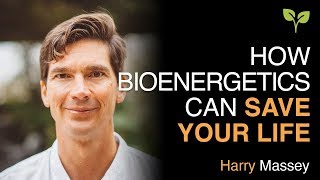
This is a recorded interview (YouTube) between Eric Edmeades and Harry Massey about bioenergetics, emotional immunity, and practical approaches to supporting health. Massey explains the concept of the "body field," argues that energetic efficiency supports healing, contrasts terrain versus germ theories, describes emotional states' measurable impact on immunity, and recounts his multi-year chronic fatigue journey that led him to develop home bioenergetic assessment and correction technologies.
Questions this video answers
Around 250 millivolts across the cell membrane.
Generally less than 50 millivolts.
Most diseases: between 50 and 150 millivolts; 150–250 millivolts described as low energy.
You produce about half the antibodies compared to being in a positive state.
He states you're about three times more likely to catch a cold, flu, or virus if expressing negative emotions.
Chapters
What we're talking about in this body field is basically all the different fields that are generated in the body. But we're saying, look, it's not just this sort of useless exhaust that you can pick up with different devices. It also actually influences your health. And basically what you want to do is make that body field or the fields of the body as efficient as you possibly can. Because if it's efficient, you use less energy. If you use less energy, you have more resources to heal. And again, from quite a simplistic point of view, if you're looking at health, if your body has enough resources and energy available to elicit a healing response, it can basically heal itself. If you're really low in energy, what does the body want to do? Well, it conserves energy and it won't heal and you go down with disease. This is another example of that. If you look at cancer, if you look at cells in the body of people who have cancer, a healthy cell across the cell Membrane produces around 250 millivolts. Some of cancer generally is less than 50 millivolts. Most diseases are between sort of 100 and sorry, between 50 and 150 millivolts. And 150 to 250 is just low energy. And anything above 250 you're really super healthy. And so yeah, the whole idea is basically you want enough energetic potential so that your body has plenty of energy to be able to heal itself. And all we're trying to do in biogetics is just get your use of energy as efficient as we possibly can. And there's a lot of ways of doing that. And of course we also want to exchange energy with the environment. And that's all your normal stuff like exercise, eat right, go out in the sunshine, etc. Etc.
Hi, welcome back. I'm Eric Edmeads. I'm your host of thrivetime and I'm here today with a very great guest, Harry Massey. And I've known Harry Massey for some time and main reason I know Harry is because we're fellow kiteboarders. But it turns out that as I have been finding with so many of my good friends that when I bring them into this show and I end up having to do some research on them, I find out that they're significantly more amazing and dynamic that they ever let on. Harry in 2002 founded Energy for Life, a company dedicated to restoring people's energy and health. And you invented some really cool technologies that help health practitioners assist their clients creating more comfort and health from their Own home. I think it's fabulous stuff. It's way beyond my capacity for understanding technology, but maybe we can dig into that a little bit. And you've also written and directed a number of movies. You did the Living Matrix, the New Science of Healing. You did. Let's see, what was the other one here? Choice point. Align your purpose and supercharged movie dot com. So you've done some really cool creative stuff, and I've been to your house for a New Year's party. So, I mean, what else more can I say? Harry, welcome to the show.
Thank you, Eric. It's great to be here.
Good to have you. So, Harry, frankly, I'm kind of excited to dig in and learn a little bit about the technology you developed, because I've never really had a chance to have that conversation with you. But first, I want to talk to you about what is most important to me right now. And the thing that's most important to me right now is immune system support. About two weeks ago, I got frustrated with people not paying attention to the social distancing warnings and all that kind of stuff. But I got even more frustrated by the fact that that's one aspect of the advice. But social distancing and washing hands will only get you so far if you're incredibly unhealthy and not supporting your immune system. And so I've been railing on about that. I put out a video that went medium viral all over the place. And so that actually is what stimulated me creating a show. I've had some fascinating guests in talking about immune support. And so I want to talk to you. I would like to know from your perspective what is most important for people right now to make sure they've got a strong and robust immune system. Sorry, Harry. I'm so sorry. It's so bad form to cut you off. I want to also point out that you're not a doctor, you're not a traditional person here, but you're in, in many ways similar to me, that you were sick for a really long time and unable to find the answers in traditional ways. And you put your research hat on and you unlocked some incredible mysteries. So I'm really intrigued by the way you think and the way you approach this. So now. Now you can answer.
Now I can answer. Perfect. But, yeah. Well, I'm going to say something a little bit contrarian. So there's really two aspects that I'd love to dig into over the next half an hour or so. One is this concept of emotional immunity, and the other is this Concept of you have basically general viral theory of disease, but you also have terrain theory of disease. And those two split, split out 100 years ago with pretty severe consequences in today's pandemic.
Are you talking about the Pasteur versus Beauchamps?
Yeah, exactly, exactly, exactly. So, yeah. So if we look at emotional immunity, which I think is really, really key right now, the mass media has basically got us all into panic. What does panic do? It makes us fearful, it makes us anxious, it makes us lonely, obviously it locks us down, locks us down into our houses, might make us depressed, etc. Etc. Now, if we didn't think this whole virus thing was going on, would we want to expose ourselves to all those negative emotions? And the other question you want to ask is what all those negative emotions actually have or what impact do they have on terms of health? And basically the research is pretty clear about this. But basically all those negative emotions that we just mentioned, you only produce half the antibodies than you would if you were in a positive state. And this statistic is really, really horrible that no one's going to like is you're three times more likely to catch a cold, flu or virus if you're basically expressing negative emotions. Now, I don't want to really go and say that we shouldn't be doing social distancing, but I am going to point out that some of the effect of this sort of the panic from mass media and government imposed social distancing, it is going to cause, it is actually going to lower our immune systems. But as it is, we're actually in that situation. So obviously, you know, we can't go against sort of government recommendations.
I'd love to offer to like, I'm with you on that completely. And I want to offer two thoughts. One is I'm really, ultimately, I have the rule of thumb. I like to measure everything against evolutionary theory. And so I will give you my theory as to why our immune systems do that. Because sometimes when people understand the why, it makes it easier for them to act. But my view is that the best metaphor I can give you is that you're on the Star Trek Enterprise and you've reached a point where there's something so severe going on in your life that your immune system is irrelevant and so you divert power from the shields to the thrusters to get the hell out. I believe that the reason that our immune system depresses like that under stress is that in that moment the bigger problem is the lion, the tiger, the other person, the attacker. And our biggest, the thing we need to be doing in that moment is acting super quickly, which means we need to let go of some logic, we need to let go of some intelligence and we need to let go of some empathy because we need to take care of ourselves and quickly. And so we raise these stress chemicals, we lower our shields, our immune immunity's down, we get away and then when we get away, we put the shields back up.
That doesn't actually work if the threat is a so called virus that's going to attack your immune system.
But that's kind of the point is that while there's a virus out there, you don't want to lower your shields. And the problem is, I think a lot of people are looking at this, they're producing the stress chemicals of an immediate threat because of things like imposed social distancing and all the media noise and all that kind of stuff. Which means they're lowering their shield right at the point in time when they need their shields up.
Yeah, exactly, exactly. If we're looking at, within the body of what are the actual core ways that we can boost our emotional immunity? I mean, if we. A good place to go is back to Chinese medicine. The, the Chinese, they basically identified these five core core emotions, but only one of them, only one of them was a positive one, which was joy, which is related to the heart. So from a general principle, anything that you can do to help the heart, like meditate, do breathing exercises. Hugs. Hugs. Hugs, yeah, exactly. And social distancing. I put a post up on Facebook called Social Connection during social distancing where we had, where we basically ran a yoga class at home. But yeah, and anything you can do to heighten your HRV during this process is basically going to be good.
Yeah, yeah, no question about it. It's funny, I made the joke about hugs because I am one of those. I'm sure you've seen the video. Now the guy, the camera's in on him and it's like there's a major pandemic going. You have a choice, A, get locked up with your wife and children or B, B, I take B and I unfortunately am that guy. My kids and my, well, one of my children lives in Canada anyway, but the Zoe and Elise and Candy who lives with us are all in the US And I'm actually completely in isolation on my own. And I got to tell you, a week in now, I'm really, I mean, as introverted as I am, I'm really noticing that, that there's, there's a. We have to pay attention to That I don't, I can't have a hug. You know, it's, that's a difficult thing for those people who are at home and maybe getting like kind of short tempered or a little like feeling like there's a little too much. I want to remind them that that is a lot nicer than those people not being there.
Yeah, totally the case.
So let's talk a little bit about. I think that people are facing an onslaught of information. Clearly I think people can handle that because they could filter it out a lot. Like I've been telling people, if you're on Instagram, delete anybody who scares you. Just stop it. Like, you know, delete anybody who's not inspiring you or empowering you. Or delete anybody who's just producing canned content that their social media company wrote four weeks ago. Delete that crap. You know, get with people that are really inspiring you and empowering you and making you and raising your vibration and making you make working on the heart. But you know, we have to balance that with also being aware of what's going on around us. What are some of the practices that you would recommend to help people create a real sense of emotional immunity where they can. Even though there are some genuine sort of changes and differences and stresses around us, what can we do to in a sense fool our bodies and make our bodies feel like things are okay and make sure that our immune system stays up?
I think. Well, hugs is definitely, is definitely a good one. Developing empathy. Obviously we're using zoom right now. I mean, if, if you are a bit.
My little girl hugged the phone yesterday.
Oh, that's cute.
I'm doing video calls with her and I could. The picture went all crazy and I didn't know what was going on. And then they told me that she was hugging the phone.
Yeah, I mean you can, I mean you can actually use it as a great excuse to connect all your long distance family. I mean, the fact that you're isolated, you can actually just pick up the phone and start, start calling people. I don't know about you, but in a way I've actually been speaking. I've probably spoken to more people on the phone last two weeks than I did in the last three months. So. So in a way you can actually just use it as an excuse to actually build connection.
Yeah, I believe so. I'm in the same boat. I have rekindled. Not even rekindled, just living the way I live. Similar to you. I'm on the road a lot and it's really easy to get. It's really easy to just sort of drift apart from people. You still love them, you still care about them, but you don't necessarily get to connect with them. And I've just had some of the most gorgeous, deep, connective conversations, and I think this is a really good time for that. And you know what? I always feel good. Afterward, I put the phone down and my house doesn't feel quite as empty. And it's a very different experience. Plus, my little comment about this is, thank God this didn't happen 10 years ago. And then if anybody wants to test that theory, all they got to do is go back and unplug their router, figure out what it would be like to live without food delivery, without Netflix, without Skype, without WhatsApp and all that kind of stuff.
And on top of the 2008 financial crisis.
That might have been a little compounding, a little bit much. Harry, talk to me a little bit about. You know, we're interconnected very well. We've got a lot of common friends, and so we were often at events together, but we don't often get a chance to kind of go really deep. I'd like to learn a little bit about your health journey. I mean, you were dealing with chronic fatigue and a bunch of other issues, and you went into this huge research project and in the end you've become a technology guy working on creating phenomenal solutions for people in health. Tell me a little bit about that.
Sure. So When I was 21, three things happened. One, I got a viral infection. Well, I basically got glandular fever and started basically just getting post viral fatigue for the next few months. While I was in that post viral fatigue, I went ice climbing up Ben Nevis and I ended up falling off, falling off the mountain and fracturing my spine. And then the third thing actually came out as being gay to my family. And then I had a whole load of sort of family issues. But in short, we had these sort of three major stressors. You know, one. One viral, one, one environmental and you know, one. Sorry, one emotional, one physical. And who knows which of the triggers or all three of those triggers. But that basically triggered a seven year bedridden episode of chronic fatigue syndrome. And, well, it was. Well, it was pretty, pretty bad. But it basically got to the state that I re enrolled in an mba, but I had to do that in a wheelchair over two years instead of one year. And then after that, I basically got stuck at home with my parents. And I was always trying to. Always trying to look for a cure or trying to get better. And I went through the conventional medical system, tried every, every blood test you can imagine. They couldn't really work out what was wrong. Went down the sort of functional medicine and nutritional route for about 2, 2, 2 to 3 years. Tried every single diet under the sun. I did things like Gerson Therapy where you're doing coffee enemas two, three times a day and drinking gallons of gallons of juice, but I basically didn't have the energy to sustain, to sustain it. And I probably try what else I tried like homeophi, tons of ozone, you name it, I would have done it. One of the more extreme things I did is I did a three week water fast, which was pretty interesting. I dropped down from 12 stone to 8 stone and I ended up passing this bucket of worms of parasites, which was really, really gross. And it was, it was actually from that point that I ended up complete, completely bedridden. And yeah, I think that took me about a year, year and a bit to actually get walking strength again. And after, I guess after about six years where I really tried all of these things and was in a pretty desperate state, I just, I just basically just thought, well, where on earth does energy come from? So I didn't have any energy and that's how I stumbled on the Internet. So this idea of bioenergetics, and bioenergetics basically just stands for the study of energy in living systems. And then the second idea I was having at the same time is I was having to get my parents to drive me to adopt us. They would drive me up to London about, I think it was about every three, four months I see this chronic fatigue specialist for 15 minutes, you know, some vast expense and then I'd be driven home again. I was like, yeah, this isn't really, this isn't really very good. And I just thought it'd be really good if there was some way of working out what was wrong with you from home. Because A, I thought, well, if, if I could work that out, I might get better, two, it might help get other people better. And then I had a third motivation which was I really didn't want to be under my, under my parents. And I wasn't quite sure if I was going to be disabled for a long time, but I thought if I had more of an income I could have a nurse or something like that. And yeah, long, long, long and short, those sort of two things ended up being combined and we had this idea to create a home wellness system that these days is called the Bioenergetic wellness system. We just like the universe does these things. We had sort of this billion to one chance where we were introduced to this scientist from Australia called Professor Fraser who'd been mapping out the energy of the human body field over the past 25 years, where he basically taken original Chinese medicine research for the acupuncture system and then gone into a lot more, lot more granular detail of how energy flows through the meridians and the information systems work. And we ended up hooking up and he took me on as a, he took me on as a patient and ended up basically entering up, giving me what are now called emphasis to trigger different healing responses. And together we ended up making this overall, this overall system that took about another two years from then.
And can you, can you give me a sense like what types of things are you working with? What, what, what is it effective with? Who, who and how does it kind of work?
Sure. So basically bioenergetics stands for the study, detection and correction of energy in living systems. And really there's just two, there's really just two major sides to bioenergetics. One, one is this idea that our body basically has energy and is really acting as a body battery. So if you imagine we're sitting here, we're breathing in oxygen, breathing out carbon dioxide, we got in sunlight, get energy from the sun, we eat food. So basically we're always exchanging energy. And so from a biologistics point of view, you really basically want to top up the amount of energy that's in you and get your energy usage as efficient as you can. So that's sort of one side of it and then the other side of it is how that energy is being used. And you want, you want energy to be as efficient as it, as it possibly can. And what controls that is what is basically the body's overall control system that we call the body field. And simply put, you basically. Well, it's not totally simple, but I'll start.
It doesn't sound so simple.
It doesn't sound so simple but basically you're just trying to get energy to be as efficient as you can in the body. But for some physics for that, for people who love physics. So Einstein had a number of amazing quotes, but two of his great quotes were equals MC squared, which just means that energy is equivalent to matter. She's basically just saying that actually all matter is energy. And the second one is more profound which is that the field is the sole governing force of the particle, which, what he's saying there is basically a particle or Mass doesn't really matter. It's all being held in place by a field. And he was basically talking about as a field of information. Now if you apply that to the body, you can basically say the body field, that is the fields of the body are the sole governing force of life. And so you basically have, you basically have, within biology this, this field and this, people think, well, what, you know, my body doesn't produce fields, you know, well, if you look, if you look at your heart and use an ekg, you can detect that with an ekg.
Oh yeah, an EKG wouldn't work if that wasn't true.
It wouldn't work if it wasn't true. You could, you know, there's brain waves with, with EEGs, things like, like, like an MRI stands for magnetic resonance imaging. So in completely conventional medicine, actually. Well, medicine looks at fields in the body all the time. The only thing medicine doesn't do is they don't look at it the other way around.
They don't get the field as the result.
Yeah, they just look at the result. They don't think it's actually doing anything in the body. Which, you know, why on earth would the body be producing those fields if they didn't do anything? That's sort of non, nonsensical really. And so what we're talking about in this body field is basically all the different fields that are generated in the body. But we're saying, look, it's not just this sort of useless exhaust that you can pick up with different devices. It also actually influences your health. And basically what you want to do is make that body field or the fields of the body efficient as you possibly can. Because if it's efficient, you use less energy. If you use less energy, you have more resources to heal. And again, from quite a simplistic point of view, if you're looking at health, if your body has enough resources and energy available to elicit healing response, it can basically heal itself. If you're really low energy, what does the body want to do? Well, it conserves energy and it, it won't heal. And you know, you go down with disease. And this is another example of that. If you look at, if you look at cancer or if you look at, if you look at cells in the body with people, of people who have cancer, a healthy cell across the cell Membrane produces around 250 millivolts. Some of cancer generally is less than 50 millivolts. Most diseases are between SOR, between 50 and 150 millivolts and 150 to 250 is just low energy. And anything above 250, you're really super healthy. And so yeah, the whole idea is basically you want enough energetic potential so that your body has plenty of energy to be able to heal itself. And all we're trying to do in bioenergetics is just get your use of energy as efficient as we possibly can. And you know, there's a lot of ways of doing that. And of course we also want to exchange energy with the environment. And that's all your normal stuff like exercise, eat right, you know, go out in the sunshine, etc, etc.
All right, you got to help me out here. You know, I. One thing I'm really aware of is that what we think is crazy and insane in one era isn't in another. You know, we don't. What is considered to be airy fairy and out there in one decade is science in the next. And in fact, one of my favorite examples of this is that if you, if you're looking for an example of masculinity and you watch Sean Connery in a James Bond movie, you'd be shocked to find out that he's just like the exact example of what MeToo was all about. Back then it was masculinity. Today it's something else. So we're always changing views. For example, we'll definitely come back to the Pasteur versus Beauchamp's conversation. But here's the thing. I consider myself fairly open minded, but I also consider myself mostly a Newtonian physicist rather than too heavily outside in the quantum untouchable. I mean, as much as I'm a Star wars fan and I like to use the force, I also like to pick up an actual thing. So I understand, absolutely, the body has energy fields. I don't think that's open for debate. As we said, you wouldn't be able to. An EKG wouldn't work, a brain scan wouldn't work if there wasn't energy to measure. And so I understand from my perspective, I could see very much having a device that would measure that energy field. And as a consequence of the measurement of that field, much like say measuring the exhaust of a car, we can tell what's going on with the car and therefore make adjustments to the car. What I'm unclear about is how does.
One, how does the control system work?
How does it go backwards? How do you.
Sure. Well, let's briefly just talk about the chemical control system and its flaws and then we'll talk about the field based control system. So conventionally speaking, we all think, basically we eat all this food, all these chemicals run around our bodies. Molecules bump into each other, create more molecules, and all these things happen. So just for a minute, think about these. Just a few questions. You basically have a trillion operations happening in your body in every single second. How on earth. Now, somehow all of that is orchestrated basically in. Well, it's orchestrated in real time, instantaneously and perfectly. And, you know, just imagine. I don't. Well, you just gave the example that, you know, we all get in a panic and shock, so let's say something fearful happens. So, okay, in the chemical version, our adrenals pump out adrenaline, maybe pump out some more thyroxine. Okay, well, then that chemical travels around the blood. How long does that take? 25 seconds to get to your leg or whatever it is. And then it can do something. It's too slow. I mean, it's not that those chemicals don't reach there. They do, but it's basically, if you think everything.
More from Eric



Eric Edmeades: The Speaker Your Audience Will Still Be Talking About Next Year

Eric Edmeades: The Speaker Your Audience Will Still Be Talking About Next Year


A free class on Stop Style Profiles, habit cessation and behavior change by Eric Edmeades.




