Thrive Time with Eric Edmeades Live Stream
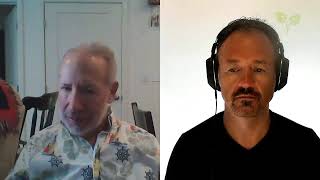
Eric Edmeades discusses why diets fail and how people gain weight during crises like pandemics. He talks with guests about food freedom and the psychology behind eating, examining what the food industry gets wrong about how we actually lose weight.
Chapters
It's. It. Sa.
Hey, hello, everybody. It's Eric Edmeads here with thrivetime. I'm so excited to be back and so excited to be talking about something that, you know, that I am particularly passionate about, Particularly passionate about. And that is health. Health and food. Health and food. But more than that, I want to talk specifically about some trends that are happening right now that have an incredible impact on us and society. And here's where we're going. Have you heard of pandemic pounds? Have you heard of the COVID 15? Covid 15 is not the virus four generations ago. Covid 15 is apparently the £15 or the 15 kilos that people are kind of accepting that they might put on during this time. And so those pandemic pounds that Covid 15 is what we're sort of going to be talking about today, because more and more people are now searching on Google what diet can get rid of my pandemic pounds. And so today we're going to talk about why diets don't work. In fact, I want to share with you this basic idea, and that is that people don't fail diets. Diets fail people. And the science on this is really clear where, depending on where you look, you find a bunch of different statistics that suggest, for example, that about 1% of people are able to actually get benefit of a diet. They attempt. That's not the highest success rate I've ever heard of. And then on top of that, there's another statistic that suggests that people gain three pounds every time they go on a diet. And so this is a challenge, particularly in light of the fact that now people have turned more to comfort foods. They've turned more to comfort foods because these are uncomfortable times. And so there we have the pandemic pounds, and there we have the COVID 15 piling on. And before we start talking about why diets fail, because what I ultimately want you to get from this is whatever diet you attempt, whatever transformation you tried to create with your relationship for food, I would like it to work. I would like it to work. So I'm going to share with you the strategies that don't work so that you can identify how to make something work. But before we get there, let's talk about this. In previous episodes, we've talked about the impact of health relative to COVID 19. We've talked about this. Studies are showing us right now that in order to die or face serious hospitalization from COVID 19, one of the things that has to be in place for 50% of those people is that they have to have three major diseases, three additional major diseases, and then 25% have to have at least two, and another 25% have to have at least one. Which means there's almost nobody suffering significant hospitalization or disease or dying from COVID unless they've got one of those conditions. And what are those conditions? Cardiovascular disease, hypertension, obesity, diabetes, autoimmune disease, and chronic respiratory disease. All of which are influenced by what we now think of as lifestyle. But I want to suggest to you that we don't want to call it a lifestyle disease because that is a method of creating blame. That's one of the ways that we create blame. The idea of lifestyle disease is a great way for the government or the food agencies or what have you to shift the blame to you and me. Oh, it's a lifestyle disease. You chose badly. If you just ate a little less or you just moved a little more, you wouldn't have this problem. And while on some level those things are true, it completely leaves out the systemic destruction of the food manufacturing industry, the manipulation of the food marketing and lobbying industry, and the bought and sold nature of the government regulation and legislation of food. In other words, it's a shared responsibility. I would go so far as to say that if you or anybody you know is dealing one of these lifestyle diseases, or if you are dealing with being overweight, or you're dealing with type 2 diabetes or any of these things, the most important message I have for you is that it is not your fault. It is not your fault because we have a broken food system. And I want to say this though, it is your responsibility. That's the hard part. It's not your fault, it's your responsibility. Somebody comes along and smashes into you in your car, you've had a car accident, they drove into you, it's not your fault. But your recovery is going to be your responsibility. And so now it's our responsibility. And I want to talk about why diets don't work. One of the biggest reasons they don't work is that they are inherently designed in a way that damages people's self esteem. Think about this. Somebody has some body issues, maybe they're carrying a few pounds, they wish they weren't. Maybe they don't have as much self control as they wish they did. Okay, so then what? Well, they, they want to go on a diet, they want to, they want to change something because they ultimately want to feel better. But the very thing that drove them to go on the diet is a questionable feeling about their body image and their self esteem. So you see, they walk into the conversation already in a little bit of psychological danger, but then they go to a diet. And what does the diet do from the beginning? From the beginning it introduces a bunch of concepts that are about shame. From the very beginning, it creates a bunch of rules, rules that are almost impossible to adhere to. And each time you chisel away at one of those rules because you know life is full of exceptions, each time you break one of those rules, your self esteem takes a slight dip. And each time your self esteem takes a slight dip, your self control also takes a slight dip, which causes the inevitable slide. And that's why when I've been working with clients, many tens of thousands of clients in over 130 countries around the world, once I've spoken to them for two weeks, once I've connected with them for just two weeks, I often ask them how many of you, this is the longest you've ever been able to stick to a diet, and it's 85%. I want you to think about that. 85% of those people have not been able to stick with a diet or a regime change around their food for longer than two weeks. That's because diets are designed to fail. I'll give you another example, calorie counting. Calorie counting is basically the nutritional equivalent of Enron accounting. It is a garbage system of accounting and it's a terrible measure of weight, a terrible measure of weight loss and health. Calorie counting is a bad science and I'll give you one silly example of this. But in order for it to work, you know, if we were going to apply proper accounting principles to it, you would have to count all the calories that were coming in. You'd have to figure out all the calories involved in processing the calories. You'd then have to figure out the baseline calories revolve just to live. Then you'd have to take a look at the calories you're burning to move around and all that stuff. Then you'd have to measure the calories that you poop out. The organic material that comes out of you also has calories in it, but nobody ever talks about that because it's a bad accounting system for a number of reasons, including what I've just pointed out. And this Calories are not created equally. There are different kinds of calories. Are calories good or bad? I don't know. Which ones are you talking about? Some calories are incredibly bad and Some are incredibly good. Counting calories is a pointless exercise. Oh, and while we're talking about pointlessness, let's talk about calorie restriction, another completely pointless idea. Why? Because when you start to restrict calories, your body starts to feel like you're starving. And so as you restrict the calories and your body starts to feel like it's starving, guess what your body wants to do? Eat. Your body just wants to eat. And so then you start feeling like you're starving. Oh, and by the way, have you ever noticed the hungrier you get, the more flexible you are about your rules about food? Well, that's another reason that diets fail. Because they put you on calorie restriction, then you start increasing your level of hunger. And the hunger you get, the less willpower you have. And so again, designed to fail. How about this? Most people in the western world today eat far too much energy and not enough non energy nutrients. Let me say this again. Most people are overeating calories and under eating the non caloric portion of their diet. They're not getting enough minerals, they're not getting enough vitamins, they're not getting enough of the healthy fats, they're not getting enough amino acids and proteins. They're eating too much carbohydrate food. They're eating too much energy food and not enough non energy nutrient food. Now, if we take that person who's already overstimulated with energy and undernourished, malnourished, in other words, starving slowly, and then we put them on a calorie restriction diet, what do you think's going to happen? They're now going to end up with even lower levels of nutrition than they ever had before, which means that they're opening themselves up to a variety of health problems and massive, massive cravings. Oh. Also, diets are built around the concept of shame. Like diet programs that make you go to a meeting and check in. Did you slip? Did you trip? Did you cheat? Cheat. And somehow we turn the word cheat into something fun. Oh, I cheated a little bit this weekend and it becomes this fun thing. I don't think your husband or wife would think it's a fun thing. It's not. But diets are built around this idea of making cheating functions and then having you have shame about it. And so what I want to suggest to you is that if we want to make real lasting change, if we want to make real lasting change to our relationship with food, we have to avoid some of these obvious pitfalls that have been failing us decade by decade. And what has that led to? It's led to prolific levels of obesity. It's led to an explosion of type 2 diabetes and a variety of other lifestyle diseases. And I can tell you that it didn't need to be this way. When the American government hired people to come up with the food pyramid, they designed an outstanding food pyramid. And then the government took that food pyramid, and over a space of something like 10 years, they allowed the food industry to influence that food pyramid. In other words, the food pyramid is now a sponsored, bought and paid for set of guidelines. While food manufacturers bicker over their share of your plate with no thought to your health, that's not what they're interested in. In fact, early on in the sugar versus fat battle, there was an incredibly good round played between sugar and fat where sugar hired Harvard researchers to blame fat to make us all think that fat was terrible so that sugar could take those calories off the plate, that sugar could have those calories and replace themselves. And this is not a conspiracy theory. Hen Haas, working for the lobbyist that made this deal happen, said at a beat Growers conference, research has now indicated that fat is causing all these diseases. What he doesn't tell you is that the nutritionists that did that research were bought and paid for by him. He then goes on to say that as Americans move away from fat, it will free up 20% of the plate space. And if the carbohydrate industry can grab it and maintain the share we already had, it will speak of an incredible opportunity. 1954. By the 1970s, the impact was already starting to get filled felt by the populations around the world. But between 1970 and today, obesity has exploded around the world, diabetes has exploded around the world. We are at pandemic levels of food problems. And oddly, the lockdown pandemic or the pandemic lockdown, I should say has made it worse. As people have drifted into their old habits, they've gone to their comfort foods, they've moved less than they did before, and they've put on their pandemic pounds, they've put on their Covid 15 and now they will turn to the diet industry to dig them out. And the diet industry will ask them to count calories, it will ask them to exercise their way to health, which absolutely doesn't work. It will ask them to restrict their calories and it will set them up for failure. Listen to me now. If you have a health condition, if you are carrying weight, if you are a type 2 diabetic, it is absolutely not Your fault, and it is your responsibility. Welcome to Thrivetime, and we're going to be talking to our guests very soon. I thought you guys needed to see a little bit of the intro the second time around as well. Welcome back, everybody. It's Eric Edmeats here. I really enjoy talking about food psychology. I really enjoy it because every single time I do it, I get all this commentary back from people on Instagram and Facebook. And it's so very interesting to me, the types of things that I see. Eleven or twelve weeks ago, I released a video saying that if you wanted to protect yourself from COVID 19, the best thing you could do, really, is follow the guidelines around social distancing and take care of your diet. And you know what? I got a lot of people writing to me going, thank God that I turned my relationship with food around. Many of them clients of mine through wildfit, and many of them finding other ways to do it. Many people writing, I'm so glad my immune system is at a better state because I turned these things around. And then, and then there were the doctors and nutritionists that attacked me and said, that's not how the immune system works. Well, I think we found in the three months since then that it absolutely does work that way, that our health is not just about our later years. Our health is about keeping healthy now. And so I love to talk about this topic because the food industry spends a huge amount of time, money, and focus getting other people to eat, getting people to eat the way they wish they wouldn't, and allowing people to end up with guilt and pain and suffering around their diet. And so today we're going to talk about a very important idea, and that is that if you have ever felt like you failed a diet, you didn't, it failed you. And if you feel like you then went on and failed at another diet, nope, you didn't. It failed you. And then if you tried another diet and it failed you, now you're starting to understand that people don't fail diets. Diets fail people. And today we're going to talk about how people have found their way through this nightmare, how people have found their way through the jungle, and how they've managed to defeat the diet industry and the food industry and start to turn their health around. And we're going to learn some powerful things about that so that we can have increased senses of food freedom. Our first guest today. Our first guest today is going to be Esther. Esther, I am so, so happy to welcome you to the show. Say hello to Everybody. Esther, I'm not getting sound from you, Esther. I don't know why. Okay, I'm going to have to. Let's see here. Esther, I'm going to have to switch over, but if you could keep playing with your sound, we're going to get you back on the show as soon as we can. Kelsey, if you please work with her. In the meantime, we're going to get Marcia on live with us here. Marcia, I hope your sound is working. It's good to have you here. Hello.
Hello. Can you hear me?
I can.
How are you?
I'm good. How are you doing?
Good. Happy to be here.
So let's talk about food, diet. What's your experience and what would you like to share?
So, you know, I started dieting in and out when I was about 18. I think I grew up never really happy about my weight, and things got worse with time, right. So I had some diets that were successful, but I would always end up gaining weight. And bear in mind that I was living in Europe, in Portugal, and then I moved into the U.S. where I've been for seven years, and I started to notice my weight decreases, right. I was highly addicted on bread, desserts like that. Sugar too. And my sugar monster was really high, let's just say. And. And then I decided to learn about food because I. I felt I couldn't go on this way, right. So I became the Wild Fit program two years ago. And that really taught me a lot about food, what I was doing wrong and what was really healthy for my body. So it created a revolution for myself because I realized that before I was dieting for external reasons, that I wanted to look good for other people. But then it became my transformation because I realized I need to feel good about myself, my health, so that I can continue to have the rhythm of life that I have here. And it even got me to be more aware how after being launched it, I could also exercise and have a healthy lifestyle. So to me, it was a big transformation because I finally could also commit to an exercise routine when before I couldn't. So, because I saw this transformation, and with COVID 19, I saw how people were eating so badly, like you mentioned, and I saw it here in New York, the shelves, you know, when we went to the supermarket, you would see that all the bad stuff, like sugary stuff was flying off the shelves, and then you see, like vegetables and everything still available, which was good for me, but, you know, it's not good for the overall. And how this lockdown was happening a lot because people were not taking care of themselves. So I decided to join the coaching for WildFit because I wanted to bring that awareness to people. And I realized that although I cannot help in this country, but I can make a difference. Because when I go to some places and I ask for the type of food that I eat, usually people want to sell it, so they will get it from me. So I think that we all can be part of this transformation. And I just wanted to leave that message, actually.
That's excellent. So, Marsha, let me ask you. I want to go into the, like, I want to go a little bit into what really happened for you. So, like, what were some of the foods that used to have, say, power or control over you?
I would say bread, for instance. And I did a lot of pasta, rice. And then I got into a path that I was really craving for dessert every day. And now I know.
Kidding. Hang on, Marcia. How many of you guys in the audience, you can relate to this? Like the bread having control, rice, pasta, the carbohydrates. You see, Marcia, it's very common for people to feel that. And at what point did you start to feel like you had a degree of freedom from bread? Like, do you remember was there a moment where you were like, oh, it's not really there for me anymore.
I think when I started to feel more nourished with the program and then realizing how all it was affecting me because also dairy was something that. It's below my freedom line now because it's something that really impacts my health. Because of my sinuses. I noticed how that really was impacting how my infection was growing. And I think I was like here the other day about the COVID 19. I actually had the antibodies and I mentioned that I didn't really feel anything when if I was eating like before, I feel like I would have been more impacted by.
Hold on a second. Are you saying you tested positive for the COVID 19 antibodies?
Yes, yes.
And you had no symptoms?
No, I just had like a mild cough that I thought, you know, it was just like allergies from the weather and like three, four days, I didn't feel anything else.
Do you know, I'm so encouraged to hear that. You know, one of the problems that we have right now with the press is that the press is not interested in your story of having no symptoms. I saw a headline just a week ago, 30 year old man dies of COVID 19. And I was like, oh my God, everything I've said is wrong. I better and. But you know, What I found. What I found is as dishonest as the press is, the place of the highest level of dishonesty is in the headline. You know, if you go past the headline, then sometimes you can find a measure of honesty under the headline in the story. And so I thought, why don't I try that? And I. This is. By the way, I've noticed a lot of people don't read the story. People are posting stuff online. Look at this headline I saw, and they don't read the story. So I decided I'll break with the tradition and I'll read the story. And it turned out the poor young man had been battling cancer for six years. He had another sugar problem. He was having, like, he was sick. And, you know, but with the press, what CNN is not going to be calling you Marcia anytime. Going. So, Marcia, tell us how your COVID 19 experience. Oh, it was mild. And you had no. Get another guest. Get another guest. So I'm really, really happy for you that you had that experience. And by the way, for those of you who are watching on YouTube, on Facebook, I don't want to diminish the fact that I understand that people are getting sick. I get it, and I'm not making fun of that at all. What I'm suggesting is, is that we are in a world right now where the press is trying to frighten us constantly. And so we're at a stage right now where the very best place for the press to operate is at what we would think of as the edges of the bell curve. That's where the press wants to operate is at the edges of the bell curve, at the extremes. And so that's why you're going to hear always the extreme of this and the extreme of that. And of course, what we're going to hear is the extremes of what is causing the problem. Marcia, tell me. You know, I can relate to your. To your feelings about bread, because I had the same thing going on with bread for many, many years. What's your relationship like with bread today?
Well, I can see it, and I don't really feel like eating it. I do feel like there's that emotional attachment because I miss home. So when I go home sometimes, occasionally I have it, but it's something that I know I have to be well nourished to also put that in. So I kind of like, I have that notion that before I didn't know. So knowing that, it's really helpful.
It really. That's so like this concept of food freedom that we talk a lot about at WildFit really is important. And I'll tell you that when I first gave up bread, I did it with pure. The willpower thing. And I just gave it up because I knew I. And by the way, for everybody who's watching, I'm not saying you have to give up bread. I had to. Right? I had to. It doesn't mean you have to give up your entire relationship bread necessarily. But I felt like I had to. But that's because I was even back then running the old diet paradigm, which is like, I have to give this thing up. And you know what I have found since is I rarely ever eat bread, but I do occasionally. Very occasionally. I was in Italy last year with some friends, and I decided, I'm going to have some pizza now. I won't break the dairy thing. I don't eat pizza. Milk and cheese. I just don't do that. That's my rule. That's my freedom. But I decided I'm going to have this pizza. And you know, Marcia, what was really great is I did that, and then I would have 20 years before, oh, I ate pizza on Monday, so I may as well eat bread on Tuesday and all that kind of stuff. So freedom is not.
More from Eric



Eric Edmeades: The Speaker Your Audience Will Still Be Talking About Next Year

Eric Edmeades: The Speaker Your Audience Will Still Be Talking About Next Year


A free class on Stop Style Profiles, habit cessation and behavior change by Eric Edmeades.




