Thrive Time with Eric Edmeades Live Stream
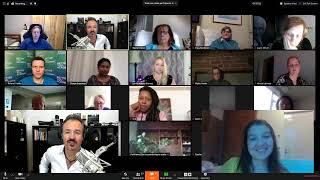
Eric Edmeades discusses COVID conspiracy theories, lockdowns, and 5G rumors, then takes audience questions on goal-setting, fear, and the Law of Attraction. He covers why Sweden's approach differed and how to manage fear in a misinformation-heavy world.
Chapters
Hey everybody, welcome back to our next edition of Thrive Time. I am absolutely thrilled to be here with you today. I really enjoy these episodes so much because I really enjoy these particular episodes so very much because I really get to interact with all of you and that really helps a great deal. I think that it's really great to stay in touch with what's going on. So I wanted to share some things before I jump into the Q&A process and I want to remind you how it works. I know many of you are watching I know many of you are watching through the Zoom platform, and I know lots of you are also watching directly through YouTube and Facebook and so forth. For those of you who are backstage, in a sense, in the Zoom room, that's our live studio audience. In fact, let me show you our live studio audience. Where are they? They're here somewhere. Hello, live studio audience. In a second, you guys can wave to the camera. You're not on camera yet. Don't wave yet. Jeez. All right, there you go. Say hi to the live studio audience. There you guys all are on camera live out to the world. And so if you ever want to join the live studio audience, the best thing to do is to go to the Thrive Time with Eric Edmeades Facebook group. And that's where you get all the backstage information about the episodes, the upcoming guests and and you kind of get to see the making of, and then you get to come and join directly in the Zoom, where you can be asking questions. We have a limited number of spaces that we take into the live studio audience, so if you do click that link and you join that, then you can come into Zoom, but you'll first find yourself in the waiting room, and if the audience is full, then you'll be held in the waiting room until or unless there's a place for you to join, and what we recommend is that you just watch the show from Facebook or YouTube while you're waiting in the waiting room, and then But if you get connected to the show, it's really important you disconnect your Facebook or YouTube connection, because otherwise there'll be feedback, and that won't be ideal. I just am hearing from our backstage audience for some reason that they're not hearing me in Zoom. Can I get a thumbs up from you guys if you can hear me in Zoom? But apparently they can hear me in Zoom, so maybe it was an outdated message. But anyway, here we are, ready to go. Make sure those of you who are over in Zoom, if you want to interact and jump on the show, which I really love and I love getting to meet you guys, please click the link that the team has given you that will let you come in backstage and then I can invite you directly in on the show. I want to remind you a little bit about the culture of that. It's really important that you are in a quiet place. It's no good if you're out in the car, there's traffic or noise in the house or any of that kind of stuff. It's also ideal if your camera is stationary. When you're using a phone and you're bouncing around, it makes it a tough viewer experience for other people. And it's really great if you are front lit. So if you join in, then the culture of that is it's really ultimately for you to share something you think is really important that you've picked up from the show or some sort of breakthrough you've had. And then also if you've got a question that you'd like to dive into. So this is your opportunity to ask questions and speak with me directly. So please click that link to join us back in the show. I can see right now there's plenty of space still for people to join in live in the show as they're always at the beginning. And then at the end people complain that they didn't get in. So it's better if you do it All right, so before we jump in, I know that our first guest is going to join us in a minute and ask a question that's going to be hairy. I can see him already on deck. But before we get into that, there's something I've been wanting to talk about, rant about, rave about, or whatever, and that is conspiracy theories. I've had so many of my friends over this last week or so call me, write to me. I've had people, followers on Instagram writing to me going, I don't know what to do with all this noise. My friends are freaking me out and they're posting all kinds of stuff. And it's gotten to the place now, I think, that because there's so much fake news, generally speaking, out there in the world. We've gotten to a place where we feel like it's okay to post our own fake news out on the social media. And so I want to talk a little bit about the culture of that, I want to talk about what we do to manage our fear when those things are going on, and I want to address some of the direct conspiracy theories directly. Now, please understand, when we go to Q&A, you don't need to ask about that. This is just my little preamble at the beginning because it's what I feel like ranting about today. So, Here we go. Let's first talk about the general idea of conspiracy theories. I want to remind you of this. Just because you're paranoid doesn't mean that they're not plotting against you. Do you hear me? Just because you're paranoid doesn't mean that they're not plotting against you. In other words, paranoia is a real thing. And I want you to know that some of our expressions in English are really funny. Like I hear people say, oh, I don't believe in coincidences. Okay, that drives me up the wall. That's like saying I don't believe in gravity. Coincidences happen. You went to the airport one day and you bumped into your friend there. That is a coincidence. It is a co-incidence. Two incidents happening in co-, together. It's a coincidence. When you say you don't believe in coincidences, what you're saying is that you believe that nothing happens at the same time as anything else in the same place. They do all the time. What I think you mean to say is I don't believe that coincidences have no meaning. And that we should be looking at those coincidences. And so it's the same thing with paranoia. When you're afraid or paranoid, it doesn't mean there's not something to be fearful or paranoid about. And so when these conspiracy theories come up, it plays into that for us. And so I want to talk a little bit about what I believe is really going on and how we can manage it best. First is, please don't post anything that you do not know to be factually true unless you disclaim it by saying, I'm interested in this, it's a theory, it's not a fact. But if you post stuff and speak strongly about it, you say this is a fact when it's not a fact, well, then what you're doing is spreading fear and confusion. How many of you agree with me on this? Do you understand what I'm saying? Okay. And I'm going to give you a really specific example. A very good friend of mine has been posting confusing facts and misfacts and information because she's infected by the fear, right? So she's so fearful that she's reaching out. What happens is when people become afraid, then they become uncertain. And when they feel uncertain, they want to grab on to any certainty they can. I'll give you an example that's more common to us. People work in companies. Sometimes they feel uncertain about the company. And so what do they do? They start gossiping. Because gossip is a way to feel certain. Oh, I have information. It gives people a sense of certainty. And so what happens right now with COVID-19 and the lockdown is that there's... How many of you feel some uncertainty? I'm curious. Anybody with uncertainty? Okay. So we feel a degree of uncertainty, which means that we are inclined to seek out certainty. And so the news knows this. The mainstream media, they're all over this. They completely get this. Because what they do is they create a lot of uncertainty with fake news or exaggerated headlines. And then what happens is because people are feeling uncertainty, they go, I feel uncertain. I'd better check the news. And they make money like you wouldn't believe. It's absolutely by design. And now our friends are doing it on social media. So what we need to do is post things that are real. So this friend of mine, she posted this fact, which she stated as a fact. Doctors have confirmed that COVID-19 is fake, that it's fake, that it doesn't even exist. She posted that as a fact. Then the next fact she posted was, doctors have confirmed that the mortality rate is in fact only 1% rather than the 3%. Incidentally, I believe it's a lot lower than that, and I'm going to come to that in a minute. But do you understand that those are two facts that are in conflict with each other and does it make sense to you that that makes no sense at all? Are you with me? Okay, that's a problem. And so what we want to do is post things that we know to be true and block people who don't. Because if you comment on it, that's the mistake I've made. I'm like, I'm trying to help, so I comment. But then when I comment, I get the more clicks. And then Facebook goes, oh, look, this must be an interesting conversation. And then it spreads it even more. So I am a person who doesn't have the disease but I'm still spreading the disease because I'm using social media irresponsibly. If somebody has a lot of fear, if they've got a lot of fear and they're sharing all their conspiracy theory stuff, they are more dangerous than somebody walking around spreading COVID-19. When they post their fake stuff, they sneezed on you. Do you understand what I'm saying here? When they post the fake stuff, they just sneezed on you. You should then snooze them. If they sneeze on you, you snooze them. You just snooze them. Facebook has a feature, snooze friend for 30 days. You don't even have to unfriend them. All right. So that's my first rant about this, is please post real things. 5G... 5G! May not be good. I will admit I don't like all these electronic radio raves all over the place. I turn my Wi-Fi off. I get it. I get it. I'm not suggesting that 5G is a fabulous idea. I don't know. I don't know the science. I won't post anything saying it's a bad idea, but I equally won't post anything saying it's a good idea. But what I will point out to you Two things about the 5G conspiracy that I really hope you understand. The one is the main guy propagating the theory. His last theory was that the world is being run and managed by shape-shifting lizards in human skin. That's his last theory. I'm not kidding you, you can check it out for yourself. He was talking and he got these videos online where they zoom in on people's eyes and they show, look, zoom in closely, you'll see, it's really a reptile. I mean, this is the same guy that's getting millions of views and is freaking everybody out because he's sneezing on millions of people at once. And people are afraid. Well, let me just give you one fact. One fact. And when I say fact, I'm not sure it's 100% accurate, but there are about 30 countries with 5G deployments. There are about 190 countries with COVID-19. Are we done with this now? It's not 5G. It's not. I'm not saying it's good for you, but it's not causing COVID-19. So let's deal with that. Boy, this is fun. So I just, I really, I'm so concerned because friends of mine, a very good friend of mine called me four days ago and she says, I'm having anxiety attacks. And I said, why? And she goes, because two of our mutual friends keep posting this stuff about 5G and they're posting all this stuff about Bill Gates and they're scaring me. And I don't want to unfriend them because they'll know I unfriended them and I don't want to do that. She was like, I could just unfriend them until the pandemic's over, but they'll see that we're unfriended. And I said, no, you can snooze them. You can totally snooze them. Think of it this way. If you knew they had a fever, would you give them a hug? No. If you knew they were sick, would you go visit them at their house? No. So if you know that they're affected, if you know they have a COVID-19 infection, then don't read their feed. Because then you might get infected. By the way, how many of you have been infected every now and again by posts like that, where it got to you? How many of you have felt the infection coming in? Right. There you go. They are infecting you. And here's the problem. Once they've infected you, you start producing increased levels of cortisol. And you already were because of what's going on. And now it's more. And maybe even some adrenaline. And the more cortisol and adrenaline you're producing, the more fundamentally pessimistic you feel, which means you're more inclined to believe bad news. Do you understand the cycle here? That's the real pandemic. So now let's talk about a couple of other things that are related to this. How many of you currently, I'm curious, I'm really curious, from the live studio audience, how many of you currently feel, I really need to know this, how many of you currently feel that Bill Gates is evil? I'm just curious, how many of you feel that he might be evil? Not so many from our audience, but out there in the world, how many of you know that friends of yours think that Bill Gates is evil? How many of you know your friends think he's evil? I'm gonna explain a little bit why it is that people think that he's evil. One of the reasons that people think that he's evil is that in an interview some years ago, he was talking about the third world. He was talking about developing nations and the incredible population booms that they have in those places. He made a comment in the interview that by introducing vaccines into those countries, it could reduce the population. And people grabbed a hold of that quote and said, see, Bill Gates is trying to kill people with vaccines. They're trying to kill people with vaccines. They're typing away on their computers. What he really said was that in the third world, there's a culture of having a great many children. Because you need to. I know we've talked about this before. I just want to really get it out. There's a culture of having eight to ten children because many of your children won't make it. So you need to have some children that are going to survive you out into retirement because they don't have pensions and stuff. And because many of your children won't make it, you have to preemptively have many children. Does this make sense so far? Are you guys all following me so far on this? Okay. So now what Bill Gates really said was when you introduce education ស្រុងស្រុងស្រុងស្រុងស្រុងស្រុងស្រុងស្រុងស្រុងស្រុងស្រុងស្រុងស្រុងស្រុងស្រុងស្រុងស្រុងស្រុងស្រុងស្រុងស� ὅᾱᾱᾱᾱᾱᾱᾱᾱᾱᾱᾱᾱᾱᾱᾱᾱᾱᾱᾱᾱᾱᾱᾱᾱᾱᾱᾱᾱᾱᾱᾱᾱᾱᾱᾱᾱᾱᾱᾱᾱᾱᾱᾱᾱᾱᾱᾱᾱᾱᾱᾱᾱᾱᾱᾱᾱᾱᾱᾱᾱᾱᾱᾱᾱᾱᾱᾱᾱᾱᾱᾱᾱᾱ� But we can't even have a real conversation about it if we start the conversation with a lie. The minute we start the conversation with a lie that Bill Gates is a shapeshifting reptile who's intentionally sterilizing people to reduce... No, we're not going to have a real conversation anymore. It's not real anymore because we started it with a lie. What we need to do is start with the truth. And so again, I come back to you. Please don't post stuff unless you know that it's true or unless you're asking a question about it. I want to talk a little bit about the lockdown. I want to talk a little bit about the lockdown because I am seeing a lot of division now. There are some people who believe that the lockdown should be over. There are some people who believe that the lockdown should never have happened. And there are other people who believe the lockdown should be enforced and we should carry on with it. And you know what the trouble is? None of us really know if we're right. That's really a big part of the difficulty right now. None of us really know if we're right about that. We don't know. And the reason we don't know is the data is still coming. We're still getting the data. But I want to share with you a couple of observations that I have. I am fascinated by the experiment that Sweden is conducting. And in fact, Sweden, they're the first ones to point out that it's not them conducting the experiment. Because they're just carrying on relatively as business as usual as they've done for every other disease that's ever swept along. We're the ones conducting the experiment around the world by shutting down our economies and locking everybody up at home. That's a fascinating idea. But in order to really measure what's going on, in order to really understand what's going on, one number that's very important. You might think that it's deaths or infections, but that number is not so important in absolute terms because countries have different sized populations. So if you compare the number of people that have passed away in Sweden with the number of people who have passed away in America, that doesn't give you anything to look at because there's different. You'd have to factor it in as a percentage of the population. Så den nummer vi använderar vi kallar för döds per miljon. Ja, Sverige är väldigt hög på döds per miljon. Jag tror att de är nummer fem i världen just nu. De är nummer fem i världen bakom Holland, bakom Belgien, bakom ett antal länder, och de är bara före USA. Det kan verka som en dålig sak. Det kan verka dåligt att de är väldigt hög på döds per miljon. But I will point out to you that they're half of the death per million that they're having in the Netherlands and Belgium. Half of it. Half of it. And they haven't shut down their entire world. They haven't shut down their economy. So it begs the question. But then we have to point out something else. And that is that both the Netherlands and Belgium, as examples, have incredibly yng niferi yng niferi yng niferi yng niferi yng niferi yng niferi yng niferi yng niferi yng niferi yng niferi yng niferi yng niferi yng niferi yng niferi yng niferi yng niferi niferi yng niferi yng niferi yng niferi yng yng niferi yng niferi yng niferi yng niferi yng niferi yng niferi yng niferi yng niferi yng niferi yng niferi yng yng niferi yng yng niferi yng yng niferi yng yng niferi yng niferi yng niferi yng niferi yng nifer ὅᾶ ὅᾶ ὅᾶ ὅᾶ ὅᾶ ὅᾶ ὅᾶ ὅᾶ ὅᾶ ὅᾶ ὅᾶ ὅᾶ.
Ὅᾶ ὅᾶ �.
Ja, det är en annan sak som jag tänker om Sverige, om du är nyfiken på vad jag tänker om Sverige, och det är, hur många av er har hört att vi måste öppna kurvan? Vi måste öppna kurvan. Okej. Men jag tror att en av de saker som ni nog har noterat under hela den här pandemin är att vad vi hör en vecka blir irrelevant i nästa vecka. Hvad om det här? Jag har tänkt på det här på weekenden under en av våra program. Hur många, när var det den sista gången du hörde att nån inte berättat dig? But do you remember all the rage was, don't touch your face, right? Don't touch your face. Well, you know what? You know what? I'm going to touch. They don't tell us not to touch our face anymore. That news is now old news. With masks, we've been told, yes, you should wear your mask, no, you shouldn't wear your mask. You want me to confuse you fully? I'll do it right now. If you wear the mask, you can stop yourself from infecting other people. Also, if you wear the mask, you breathe a warm, wet environment inside this place where bacteria can breed and get into your own respiratory system and cause a bacterial infection. Are you confused about masks? I am. We keep getting confusing information about this. And what I want to suggest to you is that the concept of flattening the curve might be the next one. Because in order to understand flattening the curve, you need to understand the shape of the curve to begin with. और अपनी अपनी अपनी अपनी अपनी अपनी अपनी अपनी अपनी अपनी अपनी अपनी अपनी अपनी अपनी अपनी अपनी अपनी Så jag अपनी vill अपनी tala lite om att flättrar kurvan, för att du ser att Sverige har en högre mörder per miljon än Amerika. Men kommer de att ha den högre mörder i slutet av året? Kommer de? För det jag vill önska er är att om du har den här kurvan, och du drar ned den på toppen för att flättra den, så öppnar du den också. Do you understand what's going on? In other words, quite conceivably, roughly the same number of people die. They just die on a different time frame. And I think that what we're going to see with Sweden is that they have not flattened the curve as much as they could have if they observed even more social distancing and maybe a lockdown, but that over this course of a year, their death per millions number will be about the same as anybody else's without having shut down their economy, without having shut down their country. Now it might sound to you like I'm saying I'm against the lockdown. I'm not. I'm trying to point out that each country needs to find the solution based on their culture and based on their population density. If you have a state like California, or let's talk about Florida. If you have a state like Florida, which in my opinion, has a fairly dense population in both meanings of the word. Some of the population is dense because they live close to each other, and some of the population is dense because they insist on having spring break vacations in the middle of a breakdown. So they have population density and population density. They should be observing a lockdown. The infectiousness of the disease seems to be related to three things. Your fundamental health, the density of your population, and the density of the people in your population. And so every country needs to take a different view on the way they're doing it. And if we're going to be talking about this stuff in social media, I think what we should do is do enough research that when we share stuff, we can offer an opinion that at least has a little backing behind it. And so I thought I'd go in and dig into these things and answer the questions because people have been asking me about them. So that's my rant on conspiracy theories and lockdowns and 5G and lizard people for this episode of Thrive Time. And now, We're going to go over and we're going to talk to some of you. And guys, we can totally talk more about conspiracy theories or anything at all that's going to help you have a better lockdown experience and prepare you for the post-pandemic world. Harry, our original fan, you're our first guest today. Harry, say hello. Hi. Hi, how are.
You? Can you hear.
Me? I hear.
You. I had a fantastic seminar over the weekend and I have a question regarding that. The homework regarding goals and desires and now especially with the lockdown being home and thinking about the future and trying to be a better person coming out of it. How do you get away from the fear of setting too high goals? I know that in the seminar you talked about it with the sentence of wouldn't it be nice but still like when I was writing down that what the one year in the future person would write what I did Se on edelleen vaastu kirjata konkreete numereita ja stuufi, koska mín mín mín mín mín mín mín mín mín mín mín mín mín mín mín mín mín mín mín.
Mín Okay, so I want to describe Law of Attraction in a kind of cute, funny way that I often think about it. The first thing, for those of you who are interested in Law of Attraction, how many of you guys are interested in Law of Attraction and The Secret and that kind of stuff? Some people totally, some people not at all. So here's the thing. First thing is, is that for any of you who watch The Secret, you need to know it was heavily edited and a lot of what was edited out of it was the part about you doing stuff. The part where you actually had to take action. There was a lot of that kind of taken out. So when we're talking about manifestation, when we're talking about creating reality, when we're talking about attracting the things into our lives that we want, there's always going to be action involved. And then the other thing about attraction is that I believe attraction is a way of being, not necessarily a way of doing. In other words, the happier you are as a person, the more optimistic, the easier you are to be around, the more you will attract things to you. That's the first level that I want to suggest you. The happier you are, the more you are doing what you love to do, the more people will want to do it with you, the more people will want to buy from you, and so on. Does this make sense to everybody? Okay, cool. So now, let's do this. आपको समक्षन आपको समक्षन आपको समक्षन आपको समक्षन आपको समक्षन आपको समक्षन आपको समक्षन आ� Oh, I understand. Guys, you think I'd have learned by now that you guys can't hear my guest. Is that what's going on? All right. Harry, could you say hello to everybody? Because they haven't even heard your voice yet. Say hello. Hello. Are we good? All right, all right, all right. Thank you, guys. Thank you. So sorry about that. Sometimes you're in your live studio audience, there are advantages. Sometimes there are disadvantages. So, all right. So, so, What happens is that people set this goal and they're like, all right, I want to set a goal. And then they limit it down. They limit the goal down because they're afraid that if they set too big a goal and then they don't hit it, that they're going to face a feeling of failure, rejection, and all that kind of stuff. All right. So first thing I'd like to suggest is if you set a really big goal and you work really hard toward it and you do all the right things and you achieve a lot but you don't achieve the big goal, have you achieved a lot? Yeah, like, you know, the old expression about that, Harry, is if you shoot for the moon, you might miss, but you'll at least end up with the stars, right? So there are times when you want to set a big goal, and you set the big goal, and you work toward it, and you miss, but you still got the journey, you see, because it's not just about the destination. It's about the journey and the rewards that come along on the journey. Is it possible that somebody sets this goal to create a bestseller? Great. So they set the goal to have a bestseller. By the way, that's a big goal. To become a New York Times bestseller is a big goal. So they set out to become a New York Times bestseller, Harry. And they write, and they write away, and they write, they write, they write. And they edit, and they edit, and they get a cover design, and they do all this, and they launch the book. And they launched the book, and it doesn't become a New York Times bestseller. I mean, that's terrible. But it landed them a bunch of speaking gigs. It got them interviews on the radio. It got them, you know, money raised for their company. They helped hundreds and thousands of people, but they didn't become a New York Times bestseller. So, Harry, have they failed? No, I don't think so. Now I've lost your sound, Harry. I think maybe you muted yourself. I got you, I got you. So they haven't failed. They haven't failed at all. Now, they've kind of failed in the ultimate objective, but you know what? For years, I used to take people up Kilimanjaro as part of a leadership program. We'd take them up. I thought, I really am a big fan of using metaphors to teach, and I thought, wow, Kilimanjaro is like the ultimate metaphor to teach people about themselves. And so I was like, ready, take them up Kilimanjaro. And the one thing I had to prepare myself for was that not everybody was going to make it to the top. In fact, about one third of the people that set out to summit Kilimanjaro actually get to the top of Kilimanjaro. So I need to be ready that a lot of my people might not reach the ultimate summit and I was going to need to reframe that for them so they could see that life is like that somewhere. The good news was is that the preparation work that we did with them psychologically made it so that over our seven expeditions we averaged 90% of our people to the top of the mountain. 90%. How cool is that? Very, very cool. But that's still not 100%. And that meant that every year, except one, because I think one year we did get 100%, but every year, there was always one or two people that didn't make it to the summit. And do you know what they told me, Harry? It was good. It was cool. They got the life lessons they were meant to have. They were so glad that they came on the adventure. They were so glad that they walked up that mountain. They were so glad for the friendships they created and the sights that they saw. And yes, they have a little sweet sorrow that they didn't get to the summit, but ultimately, it wasn't a failure. Does that make sense to.
You? Because I have to carry the process more.
Exactly. And now one more thing, and this is my crazy off-color metaphor, but this is the other thing, is that attachment is sometimes part of the problem. When we get too attached to a goal, it's too, you know, like the more we're like grabbing onto it, we've got this grabby attaching feeling to it, the more that goal wants to run away from you. Does that make sense? Let me explain exactly what I mean. Have any of you had that experience where there's something that you really want and it seems like the harder you grab at it, the more it runs away? Who's had that? I have a great metaphor for you. Here's how it works, Harry. The metaphor is this. Harry, have you ever been in a situation where there was, let's say, a physical experience you wanted to have in your body, a physical experience you wanted to have in your body, And the more you wanted that physical experience to come, like the pressure was building, you wanted the physical experience to happen in your body, but the more you wanted it, the more it seemed to escape away, and the more pressure you felt to feel that feeling, the more it escaped and went away. Have you ever had that feeling, Harry?
Yes.
Right. I'm talking about sneezing, right? Sneezing, like when the sneeze is coming up, What were you guys thinking in the studio audience? Karen, I need to know what you had in mind. I don't know. Karen! I was talking about sneezing. But the thing is, the more the sneeze builds up in your body, you get to that point where it's like, oh, come on, sneeze, please! And the more you want it, it just disappears. Goals are like that sometimes. And by the way, Karen, so are orgasms. I know. So what I want to say is that we want to have our goals and relax into them. And by the way, if we're going to go, because I know Leslie, Karen, I saw all of you. I saw you reacting. But here's what I want you to know. We can talk about that exact issue because the more pressure in somebody's sex life, the more pressure they feel to get to the ultimate destination, the harder it is for them to get there. The worst thing in the world that a man or a woman can do, or whatever, it doesn't matter who's involved and who's in the room, but say it's a heterosexual couple, the more pressure the man puts on the woman to get there, the harder it is for her to get there. Women, come on, raise your hand if that's true. But it's the same for men. The more pressure there is to get there, the harder it is to get there. And your subconscious is very much like that with goals as well. So if you get this strong sense of attachment to the goal, and you really put a lot of pressure on it, and you start feeling needy, then the goal will wisp away from you. And that's why we talk about, wouldn't it be nice? You can set the goal. My goal is to write a book. And wouldn't it be nice if it was a bestseller on the New York Times? And then you can release some of that pressure. And it's like somebody saying to you, Harry, relax. There's no hurry here. Take your time and just enjoy the process. And then it'll be a lot easier for you to write the book. Harry, it's been a pleasure as always to share this experience with you. Thank you so much for being a guest on the show. All right, well, it seems like we're definitely going across, we're coloring outside the lines today, everybody. We are now going to be going over to, I have, let's see, who do I have here? I have, I think Ragna, if I'm saying it correctly. Hold on, I've got you coming in. I just need to get a little faster at being the producer here. Here you go, Ragna, please say hello to everybody. Say hello.
Hi. So, so good to have.
You. Can everyone hear me? They can hear you, I'm pretty sure. We can get a thumbs up to confirm, but let's see, have we got her? We do, we've got her. All.
Right. Okay, so my question is more or less about changing someone else's habits and beliefs, because the situation I'm in right now is that my stepdad is really destroying his life and the relationship with my mother, and Tau, eto, yon person first has to realize it on their own that they need to change. But in this case we really need to make him realize that he needs to change, because if he doesn't, then things are not going to end.
Fine. All right. This is a very tough one. This is a very, very tough one. And it kind of crosses the line a little bit because we start getting into this question of at what point are we responsible for other people's experience, right? I mean, it's a really tough one. How many of you out there have ever wanted to change somebody else's habits or behaviors? Okay, let me ask another question. How many of you in your attempt to help somebody change their habits or behaviors have harmed a relationship? Anybody done that? So it's a bit like this. The first thing I want to suggest about it is that rather than trying to stimulate the change, you try to stimulate the curiosity about the change. So instead of pushing, you try to pull. Instead of pressuring somebody, you try to lead by example and you try to live the way that you want them to live and to let them see by example what that looks like and allow them to have some curiosity about it. We see this very often with WildFit clients where a husband or wife does the program And the other one is like, not down, doesn't want to be involved, not interested, not going on another diet, that's ridiculous, stupid, da-da-da-da-da. And then three months later, they've signed up, they've lost 30 pounds, their life is transformed. But the reason that it worked was, the husband or wife that was on the program didn't go, come on, you gotta do it, you gotta sign, it's so good. They don't do that because we tell them not to. We tell them to simply live. We tell them to be the change they want to see in their partner. So I think that's a really big clue as to how this has to happen. But here's the other one. And it's really tough. And it's kind of related to what we were just talking about with Harry. And that is the more you want something, the harder you make it for the other person to get there. It's the strangest thing at all. But the more you want it for them, the more... I mean, look, have you ever had this experience where a friend of yours says, oh, you've got to read this book, you've got to read this book, and the more they tell you to read the book, the more you're just not reading the book? Have you ever had that? It's challenging. And so, what I want to suggest is this, is that with your children, for example, when you've got kids, sometimes you just have to let them fall down. Sometimes you just have to let them hurt themselves a little bit. Sometimes you just have to let them have that experience. And that's how they're going to develop the life experience. And so when you have a partner or a friend that's headed down a tough road, what I suggest is you be the example that you want them to be. You try to stimulate their curiosity about it. And then you let go. You let go and you let God and you let life and you let it happen for them. You be there for them to help them pick up the pieces. But here's the tough part. Let's imagine that somebody's married to an alcoholic and they want to support the alcoholic to change. then they might be tempted to hide the alcohol. This is a very common thing that spouses will do. Well, if there was no alcohol around, they wouldn't drink it. Let me tell you something. Alcoholics can find alcohol in the Sahara Desert. So hiding it is not going to help. It's not going to help. But then the next thing you might start to do is go, well, I know that he was unacceptable, that his behavior was unacceptable at the last party, but then you try to explain away his behavior. You try to cushion the fall. Or you're at the party and he starts behaving in a bad way, so you try to get him to leave the party to prevent him having the embarrassment. Well, you know what the problem with that is? It's that very embarrassment and it's those consequences that might have driven him to stop. Ja, ja, ja, ja, ja, ja, ja, ja, ja, ja, ja, ja, ja, ja, ja, ja, ja, ja, ja, ja, ja, ja, ja, ja, ja.
Ja, ja, ja, ja, ja, ja, ja, ja, ja, ja, ja, ja, ja, ja, ja, ja, ja, ja, ja, ja, ja, ja, ja.
Ja, ja, ja, ja, ja, ja, ja, ja, ja, ja, ja, ja, ja, ja, Okay, so you're a relative, which on one level makes you the ultimate person to want to help and support, and on the other level, ja, it makes you one of the hardest people to help and support, because we're like that with family. And, you know, really all I can suggest to you is the kind of things that I've said so far, and then the other one is brutal, honest communication. You know, sometimes that's what it takes. You know, you guys have all seen this thing where people do like interventions, right? You do an intervention and you all sit around and talk to the person about the reality. Well, sometimes you can have a one-on-one intervention where you just have a sit down and you have a conversation. You say, listen, I love these kids as much as I know you love them, and I'm a little bit concerned. And you try to have an outright, frank conversation. The problem for a lot of us is that we will often, again, try to soften the blow. We'll try to say it nicely. I'm often in this situation where somebody looks to me for coaching help. I will never forget years ago, many, many years ago, I was teaching a workshop on public speaking, and one of the women in the group She was talking about wanting to become a public speaker and all this kind of stuff. And I said to her, like, you know, what do you want to teach? And she says, I want to talk about women's health. I want to talk about women dating and women's health and all that kind of stuff. And here's the thing. I'm sitting in a room with 150 people and I've got this woman telling me she wants to be a public speaker and talk about women's health. She was dressed in a stained pair of sweatpants and a baggy sweatshirt with food on the front of it. Her hair was everywhere. She was carrying 50 pounds that she doesn't need to be carrying. And here's the problem. I'm a white dude at the front of the stage. And she was also mixed race, so she's got all this stuff, and I'm a white dude in front of the stage, and if I turn to her and go, hey, maybe you need to lose some weight, now I'm fat shaming her, and I'm an evil man, and all that kind of stuff. That's kind of what's going on. But what I can tell you is that in my environment, in my events, in my My clients know that I'm not very nice. That's just the truth of it. Come on, how many of you know that I'm not very nice? Really, if you really get down, be honest, you know. But what they know is that what I really mean by that is that I'm not very nice in the short term in order to be nice in the long term. I'm willing to say what needs to be said. I'm willing to say what needs to be said, and I can say it with love, and I did with this woman. I said to her, listen, I want you to achieve your goal. I just want you to know you're here at a public event. It was a public speaking event. You knew that microphones are going to be passed around the room, and I want you to think a little bit about your appearance in this situation. You know, you want to talk to people about women's health. Well, if you want to talk to people about women's health, you need to be a glowing example of women's health. By the way, does that mean she needs to be a swimsuit model? No. No. No woman who's interested in women's health and weight loss wants a bikini swimsuit model as their coach. That's just too much to deal with. They don't want that. They want a real woman, right? So I'm not saying she's... I'm not fat-shaming her. I'm not telling her she's got... I'm just saying... She needs to be healthy. And then I said, and also, I want you to look at the way you're dressed right now. I know it's an event, but it's an event, which means it's a networking event, which means there's potential clients here and you're in these sweatpants. And I said, so I just want you to think about that. Now, that's not very nice things to say to a person, but the context was such that I created the environment to say it. And that's the question. Can you create that environment? Do you have the mutual love and respect with this person to be able to have that conversation? Do you?
Yeah, I.
Do. Then maybe that's the deal. Maybe that's what needs to happen is you need to have a sit down, heart to heart, but you need to understand something. It's not your life. And I want you to know something about those kids. They're going to be just fine. They are. Come on. I mean, who... The only people, if I'm really... I hate to say this out loud, but honestly, some of the most screwed up people I've ever met had perfect childhoods. I'm telling you. If your childhood is too easy, your life is going to be hard. If your school life is too easy, your life is going to be hard. Some of the most dynamic and amazing and phenomenally interesting people I know went through awful childhoods. That's why they ended up like this. That's where they got their sense of humor from. That's how they ended up being, you know, they got their life skills. So these kids, for all you know, this is their destiny. Their destiny is to have a weird relationship with their father where it doesn't quite work out right. How many of you in the studio audience know that part of the reason that you're interesting, part of the reason you've had an interesting life, there may be bad stuff too, but part of the reason that you've had some interesting stuff is because there were some stuff your parents didn't totally get right. How many of you know that that's true? Oh, look, it's almost everybody. So take it easy. The kids are going to be okay. They're going to be okay. So anyway, I hope that that is some assistance that helped you. I want you to relax, maybe have the heart-to-heart, be the example you want to be, and then chill out and let the kids have their upbringing and let them have their relationship. Thank you. You're very welcome. Thanks for being on the show. Okay. All right. How fun is that? We are going to go to our next person. In the meantime, I really want to share something with you that kind of is related to what I was talking about. I really had, in many senses, a very imperfect upbringing myself. Things weren't easy for me growing up at all in many ways. But you know what's really fascinating about that for me is that it worked for me. I'm having a sound issue. Okay, I've got you. It worked for me. I went through some really tough stuff as a kid, stuff that I would never, ever want one of my own children to go through, not in a million years. But in the meantime, I learned as a result of it. This thing happened over here, and I had to develop coping skills for that, and those coping skills ended up supporting me later on. So I want everybody to remember that it's not meant to be easy. It sometimes is meant to be tough and to the degree that you can develop a powerful sense of अगर आप करतक करतक करतक करतक करतक करतक करतक करतक करतक करतक करतक करतक करतक करतक करतक करतक कर Does that make sense? But here's my question. Is Bumpy bad? I tell you, I don't think so. I just get a 4x4. I like Bumpy. I'm in for it. I'm down for it. Let's have some Bumpy. Anyway, with that, we've got Daisy coming into us live. Daisy, you're on the show. Say hello to everybody.
Hey. Hi, everyone. So my question is actually a little bit related to Harish's question regarding law of attraction. I know that dreams can come true, and I know that my brain knows, because I've seen it. Many times I've been asking for something or wishing for something, it has come true, but recently I found that my little brain sends out a sabotaging thought, which is, are they really going to come true? And I haven't found that question before, but now every time I wish for something, it starts to come in, and I have a lot of question marks.
Yeah, you know, if everything was easy, it wouldn't be worth doing. If everything was certain, it wouldn't be doing. One of my favorite little jokes, I'll share with you, it's one of my favorite little jokes, it kind of goes like this. This guy, he dies and he ends up, He's not quite sure whether he's going to heaven or hell, because he lived a kind of on-the-edge life. You know, a little too much of this, a little too little of that, and he's not really sure. And so there he arrives in the afterlife, and he finds himself in a limousine. And he's in this incredible limousine. He's like, oh my God, I'm in a limo. And then the limousine pulls up, and he's in Las Vegas. It's his favorite place in the world. Oh my God, he made it to heaven. There's this gorgeous casino, and these beautiful women come out from the casino, and they welcome him to the casino, and they walk him into the casino, and they offer him a drink right away, and it's like, oh, I'm so glad I made it. The fire, I was so terrified of the fire and the brimstone. I was so afraid of hell, but I'm here, I made it. And they're like, well, what would you like to do, sir? You know, what would you like to do? And he goes, blackjack. Let's go play some blackjack. Let's go. And they head off to the blackjack table. And they're there at the blackjack table. And they're playing. And he wins the first hand. Right away, he wins the first hand. It's amazing. So this is so cool. He plays again. And he wins the second hand. Blackjack. And then he plays again, third hand. Blackjack. Blackjack. Blackjack. He gets bored with playing blackjack, so he heads over to the roulette table, and he wins the first round, his son! And then the second one. And then the third one. And then he gets bored with roulette, and he goes over to the craps table. Same thing. Can not throw a bad roll. Can't throw a bad roll, wins everything! But after about five or six hand rolls, not interested. At this point he says, I'd like to talk to the manager, please. I'd like to talk to the manager. We need to talk to the manager. And they're like, okay, let's get the manager for you. And the manager comes over. Manager's like, okay, sir, sir, what can I do? How can I help you? What's the issue here? And he says, well, I'm really struggling. This is just not my idea of heaven. And the manager says, you're not in heaven, son. Daisy, you don't want it to be easy. You think you do. But the truth is the reason people go to Las Vegas and gamble is because they lose. Because if they didn't lose, the winning wouldn't feel so good. And so the next time you think of some goal and you realize that you could lose, get excited. Get excited. Let me just ask you something. Does food taste better when you're full or when you're hungry? When you're hungry. Does food taste better when you're hungry or when you're famished? The hungrier you are, the tastier it is. And there are so many things that are like that in life. There are many things that the longer you don't have it, the more you enjoy it when you have it. And I know what some of you are thinking based on our earlier phone call. I wasn't even thinking of that. But the point being is that I want you to be okay that it's going to be a bumpy road. You just make sure you're driving a 4x4 and then you're not going to have a problem. Give me an example. Think of a goal that's so big and it makes you a little bit scared and a little bit nervous.
Probably financial freedom.
Okay. What does that mean for you?
More from Eric



Eric Edmeades: The Speaker Your Audience Will Still Be Talking About Next Year

Eric Edmeades: The Speaker Your Audience Will Still Be Talking About Next Year


A free class on Stop Style Profiles, habit cessation and behavior change by Eric Edmeades.




