What Fear Teaches Us with Alyson Stoner
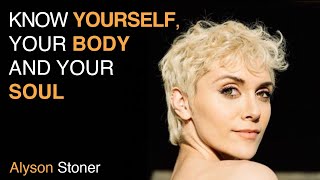
A livestream conversation (April 15, 2020) between Eric Edmeades and Alyson Stoner about coping during the COVID-19 pandemic. They emphasize reframing fear (e.g., 'give fear a face'), pursuing lifelong learning, and using mindful movement and playful dance (exercises like 'thread the needle' and 'paint a sunset') to support emotional resilience and immune health. Alyson shares personal history (career in entertainment, diagnosis of alexithymia) and practical tips for families and individuals to move safely and creatively at home.
Chapters
Guys, I'm really excited to have Alison Stoner here with me today. I met Alison for the first time at event in Los Angeles a little while ago and just was really taken by her energy on stage and her. Her ideas around movement and fun and spontaneity. And we were having a casual conversation a couple of days ago about what was going on, and immediately I said, you know, what I want to do is I want to bring Alison to you guys so we can talk a little bit about. As you know, I'm all about the. What we need to do is get through this. We need to cope with what's going on. We need to survive it. We also need to thrive. And one of my objectives with all of this is that we and our children around the world come out of this with more positive memories than negative, that we are able to look back on this and go, you remember that time when we had to camp out and we had all this fun. And so that's really why I wanted to bring Alison here with you guys today. Allison, welcome to the show.
Thanks for having me. It's quite a condition and climate to be doing a live stream, but I think I've done more livestreams in the last week than I have in the last six years total.
You know what's really funny is I have been threatening to do something like this for a long time. Podcasts and that kind of stuff. But I travel all the time, and all my friends that I would want, they travel all the time. Suddenly people are very available.
Oh, yes. Not only available, but pining for connection in any way, shape or form.
Yeah, yeah, it's very true. It's very true. So listen, I am really, I'm impressed by you. And I say that not lightly because frankly, when my team went and did a little research, they sent me your date of birth. I'm like, they let her drive cars? I'm kidding. But I'm saying that because, frankly, while you look very youthful, your energy on stage and when we met certainly speaks of an old soul and a level of wisdom that doesn't easily reveal your youth. And I really liked in one of your YouTube videos, I saw you talking about relationships and wanting to be in relationship with people who don't simply act their age, that they can act the full spectrum of age. And I wonder if I think that really factors into this situation. I'd love to hear your thoughts on that. Yeah.
So I guess it might be helpful for your audience. Apologies for the mic here. It's all makeshift, so a Little background, context. I started in entertainment close to 20 years ago at this point. And I've lived a lot of different lives for being 26 years old. Worked on 200 different films and shows and have played characters which require me to delve into human identity, to understand, like you said, the spectrum of emotion, of life experience, circumstance, privilege versus, you know, being marginalized or discriminated against. I've played addicts, I've played, you know, type A personalities, which you could argue is actually another form of addiction to achievement and high performance. And so for me, I made a relationship video on my YouTube channel with my series Alchemy. And the premise of the series is to give bite sized frameworks for people to just consider and contemplate things with through a creative lens. Sometimes I think if we go straight to therapy, it can feel so vulnerable, so intimate, and we're not always ready to be that open with our own self disclosure. And so when I spoke about being, you know, the full spectrum of a soul, that space of almost timelessness, I was referring to the fact that in some relationships, you know, we are so bent on being mature and serious and tackling an issue that we focus on, you know, trying to present ourselves with confidence and know how. And at the same time we all understand and tend to agree that childlike youthfulness, that sense of wonderment is actually a space where playfulness, creativity, curiosity can give us new ideas for solutions to tackle our problems. I mean, you can ask a kid to get from A to B in a new way and every single time and they'll find something. But see, you know, the more we get into our routines of this is how we do this, this is how we do that, we get a little more rigid. And so, you know, the idea of just being, being a timeless soul. As we approach even now with coronavirus and being at home, I want to operate from a space of infinite expansion instead of a space where my body wants to contract and, and just stay in survival mode. That's going to keep our lens linear. It's going. Our periphery very, it's just gonna, we're out of a narrow minded approach. And right now more than ever, we need to create a sense of expansion. Even if we're confined within, you know, the physical limitations of a room.
Yeah, that's, that's really. I'm with you. And it's funny because I think that right now it's very easy for somebody to focus on all the things they cannot do. But what we really need to be focusing on is what are all the things that we can do. Another thing that I've seen you speaking about is wanting to be a lifelong learner. That's a huge value of mine. It's a. You know, I. Honestly, people always ask me, like, I enjoy. I enjoy speaking and training and that stuff around the world. And they asked me, when. When would I ever stop doing it? And I said, well, there's only two reasons I would stop doing it. One is if I got off, if I. If I felt like it was perfect every single time, then I'd stop. And the other one was if I was no longer learning, then I would stop. And so this is a time, I think, when, you know, we should be focusing on what we can be. Alison, I bought a guitar. I don't know what the hell to do with a guitar, but I have one here, and I can play the first eight notes of Wish youh Were Here.
Oh, that's amazing. Also, just to stimulate that side of your brain, there's a book called the Jazz of Physics. And it just ends up combining, you know, music theory, understanding the circle of fifths, but then looking at it from a scientific standpoint and seeing cosmically what's going on in the natural order of things and where vibration, sound and music come into play. It's just so fundamental to who we are. So definitely, you know, people who have that penchant to learn and grow, music is such a helpful tool right now. Art therapy, you know, I teach. I've been teaching dance for 10, 12, maybe 15 years. I started assisting at, like, 10 years old. And music really is. It's transformative.
It really, really is. I was speaking to a friend of mine who does. She's a professional singer, and she also does voice training and stuff like that. And she said in her business right now, there's just this great opportunity where there are people sitting at home able to do lessons online like that, you know, so some people might be going, well, I can't do. I don't have a piano. I don't have a guitar. Well, music is still there. You know, there's opportunities to get to it.
Yeah. And when you speak of lifelong learning, you know, this is a global pause. But in the pause, in the silence, we actually get to hear the symphony more clearly. So when we slow down, when we become still, then we actually get to be more mindful about how we move. And it's not. It wasn't voluntary. And I think that can bring up a lot of resistance. We didn't choose. I should say we didn't consciously choose to be in this position. However, you could argue that human behavior over the last however many generations has contributed to the state that we are in. And so it's a time of reckoning. We are facing a mirror. And we might not have wanted to see our reflection this clearly, but we don't have to be afraid of it. And something. I also made another video in the series Alchemy on Fear, because I think we're feeling a lot of fear and anxiety and stress and overwhelm. But a trick to overcoming fear is actually in order to face fear, you give fear a face. And by making fear a recognizable person, maybe it's a younger version of yourself or whoever you feel comfortable personifying as fear, we actually get to create some distance between us and not over identify with fear. Fear's truth doesn't have to be our truth. Fear's thoughts don't have to be our thoughts. And we end up getting to have a conversation and ask, hey, fear, when did you enter the picture? At what event did you start tagging along with me? And what secrets do you know about me that I've been too afraid to ask? What information can we explore together right now at a safe distance, so I can get some new insight and I can start approaching life in a new way. And it does involve facing fear, but at the same time it involves embracing joy and like I said, with being childlike and playful. Curiosity and creativity aren't just fun to feel. It's scientifically proven that in that space of pleasure, you're actually opening yourself up to just truly creation, all of the infinite possibilities. So it's crucial that we see this truly, like you said, as an opportunity. Because while we may not have wanted to do that work right now, we actually get to make some really specific pivots in our lives, our lifestyle, our relationship to the planet, to society. It's endless.
This discussion about fear is really important to my mind because I did an earlier series. The first three episodes of this show were all about basically immune system support. And one of the things we have to do to support our immune systems is not produce a lot of stress and fear chemicals. And I think that the news is so scary. And of course, what's more scary than the news is the reality that it seems to actually be affecting us because we all have to go into lockdown. But the truth is, most of us are not in any actual danger. Most of us are not. In fact, this is a little bit cynical, but I was doing some math research and it turns out that around the world about 3,000 people a day die in car accidents and they're not dying in car accidents at all right now. And so far we've lost about 15,000 people to coronavirus. What I'm saying is we actually, we have net more people alive today than we would have. And I know that's cynical and I'll probably get a bunch of haters telling me that I'm being unthinking. And believe me, I understand the exponential math. I'm not diminishing anything. What I'm saying is that if the news covered, let's say, diabetes, the same level that they cover coronavirus, you would still think that corona was a beer.
Right.
Because the numbers are so much bigger. What that means to me is that our social media channels and our fake media news, and by the way, I don't care whether it's CNN or Fox, those are just two different ends of the fake news as far as I'm concerned. And as long as we're in a place where that's our predominant source of information, we're going to be freaked out. And I think what I like about what you're saying so much is it's so important for us to be telling our bodies that we're okay right now, you know. Oh, yes, it's so good for the immune system.
Yeah. I mean, I've been delving into your story and your programs too, and I'm so appreciative of the information you're providing for people because, you know, as a dancer, you might assume that I'm an expert when it comes to being in my body. But I actually, in my history, I was diagnosed with alexithymia. And alexithymia is the inability to feel and identify emotions and sensations in your body. And so even though I was on camera performing and maybe portraying a certain emotion in my body, I was in a state of hyper vigilance for, I would say, the majority of my youth. And I have paid for it with immune deficiencies and with compromise. Just different systems and functions and development overall. And so in the last maybe two to three years, I've recognized just how important it is to bring myself into a resilient zone. So I'm not, you know, swinging from manic to depressive. And that pendulum isn't constantly going from extreme to the other extreme like you said, CNN to Fox, they're just extremes when, when really we do need that sense of grounding. And so I started doing this 14 days of mindfulness on my, you know, Instagram and YouTube daily right now. Because it's not just about. It's not just about relaxation giving us a break from the stress, like you said. It actually is. It's our neurochemistry, it's at a chemical level that we're training our bodies right now to remain calm when we need to be able to think clearly and critically. We absolutely want to stay in this space of clarity and calmness. And then I'm also leading mindful movement for people on live streams. And they're saying it's giving them such a chance to release the stress of the day, but then also connect in their own skin. You know, I think in many ways we haven't had to be alone with ourselves like this, and we haven't really chosen to. We might go to the gym and push through a hard workout, but unless we're doing yoga every day and moving through every single bite we eat and walking to the car with a very conscious presence and awareness, we might be disconnected. This might be us, you know, getting a chance to re meet ourselves for the first time in a long time.
Alison, you're so right. I'm in the unenviable situation where my wife and my three year old girl and a family friend of ours that lives with us, they were all on a cruise ship and they managed to get off the cruise ship into Miami, which we were. I was so concerned they might not even be allowed into the US but then the next question came. Do they come here? Do they go there? And suddenly the math hit me that if we were forced into some kind of, you know, evacuation or what have you, we all have different passports and we could have been broken up. And I made the decision that the best thing for them to do is to hold up with some friends of mine with nice property, safe in the U.S. in other words, I'm here, isolated, alone. And you're absolutely right with what you're saying. I've come to understand that in as much as I'm heavily introverted, I almost never get alone time. I'm always. I'm on stage, I'm on a plane, I'm in this. And all of a sudden I'm like, I'm by myself and I'm getting to know me. And that's a fascinating. I mean, it turns out I'm pretty interesting in there.
I know, I know. And I think, you know, it's easy for us to just keep that work up here upstairs in our brains, in the attic, but we're a full home. And I think right now we're getting to see, actually we're all mansions. We've got a lot of different rooms and some we've never seen before. And, you know, I was writing some copy for upcoming posts. In all, full transparency as a creator. Right now, we are posting more than ever, and there's a greater need for it. And so I've had my head down and I was talking about how not all shadows need light to exist. Because I'm facing and encountering many shadows daily and nightly here in quarantine. There's no sunlight coming in, and I don't always have physical light, but I'm still meeting my shadows, and that's okay. You know, I think also it begs the question, why are we reacting to life instead of being more proactive with how we approach things? I'm recognizing that in my career, even in my business growth, I've been meaning to create content programs, services and courses, which I'm now doing because I have the time, so to speak, for so that I can release them online and share them with a greater number of people. But it took this pandemic to prioritize that. And in fact, those courses are actually probably going to be, you know, further reaching than my standalone performances in front of people, a physical audience of two to five hundred or a thousand people. So, you know, the next round, because this outbreak is not going to be the last thing, the last difficult crisis we encounter. How can I be more preemptive about how I'm going to approach it? And it starts at the basic level of do I know myself, my mind, body and soul? And then from there, what is my purpose? You know, ask the bigger questions and then start connecting those dots in practical ways. And there are so many books and so many leaders, so many speakers, you can find a helpful framework for anything you're going through. Right now, you really do have infinite options more than ever, because you not only get to access our minds and listen to other people process, you get to. You get to access an abundance of material on every audiobook site, on every.
Alison, you know, you are bringing up that, like, imagine if this happened 10 years ago. Like right now we can buy any book we want, and we've got Netflix and Hulu. And while I'm not saying anybody should give their lives away to those things, there's tons of incredibly good, healthy content available to us. Ten years ago, it would have been a different thing entirely. Yeah.
And I think recognizing that more than ever, we've seen the ethical component in tech development. And so you have Apps like Calm Headspace, you've got simple habit. You have so many opportunities to utilize tech in your devices and your screen time in a way that actually brings you back into your body, into sanity. You can talk to therapists for free online. I mean, really, it's a matter of allowing your own doubts to kind of fall and crumble and let some of those limiting beliefs be shattered, knowing that it doesn't have to be a horrible experience right now. In fact, yes, you're facing very real circumstances that are challenging. But during this process, you get to access joy, you get to access humor, you get to access creativity, you get to access good things, too. It doesn't have to be hunkering down and just muscling through. In fact, I would say that many of us have made a lifestyle out of pushing. And now we get to tune in and listen to how we can be pulled by, you know, the magnetism of the future. We actually really desire and want for ourselves, our families and the world. We actually get to be pulled by hope, by consciousness, by, you know, inspiration, and we get to lean on each other and, you know, provide both a shoulder, but then also let ourselves be held. I mean, if you want to look at it from an optimistic standpoint, the situation is dire on many fronts, but it's also incredible.
It really, it's a hard thing to say. Nobody wants to admit that they're enjoying or getting benefit from something that's causing other people any kind of suffering. It's part of the human condition. But I was hosting a live episode with a bunch of people dialed in a couple, three days ago, and I asked a couple questions. One of the questions was, how many people are secretly actually having fun? Like on some level this is an adventure. And just about everybody raised their hands. And then I said, and how many of you feel a little guilty about that? And just about everybody raised their hands. And I think that's one thing we have to let go of, is that we're all here having our own experience. And while there are clearly people suffering and we are so fortunate to have first responders out there. You know, like, we've got Dr. Ara on call, is in Florida right now. We're interviewing him later today as well. Of course, there are some people that this is an incredibly difficult time, but for the rest of us that can't be helping and aren't being affected by it physically, what if we could turn this into a great opportunity for self exploration and fun and enjoy it and not feel guilty about that? I love what you said about the pause button. I said this yesterday in an Instagram live. I said, you know, we come to December 31 and we set all these goals about what's going to happen with 2020. And then all of a sudden it's January 1st and then it's January 6th, then it's January 8th, and then it's February, it's March, and all of a sudden it's like, oh, it's June. I'll wait till next year to make it amazing. And what if you could press a pause button? What if the whole world agreed to hit a pause button? What would you do now to make sure that this year was going to be the best possible year ever? And that's why I think I like what you're saying so much, because it's putting us right here in the present.
Yeah. And I'm as. I think a lot of us are reassessing my highest values and it really does crystallize what's important. And maybe what you thought was important, but isn't so much right now. And sure, you take care of the basics first. And I also think we can't forget component of service in this. If you do have excess, whether that's time or physical resources, I would absolutely look into the people who are in compromised situations, who are most vulnerable and do get involved. I mean, what are you holding on to things for anyway? Why are we still operating from a space of scarcity thinking, oh, if it's here now, it'll never be here again. If we can tune into the wisdom of water and let things flow through us and not just to us, I think we can also examine sort of the brainwashing that we have here, at least in the west or in the States with mass consumerism, this idea that we need to accumulate more just in case. Just in case. Just in case. Instead of trusting that there will be ways to find resources or to get your needs met and to recognize maybe the things you thought were needs were more wants and the things that you may have been neglecting, like your emotional, mental, physical health, those are the real needs. And those can often be met with very little spending.
Yeah, yeah. There are a lot of people out there with Ferraris that don't need them right now.
No. And the more tools you have for, you know, self care and self awareness, the less you'll find you'll need to spend on different things outwardly, even in, you know, paying for support, because you'll go, okay, I remember. I mean, I highly encourage people to be in some form of therapy. I've had a therapist for over a decade, and because I work in entertainment, there are a lot of unique situations that I encounter.
Let's be clear. It's not like you don't just. You don't just work entertainment. You've done dancing work with, you know, with outkast and Will Smith and Eminem. Like, you're not just in. You are entertainment. Like. So I think after that, you would definitely need a little therapy.
Oh, yeah. Yeah. Especially with the rapid adult adultification. Adultization. Adult. I've said that many times, and I don't know what that word is right now, and I'm okay with it. And. Yeah. Then rapidly adultified. And so, you know, I had a lot of checking in to do when I hit a certain period. And so I think I actually went through a dark night of the soul a few decades before. Many often do. And maybe that's why during this kind of global dark night of the soul, I'm able to see. No, there really is a candle here. Because the last time I thought there wouldn't be. And it turns out I just really had to let go of a lot of my expectations, a lot of my beliefs, and I had to trust that on the other side, man, something would be better than I expected. And it has been. It hasn't taken away challenges and obstacles in life, but wanted to. No, truly, I'm so grateful for the strength that I have cultivated over the last many years, because right now, I'm recognizing that if I can do it, literally anyone can do it. And it's just about creating access and opportunity with this information so people can be empowered to empower themselves. Everything about my content, my mission and this time together right now, is to remind you that you can handle what is in front of you and you can face what's within. And you can reconcile all the elements of who you are and see the mosaic, all the different pieces, and let them be cohesive and not lead to you feeling fragmented, like you're in just a bunch of pieces that are broken. But actually find a way for all of those to lead to wholeness, a sense of all of your dimensions, you know, the multidimensionality of reality and everything that the universe that's inside feeling whole and well and thriving. And those are. Those are things that. Those are terms that get tossed around right now, I think, and can be, you know, whitewashed, can be westernized in a way that's like, oh, just feel good and think happy thoughts, and you'll be happy yeah, in a reductionistic way, you could argue that's true. But also, we got to do some simple practical application, and small things will lead to big fruit.
Yeah, let's talk about some simple practical applications. So, you know, in earlier episodes of this show, I focus a lot on what I, you know, around immune system support. You know, I think I'm a big. I'm a big believer that the warnings that we're receiving and the advice we're getting from the government and from CDC are all important. The social distancing, I think I am shocked and horrified to see spring breakers dancing in Florida right now and just not knowing what's going on. But in the meantime, as much as all that advice is really important, there are going to be some people that ignore that advice, as we're seeing. And so it seems to me that one of the most important things that we need to do is take care of what I call our last line of defense, which is our own immune system and our own health. So we've talked on this. We had a previous guest on Dr. Greg Wells, talked a lot about nutrition and really great stuff. What I want to talk about right now is movement. And what I mean by that is that we know medically that movement is incredibly important to the physical reality, but it's also, we also know that it's really important to emotional reality. And I saw you take a room of, I don't know, 800 some odd people, whatever was there in Los Angeles not so many weeks ago, and introduce them to movement in a way that took even. Even people like me, you know, like, you know, you were talking about that, like, not being able to feel your own emotions. It's almost like emotionally tone deaf. Well, I am physically tone deaf. So suddenly you create, like, suddenly you create this environment where moving became comfortable and safe. Here's what I'd like. I would like to inspire you guys. Years ago, used to watch Grey's Anatomy, and the girls would always have dance parties to get their stress out after all those long. I want to inspire everybody out there. I know you already are. I want everybody having dance parties at least once a day. Tell me, like, really, truly, you're at home with your kids, let's say, and you want to get everybody up and moving. Break it down. What's the best way to make that fun? And how do we get them moving so they're not worried about the form and they can do, as you always say, just be in their body.
Sure. So a few things with mindful movement in particular. We're recognizing that we need to reconnect to our own bodies, and that means going as slowly and as comfortably as you need to move. I think when we associate dance with stress relief, there's still people who are actually more triggered by the idea that they need to be a professional dancer. And they're like, I don't know. I don't have rhythm. I can't do that cool, wavy body roll thing. And so the truth is, well, yes, you actually probably can. But in the process, if you focus more on connecting to one body part at a time and actually sparking your creativity with a prompt, such as pretending that you're holding a needle with a piece of thread. And if you thread it in one direction, you have to keep the thread going for, you know, the whole duration of the song. But the only rule is you can't thread the same place twice. So you'll start to notice that as you're threading with your body, you're occupying different parts of the room. You're occupying space differently. We get so stuck in our postures, our mannerisms, our gestures, and really mindful movement allows you to start moving literally in different ways. You know, if I say, paint, paint a sunset with your body, and I remind you that, hey, by the way, you might be thinking, the canvas is in front of you. The ceiling counts too. So does the ground. So does behind you. Every single wall, the entire room, all of that space. You realize, whoa, we really. We can actually explore and have more fun with this. And so I encourage you, if you're alone or with family, try the thread the needle idea. Try the paint the sunset idea. Another thing that I have so much fun doing with people during my mindful movement live streams. And of course, everyone's welcome to join Instagram and YouTube Daily lisonstoner. A L, Y S O N. Stoner. I'm assuming more people know how to spell stoner than the way I spell my name.
Alison.
Yes. That was my birth identity. That's on the birth certificate.
We have two members of staff whose last names are Tokar. I'll introduce them to you later.
Oh, perfect. Yeah. I grew up with a Kendall Weed and Tori Cracker. And I was like, really? How did this happen? The universe was laughing. And so with one of the exercises, we pretend that every joint in our bodies has a different marker or a different crayon and color. And one by one, you pick a joint again to clarify a joint in your body, and you begin creating shapes with that part. Every moment of movement has to Start and be led by the different joint in your body. So if I say elbow, all of the movement originates and starts from the elbow. And now if you want to get really creative with it, you can limit the shapes to only triangles or only circles or only squares. And you can be any age and do this, you will realize that your body can move in ways you had no idea it could. And every song or every, you know, your favorite artist is going to inspire a different kind of feeling in music. Allow that to be, you know, something that you connect with and just more of the scientific standpoint really quickly. A lot of our trauma, our stress, memories, sorry, not memories, but a lot of important things that are held within our body are stored in nonverbal places in the brain. And so we can analyze all we want and we can process, but really, movement actually allows different things to arise and release that maybe we weren't accessing before. So be gentle with yourself in this time. If you're going to be doing workouts at home, recognize you might need to be a little kinder. And so that's why I like mindful movement. And just actually have fun. Dare to be creative.
And I've learned so much from you about this, by the way. I turned 50, like, I don't know, a few days ago. I paused it all. I'm having my birthday later, you know.
Okay, okay, got it. Happy early birthday.
There it is. There it is. But so I'm one of those people who I, you know, like, I'm happy to go out dancing, you know, in a club with people and music pounding, and I can kind of get in the mood of it, and I kind of enjoy it. But the idea of dancing in any kind of structured way or any kind of like, that I'm supposed to be doing something, something correctly drives me bananas. And so I saw you doing that threading the needle thing in Los Angeles, and I really liked the idea of it because it was like, in a weird way, the way I thought of it is that when you are dancing, it's like all your body parts have decisions to make, all of them. Your hand has to make a decision, your left foot has to make a decision, and your eyebrow has to make a decision. But all of a sudden what you did is you removed it down that my index finger and my thumb could make all the decisions because I just had to follow them everywhere. And then I combined what you. This is a little embarrassing, but I combined what you taught us that day with another principle from hypnosis, and that is that A lot of times if you've lost something, you actually know where it is, but your conscious mind is in the way. And so there's a process that I've used in the past to find something that I've lost. But I decided to combine my process with yours. I couldn't for the life of me find my keys, which is incredibly embarrassing because they have a home, and I clearly didn't put them in their home. And so I thought, I'm gonna go find them. And I really did this. It was after you and I spoke the other day, and I decided, I'm just gonna follow the needle. And I just did this. Low, high, followed the needle, and no kidding, the needle took me to the keys. What, all over the house, and boom, there were the keys. And the whole time I was moving, having fun. Whereas the old Eric, which was only 49, would be going like, where are the goddamn keys? Jesus, why do I keep doing this to myself? You know, beating myself up more, which was not helping. And now the new needle method seems to be a lot more fun.
I absolutely love that you're not only threading physical movement, but also mental thoughts. Like, actually, you know, threading back and seeing what. What was that train of thought, you know, connected to? That's really awesome. And you'll see over time, with things like mindful movement and, of course, meditation and different practices, you're. Yes, you're optimizing your overall performance, performance in a lot of ways. But you're. You're truly. You're. You're upgrading your brain, your body. You're leveling up. Or should I say, instead of leveling up, you're stepping into the fullness of who you've always been but maybe just haven't accessed yet. You know, all of this potential is stored within. And I don't just mean that as like a cute inspirational saying. It truly, you have so much inside, and things like mindful movement can end up, you know, actually helping you in practical ways, like finding your keys.
What I really like about the way you teach movement is that let's say somebody wants to go learn salsa or bachata. There's a right and wrong, and that's fine. And by the way, I have a huge respect. I love watching it. I find it difficult to learn, but there's a right and wrong. And then when we go to this other version of, like, dance, like, nobody's watching, then we get to this other situation I was describing where every body part has to make a decision, and people don't really Know what to do. What I like about the way you do it is you say there's no constraint, except this constraint. Like, for example, there's no constraint. But I want you to stick with triangles right now with your elbow or whatever it is. And there's. I think there's something really fun about that. So I'd love to say to people like you guys, you got to go check out Alison on YouTube and Instagram and everywhere else, because I would love for you guys at home, especially if you have kids. No, nevermind that. Especially if you have an inner kid. I don't really care if you're alone at the house like me or you've got eight people in the house. I really think you got to dance it out sometimes and, you know, get some music on and do some of the stuff that Alison's talking about here where you. You just really get into this. Maybe there's a border between mindless movement and mindful movement right there in the middle somewhere. Right.
Well, I think you're touching on one of the core benefits and parts of the experience, which is we see freedom, but we don't always know how to get there. And opening yourself up to being free can be intimidating. What do you do with all this space now? We have so many options. I don't know what to choose. So mindful movement. Yes. Gives you some structure to actually slowly and at your pace, open yourself up to greater freedom in every area of your life. And that freedom is going to give you the confidence to make the decisions you need to make for yourself, for your family, for your job. And so guiding yourself to freedom, it can feel like a very tall mountain. And so we're here to support, by giving you small doses of what that freedom can be and then letting you synthesize it on your whim, on your time. There's no pressure, there's no force. This really is just as much as you want to open up, freedom will be there waiting for you, saying, hey, it's good to see you. I'm glad you're here finally. Yeah, freedom's been waiting for all of us.
Just in case anybody thinks this is a little flippant, you know, here we are in the middle of a pandemic, and we're sitting here talking about threading needles and dancing in your living room. I want to be clear that we can have fun about this and we can talk about it, and it might be a fun diversion, but there's two things I really want to make absolutely clear. Your body requires movement for Optimal function. I keep making this joke that I saw this meme the other day that, that our grandparents were called to fight in the trenches, and we're being called to sit on the couch. And I think we can handle it. But I want to suggest to you that we can't be sitting on the couch and we do need to find ways to be out moving our body. So this might seem like a flippant comment or a flippant topic, but I actually think it's really, really important that we're out there moving. And not only is it really important for your body, and incidentally, it's important for your body on a number of levels. Like if you don't use your muscles during this time. You know, it's funny, one of my team the other day said, wow, Wildfit is just going to explode when this is all over because people are just sitting at home getting fat and they're going to need help afterward. And I'm like, well, don't do that. Get moving and keep your muscle tone and all that kind of stuff. But the other side of it is that our nervous systems can be tricked. Your nervous system can be tricked to think you're in incredible danger. Your nervous system can be tricked to think that you're under immediate pending doom.
Trust me, I get it. I'm an actress. What's that said? Trust me, I get it. I'm an actress. I made a life out of pretending and tricking my nervous system in a lot of different states, for better and worse.
Yeah, and moving around and being playful and giggling tricks your nervous system to feel you're safe. And you need to feel like you're safe because that is the optimal condition for your immune system. So I really am glad that you're getting that message out to me. And I just. I really love the way you facilitate it for people. And with that in mind, there's one more thing I really wanted to dig into with you because I am fascinated by performance. I'm fascinated by stage presence. I'm fascinated by what it takes to create authentic delivery and attraction and all that kind of stuff. And every now and again, I see people on stage that have that presence, and it's not that common, and you definitely do. So what I want you to know is a lot of my clients and fans and friends that are tuning in that'll be watching these things. Like, I can see Ambika and Rita and Christian and Suze and so on, and Janik, Like, a lot of these people have gifts for the world. And their gift for the world might be, here's a game to play with kids. I can teach a language. I can teach you to sing. I mean, here's how to. Suze could talk to you about money during these really difficult times. What I would love is, from your perspective, what would you advise somebody who's saying, you know what, I want to go out to the world and I want to help people. Even if it's five people, I want to help them. How do I present? How do I speak? How do I create that kind of magnetism that you so obviously have and that has done so well for you in show business?
Thank you. I appreciate it. And I think there are a few things to start with. I began performing at 3 years old, so some of this is conditioned, but it can be learned and refined. And then another thing is, I think it surprises people to know that I'm extremely introverted. I am terrified of performing often, and I have learned ways through and around that. But it didn't come come naturally, as you might suspect. And the adrenaline used to just wreck my body. I would have such a, you know, a spike. And then the comedown was just horrible every day on tour. And so I knew that actually for my survival and sanity, I was going to need to learn how to balance and find an even space where I can go on stage and just feel available and then get off stage, let go, and move on. And so some of that was letting go of the perfectionism. Right? Embracing that humanity and being real and truthful and honest is actually often exactly what people are wanting the most. Even if you stumble and mumble your way through something. But, you know, I'll give you just a bunch of different little things. Practice visualizing what you're going to do. That's been a huge help. I've heard it from many people before. I didn't use it until I was an adult. That has made such a difference. To train your body emotionally, to feel the success of the moment, the joy of the moment, the confidence of the moment before you actually do it. Precondition yourself by using what you just said, the power of the imagination. And that really can prompt your body to then step onto that station, go, oh, I've been here before. Now, there's a more abstract exercise that I've been doing lately, which is, you know, a form of walking meditation, I would say. And it's a trick I actually learned through Vishen and Neale Donald Walsh through a mindvalley quest. And it's called something like, you know, I am that. And I think a lot of times what happens.
More from Eric



Eric Edmeades: The Speaker Your Audience Will Still Be Talking About Next Year

Eric Edmeades: The Speaker Your Audience Will Still Be Talking About Next Year


A free class on Stop Style Profiles, habit cessation and behavior change by Eric Edmeades.




