Why “Everything in Moderation” Doesn't Work
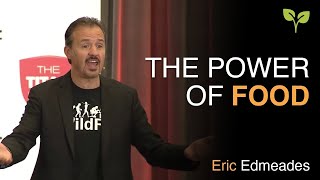
Eric Edmeades argues that "everything in moderation" is bad advice. Every species has a specific diet that determines its health. He uses elephants, cheetahs, and vultures as examples, then walks through how Western food systems and gaps in medical education drive chronic disease.
Chapters
In fact, one of my least favorite expressions, everything in moderation. I hate that expression, everything in moderation. Do you know what that means? Just play it out with me for a minute. Everything in moderation is the ultimate justification for daily exceptions to optimal living. That's what it is. Because somebody goes, oh, you want to have a piece of that chocolate cake? Come on. Everything in moderation. Why not crack cocaine then? I mean, if we're going to go everything in moderation, let's go with a little crack cocaine. Everything in moderation means moderate health. Everything in moderation means moderate health. I don't believe in everything in moderation. I'm an extremist. I'm also about food freedom, and we'll talk about that in a minute. I'm not saying you should never have a chocolate cake. The challenge for most of us is that we've gotten to the place where the exception is the rule. We come up with an exception at every meal as to why this meal is the meal where we can have a little bit of something and then the next meal, there's another reason, isn't there? We're going to talk a lot more about how that happened to us because we didn't do it to ourselves. But so as I got deeper into this curiosity about every living thing on Earth has a diet, I started thinking, what about us? I started watching. You know what's funny? Humans feed themselves their children. And who else? Who else do we feed? We feed ourselves. We feel. We feed our children, we feed our pets, and we feed our livestock. Oh, incidentally, we, our children, our pets and our livestock are the sickest animals on Earth. They suffer with more disease than any other animals on Earth. If you are fed by humans, I'm sorry, humans aren't very good at that. You know, when it's about profit. As soon as food became about profit, we were in trouble. As soon as food became about profit, we were in trouble. All these evolutionary principles. You know, why? Do you know why bad is easier than good? Because bad means super high caloric load. A lot of times, so your body goes, oh, wow. Massive caloric input with little effort. What will your ancestors have said about that? They'd be in. Imagine we take a species that has an evolutionarily designed craving for a food, and. And then we design a food that tastes just like that food, only it's poisonous. What do you think happens to that species? Health is a really important thing, isn't it? Isn't it? But if you were to look around at the average person in The Western world. Would you think that they think health is an important thing? No, not until they want to buy it at the end. Right. You know, the way people are living, it doesn't seem like it's so important. And so as somebody who's really thought a lot about how to impact people's health, and then, you know, the first step in impacting somebody's health is getting them to want to impact their health. And so you have to figure out what the reasons are that people want to get healthy. And it turns out there's many of them. You know, for some of them, it's crazy stuff. Like, some. Some of them, it's just like, well, they want improved cognition. They want to be faster with their mind. Does that sound like a good reason? Yeah, sure it is. And then some people, they just. They just want to look sexy, don't they, James? They want to look sexy. That's why they want to get healthy. You remember this morning he said, is it okay to work out, to get. Oh, he said to get hot. Right. He wasn't talking about temperature. And so there's a lot of different reasons. How about more energy? Who would like to have more energy for their family, for their kids, for their life? Yeah, there's a lot of reasons. And in fact, when we were discussing all these marketing reasons, I mentioned something funny to my wife. Now, I don't do this out there in public, but in here, can we have a private chat? So I was talking to my wife about this, and she says, eric, like, when people suffer, when people go through dramatic weight loss, the changes to their body are incredible, aren't they? They're really incredible. When somebody like many of our clients have lost 50, 100 plus pounds, do you think that changes some stuff for them? You know, like, there are people out there that. They've got this thing here going on, by the way, which is not their fault. I want to be really clear about that. If you ever, ever see somebody who's overweight, you need to understand something. It is not at all their fault. We will talk about why it's the food industry's fault, but it is not their fault. And shaming them about it does not help. Telling them move more and eat less is not helpful. There are deeper things going on, but the fact is there are some people out there, they've got this. And it means that when they look down, there are things they can't see. Like their feet, for example. I don't know what you were thinking, but. So my wife and I were Talking about that. And it turned out I said to her, well, what's interesting about men is that when they gain weight, you see, as their body expands this way, there's one part of the body that starts looking smaller because it starts getting absorbed into the body, right? So you know what we're talking about, right? Penis. And so it starts getting smaller as the body starts coming out like this. So when somebody loses weight, you know, for every £15 or so, they gain like an inch. Like, they gain. That's how it is. She goes, you gotta put this in the marketing. She's like, you gotta. We'll be billionaires. You've gotta put it in the marketing. I go, no, no, we're not putting that in the marketing. They're getting that email already. That's expensive traffic to buy, really, isn't it? We're not getting into that marketing. But the funny thing about this was I just told her this. And we were hosting a retreat at our home. We have this annual life planning retreat that we do. And one of our good friends, Perry, he was coming to the retreat. Now, Perry is a very big Nigerian man. He's very big. And he walks into our house. He walks in, I couldn't believe it. We hear the door. He comes along. He walks in, he opens the door and he goes, eric, Elise, I can't believe it. I have to show you. This WildFit program is amazing. It's amazing. And we're like, whoa, dude. He's like, look how many extra holes I had to put in my belt. So. So there's a lot of reasons that people want to get healthy. Some are deep, some are a little more shallow. Some are. But in this room, in this room, there's one thing that's really clear to me and that is there's a bunch of people in this room that want to do big things. Is that true? They want to do amazing things and have a significant impact. How many people in here want to have a significant impact? Excellent. How many people think that with more energy they could have a bigger impact? How many people think that if they got sick less often, they could have a bigger impact? How many of you have ever been, like, on a run, things are going really well, and then suddenly the flu got in the way? Anybody ever had that happen? Well, what I want to suggest is that what we're here today to talk about is how to have a bigger impact, how to have more energy and have a much bigger impact in the world. And so here's an example. Let's See this guy, he can have a pretty big impact. Young man, looking good, then he lives a Western lifestyle, by the way, he comes from Estonia, this man, and most people in Estonia look incredibly fit and healthy. But you know what's moving to estonia? That's right. McDonald's, KFC, all that stuff's on its way. And so then what happens to a man like him is that he ages, same guy. Can this guy have as big an impact? Well, if he sits on you right, like, it's going to be a big impact. But here's the good news. Here's the good news. That's not the direction his transformation went in. That's not the direction it went in. It went the other way. It went totally the other way. Three months, no exercise. No exercise, no counting calories, no supplements, nothing. Just changing his relationship with food. He bumped into a buddy of his from military service. He's in his 40s, he's bumped into or late 30s. His military service buddy walks up to him and he goes, oh, my God, you haven't changed a bit. Then he goes, well, there's the middle of the story. You should see, right? The issue here is that this guy can have a much bigger impact on the world. Do we agree? And then some of you might know this guy, Paul Shealy writes about speed reading and a bunch of really. He's a really, really great author and a great speaker, and he's a very good friend of mine. And he did our Wildfit program, and then he went to go do a webinar and he looked on the landing page and he said to his marketing team, who's this guy on the landing page? And they said, well, that's you. It's a picture you sent us three months ago. And he goes, no, that's not the me I'm looking at in the mirror. That's how much he changed in three months. Now, I want you to know, Ritva, I'm not gonna go through all these. There's many. Actually, there's one more I will show you because it happened just yesterday. One of yours. See, last year I came and checked out the Titan Summit for the first time. I sat back there and watched what was going on, and I was amazed. And so a handful of titans joined us on a little pilot project last year. So some of you might remember this gentleman. Where are you? Yeah, there you are. He walks up to me with the biggest smile and he's like, I just did your program and I lost £25. And I'm telling All my friends. And so he said, you know what? Can I add a slide to my presentation? Thank you so much. Can we give him a big hand? So I want to breeze through some organizing principles so we can get to some actionable stuff. Does that sound good? Okay. First thing is, when I was about 21 years old, I was living in Vancouver, Canada, and I had been sick for 10 years. I had been basically sick for 10 years. All kinds of different things, from allergies to stomach cramps that would be so painful and debilitating that I couldn't think when they were happening. I had cystic acne so terrible that if I smiled, it hurt. I had tonsils so swollen that when the doctor looked into my throat, his face would go white, they were so swollen and constantly bleeding. I was sick, and I had tried everything. Injections and creams and pills. And now surgery, they were telling me, was next. And I tried it all. And one day. And you know, the funny thing is, when you're sick like that all the time, you don't think of yourself as sick. You just think of yourself as you, because your comfort zone becomes that. So mostly I kept going to see doctors because my mom kept saying, well, you could get better. I'm like, well, this is me. I've been like this for years. 10 years. What difference is there? And then one day, a couple of friends of mine sat me down, and they're like, you know, Eric, we think that you might benefit from, you know, reevaluating your relationship with food a little bit. I'm like, why? I'm not unhealthy. You know, I eat like everybody else does around me. And they said, yeah, but maybe you could change a few things. So I changed a few things, and a month later, I had lost 35 pounds, 15 kilograms. My acne was completely gone after two weeks. Only I noticed something. Any of you who suffered with acne, you will know the difference between new and old acne. And I noticed after two weeks, I had no new acne. I only had old pox. And two weeks later, it was done. The stomach cramps completely went away. The headaches went away. The throat infections went away. My doctor's office called me up and said, are you ready for your surgery? That was booked. And I said, no, I'm not going for the surgery. And they said, why not? And I said, because the pain is gone. It's over. And they go, no, no, it does that sometimes, but it'll be back. I swear, it was like my doctor had gone to the Same sales training course that the used car salesman went to. Oh, come on, the pain will be back. You should just buy now, you know, and, and, but you know what was fascinating? And by the way, I have no disrespect, I think doctors are some of the most amazing people in the world. If you can devote that much time, effort, resource, studying to help people, you are an amazing person. It's a shame that maybe the educational system that you gave all that time and education that time and focus to might not have been ideal in some ways. Is that true? Yeah, it's harsh to say, but it might be. And so I don't really judge my doctor for what happened next. But you know what really amazed me was that he wasn't curious how I did. Never. He, I mean, he looked at me, I'm 35 pounds lighter. Believe me, that shows up on a person. He didn't ask any of this stuff, wasn't curious. That made me curious. And so I asked him, can you imagine 21 year old, by the way, when I was 21, I looked 12. So can you imagine me asking you, you're the doctor. Excuse me, can I. How long did you go to medical school? Can you even imagine asking that question? Six years, it turns out. I said, in that six years, how much of that time did you spend studying food? Would anybody guess at the answer? 0. 0. I have now asked that question of, I can't even tell you how many doctors around the world, in 20 countries around the world. In fact, I was at this event in Germany. There's over a thousand people in the audience. I'm doing a talk about health and food and stuff. And I made this comment about then. I had never asked the question in Germany before. I said, is anybody in the house a doctor? Do we have a doctor in the house? And yes, we did. And I said to the doctor, I'm curious, how long did you go to medical school? Six, eight years. How much that time, cameras on him, public in the room, how much that time did you spend studying food or nutrition? None. Now, how many of you would take your car to an auto mechanic who had never studied oil or gas? Think about that. How is that possible? How is that possible that they are not studying the single most powerfully influential force in your health and they're not studying it? Frankly, that makes me angry, not at them, but at the educational process that they go through. Every now and again, I've bumped into a doctor that has studied food. And there's only two ways that it's Ever happened so far? The one is they took an elective. Yeah, that should be elective, don't you think? You're gonna be a doctor. Maybe you should. There's a cooking class. You should take that. And the only other way is that they saw the fallacy of it and they decided to study food and nutrition after. I have a huge amount of respect for that. Some of you are, like me, old enough to remember bg. Do you guys remember BG before Google, you know? Cause these days you have a question and you just go, hey, Mr. Google, what's going on out there? But, you know, I had this question, and this question was about food and diet and health and stuff, but there was nowhere to get an answer, really. And so this question was just brimming in my head all the time. And then I found myself on a plane headed to South Africa doing a photographic assignment for an airline. And I do a lot of wildlife photography. And I'm very passionate about Africa and the bush and conservation. And I saw in the In Flight magazine an article, and the article was about elephants. Who likes elephants? Yes. They don't like you, just to be clear about that. But the fact is that elephants are truly amazing animals. And you know that over 100 years ago, we started capturing them and putting them in zoos and circuses. And when we started doing that, we found something interesting about them, that they would only live 7, 8, 9, 10 years. This didn't make anybody question what was going on, because, of course, a big dog only lives that long. A big Great Dane might live less than 10 years. So we. Why should an elephant live any longer? They didn't know different. They didn't understand nature back then. And then at some point, somebody started studying elephants, and they're like, oh, my gosh, elephants can live 70 to 80 years. And so all the zoo and circus owners, they became deeply, deeply concerned about their investments, and they started studying the wild elephants. In this article on the plane, I'm reading it, and started studying the wild elephants and trying to compare the difference. Why were the captive elephants only living this long and the wild elephants were living this long? And then the guy who's writing the article, he starts talking about the wild elephants, and he makes a grammatical error in the article. He says that the captive elephants were not on the wild elephant diet. The elephant's wild diet. I'm like, whoa, whoa, whoa. I wanted to grab my red marker and circle that, because that's not correct. The elephants don't have a wild diet. What do the elephants have they have a diet? If you're going to watch, you know, if you're going to watch National Geographic, you'll have the person, come on. For some reason, you know, they always have a British or South African accent. You've noticed this. And they always explain. They go. And the elephant's diet. They don't go. The elephant went on a diet. Right? They say the elephant's diet is to eat 200 kg of fresh bark and grass and fruit every single day and drink seven liters of water. Huh? I'm reading this and I'm circling the articles. I want to circle it. It's not the wild diet, it's the elephant diet, Man. Give me all the copies on the plane. Let's fix this right here. And as I'm having this grammar fascist moment, I realize that this is a mistake we make all the time with humans. Every species on Earth has a diet. Every species on Earth. Oak trees have a diet. Cheetahs have a diet. They eat 2.5 kilograms of fresh meat. They won't eat carrion. They won't scavenge. Leafcutter ants have a diet. What do they eat? You would think so, but no. No. They cut leaves and they bring them home and they farm them and they farm aphids. They're agriculturalists. They're actually agriculturalists. Every species on Earth has a diet. And to the degree that species is on that diet, that that species will have optimal health. And to the degree that that species is off that diet, that species will suffer at an individual basis and even at a species level. This really fascinated me. And then further in Africa, I went to go do some. Yeah. Isn't this a beautiful picture? I wish it was a little brighter for you. Gorgeous elephant. And then how about the baby? That sound every time. I don't know. I don't. That's the sound of oxytocin. That's that sound. And then there's this cheetah. How fast can a cheetah run? Do you know that there's only one car, there's only one production car in the world that can outrace a cheetah from 0 to 60 miles or 0 to 100 kilometers an hour. What is it, Tesla? Nothing. You know, your standard production Porsche. Can't do it. Can't beat the cheetah to 100 km an hour. Can you imagine that? That's an incredible feat of evolution. So I went to go do some research and I'm doing some photography with cheetahs and I find out that they're breeding them because of course, you know, I don't know if you're aware of this, but we're obliterating a lot of mother nature. I don't know if you've seen this in the news at all. And so, you know, they're breeding them to try to release them back out into nature. And, you know, what they found is that they couldn't get them to breed. They also breed African wild dogs. That's easy. You take a male dog, you put a female dog, you put them in the pen and they make puppies. It's really straightforward, really easy. Cheetahs, it's more complicated. They found that there's some rituals you have to go through. So what they do is they create lovers lane, which is a road with pens all along the side with the male cheetahs in the pens. And they're huge pens, they're big. And then they have the female cheetah and they have her on the leash and they walk her up there and she, you know, checks out this pen, smells around a little, finds out what he does for a living. You know, comes over here, checks out this guy's driveway. You know, she's going up there checking out what's going on. Can this guy make me laugh? She's got it, she's got criteria. And then eventually she picks one of the cages. They can tell she has signals. And then she picks one of the cages and they open the cage and they let her in and they unclip the leash and they close the cage. And then she goes in there and either she mates with him or she kills him. It's a bit like human dating. Similar similarities. Right, now they got them going. They got them going through the motions, you know what I'm saying? Here, Little hanky panky, little kitty hanky panky was happening, but no babies. Nobody was getting pregnant. And so then they brought a vet in to do live blood analysis and they took a look at their blood under microscopes and they compared their blood against the blood of wild cheetahs. And they found something fascinating, that the wild cheetah's blood looks like it should. Little beautiful discs of pink flowing around with little dimples in them, doing what they're doing. No spikes, nothing. No weird parasites. It looked good. The captive cheetahs, their blood was stuck together. Stuck together and moving, sludgy. And slowly, spikes, streams of fat in the bloodstream. Odd, because the cheetahs have a diet. Does anyone remember what the cheetah's diet is? 2.5 kg of fresh meat? Well, the captive cheetahs were getting 2.5kg of fresh meat and the wild cheetahs were getting. So what's going on here? Well, the cheetahs in the wild are hunting antelopes who can also just about outrun a Tesla. The captive cheetahs, sorry, the wild cheetahs were hunting. The captive cheetahs were getting donated cows and zebras or, sorry, horses and other livestock. And a wildebeest or an antelope or a zebra is about 4% fat and a cow is about 40% fat. That was the problem. Diet is unbelievably specific and it has repercussions that you don't necessarily feel the next day for, but that you will feel in your lifetime cumulatively. And just to make the point a little further, on that same trip, I read about the Mahalisberg vultures. They live high in the cliffs in the Magalisburg Mountains behind where the cheetah place is. And you know, like most of wildlife, their numbers have been coming down, down, down. And the local farmers, they were quite nostalgic for the vultures. They missed seeing them in the sky, so they wanted to do something about it. They figured the reason that the numbers were going down was that, you know, with all the farmland expanding, with all the farmland expanding, that there just wasn't enough wildlife around and, you know, there weren't enough hyenas. And so because of that, there weren't, you know, that that was the problem. So what they did is they went into the forest and they cleared out the trees. And then they would, every now and again, if a horse died or if a cow died or whatever, they would take it and they would put it in the field and leave it for the vultures. That's what they would do. And the vultures would come down and the vultures would eat. But the vultures numbers continue to fall. So it wasn't that they weren't getting enough food. There was something else missing. And so suddenly somebody thought this through and they were like, oh, you know, if you think about it, does the vulture, I mean, does the vulture ever really get to go to the fresh kill and eat? Like, have you ever seen a vulture like kill a hippo? No. No. In fact, I saw a far side. You guys remember the far side? Gary Larson comics saw this far side comment. And there's a dead hippo on the ground, feet up in the air, and these two vultures, you know how vultures kind of look like they're in a tuxedo? Sometimes, you know, they love a collar. And the two vultures are standing there going, do you know when this place opens? Because vultures can't open a hippo, they can't open an antelope. They don't. And there's only one that can. A lappet faced vulture has a very, very strong beak and he can kind of do it. But mostly they can't. When does the vulture get to eat after? Who? Lion, hyena, Other predators. Right. And by the way, are pit bulls pretty tough? They're pretty tough, right? Okay. A hyena makes a pit bull look like a small French poodle crossed with the smallest chihuahua you've ever seen. Hyenas are incredibly strong. They can crush a giraffe's thigh bones, which is like the size of my thigh. Right. They're powerful. And so by the time the vulture gets down there, what is the vulture eating? Sinew marrow bone shards. Somebody was watching the vultures one day and there was a baby vulture getting ready to take its first flight. And it got out on the edge of the stage. Okay, Cliff. And it got out on the edge of the cliff and it went, and it went to take its first flight. And as it came off here, wings snapped from its own body weight in the air and it fell to its death. That's what was happening to the vultures. Now this happened to the condors in the United States 20 years ago. Some of you might remember because of what? DDTs, pesticides. But there were no DDTs in use anywhere near this area. So it wasn't that. So what do you think it was? Why are their bones breaking? No calcium. Because they weren't getting enough calcium. They were getting the meat, but they weren't getting the rest. So now the farmers would take. This is a little harsh, but the farmers would take like an old dead cow and they take it up there and they'd cut it all up and they'd take sledgehammers and smash the bones open. Now the vultures would come down and then their numbers started to climb. Diet is a specific thing. If you get it right, you reap the benefits and the rewards. If you get it wrong, you pay. That's how it is. It's a very, very specific thing. In fact, one of my least favorite expressions, everything in moderation. I hate that expression. Everything in moderation. Do you know what that means? Just play it out with me for a minute. Everything in moderation is the ultimate justification for daily exceptions to optimal living. That's what it is. Because somebody goes oh, you want to have a piece of that chocolate cake? Come on. Everything in moderation. Why not crack cocaine then? I mean, if we're going to go everything in moderation, let's go with a little crack cocaine. Everything in moderation means moderate health. Everything in moderation means moderate health. I don't believe in everything in moderation. I'm an extremist. I'm also about food freedom, and we'll talk about that in a minute. I'm not saying you should never have a chocolate cake. The challenge for most of us is that we've gotten to the place where the exception is the rule. We come up with an exception at every meal as to why this meal is the meal where we can have a little bit of something, and then the next meal. There's another reason, isn't there? We're going to talk a lot more about how that happened to us because we didn't do it to ourselves. But so as I got deeper into this curiosity about every living thing on Earth has a diet, I started thinking, what about us? I started watching. You know what's funny? Humans feed themselves their children. And who else? Who else do we feed? We feed ourselves. We feed our children, we feed our pets, and we feed our livestock. Oh, incidentally, we, our children, our pets and our livestock are the sickest animals on Earth. They suffer with more disease than any other animals on Earth. If you are fed by humans, I'm sorry, humans aren't very good at that. You know, when it's about profit. As soon as food became about profit, we were in trouble. As soon as food became about profit, we were in trouble. All these evolutionary principles, you know, why? Do you know why bad is easier than good? Because bad means super high caloric load. A lot of times, so your body goes, oh, wow. Massive caloric input with little effort. What would your ancestors have said about that? They'd be in. Imagine we take a species that has an evolutionarily designed craving for a food, and then we design a food that tastes just like that food, only it's poisonous. What do you think happens to that species? Well, I'll give you an idea. Check it out. Do me a favor here. I want you to pick a number between 1 and 3. Go pick a number between 1 and 3. Stand up with your number between 1 and 3. Stand up in your head. What's your number? Stand up. Don't say it out loud just yet. All right? If you pick number one, you are roughly the one third of the people in this room that unfortunately represent the roughly one third of people in this country and in the United States and in the Western world that will die cancer. So you should all sit. Everybody pick one. Sit down. Sorry about that. Now, if you pick number two, you represent the roughly one in three people that in this country and in the United States and in the Western world are going to die of heart disease. So please sit down. Now, if you pick number three, you're thinking, yes, I did it. Well, what I'd have to do now is have you all pick another number between one and 10, because one out of 10 of you will live along life with a pleasant ending. You'll die. What I like to think of as a Stephen Covey death. If you don't know the story, it's so beautiful. He was in a bit of an accident. They thought he was coming close. And then he recovered. And in his recovery, all his family was around because they thought he might be in a bit of trouble. And then he recovered and he was fine. He was having dinner with his family. And then that night he got tired and he went to bed and he called his family. He said, would you guys just bring everybody up, please? And by the way, he was a Mormon. So the family was big. I think 11. I think it was 11. I think 11 brothers and sisters. In any event, they all come upstairs and they all get to say goodnight to him, and then he went to sleep. How's that? One in ten of you get that. The rest of you, how about this? Would anybody like to die of an iatrogenic death? Would anybody like that? Who knows what an iatrogenic death is? Does anybody know it's the fourth highest killer in the world? Fourth death by doctor. And the rest, about three out of the 10 of you are going to die of some of the respiratory disease. A bunch of you are going to have blood sugar problems. I'm sorry, I'm not a motivational speaker. I'm a realist. Now, the good news is this, you get to choose. You don't get to choose exactly the outcome, but you get to choose the likelihood of the outcome. Does this make sense? And so if you're ready to choose a really awesome outcome, then you can also sit down.
More from Eric



Eric Edmeades: The Speaker Your Audience Will Still Be Talking About Next Year

Eric Edmeades: The Speaker Your Audience Will Still Be Talking About Next Year


A free class on Stop Style Profiles, habit cessation and behavior change by Eric Edmeades.




