Eric Partaker - CEO of the Year 2019. Formerly Skype, McKinsey & Co. and Co-Founder at Chilango
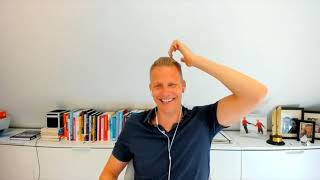
Eric Partaker went from McKinsey and Skype to founding Chilango, then became a CEO coach after a heart attack on a flight in 2010 changed his priorities. He shares the 80/20 principle to beat perfectionism, a morning routine that puts creative work before reactive tasks, and data showing task-switching costs 13 weeks a year in lost productivity.
Chapters
Eric Partaker. How are you?
Very good, Simon. I'm trying to keep cool with this unusually hot weather in London, so.
Yeah, yeah, I think it's just about 30 degrees, isn't it?
Yes. Although with this little air conditioner I bought for my office here, it's a little bit cooler. It's just that you can barely hear anything besides the air conditioner.
Well, welcome to the first live interview that we've done outside of my living room. As you can see, we are back in the office to an extent that we first connected on LinkedIn. Good old LinkedIn which we were just talking prior to this about being the lifeblood of our business now really in terms of accessibility to the market and being able to advertise our products and services. We connected over a passion of, well, being, working far too hard and possibly discussing burnout, etc. And the sacrifice that some people do when they work that hard. And then you were CEO of the year, which surprises me. You've put that right at the top of your LinkedIn. I mean, what a thing to put up there to do that to the rest of us mere mortals. I thought I'd, you know, introduce you. You've had businesses, we're also brush along Skype, which you've worked with because that is incredibly relevant now in this market. So take us from the start.
Yeah, yeah. So I mean, I say to my 15 year old son that when he asked, well, what should I consider doing when I grow up, I say, well, look, the John Lennon quote, life is what happens while you're busy making other plans. You know, you can do just about anything you want if you just work hard at it. And if you would have told me 25 years ago that I would have gone from consulting at McKinsey Co. To helping build Skype before we exited, to ebay, to building a chain of Mexican restaurants, to doing performance coaching for CEOs and entrepreneurs. I would have thought you were smoking something. It just certainly wasn't what I expected, but it's just flowed in that way. And the. I kind of, I kind of look at my professional career in two halves. So. And it really starts in the middle in terms of describing these two halves. And it goes, you know, I'll tell you a story. So I was boarding a plane in November of 2010. Yeah. About 10 years ago, shortly after the cabin doors closed, I could feel something wasn't right. Plane began descending and I had a lot of pressure in my chest and soon the pressure became pain went down my left arm, left Arm went completely ice cold. I had a friend and colleague sat next to me and started to get really worried. At that point I asked him, I said, louis, do you just feel my arm? This is. Something's not right here. And just the look on his face certainly didn't make me feel any better because he said, well, it feels like your arm's been hanging in a meat locker. It's completely, completely cold.
Wow.
He runs to stewardess, stewardess runs over to me, sees that I'm really unwell. Asked, there's a doctor on board. Doctor rushes over, takes my vital signs and says, we need to emergency land the plane. I think he's having a heart attack. And when you hear those words 35,000ft up in the air, it's not exactly what you want to hear. You're about as far away from safety as you can imagine. And it seemed like an eternity for the plane to land. I was terrified that my heart was gonna, you know, completely stop right before getting to safety. And I just remember thinking, you know, please fly faster, faster, you know, just, just get down and. And we ended up emerging. Emergency landing in a. In a town in our city in France. They had shut down the Runway to accommodate the landing. And I googled later, I was just curious, you know, how much does this cost the airline? And apparently cost about £150,000. My ticket was about £150. I don't think they did too well off of me. The plane lands. Emergency response team boards the plane. I vividly remember this. I don't know if they're Chinese or Japanese, but, you know, I remember this family next to me and they just burst into tears as I was being carried off in the stretcher. I mean, I think they were worried that they were about to witness somebody dying. And I got taken into the ambulance that was waiting. They administered nitrates. He opened up the arteries. Ambulance speeds off to the local hospital. Really the epiphany moment came when I looked up at the eyes of the French paramedic looking down at me and I said, please don't let me die. I have a five year old son. And probably the next thing I thought was, I hope you speak English.
That's right.
But you know, in a moment like that, when you think it's lights out and you think it's game over, right? Whatever matters most, the truth reveals itself. And that was a pivotal moment for me because I realized that this obsession with achievement before that point was coming at the price of my health and relationships. And I nearly paid the ultimate price. And after that moment, I really went all in on trying to understand, well, how do you perform at a high level but without breaking down so high performance, trying to reach your full potential. That's been the defining characteristic of my whole career. It's just that for the first half of it, I approached it in all the wrong ways at the expense of everything. And in this latter half, I've approached it much more holistically.
So I'm going to take you back because I love this bit about your story, really because we talk a lot about when something happens, do you leave it in the past or do you embrace it, learn by it and bring it into the future. And actually that shapes and guides your, your well being and when you're present. There's two things I want to ask is that at that pivotal moment where it was all happening and from speaking to quite a few people on exactly this moment, what are you thinking? Were there any regrets? Was there anything that came to light that you thought, I wish I'd done that, or I, you know, when people see that, they see their whole sort of life. And some people have thought it wasn't worth it. I've not been worth it, what I've done. What did you think? How did you digest that moment?
So, yeah, it's a really interesting question. So I didn't have the whole life flashing before my eyes feeling, to be dead honest, I was really scared. I was, I was terrified that, you know, I was gonna die. So there was that one belief. The other belief was I can't believe. I can't believe this is happening. I can't believe I did this to myself. And so a bit of guilt, right? So we got fear, we got guilt. And then the third feeling was, you know, sadness, right. So I was really worried that I wouldn't ever see my boy again. Right. And yeah, and you know, that, yeah, that thought that the next time he sees me, you know, I might be just in a coffin. Right. So, yeah, I mean, it's a great question. You know, I've never really distilled it down into those words, but I think it's fear, guilt and sadness, at least for me. And what I think what was so special for me though in that experience was that moment looking up at the paramedic when, as I said, the first thing that came out, because there's no chance for premeditated thought in a situation like that. It's not like, oh, I was waiting for this moment. Here we go, here's the line. I've been practicing this. Yeah. You know, I mean, or, you know, put it this way, it's not like if you're suddenly given five more minutes on your deathbed, you'd be like, oh, thank God, you know, would you mind passing my laptop so I can fire off a few more emails?
Yeah.
So, you know, my, my words were, please don't let me die, I have a five year old son. And the fact that that came out of my mouth unprompted was the most powerful thing that happened to me because I reflected on that sentence so many times. You know, why did I say that? What does that mean?
And let's take this one step further then, because you and I said we could both talk together for hours. So we've got a rough guide to this and we'll see where. Because where I want to go now is that you've just said fear, guilt and sadness. So it's the fear of not seeing your. Sorry, what's your son's name?
Alexander.
So it's the fear of not seeing Alexander or Alexander seeing you like that. So I'd like to know what are you doing to. If that was your biggest fear at your biggest moment, what have you done to overcome that and to make sure that you maybe have increased longevity? Guilt. Why, why are you guilty and what have you done to shape that one? And sadness. Sadness at what and where does that. I suppose, because if they're your three most poignant thoughts right in your last second, it's a pretty much a guide now to shape what is really important to you, isn't it?
Yeah, yeah, yeah, Great question again. So let's, let's start with the first. So that the fear bit was, was more about squandering my potential in life. You know, the fear of dying before having become or experience all the things that I could become or experience. That, that relates to the guilt point because the guilt point was that I felt guilty for being almost entirely focused on, you know, work hard, play hard, lifestyle. Right? So working, you know, 12, 14 hours a day, grab some drinks after work, you know, that can happen anywhere from two to four times in a week. And just being absolutely worn out. Right. Just not having the proper energy that you need to, you know, to be living a good life. And so the guilt was that I was doing this to myself, that I had done it to myself. The answer to the guilt piece. Well, yeah, let me go back to the fear piece. So the answer to the fear piece has it didn't manifest immediately, but it has more fully now. But it manifested in that I started to go quite deep on, well, what do we need to be doing holistically to succeed not just at work, but also on the health and the home front. Because when I'm working with CEOs and entrepreneurs right now as a coach, I mean, one of the things I invariably find is that people don't just want to be high performing leaders, they also want to be fit and healthy. They also want to be great spouses and parents.
Yeah.
And so I just started to study that and started to reflect on, whoa, if that's the ideal, you know, what could I be doing differently? And it ended up manifesting in a really simple tool that I still use to this day. And I talk about, I have a book coming out in September called the Three Alarms. And I talk about these three fronts, right? The work, health and home fronts. Because this is the 8020 for life, right? Our health, wealth and relationships, however you want to describe it. And years ago, I decided to define, well, what does the best version of me look like in each of those areas, gave that a name. For health, I said, I'm a world Fitness champion. For work, I said, I'm the world's best coach. And for family or home front or relationships, I said, I'm the world's best husband and father. Now, am I actually these things? You know, probably not, to be honest, you know, but do I aspire to be better and, you know, close the gap? Absolutely. And what I did was I took that name and went into my phone and you can go into an alarm and you can change the name or the label on an alarm. You can give it like a phrase. And so at 6:30am Every single day, World Fitness Champion goes off as an alarm on my phone just to prompt me to switch into that identity. How would that version of me respond to, oh, should I go to the gym or not? And then when that version of me shows up in the gym, how did that version me work out? And then similarly, on the work front, 9am, it says world's best coach to kind of prompt that intentionality, how would that version of me show up? And then the game changer for me, though is 6:30pm, world's best husband and father. The prompt, the question, well, how would the world's best husband and father walk through that door right now? So that fear translated into me taking more holistic ownership in a very intentional way across those three dimensions. You know, health, work and home, or health, wealth and relationships. And using that simple alarm tool to prompt an Intentionality there.
So as I say it, you've got to a point where you're fearing that you squandered this thing. You know, you had an idea of what it was to be perfect perfection. You're not angry with the fact that you were going after perfection. It's just your. Your guise of what your idea of what perfection was has changed. So it was perfection there, and everyone should, you know, but it was actually over here that you realized that it was work, health, and home, and that you had to subdivide those three as well.
Yeah. And that it's not even perfection, that it's just about continually making progress.
Perfection isn't possible. No, I mean, the sooner everyone knows that, and I've literally just made that up. So hang on, I'm writing that down because that's my book when it comes. But there's no such thing as perfection because you set a world record and someone will beat it, or you set a world record and you've done the sacrifice of all that training to maybe a relationship. There is no such thing as perfectionism.
And, you know, it's interesting we talk about perfectionism because that was something that I identified as my single biggest development opportunity. Right. So I started to look at things holistically, but I also started to realize that I was still being quite perfectionist.
Yeah.
With everything I was doing. There's lots of things that you can do to combat perfectionism. The 8020 principle, I think, is the 8020 solution. Out of all the things that you could do to combat perfectionism. What I mean is that there's a myriad of things that you could do to combat this, but the 8020 principle is the 20% of things, if you will, that will solve 80% of it for you. And I started to just think about that at a micro level throughout the course of my day because I realized that I was spending far too long on everything. Right. I was taking too long to write an email. I was taking too long to compile a list of various books that I want to research on a particular topic. I was taking too long to write a report or complete a presentation.
Don't get me onto LinkedIn posts.
Yeah. Taking too long to craft that LinkedIn post. And the 8020 rule is beautiful in that it says, okay, well, what's the 20% of effort that you could put in that won't yield a perfect hundred percent result, but that will yield 80% such that you can move on to the next thing. And the act of doing that, the act of Pushing things out that are, say, 80% good enough helps you deal with that perfectionism.
And I do think that, again, with all this authenticity around Covid, the fact that everyone realizes everyone is normal now and unpolished, that people like that, just putting something together and getting it out there, because it shows you really what you're like before you've had the chance to mask it over with that veneer of perfection. And you know what? Perfection is not normally your. It's not normally perfection. You're thinking it's perfection because you're thinking that somebody else might find it perfect. Like, perfection is a really nice car in a really nice house in a really nice. But actually what makes you happy really is just probably spending time with your kids, especially after what you've been through. And it doesn't really matter where you are, in what environment, to an extent. So this idea of perfection is usually through eyes that have been hardwired from everyone else's. You think it's everyone else's idea of perfection.
There's a great book called the Rhythm of Life by a guy named Matthew Kelly, and he talks about when it relates to quality time. Right. We always want to spend quality time with our. With our loved ones. And he suggests a different tact, which I've really subscribed to, which is that it's more about carefree timelessness. Yeah, carefree timelessness. And what he means is that instead of trying to quick, you know, tick off the quality time spent box with the spouse or with the child, just spend a good chunk of time with them. One hour, two hour, three, four hours. Such that spontaneously, during that time together, a quality moment, conversation, laugh, you know, story will just emerge, you know, without you having to say, okay, we're doing our 15 minutes of quality time now.
Just after breakfast and before I preach for that interview.
Yeah, yeah. So, yeah, so the, you know, the perfectionism is something that was a massive deal for me. But, you know, I've had professional experiences, too that have helped me as well along the way. So when I was helping build up Skype, you know, that. That was so successful because of our approach to embracing imperfection. So we are constantly trying to ship, you know, the new version, the new product, get feedback on it, improve it, and do that through as many rapid iterations as possible possible. And so that almost like that focus on imperfection, you know, led to that, what people perceive from the outside to be that perfect result.
You know, whatever happened to Skype? I'm joking, by the way, because it must be one of those that are booming at the moment.
Well, I mean, so I'm going back 15 years ago when I talk about my Skype story, you know, what's happening to it nowadays. You know, frankly, I not connected enough to it to know.
But was there 30 staff, did you say, when you.
Yeah, when I joined, we were about 30, 30 people in the London office. We grew to around 500. We sold to eBay for $4 billion. I mean, all of that sounds perfect. But again, it was achieved through this imperfect focus on just keep shipping as rapidly as possible the next version of the product, continue to improve it. And I think that's an approach too to take with our lives. Right. How do you continually ship on a day to day basis? The very next imperfect version of yourself? Today is V1. What does tomorrow V1 1 look like? And then 1.2 and 1.3. But as you know, you get to 1.9, you just go to 2.0 then. Right. So it just keeps going and we never, we never achieve it, really. In the end, my obsession which led to that plane incident was largely driven by the thought that I could achieve it. You know, I could get there in the end. On the other side of that, you know, I realized that, no, it's, it's more about literally just realizing that it's all about making progress.
Yeah, but what you've just said sums it up. I don't know if we've just realized this. You know, the ideal is that you go from 1.1 to 1.2. This is how Skype Bill ended up selling to eBay for 4 billion, 1.3, 1.4. What some humans do and what we tend to do and what anxiety breeds is that especially if you have a down period in your life, a lot of people do and they try and race forward, then they try and it looks ever so more daunting to get to the top of the tree because they're thinking, how can I jump straight up there Rather than going up through those steps. What I see a lot of people doing is they don't go 1.1, 1.2, 1.3. They try and go to 1.1 to 3.6, and they try and give up this and they try and work 18 hour days and they try and do everything else and suddenly realizing that they haven't had that skill set in between and it doesn't work.
Yeah, I'm willing to sacrifice what might be a momentary feeling of brilliance in the short term achieved by working a string of 18 hour days for the consistency and kind of winning the race in the long term by working a little bit less. Some of the principles, there's been a handful of things which I have implemented which I think, you know, literally any entrepreneur or leader or CEO should think about to help stave off, you know, burnout, to help make sure that you're keeping things balanced. And I just wanted to share a few of those because I think they're hugely impactful. I mean, you know, when I talked about that identity piece and I encourage anybody listening, watching to really think, well, what does the best version of you look like? The health wealth in our health, work and home fronts. Give that version of yourself a name. Think about putting those alarms in on your phone so that they can power that best Self identity can power the relevant segment of each part of your day and use it as a prompt. Am I behaving when that alarm goes off like that? Am I not? How do I close that gap? So there's that piece, but there's also about high achievers, peak performers. They're always wanting to do more and they're always wanting to be more productive. And I really encourage people to just design productivity in their days. And I do that with a trifecta that I love to tell you about very quickly here. So one is I recognize that a productive day doesn't begin the day of, it begins the night before. And so I make sure that I have a really strong evening routine. This is a game changer. Seriously, if you're watching or listening to this, if you implement this and follow this for a week, you will see results. The evening routine simply has two components. You have a shutdown ritual, which is a static appointment in your calendar. It's an appointment with yourself that you honor, just as you would with someone else, where you're always going to do the same thing. You're going to shut down your day, but you're going to do it by taking a final look at your to do list. There are any action items to, you know, to update. What does your calendar look like for the next day? Final check of your email and here's where it gets key what are the top three things you're going to do the next day? And then lastly, where will you do those things? Dropping those top three things that you've decided the night before into the white space of your next day as appointments once again with yourself. And when that time comes up, you stop, just as you would if you're meeting someone else and you do that thing. You don't Take a phone call during that time. Just as you wouldn't take a phone call if you're meeting with someone else. You don't just suddenly leave the appointment. Just like you wouldn't leave with somebody else. You do that thing. Second part of the evening ritual that I do is a digital sunset. Real simple. One hour before bed, all electronics off. Why? Because any blue light from your electronic devices in the hour before bedtime will lower your melatonin production by 50%. Not enough melatonin, not good enough sleep, you won't be productive as possible the next day. What do you do, Simon? Do you have an evening routine of any sort along those lines?
Oh, you've crept that up on me, haven't you? Sorry, I was just writing everything down there. I mean, the beauty of this job with Moti is I've just got an insight into that and I'm already thinking tonight, okay, the digital sunset, what a lovely way to put it. And the shutdown ritual, I mean, it just means that you've got to be proactive. You've got to realize, first of all, going back a step forward, you've got to realize that your actions have consequences. And it's not a state of waking up in a certain mood. That's what I think a lot of people say they are. But I wake up tired, but I wake up in a bad mood. I don't know what it was, I just woke up like that. And a lot of the time you can just wake in a separate mood, but a lot of it can be controlled by the best day starts with the day before.
Yeah, 100%. If you really shut that day down properly, choose your top three for the next day, schedule them in, have those electronics go off an hour before your bed so it's such that you can get eight hours of sleep. You'll sleep so much better. You'll be more engaged with your family, you know, you'll. Yeah.
I have made some changes recently, but I'm not perfect. And I keep saying to people in well being, it's not about being completely teetotal, it's not about being perfect and brilliant and yoga at 4 o' clock in the morning and everything else. Because we want to do yoga at 4 o' clock in the morning, that's fantastic. But you might well be going to bed earlier than someone else who's a night owl. So what I have, I've tried to make various changes, which is giving up the booze in the week, which has made a massive difference. Even if it's Just one or two. As soon as I had a drink in the evening, it meant almost that the day's over. Subconsciously, it meant I was going from work time into social time. Even if I was sitting on my laptop until 11 o', clock, it wasn't really. So I just stopped. And it means I can either work more or like last night, I forgot my charger. I left my charger in the office and so I couldn't turn my computer on. And it felt like a holiday, honestly, because I then I couldn't work if I even if I wanted to. So I thought, I'm gonna do what normal people do. I'm just gonna relax, watch tv, go for a walk. And it was lovely. It was really nice. So my sleep is suffering at the moment, so I'm. So that digital sunset, I think, may well be a key for me because it takes me a while. I've almost written off going, you know, being able to drop off straight away, but the drink is a lot. And running, I've just taken up running, which is, you know, say, a savior for me during lockdown. And there was one other thing that slipped my mind. But, yeah, I'm making conscious efforts now.
Yeah. And the how you start your day is you talked about, well, you don't need to do this, you know, 4am routine or the 5am I think you're exactly right. You don't need to do all these latest, you know, things that people are raving about in terms of how, you know, how you start your day from a routine point of view. But I do advocate that you just at least do one thing in terms of how you start your day. And that's my approach to the morning routine. And that's just to make sure that you're creative before you're reactive. And too many times, and I used to start my day like this all the time. People are starting their day in reactive mode. And what I mean is that you start your day by looking at your social media threads, by looking at your inbox, by browsing the news. And you're not starting your day on your own turn. Right. You're bouncing from somebody else's agenda, you know, one person's agenda to the next. So when you start your day creative before reactive, start working on one of those top three things that you chose the night before, do that at least for one hour before you open your inbox or any of that stuff. And it's hugely, hugely powerful from a productivity point of view.
The other thing going on, exactly what you've just said you've reminded me is I haven't watched the News for about three months because I watched it last night for about 25 minutes and everything was through the floor in terms of depression. I thought well what have I. It doesn't look like. I mean I know there's everything going on in the world but it just didn't seemed like the day I'd had out where people were trying to be positive. We were encouraging each other on social media at work and everything else and on there there's no encouragement, everything's worse. The reporters are using to trying to find the worst hyperbole to describe what could happen. That's not even that but could happen if it carries on, if these trends carry on, we could all go into anyway. And then the other thing is I'm guilty when I was hit my downtime, when everything hit the scale for a bit I was really guilty of comparison. And so as soon as you compare, you lose because you don't know what timeline they're on or what else they're doing. But social media still when I. When the alarm goes off and you grab your phone because invariably your alarms on your phone. It'd be lovely to find something with my alarm maybe on a clock and my phone's elsewhere because the first thing I literally do to turn my alarm off is grab from my phone. Then I go on to social media or used to until about two days ago and then everyone is doing better than you on social media because the very nature of their posting stuff means that they've either gone to a cliff edge to do yoga at five o' clock or watch the sunrise or they're on holiday. So immediately I think what have I done with my life? They've done all that and I haven't even woken up.
Yeah, I mean it's this, this is why I think it's so much more powerful decide, well, what does the best version of you look like? Right. In those areas that matter most. You know what the best person to be competing with is yourself. Right. Rather than others.
Well, I look where I was February 2019 to where I am now and it's amazing. Obviously I compare myself to someone else either in terms of materialistic, the way they look, how tall they are. I can fail miserably each time.
Yeah. Another interesting thing too is we've talked about how you end your day. We talked about like how you start your day. I also, and again I learned this the hard way. I don't think people pay enough attention to what they're doing once their day starts, you know, how are they actually working? Right. People are very, very focused on, well, everyone's focused on the morning routine. Few people think about an evening routine. I'm saying you should start with the evening routine, then have your morning routine. Even if it's just being creative before reactive. But nobody really thinks about their work routine. Okay, once the day starts, how do I work? What does that look like? And there's a really fascinating book. You might have read it. Have you read the book? The one thing?
No.
Okay, excellent book. And in that book they talk about some research. I think it was done out of Stanford University where they observed that the average worker. And this is in the US I'm assuming it would apply to the UK as well. The average worker was losing about 28% of their day to task switching. So what this means is it's 9 o', clock, I start working on a presentation. 9:07 phone rings. And now I'm talking to somebody for five minutes. It's 9:12, I realize that my coffee is now needs to be reheated. I go reheat that. 9:16, I'm sat back down, start working on the presentation again. You know, 9:23. Oh, that's interesting. Let me just google that very quickly.
Hang on. Have you been my day?
Yeah, slightly worried. Wait there.
I've just had something pinged on my phone. The doorbell's gone. I'll do that.
Yeah, yeah, so. And that's, that's how I used to work too. So when I read that, I saw myself and what I was reading. Because this study was based on the average person and the average person is task switching 37 times an hour. No, most of it very unconscious. I was talking about very big task switches there. So there's, there's also very small ones. Right. So just gonna very quickly look at. Oh yeah.
Okay.
What's this notification on my phone? Okay. Oh yeah. What's nothing in my inbox? Okay, fine. I go back to what I'm doing.
Because in your head you think you're accomplishing more though.
No. Yeah. So here's the thing. Every time you switch it to a task, it's not just going back to what you were doing. Right. You also, you go back to what? You not only lose the time, you know, lost by switching to something else, which could often be meaningless, but when you go back, you don't start where you left off. You have to reorient yourself, you lose your momentum, you have to regain it. All of that accounts for a 28% loss of the day. But then I thought, hang on this stat. They're doing this injustice. Because me as a reader in that moment I thought, okay, that's just a day though, right? 28%. I got the next day. That's not how it works though. We're doing this every single day. So that, so I just did the math and I said, okay, well let's take 52 weeks, let's take six weeks out for, you know, holiday vacation. 46 weeks. What's 28% loss times 46 weeks? Mind blowing. The average person is losing 13 weeks a year. The average person, of course they feel unproductive. Of course, the average person feels like there's not enough time in their day. Of course the average person wants, you know, a nine day week instead of a seven day week. Why? Because they're playing the year with only three quarters instead of four. They're losing 13 weeks every year.
And that's outside of the holiday. That's not like the other quarters made up of. Yeah, but that's holiday and weekend. That's including all that.
Yeah. And then I took it further and I thought, okay, well, a professional career of 40 years, what does it mean over 40 years? Average person is losing an entire decade. What could you do with an extra decade?
Oh, stop it, stop it.
You're onto something here because you, you.
Check in what you know, you check in dating apps, doorbell going, all sorts of things. Because these businesses are made on, they're like fruit machines now and social media. They want to draw your attention. They're bringing you in. Each one's got a different noise or a ping or something else. And so the art would be to recognize all this and switch them all off until you have a designated time to do it. I cannot believe that that's 13 weeks. I can believe because you told me. But 13 weeks a year, now you chuck in the fact if someone's, I don't know, up against it with their mental health or they're drinking too much and they got a hangover, which means that that accentuates that even more. Or they just, heaven forbid, take a couple of days out and then put themselves under that self guilt of wanting to catch up even more. I mean, it's pressure, pressure, pressure, isn't it?
Yeah, yeah, non stop and, but we do it to ourselves because we're like dropping ourselves like mice in a maze, frantically going around from one route to the next, searching for a piece of cheese there, rather than just developing this habit of single Tasking, which is really what your work routine should all be about. Develop the habit of, as you said, shut down those notifications. If you're working on a document, put it in full screen mode. Take your phone for a quality period of work, leave it in the other room. Because you succumbing to all those distractions, it's costing you a decade over your 40 year career, or at least a quarter every single year.
Have you told anyone about this task switching and you know, a quarter of the year and everything? Because if you haven't, quickly write that book and put your name on it. That, to me is one of the biggest things in productivity I have ever heard.
Yeah, yeah, it is mind blowing.
And it's come from the CEO of the Year. Now talk us through that. CEO of the Year, when was that? Just, let's substantiate that.
Yeah, so as a, so was a consultant at McKinsey Company, helped with the, you know, the buildup of Skype. We, you know, we sold to ebay. And then I was thinking, well, what should I do next? And I had grown up in Chicago, and if you grow up in Chicago, you have to love Mexican food because it's a big part of Chicago and I love Mexican food. And I was missing the food here in London and I thought, well, yeah, I thought, why not start a Mexican restaurant chain? So I did that together with my colleague at Skype, a guy named Dan Houghton. We started a chain called Chilengo. And along that journey, as a founder, at some point you recognize that it's one thing to start a business as a founder, it's another to scale one as a CEO and what I mean, scale a business, I mean, when you're getting into that territory of, you know, from 1 million to 10 million in sales and then even beyond 10 million, as we did. And I recognized some gaps in my leadership and I voiced those with my coach at the time. And I said, I need to work on my leadership here, I need to work on my CEO skills. What should I do? And he said, well, you should go for the CEO of the Year award. And I thought, well, that's a bit overkill, right, for just wanting to shore up some leadership skills. But he was right. Because that massive goal, you know, it was the same thing at Skype, right? So at Skype, our tagline was the whole world can talk for free. So that massive goal prompted these massive results, right? And the same thing happened there. You know, it's like I had to be reminded of this power that I had previously experienced, but that's what a coach is for. And with that goal, you know, in the crosshairs, I ended up doing things that I never would have considered doing. Right. So I ended up interviewing CEOs to understand what drove their success. I read lots of books on leadership, did 360s with my team and, you know, board and advisors to understand, you know, what were my blind spots. And then all of that culminated in receiving that, that CEO of the Year recognition in 2019.
Fantastic. What a story. And that's come because you didn't tell everyone that you were perfect. You told everyone because, you know, a great leader knows what they can't do, doesn't tell everyone what they can do. They know what they can't do, and they get either learn or they get people to fill in those roles. Would that be right?
Yeah, 100%. And, you know, great, great leadership is about having the vulnerability to ask those who you're leading to give you direction on what you should be improving, you know, what you could be doing better. And then, as you said, equally understanding. Well, if this is a team that needs to be optimized to win, you know, what are the key positions that are missing and how do I optimize those positions? You know, when it comes to leadership, people often mistake. They think they want to be running a nice, cuddly family when they really need to be, you know, running a team. Because a family will strive to stick together no matter what, whereas teams are optimized to win at all times. And when you really embrace that, and if you think about it from a sports point of view, a coach, what is he doing? He's constantly calling the bottom of the lineup, constantly trying to coach the average players up to great, and constantly looking for the next best talent. And that's one of the most powerful things I think you can do as a leader, is just really understand that family versus team dynamic. And what is it that you're truly trying to run and create because they're very, very different.
Just writing down family versus Teams. I've been writing down everything. This is actually, I'm getting a free session here. This is great. Keep talking. And so where is this taking you then? Because. Well, I mean, obviously two great successes, but you did Chilango and I read that the Supper Club and the Young Presidents.
Yeah, yeah. So I'm a. Yes, I'm a member in YPO Young Presidents Organization, also a member of eo. I chair a forum in Supper Club. The main thing that I do these days is help CEOs entrepreneurs and leaders scale up themselves and their companies while also improving their well being. And I just draw on the experience from McKinsey and Company, from the tech days at Skype, the bricks and mortar days at Chilango, and help those high achievers out there close that gap between where they are and where they'd like to be, but do it in a way that's not going to come with catastrophic sacrifice.
As I experienced and at well being, we normalize the conversation around mental health to ensure that everyone can be the best versions of themselves. Mental health is linked to physical health. It's all linked together. It's congruent. So we couldn't be more on the same page. We want to do this over many years and not go for that booze, banter and burnout culture that we were all part of, perhaps when we were growing up. Because just like professional sports where they were all, you know, boozing in the week and it was all rah, rah, now they are far more sustained and performance has gone up. So when we talk about well being then, which is again a leveler for you and I, what are the things that you're looking out for? Is it number of hours, diet, self critic, pressure, stress? What are you looking to? Because I know one of the things was balance against extremes.
Yeah, yeah. So when I think about health.
The.
Four things that I really focus on is getting eight hours of sleep per night. I used to sacrifice my sleep, you know, I used to, like many entrepreneurs, you know, and leaders do. Your chance of having, there's a gene, actual gene, associated with being able to thrive on less than eight hours of sleep. Your chance of having that gene, well, your chance of being struck by lightning is better than you having that gene. So you don't have the gene. But even though every, every person thinks that they do. So what's happened is that most people have just become accustomed to operating at a low baseline. They've lost their reference point to what a good night's sleep feels like, how that feels during the day. Or they're polluting their brain with so much light from the electronic devices in the moments before bed that the pea sized gland called the pineal gland at the center of your brain that produces melatonin picks up all that light and says it's still daylight. Don't produce melatonin. And so therefore you don't sleep. So what I mean is that a lot of people can't get eight hours of sleep because they don't realize that the things that they're doing right before bedtime are inhibiting eight hours of sleep. So I focus on sleep first and foremost. That is really the foundation for everything. Nutrition for me is a big thing. The simplest way to kind of think about nutrition would be what's his. Michael Pollan, he says eat food, not too much, mostly plants. You know that's. And what he means by eat food, like eat real food. Right. Eat whole foods, not like a bag of crisps or you know, something that's processed something. Yeah, mostly plants. You know, watch your portions and then, you know, exercise. Exercise for me is exercise. Here's the interesting thing about exercise. So, and I'll give you an example of one study. So they looked at people taking antidepressants and they looked at people who were also in need of an antidepressant, clinically speaking. But this group was just told just go exercise in the morning. And the mood boost of the exercise group was equivalent in strength to what the tablet was providing for the non exercise group. That being the case, when I'm coaching clients, I say, well, so when do you want to take your antidepressant? Right before bed or right at the start of your day? So get that exercise in at the start of the day because it will literally boost your mood for the whole day for about 12 hours. It's going to boost your mood then. Last thing for me on the well being front is just something that promotes mental clarity, whether that's a spiritual practice, meditation, a bit of journaling, there's lots of ways you can approach it. But something that gives you, it gives you a moment to just reflect and.
Pause again, writing it down. And the pressure comes with everyone thinking, right, well I've got to stop everything I'm doing and do all of those for you don't do you, you do them in bite sized bits. When I, you know, running saved me in lockdown run for 100 and what have I done, 11, 1200 kilometers in about six months and well, no, but it was, yeah, for me it was amazing because I've not really done that before, but it was framing it in my mind was that I just want to go out for an hour or two.
Yeah.
And once I'd done that and said, well, I could, I could get some sun and kill my exercise and listen to my music all in one go. I was looking forward to that every day. Not to the running and I wasn't going particularly fast but I mean it was 10k plus each time. But I hadn't framed it. It's like Gardening as well. People say, I don't want to do garden to mow the lawn. They put it off. You look at that as an hour of exercise. You just happen to be walking around with a lawnmower or something else. It's about framing it, isn't it? And nutrition. I don't want to eat vegetables. Well, you don't have to. You can just not eat crisps.
Yeah, yeah, yeah, exactly. The. But, but, but it's interesting when you, when you talk about feelings, because there's. There's an alternative way to look at it as well, you know. Well, you know, I, you know, I. So I love this construct. So what's the difference between a professional versus an amateur? So an amateur needs to feel like doing something in order to take action, whereas a professional takes action whether they feel like it or not. And this, to me, is so incredibly powerful because you don't need to feel like going for a run. You don't need to feel like getting a good night's sleep. You don't need to, you know, feel like eating well. You can take a pro approach to it and say, I'm just going to do it because I know it needs to be done. But then here's the other secret. Professionals know that action typically generates feeling, whereas, you know, amateurs are depending on feeling to generate action. Right? So the moment, what I mean is the moment you start acting and doing whatever it is that you didn't feel like doing, typically, what I find is that the feeling ends up emerging anyway. You feel, you feel better for yourself. You feel more confident. But that's because you didn't allow yourself to be sabotaged or tricked or fooled by this little, you know, oh, this voice. Well, I don't feel like doing it. Well, what does that have to do with it? That's how amateurs talk.
And that's what gets louder with your inner critic. Don't do it. And then it's. Then it tells you off. You're useless. I knew you couldn't do it. You're rubbish. I knew you drink too much. Now look at you. And it was that voice that was telling you the night before, have a drink. It'll let your anxiety go away. It'll make you feel better if you don't listen to those feelings. If you're less emotional, you get some people in the corporate world that are like robots, and they just up, bang, up, they go straight to the top, don't they? I mean, because you could, you can, you can bet your life on them, as they say, because you know, that they're going to rinse and repeat, rinse and repeat, rinse and repeat. And they'll find a formula that works, which is what AI and everything else. That's how it just becomes so productive.
Yeah, yeah.
And governs you. It's different.
Yeah. And I'm certainly not advocating, you know, that right. To not. Not have any emotions or not respond to them, but just be wary of emotions or feelings disguised as. Well, they're, you know, emotions and feelings that are really just, you know, saboteurs in disguise.
So amateur is feeling the feeling. They rely on feeling to generate action.
Yeah.
And professionals rely on action to generate feeling. You're good. You are.
Right.
So we've gone through quite a bit, and we've gone through the fear. We've gone through about the fact it's about balance and not extremes. You've got a thing where in terms of mindset, we're both incredibly passionate about. You know, maybe over half of what you do is governed by your mindset, because that will make you do your bedtime routine, that will make you do your morning routine. It'll feel like. So it's all mindset, as long as you're positive. And I got two things which you said in our prelim chat when we last caught up, which is act as if it was impossible to fail. What a mindset. And leap and the net will appear.
Yeah. So those two are very related. They. They were quotes that I just came across as we do in life. I think I picked them up maybe in a journal that I had been using at the time, and they just really struck a chord with me because I realized that there was so many times in life, and it doesn't even have to be big, grandiose things, but there's just so many times in the course of a quarter, in the course of a week where I wasn't taking action because I was afraid that I wasn't yet good enough or that the result wouldn't be what I had hoped for. And leap and the net will appear is just, you know, it says it all right. Just, just, just, just, just go for it. Just, just create. Just do whatever it may be. Similarly, act as if it were impossible to fail. I'll tell you where act, if it were impossible to fail, really helped me. So I had never done an online event. And as part of my response to the whole Covid situation, I thought, okay, well, I'm going to put on an event called Wartime CEO. Get some guest speakers in. It's going to be A half day free event for CEOs, entrepreneurs, leaders, just to help them think through how can they navigate the current crisis, emerge stronger as a result. And I thought, okay, it's going to have some worksheets and some interactivity and I'll put people in breakout rooms and, you know, just do all these things that I had seen or heard about other people doing in online events, with the exception that I had never done any of this before. And I came across that quote, act as if it were impossible to fail. And that quote inspired me to put together the sales page, if you will. There's nothing being sold. It was a free event or the registration page and publish it and start getting people to just sign up to the event. I hadn't even created any of their content. I hadn't even finished booking the guest speakers. But the registration started pouring in and it was about, you know, a week after I had posted the page online and there was suddenly the 207, you know, CEOs and leaders registered. And I thought, oh shit, I better, yeah, I better put together a really good app data. But that whole act as if it were impossible to fail prompted me to get that page and publish it and get people registering without having any idea how I was gonna, you know, close the loop. But look, and I'm sure again, a lot of people, you know, watching, listening, can relate when we're worried about doing something, whatever it may be, you know, just think about it. Think about the last thing you were really terrified about doing or worried about failing at, you know, what ends up happening. You step through that fear door and as you cross the threshold, you get to the other side and you're like, wait a second, you know where I was going to be? Full of, you know, orcs and goblins and all the kinds of weird creatures from Middle Earth. And it's actually completely, you know, it's not nearly that bad, right?
Do you know, I think is worse than that as well, is when you think, why didn't I do it 20 years ago? This is maddening. Yeah, 20 years I'd have taken that punk. Because people always think other people in senior positions or other things are something different. They're doing something a lot. They're not. They just acted as if they couldn't fail. They did jump and then, you know, jumping and the net will appear. It's like building the airplane in the air as you go. It's like all these other things, they've done it. And that's what I find inspiring about talking to you Is, Yeah, the fear and the guilt that you were talking about when you were, you know, facing your last seconds alive, imagine feeling, you know, I wish I'd just done it years ago.
Yeah. And the key word you use there is act. You know, people are acting because knowledge is cheap nowadays. Knowledge is no longer power, you know, I mean, I can, I can Google what to do on something that I have no knowledge of and be, you know, enlightened within seconds. Right. So knowledge is no longer where the game is played. It's about translating knowledge into action. That's where the game is played. And by consistently acting and knowing that on just the other side, things won't be nearly as bad as your fearing self had thought they would be. You know, that's how you build, that's how you build confidence, right, by just taking that consistent, bold action, you know, over time. I think it was a Churchill that said. Fear is a reaction, encourage is a decision. Something along those lines, you know, that ultimately, I think, you know, what he was referring to is we have to act, you know, courageously. Of course, we'll be fear fearful when we've never done something before. But we have to step into that discomfort, you know, that's what builds our confidence and courage.
And there's another one. Wasn't there fake evidence appearing real? Yes, fear.
Yeah.
Right. So as we've got all of this information and we've followed your career now and you've worked, worked your way up in terms of wellbeing after everything that you've known. In fact, first of all, why is this just before we go into your definition of well being, which I'll prompt you to. There you go. Spring it on people, because I'd like to see what first comes to your mind. Why is the sales industry different? What is different about the sales industry in terms of burnout, in terms of expectation, in terms of perfectionism, in terms of comparison, in terms of the way we put our own physiologicalness secondary to some materialistic gain or to try and please a bottle.
Well, you know, my view on that is that there's a massive uphill battle to be waged in the sales industry just around the cultural approach to sales. Right? You know, the, you know, the whole industry, you know, the wineing and dining, the. Well, let's, you know, discuss this over, you know, a pint or two. I mean, look, guarantee you there's plenty of people making sales right now during this crisis. And it hasn't been happening in a pub and it hasn't been happening over beer I mean, maybe they're so committed to their cultural ideals that they actually, you know, got wasted over Zoom with someone, but I highly doubt it. So I think there's a cultural issue with the sales industry that hopefully, which I know by the way firsthand, I mean, I've worked in business development for years, which hopefully can be shed by the fact that this pandemic has forced us to realize that the job can be done without subscribing to all those kind of health and soul destroying tactics. Which can be fun, but they won't be serving you for a long time.
But not as the norm. I just laugh because I wonder how many salespeople will be up at 3 o' clock tomorrow morning still drinking with their Zoom counterpart on the other side, thinking, I've got more charts of closing this now.
Yeah, I mean, how ludicrous of a thought, right? So it absolutely wouldn't happen, but yet the deals are still going to get done, right?
That is such a good comparison. That is such a good comparison to take Covid or lockdown the sales culture into the new one and just. You haven't taken that culture into lockdown, have you? Thinking that we should be just tearing apart bodies, staying up late, working. I mean, you're arguably more productive because you're not doing that until three in the morning. You can be up with that routine the next day. I mean, talk about sustainable sales. Haven't we just hit the nail on the head?
Yeah, absolutely. I mean, because think about it, it's not just at 3am Definitely. Whatever that, whatever is achieved from. I mean, look, the world's best decision making is never made between 10pm and 3am at least I don't believe so. And I'm sure whatever was happening then could have been done in an hour long Zoom call without the travel on both sides and without feeling like absolute crap for the next two days.
That's an interesting take on it and I do see it developing and evolving. So, right, here's the big question. With everything that you've done with the growing of Skype from 30 people to 500 people, to a sale of 4 billion, to eBay, to becoming CEO of the year, to facing the sacrifice and the consequence of all that by having a near death experience on an airplane and then moving forward to help realize and help others become best versions of themselves, in fact, preaching what you'd learn on that, the first few minutes, the first minutes before you thought you were going to die, what is your definition? With all that considered, Eric Partaker of well, Being.
For me, it's about just choosing to be happy. And that sums it up for me because, you know, we talked a bit about this right before the call about how we can get ourselves into a bit of a rut, thinking, I just must get this done. And now I need to, oh, my gosh, I don't have time to, you know, and then. And then we go out and we're walking around and we see, oh, it's another family there, they're just enjoying themselves and, oh, and like a nice couple here going for a run together. And we put so much stress on ourselves just by forgetting the fact that it's up to us to choose whether or not we want to be happy. And it can start in the smallest of ways by just when you wake up in the morning. I learned this from. I did a coaching certification apprenticeship with a guy named BJ Fogg, who runs Stanford University's Behavior Design Lab. And he taught me this very, very simple habit. Every single morning, when my feet touch the ground, I say, today is going to be a day. And that simple little thing, feet touch the ground. Today's gonna be a great day. This change is how you start the day. And it just serves as a reminder that you can. You can always choose, right? Yeah, you can miss your plane, but you can still choose how you're gonna respond. Miss your train, choose how you're gonna respond. Somebody can say something that you don't like. You could still choose, you know how you're gonna respond. You can still choose to be happy, no matter what's happening.
Great and great words. Now, Eric, where can people find you? Because I've been inspired. I've gone through three pages of notes. I'm sure others will. Where can others find you? What should they do?
Yeah, just head over, you know, if you're. If you're interested in some support and achieving your full potential and whatever it is that you're doing. I do a very close integration of business and life coaching together. And if you just head over to the website@ericwithecartaker.com and get in touch, and I'd be happy to set up a free initial chat, sort of like as we've done today, see if there's a way in which I can help.
Great. And I can't thank you enough. That's what I did. I reached out to you on LinkedIn. You came straight back. So immediately, for authenticity sake, you know, I vouch for you to our community. Now, Eric, I can't thank you enough for your time. At wellerty. We started it to normalize the conversation around mental health in a bid to help everyone realize that they can be the best versions of themselves and then offer them practical ways of doing so. Thank you for helping us along that journey. We'll direct as many people to you as possible in a view to make a difference to wider amount of people as possible. Is there anything else you'd like to add before we wrap up?
No, just thank you Simon. I think what you're doing is very inspiring. Fully support the vision and the mission and yeah, just grateful for the chance to share some thoughts today. So thanks a lot.
More from Eric
How to win big, lose it all and rebuild smarter w/Eric Partaker #podcast #business #health
