You Won't Believe What The World's Best CEO Coach Says About SUCCESS
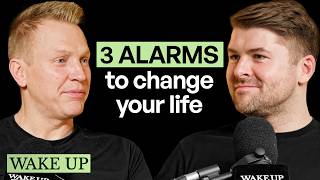
Eric Partaker, a CEO coach and former McKinsey consultant, explains his "Three Alarms" framework: daily reminders to embody your best self in fitness, leadership, and family. He argues founders should chase work-life satisfaction, not balance, and that discipline and a high pain threshold drive real achievement. His Chilango restaurant collapse taught him hard lessons on debt and lean operations.
Chapters
It's threshold for pain, you know, like, can you step into discomfort and enjoy things that are difficult or hard for like most other people?
I feel like a lot of nine to fives feel quite risky.
I'm not there. And thinking that the 9 to 5 is too risky. I think pretty much you can do absolutely anything that you want in life. Like if you focus on the right things. I think the majority of people focus on the wrong things. Here's a simple way to look at it. You have ordinary and then extraordinary. Right. I've always said to myself, you may be smarter than me, but there's no way in hell you'll outwork me.
You told me when we first met about your near death experience. Mmm.
It feels like somebody's like sitting on my chest. I start getting nauseous and he's like, we need to land the plane immediately. He's having a heart attack.
Wow.
Just remember looking up at the paramedic looking down at me and I just said, please don't let me die. I have a five year old son.
Do you think that founders and entrepreneurs can actually have a work life balance?
No.
For the audience who don't know you, you know, you're broadly known as the CEO coach. You know, you've been Ali Abdul's CEO coach for a long time now. You've coached some incredible people, massive entrepreneurs, very successful founders. But for the audience that don't know you, do you want to tell us a little bit about your story?
Yeah. So I always started out with the quote from John Lennon, Life is what happens while you're busy making other plans. Just because none of this was planned, I'm just kind of like, I smell opportunity and go with the flow. So I was literally at this. I was at a management and organizational behavior class at my university and it was a visiting professor from Stanford. And I only took this class because I was like, wow, Stanford, I'm going to learn something from somebody who's way more intelligent than me. And I remember in the class he said, if anybody is going to get a job at the company that I'm going to profile next, I'll fall out of my chair. And then that made me pop up. I wasn't really paying that much attention. And then he profiles this company, McKinsey and Company. I was like, hell is McKinsey? I have no idea. And then I find out gold standard management consulting. Like, what is management consulting anyways? But like the 800 pound gorilla in that sector. And so I just went up to him after the Class. And I was like, look, I'm going to get a job there. And he's like, well, I will fall out of my chair then. And I ended up. I did get a job at McKinsey. Incredible start for my career. It gave me a really good business foundation. It was a bit of an equalizer in terms of a pedigree thing for me. So I was in the Chicago office for a while, then in the Oslo office, and I'm half American, half Norwegian. Then I was using Skype, given it Scandinavian roots, like a little bit earlier than most people. And I looked at that and I thought, wow, this is going to be big. And so I knocked on their door, figuratively speaking, and I said, hey, can I join the team? And they said, no. And I was like, I don't like that answer. And so three months later, I said, can I join the team? Like, you just applied. I'm like, yeah, but I think you're not thinking about things correctly. I think you do need somebody with, like a business background. Here's why. And I got my foot in the door and then spoke with them and ended up becoming a member of the early team at Skype and helped with the blitz scaling of that. And then we had this big exit to ebay for a few billion dollars, literally. So after that, I'm literally sat on my. I'm living in London now at the time. I'm sat on my sofa and I'm just hungry and I'm like, man, I miss burritos. So then I go online and I'm like, are there any burritos, like burritos in London? And there's like, none. I'm like, maybe that's my next thing. And so I thought, you know what? I'm going to build a burrito and taco restaurant and build that. And that becomes like Zagat number one rated. Becomes like the public favorite or whatever in terms of the brand and the food.
And it was incredible because obviously I'm from. I'm from London. And so, like, we just used to eat at your restaurants all the time.
Yeah.
And I suppose what is the comparable in America? What's the. Is it Chipotle?
Yeah. So that was the model. That was the business model. I was like, okay, that model works as like, as a delivery mechanism or whatever. And. And then we just. I was very. At the time, I was very inspired by. Still am, but everything that Richard Branson had done, and I was like, okay, so he takes. What does he do? Like, often he goes into already well established Industries where he's the underdog and he wins through brand culture. A proposition that just resonates more with, say, the people or whatever. I was like, okay, we're just going to do that same thing. So built that. That actually did not end well. So I went from experiencing kind of unicorn success with Skype, and this goes back to Threshold for Pain. So that was like a 13 year journey. And in our 12th year, there was massive restructuring going on in the restaurant industry. You remember when all the delivery platforms came in, so the whole economics of the industry changed. And we had like several leases that we were trying to get out of that we hadn't yet built that we were trying to get out of as a result of, like, football patterns changing and everything. Basically deemed that they wouldn't be profitable anymore to open. And then of course, we couldn't offload them because nobody else wanted them because they were seeing the same patterns. And then we had too much debt in the business. And then boom, boom, boom. A series of things aligned. And so we go through a restructure. Come out of the restructure, we were able to shed some of those leases and we're like, okay, so we come out of the restructure. I think we were close to like in dollars, but, you know, restructured into a company that had about like a million a year in ebitda, so, you know, fairly safe place. And then Covid comes three months later. And in the clause of the CIBLS loan, right. The main.
The government loans.
Government loan in the uk, it said if your company's been through a restructure in the 12 months prior, you're automatically disqualified from the loans. Wow. And if you're in the hospitality industry or the travel industry during COVID with zero government support, boom. That's like the death sentence.
So you couldn't even do things like furlough?
No, we could do that, but we, we couldn't qualify for like, the massive, you know, we had no working capital support or, you know, any of that. So the whole thing went up in smoke. And I had migrated already to like a board position at that point, but it was still, like, painful, right, to see something that you had built over a decade. Yeah. And it's just like, poof, gone. And then. But then I thought, okay, well, you know, what do I want to do Next? And various CEOs and founders had been coming to me over the years asking for advice, either because of the McKinsey time or the Skype time or the Chilango time. And so I thought, well, I need something to do next. Stay busy. And I thought, okay, two days a week, I'll coach and mentor CEOs and founders. And so I started to do that, like Mondays and Tuesdays. I moved to Portugal from London and then started to invest in some of their companies as well. And then all of a sudden just kind of rebuilt from a wealth point of view to a point that was higher than actually we were ever before.
That's wild.
And we had some good outcomes, especially with Skype, for example. So it just, it kind of, you know, like I said, life is what happens while you're busy making other plans. It just kind of like proves to me that I think pretty much you can do absolutely anything that you want in life, like, if you focus on the right things. And that's like the key point because I think the majority of people focus on the wrong things.
And you told me when we first met about your near death experience, which seemed to be like a real wake up call in your life. Is that. Yeah, Before Chilango.
That was during.
During chilling.
Yeah, this is like 2010 and I bought a. So I'm returning. So had a. So had a business trip in Spain, was returning to London, and like shortly after the, you know, the, the plane reaches cruising altitude. I had not been feeling well, though. Like, you know, honestly, like, for the whole six months prior to that, I've been noticing like, pains, like, you know, my jaw and in my chest. And I just kept like, you know, putting it off to like, stress or whatever, which definitely was like one of the components. And. Yeah. So we reach cruising altitude and I just start to sweat. It feels like somebody's like sitting on my chest. Start getting nauseous. My friend and colleague Louis has sat next to me and I'm like, dude, feel my arm. And he feels my arm and like, the look on his face was just like. And Lewis says, it feels like your arm's been hanging in a meat locker.
Was it freezing?
Like ice cold? Wow. And I thought it was just me, like, think, you know, in my own head, but, you know, it wasn't the case. And then he jumps over, runs to a flight attendant. Flight attendant asks if there's a doctor on board. Doctor rushes over.
As in a passenger?
Yeah, luckily for me, there was a doctor on board.
Oh my God.
Doctor rushes over, like, takes my vital signs and. And he's like, we need to land the plane immediately. He's having a heart attack. And. And I thought, like, when you think it's like, game over, like that lights out. It's like. And then if you're 35,000ft in the air, you're like so far away from any help that you, you know.
Yeah. So you're thinking in that moment, done, right?
And. And I don't care how strong you are, like, how strong, because I consider myself a pretty, you know, tough person in terms of, especially in terms of like, you know, mind man, you become nothing in a moment like that. Like, and I thought I was. Because my heart was beating, so it felt like I could feel how faint it was. It was just like, boom.
Oh, Christ. Boom on a plane as well.
And I was like, man, that feels like a flickering light that's about to go out. And I just remembered, I kept thinking, please just fly faster. The descent felt like an eternity. And so they emergency land and there's like an ambulance on the airport Runway. I like googled after how much does it cost the airline for an emergency landing? And it was something like 150,000 or something. And I was like, I only paid 1,500 for my ticket. So I thought, like, that's not a good deal for them. Although they probably have insurance, right? So, yeah, so they take me off on a stretcher into the ambulance. They administer nitrates right there in the Runway to open up the blood flow. And yeah, I just remember looking up at the paramedic looking down at me and I just said, please don't let me die. I have a five year old son. And those were like the first words out of my mouth. And he said, just sit tight. I think we got to you just in time. And the next morning I woke up in the hospital and I just remembered feeling incredibly. It's a weird feeling to wake up and be. Because we take it for granted every day we wake up, right? But when you wake up and you're genuinely grateful, oh, shit, I'm still alive. And that started like, change didn't happen right away, but it was like a process. And I realized that.
As in changing your perspective.
Well, change in that. Because remember we were talking about work, life balance, work life satisfaction. And that you have to recognize that there's an imbalance, but you still have to show up at your best on the health front, on the home front. And I wasn't doing that. And so I decided I had to, you know, I had to look after my health more. I had to have to look after, you know, home more.
One of the first things that I ever saw of yours was your book. And this is before we knew each other. And I saw the title of the book and then I saw, I mean, it was early on, but I saw Sahil Bloom post about the book and about how he was using it to be his best self in all of his key moments in his life. And so the book was the Three Alarms. And what was the concept behind that? Did that come after the wake up call?
No, that was basically the summation of everything that I put together in my head following that wake up call. The concept is really simple. So everything as you know, everything for me is like 80, 20. You have to find the leverage. And there's a lot of different stuff you could focus on to improve your life. Stephen Covey has roles and responsibilities. You can think of nearly endless roles and responsibilities. I think Tony Robbins has categories of improvement, but I can think of nearly endless categories of improvement. And when I really think about it, what's the most important stuff? It's your health. Because without your health, you're nothing. I experienced that firsthand. Your wealth, both in terms of how you make the money and what you do with it, and then your relationships. Because when I was about, you know, when I thought it was lights out for me, it wasn't, Please don't let me die. I have to clear out my inbox. It's like, please don't let me die. I have a five year old son. So it's like your relationships are what matter. If anybody on the planet's given five more minutes in their deathbed, what are they going to use it for? They're going to use it to hug someone longer, talk to someone longer. That matters, right? That's the only thing you're going to use it for. And I think that would be universal. So health, wealth and relationships, it's like the 20% of things you could focus on for 80% of the improvement that you seek in life. So narrowing focus in everything that you do. Earlier I was saying you can do just about anything that you want in life if you focus on the right things. But people focus on way too many things. So it starts with narrowing your focus to health, wealth and relationships. And then it's about being a little bit more intentional rather than reactive in terms of what does best look like for you in each of those areas and then just assigning some kind of identity to that. Like what would you call the superhero version of you in each of those areas and then just simply setting an alarm on your phone to kind of like remind you of that identity at the time of day that would most benefit from that reminder. So for example, at 6:30am I have an alarm that goes off that says World Fitness Champion. Because that's the version of me that goes to the gym in the morning, especially when I don't feel like doing it. And then 9am World's best CEO because, well, if I was that, how decisive, inspiring, reliable, will I show up today in my various meetings or whatever. And then at 6:30pm the most powerful one for me is it says World's best husband and father. Just to prompt the question, how would the world's best husband and father walk through that door right now? So it's like just having that intentionality so that you're not drifting.
And so if you were talking to someone who's struggling with different aspects of their life right now, whether it's like work or family, the advice would be to try and model the best version themselves in each of those.
Yeah, think of what the best version of you looks like. Give that a name. Like what's the superhero identity of you? Think about a time of day that would best benefit from being reminded of that identity. And then on a daily basis just try to do one thing to three things total in each of those areas. One in each, which if done, would evidence that you were you at your best.
Right.
So as an example, World Fitness Champion, you know, so earlier in the week it was like, I'm going to try to burn 600 calories on the stationary bike, you know, and then World's Best CEO it was, I was going to, I made it a point that I was going to get a proposal out, you know, that day that I had been sitting on. And then World's best husband and father. So a recent one was I just said to myself, I'm gonna do a ping pong tournament with my 11 year old in the evening. And it's just like having these simple little goals in each of those areas. That's all it is.
So what's the biggest challenge for people who are trying to improve their wealth and health and relationships? What's the thing that stops us all?
Well, because they don't think about it, they just don't, you know. So especially if you're really, really career focused, you get so consumed with the professional side of things that all the other areas of your life gets, you know, that's like the leftovers. And if you just were intentional once again about what best looks like and just pick one thing that you could do, well, at least you're doing one thing right, that's evidencing that. So, yeah, I just think that the biggest thing that gets in the way for most people, especially when they think about being more satisfied with work and life, is that they're not intentional about what good looks like and what they can do on a daily basis to evidence it.
I think one of the things that's quite fascinating about you is you obviously built a great brand with Chalango. And like I say, like, I, you know, I live in London. And so for me it was just like part of the high street growing up. And obviously that company became a brilliant business that people loved and adored. And then because of big macro problems, kind of just disappeared. And so that rock bottom is something that a lot of entrepreneurs and CEOs will experience with their companies going under or failing or whatever. Like from that moment, how did you say, I'm gonna pick myself up? Like, what's the plan you went through? Because presumably you were in your own rock bottom at that point.
Yeah, yeah. Well, I mean, the first thing is, you know, when, when something doesn't go to plan, the first thing you need to do is look into the mirror. And so, yeah, it's, yeah, there were big macro things going on. Right. But you still need to look into the mirror and take responsibility. Right. And that's key to recover from a bottom because otherwise you're going to stay on the bottom or just repeat it. And so one of the first things was, okay, well, what could I have done better? And you got to be really careful with how much debt you put into a business. And because when the times are flying and everything's great, it looks great, right? Then all of a sudden the industry changes. Like I said, football patterns change and you got throw in a pandemic and a heavy debt, business is going to go out very, very quickly. You got to be super, super conscious. Most entrepreneurs, I think founders, need to be more conscious about just expenditure in general, especially at HQ level. Again, because when things are going super well, yeah, you're not really worried too much about it, but things don't always go well. So I think we could have run a leaner cost structure as well. And then when you expand, you have to be careful, no matter what business that you're expanding, it's easy to. And we talked about this with our, you know, our creator businesses now, right? It's like, it's easy to want to do like a bunch of things at once. Yeah, it's easy, but we know now from experience. No, no, no, hang on, focus on, you know, where's the 80 20, optimize the hell out of that, then move to the next bet. Right. And so yeah, that's the first thing is like when you hit bottom, make sure you're not just pointing outwards and also like point inwards and ask yourself what can you be doing better and differently? And yeah, it was powerful in that sense because it helped me create, it helped me realize, you know, for my next business, my next venture, I want to go with a model that inherently can operate from a leaner structure and that can make money with much less investment and virtually zero upfront risk.
I think that is a bit of advice that new entrepreneurs never take on. For example, nowadays if I ever think about starting a business or if I ever invest in a business, I always ask myself the question at the scaled version of this, when this thing becomes what we all hope it will be.
Yeah.
What profit does it create then? Yeah, like what's the throughput then? And then one step further than that. Nowadays I always think what is the industry likelihood, profit and then what is the likely multiplier and then the likelihood of sale? And if those, those things don't stack up in a really positive way, I think to myself, well, this thing that I'm interested in is probably just an interest. It's not a business I should pursue.
Yeah.
And so I also think that like one of my first businesses I ever did was such a failure dramatically that.
And what were the reasons?
I mean a lot of what you just said, like we, you know, we raised money for a tech platform when we were like 18, 19, having no idea how businesses ran and spent an absolute fortune on the belief that we could raise more money. And then before long we realized that we just weren't monetizing. All of the plans we had for monetization didn't work. And suddenly the cost structure was just growing and growing. And suddenly I was like, well, even if this business makes it, it's going to be a pretty awful business.
Yeah.
And I think that was a useful experience early on. And now I think, you know, for example, we've launched businesses in the last year. Before we did that, we thought long and hard about the business. In 10 years time.
Yeah, totally.
How much money would it make? Will it be free cash flow? Is it sellable? Is it going to have.
And we're still thinking about all of these things. Right.
Like proportionately raising costs is not something I'm interested in at all. Like I want a global scale business with high margin.
And I think this is where like most founders less so like CEOs once you make that transition, which is worth talking about too. But most founders, they, I mean, look, the number of cases where you have an incredible exit from a business that basically wasn't profitable, that's like fantasy land.
Yeah.
You know, like Uber is like, you know, recently became like, that's just total fantasy land.
Yeah.
Like that is not what you should be building and optimizing for. And I think a lot of people, I hear so many times, because I said this once at one point, you know, myself, I'll hear so many founders say, so I'll say, how's the business going? Really good. Yeah. Okay. What's revenue? Revenue is, you know, x profitable. Next year's our year.
Yeah, yeah, it's always next year.
Next year, we become profitable next year. And so first of all, the language is already, it's like it's already set up for disaster because they literally say next year, next year is floating. Like you just said, it's always next year. So it's not like, oh, we become profitable on December 31, 2025. They never speak that way. It's always next year. So they literally are kicking the can down the road. And I think a lot of the business go under because they just keep kicking the can down and at some point it's just not going to work. Right. It's just going to fall over.
Do you think that founders and entrepreneurs can actually have a work life balance?
No, I think it's a myth, but it depends once again on who you're talking to. So I think for the person, I don't know what the numbers are, but let's say for example, that entrepreneurs, founders, CEOs, let's just assume they're say 1% of the world and that 99% are not that. And thank God, or else probably nothing would get done. So I think the person who wants the career really enjoys the nine to five routine and wants that security or whatever, then work life balance I think applies. But I think for founder, entrepreneur, CEO, I think it's more like work life satisfaction. Not that the other group doesn't want satisfaction too, but it's just that it's just so hard to balance things. I mean, as a founder, entrepreneur, it's like your standard is like a 10 hour day. That's standard when things are going okay. Yeah. And then that can easily become 12, 14. But satisfaction is that even though you know things are imbalanced in terms of most of your time is going towards work, you still feel satisfied. Like on the health front, you still feel satisfied on the home front in terms of you're making the most of the time that you do have. You're doing your best on those fronts. Even though things are imbalanced.
You obviously advise and have advised hundreds of professional CEOs and obviously in there will be dozens of founders. Is there any controversial advice that you would give to them that on the outside sounds, you know, incredibly controversial? For example, I think that mainstream now is like work life, balance, etc. Etc. Whereas we've discussed so many times that to build anything of like note or real worth.
Yeah.
I mean, you got to commit to a certain level of pain for a
certain level of period. Yeah. I mean, consistency is this massive buzzword. And we've talked about this before, if you're going to achieve anything, great, you know, you have to be consistent. And really what I think it's more about is like. No, no, no. You just need to almost. You need to like, like pain. You need to have like a high tolerance for it, a high threshold for it. Because if you think about like to be consistent, you don't need to be consistent at something that you enjoy doing. Right. That doesn't. You just do it. You don't think of the word consistency. And then when you think about like the word discipline, what does that mean? Well, discipline just means the capacity to do things you don't like doing. So all of that though, what does that mean? Even one level further down and it's threshold for pain, can you step into discomfort and enjoy things that are difficult or hard for most other people? And I think your capacity to do that for a long period of time, that's what translates to success. Have you heard of this thing life is 50, 50?
No.
So it's like life. 50% of the time it's good. 50% of the time it sucks. I think I just take a more just realist view on and I know you do too. Things aren't nice all the time. Every day. I have still to this day, even though I've achieved it.
More from Eric
How to win big, lose it all and rebuild smarter w/Eric Partaker #podcast #business #health

Eric Partaker - CEO of the Year 2019. Formerly Skype, McKinsey & Co. and Co-Founder at Chilango