12 Must Read Books Recommended From Top Entrepreneurs (Rand Fishkin, Neil Patel, David Allen, More!)
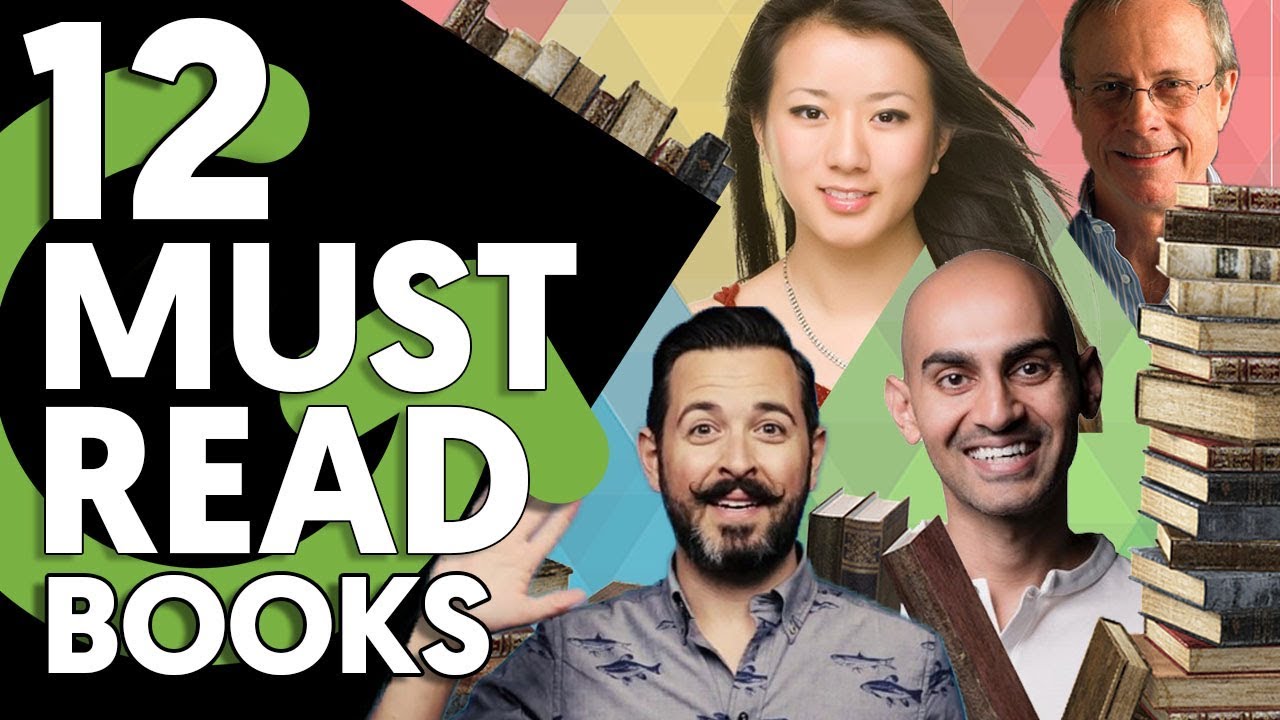
Rand Fishkin, Neil Patel, David Allen, and other entrepreneurs share their favorite books. They recommend titles like The Dip, The War of Art, How to Win Friends and Influence People, and The Hard Thing About Hard Things.
Chapters
In this video, we are going to talk about my favorite book recommendations from the Growth Everywhere podcast where I interview world-class entrepreneurs, over 300 now, such as people that have, well, invented the little credit card stripe that you have on the back of your credit card, and billionaires, and bestselling authors, just all over the place. Best books from these people. And without further ado, let's check out the books. What would you say is one must-read book entrepreneurs should read?
You know, personally, my—
I'm always attracted to stories.
And so my favorite book, the one that inspired me the most over the years, is called The Billionaire Who Wasn't.
Oh, that's my favorite book too.
Yeah, it's the story of Chuck Feeney.
Yeah, good book.
First, like, real book about startups that I read after Paul Graham's book— or no, excuse me, it's his wife Jessica's book. After that one that I read, I read the book by Jason Fried. I believe it was Getting Real. It was the one that they initially distributed online.
Actually, it isn't so much a book. I mean, I could recommend all the customer— all the same, you know, the customer development stuff that's out there. But actually, I would get a subscription to Harvard Business Review.
Okay.
And they cover fundamental Everyday challenges for small businesses, big businesses, and some of the best takeaways and best lessons I ever learned were in just some of the little stories in every issue of the magazine.
One of the best books I've read was actually on venture capital, and it was Brad Feld's Venture Deals book. I read that about 3 years ago, and I was like, oh my God, I understand it all now. So like, if you're interested in VC stuff, I would totally read that book. And even if you're not, it just It's really awesome because he takes specific segments of the term sheet and the financing documents and then explains them fully, and then has like an entrepreneur's take on it too. So it's just a great book.
I would say it's How to Win Friends and Influence People, the classic from Dale Carnegie. You know, it's from like 1930 or something. It has just been so good. The other is if you're Scaling your business and, you know, you have moved into a CEO role for real. I just finished a book called The Great Game of Business and it's about open book accounting and it's awesome. So The Great Game of Business and How to Win Friends and Influence People.
I'll have to check that one out.
I like reading The Dip by Seth Godin. It tells people when to stick and when to quit. Too many people don't know when to bail out of a business. Okay.
How many times have you made that mistake?
A lot.
I don't even know.
I can't even count on one hand.
Why do you think that is? I'm cheating here, one more question. Just young and naive, not enough experience.
I know now when to quit, but you know, when you're 21 and you're a young entrepreneur, you don't always know what's best for you.
Here's one that you wouldn't think of that I actually have been reading. I've read all of the series of these books, The Smartest investment book you'll ever read and the smartest 401 book you'll ever read. And the only reason I say that is because if you want to be a responsible employer, then you— and give your employees financial security for their future, then setting up a 401 program for them is great. But I would definitely read The Smartest 401 Book You've Ever Read. That's what it's called.
Uh-huh.
Because it will tell you how to set up a 401 in a fair way for your employees instead of in a way that could actually really harm them in the future.
I like Steven Johnson's— I'm trying to see it on my shelf here. I think it's called Future Tense. It basically talks about the power of peer networks. And like their profound ability to change, um, really all aspects of society, and certainly the world of business. Um, that deeply affects my thinking. And I think that— I think the ability of individual actors, people, to to work together is a capability that was kind of architecturally enabled by the internet, and it is spreading. I mean, certainly Sidecar is part of that movement, but it is spreading and it's going to continue to spread to pretty much all sectors of the economy. I think it's going to spread beyond that. I think it's going to spread to sectors— it's going to transform the way we think about government, the way we think about even other segments of society, how we think about philanthropy, how we think about science, and potentially even how we think about religion. It's, um, I think it's a deeply profound thing that's going on that we're living through, that we are participating in, that we're building ourselves. Um, it's one of the things that makes me excited about the era that we're in.
So I just finished reading that Ben Horowitz book, Hard Things About Hard Things, and I can't recommend it enough. I think it tells the most realistic story of what's going on that I've seen.
Yep. It's funny because, you know, it's— I'm about to make all my team members read it, and it's the 7th time this book has been recommended on this show, and I can't recommend it enough either. Probably the best book I've read in the last year.
Yeah, I agree with that.
So the book that I recommend to anybody, especially when they're like early on building stuff, is The War of Art by Steven Pressfield. It was massive for me to get over the— a lot of people kind of end up making up excuses for why you're not able to pull off things, or you kind of procrastinate things that are really, really difficult when the fact that those are difficult are The, like, main sign that you should be doing them. And it's sort of a quick— I read it on a plane, like, in a couple of hours. So it's a good read.
Nice.
Yeah, I've heard good things about it. I think it's on my Amazon wishlist. So I think you might press me to actually buy it right after this.
You should.
It's great.
Okay, got it. At any given time, I'm usually reading 3 to 4 different books. Another book that I actually just really liked a lot is Battle Hymns of the Tiger Mother.
You're like the 30th person. No, I'm just kidding.
Really?
Yeah, I'm just kidding. No, no, what is it?
Alright.
Okay, so that's the book by Amy Chua. That's about how Asian parents or Asian moms specifically raise their daughters. It's not so much like the tactics, but it's more, um, it's about when you do things and why people can accomplish things. It's less about luck. It's really self-created. Like, you make things happen. And I really appreciated the book because my parents came here as immigrants. They definitely were like, we didn't get here because we got lucky. We got here because we got scholarships to go to grad school, and it was really difficult. You make things happen. You can either pursue things or you, you just think that like things will just happen for you, which it doesn't.
A book that came out right before that, and they didn't even know each other, but very, very similar. And, you know, they're 2 of my favorite books right now is The Organized Mind by Dan Levitin, L-E-V-I-T-I-N. And it's a whole lot of that is about the requirement for the external brain and a lot of the research, a lot of the aggregation of the research about, you know, that showed up in the last 20 years that your head is really capable of handling about 4 potentially meaningful things. And you add any more than that and it loses it.
Interesting.
And so, you know, just it's, it's They're certainly favorite books of mine right now because they very much validate this whole Getting Things Done methodology. I mean, I learned it on the street. I mean, in 30 years and thousands of hours deskside with some of the brightest people on the planet sitting there and working with this model and seeing how it works and refining it and testing it out. But these guys now, the cognitive scientists, are proving it from the— coming around from the other side, from the scientific side, about how it works.
Got it.
So, I can't help but be enthused about it because it very much helps sell the idea. Hey guys, your head is for having Ideas, but not for holding them.
All right, so I hope you enjoyed those books. Hope you at least go pick up one. Let me know in the comments what you plan to do with one of these books to help level up what you have going on in your life. And go ahead and hit subscribe, and we'll see you in the next video.









