4 Unusual Marketing Tactics for 2024
Eric Siu and Neil Patel break down four marketing moves for 2024: high-visibility sponsorships like vehicle wraps, luxury assets to recruit talent, long-tail SEO keywords that convert better than short ones, and platform-specific posting strategies. They cite TripAdvisor's organic traffic success and stress tracking leads over vanity metrics.
Chapters
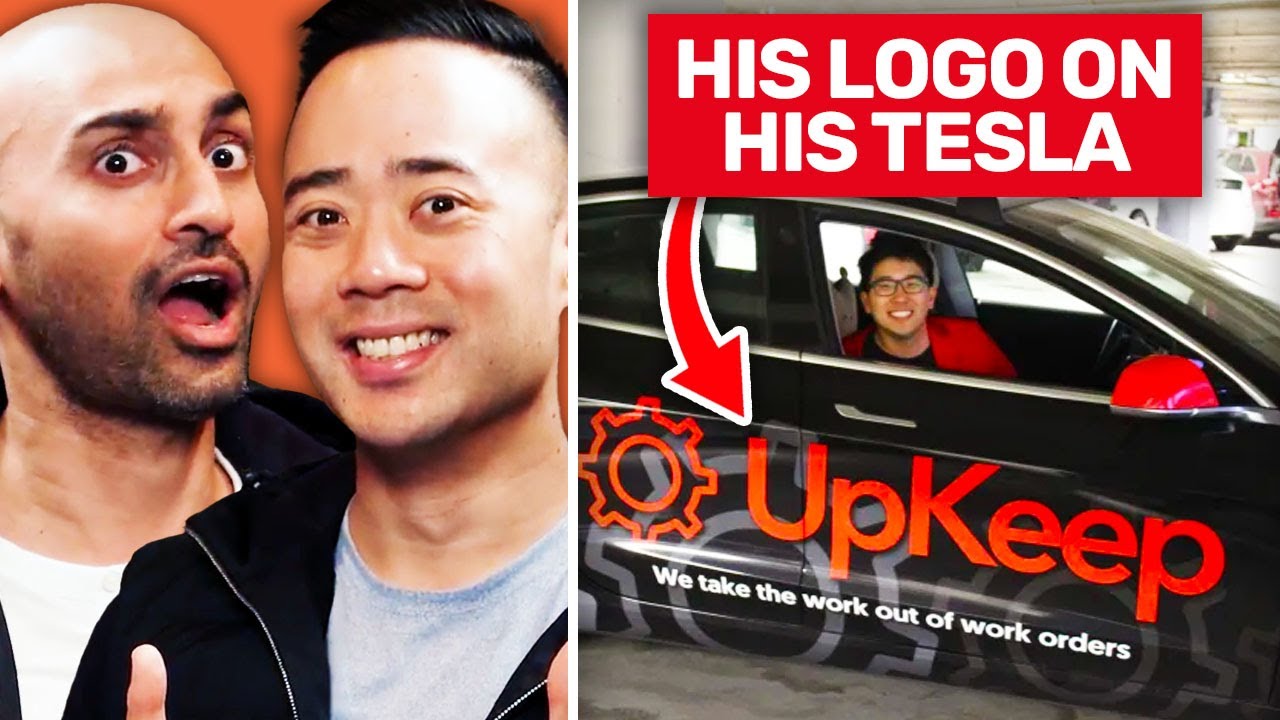
All right, so we're going to talk about unorthodox marketing tactics for 2024. So Neil and I, we have a lot of friends that do interesting things when it comes to marketing. Some things are outside the box. And so I have a friend, his name's Ryan Chan, and he has a company called Upkeep. So they do maintenance software and great business. So if you're in the maintenance world, go check them out. Or I mean, if you have a bunch of staff helping you with physical activity, Upkeep is a place to go, contractors, for example. Anyway, I digress. So he does an interesting thing. So Neil, I don't know if you know this, but so Ryan has, he has 2 Teslas, okay? Now the interesting thing about the Teslas is they're wrapped in his company. So meaning that it's wrapped with his company logos, right? So when he drives around, it just says Upkeep the whole time. All his shirts just say Upkeep on them. And like sometimes he'll fly planes around like, you know, the beach, that say upkeep on them. So he's trying a lot of things that are outside the box. And I think the key takeaway I have for him at least is that he's willing to take shots on things that are maybe perceived as maybe not too effective in his industry because he's trying to sell mid-market to enterprise SaaS at the end of the day.
How's it working out for him?
He says it's too early right now. He says, I think he's even sponsored basketball games before or football games in a sense. And actually, I mean, we have a mutual friend. He sponsored NBA teams before. He sponsored college football, entire divisions. And yeah, I mean, he said that that's been good for them. I don't know how he's quantified the ROI there, but But it isn't like an exact apples to apples, like, oh, we got like 5,000 more customers from it.
I look at a lot of these crazy marketing tactics as a good way to get your brand out there. Like if you look at FTX, I know FTX really blew up from the embezzlement.
In a negative way.
Yeah, money stealing or whatever you want to end up calling it. But FTX first got on the map by Miami Heat Arena, the baseball stuff, the MLB umpires wearing it, commercials with Tom Brady.
Steph Curry, Tom Brady.
Yeah, exactly. I think doing some of these marketing tactics are definitely worth it to put your name out there. But there's a point where there's diminishing returns. Like if you're already doing a lot of it, you'd be like, yeah, I want to go sponsor Manchester United. Well, I'm like, you're already doing a lot of it and it's not providing as much of a return. Like there's massive diminishing returns after a while.
Yeah. And also Neil, you had some other, I'm just trying to give ideas to people here. Like when we were talking on the phone a little earlier, you're just talking about how you met up with some people And there were some unorthodox marketing things that they were doing. For example, you said that having a Ferrari definitely helps with business and it helps with even dating in some cases, right?
Yes. A lot of this stuff like Ferraris, I was talking to a friend that I know, his name is Albert, and he's in the mortgage space. And he's married, happily married with 3 amazing kids. And all of a sudden he was talking to me about Ferrari yesterday. So he was, you know, I've seen his Ferrari. He's even driven me around in his Ferrari. Like he was dropping me back to the hotel I was staying at many, many months ago when I first jumped in it. And I didn't know it was that expensive of a car. You know, he was telling me it's like to buy it, you know, I was talking to him yesterday. I was like, yeah, Ferrari, maybe a few hundred grand. He's like, no, they're way more expensive. And I'm like, really? And he's showing me his Ferrari and he's like, yeah. So we look it up together and he's like, yeah, look, you can buy it right now for $700,000 and something. I was like, what the heck? And I was like, what does a Ferrari really do? And he loves cars. So that was one of the main reasons he bought the car. But he was also breaking down to me. He's like, dude, you know how many people it ends up motivating being like, wow, Wow, look what you have. I want to work with you. I want to join your team. I want to, you know, figure out how to get mentorship from you. And he's A, recruiting amazing people from this strategy. B, you know, when he has people who work really hard and perform really well, a lot of times he'd be like, here's the key to my Ferrari. You can end up driving it around for a week or a month or whatever it end up may be, right? And that's also helped motivate a lot of the people on his team and that's helped increase revenue. But he used it to get more people to buy tickets to his event, more people to join his mortgage company, more people to join his real estate company. And the strategy of one simple Ferrari has made him millions and millions in revenue. And I'm not talking about a million or 2, but I'm talking about like literally like millions and millions of revenue just because of a car. And if you look at Tai Lopez, what put him on the map was his garage. Check out this Lamborghini, but you know what's better than this Lamborghini? These books, right? And that strategy put Tai Lopez on the map and it helped him make millions of dollars through info products and revenue.
I think the Ferrari thing is interesting. And like, if it helps with your company in terms of like a recruiting customer standpoint, more power to you. I think at least for me, I understand that if I were to do that and people want to join my company because of the car, Maybe these aren't the people that I necessarily want because I want people that are humble, hungry, smart. Not saying people aren't humble, but usually when people are really driven by materials, material objects, maybe they aren't necessarily the people that could have performed the best, right? And that's just my personal bias. That's my opinion. I'm not saying what he's doing is wrong, but it works for him, right? And just keep in mind, everything you listen to, whatever works for you, just go keep doing that. So, Neil, what is your next one?
So the next thing I want to talk about is the kinds of keywords that you should be focusing on when it comes to SEO. So we have quite a bit of new data out there that we were analyzing throughout all our tools like Ubersuggest, AnswerThePublic, all the analytical data that we have from so many sites and aggregating and stuff like that. And here's some interesting data, right? And first off, Our database has 7.4 billion keywords. Keep in mind, some of those keywords are misspellings and in a lot of different languages. And we match it up with analytical data from over a million plus websites to figure out the type of keywords that are performing the best. Also keep in mind, not all sites have conversion rates set up and all this kind of stuff. So the data sample can be smaller for certain, for some of these stats. But when you dive into the data, let's look at some of them. And there's 8 main points. 1, keywords that are 10 to 15 words in length tend to get 2.18x more clicks on average than 1 to 2 word search terms. I actually should just share my screen for all you guys who are on YouTube. All right, cool. 2, if you remove brand queries, 77.91% of organic conversions come from search terms that are 3 or more words, right? So long tail for the win. 3, on average, 82.53% of a website's organic traffic comes from search terms that are 3 or more words. And that's if you remove brand keywords as well. 4, over the past year, there's been an increase in searches for phrases that are 10 or more words by 47.95%. The assumption here is because of ChatGPT and AI, people are like, yeah, these searches are adding AI, although it's not fully out there and fully integrated. And they're assuming that they're just going to get the answers to their questions. 5, click-through rates on search terms that are 2 or fewer words are down 9.44% compared to 3 years ago. 6, rankings for 1 to 2 word search phrases are 18.26% more likely to shift up or down in search rankings than long-tail keywords. In essence, if you're ranking for a short-term like head terms, your rankings are going to fluctuate way more than long-tail search terms. 7, compared to 3 years ago, there has been a 19.58% shift in the type of results that Google ranks for 1 to 2 word search phrases. In other words, 19.5% of the rankings for these short-term or head-term keywords have shifted from being transactional to more informational from all the keywords in our database. So sites that focus on more information for head terms tend to rank better than if it was more transactional. And 8, keywords that are 6+ words long convert an average of 48.52% better than keywords that are 3 to 5 words in length and 219.34% better than keywords that are 1 to 2 words in length. You know, you guys all know that long-tail search queries is where it's really at when it comes to SEO campaigns, but the data is showing that it's shifting even more to more long-tail keywords and even longer form. Not just from a traffic standpoint, but from a revenue standpoint. And I think this is really important for people to realize because a lot of marketers are like, yeah, we want more traffic. I'm ranking more, I'm getting more traffic. But if it doesn't convert into revenue, who cares? That traffic is useless.
Yeah, you know, that actually bothers me. Like I was looking through like some of the, I'm like end of the year, let's audit how we do things, right? And sometimes I'll take a look at how we do things from like a, Service standpoint. And I'm like, how is it that we don't have like in our running documents with clients, like how we're doing with the number one result each, like the number one KPI, right? So if their KPI is to drive more leads, they want 5,000 more leads. Okay, how are we doing on that? What was the baseline before? How are we doing on that? So every single week we're talking about that, right? And to me it's like a very simple like business thing. So it's like if you're working with an agency right now, request that every single week. Just talk about like, Talk about the main thing. Keep the main thing the main thing because a lot of agencies, they like to talk about a lot of smoke and mirrors, right? But I digress. What I do want to call out here is like from a programmatic SEO standpoint, we talked about this a couple episodes ago, but what we're doing for our clients is we are focusing more on long-term, long tail, I should say, lower volume keywords, but have the propensity for higher conversions. And so, for example, we mentioned HubSpot versus Salesforce or Salesforce alternatives. There's a lot of these permutations that you can create. One of the best examples out there is TripAdvisor because they get about 122 million visits per month from organic and they rank for like, I don't know, 100 million keywords or something like that. And a lot of it comes from programmatic SEO. Now, am I saying you need to do that? No, but you can start to take those concepts and implement it to your business. The last thing we'll end off with here is this is a fan-voted topic. So this one got 4 upvotes, I believe. How to grow your followers in 2024? And I'll kick this one off. We'll make it very simple. Assuming you're trying to grow on Instagram, on YouTube, or TikTok, you just have pump out 2, 3, 4 reels per day, TikToks per day. And if the content's good, some of them are bound to take off, right? There's people out there that are doing like 2,000, 3,000, 4,000 pieces a month across like Snap, Facebook. Yeah. YouTube, TikTok, Instagram, Facebook. I think I said Facebook already. But my point is that the way social is engineered now, especially for those 3 platforms, is it's very driven by Reels, TikTok Shorts, and anybody can win the game as long as your content is good. I've had some Reels that have a couple hundred thousand views, right? And for me, the usual for my Instagram is like 2,000 views or something like that. But occasionally I'm going to have 300,000, 400,000, 500,000 or so. And that just shows the content is good. Go ahead, Neil.
Dude, you know what's funny? On Instagram, I found that the ideal amount of posts to do per day is 2, and you just spread them out. LinkedIn, 1. Twitter, as many as you want. YouTube, 1 or 2. Facebook, 1. And you can do more on Facebook, but Facebook, it doesn't actually matter if you post 5 or 1, the reach just sucks. But yeah, you know, posting the right amount of content on each social network can help you get more followers. The other thing too, and we've talked about this, is use Twitter as your testing bed because unlike most social networks, there's no cap on how much content you can produce. You'll see what's getting the most engagement, take your winners, and then leverage it for all the other social networks. Now, what works for Twitter doesn't always carry out to what works for Instagram or Snap or LinkedIn or TikTok or YouTube. but it's directionally correct. And what you can do with Twitter, which is what's amazing, is through text you can just test a ton of hooks and you can figure out which hooks get the most engagement. That's how you know how to start off your video-based content because that's what's going to keep them engaged, right? Or attract their attention and then you got to keep them engaged. But we love testing on Twitter and we've seen that it's just boosted our overall views and our engagement and our overall Follower count has been growing, but more importantly, the amount of inquiries we've been getting from potential companies to sign up as customers has been going up. And that's the main metric that we use to track our social media success.
Yep. Look, final thing I'll say around this is if you're starting from scratch right now, how do you grow your followers? Well, I think one of the best things you can do is you can either be interested, right? Or do interesting things. Like do interesting things. You can talk about those interesting things. But if you're interested, let's say you're interviewing other people Or maybe you're reading things and you're going through your day-to-day. That's another form of creating interesting content that only you can create, right? I think a lot of people are— we talked about a couple episodes ago, like you can certainly go out there and look for inspiration. You can copy other people, but there are people out there on YouTube, for example, they just copy exactly what MrBeast is doing. And what happens is then you're just lagging. You're always following someone and you're not able to truly innovate. So if you want to grow your followers, especially in 2024 or really forever, You got to think about what your point of view is and go out there and try to do interesting things, or at least be interested and share interesting stories around that. That's how you're going to stand out. And that's how you're going to get play on any of these platforms, whatever is old and whatever is new. Go ahead, Neil.
One thing you talked about interviewing. So if you can get great people on your podcast or your videos or, you know, in whatever content you're creating that you're going to put on social, it can generate a lot of views if you're great people. And a lot of them just say yes. People hit me up all the time on Instagram or email or LinkedIn.
I just say yes.
Eric, you interviewed Alex and Leila Hormozi, right? And I don't know if they promoted the content. I don't think they promoted it. I could be wrong. But when you put it up, what was the view difference on that content versus your other content?
So like, my YouTube channel is still in recovery mode right now. So maybe like each video is averaging 200 to 300 views, but Alex has got It's still growing, by the way. It's 72,000 views and then Leila was 43,000.
So that's a massive difference from the 200, 300 that he's talking about, right? So interviewing the right people and just putting them on, keep in mind they have a presence. Anything that you put with their name out there will just get you a lot more views. It's a great way to just get more followers.
That's a 365x times increase, right? So if you do the math on that. And then what I will say too about YouTube, because I think both of us are, again, for the next decade, it's going to be YouTube, is you want to look at your— if you're going to be doing interviews, and Ali Abdaal put this in a good way, and he was actually one of the interviews that I did as well. You want to look at each video as a seedling because YouTube is going to— its algorithm is going to do whatever it can to try to figure out how to make it work for a video. And I've seen for each of my videos, maybe they're not taking off as quickly as Alex Hormozi or Leila Hormozi, but they're constantly growing. They're constantly growing up into the right. And, you know, if you play, as long as you continue to play the content game for 2, 3, 4 years or so, you're going to be fine. It's just most people give up too easily. So, that is it for today. Please don't forget to subscribe to us on YouTube and don't forget to also review the podcast as well. Please, 5 stars, and we'll see you tomorrow.









