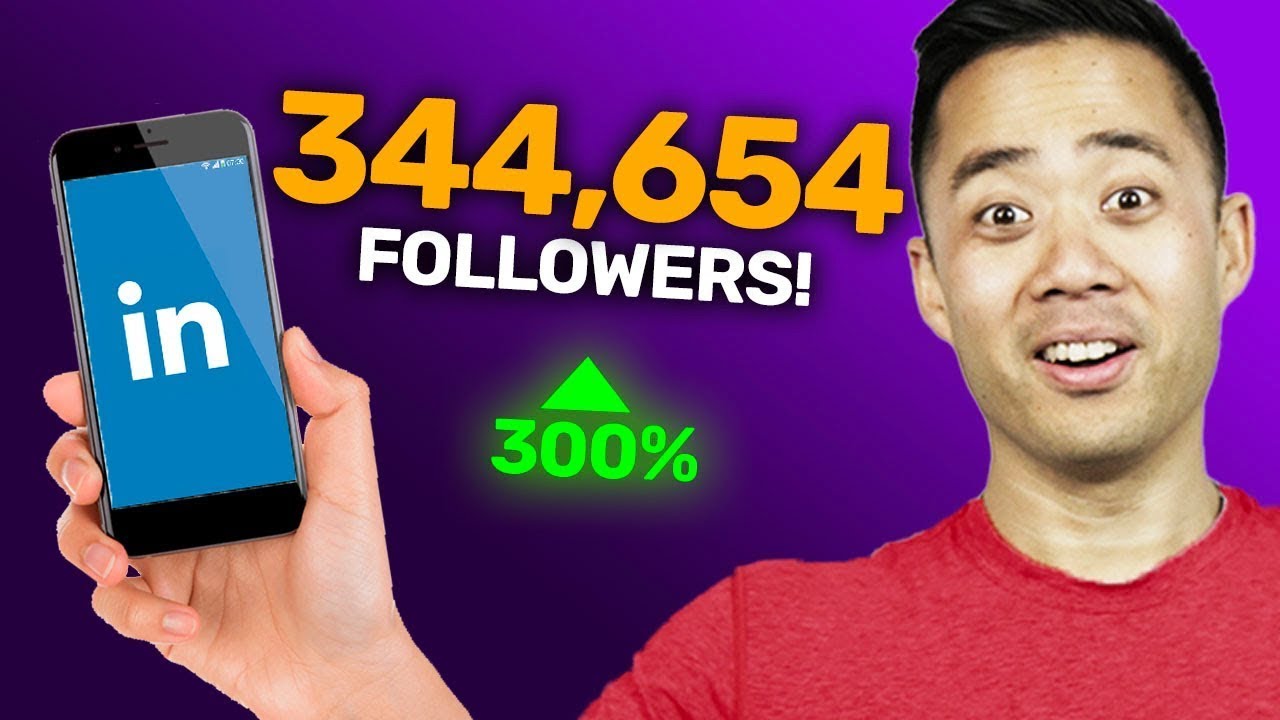
This content was created by Eric Siu. This content was uploaded by Eric Siu. This is a YouTube video titled "6 Ways To GROW Your LinkedIn Following in 2022 | A LinkedIn Case Study" (published Sep 6, 2022). It is a single-speaker case-study/presentation in English about how the presenter achieved ~344,000 impressions on a LinkedIn post and how others can grow LinkedIn reach. The speaker gives practical marketing tactics: use a spiky point of view, simple imagery, ask a clear question (agree/disagree), tell a brief story, prompt and respond to comments, leverage coworkers/friends to seed early engagement, and track performance with tools like Shield App. The video also mentions the speaker's agency (singlegrain.com) and hiring page.
Chapters
All right, so today we're gonna do a little case study on how I got over 300,000 impressions on one simple LinkedIn post and how you can easily do the same thing and probably get maybe over a million impressions or a couple million impressions for a LinkedIn post. So first things first, LinkedIn organic is super strong right now, and the reason for that is because on Instagram, what percentage of users are actually posting? And then now think about this, what percentage are actually posting on LinkedIn? So percentage of users posting on Instagram versus percentage of users posting on LinkedIn. If you wrote 87% or above for Instagram. That's what it is. 87% of users are actually posting to Instagram. Now for LinkedIn, it's 1%. So 1% of users are actually posting to LinkedIn, which means LinkedIn needs more content. And now what I need is I need a smash on the like button for the YouTube algorithm because ideally need 87% of people watching this video to help it grow. Okay, now let's talk about this. I am going to pull up my post over here so we can see. This is the post: Should you try to measure everything in marketing? And then you can see there's actually a see more, and then there's about 4,700 likes on it, 224 comments, and 344,000 impressions. And first thing, I'm basically going to give you a couple of pointers here that you can take advantage of. Stay to the very end, and I'm actually going to give you the thing that you should be doing to make sure that you are maximizing reach, because a lot of people are not doing this. So first things first is if you have a spiky point of view or if you have something that you know that other people will maybe disagree with you. For example, even though I'm a fan of remote work, I think a lot of companies are going to go back to a hybrid type of model where they're Meeting in person, maybe a couple times a week or a couple times a month. So spiky points of view—you want to have a point of view with what you're saying. So I put here how to fail at marketing, try to measure everything. Some people are gonna be like, "But like no, like no way." Like they have their point of view, right? And that's actually what's gonna get people to comment. So having a point of view—that's the first thing. But also the second thing is having a very easy to understand image. Like if I had too much text in this image, it would be too hard to understand. So how to fail at marketing, try to measure everything—that's gonna get people to react. And then I have a question here: Should you try to measure everything in marketing? People like whoa, like. A, this is already getting me. B, like there's this question here. Like I have a point of view, I want to say something, right? And then if you actually expand it, the third point over here is a little bit of a story. 10 years ago, marketers used to obsess over measuring every little thing, but things have changed. I have changed as well, right? And I talk about all the disparate channels out there, but I give a little bit of a story here. And then at the very end, I put agree or disagree. So it's like, here's a point of view. Should you try to measure everything? It's like, oh, okay, I'm winding up my opinion and agree or disagree. By this point after the story, you can get people to have some type of emotional response, right? Let me know in the comments, do you agree or do you disagree? Disagree with this? Should marketers be trying to measure everything? I'm curious to know. And if you do just try to measure everything, I'm curious to know what tools, what software, what frameworks you're actually using there. So if you look at the comments, I try to respond, right? Like this guy over here, Tom, agree with you. The short answer, my viewpoint is brand authenticity always wins. Okay, that's fine. Here I just said, well said, because I just agree with the guy, right? Like not much more for me to say. At least I can leave a comment here. But most people tend to forget about the comments. And that's not saying you should respond to every single thing. But try to respond as much as you can and try to be authentic. I'd rather do that than hire someone to just respond to my comments. Here's the thing I'll say too. When you think about social media platforms, for LinkedIn, we use an app called Shield App for analytics. And what happens is you can see the posts that have the more comments on it, the comments are actually weighed more. When I have a post with a ton of likes, but maybe not that many comments and a post with maybe just like, you know, 20, 30 comments or so, you'd be amazed. But the post with the comments actually has more engagement because you're actually getting people to write and contribute to the platform. And so LinkedIn wants more content for the platform. That's why organic reach is so strong. And I think it's going to last for maybe another year. Or 2. So you can really take advantage of that, especially if you're working in B2B. Now, the 6th and final point, if comments are important and engagement is important, if you have friends, if you're part of a company, getting your coworkers or getting your friends to help promote your piece of content when it comes out, because we always do that when a post comes out, that's going to help seed the content initially, meaning that if you have a couple of people liking, a couple of people commenting, then the algorithms are going to be like, oh, like this is worth maybe showing to some other people. And then if it resonates with other people, then it's going to be shown more. And that's how this post, you know, quote unquote went viral, right? I try to stay in my lane, which is more on the marketing side. And that's what works out well for us. So if you want us to do stuff like that for you, you can reach out to my ad agency, singlegrain.com. Or if you're looking for a great marketing job, just go to singlegrain.com/work. We're always hiring over there, and we'll catch you in the next video over there, and we will catch you later.