AI Agents Are Replacing Entire Jobs
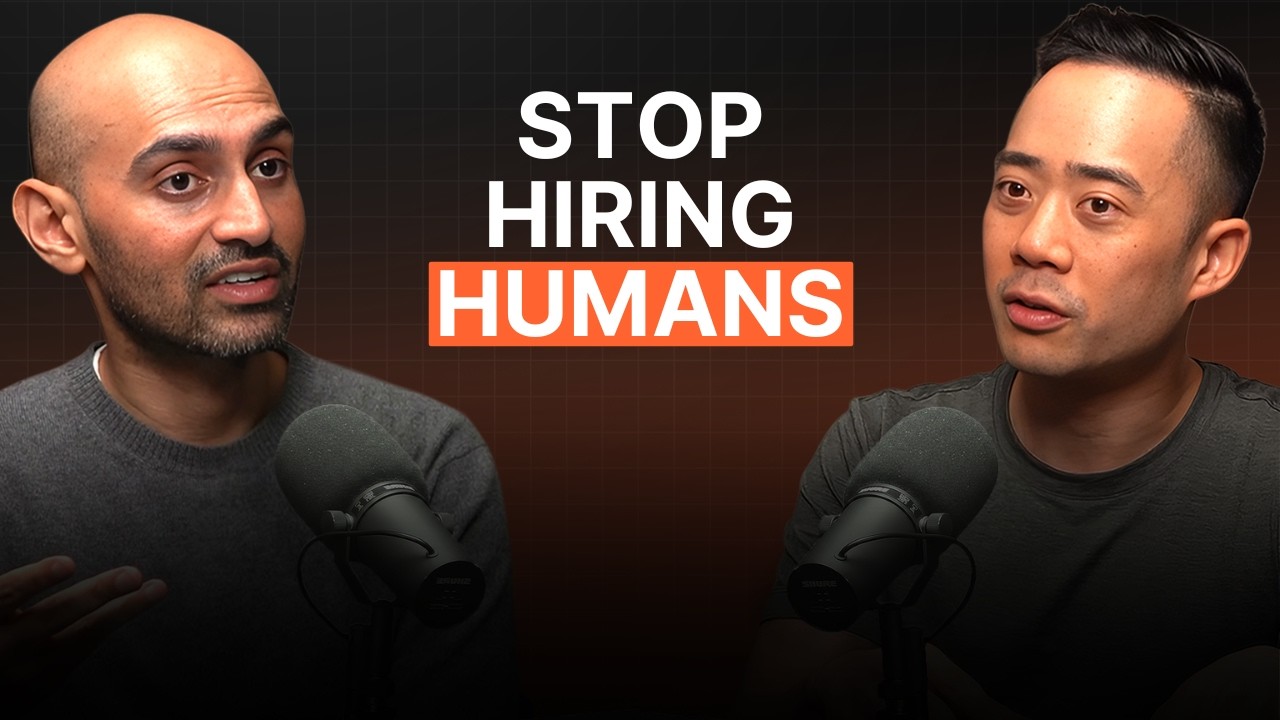
Eric Siu and Neil Patel discuss how AI agents are automating jobs, from recruiting to customer service. They showcase agents running inside Slack, explain how Intercom's AI product Fin grew dramatically, and argue the key shift is stopping companies from paying humans to do work robots can handle.
Chapters
All right guys, so it's another week of Marketing School and Neil is in Hong Kong as of right now. So it's 10:45 PM, it's 7:45 AM for me. And there's a lot to talk about. Neil, I think it'd be interesting because you've been traveling for the last few weeks. Maybe you can talk about what you're seeing, how people are, what trends you're seeing, what you've been talking about. And maybe we can start from there and then we can kind of jump around here.
So the The first thing that I really saw is, you know, you and I are both American, although originally my parents are from India. I believe your parents are originally from Taiwan. I could be wrong, but I'm pretty sure it's Taiwan.
China, Hong Kong.
It was Hong Kong? Oh, I'm in Hong Kong.
I'm half Hong Kong, Cantonese.
So it was funny because everywhere I go, they ask me what I think about the war, which I wouldn't have expected, but they asked me because when they see my passport and stuff, like, oh, what do you think about the war? So, you know, I usually just say no comment because I don't want to get into them. Like, I don't know what to think, you know. And of course, you know, no one wants a dictator who is gonna kill people. So, you know, I think a lot of people are happy that there's not someone ruling who killed— I think it was 30,000 people. But I try not to make comments about it. But yet a lot of people tend to ask me about that. Of course, no one wants to see innocent people die as well. That's the first thing I noticed over the last few weeks because that's the big thing that is on the news around the world. The second big thing that I'm noticing is, at least because I'm in Hong Kong, they're seeing the market soften because of China. I think China actually just revised their GDP.
Growth targets are coming down.
Yep, their growth targets are coming down. And what I'm seeing is, you know, we were talking, I checked into a hotel, we do the hotel's marketing, funny enough, globally. And I was talking to some of the people who are here and even at the events I've been at. And they're all telling me, they're all like—
Can I guess where you're at?
Go for it.
Rosewood?
No, I'm not at the Rosewood.
Okay, I'm not going to guess anymore. Keep going.
So I ended up asking them, or we were just talking about the economy and things like that, and they're just like, you Americans need to buy more. And I'm like, what do you mean we Americans need to buy more? And they're like, you guys spend a lot of money on marketing per GDP per capita, which funny enough, when you look at per country, we actually are one of the leaders in how much we spend per capita for marketing. They're just like, we're producing a lot of goods, both India and China. And they're like, our people don't want to buy the goods as much. I'm Indian, you're Chinese. And they're just like, we need you guys to step up and buy more goods. And I got that message like maybe 3 times over the last 2 weeks.
Of course we're going to tell you to buy more.
Yeah, they're like, it'll help our economy. You guys need to buy more goods. I was like, okay, sounds good.
Okay, so that's what you've been seeing. But like, what have you been—
wait, this is cool.
I'm gonna put these on right now. What have you guys been talking about? Like, what have you been talking about in your talks? Like, what's the trend? Because obviously you're adjusting your talks per audience, right? So how's that been going for you?
The big thing is when they're thinking about marketing, they're specifically focused on persuasion. How do they convince more of their own people within their own country to develop their own ecosystem? So for example, in India, and I'll use that as an example because I'm Indian and I know the culture really well, they talk about, hey, Indians are very price sensitive. So if your marketing is pushing some products that are premium and that are expensive, it's harder to sell. Indians are extremely price sensitive. They want good deals. So they were just like, hey, in marketing in India, how can we use persuasion? Think of like David Ogilvy. with copywriting, storytelling to convince people to spend the money to buy the products here. And that was a big theme because, you know, they're just not able to get the consumption from their own market and they're like, we're spending money on marketing, our consumers just don't want to spend the money even if they have it.
Quick break. One of our ClickFlow users just told me that they're saving 90+ hours a month on content alone. ClickFlow is our AI SEO product that actually does the work. Not just here's what you should do. It does it. It creates content in your voice. It helps you with other areas such as finding the right internal links and creating FAQs. We spent years making it, perfecting it with our clients so it doesn't just sound like AI slop. You can get a 14-day free trial at clickflow.com. If you're serious about AI SEO, you should check it out. Back to the show.
Cool.
By the way, you know what's interesting? So last week we recorded, I think Neil was in India and then he was basically falling asleep at the end. In this version, you're getting him in Hong Kong and he's basically close to falling asleep here. So, his energy is a little different. I woke up.
I got 5 hours of sleep. I'm good.
Oh, you're good. You're good right now. Okay, good, good, good. Because you're talking slower than you usually talk. Usually, you're pretty measured in how you talk, but you're even more measured today is what I've noticed. So anyway, so here's what I've been seeing. This is— so I came back from traveling last Tuesday. What I will say, by the way, the reason I'm wearing these glasses right now, because these are not only— they block red light and blue light, so they help you fall asleep, right? But they strain my eyes less. So, what's been happening for me, Neil, is because I've been kind of redlining it with the AI stuff, this means that every day I basically— because I have LASIK, right? After 10 years, your eyes start to hurt like hell. They dry up really quickly, right?
Yes.
But I have that every day now. So, my eyes hurt like hell at the end because I burn my eyes out every single day because I'm not even watching TV anymore. There's so many good shows to watch. I'm just like, I can't help it. I just like walk back to the computer room, I put these glasses on, and I'm just cranking on AI, right? And one thing I will say is Jensen said this the other day, Jensen Huang. So here's, I quote, okay? Jensen Huang, CEO of NVIDIA, OpenCLaw is the most important piece of software ever built, right?
Wow.
Like, that's crazy to hear from him because he's been doing this stuff for a very long time. And here, I'm going to read the exact quote. This is from Tay Kim, who wrote the book The NVIDIA Way, which is a great book. So OpenCLaw is probably the single most important release of software probably ever, right? And so what I want to say is like, one, there's a couple caveats here. I think if you're a founder right now, yes, absolutely set it up. You want to make sure you set up security provisions and all that. But if you're listening to this, you're probably not going to get it right. So just be prepared to take the risk. I'm not even bringing this up to my team right now. So they might be listening to this, but our whole thing is like, if you set up OpenCLaw for yourself, fine, go for it. You are not allowed to connect any of our stuff to it.
Okay.
we don't want to deal with that, right? And so, and that being said, Open Claw was purchased by OpenAI. Like, they are doing a lot of security hardens, like, um, every single week, and they're making quite a bit of updates to it. Um, but what I do want to say is the, um, the things that we have been, um, shipping— I might want to pull up this dashboard for you, but I'm spending the vast majority of my time on it right now. And, um, I came up with this phrase, actually my Open Claw came up with this phrase because there's this new offer that we're coming out with, right? The phrase, Neil, is Stop paying humans to do robot work. So I'm going to repeat that again. Stop paying humans to do robot work. So what I'm getting at with this is like, I'm, you know, much more— I'm back, you know, we're pushing the team on AI fluency. That's one piece, right? But also for me, with our new offerings, we have to, like, on top of what we're doing right now, we have to be constantly building, right? And so the thing that we've been saying is stop paying humans to do robot work because Our team right now, even though we have them using Claude code to build stuff and we're doing hackathons and things like that, there's a very big risk there. The risk is if they build a lot of stuff for AI theater, which is like maybe just to appease me or whatever, it's not going to be a good thing, right? So I might see people building dashboards for human use. Like, you don't want to do things that way, right? You want to build things that robots can use. And I think something that we kind of touched on briefly last week, Neil, was that—
Yeah.
We might be optimizing for humans right now, but in the very near future, Neil, like the stuff you're buying on Instacart, you're probably going to have a robot doing that for you. And it's going to be robots marketing to robots, right? Or humans marketing to robots in the near term, the very near term. So my point of saying all this is that, yes, there's a lot that's happening right now. Sure, Jensen's talking about OpenClaw and all this, but also the world is— you might be hearing an echo chamber because the stuff Neil and I are talking about, we're hearing from people that are cutting edge on this stuff. I would say keep the pressure on yourself, but also understand that the world is going to take time to adapt to this. But I do think we're very quickly moving into a world where you're going to stop paying humans to do robot work because I'll give you one more example here. RevenueCat is hiring agents for 10 grand a month. I don't know if you saw this on Twitter, but this came out yesterday. So they put out a job post saying, hey, we're not hiring humans here. We are actually hiring agents to work alongside humans.
Wow.
humans for 10 grand a month for these agents. Okay. So I think very quickly we're moving to this world. And one of my, this guy I know on Twitter, Nat Eliason, his agent, he released it into the world 30 days ago. And the agent on its own has already made 100 grand, 100 grand on its own.
That's awesome, dude. So yesterday I was at Campaign, you know, Campaign, the marketing publication. I was at one of their events and we were in a roundtable setting. It deals with a lot of big corporations that are publicly traded and that are global because Hong Kong is a big financial hub throughout the world and it's a big region for APAC even though the population of Hong Kong isn't the biggest. It's more so this is where a lot of businesses are headquartered and from here they'll sign contracts for the rest of Asia. Hong Kong and Singapore are really known for that. So we're discussing AI and marketing. What is your biggest win and what is your biggest, you know, or unexpected loss? Like something that AI did not do perfectly well. And someone from the room made a really good point. They have in their organization, this is a $10 billion USD company, they're publicly traded. They have people who just train AI for the company. So imagine you are in marketing and you use AI to create content, okay? And that's just your job, to create content. Well, they have someone who's part of their organization who helps the AI be trained to write better content. Let's say if you're in a department doing ads on Facebook, they train the AI to just create better ads. And they do that for every marketing function. So then that way, when the individuals within marketing are using, you know, Copilot or ChatGPT or whatever they're paying for, a lot of people are paying Copilot. You want to know the number 2 option?
Anthropic?
Gemini.
Well, that makes sense. It's in the suite too.
Uh-huh. But that's what we're seeing large enterprise corporations adopt. So just keep that in mind because everyone talks about optimizing for GEO, for ChatGPT, Perplexity, Claude, but a lot of the big corporations are paying for their staff to be on Gemini and Copilot. And remember, they have a lot of revenue and their budgets are massive because they're enterprise businesses. But we were talking about training agents and they were talking about how this is very successful. But here's a caveat on the big mistake that I saw, because some of them were showing me their outputs. They're paying only a few people to train the LLMs to do marketing the way they want for specific tasks. If you're paying some generalists, and Eric will know this right away, if you're paying some generalists to train the AI to help on different marketing initiatives, what do you think is going to happen with the outputs? It's a smart model, but what do you think is going to happen with the outputs?
It's not going to be great.
Bingo. He nailed it. And the reason being is AI needs to be trained by people who are amazing at that job function. So the concept, in theory, on paper, it sounds good to just have a few people who train the AI so it's more efficient for the whole organization and marketing. Sounds great. But if those people aren't specialists at what they do and they're just average and mediocre, Then everyone with the organization that's using the AI to help them with specific tasks, they're going to get some mediocre bullcrap output. Excuse my language. You need amazing people at content to train the AI when it comes to content. You need amazing people at ads and creative to train the AI and so forth, so down the road. And here's the other thing. When a lot of these people are training the AI, they're expecting amazing results within a month. And I'm trying to tell them, you need to look at it from a year-plus time horizon. You should still use it within that year, but if you continually train it for a year with amazing quality inputs, you're going to have amazing quality outputs in a year plus. Of course, in 3 months, you're still going to get great outputs, and even 6 months will be better than 3 months. But people need to be patient and think long-term because if your companies have been around for 30, 40, 50 years, You can't look at it as like, I put in time and energy in this last 30 days, I expect amazing outputs in 30 days from now. You'll get amazing returns if you're patient and you do it right for a year plus.
Yeah, so here's what I'm going to say. We did something recently. Oh my God. So I was going to show you something, but so I've been using OpenClaw in Telegram. Okay, so I've been working with it alone and I've spun up a bunch of different agents, one for content, one for sales, one for all these different things. And I noticed the problem that I was coming up with is that I was the bottleneck. I was becoming the bottleneck because I was building all these things, right? But at the end of the day, if I have to be the bottleneck of every decision, things are going to move a lot more slowly. And so what I had happen last week, Neil, this was a major unlock for me last week, and I'll be doing a webinar actually on this in an hour.
Wait, before I cut— and I'm sorry to cut you off. Can you explain to everyone the cool stuff you're doing on Telegram with OpenClaw?
So, well, yeah, that's good. Thank you. So I'll start with what I was doing on my own, and then I'm going to talk about the major unlock that happened last week. Okay. So, you know, in terms of actual ROI use cases I'm getting from OpenClaw right now in my Telegram, so you can use WhatsApp, you can use Discord or whatever it is exactly, and you can even add it to Slack, which is what I just did last week, but in Telegram, I am using it. I have a bot called Alfred that acts as my chief of staff. And so Alfred has all the context of my business. It has all the context of my goals. It has all the context on my— just almost everything, right? And it can spin up like— it creates content for me on X. So the content, I've talked about this before, it averages 85,000 views per post. Not only that, it started creating content for me for Instagram. So it did an Instagram post and then that one got like 40,000 views or something like that. It's one of those data charts.
Wow.
that you see on my Instagram, right? I was like, oh, I was like, hey, this one did really well on X. Hey, what can we do based on the work we've done? Okay, so that's cool. That's content, right? But not only that, Neil, the Beat Claude challenge that I put together, we made our first hire. The very first person we talked to was a superstar. Okay. And then when I talked to that person, I was like, hey, so how did you— I usually like to ask when they're in an interview, I'm like, so how did you prepare for this call? He's like, well, Eric, I read your book. I was like, oh wow, he read my book, right? I'm like, you don't hear that from a lot of people. And so—
Wow.
I read your book. And not only that, dude, this guy had a startup he's been working on for 3 years or so. And I'm like, oh, he's been taking a beating for— he like, not only has he taken a beating, he took a beating for 3 years. So he knows how to take pain, right? And then I passed him over to talk to my CTO. My CTO was like— I saw my CTO talking for like, I think it was 70 minutes or so. And he had a smile on his first, uh, on his face the whole time.
That's cool. Uh, so to go back to it really quickly before you end up breaking down some of the Or before you end up breaking down some of the OpenClaw stuff that you're doing, because I'm curious, because we talked about it a lot last week and when I was in Mexico as well. But what are some of the cool stuff that you're doing with OpenClaw, like on Telegram and some of the other channels? So I know you're doing this stuff with the X articles, and that's been going well for you. The Instagram stuff is new for me, so that's really cool. And you're seeing some good results. I'm assuming it's hit or miss, like most social media posts.
Yeah.
But you're getting some more hits because you're asking it to create similar content to your hits. So it's learning. Okay. What are some of the other cool successes that you've gotten from Open Claude over the last week?
So hiring, that one's major, right? Because now everyone that applies, they're going to have to go through the Beat Claude challenge and it saves us a lot of time ultimately. And you find AI-native people, it just makes it a lot easier. We actually have a dashboard that shows what Neil scored versus what Claude scored. And if you beat that, then we'll talk to you and then all we want to talk about is, uh, at least if you get to me, all I want to talk about is AI because I just— I'm looking for an exceptional conversation with an exceptional person. So that's recruiting. Not only that, we—
Let's stop with recruiting. So let's stick on that for a minute. I know you talked about this challenge. It was either last week or the week before, and you told me about the kid who read your book, which I thought was awesome, by the way. For someone who has that kind of dedication, that's amazing. It was the same thing when I was in India. I met someone who wasn't part of our Mumbai office, and he's just like, I really want to be part of it. And he's just like, so I asked the— we have a leader there named Rubina. He's like, I asked Rubina if I was able to pay for my own ticket and own hotel to be here so I can learn more. I was like, look at this dedication, right? I didn't expect him to do that. So that was great. But where was I getting at? So on the recruiting side, it's really good that the kid did that.
Yeah.
But can you break down the challenge again? Because you talked about it a week ago. I thought it's an amazing idea and it's something that you can templatize and do for your whole hiring process.
Dude, all you guys need to do, if you're watching this right now, you can still see me, right?
I can still see you.
Okay, cool. So if you go to singlegrain.com/apply, you can steal this from me. I have no issues with this, right? Because I literally, I stole this from Anthropic because Anthropic does this. That's why it's called the Beat Claude Challenge, right? Let me back up a second. When I saw Anthropic, what I have pulled up on the screen right now, if you can't see it, is I have a GitHub repo that's open. Okay, so that might sound scary. It's like, oh my God, I don't know how to code GitHub. Don't worry about that. Okay, this GitHub, it just shows what I have here for the challenge. It basically describes it. What Anthropic had before was like, hey, we want to hire you if you can beat AI. Okay, so they're hiring like more engineers, obviously. So I went to my, I went to my OpenCLaw and I said, hey, I want to have this challenge, but I want to have it relate to my company and my goals and the roles that we're hiring for. So what I'm going through right now is this is an overview. Like, this is how it works. You pick a challenge. The challenge is basically these are the different roles that we're hiring for, right? So like paid media engineers, product designers, sales, head of talent, sales director. So these are the roles that we have. And by the way, if there's no role that we have available and you really want to join Single Grain, we have a general one over here. Okay. I'll pause for a second. Any questions before I go on?
Do you want to explain the repository one more time for people, like in more depth so they understand it?
Yeah. So a GitHub repo or repository is where you might have your code stored, for example, or you might have different skills, right? Like marketing skills. Or in this case, this is just a bunch of folders and files on the different challenges we have if you want to join our company. So you have to beat the challenge, right? And then there's also like a leaderboard here, and then there's different submissions that we have. So there's different folders. There's a README, there's a scoring rubric as well. And then if you click through one of the challenges, let's say marketing strategy, you will see that here's a brief for the challenge itself. If you're watching on, you should definitely be watching on YouTube. And then here's like the situation that we give, you know, this is like a hypothetical situation. Oh, this company raised $5 million, there's 6 months of runway remaining. Here's the founder, here's the product. So it gives a bunch of context on what the challenge is. And then it tells you, hey, here's what you should submit over here. Create a 90-day go-to-market strategy to get them from $0 to $50K in monthly recurring revenue so they can raise their next round. Right? But this was all created using OpenClaw, just asking it to make this, and then I can edit it if I want. But then after I just took the Anthropic link and I said, I want something like this, ask me clarifying questions, then it put this all together and it launched it to my repo. So you look at all this stuff over here, it looks like a lot of work. How much work did I do? Like, I don't know, 10 minutes?
Yeah. And if you guys don't have OpenClaw up and running, you can do this with ChatGPT, you can do this with, you know, Copilot, you can do this with Gemini. The list goes on and on.
Yeah, I would go Claude Code or OpenCLAW with this one, or Codex if you want. It's one of these agentic coders because the— yeah, with like one of the, like a Claude or just a ChatGPT, there's more to be desired there. I don't think you could do this in 10 minutes, so.
Yeah, I agree with that. One thing that we're seeing on the marketing end with people talking about OpenCLAW and Claude Code before this, and, you know, ChatGPT of course was big, then Gemini. Gemini had a lot of cool features like Nano Banana and stuff, so it started gaining tons of traction. That we're seeing is we're constantly seeing corporations, at least in the marketing department, trying to use new tools, which I think is really good. But I think there's one big mistake that people aren't really taking into account that's going to hurt them in the future. It doesn't mean you shouldn't use OpenClaw or Claude Code. If you spent a year training ChatGPT, hypothetically, and then you just want to switch over to Claude Code and everyone use Claude Code, you have to start a lot of the training all over again. And people forget that there's a big cost sink into all of these LLMs because if you're adapting these LLMs to be more efficient with your marketing and you don't think through which one you really want to use at the beginning and you just switch around, you'll lose a lot of traction a year from now. You got to really think long-term on where you want to invest your eggs.
Yeah. So what I would say is you want to make sure whether you're using— I mainly switch between Claude Code and OpenCLAW for different reasons. Claude Code's good for UI/UX and deeper builds. OpenCLAW is good for if I just wanted to ship something very quickly and think through it, right? What I would say is whether it's within Codex or Claude Code— Codex is the one from OpenAI, that's their autonomous agent or agentic coder, I should say. They have all these files. So in your Claude, you have your claude.md file. So you can actually set up contextual memory where it compounds. And that's one of the true values of OpenCLAW, for example. It has contextual memory and has these files to continually refer to, and you can continue to upgrade the memory over time. That's what you didn't have in a ChatGPT just by itself before. It might say it has a little memory, but there's a lot more to be desired. The reason why Jensen said OpenCLAW is such a big deal is because now you can continue to compound on it and those learnings you can actually carry over, right? And another thing I should call out too, Neil, I don't know if you're aware of this, but now there's easy portability. If you want to move from ChatGPT to Anthropic, there's actually very easy things that you can just execute now to just port your memory over. And I think Anthropic was the one that first came out with that, but you can also do it vice versa. If you want to go from Anthropic to ChatGPT, you can do the same thing too.
How good is it when you port it over?
I haven't ported it over because I don't need to do it, but I see so many people talking about it on Twitter. It's like, oh, I like now, now, like, because you see people, I think some people were kind of up in an uproar because ChatGPT signed with the Department of War. And then like, you know, everyone's like, oh, I'm on Anthropic now, right? I'm like, okay, like, they're both great products. I don't care. But that's, I saw people talking about it. But I will say the memory with this, like with the OpenCLaw API.
Eric does care about AI being used for war and hurting Yeah, I don't want surveillance, right?
I don't want that type of stuff going on. And I don't think AI should be controlling missiles and things like that. So yeah, but I think the news cycle, that's not like, you know, I'm just kind of scrolling past it. That's what I'm saying. But thank you for the clarification. Yeah.
And he doesn't want innocent people dying either from—
Yeah. And I'll give you one more example, then we can move on from this, Neil. But this is where I'm starting to combine everything together. So this is our This is like a dashboard that I have, right, called Single Brain, where again, I'm like, why hire humans to do robot things? We want the people that we have on our team to focus more on doing only things humans can do, right? And we're getting there. So this is, um, this data, like we're still porting in data here, but you can see I don't want a dashboard that I need to manage. I want a dashboard where I can manage the agents. And so I have my agents in here. I have Oracle, I have Flash, I have Cyborg. So Oracle's for SEO, Flash is for our social media, Cyborg is for recruiting. Alfred is my chief of staff. You can see the what they're doing over here. You can see the actions they're taking. I can set it to auto if I want or not. Or as an example, I can see the speed to lead on my team over here, right? Again, some of this is dummy data, some of this is real, but this is all— by the way, none of this data was populated yesterday. So all I do once I'm done with my kind of operating company work is I just go to OpenClaw because OpenClaw is porting the data over to this dashboard. This dashboard is built within Claude Code, and I basically have everything I can manage here. I can see The tasks that are happening over here, the cron jobs I have, the team that I have over here, right? All this is going to be something that clients are using as well because the way we see it is like, okay, you know, if you just know how to push buttons with paid media, okay, you're basically done. Okay. If you just know how to do, you know, if you're just a BDR, you know, 6 months ago, you're done as well. Like the way is we have to help people learn how to control the robots so they can do higher leverage things that only humans can do. That's where we're trying to go with this. Um, but that's why this stuff matters so much, um, at least to me.
Dude, I'm gonna share my screen really quickly.
Go for it.
I use Claude Code so much for this internally.
Dude, you're so— so when'd you start using Claude Code?
A while ago, but check this out. I use it mainly for financial projections, for stuff that's like related to new divisions and stuff like that. And then you can end up just adjusting, but like Dude, this is sweet. It's sweet.
You stopped your screen share.
Yes, I stopped it, but I was just showing— it's just random charts. Um, but like, it's quick stuff. Like, it doesn't take more than 10 minutes. It's just easier to do than Excel, and it's just more pretty, and it's easier to digest for me to share it, and it's quicker for me to get the output than it is to manually type it all into—
Dude, you know how you get text messages all the time with the data? So you can basically Plug all those text messages in and just have it update your dashboards.
Don't need to. People don't send me data anymore. They send me—
Oh, they just plug it into dashboard?
They send me Cloud Code reports of pretty versions of data. They text me—
Oh, that's great.
They text me HTML. You have to click it and open it, but if you open it on your phone, you have to open it within the browser for it to load and look correct.
I will say one more thing, Neil. It actually is working now. So we have a deal revival tool, right? So OpenClaw started using a deal revival thing and people started responding. And so for generating pipeline, for generating meetings, I told you about the Google meeting that was booked, right? It's actually generating meetings. It's generated, like it's generating people that we're actually hiring. Okay. And then all the stuff that we're doing from a social standpoint, you can basically set it to autopilot at some point. The one thing I will call out is I came up with this concept earlier this week called calibration loops because the challenge is, to Neil, your point is how much can you really trust these things if you don't train them, right? But there's a problem with that too. If you don't train it, it's going to suck. If you train it, you might think you're done, but you actually need to continue to train it because what if you change your product or what if your ICP changes or whatever? So I think whenever you build an agent, you need to have a calibration meter at the top to show how much trust you've built. But that decays over time too, because the product or your business changes.
You want to hear an interesting stat talking about, you know, deal recovery? Did you know, guess how much percentage of our business every month is from old deals that didn't close?
New business, right?
How much new business is from old deals that never close?
5 to 10%.
Or more than 20%.
More than 20%.
Every month. Uh-huh. Wow.
That's crazy. That's good for everyone.
And when I'm saying like old deals, I'm not talking about 3 months. I'm talking about more than 6 months old. So like 6 months, year plus, sometimes even 2 years. These are deals that are coming.
Yeah. You, and you stretch it out to 2 years, right? Is that the max or do you stretch it out to 3?
We closed Heineken last week. It was either 3 or 4-year recovery for Heineken. We never had them as a client. It took 3 to 4 years of us following up on our old lead, which was Heineken, to close them.
But that's, that's a good callout, right? Because here's the thing, and you can, you can add onto this too, but, but like 99% of people are not in market to buy. And over a 4-year period, how many agencies have they gone through? Or maybe the timing wasn't right, or maybe some other reason. And then maybe you just hit them at the right time and it's like, hey, okay, yeah, let's have a conversation.
Yes. And I've told a few people, this stat because a lot of people, at least in B2B, talk to me about, oh, recovering old customers, and it works in B2C as well. So they're just like, oh, it just works for you because you're enterprise. Even on our SMB end, more than 20% of our monthly new customers are old leads in our system. And typically in the SMB category, they measure an old lead as someone who's been there for more than a year. Okay? They don't look at the 6-month mark. They look at a year plus an SMB. That's how I know how that division measures it. And more than 20% of their revenue, they're actually closer to 30, they're not at 30, but they're closer to 30, is coming from leads that are a year old for our SMB division.
That's great. That's a great stat. Well, I didn't actually share the major unlock from last week, and then I want to kind of come over to this Aaron Levy quote that I want to get your reaction on. So with OpenClaw, obviously, like, I don't want to tell everyone on my team to use it. And obviously I have mine locked down where, you know, I'm constantly hardening it every, almost every 1 or 2 weeks or so from a security standpoint. But even then, I'm never going to be 100% secure, right? But the point is, I was like working in Telegram, I'm like, I'm doing all these cool things on my own. And it has so much context. What if I just unleashed it? What if I had all my agents invade Slack? So I had the Slack invasion happen last week. And it started invading, you know, the sales room, it started invading the leadership room and all that, right? And the really cool thing is I added my chief of staff bot Alfred, like Alfred from Batman, I added Alfred into it. And immediately my COO started asking questions. Hey, with ClickFlow right now, what are the stats over here? Where's the biggest drop-off in the funnel over here? And then it started, because it's connected to Mixpanel MCP, it started citing all these things. It's like, hey, here's a smoking gun. You should attack this over here. And then she starts asking more and more follow-ups, and then we tag in the CTO. Hey, here's what's happening over here. And what's happening here is that you have a really smart bot that understands all of your goals, and then it's interacting with other people, and then it's creating all these idea babies, and then it's getting people to take action. So there's like an oh crap moment. It's like, oh, I can actually work with these agents. And not only does it spot out the— it does the data pulls very quickly, it gives insights on it, strategies on it, but it can also execute on those strategies if you let it. And so in the SEO room, it's saying, oh, Single Grain is— it rated us, right? It's like, oh, you know, you should be doing this from an AEO standpoint. And then our new SEO director comes in and she's like, well, rate Single Grain on how good we are on the AEO standpoint based on your recommendation. And it's like C, D, F, like across the board, right? On how we should be designing our pages for LLMs. And then it's hooked into my WordPress. And so we can make those changes. So my point is, once I had this Slack invasion happen, it was a big load off my shoulders because now my team can work with these agents to train them. And then that scales over time because now they are learning to work with these assistants. So that's still— it's still very early days right now, but I'm very, very excited about what's been happening. And I think it's been a major light bulb moment because even me telling them, oh yeah, you guys, you know, You got to use Claude code, we're going to do these hackathons. There's a lot of theater there, but now that they're actually working with the agents, I think that's another step up. Yeah.
And one quick feedback for anyone listening who's trying to do AEO stuff, we constantly see this mistake. So let's say you are a home service company, so you do like roofing, you could be a dentist, it doesn't matter what kind of business, you can sell a product, whatever, right? You could be in B2B. A lot of people will create like a blog post on their own website, the best roofing company in Michigan or the best dentist in Michigan, the best dentist in Chicago, Illinois, the best, you know, whatever it may be. Actually, agency is probably an easier example because they're more national. But let's say if I'm an agency, I'm NP Digital. Hypothetically, if I created a blog article on our own website, the best agency in Michigan, the best agency in Chicago, the best agency in Los Angeles, the best digital marketing agency, the best paid media advertising agency, and I created blog articles for like 400 or 500 of these topics. You may end up getting some AEO juice or extra juice. What we're also seeing though is it's hurting your traditional organic SEO. So you need to be careful because what's happening is, is you're creating a ton of, I wouldn't call it duplicate, but lookalike content that's too similar. It confuses Google on which ones to rank and it hurts your overall site. So people just need to be really careful if they're trying to do that from an AEO or GEO perspective. More so what your goal should be is to try to convince other websites to write articles on you for all these subjects. Much more effective. It's harder to do as well, much more effective than if you just publish 500 or 1,000 blog posts on your own website. Because if you just publish it, you remember just like in the old days of SEO, if you had 1,000 pieces of content and a lot of them sucked, even if you think they're good, or if they're on the same topics and the same keywords, it confuses Google on which ones to rank. And though, even though GEO and AEO, is a big chunk of the future and it's really valuable. Google's organic searches are growing. They're now at 13.7 billion searches a day. You can't forget about the boring and ugly because the boring and ugly being traditional search still drives a crap ton of revenue. So ideally you need to optimize for both without hurting your traditional SEO.
Just a quick break. If you want to run LinkedIn personalized ads and landing pages, you can't do it on LinkedIn ads right now. But you can do it with Karrot. It's www.karrot.ai. Again, karrot.ai, and we'll see you on the other side. So Neil, let me show you this, this table over here. You actually, um, you, you hit on one of the topics I have here, so check this out. So this guy over here, Danny Critchton— Critchton— Critchton— Danny Critchton posts this. So he says, no discussion of tech media can get past this basic traffic fact. In the AI world, Google and social no longer refers traffic Which means that the vast majority of readers just never find you in the first place. Here's the analysis over here, right? So you see Digital Trends, peak traffic 8.5 million in 2024, March 2024. January 2026, 264,000.
Wow.
97% decline, right? Remember ZDNet? 7.6 million visits per month, February 2024, 768,000, minus 90%, right? So like Wired.com, 7.7 million, November 2024, Drops to 2.9 million, negative 62%. Dude, so I think, by the way, like what Neil said, he's not wrong, right? But I think it's just really interesting to look at these big publications from the past, how they, some of them have adapted, but I don't think a lot of them have adapted.
The bigger problem with publications is they're creating informational content. Informational content is the stuff that's getting hit the hardest. The content that's more transactional, navigational, That's the stuff where you can still get a ton of traffic and more importantly, revenue. Because if someone wants to talk about, let's say with CNET, they talk about computer-related stuff or HowToGeek. I've never been to HowToGeek, but I'm assuming it's computer-related stuff. If you go to CNET and you're reading an article on how to optimize the memory in your computer and make it more efficient so your PC is more quicker, because memory's a big issue in AI, right? Not a lot of people are talking about that, but this is why companies like—
Huge.
Dollar booming. And with that article, Google in AI Overviews or AI Mode or Gemini or ChatGPT or Perplexity or Claude, they're just pulling in what to look for and how to fix it so that way you don't have to go to CNET. Reading that article on CNET produces them revenue, but it produces them revenue typically on the ad front. On the flip side, transactional keywords, navigational keywords, these are more bottom of funnel. They drive revenue. People still go to websites for it. Even if they don't go to your website and an AI agent just helps you finish the transaction on their website, that works too. At least you're capturing revenue. Who cares if you get the visitor? You just want the revenue. That's really the end game. And if you're like, no, I want the visitor, you're looking at the wrong metrics in your marketing and you have been for years. Yes, I get how more visitors in theory relate to more revenue, but even 3 years ago, 5 years ago, before all this stuff, your number one metric that you should have been looking at is revenue, LTV, profitability, even more than traffic or followers or likes. But it's the type of content that people are creating and the informational ones are getting hit the hardest. And a lot of businesses haven't adapted from just shifting away to, we're just going to cover everything related to marketing, like what is SEO? Well, that's cool and all, but there's already a million articles. Now, even if you don't get traffic, you do want to make sure you're covering your topic thoroughly on your website because you still want AI and Google to pull from you even if you don't get the traffic because you're building up the authority and the brand visibility and they're more likely to cite you. But you just don't want to target all informational keywords like what is marketing? Well, that's been beaten to death and a million sites hypothetically have covered that.
I think a lot of this just comes down to adaptability at the end of the day. So we've talked about search everywhere optimization to death over these last few years. And so a lot of these like digital trends, for example, they just didn't adapt their business models and they were not quick enough, right? Versus the ones who have, let's use Andreessen Horowitz as an example, right? I was actually listening to a podcast where Ben Horowitz and Marc Andreessen and We're talking about the new media model that they have where they get to control the narrative. And they have, they have multiple podcasts going on. They have like multiple YouTube channels. They've really kind of mastered the media game, not just for themselves, but also for their portfolio companies as well. But that's a good example of a company adapting because, you know, the reason they— part of the reason why they did it was because they were getting attacked all the time by like the Wall Street Journal or New York Times. But now the internet, they've realized that the internet has changed and you want to be able to own the conversation. And that's what they have done, right? And so Um, I think that, that's, that's the name of the game here. Like, don't get me wrong, like Neil and I first started in SEO. And when we look at this, it's like, yeah, it sucks. And like our traffic has declined. I don't know if we've declined 97%. We definitely haven't. Um, but we've also adapted to kind of appear on other channels. You want to know something interesting, Neil? So yesterday I was talking to Apple and I was like, okay, we're ready to pull the trigger on some of these, uh, Mac Ultras, right? I was like, but we need the 512 gigabyte, um, unified RAM. And they're like, we don't have those anymore. I'm like, why don't you have them? He's like, because we're sold out. I'm like, oh, damn it. So it's like, you do need— if you're going to run local models, you do need the 512 at minimum. You can't have 256 because like a model like a KIMI 2.5, which is an open source model, runs on like 240 or something like that. So you don't have much wiggle room there. So I'm like, okay, well, you know, my strategy now is like, okay, if I'm going to buy these Mac Ultras, I was going to buy like one old one because it's a Mac, it's on the M3 Ultra chip. But the M5 is about to come out. I thought it was going to come out this week. It didn't come out this week. It's going to come out in like 2 months or so. So my point of saying all this is that I think a lot of people are buying on-prem, at least for themselves, to run local models. Because Neil, I spent $5,000 just on my own Anthropic API key in the last 30 days or so, and that stuff's going to keep adding up. I'm like, goddammit. Sorry, pardon my language. Damn it. Okay. If I released my OpenCLAW, to my team and they're all using it like crazy, they're going to town, I need to have local models if I want to save the monies.
So yeah, dude, yeah, and RAM is super important and people forget that. They all think like, you know, these GPUs or CPUs, I forgot whatever they call— I think they're called GPUs, um, you know, like the Nvidia chips, AMD chips, and all that kind of stuff, the TPUs, but they forget that you also need tons and tons of RAM. Dude, without that, it doesn't work.
You know, the research I did on this yesterday, I— what was I using? Was I using Claude? Was I using OpenAI? I was using none of those. I was using Gemini AI mode for this. Okay. And I was like, okay, so give me a crawl, walk, run for this. Like, what do I need to do? So my crawl, walk, run, just if anyone's interested, for my local on-prem setup is I'm going to have multiple Mac Studios.
Okay.
And each one of those is like $10,000 to $15,000, by the way. So you have a few of those. Okay, one might be running the local models or the open source models locally, but you might have some for clients. You might have some for like your team's agents and all that. But the other thing too is you actually will need an NVIDIA, like one of those CUDA chips as well, because if you want one of those, that's going to decrease the time it takes to get these tokens out, right? So if your team starts complaining about, hey, it's taking too long to get answers, well, that's when you start to need to include like one of these like $10,000 to $15,000 to $20,000 Uh, NVIDIA CUDA chips. So yeah, my guess, Neil, is you're gonna probably be buying from NVIDIA soon as well. So, uh, we'll see.
We could be. I have no idea what the heck my team buys half the time. I just see credit card bills and I stopped looking at them because I used to go line item by line item. It's just so much stuff to go through line item by line item now.
You know, Kach just catches the line items for our podcast costs sooner than I do.
I have a tendency to nitpick every expense.
And it's like, what is this? It shouldn't be this. It shouldn't be this. I'm just— and at the same time, I'm like, I don't know. So, so yeah, but the good news is HubSpot, which is our sponsor, those checks should start to come in soon at some point. So we will see. Yeah. By the way, Neil, did you see how Intercom, they talked about reinventing themselves into doing $400 million in ARR?
I did not see that. I'm really curious about this. Do you want to catch me up? Okay.
Yeah, I'll share my screen. Like, then I'll get your reaction first to this. Okay, so I don't know how you pronounce the name. I don't know if it's like Owen. So he's the CEO of Intercom. Okay, so originally Intercom was like a help desk software, like a Zendesk or like a little chatbot you have in the bottom right of your screen. Neil, did I miss anything there? That basically was what they did.
The original version of Intercom, think of a chat that pops up in your bottom right corner. And that chat was human-powered, right? And it was mainly humans using it, although I think you could have some pre-filled text and you could input a database.
But those were never that great.
It was never that great.
Yeah. Okay. So Intercom, I think they were maybe at some point in the last couple years or so, they're maybe doing $100 million in ARR. Now today they're doing $400 million. Okay. So, um, so the CEO and founder, he left for actually 2 to 3 years or so. Okay. And then it was only when ChatGPT came out, where that was an existential kind of code red moment for them, um, and they started building Fin. Fin is actually their customer service agent, um, that I actually interacted with one yesterday where it actually answers and solves questions. Um, it's basically your automated customer service team. Did I miss anything there?
No, and it's really good. And to be clear, when Intercom made this pivot, instead of saying, hey, intercom.com, you can get all this stuff, I believe it was fin.ai, or they created a separate brand, separate products, so that way there wasn't confusion to get more adoption in the market.
Yep. So I'll kind of give you the TL;DR on this post. I highly recommend you read it because it's got 870,000 views on Twitter. But so Owen says, look, I'm going to offer Intercom, the company I run, as a case study to help me explain how SaaS companies can be saved and share the things we did starting 3 years ago to find relevance in this new world. We found ourselves being referred to as the poster boys for success as a late-stage SaaS company in AI, and I'd like to first share some numbers and background context to help you understand why that is. So 3 years ago, our future was looking pretty bleak. I jumped back into the CEO role after a 2-year hiatus while sick, while we were heading quickly towards negative growth. All SaaS growth rates fell as the ZIRP days waned, zero interest rate policy, and ours fell extra hard due to unfocused business strategy that led to poor product-market fit. A month later, ChatGPT was announced and we all began our collective gradual and still ongoing journey to try to understand what that all means. I'll give you a simplified meme version of the story first. Step 1, AI. Step 2, a lot of question marks. Step 3, profit. Because I'll be explaining how— the how shortly after. But in summary, we launched our new service, Fin, in the summer of 2023. So now it's— we're talking 2.5 years or so, and our business began to violently, violently Recover thereafter. Like, by the way, look at this chart. So Neil, I'll let you kind of explain this chart.
It's too small for me to see.
Oh, you can't see. Okay. So, um, basically what you have here is you can see in 2021, okay, 2020 happens, right? So everything starts moving up. SaaS, uh, Intercom growth rate is like a high of 37%. Okay. But 2021, okay, it drops to 30, 31% growth rate, then 30%, then 24%, then 18%, then 12%. At 12%, when it's like it's coming down a cliff right now, that's when the CEO change happens and he comes back in, okay? So CEO, like, by the way, CEO change happens, it drops from, Intercom growth rate drops from 12%, 7%, 5%, 4%. When it's at 4% at their lowest, that's when they launch Fin. And right when that launch happens, 4%, 6%, 7%, 9%, all the way back up. My camera's blocking the way, but it goes up to like 30—
37%.
37%, all the way back up to 37%, and they're crushing. The average, like you see the black line over here, that's the average SaaS growth rate. They are now well above that, and that's, that's the recovery story, right? So, um, they're now at $400 million ARR overall with Fin about to pass $100 million. Uh, go ahead.
Yeah, but when Eric's showing 37% growth, their growth rate is higher with a higher base. To grow at 37% when you're doing $400 million, That means you're adding $148 million in revenue that's recurring each and every single year. But here's the kicker, right? So if they're at $400 right now and they grow 37%, next year they're at $548, hypothetically assuming the growth rate stays flat, but their growth rate is actually increasing. So let's say if they just maintain 37% growth, it's $548 because they added $148 million. And then when you look at the $548 million, 37% growth on that is $202 million. So it keeps compounding. So then they'll be over $700 million. And I bet you at that point they'll go public.
Cool. So let's talk about how they did it, right? So then the main gist of his article here without reading the entire thing is this: at Intercom, we destroyed so many things big and small. We ripped up our old values and created new disruptive ones, which we then hired and fired against to drive the behavior we needed in this new world. We rewrote our mission to focus on our agent goals, and we changed our targets to Fin revenue. We switched up our board, removing mature and experienced leaders for startup founders. We moved our R&D focus to be nearly 80% on Fin while that business was still a single-digit percent of our revenue. We created a whole new brand and a separate site with a separate onemilliondollar.ai domain. Ouch. And drove 100% of our paid traffic to it. Every bit of marketing said Fin, Fin, Fin, not Intercom. And it was risky. Big picture brand and positioning marketing to hopefully pay off later versus incremental performance marketing to definitely pay off that quarter. So again, while Fin was a single-digit percent of our revenue, all because we needed a market to give us a new look for a new category, we aggressively promoted and compensated our AI team above others. We grew it from 6 people to 60 people in 3 years with real PhD-level AI scientists and researchers. We built out our own AI and trained our foundational models. More on that soon. So the main thing he's calling out here is this: we did not hold back on the creative destruction. And that really is the only idea I'm trying to sell here. We deserted our past to make way for our future. So what I just mentioned earlier, he's like, you know, we got rid of our entire board, screw experience. We bet all in on this single-digit thing that wasn't even the main thing. And they just ripped everything apart and they were willing to destroy everything for the future. And I think not many people are willing to do that. And so he's saying, look, this shit is insanely hard. The shift from on-prem to cloud wrecked many companies, but the change was not nearly as fast. And while it proved quite difficult, right, I think this shift is, he's like, look, it's hard to do this shift, but little old left-for-dead 15-year-old Intercom did it. You can do it too. You have the brand, the customer base, the cash flows, and the access to debt. So what do you think?
Dude, I think it's spot on. The big thing here that I think a lot of people need to take away, at least from marketing and business lesson, is sometimes people try to adapt their old products or create old products, but there's brands and people perceive a brand for a specific thing. It's really hard to reinvent a brand and say, hey, we used to do this, but now we're this. Sometimes people just have it pigeonholed on what you do. So sometimes the best approach to move forward is to not try to convince everyone your brand's changed, It's to launch a new brand that's owned by the main parent company that focuses on this new thing and you get easier adoption in many cases and you start seeing a quicker uptick. That's at least what we've noticed because it's hard to please the old customers and the new customers at the same time. So in many cases, it's easier to launch a new brand.
So you know what I want to call out here is I'll call out this last line that he has here. So it says, look, I want you to survive it and win. So this change. Being this AI change, right? All it will take is destroying everything you love. So here's what's happening right now, at least for me, the experience shares from my side, like supplement companies are growing very quickly, crypto companies are growing very quickly, they're coming and they're seeing the content that I'm putting out there saying, hey, we want to do what you do. And then internally, the struggle that we're having right now is that you can't just be button pushers for paid media, you can't just say I'm going to do keyword research and do traditional SEO. doesn't work anymore, right? So what we're doing from a creative destruction standpoint is my CTO leveraging OpenClaw last week, we are actually building something that's actually promoting a Fin-like product, right, for another company, but we're building all the scaffolding for the cold outbound, the voice phone calls, right, with voicemails as well from the AI. And also we're building the agents to kind of fulfill everything from end to end, right? Now, everything from like the software stuff, we're just like, let's just give that all away, or at least do freemium for all that, and then have those be lead magnets that lead up to kind of the main things over here. And then the dashboard that you saw earlier, that's all going to plug in together, right? So that's how we see all this doing, but without this coming together, but without an open cloud and a cloud code, we wouldn't be able to do this as quickly. And so I think it's easier for us because we're smaller to be able to kind of move quickly like this. But I think if you're a larger company like Intercom, for example, It's more difficult and he had to make that bet to just say, you know, eff it, all in. And it paid off for him at least so far.
Yeah. And when you said that internally you guys are working on creative destruction, maybe I heard that incorrectly. That's correct. What do you mean by that?
So actually he used this term over here where we did not hold back on the creative destruction. So this actually came from the Cole brothers, right? So I think it's the Cole brothers.
Who's the Cole brothers? Is that the Stripe No, that's not Stripe.
No, that's the Collison brothers. Um, you know, the, uh, oh, Koch, Koch, Koch, Koch brothers. K-O-C-H. Yeah, yeah, yeah. So, um, so, you know, they're a conglomerate just for those that don't know. Um, they have a bunch of privately held companies. I think maybe the largest privately held conglomerate, maybe?
Uh-uh.
No?
No. Cargill's larger, $160 billion in revenue a year.
Um, so anyway, but they're pretty big, right?
One of the Koch brothers passed away. Although his wife just bought, I think it was last year, she bought part of the New York Giants. She bought, I think, 10% of the Brooklyn Nets. She's been making some moves.
I love how you're on top of it. Anyway, so the Koch brothers, I read one of their books, they do talk a lot about creative destruction. You have to be willing to destroy what you currently have for what's new, and that's what Intercom did. The way I see it is that whether we like it, at least for us, whether we like it or not, a lot of our original services in its current form is being destroyed, right? So we have to evolve into the a new world. And, um, you know, it's, it's hard for people to adapt, but I'll tell you the ones that are, it's like, like every week I'm almost, um, I stole this question from one of our mutual friends, like, hey, Neil, what have you automated this week? What have you automated this week? It's like, okay, the ad production now is going from like, you know, um, maybe $200 to $400, because people are now asking about more AI creatives, right? And they want like $4,000 to $5,000 a month or so, or $10,000 a month or so. And, um, you know, the team has gradually been building up to that, right? So that's an example of, hey, you can't do creative like necessarily the old way. You still need A lot of the process, but you need to learn this new way. But major creative destruction is with some of the products that we're building. That's major creative destruction because the way we see the future is like we need to hire probably a lot of strong marketing strategists too. So that doesn't go anywhere because that's what we do. That's what you guys do too. But we need to hire a lot of AI automation engineers to leverage the OpenClaws and the CloudCodes and then partner up with the marketing strategists. And then you also need to have a leadership layer. So at least for me, that's very different than what I was doing, you know, Even 2 years ago.
Yeah, dude, it's just so funny how I'm now starting to see big corporations finally encourage AI, at least in marketing. And when I mean encourage it, there's been a shift. If I had to say last year, even towards the end of last year, not— which isn't that much time ago, right? You're talking about like 6 months ago. I was seeing a shift in organizations of all sizes. Hey, you should get way more done with AI. Why aren't you able to fire a lot of people? Why do you need all these people? Can't AI just do a ton of this stuff for you? That was a narrative, call it in Q4 of 2025 that I was seeing from a lot of companies, and that was the internal pressure they were getting from their CFOs, CEOs.
Et cetera.
Now internally, I'm actually seeing organizations say something very different. They're not pushing the narrative, why do you need all these people? Shouldn't you get more done with AI? I see the narrative of, hey, everyone's moving so fast because of AI. What resources do you need to make sure that we don't get left behind and we can stay ahead of our competitors? Who do you need to hire? What training do we need? I'm not really hearing too much of the narrative of firing. I hear more of the narrative is there's so much going on and the executives understand this. There's so many LLMs, so much technology, so many platforms, it's hard to keep up. They're just like, how do we stay ahead? Who do we need to hire? Because many of these large organizations have so much cash on their balance sheets, right? They're not focused right now as much on cost cutting. Their focus, and I think this is actually more important, how do we stay ahead and make sure we don't lose? And if that means you're paying extra in the short run or spending more, I think that is an investment that's worth it. But the key right now, if you want to win in this AI race, is not about cutting costs. It's about how can you make sure you're adapting to this technology and implementing and integrating it and using it correctly faster than the competition?
Yeah. You know, Naval actually had a really good quote on this one. So I would say both for Neil and I, like, I never want to just, you know, we're talking about human beings here, right? But what I would say is Naval's quote is, so we're not looking to fire people, right? Neither of us are. But Naval says this, so it's not about junior versus senior. It's about good with AI versus not good with AI. So I'm going to repeat that. It's not about junior versus senior. It's about good with AI versus not good with AI. And so when I look at, for example, let's just change this. Let's just change this quote. It's not about junior versus senior. It's about good with internet versus not good with internet. So if you use that quote for today, good with internet versus not good with internet, of course you're going to want the people that are good with internet, right? Just because they're with the times. And now I look at this as kind of no different with that in terms of philosophy there. And so I think what is going to happen is there's going to be some temporary job displacement in the next couple of years. But I think net-net, Most humans are going to be okay with jobs in the future. And not only that, all of these humans are going to have agents helping them, right? We're already starting to see that with our organization. So at the same time though, I will say, Neil, I do get a lot of text messages at least once a week from one founder saying, like one founder messaged me this week, he's like, oh yeah, we're going to cut 20%. This stuff is so crazy. I'm like, why are you cutting 20%? He's like, I don't know. I just don't need them, right? I'm like, He's like, I actually wanted to cut 40%. I'm like, that's a lot of people, right? And you saw Jack Dorsey from Block cut 4,000. So I am a proponent of helping our people get there. And I say that, right? Like, we want to help everyone. Like, we want to bring everyone to drink the water, but we also can't force you to drink the water too. And so that you've heard me say this before, like, I want to shake people to help them wake up, right? And I would say the good thing is I think people are starting to wake up now at my company. I don't know, how about yours?
Yeah, I think they've been awake on this stuff for a while. It's just, I think awake's the wrong word. I think you're starting to see more excitement within organizations. Forget the waking up. I think just people are more excited with everything that's happening and they're starting to really adapt it because they're seeing everyone else talk about it and adapt it and no one wants to be left behind. But I have 2 comments to make. The first is when your friend just said he's gonna remove 20%. When you think about his company, I bet you if you just forget AI, he probably didn't need a lot of those 20% anyways. And sure, AI is probably saving him some money, but I don't think AI is the only cause for firing this 20%. Would you agree with that?
I can't comment. I don't know.
Okay. But typically in organizations, when we see people cutting, people like using AI as a main reason. For publicly traded companies, at least, it is the best explanation because it makes you look better. And if you look at Block stock, it went up. It's a great marketing angle. If you use a narrative that we overhired and we didn't need all these people because we didn't grow into it, your stock's going to plummet because it shows that you're not hitting numbers. And if you look at Block and a lot of other stocks, Block is not having the growth that they once had. You can see it in their quarterly earnings. I can actually pull up their growth. If you look at Block stock, it did go up quite a bit. I think it was like 20, 25%, but their annual growth rate, if you look at quarter over quarter, is 3.65%. So they're not growing into all these people that they ended up needing. So you just end up cutting. But AI is a better narrative if you want a stock to go up. Versus your stock to go down. The second thing, my favorite AI quote is actually one that Eric came up with. AI brings out the best in you or the worst in you. And I'll give a prime example that Eric can relate to and everyone can understand here. Everyone's worked with lazy people. I have a really close friend. I've told him this. Eric, you know one of my really close friends that I'm talking about. who's somewhat lazy. You agree with the statement when I say he's lazy, right? And I've told him this, by the way, so I'm not trying to say this behind his back. I'm not going to mention his name because that would be rude. But I have told him this many times in his face, and I actually had a conversation with him about this, no joke, 2 days ago.
Wow.
So a mutual friend, not of Eric's, but of mine and his, hired him to work on their restaurant business. And I was talking to that guy and they're like, yeah, I'm working with him for a few months. I'm not going to pay him after that. I was like, so what happened? He's like, dude, he just keeps giving me ChatGPT outputs. I was like, what do you mean? He's just like, we're trying to get more traffic and more business to our local restaurant. Luckily, we only gave him one location. I'm speaking as a person who owns a restaurant. And I'm repeating pretty much what he said, or I'm paraphrasing. And he's just like, every time he does work, gives me stuff, you could just tell it's done by ChatGPT. There's no creative strategy. There's no real input from someone who claims that they've worked within this industry. It just seems like mediocre average outputs. And his viewpoint is if we optimize for the average, we're never going to win. Everyone's doing the average because they all have access to these tools. And I personally agree with that. And in this case, AI is bringing the worst of that person. It's taking the person who doesn't want to do work in the first place and making them more lazy. And when I confronted the person and I told them and I gave them feedback, what do you think their response was, Eric?
Whatever. They were offended and whatever.
They weren't too offended, but they were with whatever. He's spot on with that. Eric knows him well too. And when he said whatever, he's like, well, everyone's using AI, so what else do they expect? Actually, you can actually consider that somewhat offended as well, right? They're, instead of taking the feedback and trying to improve, I'm not saying the client's right or wrong. That's open to people's opinions. I have my own opinion. You guys probably obviously know where my opinion is on this based on how I'm talking. But his opinion is that everyone's using AI. What else do they expect? Right? And my feedback to him is I'm like, yes, but if everyone's using AI, they're getting similar outputs. How is he supposed to beat his competition when they're all using, doing the same stuff as you? They need something more than that. They need something better than that.
Beat AI, beat Claude.
Yes, exactly. And dude, even going back to beat Claude, Claude, the company who created it, and Eric talked about this earlier, they're telling people to bleep Claude because they know if everyone's just using Claude to do the work, it's not the best and it doesn't mean you're going to beat the competition. It doesn't mean Claude sucks. Their own company's telling you to beat Claude, but to beat Claude, you need Claude combined with the human who's amazing. It's not just a human who's amazing. You need Claude combined with that. In other words, you need an amazing human with AI. And, you know, I was talking about, if, or if you look at what Eric's been doing and talking about the examples he's been giving today, right? He's showcasing how he's growing faster with AI, but Eric has a lot of experience in marketing, so he's doing better. when you combine both. I spend a lot of my time on M&A, finance. So, you know, I shared my screen today showcasing what I'm doing with AI to make better decisions on where to spend resources and where not to, to figure out what's going to maximize my ROI for time spent. And Claude's been able to help me, you know, create these reports that I can share internally. No joke, not in minutes, but call it in 10, 15 minutes, which is really fast and way faster it would be for me to use Excel Or talk to someone on my team and have me help out here, right? And these are just small examples. Eric and I are also using AI in many other ways. But when we look at our A players, an A player doesn't necessarily mean someone who has tons of industry experience. A player means someone who's going to grind it out, figure things out, learn, put in the hours. They could be junior, they could be senior. But when people have the right mentality and then you give them AI, The outputs are just so much better and amazing. It's because they're not lazy. You give people who are motivated and willing to crank it out and learn and, you know, think with the strategic hat, AI makes them so much better. It levels them up by multiples. The lazy people, they just get lazier and they just produce crap outputs.
Okay, so this is a— I'm going to close it out with this one, okay? Because I have to go to a webinar and I have to pee and I have to prepare and all that. Okay, so here's how I'm going to close it out on this piece. So take a look at this screen over here. over here. These are the people that will not only survive in the workforce, but they will also thrive. Okay? So you want to think about the people that will not only survive, but they will thrive. What we just talked about here, the people who will get fired in this AI world, okay? And this is— if you think you're part of this, like, you should probably think about how you can, you know, survive and thrive. So let's talk about this first. People who do not have good judgment and do not use—
Eric, do you want to explain the image for anyone who's listening to the audio version?
Yeah, that's what I'm doing right now. Neil just broke my clip. I had a really good clip going.
Start with not— does not have a good judgment. I'm looking at a 4x4.
I was doing that right now. I was doing— okay, okay. All right, all right. So I'm gonna explain it. Okay, so this 2x2 chart we've gone through before. Okay, so these are the people that will not survive in this AI world. These are the people that would unfortunately be fired. Okay, so the people who do not use AI and who do not have good judgment, they are considered on this 2x2 Dead weight. Okay, this is on the bottom left of this 2x2. Now let's say they do not have good judgment, okay, but they use AI, they become slop cannons. So the person that Neil just referred to, he is in effect a slop cannon because he does not have good judgment. He's like, everyone's using AI, we should just use AI. Wait, if everyone's doing that, then everyone's doing the same work and there's no differentiator, and thus you should get paid nothing, okay? Because it is a tie with everything else. Okay. All right. Now in today's world, so the people that Neil likes at his company, people I like at my company, these are people who have good judgment. Maybe they don't use AI, but maybe they're very willing to learn and they're very all in, like they just need some direction. Okay, great. These people will definitely survive. Now, the people that will thrive are the people that have good judgment and they use AI at the same time because then they become turbo brains, right? So we want everyone to become turbo brains. We want to give them the resources at our companies to do so. But also, if you have someone at your company, I just— I mean, I'll be honest, on my end at least, the more If people are willing and they're capable, great. But the people that aren't willing and aren't capable and they give a lot of excuses, they won't last very long because it's becoming more and more unacceptable and the AI's taking more and more away of their jobs because they do not want to use AI and they don't have good judgment.
Totally agree. And the key here, I know Eric has to end up going, is to help the people who have good judgment go from steady hands to turbo brains. So you got to educate and teach them. An example for this is, you know, I showed the Claude code doing financial projections. We started teaching our financial team and having internal people who teach them how to use Claude code to do a lot of these financial projections. Also, they break down the errors that it creates because trust me, it's not perfect on the first run, sometimes not even the second run, and sometimes the numbers are off. Third, how to fix the errors and not just double-check it. And fourth, eventually NetSuite and accounting solutions and finance solutions will have it built in so they don't need to use Claude Code. Maybe NetSuite partners with Claude Code and builds it in, you know, natively in it so it makes things easier. And that is actually where AI is going. We're not going to be using Claude Code and ChatGPT for all this stuff. The software solutions we're paying for will adapt and just have this all built in and do it automatically. So that way you don't even have to spend the 10, 15 minutes or do any prompts. You Tick some boxes.
All right guys, well, I hope you enjoyed this. I need to go run to a webinar. Neil's going to go to bed. So, um, hope you all enjoyed it and we'll catch you next time.









