Andrew Huberman hit piece has reverse effect, Ad Creative is a 12x ROI multiplier?, and more
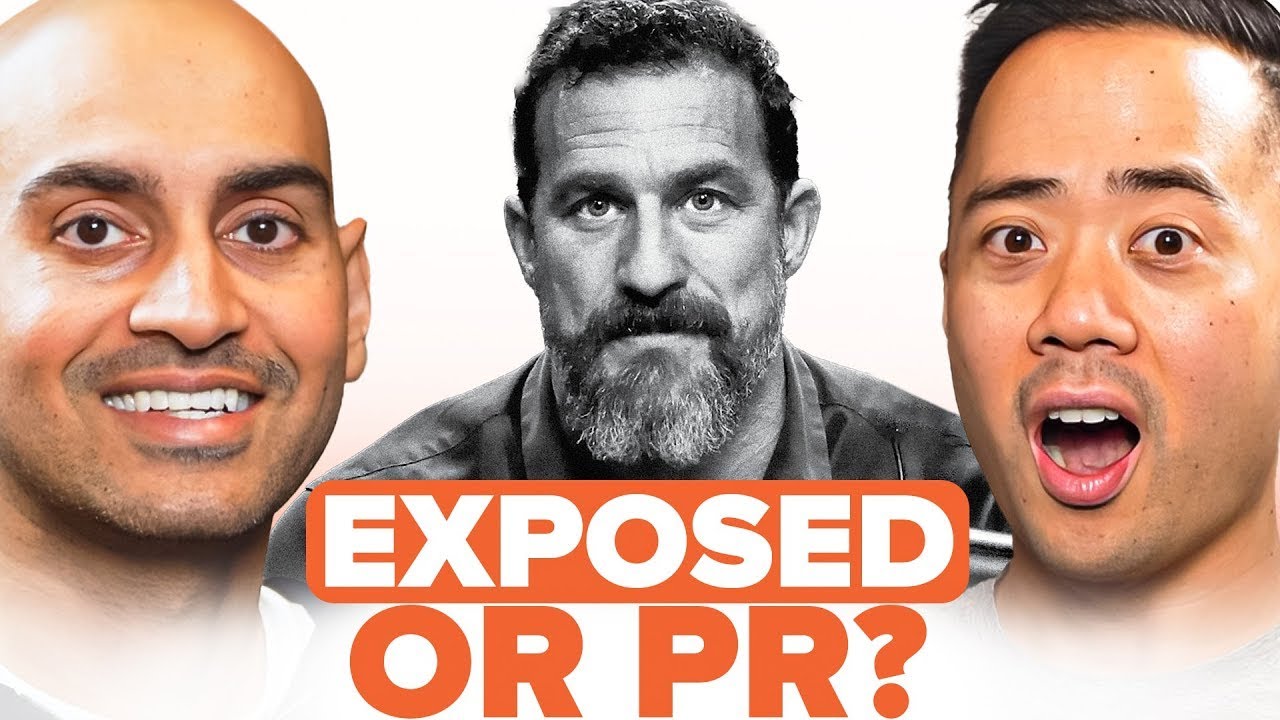
Eric Siu and Neil Patel discuss why a New York Post hit piece on Andrew Huberman backfired, boosting his followers instead. They cover ad creative as a 12x ROI multiplier and how Flexport's founder handled a bridge collapse with fast, direct communication.
Chapters
You know how Dr. Andrew Huberman, there was a hit piece that happened on the New York Post recently. Did you hear about that?
Nope.
Okay. You know who Dr. Huberman is? Andrew Huberman, everyone talks about him. Okay. So, he is this doctor and he's probably got one of the top podcasts out there right now and it really talks about just how you can be healthier. He talks about sleep, talks about your VO2 max, all these things that contribute to just living a long life and healthy life. And, I think he's certainly been very helpful to me. And so anyway, this New York Post does this article. It's a really well-written post, by the way, but the whole hit piece is like, oh, Andrew Huberman has 6 different girlfriends that he didn't tell them about each other. They all found out about each other and they created like a ring and they started talking about all the different things they're doing with Andrew. And basically it was this exposé saying that Andrew Huberman is not a faithful boyfriend.
Right.
And so basically the hit piece seems to have a reverse effect because let me show you this tweet over here. First of all, Andrew Huberman, he's not addressing it. He's not saying, oh, this and that. He's not responding to it at all. So this is like a PR communication. This is how he's handling it. And it seems to be working out for him. He's just continuing to post content. And I think his whole thing is like, this thing's going to blow over. But check this out. Let me share my screen over here.
Okay.
Tom Osman shares this. So, that hit piece really did a number on Andrew Huberman. Wonder how he's dealing with all the new followers. So, he was adding 200 to 700 followers per day before. I think this was on YouTube. Now, he's adding 3,000 to 7,000 per day after.
So, check this out.
Wow.
So, this has helped him.
Yep.
Yeah.
Oh, this is Twitter stats. Sorry. So, this was 300 to 700 before, 200 to 700 before. Now, it's way more.
So pretty much when they published it, it may have gone viral and then more people learned about him and what he does and like, oh, let me learn about him.
Yeah. And by the way, we're not saying, okay, it's good that he's an unfaithful boyfriend or whatever. I think that at the end of the day, it's his business. And net-net, has he been helpful to society? I would say yes, he has. But, you know, at the end of the day, I think this is a— the hit piece didn't really work on him.
So, so I don't really follow him. And the way I look at a lot of this kind of stuff, yes, people should do ethically what's right. But like, it's their personal life. I try not to get involved. And, you know, if you don't believe in what they do, don't follow them and don't listen.
Yeah, you're free to think on your own. That's why this information is available. And I'm hoping that even listening to this podcast or other podcasts, you are listening and then forming your own opinion so you can think for yourself. That's what the goal is, at least my opinion, that's why we're here to share what we know. But here's an interesting thing, Neil. I'm reading the comments over here and one comment here says, killer marketing. I wonder how much they charge for this service. And so what if someone did hit pieces as a service to help you get more reach?
Depends where it gets published. But like for example, I've heard his name, I've seen some of his stuff. I don't really follow him. I don't know most of the stuff he talks about. I get what he's talking about, but you know, I don't know much about him, hence I didn't see the hit piece or—
Well, if you go to the YPO Health and Wellness Summit in 2 weeks, he will be speaking there as well. Oh, got it. By the way, Neil and I have an agency owners group called the Agency Owners Association. All you have to do, just go to marketingschool.io/agency. Once again, it's marketingschool.io/agency. to learn more. And now back to the show.
All right.
So did you know that ad creative can be a 12x effectiveness multiplier? Did you know that, Neil?
No, but yeah, I know ad creatives can have a—
So check this out. This is from your good friend Pep, Pep Laja. Okay. So, so ad creative can be a 12x effectiveness multiplier. Really great creative is hard and rare. Most PPC agencies are good at campaign management, not creative. I agree with that from For the most part. Who does killer creative best? So check this out. Figure 2, the top 10 ways to improve advertising ROI. So this source is from Data to Decisions. Number 1 is market brand size plus share. So look at Coca-Cola, right? 18x multiplier, profit multiplier. This is in 2014, by the way. And then number 2 is creative tagging ad length, and this is 12x multiplier. And then number 3 is budget setting across geographies, 5x, and then it just goes down from there. Isn't it interesting? Yeah.
And I'm curious to see what the data would be in 2024.
Today. Yeah.
But we always talk about this with our clients and even on our team. The biggest leverage point you have as a marketer when you're running ads is the creative because a lot of the technology and the software, a lot of people have access to that. It's at their fingertips, but the creative really can help you stand out from the competition. We call that the X factor, right? Because That's what you can do that others potentially can't.
Yep. So that's how we think. So when we pitch creative on our side, when we actually show the creatives and we show what we're going to do with them, we show the different formats versus when we didn't do that in the past, the conversation's completely different now. They're way more engaged. You can see their eyes lighting up. It's like, oh, I haven't thought about it that way. Oh, nobody's talking about creative, right? When you show how capable you are and how you're thinking of it for them and you can bring them to a future state, if you are selling creative, it does wonders, right? And when you think about it, creative, what does it do at the— good creative at the end of the day, it decreases your CPAs. It just makes your costs a lot more effective. But, and this is what Gary talked about on Friday, it's not all on the brand side. It's not all on the creative side. It's also not on the math side. It's a mixture of both. blue or red, it's really purple, which is why the color of his new book that's coming out, Day Trading Attention, that's why it's purple, right? So you got to consider both sides. But I do believe in a world where an AI-driven world, the optimization is not so much going to be the X factor. It's not your superstructure or how you're optimizing your campaigns. That's not what matters anymore. It really is creative and data, I would say, on the other side. So it really is those 2 bands.
Yeah, no, I believe it. You need good creative and you need to look at data and you need a mixture of both. The hard part for marketers is some people lean one way or another. Like I'm more very data-oriented.
Yeah.
And it is, I can be creative with my own marketing, but what I found as a solution is instead of trying to do everything perfect, what you need to do is partner with people who are great at the side that you're weak at. I'm better at the data side than the creative side. So we will hire, or we do hire, like we have an amazing creative person who leads up that department named Alex. And Alex is just great at that. And that's how her brain works. Mine is all the zeros and ones and you combine them and that's how you can start doing better campaigns.
You know what I realized, Neil? So recently we got a 1-star rating with someone complaining about our audio. And then I was like, what? I have a beautiful mic. And then I was like, oh, I just look at you. Neil did not unpack his mic yet. And so Neil, we're going to have to get you a new mic because someone's complaining. And that means other people are hearing bad audio. And that's the only thing that matters with this pod, right? People can't stand bad audio. So guys, if you're hearing bad audio from Neil's side right now, leave a comment. Please leave a 5-star review and say bad audio. that will be helpful to us. So, that's that. You're like, leave a review, and then you realize you're like, wait, wait, wait, no, we don't want more 1-star reviews. 5 stars, please. But to Neil's point, there's a macro business thing too that Neil and I have been talking on the phone about. It's we've subconsciously or unconsciously for me, I've designed my organization around my weaknesses, right? And then you have too, I would argue. So, for me, like I mentioned in the last episode, I'm not a very detail-oriented person, but the people that work with me closely are extremely detail-oriented, right? Which is funny enough, like funny enough, you're very detail-oriented, right? And so, think about what you're weak at and then make up— don't try to plug every weakness. Yes, get stronger at those, but at the end of the day, if you can design your organization to like, if someone else is better than you at creative, go hire them to do it, right?
I wouldn't—
Wait, wait, wait.
You need to restate it. You missed— Eric didn't mean what he's saying. He's not talking about plugging the weaknesses with other people. He's saying, don't focus on fixing all the things that you're weak at yourself. Like, you don't need to be a jack of all trades. You're saying plug them in because you said don't plug in all your weaknesses. You're saying don't fix all your weak—
focus on your strengths. Sorry, let me slow down. Yeah, so don't try to fix all your weaknesses because nobody can be perfect, to your point, and instead focus on your strengths because That is what you're valued for at the end of the day. It's your strengths that make you world-class.
And then the next part, add the next part.
I forgot the next part already. What was the next part?
Hiring the people to fill in the voids. Oh yeah.
Well, I kind of implied that already. So yes, you want to hire great people around you that can, that really your weaknesses are actually their strengths. That's what you want to do at the end of the day. And that's how you're going to scale. And that's why people talk about hiring all the time, Because everything, I forgot who talked about this recently on a pod. It's like 2 main things that matter. It's people and technology. Oh, it was Brad Jacobs. Brad Jacobs wrote a book called How to Make a Few Billion Dollars, 'cause he founded like 7 multi-billion dollar companies. And he's like, 2 main things that matter, people and technology. But you can't build technology without people. So at the end of the day, everything that comes down to scaling, how do I grow to a million? How do I grow to 10 million? How do I grow to 100 million? It's all just great people. And I'm oversimplifying, but that's what it is.
It is, but sometimes people can mess things up. And a great example of this is social media marketing. So it's just like a lot of businesses are struggling to get traction on social media, but in many cases it's because of the people they hire. I'm not talking about just the wrong people, it's they're overcomplicating it. So example, if you take social media marketing, a lot of people will be like, I have these ideas, Let's sit in a meeting and brainstorm it and then come up with, bring a copywriter in, then create a script and then start looking at data and analytics and then be like, okay, how do we film this beautiful thing instead of making it just lo-fi? Who's going to edit it? Does it match every single brand guidelines? And I get why companies do this, but dude, that 14-year-old kid from Missouri or the middle of nowhere is just like, oh, This looks cool. Let me just post it. And that's—
Yeah, you want to talk about that? What is that? Because I don't know what that is. Talk about that.
What the 14-year-old kid does?
Yeah, yeah, yeah. Because you have that here.
What the 14-year-old kid is doing is they're just browsing their internet and be like, oh, that's a cool concept. Let me talk about that or post that. They're not overthinking it. And what they're doing is they're creating quote unquote content that's more authentic, that relates. They're not, you know, trying to make things too high-end in production. They're just posting what they think is cool and they're trying to understand the community instead of spending too much time focusing on the type of content you create versus understanding the community and figuring out what they want.
Oh, got it. So I thought you had an example here of someone doing it, but this is more of a generalized thing.
I don't have, I was just making a random example of like a 14-year-old from Missouri.
I want to take a second to tell you about my podcast co-host agency. So NP Digital. So Neil Neil Patel Digital. What they do is they do a whole host of marketing services and they are global. They're worldwide. They have SMB services as well. They have mid-market to enterprise services as well. They cover the entire gamut. So you can just go to mpdigital.com to learn more about it. And now back to the episode. You know the Baltimore Bridge collapse that happened recently?
Yeah, with the big shipping container. That I follow, but I also follow the stock market and a lot of these companies. It affects a lot of companies.
Yep. So this this post is from Lulu, Lulu Missouri. Here, I'm going to share my screen again. Lulu Chang Missouri. I'm pronouncing that wrong. Sorry, Lulu. So case study and founders going direct. Ryan Peterson. So he's the founder of crap. What's the Flex Flexport Flexport? So Ryan Peterson and the Baltimore Bridge collapse. So to recap, the bridges hit early morning Tuesday. Number two, by midday, Ryan posts a detailed. X thread analyzing the failure. He barely mentions Flexport, but doesn't need to. Showing the CEO's expertise and explaining the need for better logistics is better promotion for Flexport's mission than any outright shilling. Just so everyone knows, Flexport is a logistics company. Maybe I'm oversimplifying it there, but that's what it is. So number 3, same day, Ryan writes an op-ed. He does it himself in 1 hour. He truly types fast. That's his username on Twitter. The team edits it and submits it to the New York Times. New York Times usually takes days to respond to submissions, but accepted this one immediately because it was so timely and on point. Number 4, Ryan's first New York Times op-ed publishes the next day. Number 5, looking at the screenshots, I can't resist pointing out the delta between Ryan's views and the New York Times. Not a dunk on the New York Times, by the way. Their distribution is huge. The op-ed was good, and it's a great way to reach customers, but it's hard to match the power of a founder speaking direct and unfiltered. So takeaways, speed matter. Speed matters. Substance outperforms marketing fluff. People want to hear from people, not corporations. So going back to creators again, a great post can rival the distribution of a leading newspaper. And finally, Flexport has a great comms lead, but something like this doesn't work without the founder's personal involvement. Talk about being involved again. Look at this. So 327K views on this one. And then I think the New York Times, sorry, 4K views for New York Times. 1.8 million for Ryan Peterson.
But also another important thing to mention here is he understands this industry really well. It comes from what Google talks about with E-E-A-T, experience, expertise, authority, and trust. Ryan is the right person to talk about this. Neil Patel and Eric Siu are the wrong people to write an article on this because it's just not what we know.
We don't know anything.
Yeah.
About bridges and logistics.
Yes. It's like those VCs doing a post being like, here's how much AI traffic decrease you're going to— how much search traffic you're going to get from AI.
Yeah.
I'm like, oh, so you've never done SEO and you just looked at 10 of your portfolio analytics. Like, I'm not saying they're wrong, I'm just saying it's a small sample and they don't really know how the industry works. It doesn't mean it won't go the way they're talking about, but it's more so you want the right people to talk about something. It's the same reason where I try not to talk too much about politics or the economy. I don't know much about it. For example, a week or so ago I posted on, I'm not an economist, but I'm starting to see marketing recover, and it did exceptionally well on Twitter. I don't know how many retweets or—
You want to share it?
Yeah, I'm trying to actually pull it up. I didn't even have it on the list, but where is it? Best economy marketing lesson. No, that's not it. Dude, I have so many tweets. It's just hard to find this stuff. Gen Z, nope. Quick hack influencer, dude. Okay, there you go. I found it. So I think this is the last one before we have to go.
Yeah, because I— yeah, yeah, exactly. All right.
I'm not an economist, but in a bad economy, marketing is the first thing to get cut, which is true. And it's one of the first things that companies rehire because it's easier to add back marketing than most things like adding, hiring employees. Which takes longer. So I don't know if this year's going to be good or bad. I don't know what's going to happen with the elections, but we're starting to see more companies spend money on marketing and we're seeing it mainly in the United States. It's coming back. India has been booming for years. Australia, Canada, UK, rest of Europe are still slow. We're seeing what we saw in the US, what we're seeing there roughly 6 months ago. I mean, what we saw in the US 6 months ago is what we're seeing there right now. LATAM, Mexico is slowly picking up, but the rest of Latin America is roughly where we're seeing in the marketing industry where the US was 9 to 12 months ago. And most of Asia other than India is experiencing what we experienced in the US 6 to 9 months ago. Again, not economists, but it shows at least where marketing's going from our small subset of data.
Yeah, and 86K views on it, so not bad. So anyway, that's it for this episode, everyone. Neil has to go to Easter. Happy Easter, everyone. That's it for today. Please don't forget to rate, review, and subscribe. Also go to marketingschool.io/agency if you want to learn more about growing your agency. That's the agency community that we have. It's growing, so application only, and we'll see you tomorrow.









