Biggest winners and losers of Google AI Spam Update, 95% of agency work will be taken by AI, & more
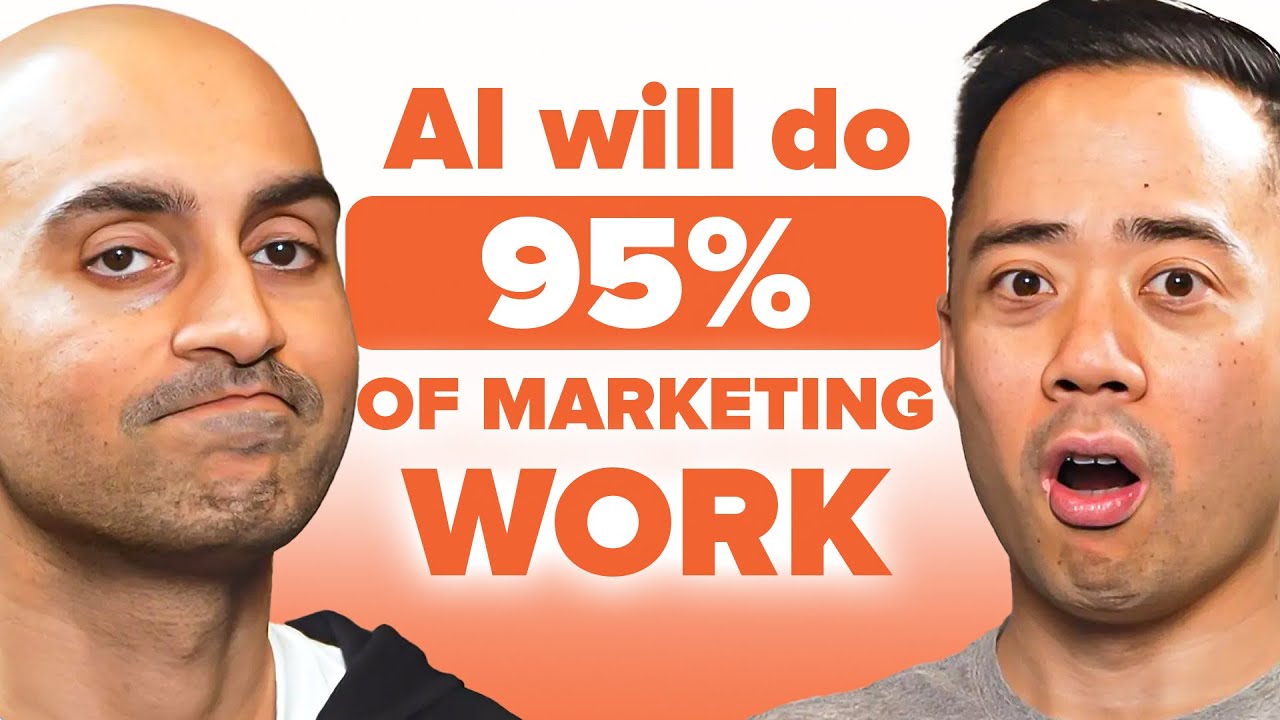
This content was created by Eric Siu. This content was uploaded by Eric Siu. This is a YouTube episode titled "Biggest winners and losers of Google AI Spam Update, 95% of agency work will be taken by AI, & more" (published 2024-03-27). It is a conversational marketing/SEO podcast-style discussion between Eric Siu and Neil Patel. Topics covered include the Google AI spam update (winners and losers like Wikipedia, IMDb, Reddit dropping vs. sites such as TechTarget/TechRadar rising), parasite/programmatic SEO and black‑hat practices being deindexed, debate over Sam Altman’s claim that AI will replace 95% of agency work (the hosts argue a lower long-term impact, e.g., ~30–50%), an internal study showing AI‑generated images get lower engagement than human images, and promotions for Single Grain and the Agency Owners Association.
Chapters
There have been a few SEO influencers that have been talking about all the black hat stuff they've been doing, and they've grown a lot on, on YouTube in the last 12 months or so.
Yeah, they showcase their screenshot of all their traffic and Google whacks them.
You never show your stuff if you're doing shady stuff. Like, what happened to all of them?
They get whacked.
Yeah, they got torched. I mean, when we say torched, they got deindexed. And so they might have properties that are getting hundreds of thousands, if not millions of visitors per month. It all went to zero. The biggest winners and losers of the Google AI spam update. So this has just happened recently.
Let me guess who's the biggest winners.
Go ahead. If you're wrong, what do I get?
Free Air One because you love Air One.
Okay. All right.
Yeah, yeah, yeah. Right? You take all your dates to Air One. Huh?
What? I don't know what you're talking about. Let's talk about the podcast. Guess. Okay, guess. You're guessing the winners.
Yeah.
Okay, go ahead.
People who don't use AI content. Those are the winners.
No, no, there's one I'm looking at here. They do use AI content.
Tons of AI content, just pure AI content?
No, no, no.
All right, and I bet you the losers are people who use AI content with no human intervention.
The losers I'm looking at here, it's a lot of programmatically generated content.
Yeah, it's the same thing.
Yeah, yeah, you can call it that. I mean, AI content programmatic, programmatic's been around for years. Let me tell you who the losers are first, okay? Wikipedia. So the way this is being scored, so this post is from Lily Rae. Again, she does great stuff, follow her on Twitter. So she's looking at a week over week absolute winners versus loser via Sistrix Visibility Index data. And so, on my screen, we'll pull this over on YouTube if you're watching too. So, you can see Wikipedia, their previous score, visibility score was 7,000. Now, it's 6,500. So, it dropped about 500 points. IMDb dropped about 144 points. Britannica, remember Britannica?
Yeah. Encyclopedia, right? Yeah.
They dropped 90 points. Reddit dropped 86.7 points or so. Instagram rounds out the top 5, -77%. Even YouTube dropped a little bit too, which is a Google property, which is a little strange to me. Absolute winners, you would never guess. Okay, so get— by the way, keep in mind here, -552, -144, -90, -86, -77, right? Now, the absolute winners, they only went up like 6 points, 3 points, 2 points. So they didn't even win that much. Who are these winners? TechTarget, TechRadar. These are like the sites that— I think these sites sell links.
TechRadar is a news site, I know that.
TechTarget, TechRadar, pokey.com, I don't know what that is. MP3juices.click, that sounds pretty spammy to me.
Pocky, the chocolate Pocky sticks?
P-O-K-I. Uh, no, no, no, you know what I'm talking about, right? No. Yeah, I know what you're talking about, the one with the, the, the—
The Asian—
Yeah, yeah, yeah, there's strawberry, chocolate, everything. Okay.
They have cookies and cream flavor too.
I didn't know that. See, they did that for— they did that for Americans. Okay, um, so number 5, the website is pornhub.com. Just want to let you know. So, um, 2% change. So It's a little strange to me. I mean, TripAdvisor went down too, by the way. I like to talk about TripAdvisor all the time. Indeed went down as well.
TripAdvisor has a good SEO team.
Yeah, it's amazing. I mean, that's why they get so much traffic. Yeah, but we should talk about this a little bit because the other thing is, I don't know if you saw this, but these— there have been a few SEO influencers that have been talking about all the black hat stuff they've been doing, and they've grown a lot on YouTube in the last 12 months or so, even the last 18 months.
Even on X. They showcase their screenshot of all their traffic. Never ever—
And Google whacks them. Never ever brag about your stuff. Never ever showcase your stuff because what ends up happening—
No, you can brag and showcase if it's legitimate and you're not using any tactics.
If it's legitimate, but you never show your stuff if you're doing shady stuff. Like, why, right? What happened to all of them?
They get whacked. But this happened like 15 years ago when people first got started.
Yeah, they got torched. I mean, when we say torched, when we say when they got whacked and torched, we mean that they got deindexed. And so they might have properties that are getting hundreds of thousands, if not millions of visitors per month, it all went to zero.
Yes, because what they're doing is they're going out there and saying, this is the correct way. Look, look what we did to game Google. They're idiots. And look, our way is better and everyone should copy. So what do they do? They make an example out of you.
Do you know what's happening on May 5th?
No.
Okay, so another update. So they're basically, this update, Google's saying, hey, we're going to give you guys parasite SEO. Remember that?
Yeah.
Any site that's doing parasite SEO.
Would you tell the people what parasite SEO is first?
Yeah, I'm just saying, I'm saying. So parasite SEO is like, let's say I go to your site, your site has a lot of authority, right? I might just contribute a few articles and then leverage your domain authority and then let that article rank, right? So a lot of these websites are letting people, you know, basically barnacle or like parasite onto their authority and—
And they're creating a lot of irrelevant content as well.
Exactly. Like there's a site called indiatimes.com, I think, and they have a lot of that going on.
They have tons of it.
Yeah, and so they're saying, hey, websites that where you're doing, you guys are doing parasite SEO, where you guys are basically letting people leverage your authority, you guys, you have until May 5th until we do something about this.
Yeah, which means they're not going to have much time at all.
Yeah, it's not a lot of time.
Because what ends up happening is Google doesn't mind guest contributors or contributors. If you're a business website and you have people creating content around business and marketing and it's not regurgitated information, amazing content, they love it. The problem is, is what you've seen is a lot of publishers have all this authority. So then they get a ton of people to guest post like, oh, you want to get to guest post about dentist stuff for a business site? Well, a dentist is kind of a business. So yeah, write whatever you want to write about when it comes to teeth cleaning. Well, like, all right, they're not actually talking about creating a dentist practice. They're writing about teeth cleaning to build more authority and backlinks. And the site's like, well, cool, more content. Oh, we got 1,000 of these contributors on a weekly basis. Oh great, our traffic is now up 30%, 40%, 50%. We're making a ton more ad revenue. And then eventually Google's going to whack you.
I'm just curious to see after May 5th what happens to Forbes because Forbes is like hugely affiliate driven now.
It is hugely affiliate driven. Forbes still has good content quality, but there are a lot of guest contributors that I know that have slipped through the crack and just publish whatever they want.
By the way, Neil and I have an agency owners group called the Agency Owners Association. All you have to do, just go to marketingschool.io/agency. Once again, it's marketingschool.io/agency to learn more. And now back to the show. Did I send you the Sam Altman thing where he believes that 90—
we talked about some of this on the show. Yeah, 95% of agencies will— 95% of agency work will pretty much disappear.
Yeah.
So here it is.
This is Kieran Flanagan, which by the way, everyone, we're going to be doing a collab collab with the HubSpot Marketing Against the Grain podcast. We're going to be talking about this there too. So the headline here is Sam Altman says AI will handle 95% of marketing work done by agencies and creatives. And so here's what he said: 95% of marketers use agency strategists and creatives professionals for today. AI will do all of that. So we, we had a conversation on the phone about this, but we thought it would be helpful to bring this here too.
Well, there's 2 big issues. Sam's really biased because He's on the AI front and that's what he does. I'm really biased because I have an agency and that's how I make my money.
That's how we're biased.
The way I like putting it is, yes, AI will be able to replace a lot of agencies and people for any type of job, but AI is not the top 1%. AI is creating average results, mediocre, and I don't see it producing really amazing quality work anytime soon. What I mean by that, the next few years, I just don't see it. Because AI is just taking a lot of information already out there on the web that's, you know, old information, and then they just parse it and they regurgitate it. On top of that, there's a lot of bad information out there in marketing. How does AI know which ones are bad and which ones are good? Just like a search engine doesn't know what's accurate and inaccurate. So you have a lot of results that are biased on both sides, especially when you talk about things like healthcare. There's so many articles that say the vaccine is good for you and there's for COVID and there's so many articles that say it's bad for you. Which one is right or wrong? And I forgot who did this study. We both saw it on X. Remember when they talked about how left or right-leaning certain platforms were?
Yeah.
Right. They said Gemini, very left-leaning. OpenAI, very left-leaning. I don't know what they said about Grok. And when we're talking about left-leaning, we're talking political. Left is Democratic, right is—
Grok is like in the middle or slightly on the right.
Right. Yeah. And right is Republican. But when you have this, how is it that AI is going to produce amazing marketing? They're going to produce the same stuff as everyone else. If everyone's using their AI to do marketing, what are they going to get? They're going to get similar strategies that all the other competition's using. So how do you separate yourself? And it goes down to people don't hire agencies to get marketing work done. They hire agencies because they want much better results. They, a lot of them have in-house teams. They're looking for that 1%. Who's going to produce amazing results that they weren't able to achieve on their own.
So, there's this one interview that has Elon Musk and it has Jack Ma, the founder of Alibaba. And so, Jack Ma is like, there's no chance that computers will be smarter than humans. And then Elon was like, no, that's definitely not true. And Elon's basically like, computers are going to be way smarter than humans in the next, like, call it However much time, right? And then there's another interview with Joe Rogan where he's talking to Ray Kurzweil, the futurist. And Ray Kurzweil, so he's been, you know, on the AI train forever, the singularity where we combine with machines. He's basically saying till 2029, once 2029 hits, like the machines will be way smarter than humans, right? So Neil's saying, look, short term, nothing much to worry about, which I agree with. I think long term, maybe 10 years out, a decade out, I think the number's a little lower. Maybe it's like 30 to 50% of work will be replaced.
And yes, and by no means am I saying no work is going to be replaced by AI. That's just so off. Work is already starting to become replaced by AI and you'll see more of it. It's how much will it be? 95% seems really high. And I do agree, AI will be smarter. If you ask me some question about Egypt, I'm not going to know the answer. AI will know the answer. But when it comes down to marketing, there's going to be a lot that's off in the AI system based on what they gathered from the web versus what I've experienced direct hand that is not on the web.
So as I was making my point, I was trying to get a clip over here, you know. Anyway, so we're basically saying the same thing here. So short term, we don't think there's going to be much impact. Long term, let's say 10 years out, 30 to 50%, I think it could be a little more than that, but I don't think it's gonna be 95%. I think you have to look at our bias, which is we both have agencies, and then you have to look at Sam's bias, and then you have to maybe just meet in the middle there. And 30 to 50% is meeting in the middle.
And forget meeting in the middle because it doesn't have to meet in the middle. But I'm with you. I don't know if it's 30% or 50% or 60% or 70% or 20%. I just highly doubt it's 95%.
You know, the other thing too is we've talked about this before. It's you want— the only people that are going to be released— replaced by AI is people that are not enhanced by AI, right? And it's like, it's like using the internet. It's basically like, are you using the internet or are you not using the internet? Someone that's using the internet has a bigger advantage over Someone that's not, that's all. Like this, it's just a bunch of stuff for AI that it's the new trend. That's all it is. This message is brought to you by Single Grain. Single Grain is a marketing agency ran by yours truly. Single Grain does paid media, SEO, creative, conversion rate optimization, and has worked with a handful of companies such as Uber, Amazon, Airbnb, Salesforce, to startups, venture-backed startups, a lot of different companies. And ultimately our mission is to do innovative marketing that drives customers If you want to learn more, just go to singlegrain.com. Again, it's single grain, grain like wheat, and we'll see you on the other side.
So I ended up, we ended up doing a study that ended up looking at if AI-generated images generate more or less traffic than human-generated images, right? Just speaking on this AI trend. And what do you think the results were, Eric?
I think they generate less engagement, AI-generated.
Yep, it is less. So we looked at 304 Instagram accounts and it was a little tough to do this study because someone has to actually say, all right, you know, like mention in the text that it's AI. We don't have a pure proof way to detect if an image is AI or not. I know there's some tools out there that help, but they're not 100% accurate from what I've seen.
Right.
So we are actually going based, we are looking for accounts that post normal pictures and AI ones, but when they post AI ones, they let you know. you know it's AI? Because then it's easy to just look at the engagement difference. So keep that in mind. So the study is of course a little bit biased, but what we saw was AI-generated images created 41 likes on average, human-generated images were 66. Comments per post for AI-generated, 2.3, human-generated, 3.1. So—
What's the sample size?
304 accounts that we looked through. As many, yes, more than thousands, tens of thousands of images over time.
Dude, who's reviewing all these for you?
I have a team in India. Tens of thousands.
That's crazy.
Well, you take tens of thousands and then you whittle it down to the accounts that actually showcase if it's AI or non-AI, and then you have to go from there. So when we were doing the analysis, we're scraping. You can't just be like, okay, let me just look at this account. You just literally have to go look for AI images and people label them AI.
But you're doing a big data pool. You're not individually looking.
Bingo.
Yeah, yeah.
And then from there you have to look at that account.
Yeah.
So we first scraped tens of thousands of images, whittled it down to specific accounts. Then we only looked at the images within those accounts because we were comparing the likes on those accounts that were AI versus non. Because I can't look at Gary Vaynerchuk doing an AI image and me doing a human because even if they say human-generated images get more engagement, Gary has like, I don't know how many more followers. Let's go with 10+ times more followers than me, right? Maybe even more than that.
On Twitter?
It doesn't matter, any channel. I'm just making up a number, but it's probably true.
Yeah.
So if you look at that, whether he produces AI and I do human, he's going to get more engagement just because of his mass reach, right? So you got to look at individual accounts and compare their AI content versus non-AI content. All right.
So that's a good place to wrap today. Please don't forget to rate, view, and subscribe. It helps us grow, especially on YouTube, and go to marketingschool.io/agency to apply to the Agency Owners Association. That's where we help agencies grow, and we'll see you tomorrow.









