BTS $100M AI Business Mastermind in Tulum
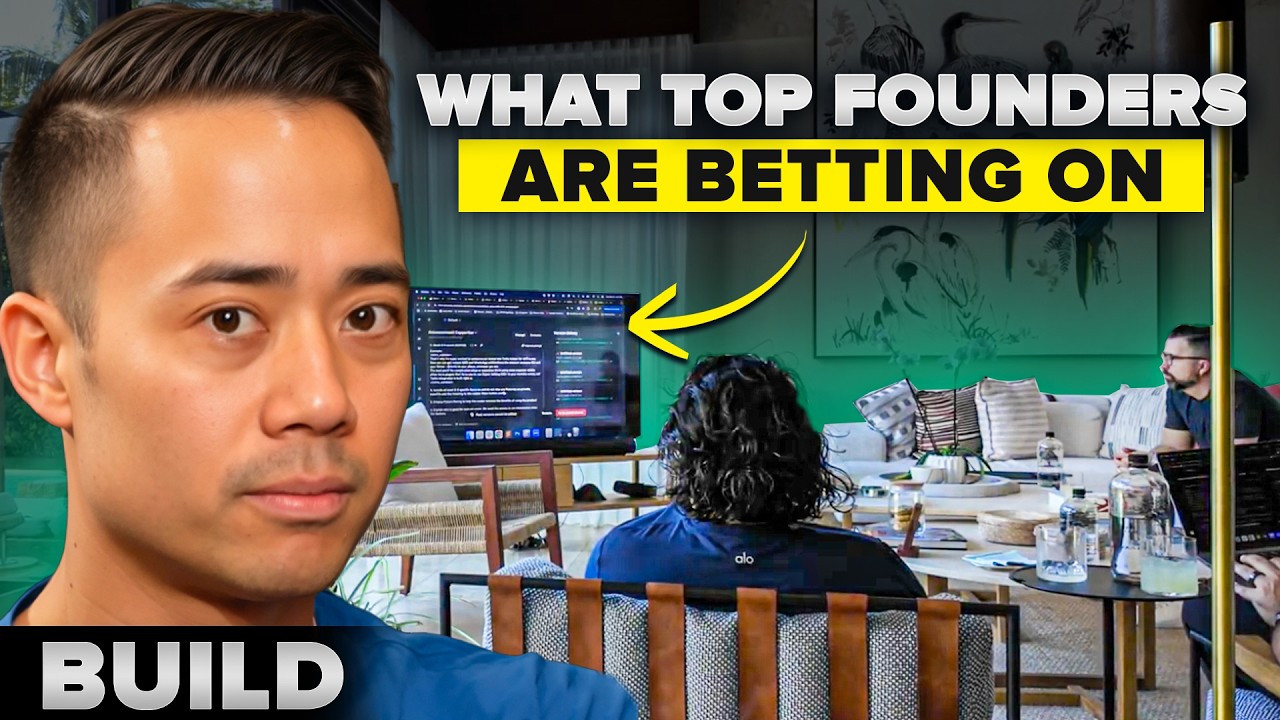
Eric Siu gives a behind-the-scenes look at the Tuluminati, a mastermind group that meets in places like Tulum and Lake Tahoe with members including Patrick Campbell of ProfitWell and Yaniv Maschetti of Nextiva. The group does 45-60 minute "explorations" where members present business challenges and get feedback, plus workouts, tennis, and spa time. Siu explains how quick conversations in these retreats have led to major business insights.
Chapters
The reason this group is called the Tuluminati is because we did a retreat in Tulum and we decided to name the group the Tuluminati. This group I've actually been doing since 2018 or so, so we're about 7 years into it. Actually, there's a couple of my, my great friends are in the group. So Patrick Campbell, he had a company called ProfitWell. We have a friend named Yaniv Maschetti. He has a company that does multiple 9 figures a year called Nextiva. They do a great job. And then Syed Balkhi, he owns a handful of WordPress companies, more than a handful, I would say a portfolio of WordPress businesses. Al Doan, and he has a quilting company and they do really well. He actually owns a town as well. And David Henzo, who I've known, I actually met him playing EverQuest when I was 12 years old. He has a handful of businesses too and a new movement that he started. Eric Rivera, who is very well-versed, has a pets business, but very well-versed when it comes to technology and AI in general. And then Walter, who's a great marketer all around and he has a pay-for-performance agency. So it's a very well-rounded group of people. And we've been to Turkey, we've been to Mexico multiple times, we've been to Lake Tahoe, and we've done a retreat in Arizona as well. And the whole purpose of this is to make memories with people that are, that are like-minded, or I should say who are like-minded and people that want to continue to push, people who are competitive. And when we do these trips, we pick cool spots to go to. I'll give you a sense for what our schedule looks like. So 7 a.m., I actually got there on a Tuesday and I just got back yesterday, which was a Sunday, but got there on Tuesday. The next Wednesday we're talking Being 7 AM workout on the East Coast, on East Coast time, which I'm on Pacific. So I got up like 3 AM or so, or 3:30 AM, and I went straight to lift weights. And then, you know, we had a handful of activities. There was tennis, there was going to the spa, there is pickleball, there was archery. There's a— we played a little, a different game called Gatorball as well. It was just a fun time in general. And we biked around the resort and, you know, got breakfast at different spots, got lunch, dinner at different spots too. And so eating great food, having a great time with people, and then just overall talking about business, talking about personal life, getting to know everyone better. Like, Like I said, this group's been together for 7 years or so, and I can see this group going for hopefully multiple decades. And we actually just agreed the other day that in the past it's been an annual trip, but we actually wanna make it maybe a biannual trip, so maybe twice a year or so. And I really enjoy this group because, you know, wake up in the morning, we'll, like I told you, at 7:00 AM we're working out, then it's breakfast, then there's more activities, and then we're doing explorations, which is where I might share challenges and You know, everyone kind of will ask clarifying questions around my challenge, which I'll kind of frame. I'll frame my challenges within 10 minutes and people ask questions maybe for 10, 15 minutes or so. From there, you know, we'll go to lunch and then maybe we'll do some more explorations. But in the afternoon, it's either we're going to the spa or we are going to do some activities again, like pickleball and tennis and all that. So we'll get ready for dinner and then dinner, we'll have more intimate conversations. And then after that, we'll just go to bed, right? That's a rough idea of the schedule. And then in terms of the content, again, I mentioned that we'll share challenges. So those are explorations. Each person would go 45 to 60 minutes or so. I remember for one of the trips, the Tulum and Adi trip, we actually rented out a resort and we each got our own hut. We did explorations in terms of getting on boats and then looking at manatees, turtles, and things like that. We played football on the beach, we had tacos on the beach, and it was just a great time overall. And then we can see the stars that are super clear at night because there wasn't a lot of light pollution. These are memories that, again, we will create for a lifetime. And, you know, when you grow older with a group, you will experience issues with your business, you experience issues with your family, and you share these things that you wouldn't share with other people. And the reason that you do this is because, one, it's very lonely at the top, and to hang out with other people who understand what you've gone through, that's hard. And also, two, it's hard to find people that are like-minded that are also very humble at the same time. So because I was fortunate enough to form this group in 2018, I handpicked the people, and then over the years we've kind of continued to refine the group over time. And I think we've gotten into a place where we know exactly what we like, we know exactly what we want, and I'm very proud of what we have. And that's another lesson for you all listening. For me, if there's anything I've learned, if there's anything I've become world-class at, it's probably becoming a connector. I think it was Leila Hormozi that once asked me, when she first met me, she's like, what's your superpower? And I quickly just said, it's connecting the dots. It's quickly connecting the dots in terms of people. It's connecting the dots in terms of ideas, and that's what I'm really good at. And so I remember when I did my first mastermind, I only had a half-eaten bag of chips, and we did it at my house. So you don't necessarily need a lot of money to do these things. And as you grow with your business, then you can consider taking trips. Maybe they can be local, it can be a staycation, or maybe you can go international, Or maybe you can go somewhere that's close to you as well. So we picked Mexico 'cause it's easy access for Americans. And we did fly over to Turkey once, but that was more difficult access. But it was still a good time at the end of the day. And these are people that would do anything to help you. And we all come from different walks of life, and we all have very different upbringings, but the one thing we learned about each other this past weekend was that we all grew up broke. None of us really had money, and we all grew up really competitive people, so there are very similar threads to pull on. And if you think you struggle networking or making friends, why don't you just put your own thing together and get out there, right? People think I'm very extroverted, but I'm actually not. I'm actually an introvert. And so figure out what your strengths and weaknesses are and then play to those strengths and weaknesses. Don't try to be what someone else is because that would then be inauthentic to, to who you are. All right. So I wanted to take a second to tell you about my ad agency, Single Grain. We're a performance digital marketing agency and we focus primarily on working with B2B companies and e-commerce. So performance marketing, that's SEO, that's paid media, that's CRO, that's ad creative. And there are a whole host of other things that we're doing with AI that's really cool. You can go to singlegrain.com to learn more. Again, that's singlegrain.com to learn more and we'll see you on the other side. I think you have to also understand too, different ages, or depending on your upbringing, you might have different preferences. Some groups prefer to party. This group doesn't party. And we actually have a friend in the group who is in another group as well, and he's in his mid-30s. But the other group, most of the people in the other group, they're in their mid-60s or so, or high 50s. You know, when they do retreats like this, they have an afternoon nap time, and then they go to sleep immediately after dinner. And so it just— you have to figure out what works for you and what you're interested in. And and then played it out, right? If you don't define that, then ultimately it's going to be defined for you. That's what I would say. Again, some groups like to party, and that's for them. And maybe they won't like to do that as much later. The other thing too is you have to come to these things with intention. And so for us, we all knew that we wanted to talk about AI. We all wanted to talk about worldview. So how we saw you know these external wars that the U.S. is involved with. We all had thoughts around the economy. We shared different AI hacks in addition to the these business kind of explorations. And we shared a lot of things that we wouldn't share otherwise. And oftentimes you just hear something in passing, and then you'll implement it, and it'll go a long way. One of the guys. in the group, Syed and Yaniv as well, we were actually talking about something related to marriage. And who knows if this is gonna happen or not. And this will be a funny update if this does happen, but I'm actually gonna try it because one of the things they brought up was very fair and I was probably being unreasonable. Or another example would be with Carrot, which is our software. Syed mentioned something in passing as we were getting ready to go to lunch. What he mentioned was, hey, like you're building this really cool feature, but that seems like a different product and perhaps a distraction. And he was completely right. Like sometimes what might be in the back of your mind might be just resurfaced quickly by a quick conversation. Syed's a very direct person. People would share stories where you feel really bad for the person, but that story also reminds you to make sure— because experience shares help you sidestep mistakes that other people have made, and those go a long way. This trip template was perfect. Again, we got up early, we went to lift weights, and then we did more physical activities. I think each day I was getting 13,000 to 15,000 steps in addition to the weightlifting, in addition to brainstorming a lot. So we're using a lot of brainpower, using a lot of physical power, and I would say we're overeating as well. But I came back from this trip just very satisfied overall because I got to work in the beginning of the trip. Overall, just To recap this, you want to have a peer group at the end of the day because these are people that you would build lifelong friendships with and create memories with. And you are going to get a lot of benefit both personally and professionally. And the way you want to look at it is it's hard to make friends as you continue to grow older. And lifelong friends are worth their weight in gold. You know, as we continue to move into AI-driven worlds, I believe that communities are going to be worth more and more. So you can have your community of your family, your friends, and then also your, your business peers like this, for example. You know, larger communities are going to continue to be more valuable. I always like to preach the value of groups like YPO or EO, bunch of other groups that you can join, but I've been in those groups for a while. I think ever since I was 26 years old, I joined EO first, and I was there for 7 years, and then I joined YPO. And I've also been in other groups too. I formed groups like my own, and I've created my own events, and, you know, soon I'm hosting the YPO Global Marketing Summit. I wouldn't do these things if I didn't find a lot of value in them. And it's interesting because today I recorded a podcast episode with Neil, who's my podcast co-host for Marketing School, and— Hi, Neil. You know, we kind of just both joked and acknowledged the fact that he wouldn't find value in these, right? And that's not to say he's right or wrong, but he just— that's not how he's wired at the end of the day. And that's okay. I find a lot of value in these things. And, you know, you want to hang out with people that do. And, you know, people that want to just stay with their family and stay at home, that's totally fine. And that's a very legit reason. So you got to find what works for you. If you're going to try to create something like this, just understand that it's going to take time. And even if you join a group, it's going to take time to find the right one for you. And over time, you're going to develop your own values and decide what's a go and no-go for you. Eventually those values might change over time too. So we're all changing. I think it's hard to predict where things are gonna end up exactly. I think the key thing is that you're constantly exploring. And this is how I've ended up where I've ended up with these types of groups is 'cause I've constantly been exploring. So that's what I wanted to leave you with, and we'll catch you in the next video. Bye.









